Sign up for the Free Tangle Newsletter Highly curated unbiased news for busy, open-minded people.
Processing your application
Please check your inbox and click the link to confirm your subscription.
There was an error sending the email

By Courtney Smith-Nelson


Surprise! Pop quiz time.

Can you solve the following problems without using Google or AI?

(Don’t worry — calculators are allowed.)

  1. If the price of a box of cereal increases from $4 to $5, what is the percent change in the price?

If the price is reduced from $5 back to $4, what is the percent change in the price?

  1. A math class takes an exam. The results are as follows:

75, 77, 80, 82, 85, 85, 85, 85, 88, 90, 90, 90, 91, 94

A student missed the exam and made it up at a later date, earning a score of 60. Which statistics — mean, median, mode, or range — change when the new score is added to the dataset? 

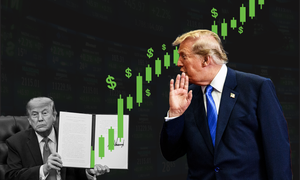
The mathematics of the first question made headlines recently. As a community college math teacher,* I was torn: on the one hand, this particular math topic — percent change — is typically taught in 7th grade math classes. Our nation’s leaders were publicly arguing about calculations that the average 13-year-old is expected to know. How embarrassing. On the other hand, though, for a brief moment in time, the American news cycle cared about math! We all saw in real time how numeracy (the mathematical version of literacy, the ability to understand and apply mathematical concepts) is inextricably connected to politics and civic engagement. 

Conversations around American civics education routinely focus on literacy, and for good reason; a functioning democracy requires a populace who can read. The skills associated with an engaged, civics-minded citizenry — understanding the Constitution, framing our current political debates and problems in historical context, grappling with exposure to new ideas, participating in well-informed, good-faith political discourse — are all predicated on reading comprehension. What is often missing from these conversations, though, is the role mathematics plays in both daily life and civic engagement, and the consequences of an innumerate populace. 
The Problem(s)

The United States has a math problem. Like the reading crisis (covered by Tangle in March, and the inspiration for this essay), standardized test scores for math have been declining for years, even before the pandemic. According to the results of the 2024 NAEP (National Assessment of Educational Progress, also referred to as the Nation’s Report Card), only 28% of all 8th graders earned an achievement level of proficient or above in math. That means that 72% of 8th graders are testing at a “basic” or “below basic” level. The pattern is consistent across nearly all geographical regions and demographics, although, as with most negative societal trends, lower-income students’ test scores have declined more dramatically than those of wealthier students.

Our nation’s relationship with math extends beyond test scores: math has a PR problem. Our culture has a  love-hate (but mostly hate) relationship with math; it is used as a bellwether for academic rigor and to gatekeep admissions to prestigious universities, while simultaneously, the ubiquity of math anxiety in students of all grade levels (not to mention the math anxiety that teachers have) contributes to the numeracy crisis. The enduring stereotype of math class is as a place where only the socially inept or tortured geniuses thrive, and everyone else fails and is humiliated — looking at you, Big Bang Theory, N3mbers, Beautiful Mind, Good Will Hunting, and literally every TV show that features characters in high school. Seriously, the next time you watch a movie or show with a school-aged character complaining about their grades, pay attention to which subject they call out as the source of their frustration.

Even in mainstream news media, it is socially and professionally acceptable to hate on math. When the Wall Street Journal reported on a mathematical breakthrough facilitated by AI, the author wrote, “Just looking at formulas is enough to hurt my brain, but I wanted to know more about what the AI found, how we humans missed it — and why this breakthrough matters to those of us who would like to permanently distance ourselves from math problems.” Can you imagine a reporter casually editorializing in this way about the entire field of literature, or history, or art? Reporting on scientific breakthroughs rarely allows space for the journalist to write “wow, biology really sucks,” but apparently such behavior is okay when the topic is math. 

On the first day of the semester in my classes, I ask my students to reflect on four questions (I did not come up with these questions myself, but have been using them for so long that I have long forgotten where I first encountered them):

  1. What is your first memory of math?
  2. What is your best memory of math?
  3. What is your worst memory of math?
  4. If math were a person, __________.

The responses to these questions are telling. About a quarter of students will write that they don’t have a “best” memory of math, while more will write something along the lines of, “the last day of class because then I don’t have to do math anymore.” The worst memories are at times visceral, filled with vivid descriptions of humiliation, shame, sadness, anger. Sometimes the vitriolic memory is directed at a person — the math teacher who publicly derided a student’s math ability, the parent who yelled at them while they sat at the kitchen table, trying to do long division through tears. Sometimes the villain of the story is the subject itself, cast as a needless and tiresome hurdle in their educational career, useless outside of the classroom.

Math and Civic Engagement

Let’s revisit question #2 from my pop quiz. The 2022 NAEP posed a similar problem on the 8th grade math assessment. Only 29% of test-takers answered it correctly. Another question asked students to look at a line graph and fill in the blanks of a sentence summarizing the pattern shown in the graph — for example, “as the weight of apples in a crate increases, the price per pound of apples decreases.” Just 39% of the 8th grade test-takers answered this correctly. 

These two questions in particular trouble me because a baseline understanding of data analysis and statistics is an essential component of information literacy and, by extension, thoughtful and well informed participation in society. The 8th graders who took the NAEP in 2022 will very soon become autonomous, decision-making adults. They will be voters. They will be parents. They will be homeowners and journalists and politicians and policymakers.

The citizen who knows that the mean of a dataset is sensitive to outliers, while the median represents the 50th percentile of the data, may question why a real estate agent chooses to present one statistic over another when discussing the housing market. The data-literate parent concerned with a public health issue can read the graph published in a news article or on the WHO’s website and understand what it is communicating. The consumer who knows to be suspicious of a supplement advertisement that claims “proven” results from a sample size of twenty people may be less susceptible to a snake-oil scam. And the voter who knows how to calculate percentage change can assess for themself the validity of politicians’ sensationalized claims. 

Some readers may take issue with my using standardized test scores as a proxy for the state of numeracy in our nation; there are strong arguments why such assessments are not valid measures of what students actually know, and no single assessment tool provides the full picture of a student’s academic skills. A thoughtful debate of the merit and drawbacks of standardized testing, though, still requires an elementary comprehension of data collection and statistics. It’s math all the way down. Additionally, I am not advocating that everyone must take calculus or have a degree in data analytics; a clear, deep mastery of the numeracy skills taught in school from kindergarten through Algebra 1 is a sufficient baseline for the average American to meaningfully engage with civic life. Of course, there are career pathways that require much more math than this: scientists, healthcare professionals, engineers, researchers of all stripes, and technology experts are expected to have a strong mathematical skillset. I would argue that government officials — legislators, elected officials, judges, policymakers — should also be added to that list. 

What Now?

The double-edged sword of a populace with poor math skills and a negative perception of math has a direct impact on our daily lives and our ability to reach our full academic and professional potential. The root causes of this dilemma are complex and nuanced: the failures (and successes) of the public education system, the diminishing perceptions of the value of education and trust in expertise, all compounded by decades of parents and teachers passing their math anxieties and traumas to the next generation. As with any wicked problem, no single solution will cure our mathematical ills. 

Debate about the causes of and solutions to the numeracy crisis have coalesced around two competing pedagogical frameworks (as these things often do), resulting in a decades-long discourse dubbed the “math wars.” As is the case with so many social issues in our polarized nation, political entities have appropriated the two main factions in the math wars in an awkward attempt to shoehorn them into liberal or conservative ideologies. 

On one side is the math reform crowd (read: liberal/progressive) who believe that math education, especially in the younger years, relies too heavily on students memorizing steps to computational algorithms without understanding the underlying concepts. Without a solid grasp of the conceptual frameworks upon which algorithms are built, students are ill equipped to apply their learning in new and unfamiliar problem-solving contexts and are less likely to realize that the disparate branches of mathematics are, in fact, connected. Pushback on this pedagogical stance comes from the traditionalist perspective (read: conservative), which argues that math reform has undermined students’ computational fluency. Practices like timed multiplication tests, memorizing math facts, and being able to use computational algorithms (like multi-digit multiplication or long division) quickly and with precision lessen the cognitive load on the brain, which is necessary for problem-solving and higher-order thinking in later math classes. On the political ideology spectrum of math education, I am a handshake-across-the-aisle moderate: conceptual understanding and procedural fluency are complementary, symbiotic elements of the pedagogical whole; emphasizing one at the expense of the other is problematic in either direction. 

The discourse surrounding the numeracy crisis tends to focus on instructional strategies and classroom practices, the nuances of which are of interest to only a small subset of the population. You do not have to be a math teacher, though, to appreciate that mathematics is a necessary component for civic engagement in a healthy democracy. While educators and policymakers consider solutions to our math achievement problems, we can address our culture’s math attitude problem. Let’s reframe the way we talk about math, our relationship to it, and its role in our everyday lives. We are all thinkers. We are all learners. We are all math people. 

*I realize that by springing unsolicited math problems on the unsuspecting Tangle readership, I may have reinforced some negative stereotypes about math teachers. Whoopsie. If you’re curious, the answers to the pop quiz are: 1) 25% and 20%, and 2) mean and range.


Dr. Courtney Smith-Nelson is an instructor of mathematics and teacher education at a community college in southwest Missouri.

Member comments

More from Tangle News related to this article

Recently Popular on Tangle News