
By Rachael Hagerstrom
In February 2023, three months into our relationship, Pfizer decided to break up with me. The company did this by way of two, no-nonsense letters. Pfizer tried to let me down gently. We are “temporarily paus[ing] all participant visits” they said initially. But we both could tell the end was near. “Unfortunately,” said the second letter, sent on the heels of the first, “your participation in the study will need to end early.”
And that was it. After two shots, some 3,000 participants and I — a number described as half the original cohort — had been booted from our Phase 3 trial. We had been in the final stage of testing before a new treatment headed to the Federal Drug Administration for approval. And what we all wanted was a vaccination to prevent Lyme disease.
Earlier this spring, Pfizer announced that the vaccine, called VLA15, was up for FDA review, the final stage before a new product can go to market. If approved, it will be the first publicly available Lyme vaccine in over two decades.
I remembered getting those shots in the trial — or at least, I think I did. Did I receive the Lyme vaccine or a placebo? And what was the real reason participants in my group were so unceremoniously discontinued? I pulled out the old participant paperwork I had saved. It listed Dr. Glenn Freed as my principal investigator, or study doctor. “Ask me offline about that experience,” said his LinkedIn bio.
So I sent him a message to do just that.
The modern scourge that came to be known as Lyme burst into public awareness in the mid-1970s, after families in three Connecticut towns started reporting a mysterious illness among their children. Doctors were puzzled. They assumed it was juvenile arthritis, but the diagnosis didn’t quite seem to fit. Kids who lived down the block from each other were showing signs of joints so swollen that they screamed in pain. The children’s mothers sent the issue over the physicians’ heads and went to the state health department.
“I just felt it was too much of a coincidence for four children on one street to have arthritis, and I started calling parents to see if their kids had it,” Judith Mensch, whose 8-year-old developed symptoms, told a New York Times reporter at the time. “I kept at it as a hysterical mother.”
Working together, doctors at Yale University, state investigators, and scientists traced the mysterious disease to the blacklegged tick — or more precisely to Borrelia burgdorferi, a spirochete bacterium it carried. The newly identified illness brought on by the bacteria became known as Lyme, after one of the Connecticut towns where it was first identified.
Since then, researchers have traced the Lyme-causing burgdorferi bacterium to ancient North American forests, mummies in Italy, and even fossilized amber from 15 to 20 million years ago. The evidence suggests that the disease may have long been misidentified as other health conditions, and it could be older than the human race.
Part of the reason Lyme is so hard to pinpoint is that its symptoms are so broad. Scientific studies, such as the one I was enrolled in, note that Lyme infections usually start with a so-called “bullseye” rash around the tick bite. After that, possible symptoms become much more general: fatigue, fever, headaches, and possibly neck, joint, and muscle pain. Over time, untreated Lyme can develop into serious complications affecting the skin, joints, heart, and nervous system.
During the 1970s, researchers initially hypothesized that deer were the actual hosts of Lyme disease and ticks were merely the vector for getting the bacterium from them. However, subsequent work by researchers in the field and in labs has convincingly shown that ticks actually gain the infection from the bacteria-filled blood of small mammals such as white-footed mice, shrews, and chipmunks.
David Quammen described the transmission chain succinctly in Spillover, his bestseller on how illness jumps from wild animals to human hosts. “Mice and shrews make the ticks sick; the ticks make us sick; and we don’t make anybody sick. The Borrelia burgdorferi spirochete, if a person catches it, stops there,” he wrote. “It doesn’t travel on a sneeze or a handshake. It doesn’t move downwind. It’s not an STD.”
In other words, humans are dead-end hosts — we catch the disease, but don’t spread it. As one expert would tell me, this fact might paradoxically make Lyme disease harder, not easier, to eradicate.
By the 1980s, doctors had started using antibiotics to treat Lyme infections, even as they continued searching for a longer-term solution. In 1998, the pharmaceutical company SmithKline Beecham (which became GlaxoSmithKline and now GSK) debuted a new vaccine to fight the surging disease called LYMErix. The three-dose series reported high efficacy rates and was approved by the FDA in 1998; a second vaccine, called ImuLyme, also went through human trials but never went before the FDA.
LYMErix’s debut did not go well. The vaccine was expensive, and although trials showed it to be safe, concerns about potential side effects started spreading among consumers. Aggrieved recipients filed a class-action lawsuit. The FDA got involved. Sales crumbled. In 2002, a mere four years after its FDA approval, LYMErix was discontinued by the manufacturer.
For almost 20 years, that was the story’s end. Then, in April 2020, Pfizer and the French vaccine company Valneva announced the sequel: Plans were in the works to co-develop a new Lyme vaccine, called VLA15.
Today, Lyme disease has been found in 80 countries. The Global Lyme Alliance, a nonprofit dedicated to raising awareness about the disease, estimates 476,000 new cases of Lyme occur in the United States every year.
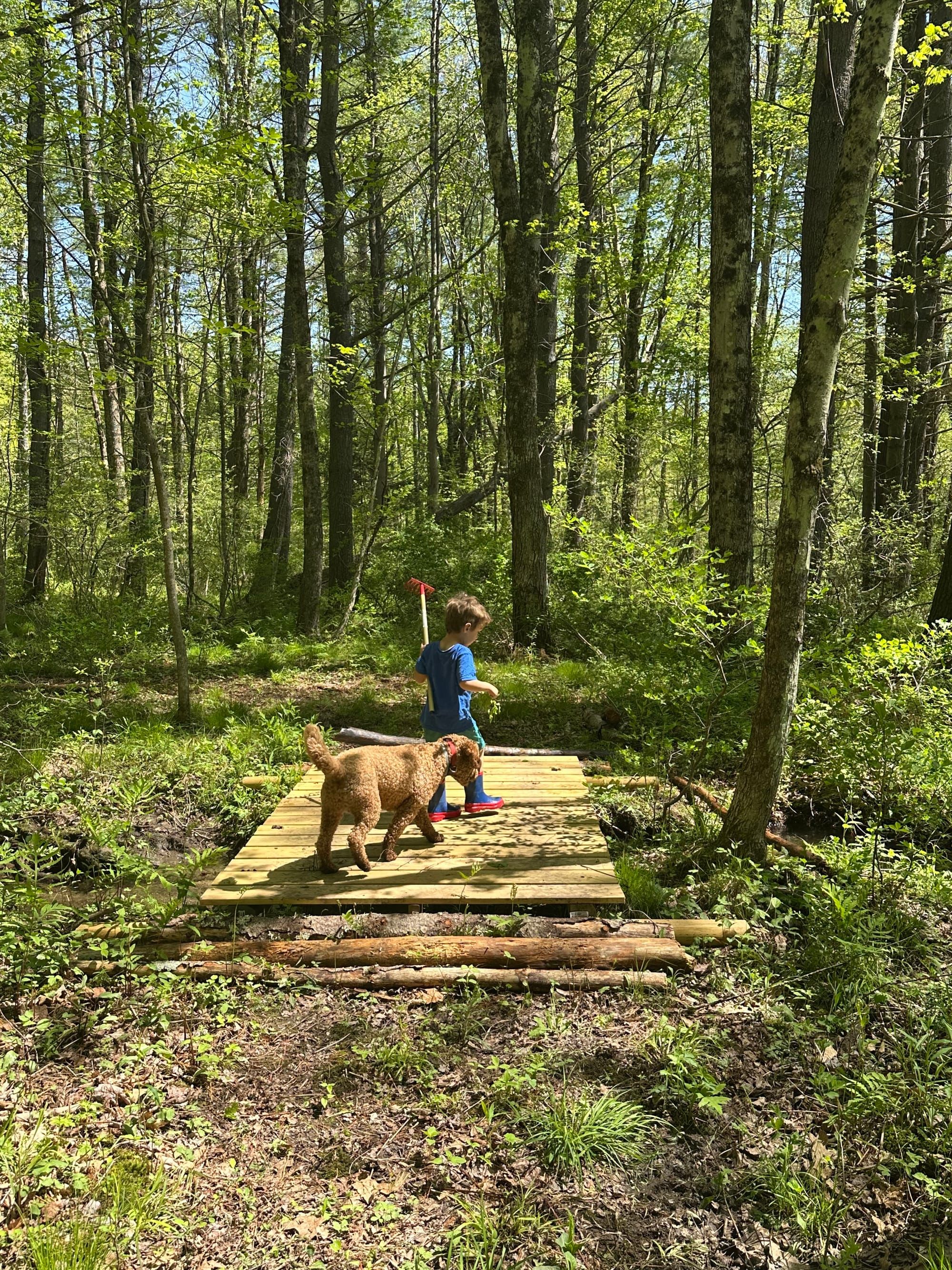
It’s easy to see why ticks — and the pathogens they carry — have been steadily crawling up the list of concerns, particularly for New Englanders like me. As soon as the snow melts each spring, my husband and I begin our vigilance against the small invaders, who cling to our clothes, our hair, our dog. Before our two young kids can romp in the woods by our house, we cover them in bug spray, long socks, and Permethrin-treated clothes, all recommended tick-prevention measures. Afterward, we have them strip and bathe, while we obsessively comb through their hair. We usually find at least one tick.
They’ve come from the dog, whose monthly pill is designed to make him repellent, and from our clothes. I’ve found ticks crawling up the kids’ bedroom walls, on our rugs, and on our couch. We pick them up while walking in the woods and across our meadow, and even while just standing in the yard. I’ve found them waiting on the garden posts and on the side of the garage. I’ve pulled a tick off my neck in my office. They make their way up the bed, biting my back while we sleep. Ticks have latched onto my knees, in my armpits, the top of my head, and between my toes.
When my then-6-year-old started complaining about an ache in his shoulder one summer, his pediatrician gave me a weary look and a script for oral antibiotics. “It’s almost always Lyme,” she said. It was. And I was horrified. With all our safeguards, I had never even seen the tick that infected him.
For my family and me, the promise of a Lyme vaccine seemed like a no-brainer. If I couldn’t prevent an infected tick from attaching to my children, the least I could do was figure out another way to guard against the disease lurking in our woods.
Yet, from talking to experts, I’ve learned that this approach comes with drawbacks. For one, a Lyme vaccine will only help the specific person who gets the shot. Since humans don’t spread Lyme to other humans, vaccinating a large group of people won’t protect anyone else in the same way a vaccine for communicative illnesses like measles, polio, or even Covid would, notes Stephen Rich, a professor of microbiology at the University of Massachusetts Amherst and executive director of the New England Center of Excellence in Vector-borne Diseases (NEWVEC).
In a recent opinion piece, Rich and his fellow authors argued that the VLA15 vaccine was promising, but ultimately wouldn’t address the broader public health threat posed by ticks. The vaccine will be significant for those who get it, he told me later, but even with a high efficacy, such a shot wouldn’t reduce the rate of Lyme disease among those who don’t receive it.
“If you get vaccinated for Lyme, it has no consequence for me, because you’re not a host,” he said. “You’d have to vaccinate the wild mice in order to have any impact” on transmission.
Since that’s not likely to happen (ticks and mice aren’t going away anytime soon), Rich worries that the news that VLA15 is available might cause people to lose sight of the ongoing importance of protecting themselves and of managing tick populations — strategies that are still needed to prevent the roughly 20 other pathogens that ticks carry.
“Now we’re sort of just catching up to having a public awareness of what ticks are,” Rich said, adding that we “don’t want to go backwards.”
I knew none of this when Facebook served me up a simple but effective ad in 2022. “Make a difference,” it promised in capital letters, next to a smiling stock image of a family enjoying life outdoors set against the Pfizer logo. “Volunteer for a Lyme Disease study.”
I clicked immediately. If this was an experimental vaccine for Lyme, I wanted in.
The trial, called Vaccine Against Lyme for Outdoor Recreationists or VALOR, was double-blind, meaning neither the volunteers nor the people administering the shots would know whether the treatments contained the actual Lyme vaccine or the saltwater placebo.
To help wrangle so many participants across different parts of the country, Pfizer had contracted with Care Access, a company that helps stand up research sites for clinical trials, to handle some of the recruiting and administration. Pfizer opened 129 sites to accommodate the volunteers. Care Access was in charge of 26 of them; I was sent to one in Brattleboro, VT.
In a glowing press release about the effort at the time, Care Access highlighted how the company would be “mobilizing all the resources that make up a research clinic” with “state-of-the-art mobile units that can go anywhere, anytime.” The company’s planned deployment also included vague descriptions of movable infrastructure and traveling research personnel.
“Care Access can rapidly set up a custom research clinic at a location that works best for the community,” the press release noted. But standing up so many sites so quickly carried its own drawbacks.
Former Care Access staff, who asked to remain anonymous to avoid retaliation at their current workplaces, later told me that the rollout was not quite as seamless as the company made it sound. That was particularly true for the more remote locations, where the company used trailers and campers for mobile units to reach participants more likely to be exposed to Lyme. One former worker remembered working at a freezing unit with a spotty generator in upstate New York, where she was so horrified by the conditions that she wouldn’t do any hands-on medical work that might reflect badly on her later. She was able to hold off on working directly with patients, and she transferred to a different location as soon as she could.
“They didn’t have a way to document anything,” she told me of the staff there, who were trying to manage hundreds of volunteers, “and they were overwhelmed.”
Electricity at these sites could be iffy, former employees said, recalling that they sometimes had to move vaccines to personal fridges. If computers went down, data was logged on paper to be reentered later. “In research, that’s a no-no,” another staffer said.
That point was echoed by an expert at the Society for Clinical Research Sites (SCRS), an organization that provides training in data standards. Trials like the one Care Access was standing up for Pfizer generate the data used to get approval from the FDA, so a lot rides on their success. Or, as Jimmy Bechtel, SCRS chief site success officer, put it in an email, these trials are “particularly high-stakes.”
“In pivotal Phase 3 studies, if violations can’t be adequately remediated, the consequences can be severe,” Bechtel noted. If I had worried about the study being canceled, these conversations did nothing to reassure me. Had Care Access fully tracked my information? Did they know what doses they had given me and when? What would my study doctor have to say when I talked to him?
Care Access would later respond to reports of concerns about record-keeping by pointing to their “rigorous policies and practices” and noting that they always adhered to the ethical and scientific quality standards known as Good Clinical Practice (GCP) in addressing paperwork errors.
When I reached out to Care Access for comment, I was referred to previous statements.
The fallout between Care Access and Pfizer hadn’t yet materialized in November 2022, when, on a cold Saturday, I headed to Brattleboro for either my first dose of the VLA15 vaccine or the placebo. I had been directed to a downtrodden shopping plaza with a hastily hung Care Access banner in green and white.
The building had obviously been adapted in a rush. Originally a roller rink, then a series of short-lived businesses, the large room featured gym-mat flooring and was subdivided by temporary walls. Staff in the company’s teal colors worked from wobbly card tables. Participants helped themselves to paper cups of coffee and then settled into folding chairs to wait.
Over the partitions, I could hear other participants reel off intimate details to Care Access telehealth physicians as a final step to confirm their eligibility for the study. When my personal physician called in from Florida, we started off by chatting about the weather.
Eventually, I was led into a small room and given a quick shot — colorless and unremarkable. I went home to carefully track my symptoms via the basic app I had been provided. Other than a mild headache, though, I had no symptoms to report. I had none of the usual arm soreness I had come to expect from other vaccines, either. “I’m probably in the placebo group,” I told my husband with some disappointment. Still, I faithfully went back for my next appointment a month later, hopeful about the prospect that I was getting some Lyme protection, or at least contributing to scientific research in some small way.
I would never receive my third and final shot, or the promised booster.
On February 17, 2023, a few months after I volunteered, Pfizer announced that, due to potential violations of Good Clinical Practice (GCP) by a third party it didn’t name, a “significant percentage” of study participants were being discontinued. The Pfizer announcement was careful to clarify that its decision was not based on safety concerns with the vaccine. In short order, Care Access responded with a statement of its own, identifying itself as the third party and noting that it both disagreed with the decision and rejected Pfizer’s allegations.
By that October, the FDA would conduct a nine-day review of Care Access that concluded without finding GCP violations or problems with patient safety and data. In the meantime, though, the fallout caused the company to restructure, with sizable layoffs.
It was mid-April when Dr. Freed called me back from his home in Pennsylvania. Yes, he remembered the Lyme study I had participated in. He was open, but wary; he still worked on studies with Care Access, so he wanted to be careful about the recollections he shared.
A gastroenterologist by trade, Dr. Freed had been involved with many studies, both in his field and in the areas of general medicine, Alzheimer’s, and fatty liver disease. The Pfizer study had been one of Dr. Freed’s larger projects, and he had been put in charge of a handful of sites and hundreds of volunteers. “Did you have any problems with your sites?” I asked. “None,” he said. “Zero.”
And that, actually, was what had bothered him about how the situation unfolded. After ending its collaboration with Care Access, Pfizer announced that the vaccination schedule for VLA15 would be delayed for a year while it recruited more volunteers.
“I had 874 people that had no issues, but never got to complete the vaccination protocol,” said Dr. Freed. “That’s almost a third of what they needed, and that was just me.”
Dr. Freed said he’s most thankful that people continue to volunteer for research studies like the one he oversaw. For him, the importance of the VLA15 vaccine is “not even a question.”
“Every time I go out into the woods, every time I go down to the river…I’m constantly in fear of Lyme disease,” Dr. Freed told me. “If I can prevent a person from developing Lyme disease, that’s one of the greatest things.”
The conversation with Dr. Freed also left me reassured that my participant data had been kept safe, that everything had occurred as it should have. I would later find out, through a notice from Pfizer, that I had indeed received placebo doses. Should the whole process have made me more leery of taking part in a future vaccine study? I still don’t know. When the new Lyme vaccine hits the market, I’ll be one of the first to line up.
On the day Dr. Freed and I spoke, I ran my hand through my son’s hair and felt a little lump. I pulled him under a light, already knowing what I’d find. There, embedded in his scalp, was a blacklegged tick.
Rachael Hagerstrom is a writer in Western Massachusetts who explores stories about nature, science, and artists who combine the two. She has previously worked as a newspaper reporter, blogger, and travel writer in South and Central America.
Member comments