
I'm Isaac Saul, and this is Tangle: an independent, nonpartisan, subscriber-supported politics newsletter that summarizes the best arguments from across the political spectrum on the news of the day — then “my take.”
Are you new here? Get free emails to your inbox daily. Would you rather listen? You can find our podcast here.
Today’s read: 14 minutes.
Keep Your SSN Off The Dark Web
Every day, data brokers profit from your sensitive info—phone number, DOB, SSN—selling it to the highest bidder. What happens then?
Best case: companies target you with ads. Worst case: scammers and identity thieves breach those brokers, leaving your data vulnerable or on the dark web. It's time you check out Incogni.
Incogni scrubs your personal data from the web, confronting the world’s data brokers on your behalf and unlike other services, it helps remove your sensitive information from ALL broker types.
Tangle readers get 55% off Incogni using code TANGLE.
Click here to get started.
*This is a sponsored post. Advertise with us here.
What does the government know about you?
Tomorrow, our team is going to be answering that evocative question in a members-only Friday edition. We’ll be diving deep on how the government collects data, what they actually know, and what it means for you.
Primary systems, simplified.
Primary elections in the United States can be confusing. They have different rules from state to state, and the requirements for participating in them aren't always clear. And yet, this process is one of the most critical steps in our electoral process. In our latest YouTube video, we break down the three main types of primary systems, explore how these systems have evolved, and discuss opportunities for reform to encourage greater voter participation.
You can check out the video here.
Quick hits.
- President Donald Trump asked the Supreme Court to rule quickly on his appeal of the U.S. Court of Appeals for the Federal Circuit’s ruling that struck down the tariffs he issued under an emergency declaration. (The request)
- A federal judge found that the Trump administration’s freeze of $2.2 billion in grant funding for Harvard University over alleged unresolved antisemitism issues on its campus was illegal. (The ruling)
- Florida officials said they plan to repeal all vaccine mandates for schoolchildren; if successful, Florida will become the first state in the country to do so. (The repeal)
- A group of women who said they were victims of convicted sex offender Jeffrey Epstein spoke on Capitol Hill, calling on lawmakers to support the release of further information on the investigations of Epstein. (The appeal)
- The House of Representatives voted to reinvestigate the Jan. 6, 2021 Capitol riots by establishing a special panel chaired by Rep. Barry Loudermilk (R-GA). The panel is separate from the original House Jan. 6 committee, which found that President Trump catalyzed the riots. (The committee)
Today’s topic.
The Venezuelan boat strike. On Wednesday, the U.S. military sank a small boat in the southern Caribbean Sea, killing 11 people. U.S. officials claimed the boat was transporting drugs to the United States from Venezuela and alleged the 11 people on board were narco-terrorist members of the international gang Tren de Aragua (TDA). The Trump administration has not produced evidence to support its assertion, but Secretary of Defense Pete Hegseth said the administration “knew exactly who was in that boat.”
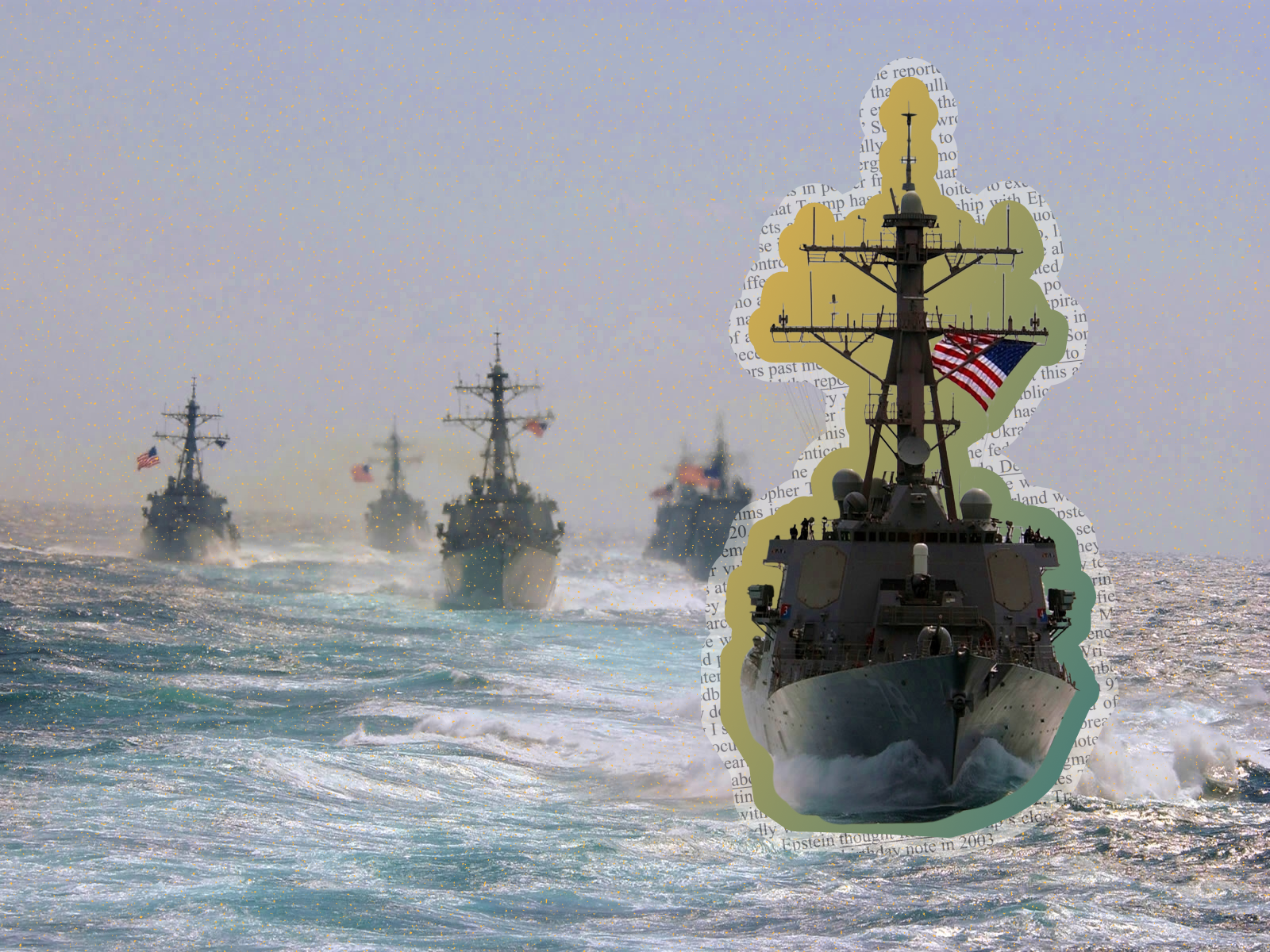
Back up: Early in his presidency, President Donald Trump designated Latin American drug cartels as terrorist groups for trafficking fentanyl and other illicit drugs into the United States, and the administration recently escalated its posture against Venezuelan cartels. In early August, The New York Times reported that President Trump secretly signed a directive authorizing military force against Latin American drug cartels that the administration has deemed terrorist organizations. Later that month, the United States deployed several warships, including three Aegis guided-missile destroyers, to the waters near Venezuela to counter maritime narcotics trafficking. Simultaneously, the U.S. State Department increased the reward for “information leading to the arrest and/or conviction of Venezuelan President Nicolás Maduro for violating U.S. narcotics laws” from $25 million to $50 million.
“Earlier this morning, on my Orders, U.S. Military Forces conducted a kinetic strike against positively identified Tren de Aragua Narcoterrorists in the SOUTHCOM area of responsibility. TDA is a designated Foreign Terrorist Organization, operating under the control of Nicolas Maduro,” President Trump said in a post on Truth Social on Wednesday.
For months, the Trump administration has been threatening a military campaign to stop cartels from trafficking drugs into the United States. “We've got assets in the air, assets in the water, assets on ships, because this is a deadly serious mission for us, and it won't, it won't stop with just this strike,” Defense Secretary Pete Hegseth said on Fox News. “Anyone else trafficking in those waters who we know is a designated narco-terrorist will face the same fate.”
The strike is a significant escalation from usual U.S. policy to use the Coast Guard to intercept and board vessels the government suspects to be carrying illegal drugs. “There was massive amounts of drugs coming into our country to kill a lot of people, and, everybody fully understands that,” Trump said when asked why the alleged smuggling boat was struck instead of boarded. “Obviously, they won't be doing it again. And I think a lot of other people won't be doing it again.”
Legal experts say that the law does not support the administration’s recent strike. “Tren de Aragua is not a military organization,” said former State Department lawyer Brian Finucane. “The previous designation of Tren de Aragua as a ‘foreign terrorist organization’ does not itself provide the authority for using military force.”
Venezuelan President Nicolás Maduro denied that the boat was carrying drugs, and said the country’s military would be escalating to “maximum preparedness to respond to the strike.”
We’ll get into what the right and left are saying about the strike below, then I’ll give my take.
What the right is saying.
- The right is mixed on the strike, and some question whether it was a proper exercise of executive authority.
- Others praise Trump for taking decisive action against a clear threat.
- Still others warn against a protracted military engagement in Latin America.
In National Review, Andrew C. McCarthy asked “are we at war with Venezuela?”
“It is not clear to me that the president’s theory is going to fly such that he is free to invoke the laws of war — i.e., to treat Venezuelan drug traffickers as terrorist enemy combatants subject to military force without congressional authorization, at least when the administration can plausibly say the traffickers are in the act of an ‘attack,’” McCarthy wrote. “Consider, for example, the Clinton administration’s formal designation of al-Qaeda as a foreign terrorist organization in 1999. By then, this jihadist organization had actually carried out mass murder attacks (as opposed to supplying drugs that resulted in the deaths of thousands of American drug users). Yet, that mere designation was not thought sufficient to unleash large-scale combat operations.”
“By contrast, President Trump is deducing Venezuelan warmaking against our country based mainly on drug trafficking, not military attacks or a declaration of war,” McCarthy said. “Under circumstances in which it is anything but crystal clear that President Trump is responding to hostile military force, as contrasted with responding to serious crime, it is incumbent on Congress to act. In our constitutional system, it is Congress, not the president, that has the power to declare war.”
In PJ Media, Sarah Anderson explored the “military action against cartels.”
“Over the last 24 hours, many — and by many, I mean mostly Democrats, MSM reporters, and dictators — have gotten upset that the U.S. Navy didn't capture these guys and bring them to the United States for ‘due process,’” Anderson wrote. “When asked about that, Rubio didn't mince words… he made it clear that he and President Trump aren't screwing around with these criminals anymore as has been done in the past.”
“[These people] aren't ‘drug dealers’ and ‘gang members’ as so many like to call them to downplay their threat. We're not going to benefit from some sort of Nancy Reagan ‘Just Say No’ campaign… They are terrorists with a motive who want to wreak havoc on our country and our people through irregular warfare, and they've been doing it for quite some time,” Anderson said. “We have an administration that knows we're the greatest country in the world and acts like it by stopping anyone who wants to harm us. This may not look like traditional warfare, but we are indeed at war.”
In The American Conservative, Eldar Mamedov argued Trump “should pursue realism and restraint in Latin America.”
“While President Donald Trump is right to identify transnational criminal networks as a threat to the health and safety of the American people, this militarized approach ignores strategic realities, contradicts intelligence assessments, and risks repeating the errors of past interventionist failures,” Mamedov wrote. “The administration’s increasingly bellicose actions and rhetoric reveal a baffling lack of consistency. It recently extended the American oil giant Chevron’s license to operate in Venezuela, allowing Venezuelan crude to flow to the U.S. and signaling a cautious opening for calibrated diplomatic engagement. This was a characteristically transactional but nonetheless realist approach.
“And yet, now the same administration floats military intervention — a dramatic escalation that would torpedo any diplomatic progress, endanger U.S. corporate operations, and undermine regional trust. This whipsawing between deal-making and threats of force projects confusion, not strength. It suggests an absence of strategic prioritization. A realist foreign policy requires clarity — and discipline,” Mamedov said. “The administration's objective remains dangerously vague. Would the goal of a military operation be to eliminate cartels? To overthrow the Maduro regime and replace it with a pro-U.S. government? To permanently stem the flow of drugs? Not one of these is likely achievable through military means alone.”
What the left is saying.
- The left is mostly opposed to the strike, with many saying it was the wrong approach to the problem.
- Some say Trump is recklessly expanding the use of military force.
- Others doubt that Trump will pursue an all-out invasion of Venezuela.
In USA Today, Jack Devine argued “Trump deploying US military against drug cartels will drag us into a forever war.”
“Eliminating the narcotics threat to our nation is a rightful priority for the Trump administration, but using U.S. troops to prosecute the drug war is the wrong tact and with far-reaching consequences,” Devine wrote. “This war will not end in a ceasefire. There will be no summits or working-level negotiations. It’s an insurgency, and the U.S. military must not become embroiled in another forever war when there are viable alternatives to undermine cartels and stem the flow of drugs.”
“We faced a similar narco-security challenge several decades ago when the most high-powered cartels were headquartered in Colombia. Back in the early 1990s, I was the CIA's director of the Counternarcotics Center and chief of the Latin America Division where I saw how a robust U.S. government effort… dismantled the Cali Cartel and Pablo Escobar's notorious Medellin Cartel,” Devine said. “At that time, just like now, the conventional wisdom was that the cartels were too powerful to be taken down. But we succeeded because we were willing to trust and equip our Colombian partners with the tools they needed, and because the Colombian forces themselves were the face of the operation, adding a critical stamp of legitimacy to the effort.”
In The Atlantic, Nancy A. Youssef, Missy Ryan, Jonathan Lemire, and Shane Harris said Trump is “pushing the armed forces beyond their traditional mission.”
“In the near-quarter-century since the 9/11 attacks, four presidents have launched strikes against suspected terrorists in at least seven nations… But with this week’s air strike in international waters in the southern Caribbean, Trump expanded the counterterrorism campaign’s mission to a new part of the world, against a different kind of threat,” the authors wrote. “And in doing so, he drew the military even deeper into crime fighting, work that has traditionally been outside its scope. Both domestically and internationally, the U.S. armed forces are tackling threats once assigned to police officers, Drug Enforcement Administration agents, Coast Guardsmen, and other law-enforcement personnel.
“They are escorting immigration officers as they arrest undocumented immigrants in American cities, combatting crime with their presence in the U.S. capital, and stopping drugs at the southern border. Off the shores of Venezuela, U.S. ships are massing in a show of force against drug traffickers, a threat long addressed through interdiction at U.S. points of entry or in international or U.S. waters — not through lethal strikes,” the authors said. “Terrorist threats are no longer limited to groups or individuals plotting violent attacks against America, and invasions don’t just come from foreign adversaries.”
In The Miami Herald, Andres Oppenheimer asked “will Trump’s naval force invade Venezuela?”
“The Trump administration’s stated reason for sending the flotilla near the Venezuelan coast is to combat Latin American drug cartels. The president announced on Sept. 2 that the U.S. naval force had just fired on a drug-carrying speedboat that was headed for the United States, killing 11 alleged ‘terrorists’ from Venezuela’s Tren de Aragua cartel. But the type of ships and troops deployed by Trump are not the kind normally used for drug interdiction operations,” Oppenheimer wrote. “Still, there are even more powerful reasons to be skeptical about an imminent invasion.
“Trump has stated time and again that he is against putting U.S. boots on the ground to fight in “foreign wars.” It has been one of his main campaign promises. He has not sent U.S. troops to Israel, nor to Ukraine, which are much higher priorities for his administration than Venezuela,” Oppenheimer said. “Trump may be sending his naval force to coerce the Maduro regime in hopes that a Venezuelan military faction will rise against the government in hopes of getting U.S. air cover. In recent years, however, U.S. hopes of a military insurrection within Maduro’s military hierarchy have not panned out.”
My take.
Reminder: “My take” is a section where I give myself space to share my own personal opinion. If you have feedback, criticism or compliments, don't unsubscribe. Write in by replying to this email, or leave a comment.
- My initial, emotional reaction is that the drug traffickers who have fed our country’s opioid epidemic had this coming.
- That anger doesn’t justify extrajudicial killings, however.
- Trump’s escalation against Venezuela is his most dangerous — and deadliest — overreach of executive authority yet.
I’ll put my cards on the table: I had two pretty extreme reactions to this news.
The first reaction, which I know is emotional and irrational, was this:
The cartels are getting what they had coming.
When you grew up where I grew up — when your entire high school was ravaged by opioids like heroin and fentanyl — the rage builds. The fury builds. Dozens of classmates from my high school class are dead now, mostly thanks to tainted street drugs. The number of old friends, teammates, and acquaintances becomes overwhelming. “Did you hear about Tim?” someone asks in the strained voice that tells you all you need to know. Oh no. Him too? The death toll eats at you. It alters your reality — not just your perception of the fragility of life and what our odds of surviving the day are, but also of how wildly misleading terms like “low level offense” and “nonviolent crimes” to describe selling drugs can really be.
When you’ve seen so many families destroyed by so many different kinds of overdoses from so many different kinds of drugs off the streets, when so many of your friends’ lives have been ruined or ended, you just can’t help but have a small part of you that doesn’t much care if some of the people responsible for it end up paying the ultimate price.
Of course, I know this is all emotion. It’s the base instinct for payback — the cruelest, worst parts of myself. But it’s earnest. I want “them” — the drug dealers pushing fentanyl, the apathetic pharmaceutical companies getting us hooked on opioids, all “the bad guys” — to pay.
But I also know the higher truth, the one we should really attach ourselves to: Selling drugs is not a crime worthy of the death penalty. The gang members in question (if they were gang members) are accused of trafficking cocaine, one of the most popular drugs in the U.S., and one that is not nearly as deadly as heroin, opioids, and fentanyl that have been plaguing our country. When it comes to overdose deaths, the Sackler family almost certainly caused far more destruction than Tren de Aragua. Here, the term “white collar crime” is even less sufficient, but because they pursue their crimes in suits and board meetings, the horrors are sanitized.
A death penalty for drug traffickers is, of course, even less justifiable when a foreign country dispenses justice unilaterally, missile to speedboat, without any judge or jury to determine guilt. The Trump administration wants us to take it on their word that this boat was filled with narco-terrorists, but top-level officials can’t even get their story straight: Secretary of State Marco Rubio insisted the boat was headed to Trinidad before the strike. Trump said it was coming to the U.S.; Rubio then changed his story to match.
Even if the boat was indeed filled with gang members bringing drugs to the United States, our anger over the epidemic of overdose deaths doesn’t justify extrajudicial killing. This moment reminds me of Luigi Mangione shooting a healthcare CEO in the back of his head as payback for the failures of the healthcare system. We’re now supposed to accept an extrajudicial killing of 11 people because previous tactics haven’t been as effective as we wanted, the law or the lives of the people in question be damned. Just as Mangione murdering a healthcare CEO was not helpful to effect change, I think this strike is unlikely to improve the scourge of drug trafficking into the United States.
So, here is my second fairly extreme reaction to this news: For a few reasons, I think this attack portends one of the most dangerous periods of the Trump presidency yet. It is not just that he once again extended his executive power as far as he can, it’s that this latest reach now includes a body count.
First and foremost, Trump just ordered the military to execute 11 people for the alleged crime of trafficking cocaine. Richard Sackler perpetrated what some consider the crime of the century, but we would (I hope) be horrified if Trump enlisted special forces to assassinate Sackler without a judge, jury, or trial. Why do we accept this as any less mortifying? Because those killed were Venezuelan, and not American? Because the military did it? Because it happened outside of the United States?
Second is the precedent this just set. For that, I’ll briefly pass the mic to Eric Boehm from Reason Magazine:
There is no evidence, aside from the Trump administration's claims, that the boat was carrying drugs. Even if it was, drug trafficking is not a capital offense and does not carry the death penalty. Even if it did, courts and juries and legal processes would be the proper way to enforce that punishment. The president does not have the authority to assassinate suspected drug traffickers on the high seas—even if they are part of a claimed criminal gang. If Trump wants that power, he should ask Congress for a declaration of war against Venezuela or for an authorization for the use of military force against gangs operating in the region.
Can we all grasp how absolutely nuts this is? As much as Trump is trying to define these people as terrorists, that isn’t even the allegation here. These alleged drug traffickers are not accused of murder, or strikes against U.S. soldiers, or putting bombs on public transit. They are accused of smuggling a commonly used drug from Venezuela to maybe the United States. It is just an accusation, and one for which zero evidence has yet been made public, given to justify the 11 people now dead.
Lastly, I worry about what this portends about Trump’s state of mind. Once dubbed “Donald the Dove,” the man who promised to end “forever wars” and pull us back from our foreign entanglements, is now threatening to flex U.S. military might across multiple conflicts. And let’s just take a moment to ask how effective that’s been: The Israel–Hamas conflict rages on. Russia continues to pummel Ukraine, even after Trump’s deadline for Putin passed. The death blow we were told joint strikes with Israel dealt to Iran’s nuclear capabilities now seems to have been overstated. We even struggled to disrupt the Houthis.
And now the president is amassing a huge naval fleet near Venezuela. I have no reason to believe Trump’s use of the military against Venezuela will stay in the water, either. There is increasing chatter (and reporting) that the administration is seriously considering an invasion of Venezuela to overthrow its leftist dictator Nicolás Maduro — or, alternatively, hoping the presence of U.S. troops will foment a violent uprising that forces him from office. Again: Trump’s justification for all this is to police drug trafficking.
So now, a president who promised not to drag us into more foreign conflicts is redefining street gangs as terrorists, redefining illegal immigration as an invasion, redefining drug trafficking as terrorism, and then treating drug traffickers from a country we are not at war with like they are active terrorists from a country that just attacked us.
Which, to me, raises the most frightening thought yet: If his imagination can get us there, where will it go next?
Take the survey: What do you think about the recent strike? Let us know.
Disagree? That's okay. My opinion is just one of many. Write in and let us know why, and we'll consider publishing your feedback.
Some extra reading.
If you’re curious to read more pieces related to today’s topic, feel free to check out:
- Our answer to a reader question about the reward for Maduro’s arrest
- Our breakdown of the controversial election in Venezuela
- My solutions to the border crisis
- My response to readers who criticized our coverage of Luigi Mangione (members only)
Your questions, answered.
Q: There was much skepticism about accepting Government buyout offers for federal employees. Do you know if the folks who accepted it have received their pay? I have not heard anything about this in the news.
—Chris from Kanab, UT
Tangle: As a bit of background information, in January, the Office of Personnel Management (OPM) sent a memo to over 2 million federal employees titled “Fork in the Road,” describing higher expectations and a demand for in-office work. The memo offered to buy out federal employees who did not want to return to the office, paying and extending benefits through September 30 to anyone who resigned. The administration hoped the offer would help to cull 5–10% of the federal workforce, or 100,000–200,000 employees.
In July, OPM reported that 154,000 workers had taken the administration’s deferred resignation offer, and OPM Director Scott Kupor said the government was on track to shed 300,000 employees by the end of the year. However, other estimates vary — a report from Sen. Richard Blumenthal’s (D-CT) office estimated 200,000 workers had taken the deferred resignation offer, and a report from the Partnership for Public Service estimated only a total of 148,000 federal workers had resigned so far.
We haven’t seen any reports of people not receiving their pay — which would be a major news story if it happened. There was some messiness with the initial payments, but most of it was resolved quickly. Members of our staff personally know a few government employees who took the buyout, and as far as we know they were all paid what they were supposed to be.
As a final note, when we covered the legal battle over the budget cuts being pursued by OPM and the Elon Musk-led Department of Government Efficiency in February, we noted that roughly 6% of the federal workforce churns organically each year. As we said at the time, “The ones who are quitting now are likely the ones with the most options. So Musk could have just paid the government’s best employees to leave.”
Want to have a question answered in the newsletter? You can reply to this email (it goes straight to our inbox) or fill out this form.
Under the radar.
On Sunday, the family of Robert Mueller, the former FBI director and special counsel who investigated alleged ties between President Trump’s 2016 campaign and Russia, revealed that he was diagnosed with Parkinson’s disease in 2021 and now experiences speaking and mobility issues. The diagnosis did not overlap with his investigation of President Trump’s campaign, though Mueller’s 2019 congressional testimony about his report prompted questions about his health. Following the disclosure, the House Oversight and Government Reform Committee withdrew its request for Mueller to testify about the FBI’s handling of investigations into Jeffrey Epstein while Mueller was director of the agency. The New York Times has the story.
Protect Your SSN From Dark Web Criminals
Data brokers sell your sensitive info—phone number, DOB, SSN—to the highest bidder, leaving you vulnerable to scammers and identity thieves.
Incogni scrubs your personal data from ALL broker types on your behalf.
Tangle readers get 55% off using code TANGLE.
Numbers.
- 200–250. The estimated amount, in metric tons, of cocaine trafficked through Venezuela each year, according to a 2020 State Department report.
- 10–13%. The percentage of estimated global cocaine production trafficked through Venezuela annually.
- 74%. The percentage of cocaine shipments from South America to the U.S. in 2019 that were transported via the Pacific Ocean, according to a 2020 Drug Enforcement Administration report.
- 24%. The percentage of cocaine shipments in 2019 that were transported via the Caribbean Sea.
- 15. The number of current and former Venezuelan officials, including President Nicolás Maduro, charged by the U.S. Justice Department in 2020 with drug trafficking and other criminal acts.
- 8. The number of U.S. warships deployed to the eastern Caribbean by the Trump administration to combat drug trafficking.
- 1. The number of U.S. submarines deployed to the eastern Caribbean by the Trump administration.
The extras.
- One year ago today we covered Trump’s Arlington Cemetery controversy.
- The most clicked link in yesterday’s newsletter was a description of Medical Aid in Dying laws in the United States.
- Nothing to do with politics: Half of Americans say the country has gotten ruder since the pandemic.
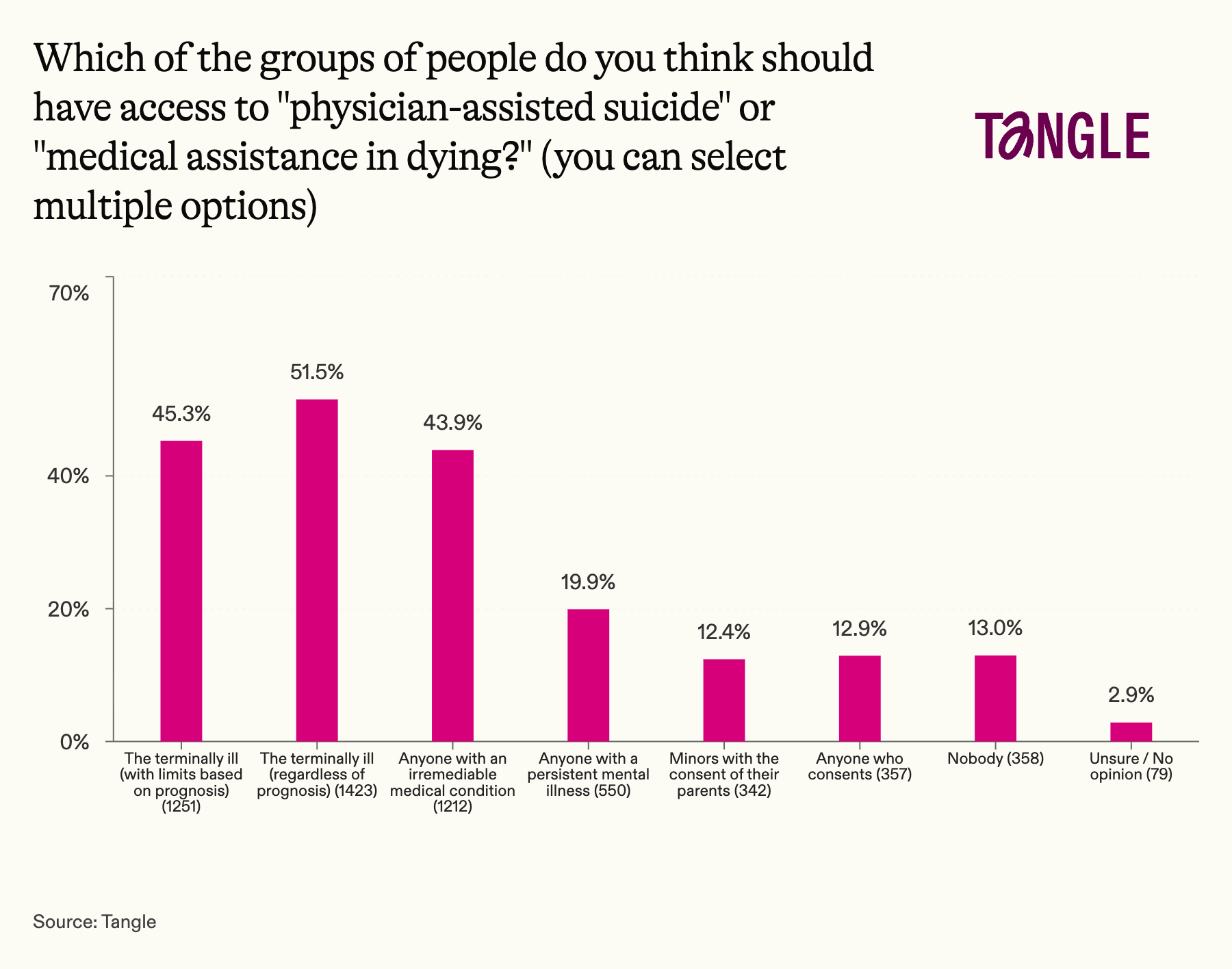
- Yesterday’s survey: 2,762 readers responded to our survey on physician-assisted suicide with 52% saying they support allowing the practice for anyone who is terminally ill. “MAID should be available to those experiencing severe pain that cannot be alleviated,” one respondent said.
Have a nice day.
After winning second place for their tiny home in the Construction Industry Education program competition, high school students in Nacogdoches, Texas, opted to donate the home to give back to the community. The students contacted The Village Nac, a nonprofit community housing development for individuals struggling with homelessness and chronic mental health issues, which accepted the donation. Co-founder Constance Engelking said the home will be rented out and expects it will make a big impact on the nonprofit. “When they leave or move on or even step up to a larger home, there’s a room for the next person to come in. So it’s just a perpetual gift,” Engelking said. KTRE9 has the story.

Member comments