
I'm Isaac Saul, and this is Tangle: an independent, nonpartisan, subscriber-supported politics newsletter that summarizes the best arguments from across the political spectrum on the news of the day — then “my take.”
Are you new here? Get free emails to your inbox daily. Would you rather listen? You can find our podcast here.
Today’s read: 12 minutes.
Tired of scam calls or scared of identity theft? Time to go anonymous.
Becoming truly anonymous online is hard—but not impossible. Experts say there are several steps you must take:
1. Use a VPN all the time
2. Buy a burner phone instead of a smartphone
3. Use a secure email service instead of Gmail or Yahoo
4. Delete your social media accounts and associated data
5. Or use a data removal service like Incogni.
It helps you disappear online by erasing your personal data from brokers, search engines, and any site where it leaks. Build a private digital presence, layer by layer.Hide what should stay hidden — start with Incogni.
Get 55% off with code TANGLE at the checkout.
*Our sponsors help keep Tangle free — thank you for supporting them when you feel they could be useful to your life.
“They attacked me first.”
A couple weeks ago, Tucker Carlson interviewed Nick Fuentes, a far-right commentator who regularly espouses antisemitic and white nationalist views. The interview has set off a wave of discourse on the right — some criticized Carlson’s interview style, and others pondered the future of MAGA post-Trump. But something else was far more interesting to me: Fuentes’s origin story, according to Fuentes. In our members-only Friday edition last week, I wrote about what I learned, and how I think we can prevent more people like Fuentes from emerging. You can read the piece here.
Quick hits.
- The House of Representatives will vote today on a funding package to end the government shutdown after 42 days. House Speaker Mike Johnson (R-LA) said he expects to pass the bill this evening. (The vote)
- President Donald Trump said he is considering a lawsuit against the BBC for alleged election interference after it was revealed that one of the broadcaster’s programs edited a portion of Trump’s speech near the Capitol on January 6, 2021, to omit a line where he urged peaceful protests. The BBC’s director general and news CEO resigned on Sunday, and Chairman Samir Shah apologized for an “error of judgement.” (The story)
- The Supreme Court agreed to take up a challenge by the Republican National Committee and other groups to a Mississippi law that allows mail-in ballots to be counted if they arrive within five days of Election Day. (The case)
- A judge in Utah rejected a new map of the state’s Congressional districts drawn by the Republican state legislature and accepted an alternate map, submitted by a coalition of groups, more favorable to Democrats. Utah Lieutenant Governor Deidre Henderson said she would follow the judge’s order and implement the new map for the 2026 midterm primaries and elections. (The ruling)
- House Speaker Mike Johnson said he will swear in Rep.-elect Adelita Grijalva (D-AZ) on Wednesday. Grijalva won the special election to replace her father, Rep. Raúl Grijalva (D), who died in office in March. 50 days have passed since her election victory. (The swearing-in)
Today’s topic.
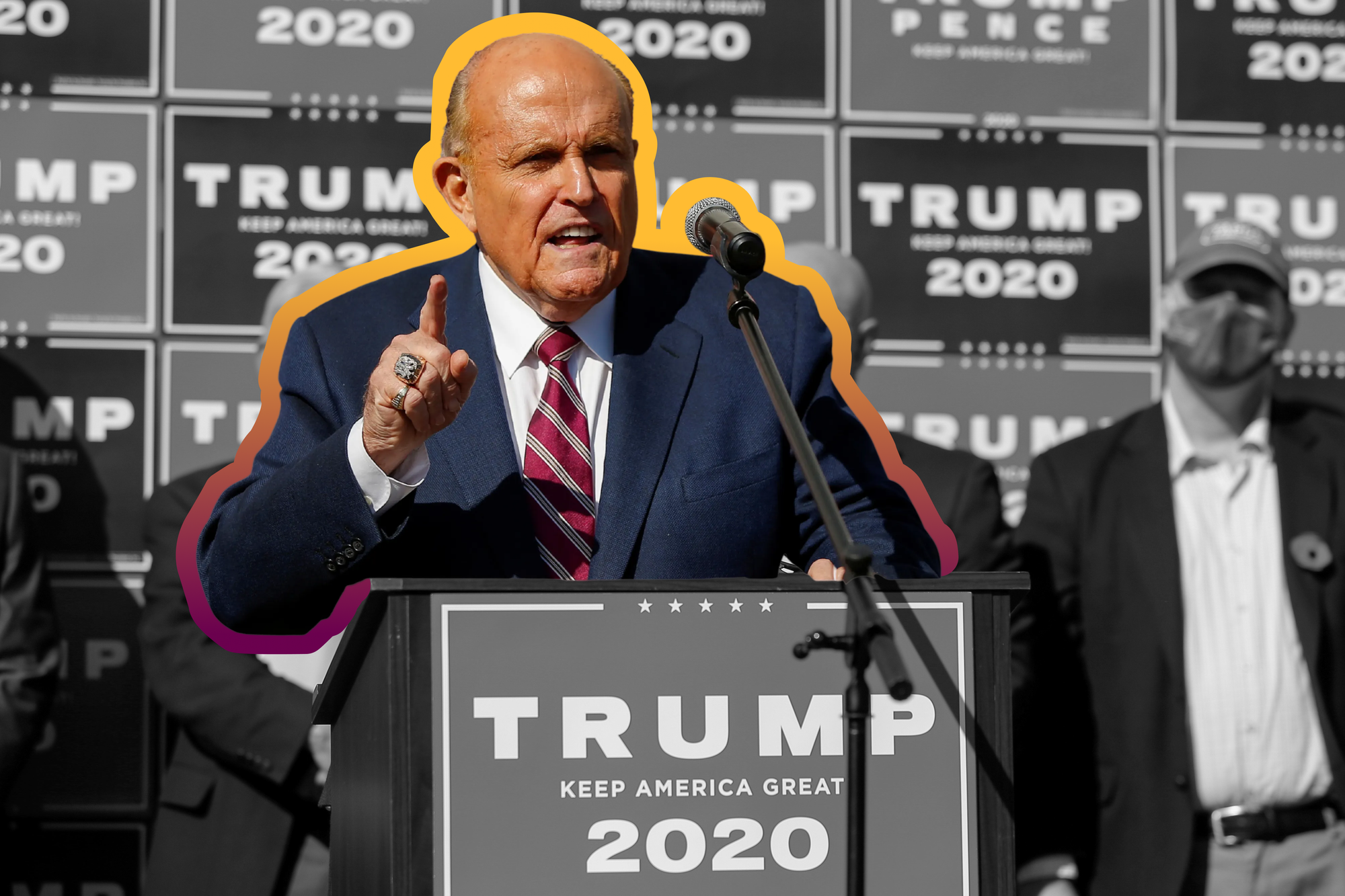
The 2020 election pardons. On Monday, U.S. Pardon Attorney Ed Martin announced that President Donald Trump had pardoned several top aides and advisers from his first administration, as well as dozens of people involved in his efforts to challenge the results of the 2020 election. Those receiving pardons include President Trump’s former Chief of Staff Mark Meadows, adviser Boris Epshteyn, and attorneys Rudy Giuliani, John Eastman, Kenneth Chesebro, and Sidney Powell. None of the recipients has been charged with a federal crime, but the pardon will protect them from future prosecution related to the 2020 election (though they can still be prosecuted at the state level).
Back up: After news outlets declared Joe Biden the winner of the 2020 election, Giuliani and Powell publicly alleged widespread fraud on Trump’s behalf and pressured key states that Biden won to reject their results. Meadows set up meetings with the White House and state officials as the president sought to pressure them not to certify their elections, and Eastman and Chesebro devised a plan for Vice President Mike Pence to refuse to certify the election on January 6, 2021.
The pardon does not protect any of those named from punishment for state-level crimes. Giuliani, Meadows, Eastman, Powell, and 14 others were indicted alongside Trump in Georgia in 2023 for alleged election interference. Powell pleaded guilty in that case and was sentenced to six years probation and a fine. Giuliani was also charged in Arizona for his alleged efforts to overturn the state’s results and, in a separate case, was ordered to pay $148 million to Georgia poll workers he was found to have defamed.
The language of President Trump’s pardon proclamation is broad, applying to “all United States citizens for conduct relating to the advice, creation, organization, execution, submission, support, voting, activities, participation in, or advocacy for or of any slate or proposed slate of Presidential electors, whether or not recognized by any State or State official, in connection with the 2020 Presidential Election, as well for any conduct relating to their efforts to expose voting fraud and vulnerabilities in the 2020 Presidential Election.” Furthermore, the pardon states it is “not limited to” those named in the document, though the White House has not offered further clarity on whom else it could refer to. The list also explicitly excludes Trump from the pardon.
Press Secretary Karoline Leavitt defended the pardons, saying, “Getting prosecuted for challenging results is something that happens in communist Venezuela, not the United States of America, and President Trump is putting an end to the Biden Regime’s communist tactics once and for all.”
Some legal experts criticized the pardons, suggesting they function as a form of corruption. “The pardon process as a method for granting executive grace for deserving criminal defendants has been replaced by a pay-to-play system that is a thinly disguised form of bribery,” former Justice Department Inspector General Michael Bromwich said.
Today, we’ll share perspectives from the left and right on the pardons. Then, Senior Editor Will Kaback gives his take.
What the left is saying.
- The left argues the pardons are another attempt by Trump to rewrite what happened in 2020.
- Some say the pardons are symbolic but troubling.
- Others suggest Trump is sending a message to those who might help him take legally dubious actions in the future.
In MSNBC, Hayes Brown wrote “Trump’s latest pardons aim to make his fake elector scheme legal.”
“While some listed were unnamed co-conspirators in the now dismissed federal case against Trump, the criminal allegations filed against Giuliani, Meadows, and others named in the pardon were all under state law, outside of the purview of the White House’s reach. Trump could no more pardon them for those alleged crimes than he could pardon a ham sandwich,” Brown said. “But Trump appears to be in pursuit of two worrisome goals. The memo attributed to Martin argues that the states have no power to police the Electoral College and its members… Thus, the first goal appears to undercut the remaining state cases that are still active and give those defendants an argument for any conviction to be overturned on appeal.
“More troublingly, the pardon acts as an invitation for those who took part in the attempted autogolpe to be returned into the fold. Those who have been disbarred, like Giuliani and former Justice Department lawyer Jeffery Clark, have already said that this decision should restore their ability to practice law,” Brown wrote. “And the pardon is a greenlight for those people who actively worked to subvert the 2020 election but have not been charged to replicate their campaign against democracy in the future.”
In Mother Jones, Dan Friedman called the clemency “fake pardons for fake electors.”
“The pardons, which on Monday afternoon had not appeared on White House page listing Trump’s clemency grants, are symbolic. They are part of Trump’s larger effort to downplay his attempt to subvert the 2020 election and his responsibility for the January 6, 2021, attack on Congress,” Friedman wrote. “None of the people he pardoned Sunday… face federal charges. But many on the list have been charged with state crimes related to the fake elector scheme. The president has broad clemency power over federal crimes, but has no authority over state charges.”
“[Pardon Attorney Ed] Martin considered recommending that Trump pardon John F. Kennedy supporters who in 1960 signed paperwork saying they were Hawaii’s presidential electors when a recount left the actual winner of the state uncertain. Kennedy won Hawaii, and those electors were accepted as the state’s legitimate slate and never accused of crimes. Also, they are dead,” Friedman said. “But pardoning them, the person familiar with the plan said, would have been a gesture aimed at boosting Trump supporters’ claims that 2020 fake electors did nothing wrong… But it may have been a step too far, even for Trump.”
In CNN, Aaron Blake said “Trump’s pardons aren’t just political; more importantly, they’re transactional.”
“So much of the coverage of President Donald Trump’s pardons is focused on how political they are. And they are certainly political — extraordinarily so. But as Trump’s latest batch of pardons reinforces, that’s only half the story. The more ominous trend is not just that he’s pardoning political allies; it’s that he’s pardoning allies in very transactional ways,” Blake wrote. “After previously dangling pardons over allies involved in sensitive investigations involving Trump himself — and later delivering those pardons — he’s now pardoned oodles of people who took illegal or legally dubious action on his behalf.
“Trump is creating a permission structure in which people will credibly think they can’t be held accountable in federal court, as long as what they’re doing benefits Trump. He’s been cultivating this for a long time, but he seems to be getting more brazen about it,” Blake said. “What message does that send to other people who might go to remarkable lengths to help Trump carry out his agenda? To participate in legally dubious administration actions — things like its boat strikes in the Caribbean? To carry out his deportation agenda in rather brutal ways?”
What the right is saying.
- Many on the right defend the pardons, saying President Trump is right to protect allies who have been unjustly targeted.
- Some criticize the pardons but say President Biden set the precedent for them.
- Others suggest the pardons won’t mean much in the long run.
In The Federalist, Margot Cleveland said the pardons “seek to end [an] injustice.”
“U.S. Pardon Attorney Martin’s memorandum to President Trump stresses… that the ‘prosecutions are attempts by partisan state actors to shoehorn fanciful and concocted state law violations onto what are clearly federal constitutional obligations of the 2020 Trump campaign,’” Cleveland wrote. “Under the memorandum’s reasoning, then, because the states are prosecuting the 2020 Trump electors, and those connected to the decision to use alternative electors, for exercising a solely federal function, the President of the United States can pardon them for their supposed state law crimes. This novel theory seeks to sidestep the normal limitation on the president’s pardon authority.”
“While there is no trial imminent, for some five years, the electors and those working with them on behalf of Trump have had their lives and livelihoods uprooted due to the Democrats’ lawfare. They have also faced a huge financial and emotional toll. The president’s pardons seek to end the injustice,” Cleveland said. “Whether the courts agree that the president’s pardon authority extends to crimes allegedly committed in performing duties under Article II remains to be seen. But the move forces Democrats to own the weaponization they launched in 2020.”
In National Review, Noah Rothman argued “Biden set the stage for today’s pardon disgrace.”
“The maneuver does not seem to have moved the activist left to outrage. Perhaps they have only so much bandwidth for ire, given that they are consumed with hostility toward Democrats for (as it appears) allowing the government to reopen,” Rothman wrote. “Or maybe the muted reaction to Trump’s decision to pardon the erstwhile members of his inner circle before they were even charged with a crime represents a prudent effort to avoid having to once again condemn Joe Biden. After all, it’s not like Trump invented preemptive pardons.
“Biden’s pardons of his family members, January 6 committee participants, and public officials like Anthony Fauci — all in the absence of any charge and seemingly only to promote the political narrative that the incoming Trump administration was salivating over the opportunity to persecute them — set the stage for today’s disgrace,” Rothman said. “The proclamation only presents us with more evidence that the political party that forges new weapons for itself to wield in the ongoing culture war will see those instruments turned against it soon enough.”
In Hot Air, Ed Morrissey explored the “timing” of the pardons.
“The timing on this pardon announcement seems ... interesting. With the Left about to conduct unending struggle sessions over the collapse of the Schumer Shutdown, what better moment than to clean up what remains of a five-year-old mess,” Morrissey wrote. “While it doesn’t impact the state-level investigations, those are mainly moribund now as well. The collapse of the Fani Willis RICO prosecution over Willis’ personal corruption has that case in what appears to be perpetual limbo. The statute of limitations in Georgia is five years, and while this may or may not apply yet in that case, that deadline is fast approaching for any of the alleged overt acts in Willis’ indictment.”
“One does wonder whether Trump and his team worried whether presidential pardons might incentivize hostile blue states to attempt prosecution on state charges in retaliation, and also before the statutes of limitations become too close to foreclose the possibility,” Morrissey said. “As of 9:45 ET this morning, Trump has not posted a word about these pardons. The announcement through Ed Martin suggests a lower-profile release. It’s a smart strategy by Trump and his team… if they stick with it.”
My take.
Reminder: “My take” is a section where I give myself space to share my own personal opinion. If you have feedback, criticism or compliments, don't unsubscribe. Write in by replying to this email, or leave a comment.
- These pardons are strange because none of the recipients were at risk of prosecution.
- President Trump is likely fulfilling a personal desire to right perceived wrongs stemming from the 2020 election.
- Misuse of the pardon power also accelerated under Biden, and the only way to rein it in is to recommit to prior norms.
Senior Editor Will Kaback: President Trump’s latest pardons are yet another obvious abuse of presidential clemency powers this year.
Trump and his allies’ actions after the 2020 election are well documented (including in Tangle), but to quickly recap: The president sought to overturn the result through multiple avenues, with the help of the people he just pardoned. One route was to have Republicans in Biden-won swing states propose “alternate electors” to certify Trump as the winner of their state’s elections, a scheme devised by attorneys Kenneth Chesebro and John Eastman. With these elections contested, Chesebro and Eastman hoped that Vice President Mike Pence would refuse to accept the results in those states and give Trump a path to stay in office when Congress met to certify the election on January 6 — which, of course, Pence did not do.
Simultaneously, attorneys Rudy Giuliani and Sidney Powell spearheaded Trump’s legal efforts to prove widespread election fraud. They alleged vote rigging by voting-system companies Dominion Voting Systems and Smartmatic, vote manipulation by poll workers, and miscounting of provisional ballots by election officials in swing states like Pennsylvania. Other Trump administration figures, such as Justice Department official Jeffrey Clark, were part of the effort to pressure Georgia to overturn Biden’s victory in the state.
We’ve tackled the key election fraud claims and attempts to challenge the election result in years past, and I recommend revisiting those editions for a deeper dive into this backstory (and why all of those efforts failed). For today, the important new detail is that Trump’s latest pardons protect most of the key players involved in this effort from future federal prosecution.
Will these pardons have any immediate consequences? It doesn’t seem like it. Giuliani, Powell, Eastman, Clark and two others pardoned were identified as co-conspirators in Special Counsel Jack Smith’s 2020 election interference case against Trump, but that case was dropped, and there’s no way the Justice Department would bring a new case against them during Trump’s presidency. Even if a future Democratic president wanted to reopen their cases, their alleged crimes would be nearly a decade old at that point and either outside the five-year statute of limitations or the window of public interest.
As MSNBC’s Hayes Brown and The Federalist’s Margot Cleveland suggested, Trump may be attempting to use a novel legal theory to undercut the ongoing state-level cases against Giuliani and others, like the one in Georgia. But those cases have either been resolved or are on life support — and regardless, Trump hasn’t claimed that he has the power to dismiss state prosecutions (he hasn’t remarked on these pardons at all).
So, if they’re not preventing possible litigation and not resolving state-level issues, why the pardons? Ultimately, I think the simplest explanation is the most likely: Trump actually believes that the 2020 election was stolen from him, and he wants to use his return to the presidency to right some of those perceived wrongs. A proclamation clearing his associates of wrongdoing and declaring itself an end to a “grave national injustice” serves that purpose.
Regardless of Trump’s motivations, these pardons are another extension of the president’s expansive use of clemency power. His mass pardons and commutations for January 6 rioters were more impactful, since they upended ongoing cases and cleared the records of people who had already been convicted (and as of June, at least 10 of those pardoned rioters had already been rearrested or charged and sentenced for other crimes). But the effect of this most recent decision will be felt for the remainder of Trump’s term — and perhaps longer. It’s a message to those around him: If you stick by me, I’ll make sure you’re protected.
As objectionable as I find these pardons and the message they send, I also agree with writers like National Review’s Noah Rothman (under “What the right is saying”) that President Biden helped accelerate this moment of expansive usage of pardon power. Biden’s pardons of his son, Anthony Fauci, Mark Milley, and the members of the House Jan. 6 committee were not proportionally equal to Trump pardoning 1,500 January 6 rioters — but when a president appoints himself the arbiter of who is a victim of a political witch hunt (as Biden did with Hunter, Fauci, Milley, and the others) and decides who gets to be immune from any future prosecution, he swings the door wide open for a future president to do the same on their own terms.
In many ways, this issue reminds me of the gerrymandering fight currently playing out across the country: Each side can point to examples of the other violating norms or taking action that requires a tit-for-tat response, and as long as we remain mired in that mindset, we’ll be stuck in a race to the bottom. Maybe, as Isaac has suggested with gerrymandering, we’ll reach a point where presidents so widely abuse clemency power that a bipartisan consensus forms on the need to rein it in. However, that will require a Constitutional amendment, which seems like a far-fetched prospect in our hyperpolarized politics. The immediate solution, to me, is a recommitment to the past idea of pardons as an act of compassion instead of a political tool. That decision ultimately lies with the president, but as citizens, I think we can nudge the national conversation in that direction by calling out the abuse of pardon power every time — and dismissing the temptation to justify the other side’s perversions with more of our own.
Take the survey: What reform to presidential clemency would you support? Let us know.
Disagree? That's okay. My opinion is just one of many. Write in and let us know why, and we'll consider publishing your feedback.
Your questions, answered.
Q: I live in Seattle and [on October 25] columnist Danny Westneat had an article after an interview with Representative Adam Smith [D-WA] and here is a small quote from it.
The House hasn’t met at all for 35 straight days, as of Friday. The legislative blackout long predates the government shutdown. For the past 100 days, the House has been in session for only 17 of them. That’s counting all committee meetings and public hearings, which are not being held.
I was frankly pretty shocked by this. I was wondering if the facts are correct, and if so, why this isn’t something that is more widely pointed out in the media. It seems to represent a complete lack of any accountability from the House of Representatives, and shows how completely they have just given up even trying to have a voice in the country. Seems like this is something that could be tracked and publicized regularly to keep voters informed.
— Lynn from Seattle, WA
Tangle: That quote from this article by The Seattle Times’s Danny Westneat was accurate when it was published on October 25. But a few things soften the outrageousness of that statistic. First, that time span covers the month of August, during which Congress was in its annual recess. Second, Congressional committees met for seven days over the span of the next two weeks after that was published (committees don’t meet on weekends and usually do not meet on Fridays, so it was really seven out of eight possible days).
The workings of Congress are recorded and made public, and you can track legislative sessions, votes, and committee meetings online. Perhaps the best site to see all of that in one place is Govtrack.us, where you can see a map of committee meetings. Just this past Tuesday, on Veterans Day, the House Rules Committee convened (you can read the minutes and watch a recording of the meeting here). And remember, as we reported in our video covering the day in the life of a U.S. Representative, members of Congress do a lot more than just meet for official business in committee or on the floor (and legislators having more time to spend meeting with constituents in their districts is arguably good).
So, while Westneat was correct, it was also a pretty auspicious time to make that observation — and official business is only part of a legislator’s job. But that doesn’t mean that Congress is busying itself too much with official duties. Historically, members of Congress have been on Capitol Hill for official business for about 60% of weekdays; and this Congress has only met for 87 voting days through October, the lowest record of any year outside the pandemic-hampered 2021 Congress.
Want to have a question answered in the newsletter? You can reply to this email (it goes straight to our inbox) or fill out this form.
Under the radar.
On Monday, the Food and Drug Administration announced that it will no longer require hormone therapies for menopause to have a warning label (known as a “black box” warning) about risks associated with the treatment. These medications replace estrogen and progesterone (hormones that decline during menopause) to treat symptoms like hot flashes, mood swings, and sleeping difficulties. The warning is the product of a 2002 clinical trial that detected increased risks of breast cancer, heart attack and stroke in women receiving hormone therapy, but the results have since come under scrutiny due to questions about the formulation of the treatment studied and the age of the trial’s participants. “Our big concern about the black box warning is that a lot of women are excited about walking out the office and then go home and read the black box and then never start it, because they get scared,” Dr. MargEva Cole, an obstetrician-gynecologist at Duke University School of Medicine, said. NBC News has the story.
How to stop spam calls and texts.
Becoming truly anonymous online requires multiple steps:
VPNs, burner phones, secure email, deleting social media.
Or skip the hassle with Incogni. They erase your personal data from brokers, search engines, and leak sites automatically so the spam calls stop & you get your privacy back.
Get 55% off with code TANGLE.
Numbers.
- 77. The number of people listed in President Trump’s pardon proclamation.
- 66. The number of pardons issued by Trump in his second term prior to Monday’s announcement, excluding his pardons related to the January 6, 2021, Capitol riots.
- 24. The highest number of pardons issued in one day by Trump in his second term prior to Monday’s announcement, excluding his January 6 pardons.
- 1,500. The approximate number of pardons issued by Trump for people charged with “certain offenses relating to the events at or near the United States Capitol on January 6, 2021.”
- $148 million. The amount that former Trump attorney Rudy Giuliani was ordered to pay two former Georgia election workers for defaming them in accusations levied about the integrity of the state’s 2020 election results.
- 6. The number of misdemeanor counts former Trump attorney Sidney Powell pleaded guilty to in Georgia related to her efforts to overturn the state’s 2020 election results.
The extras.
- One year ago today we wrote about some of President-elect Trump’s cabinet picks.
- The most clicked link in Monday’s newsletter was the ad in the free version for financial benefits most seniors miss.
- Nothing to do with politics: Do hangovers get worse as we get older?
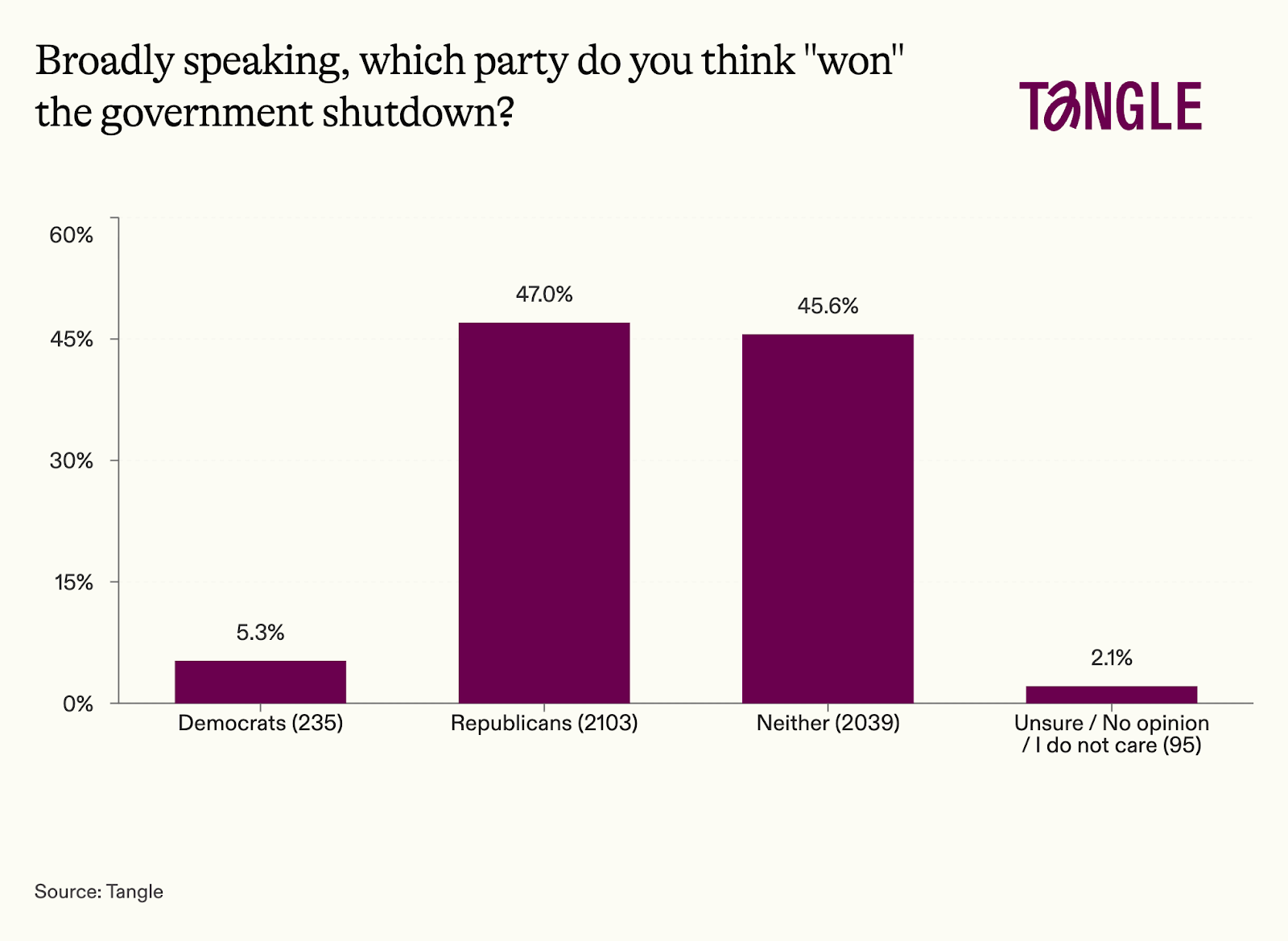
- Monday’s survey: 4,472 readers responded to our survey on the government shutdown with 47% saying Republicans “won” the shutdown. “The Democrats chickened out and caved in to Trump,” one respondent said. “Nobody won, but many average ordinary citizens ‘lost’ — time, money, and peace of mind,” said another.
Have a nice day.
In Staten Island, NY, a community is stepping up to support one of its most remarkable residents. Andy lives with cerebral palsy, but still pushes a candy cart on Hylan Boulevard every day — rain or shine — selling sweets and greeting commuters with unfailing cheer. Jennifer Remauro, whose late brother also had cerebral palsy, was so inspired by Andy’s constant positivity that she set up a GoFundMe page to support his business. “This isn’t charity,” Jennifer wrote on the page, “it’s an investment in someone who is truly spectacular.” The drive has already exceeded its initial goal of raising $30,000. SunnySkyz has the story.

Member comments