This is the Tangle Sunday Edition, a brief roundup of our independent politics coverage plus some extra features for your Sunday morning reading.
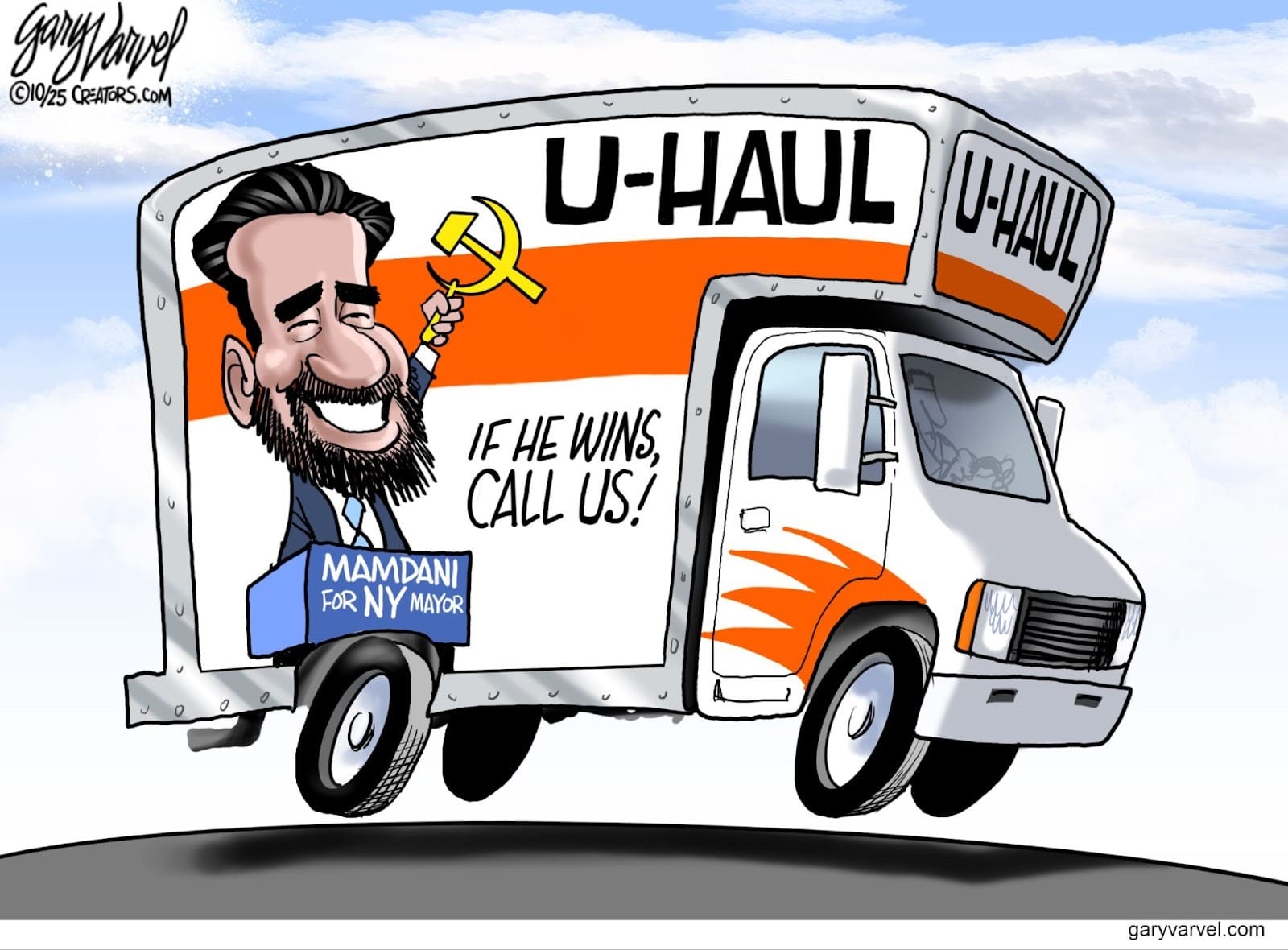
What the right is doodling.
Gary Varvel | Creators Syndicate
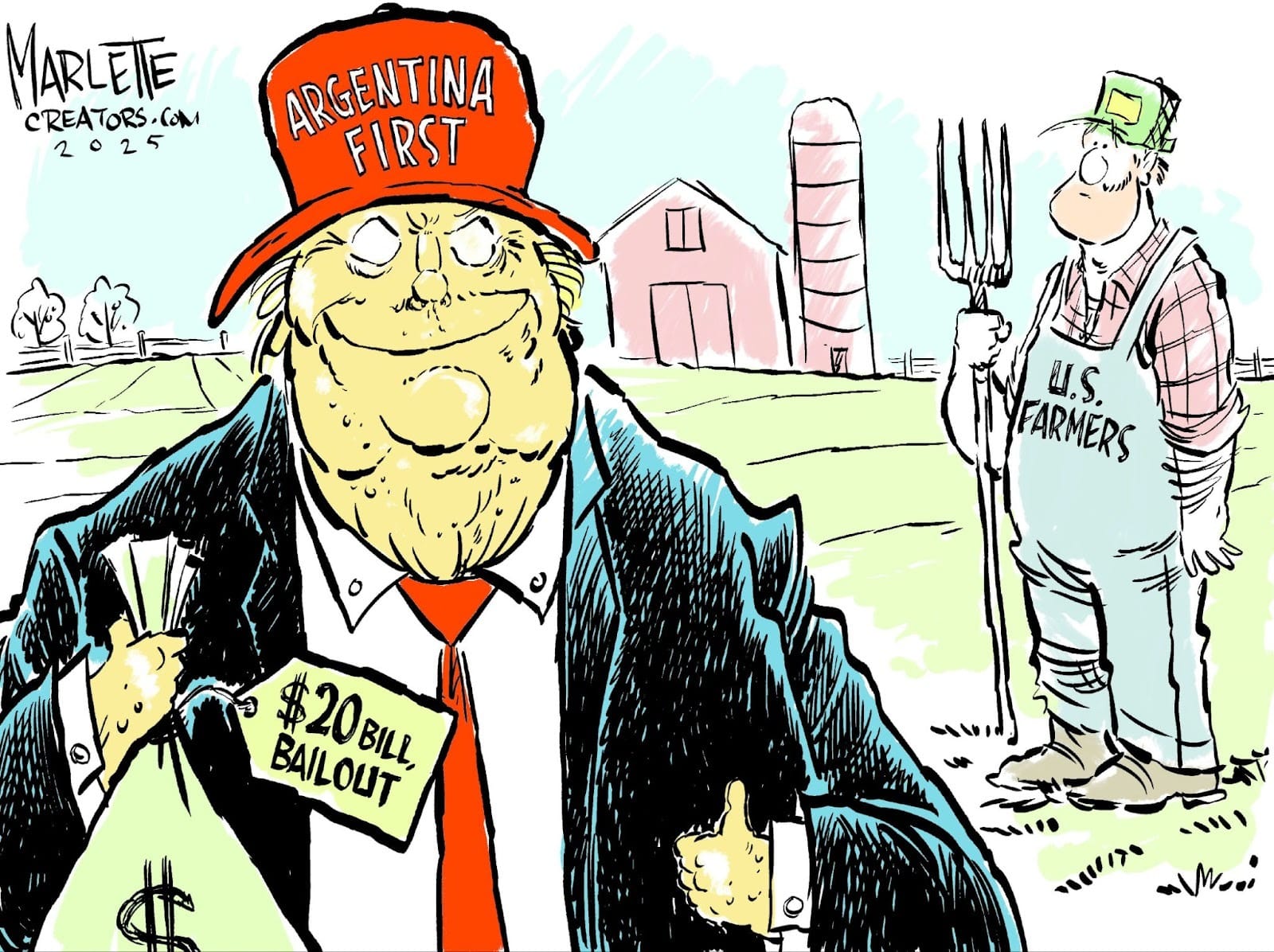
What the left is doodling.
Andy Marlette | Creators Syndicate
From today's sponsor:Politics Moves Fast. Markets Move Faster.
Behind every vote, policy, or press conference is a money trail — and The Daily Upside follows it. Written by veteran journalists and Wall Street pros, The Daily Upside helps you keep your footing.
We were off on Monday in observance of Columbus Day (Tangle observes all bank holidays), but we issued the first edition of Press Pass, our new monthly members-only newsletter. It features updates on some content changes Tangle is considering, highlights from our recent team retreat in Vermont, and an interview with one of our most important team members. You can read it here.
Tuesday, October 14.
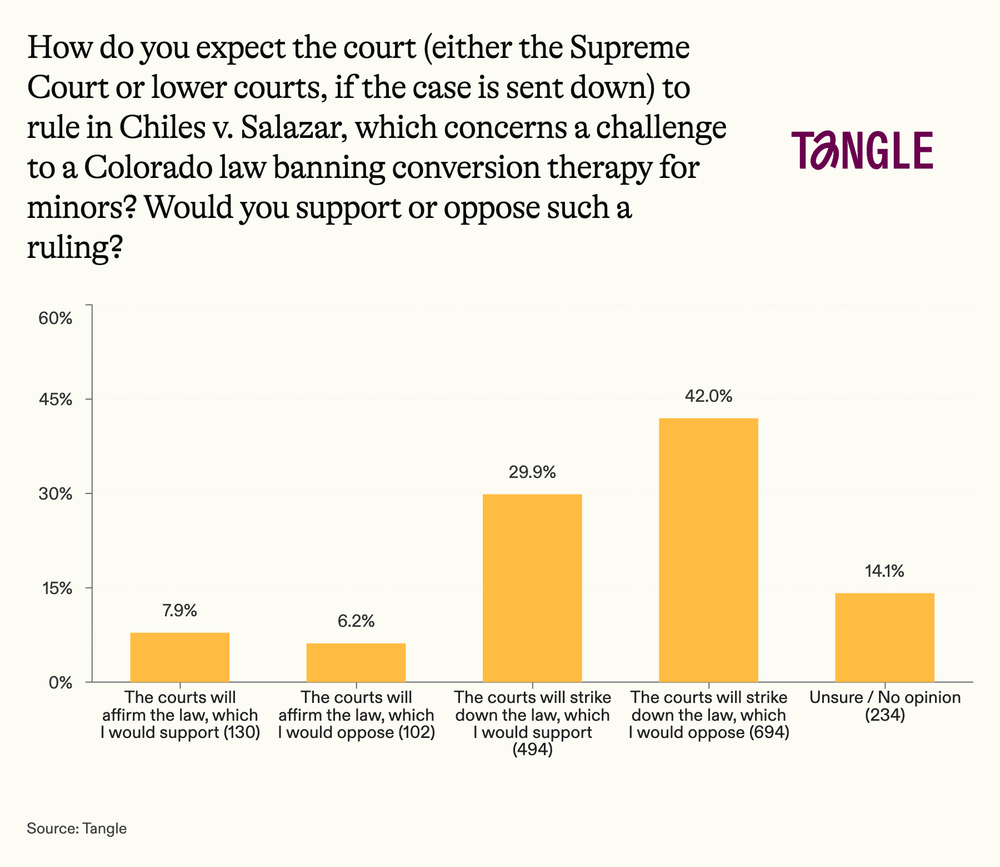
Chiles v. Salazar. On Tuesday, October 7, the Supreme Court heard oral arguments in a challenge to a Colorado law banning “conversion therapy,” or psychiatric treatment intended to change a person’s sexual orientation or gender identity, for minors. A majority of justices appeared more sympathetic to the plaintiff, a licensed counselor practicing conversion talk therapy who says the law discriminates against her based on her views. Other justices indicated their support for sending the case back to a lower court to review the law under a higher standard of scrutiny.
Our take:“I disagree with physical types of conversion therapy, but that's not what's at issue in this case. I expect the court to send this case down to lower courts to review the law under strict scrutiny. I would support that decision, but also generally support the Supreme Court repealing overly restrictive laws like Colorado’s.”
Reader Survey:
Wednesday, October 15.
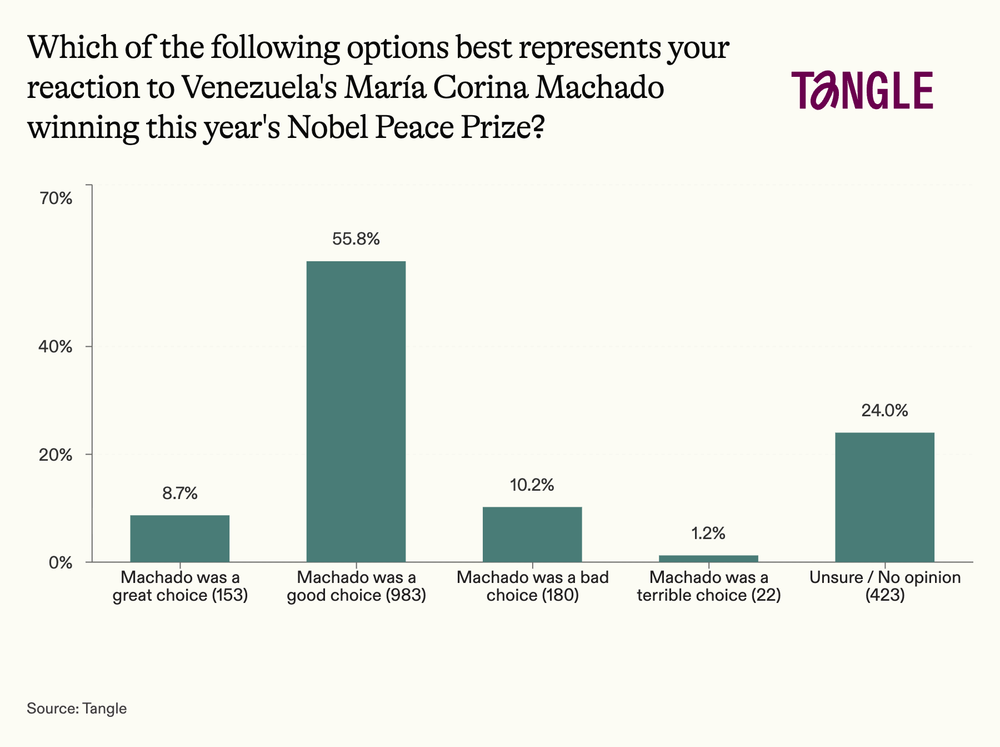
The Nobel Peace Prize. Last Friday, October 10, the Nobel Committee announced the Nobel Prize winners for 2025. Each year, the Norwegian and Swedish Nobel Committees award prestigious honors for advancements in the fields of physics, chemistry, medicine, literature, economics, and peace. This year’s Peace Prize recipient was María Corina Machado, one of the leaders of the opposition in Venezuela and founder of the center-right party Vente Venezuela. Trump administration officials criticized the Committee’s decision, though President Trump acknowledged that the award primarily recognized actions from 2024.
Our take:“Machado is a surprising choice for the award, but her efforts in 2024 to promote change through democracy are worthy of it. Her more recent embrace of U.S. military action to oust Maduro is less deserving. Venezuela has no good options, but I think any lasting change has to come from within.”
Reader Survey:
Thursday, October 16.
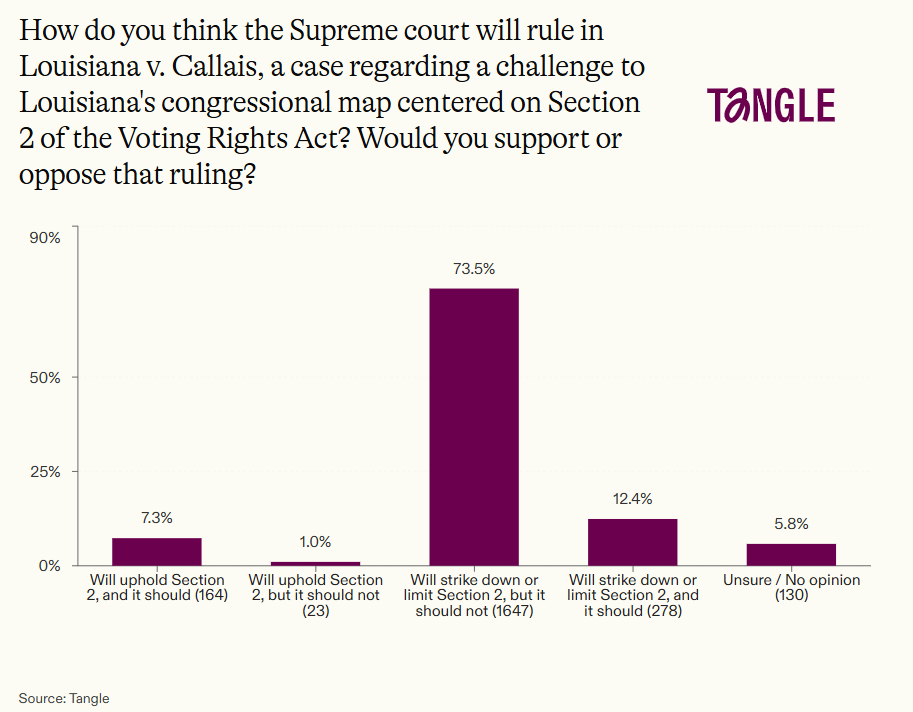
Louisiana v. Callais. On Wednesday, October 15, the Supreme Court heard arguments in a case challenging the congressional map Louisiana adopted in 2022, the second time the court has considered the case. The challenge centers on Section 2 of the Voting Rights Act (VRA) of 1965, which prohibits voting laws or districting practices that give members of a racial group less opportunity than others to elect candidates of their choice. During arguments, the court’s conservative justices signaled their support for narrowing or overturning Section 2.
Our take: “The origins of this case are frustratingly simple: Louisiana’s map violated the Voting Rights Act. The law does create some complications, but not enough for me to want the court to limit it or strike it down. Most frustratingly, gerrymandering will remain a scourge on our democracy either way.”
Reader Survey:
Friday, October 17.
In late September, Senior Editor Will Kaback spoke with two experts on Russia, Ukraine, and the seemingly endless war: Richard Sakwa, a professor emeritus of Russian and European Politics, and Anne Applebaum, a staff writer for The Atlantic. In this week’s Friday edition, we presented some of the highlights from their interviews, including their opinions on the causes of the war, Russia’s drone incursions, Ukrainian morale, and what will happen next. You can read their answers here.
What just happened.
Here are a few stories that have broken since our last newsletter on Thursday.
On Thursday, the U.S. Chamber of Commerce sued the Trump administration over its new $100,000 fee for applicants to the H-1B visa program, alleging the president does not have the power to institute such a fee. (The suit)
On Thursday, the U.S. military struck a boat in the Caribbean that was allegedly trafficking drugs, the sixth confirmed strike of its kind. Two individuals aboard the boat reportedly survived the strike. On Saturday, President Trump announced that the survivors would be repatriated to their countries of origin. (The report)
On Thursday, a federal judge said she would order federal agents engaged in the Department of Homeland Security’s “Operation Midway Blitz” in Chicago to wear body cameras while conducting immigration enforcement activities or interacting with protesters. (The order)
On Thursday, President Trump spoke with Russian President Vladimir Putin. Trump said “great progress was made” on the call and announced the two would meet in person in Hungary in the coming weeks. (The call) Separately, on Friday, President Trump met with Ukrainian President Volodymyr Zelensky at the White House, where Trump suggested he was hesitant to send Ukraine Tomahawk missiles but called on Russia to agree to a ceasefire. (The meeting)
On Friday, former White House National Security Advisor John Bolton pleaded not guilty in court after a grand jury indicted him on 18 counts related to the improper handling of classified materials. (The plea)
On Friday, President Trump announced that he commuted the sentence of former Rep. George Santos (R-NY), who was serving a seven-year prison sentence for fraud and identity theft. (The commutation)
On Saturday, participants gathered in roughly 2,500 No Kings demonstrations across the country to protest what organizers called President Donald Trump's “crackdowns on First Amendment rights.” (The protests)
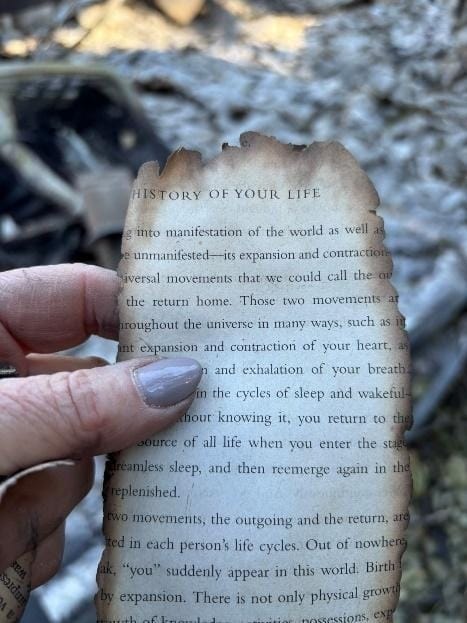
Pages from books, blown by the furnace and caught in tree branches. Ironically enough this one reads: “history of your life.” | Photo: Alyson Dutch
In January the Palisades Fire ripped through Southern California, burning over 20,000 acres of land and destroying many homes in the Malibu area. One of those homes belong to Tangle reader Alyson Dutch, who wrote an incredible essay reflecting on the recovery process in the area, effusive with praise for the teams involved in cleaning and rebuilding and grateful for those who helped her through her own emotional recovery.
This post is for paying subscribers only
Sign up now and upgrade your account to read the post and get access to the full library of posts for paying subscribers only.