
I’m Isaac Saul, and this is Tangle: an independent, nonpartisan, subscriber-supported politics newsletter that summarizes the best arguments from across the political spectrum on the news of the day — then “my take.”
Are you new here? Get free emails to your inbox daily. Would you rather listen? You can find our podcast here.
Today’s read: 14 minutes.
Here's how to stop Google and ChatGPT from sharing your private info
With a quick search, you’d be shocked to find out what anyone can find out about you online. Your phone number, home address details about your family members, health records, financial accounts, employment history and even your social security number.
When you remove your sensitive data with Incogni's Unlimited Plan, you reduce the risks not just from targeted marketing spam & identify theft.
You can also send custom requests to be removed from specific websites, so that you’re safe from being found by simple Google search results or AI conversations.
Use code TANGLE today to get an exclusive 55% discount on unlimited removals from anywhere that exposes your data.
Quick hits.
- Four European countries — The Netherlands, Denmark, Sweden, and Norway — agreed to buy U.S. military equipment valued at roughly $1 billion, which will then be transferred to Ukraine. (The agreement)
- President Donald Trump suggested that he may move to federalize Washington, D.C., in response to purported crime problems in the Capitol, specifically referencing the assault of a former Department of Government Efficiency staffer on Sunday. (The threat)
- Health Secretary Robert F. Kennedy Jr. announced that the Department of Health and Human Services will halt roughly $500 million in funding for 22 projects to develop vaccines using mRNA technology. (The pause)
- Vice President JD Vance is reportedly planning to meet with top Trump administration officials on Wednesday to determine a strategy for handling documents related to Jeffrey Epstein. The group may discuss whether to release the transcript from the recent Department of Justice interview with Ghislaine Maxwell, Epstein’s longtime associate. (The report)
- Sen. Marsha Blackburn (R-TN) announced her candidacy for governor of Tennessee. (The announcement)
Today’s topic.
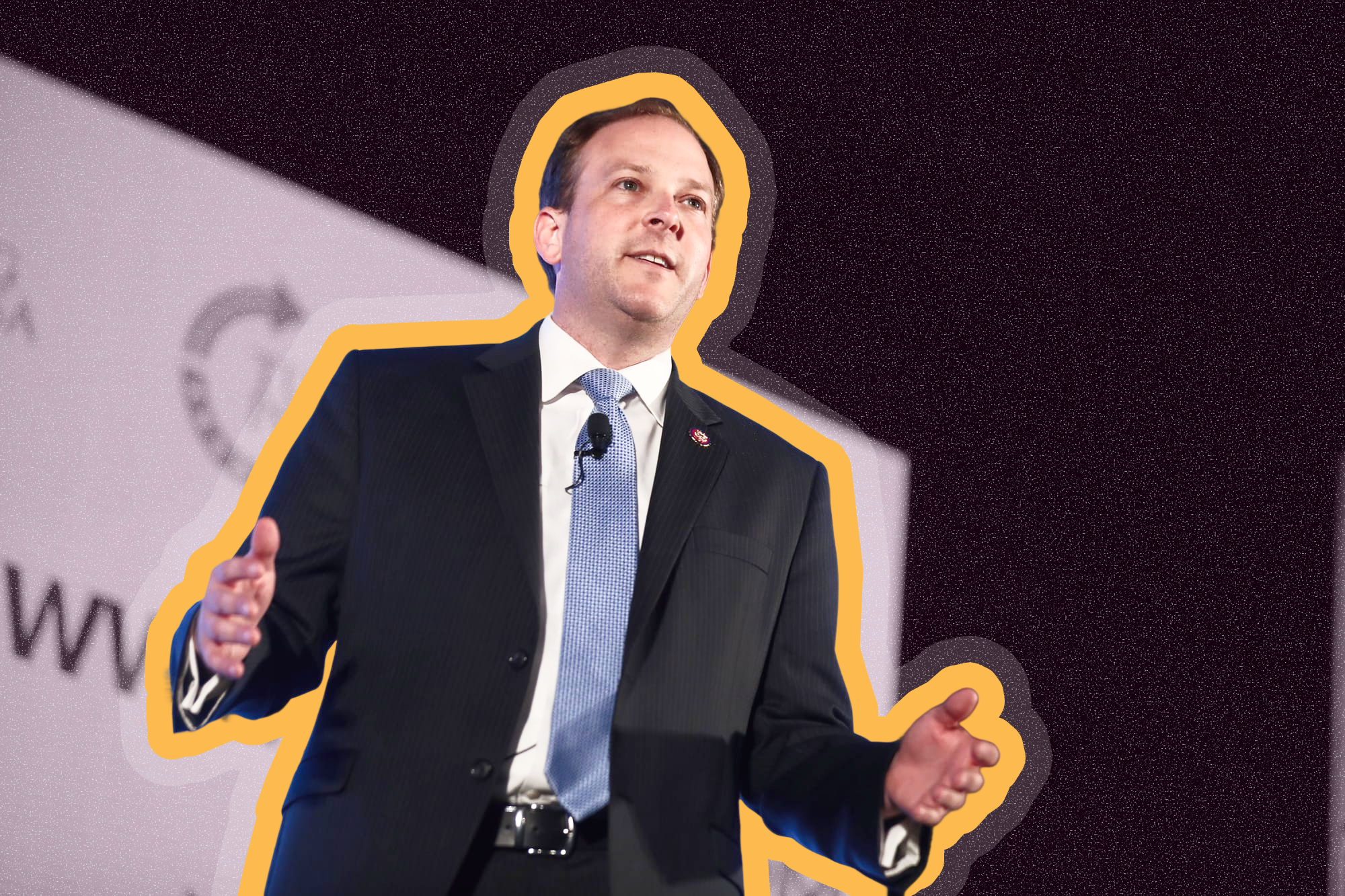
The EPA’s emissions rollback. On Tuesday, July 29, Environmental Protection Agency (EPA) Administrator Lee Zeldin released the agency’s proposal to rescind a determination that previous administrations had used to set limits on greenhouse gas emissions. Both the Obama and Biden administrations used the determination, called the endangerment finding, to regulate greenhouse gas emissions from the burning of fossil fuels, particularly from vehicle emissions. The EPA cited curtailing regulatory overreach as the primary motivation for rescinding the rule, saying that the repeal would save the auto industry an expected $54 billion through deregulations. The EPA undergirded its decision with a study that questioned the adverse effects of carbon dioxide on human health and planetary warming.
Back up: In Massachusetts v. EPA (2007), the Supreme Court found that greenhouse gases fit within the Clean Air Act’s definition of “air pollutant,” and required the EPA to regulate these emissions if the agency found that they endangered human health. The EPA instituted the endangerment finding after President Barack Obama took office in 2009, basing its authority to regulate airborne pollutants that become “well mixed” into the atmosphere on Section 202(a) of the Clean Air Act. At the time, the administration was having difficulty passing climate change legislation through Congress. In 2010 and 2022, the EPA denied petitions to reconsider the endangerment finding, and in 2012, the U.S. Court of Appeals for the District of Columbia sided with the EPA on a legal challenge against it.
The endangerment finding states that the “current and projected concentrations” of six gases — carbon dioxide, methane, nitrous oxide, hydrofluorocarbons, perfluorocarbons, and sulfur hexafluoride — in the atmosphere “threaten public health and welfare of current and future generations.” Although it does not itself impose regulations, the finding provided the legal basis for agency standards on greenhouse gas emissions and fuel efficiency in the auto industry, as well as the 2015 Clean Power Plan to reduce power plant emissions and strict tailpipe emissions standards put in place during President Joe Biden’s administration in 2024.
Before it can be finalized, the decision to repeal the rule moves to a 45-day public comment period, after which it will likely face significant legal challenges. If the EPA does rescind the endangerment finding, it would strip the legal basis for existing emission standards, making them vulnerable to legal challenge or nullification.
Administrator Zeldin touted the projected financial savings that would come from deregulation. “With this proposal, the Trump EPA is proposing to end sixteen years of uncertainty for automakers and American consumers,” Zeldin said. “If finalized, rescinding the Endangerment Finding and resulting regulations would end $1 trillion or more in hidden taxes on American businesses and families.”
Many critics of the move say that the EPA is making its decision on cherry-picked and indefensible studies. “Administrator Zeldin’s decision to axe this finding isn’t based on science,” Rep. Zoe Lofgren (D-CA) said. “It’s based on the Trump administration delivering concession after concession to big polluters, giving them permission to freely trash our air and water.” Separately, an EPA analysis of the move found that repealing the finding could cause gas prices to increase.
Below, we’ll get into what the left and right are saying about the rule. Then, I’ll give my take.
What the left is saying.
- The left opposes Zeldin’s proposal, arguing that it will have disastrous consequences.
- Some question the legal foundations of the rollback.
- Others say repealing the rule will be damaging, but not necessarily permanent.
In The Los Angeles Times, Jody Freeman wrote “Trump’s EPA proposes to end the U.S. fight against climate change.”
“This isn’t just another regulatory rollback. It’s an assault on the foundation of all federal climate policy. The endangerment finding originally applied to vehicle emissions, but it also underpins every major federal climate rule in America: car and truck emissions standards, power plant regulations and limits on oil and gas facilities. By removing this cornerstone, Trump’s EPA is repudiating federal authority to limit greenhouse gases, our most powerful tool for fighting climate change,” Freeman said. “Companies may stay quiet to avoid crossing a vengeful administration, but they know climate change is real and that some federal regulation makes business sense.”
“The administration’s assault on climate action won’t change the evidence or reality of climate change. As scientists have predicted, storms are growing more intense, heat waves more deadly, wildfires more destructive. We spend billions annually on disaster response while other countries surge ahead in clean energy innovation and manufacturing,” Freeman wrote. “The question isn’t whether we’ll eventually return to responsible climate policy — we will because we must. The question is how much time we’ll lose, and how much damage we’ll suffer, while politics masquerades as good policy.”
In The Regulatory Review, Lisa Heinzerling called the proposal “climate denialism dressed up as law.”
“In 2007, in Massachusetts v. EPA, the U.S. Supreme Court roundly rejected EPA’s decision to do nothing. It held that the Clean Air Act clearly included greenhouse gases within the category of air pollutants regulable under the Act. It scolded EPA for refusing even to form a judgment about the dangerousness of greenhouse gases based on policy concerns extraneous to the relevant provisions of the Clean Air Act,” Heinzerling said. “EPA’s legal theory for its deregulatory binge bears a strong resemblance to its failed arguments in Massachusetts v. EPA.
“Once again, EPA is smuggling myriad policy preferences into a provision that focuses on the scientific question of endangerment. Once again, EPA is doing so despite the fact that adjacent statutory provisions specifically instruct EPA to consider some of the concerns it mentions... And once again, EPA is trying to avoid engagement with scientific evidence by throwing legal spaghetti at the wall and hoping something sticks,” Heinzerling wrote. “This is not to suggest that EPA’s proposed approach to gutting rules on climate change is doomed. No member of the majority in Massachusetts v. EPA still sits on the Supreme Court. Much more conservative and assertive justices have joined the Court, and the Court has become notably hostile to ambitious regulatory actions.”
In Bloomberg, Mark Gongloff asked “how much damage can the new, unprotective EPA do?”
“The good news is that this dangerous state of affairs doesn’t have to be permanent… If a reality-based president ever returns to the White House, he or she can tell their EPA chief to reboot the endangerment finding and restart the regulation engine,” Gongloff said. “That process might be slow. It will take Trump and Zeldin several months to formally repeal the finding, including public comment and rulemaking periods. And that’s before the inevitable lawsuits, which could delay the action even more (with one huge exception, which I’ll discuss soon).”
“The EPA’s endangerment finding has long shielded oil and gas companies from environmentalists’ lawsuits. You don’t have the right to make us pay for our climate damage, they’ll say, because that’s the EPA’s job. The EPA getting out of that business could be a dinner bell for plaintiffs’ lawyers. Again, a conservative Supreme Court might find a way to build fossil fuels a new shield, but that’s several steps down the road,” Gongloff wrote. “Alternatively, our theoretical rational future president could work with a theoretical rational future Congress to simply pass a law, properly bullet-proofed against a conservative Supreme Court with the necessary spells and incantations, ordering the EPA to regulate greenhouse gases.”
What the right is saying.
- The right supports the rule rescission and praises the administration for challenging Massachusetts v. EPA.
- Some say the rollback will correct years of regulatory overreach.
- Others support Zeldin’s push but question his tactics.
National Review’s editors wrote “Lee Zeldin’s EPA liberates American industry.”
“The Supreme Court, in a dubious 5–4 decision in Massachusetts v. EPA (2007), ruled that Congress in 1970 meant to classify carbon dioxide as an ‘air pollutant’ notwithstanding the fact that it is naturally present in the atmosphere and is exhaled by humans and animals. The Court required the EPA to provide a ‘reasoned explanation’ for why it was not regulating ‘greenhouse gases.’ The Obama and Biden administrations each rushed to pile such regulations on the carmakers,” the editors said. “The EPA administrator can rescind [the 2007 ruling] on one or both of two grounds: that he does not consider such emissions to ‘endanger public health or welfare,’ or that he believes that the Court read the statute wrong.
“The former step is well within the discretion of the EPA administrator, but its basis could be challenged in court. The latter would require the EPA to argue for overturning Massachusetts v. EPA — a harder task, but court challenges are inevitable, so there will be ample opportunity for the administration to make that case. The EPA is pursuing both,” the editors wrote. “The Court may be more hesitant today to reverse that decision, given the weight of precedent in cases of statutory interpretation, but it should do so. In the interim, we applaud Zeldin and the EPA for the boldness to liberate American industry to compete in world markets.”
In RealClearEnergy, Brent Bennett and Cullen Neely said the “EPA makes the right call.”
“Even if the EPA could eliminate all U.S. GHG emissions within this decade, the action would reduce global temperatures in 2050 by roughly 0.05 degrees Celsius, less than the margin of error in global temperature measurements,” Bennett and Neely wrote. “The Obama and Biden administrations used this finding to justify dozens of regulations, including mandating 70% of cars and 45% of trucks be electric by 2032, restructuring the electricity sector, and imposing methane regulations on oil and gas. Repealing the finding will take an axe to all those regulations.”
“The EPA’s proposed recission wisely recognizes that Congress has repeatedly considered and rejected GHG legislation, from cap-and-trade to carbon taxes. When lawmakers addressed GHG emissions in the 2022 Inflation Reduction Act, they chose tax incentives and a methane tax rather than broad regulatory authority. Now the EPA needs to take the next steps to prove that CO2 is not ‘air pollution’ and that Massachusetts v. EPA is fundamentally flawed,” Bennett and Neely said. “If this regulatory reset can be made permanent, it will be an epochal restoration of constitutional governance, and American businesses and families will benefit enormously.”
In Reason, Jeff Luse argued “the Trump administration risks perpetuating the regulatory ping-pong that has plagued Washington, D.C.”
“The EPA's draft rule does not appear to call into question the climate impacts of GHG emissions (which some suspected it would). Instead, ‘it argues that the E.P.A. overstepped its legal authority under the Clean Air Act by making a broad finding that greenhouse gas emissions endanger the public welfare,’” Luse wrote. “Reconsidering the ruling on procedural grounds rather than scientific ones may be a wiser strategy for the EPA… But it would still have to pass strict legal scrutiny, especially since the Supreme Court overturned the Chevron deference last year. Now federal agencies have less leeway to interpret broad regulations — including the Clean Air Act.”
“The Trump administration has taken effective steps to reduce regulations that hurt American energy security and affordability for minimal environmental benefits,” Luse said. “Despite these successes, the Trump administration is taking the wrong approach to fixing the endangerment finding. By repealing it through executive rule making, the effort is sure to be held up in courts and rescinded by a future presidential administration, perpetuating the regulatory ping-pong that has plagued Washington, D.C., for decades.”
My take.
Reminder: “My take” is a section where I give myself space to share my own personal opinion. If you have feedback, criticism or compliments, don't unsubscribe. Write in by replying to this email, or leave a comment.
- Ultimately, I don’t think the EPA will be able to repeal the endangerment finding.
- That greenhouse gases cause harm is not actually up for debate, and it’s not even relevant here.
- As usual, the right and left are screaming past each other, which is causing us to miss a big opening for intelligent policy.
I won’t bury the lede: I don’t think the “endangerment finding” is all that endangered.
In order to really understand this issue and what might happen next, you have to comb through a lot of puffery in the punditry — predictions that this decision will “unleash” a new golden age or set climate regulation back decades. I don’t think Zeldin’s announcement will actually have any significant impact, because the Trump administration is on very shaky legal ground and (like the Obama administration) won’t be able to effect lasting change without Congress passing a meaningful amendment to the Clean Air Act — which a brief analysis of the vote counts, constituent concerns, and Congress’s reliable ineptitude tell me isn’t going to happen anytime soon.
Consider the following:
First, trying to undo the endangerment finding is a fool’s errand. The only question relevant to the statutory language is whether greenhouse gas emissions “may reasonably be anticipated to endanger public health or welfare.” That’s the very low bar that needs to be cleared for the Clean Air Act to require (not allow, require) the EPA to regulate greenhouse gas emissions, and greenhouse gases quite clearly meet this threshold; they did when the Supreme Court ruled 5–4 that they did in 2007, they do now, and they will in the future.
As Jonathan Adler notes in Reason, judging whether the endangerment finding can legally be rescinded is not a question of whether climate change is going to catastrophically impact the planet, or whether regulating consumer products is a better method than promoting innovation for addressing climate change, or whether the scientific theory of climate change is settled (it is, but that’s actually not relevant here). Instead, the only question is whether the EPA administrator can “reasonably anticipate” that greenhouse gas emissions can pose a risk to public health, which they can. This isn’t ambiguous.
Second, the push from conservatives to undo the Chevron doctrine is now coming back to bite them. Before the Supreme Court’s ruling in 2024, agencies like the EPA had broad latitude to interpret statutory language that might be ambiguous. Today, they do not. The Trump administration is trying to repeal the endangerment finding by claiming that climate change regulation harms industry and the threat of climate change is overstated — but, again, the only relevant legal question is whether the Clean Air Act created the statutory imperative to regulate greenhouse gases. The Supreme Court’s previous 5–4 ruling, and all the court interpretations since, have not been ambiguous.
One could reasonably argue that carbon dioxide is improperly classified as a pollutant, but one cannot argue that it isn’t classified as a pollutant. If you want that to change, the law needs to change; no executive or agency action can do that. Even with the current composition of the Supreme Court, I think the Trump administration would lose a legal challenge to this rule if it were implemented.
Third, and finally, the endangerment finding needs to be updated. A few weeks ago, Tangle Managing Editor Ari Weitzman published a piece on all the ways climate models and their findings have changed in the last 20 years. Many of the scientific projections argued in the initial Massachusetts v. EPA cases are now different in meaningful ways; the statutory language should reflect these changes. Congress ought to empanel an independent group of scientists (appointed on a bipartisan basis) to review the latest models, update the law, and offer new recommendations.
Do I think this administration, or this EPA, will do that? No. But it would be a nice surprise if, rather than creating regulatory chaos, flexing executive power and fighting this battle in the courts, Trump and Zeldin just asked Congress to do its job and then updated the Clean Air Act (or wrote new greenhouse gas legislation as a companion to it) in order to address the areas where it felt these regulations were holding us back.
On a more solutions-oriented note, I think there are a few other things about this saga worth considering: For one, Zeldin’s draft rule argues that the EPA overstepped its legal authority, but it does not argue that greenhouse gas emissions don’t have climate impacts (as some thought it would). This is a quiet concession on the basic fact that climate change is happening (which Ari has also written about). All the while, the “Abundance” movement is gaining traction on the left, a movement that demands climate action but acknowledges that burdensome regulations have stifled innovation, progress, and “abundance” of all things (including energy). In between the two sides on this particular front of the partisan firefight is a no-man’s land of possible consensus, where we can appreciate Zeldin (whose nomination I said Democrats should be happy about) tacitly acknowledging climate change and also criticize the way in which emissions regulations may impose undue costs.
Ultimately, I think there are good arguments for reevaluating some dated climate change regulation that is built around older models. I think conservatives' inclination to embrace innovation and deregulation to address climate change has merit. I think liberals' understanding of the risks of climate change has spurred emissions regulations that have quite obviously had positive impacts for all of us. And I sincerely wish this administration, and this Congress, would show itself capable of doing more than just trying to put old laws through the shredder and fighting court battles.
Take the survey: Do you think the EPA is appropriately regulating greenhouse gases? Let us know!
Disagree? That's okay. My opinion is just one of many. Write in and let us know why, and we'll consider publishing your feedback.
Some additional reading.
Today, we’re trying something new: We’re appending today’s coverage with some “recommended reading” from the Tangle archives to help you explore this topic in more depth.
- The future of climate change may not be what you think. This is a breakdown of what the latest climate models tell us about the future, and how they differ from what many people in the public understand.
- The challenge of renewable energy. In this piece from 2022, Isaac shared the transcript of his interview with Dr. Scott Tinker, who explains why renewable energy isn’t actually “renewable” and how we should really be thinking about alternative energy sources aside from fossil fuels.
- An (actual) explanation of climate change. This piece, from 2021, breaks down the knowns and unknowns of climate change science — explaining how we know what we do about climate change and breaking down the theory in layman’s terms.
Your questions, answered.
Q: What’s Tangle’s opinion on the fighting that broke out in Cambodia and Thailand?
— Alicia from West Virginia
Tangle: We’re going to break our response to this question into two parts over two days. Today, we’ll describe what led to the recent exchange of fire along the border between Cambodia and Thailand, and tomorrow we’ll give a little take on an interesting storyline from one side of the disputed border — a story that most people in the United States are probably not aware of.
In a much more familiar (and common) story, Thailand and Cambodia have shared a tense, contested border with one another since the partition of the French colony of Siam in 1907 along a ridgeline boundary, with several culturally significant ancient structures along the border providing focal points of disagreement. One of these locations is the Temple of Preah Vihear; in 2008, the Thai government supported Cambodia’s nomination of the temple as a UNESCO heritage site, prompting populist backlash in Thailand that led to a political crisis. The temple was also the locus of fighting along the border in 2011.
Recently, tensions came to a head around another significant site, called Prasat Ta Moan Thom by the Cambodians and Prasat Ta Muen Thom by the Thais, following a series of escalating events. In May, Thai troops shot and killed a Cambodian soldier along the border. On July 23, a land mine explosion in a disputed area injured five Thai soldiers, causing one to lose his leg — it was the second such incident in a week’s time. Then, the conflict broke out into heavier fighting on July 24 around the temple.
The armed conflict was mirrored by a war of words in the press. Cambodia said Thai soldiers deliberately attacked Cambodians first in an attempt to claim territory around the holy site, prompting them to return fire. Thailand said that Cambodia had fired rockets into civilian areas in four Thai provinces, prompting Thailand to send F-16 fighter jets to strike targets in Cambodia. After five days of fighting that claimed at least 43 lives and displaced over 300,000 on both sides of the border, the two sides reached a ceasefire deal on July 28. President Donald Trump was active in the process that led to the ceasefire agreement, threatening an elevated tariff of over 36% on each country.
Many Americans may have heard about Trump’s impact on the ceasefire deal. However, to us, the most interesting aspect of the current conflict comes out of this detail: Thailand’s representative during the peace talks was its acting prime minister.
We’ll get into the interesting implications of that detail tomorrow, explaining why Thailand’s prime minister was suspended when peace talks were finalized and what that tells us about the relationship between Cambodia and Thailand — as well as the unique relationship between Thailand’s government and its military.
Want to have a question answered in the newsletter? You can reply to this email (it goes straight to our inbox) or fill out this form.
Under the radar.
A July 2025 report from AARP and the National Alliance for Caregiving found that roughly 63 million U.S. adults — nearly 1 in 4 — provide care to an adult with health or functional needs or to a child with a serious medical condition or disability. The figure is a record high, up from 53 million in 2020 and 43.5 million a decade ago. The responsibility that caregivers assume often comes with financial challenges, as they may be forced to leave their jobs or turn down career advancement opportunities (often while shouldering some of the cost of care). Consequently, the report found that approximately two in 10 caregivers have taken on more debt, three in 10 have used up short-term savings, three in 10 have stopped saving, and two in 10 are leaving bills unpaid or paying them late. “The cost, complexity, and emotional weight of care has only grown, with employees navigating longer lifespans for loved ones, rising care expenses, and increasingly intense responsibilities,” Lindsay Jurist-Rosner, CEO of a caregiving support company, said. Yahoo Finance has the story.
Stop Google and ChatGPT From Sharing Your Private Info
A quick search reveals shocking details about you: phone number, address, family info, health records, financial accounts, even your social security number. Incogni's Unlimited Plan removes sensitive data, reducing risks from identity theft and financial manipulation while protecting you from Google searches and AI conversations.
Numbers.
- 387.6. Global carbon dioxide concentration in the atmosphere (in parts per million) in December 2009, according to the National Oceanic and Atmospheric Administration.
- 429.6. Global carbon dioxide concentration in the atmosphere in June 2025.
- 1,796.7. Global methane concentration in the atmosphere (in parts per billion) in December 2009.
- 1,935.3. Global methane concentration in the atmosphere in January 2025.
- 322.8. Global nitrous oxide concentration in the atmosphere (in parts per billion) in December 2009.
- 338.7. Global nitrous oxide concentration in the atmosphere in April 2025.
- 60% and 38%. The percentage of U.S. adults who say stricter environmental laws and regulations are “worth the cost” and “cost too many jobs and hurt the economy,” respectively, according to a 2023-24 Pew Research survey.
- 39% and 59%. The percentage of Republicans who say stricter environmental laws and regulations are worth the cost and not worth the cost, respectively.
- 82% and 17%. The percentage of Democrats who say stricter environmental laws and regulations are worth the cost and not worth the cost, respectively.
The extras.
- One year ago today we wrote about the stock market turmoil and economic uncertainty.
- The most clicked link in yesterday’s newsletter was the House Oversight Committee subpoenaing the Justice Department for the Epstein files.
- Nothing to do with politics: A website that recreates the feeling of using Microsoft 98.
- Yesterday’s survey: 3,806 readers responded to our survey on whether states are ever justified to pursue gerrymandering as a response to other states with 44% saying they are never justified. “It needs to end. Period,” one respondent said.

Have a nice day.
Researchers at the Mayo Clinic have previously identified a sugar molecule that cancer cells use on their surfaces to hide from the immune system, but the team recently discovered that the same molecule may help treat type 1 diabetes. Whereas cancer cells use the molecule — known as sialic acid — for harmful purposes, the mechanism may have positive applications by distinguishing pancreatic beta cells that produce insulin and are attacked by the immune system when a person has diabetes. “A goal would be to provide transplantable cells without the need for immunosuppression,” Dr. Virginia Shapiro, who led the study, said. “Though we're still in the early stages, this study may be one step toward improving care.” Mayo Clinic has the story.
Don’t forget...
💵 If you like our newsletter, drop some love in our tip jar.
📫 Forward this to a friend and tell them to subscribe (hint: it's here).

Member comments