
I’m Isaac Saul, and this is Tangle: an independent, nonpartisan, subscriber-supported politics newsletter that summarizes the best arguments from across the political spectrum on the news of the day — then “my take.”
Are you new here? Get free emails to your inbox daily. Would you rather listen? You can find our podcast here.
Today’s read: 13 minutes.
The 6 Dumbest Things We Keep Spending Too Much Money On,
You’re smart with your money.
But even high earners fall into these traps: quietly overspending on things that feel “normal” but add up fast.
This quick list breaks down six of the most common (and costly) habits and walks through how to fix them in under five minutes.
Last call for The Sunday!
For the month of July, we’ve been sending our full-length Sunday edition to all free subscribers. The Sunday features the latest news from over the weekend and a roundup of Tangle's coverage from the past week, along with cartoons, light-hearted extras, and reader engagement sections — everything you'd want from a Sunday paper.
Quick hits.
- An 8.8-magnitude earthquake off Russia’s Pacific coast triggered tsunami waves that reached Hawaii and other U.S. states along the West Coast. A tsunami warning initially issued for all of Hawaii was downgraded to an advisory. (The latest)
- The Senate voted 50–49 to confirm Emil Bove to serve on the 3rd U.S. Circuit Court of Appeals. Bove formerly worked as President Donald Trump’s personal lawyer in his New York “hush money” trial and defended the president in two of his federal criminal cases. Bove also served as acting U.S. deputy attorney general from January to March 2025. (The confirmation)
- British Prime Minister Keir Starmer said the United Kingdom would recognize a Palestinian state if Israel did not take immediate action to end the war in Gaza. The announcement follows France’s decision last week to recognize a Palestinian state. (The announcement)
- The Environmental Protection Agency released a proposal to rescind regulations on vehicle emissions and scale back rules on power plant emissions. The agency argues that it does not have the authority to regulate these emissions under the Clean Air Act. (The proposal)
- Union Pacific and Norfolk Southern announced an $85 billion merger deal. The companies will seek to create the first U.S. transcontinental railroad network. The Surface Transportation Board will review the proposed merger. (The deal)
Today’s topic.
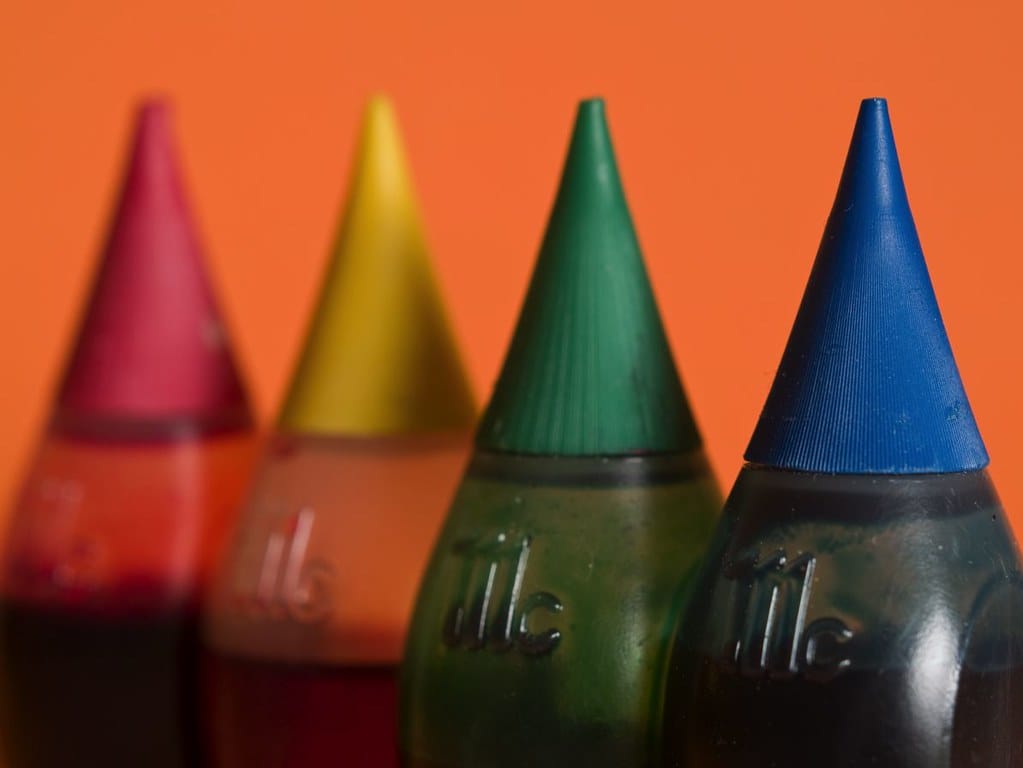
Robert F. Kennedy Jr. versus food additives. In the past two months, several major U.S. food companies have voluntarily committed to removing artificial food dyes from their products, following a plan from the Food and Drug Administration (FDA) to work with the industry to phase out petroleum-based synthetic dyes. In June, Heinz and General Mills committed to removing synthetic dyes from all their products by the end of 2027, while Nestlé committed to their removal by the end of 2026. Then, in July, the International Dairy Foods Association announced that dozens of brands will remove artificial dyes from ice cream products by the end of 2028.
Back up: In April, the FDA announced a series of actions to begin phasing out eight petroleum-based dyes that are commonly used to add color to beverages, cereals, and children’s foods by the end of 2026. Specifically, the FDA said it would work with producers to phase out six “food, drug, and cosmetics” (FD&C) dyes by the end of next year — Green No. 3, Red No. 40, Yellow No. 5, Yellow No. 6, Blue No. 1, and Blue No. 2 — and initiated a process to revoke the authorization for two others — Citrus Red No. 2 and Orange B. The FDA also asked the industry to remove FD&C Red dye No. 3 earlier than the 2027–2028 deadline the agency had initially set in January.
The push to remove synthetic dyes from foods is part of Health and Human Services (HHS) Secretary Robert F. Kennedy Jr.’s “Make America Healthy Again” agenda. Kennedy alleges that artificial additives are linked to chronic health conditions, particularly in children. Some studies have linked petroleum-based dyes to cancer risks and behavioral problems in children; another June 2025 study found that synthetic dyes were present in 19% of consumer products, and that products with synthetic dyes contained 141% more sugar on average.
Secretary Kennedy has praised recent commitments from industry leaders. “America is entering a new era of nutrition,” Secretary Kennedy said in a statement. “Replacing synthetic food dyes with natural colors marks another major victory in our mission to Make America Healthy Again.”
The regulations are not limited to the federal government. In September 2024, California banned the six petroleum-based FD&C dyes identified by the FDA for removal from public school food; additionally, the European Union and Canada already require that products containing FD&C dyes come with a warning label. Separately, in March, Kennedy directed the FDA to explore potential revisions to its “substances generally recognized as safe” (GRAS) rule, which allows some food additives to bypass the pre-market approval process if their safety is generally recognized by qualified experts.
Some food companies have reportedly struggled to replace the artificial dyes with natural ones. Meanwhile, some experts think the effects of the proposed bans are overstated. “Taking petroleum-based food dyes out of our food supply certainly can’t hurt and may have some health benefits, but it is unlikely to appreciably reduce the burden of chronic disease in the United States,” Emily Barrett, a public health professor at Rutgers University, said.
Today, we’ll explore what the left, right, and health experts are saying about Kennedy’s efforts. Then, my take.
What the left is saying.
- Many on the left say Kennedy’s philosophy on food is inconsistent.
- Some share his concerns about food additives but question whether HHS has the tools to act on them under his leadership.
In Salon, Ashlie D. Stevens criticized “the hypocrisy of RFK Jr. preaching ‘real food.’”
“Robert F. Kennedy Jr. wants to make America healthy again. That phrase-turned-slogan has become a tentpole of the health secretary’s political ethos — one that places a righteous halo around ‘real food.’ Clean. Unprocessed. Additive-free,” Stevens wrote. “So it was a curious pivot, then, when Kennedy — fresh off a tour of an industrial food facility in Oklahoma — applauded the company Mom’s Meals for delivering ‘additive-free’ trays to sick and elderly Americans on Medicare and Medicaid. The offerings he praised? Chicken bacon ranch pasta. French toast sticks. Ham patties. Meals that, while technically low on petroleum dyes, are otherwise textbook examples of the ultraprocessed fare Kennedy has spent years denouncing.”
“Kennedy has built his political brand on the idea that food is medicine, going as far as to call processed foods ‘poison.’ But as anyone paying attention to American healthcare knows, that promise plays out along a fault line,” Stevens said. “We live in a two-tiered system: one kind of care for the haves, another for the have-nots. And Republicans, by and large, are comfortable with that. If food is medicine, it follows that ‘real’ food — the kind Kennedy lionizes — should be reserved for those who can afford it. Sick, poor people? Serve them chicken bacon ranch pasta.”
In The Washington Post, Rep. Rosa DeLauro (D-CT) wrote “I’m a Democrat. RFK Jr. is right about GRAS.”
“[Kennedy] and I don’t agree on much — but we both know the Food and Drug Administration needs to get serious about food regulation,” DeLauro said. “Most Americans have no idea that the FDA puts synthetic and potentially carcinogenic additives in the same category as salt. It’s called GRAS — ‘generally recognized as safe’ — yet it’s anything but… The GRAS loophole was created in 1958 to exempt staple ingredients such as sugar, vinegar, flour and baking soda from an extensive FDA review process. But over time, it has been exploited by big corporations that have included hundreds of artificial chemicals and novel additives in food products.”
“If we are going to more rigorously test food additives, we need to give the FDA the necessary resources and staffing to succeed. It is impossible to run an extensive food safety oversight program with a skeleton crew and a shoestring budget. Rigorous scientific testing and analysis, as well as public review processes, take time, funding and expertise,” DeLauro wrote. “If Trump and Kennedy acknowledge these facts, there may be a bipartisan path to reform. As someone who has worked on this issue, which had overwhelmingly Democratic interest for years, I am glad to see the momentum for GRAS reform expanding across the aisle — and the country.”
What the right is saying.
- Many on the right celebrate Kennedy’s push to curtail food dyes and other additives.
- Some argue his policies reveal his progressive, big government roots.
In PJ Media, Paula Bolyard praised Kennedy’s “huge MAHA wins on food dyes.”
“Artificial colors in foods have been linked to a number of behavioral issues in children, including hyperactivity, irritability, memory problems, restlessness, and volatile moods, according to Henry Ford Health,” Bolyard wrote. “While it's true that there's no single gold-standard study proving that food dyes directly cause behavioral problems, the evidence continues to mount every year. With or without conclusive studies, parents have long been aware of the detrimental effects of certain food dyes on their children.”
“Health and Human Services Secretary Robert F. Kennedy said in April, ‘For too long, some food producers have been feeding Americans petroleum-based chemicals without their knowledge or consent. These poisonous compounds offer no nutritional benefit and pose real, measurable dangers to our children’s health and development,’” Bolyard said. “That's how it should be done — getting manufacturers to make changes voluntarily rather than siccing jackbooted federal bureaucrats on them. This is a major step in the 'Make America Healthy' movement that will undoubtedly be cheered by millions of American parents.”
In Reason, Liz Wolfe wrote “RFK Jr. plays the hits.”
“‘Over the past two generations, we have failed to address the alarming rise in childhood chronic disease,’ reads a new report issued by the president's Make America Healthy Again (MAHA) Commission,” Wolfe said. “Though I think some of the specifics cited within the report rely on causal leaps and faulty research, I'm not sure this diagnosis of the problem is really incorrect. Kennedy's team continues, noting that the goal is for ‘the next ten years [to] see a revolution in living standards and prosperity,’ during which ‘we understand how to better manage the increased threats to our children's health that come from industrialization.’ These are worthy goals, if you can stomach some of the anti-corporate leftism that creeps in throughout.”
“Kennedy points to ultra-processed foods as a major contributor to obesity rates; artificial sweeteners as possibly responsible for gut microbiome imbalances; red dye 40 and other food colorings as ‘associated’ with ‘symptoms consistent with ADHD.’ At times, he takes an anti-corporate tone, showing some of his lefty roots,” Wolfe wrote. “Of course, he's also giving indicators that he favors a more paternalistic state that intervenes in people's personal choices to stop them from making (what he perceives to be) bad ones.”
What experts are saying.
- Some health experts say the risk posed by food dyes is unproven, but worthy of attention.
- Others suggest Kennedy is focusing on the wrong problem with children’s nutrition.
In ParentData, Emily Oster offered “a dive into [the food dyes] controversy.”
“In talking about food dyes, one common response is: we should eat only natural, whole foods. Food dyes are generally a part of ultra-processed foods, which have their own detractors. But as I have written about before, there is more nuance to the ultra-processed food debate than is often represented in public discussion. It is fairly unrealistic to avoid all ultra-processed foods, and it is not fun,” Oster wrote. “Sometimes, food is about enjoyment and joy. Dyes tend to make food more enjoyable, which is good for consumers, but they also enhance demand, which is good for food companies. It is absolutely true that foods do not need dyes, though.”
“Do food dyes cause hyperactivity? There are a number of food dyes that have been linked to hyperactivity in kids. Most notable is Red No. 40 (this is the one in Swedish Fish, by the way), but there are blue and yellow dyes that raise the same concerns,” Oster said. “My overall read of this literature — which aligns with what the FDA has said in the past — is that it’s unlikely that these food dyes have any meaningful effect on behavior. Others obviously disagree here, but having looked carefully at the data, it does not seem compelling to me.”
In STAT, James Smoliga suggested “RFK Jr.’s synthetic dye bans miss a much bigger problem.”
“I’m not defending artificial dyes. I see no health benefit to adding petroleum-derived pigments to food, and I personally avoid using them when I bake (which I do!) — no one needs petroleum products to make cupcakes festive,” Smoliga wrote. “But focusing national attention on them risks missing the real story. To consume enough red dye No. 3 to remotely approach the doses used in rodent studies, a child would need to eat enormous amounts of ultra-processed foods like candy, snack cakes, and sweetened drinks. Parents may feel reassured that lunchboxes are dye-free, but the real danger isn’t the artificial color itself — it’s the sugar and refined carbohydrates that deliver it.”
“From a public health perspective, synthetic dye bans are a trivial drop in a much larger bucket. Removing artificial food colors may clean up ingredient labels, but it won’t clean up the metabolic toll of ultra-processed, sugar-laden foods — the very vehicles that typically carry these dyes,” Smoliga said. “The metabolic fallout of high sugar (prediabetes, obesity, and an estimated $413 billion in annual U.S. health‑care costs) is documented in humans and growing every year. Unlike the theoretical dye risk, sugar’s metabolic toll is clear.”
My take.
Reminder: “My take” is a section where I give myself space to share my own personal opinion. If you have feedback, criticism or compliments, don't unsubscribe. Write in by replying to this email, or leave a comment.
- The evidence about the health effects of artificial dyes is mixed, but it seems like there is little downside to regulating them.
- Kennedy is probably overstating the effects of synthetic dyes and undervaluing other causes of chronic health issues.
- I wish that HHS still had the funding and staffing to provide better scientific backing for these policies.
Robert F. Kennedy Jr. is a challenging person.
He’s challenging to write about. He’s challenging to support. He’s challenging to contextualize. Pretty much everything about him evokes mixed feelings in me — some amalgamation of support for the big central problems he takes on and frustration with how far he believes the causes to those problems go.
This has become a recurring theme in our last few weeks of political coverage (and maybe it’s just a theme of this administration and life more broadly), but I think the central question here is: Can you hold a few things at once?
- Studies on red dye’s relationship to hyperactivity are inconclusive at best. As Emily Oster put it, “About half of the studies on this topic find an impact of food dyes on hyperactivity, but half do not.” Anyone claiming a scientific consensus on artificial food dyes is either overlooking or unfamiliar with half of the studies on the topic, and no one I trust on this topic has highlighted a gold standard study proving or disproving causality. Furthermore, Oster is right to call out that the differences (that existed before Kennedy’s appointment) between U.S. and European regulation on food dyes are actually pretty small.
- For a lot of parents and consumers, a few compelling studies provide ample justification for regulation — and the risk threshold we have for what we put into our kids’ bodies (and our own) should be extremely low. Add to that the convincing findings that show food dyes make people eat more food (by making it more appealing) and contain more sugar, and the argument to regulate them in some way becomes pretty strong.
- The FDA has relinquished far too much control of its food-additive review process to food producers, and Kennedy’s instinct to reform the GRAS (generally recognized as safe) process is on point. A blitz on this initiative is likely to garner bipartisan support.
- Kennedy, like the Trump administration as a whole, has been laying off researchers and leading a charge to gut funding for the very groups and scientists who test, analyze, and study food safety. The FDA and CDC have already been gutted, which is going to impact not just food safety and disease control but the testing of new drugs and cosmetics. Thanks to the administration’s cuts, we are less prepared now to back new policies with evidence than we were six months ago.
- Let’s be blunt about this: Removing the dyes and additives Kennedy is focusing on, contextually, is small potatoes. Banning petroleum-based dyes or substituting high-fructose corn syrup with cane sugar in Coke is not going to meaningfully change American health habits. Ultra-processed foods sound big and scary, but at the end of the day, the big bads in our diets are too much sugar and refined carbohydrates. James Smoliga had a great piece about this in STAT News that is worth reading, but the upshot is that the banned dyes could cause issues if consumed in doses the FDA already recommends against, but they aren’t causing obesity, diabetes, and other chronic health issues; those problems are caused by sedentary lifestyles, lack of sleep, and diet.
Of course, the larger relative size of other problems is not a good reason to dismiss this one — again, while the impact of removing these dyes may be muted, there's little evidence to suggest that doing so would produce negative outcomes. It’s just to say it doesn’t represent the major challenge to Big Food that Kennedy purports to represent. Not to be nitpicky, but the image of Kennedy endorsing Mexican Coca-Cola or eating at fast food restaurants is just as damaging to American health as his awareness campaign against red dyes is helpful.
He is correct, directionally, to put such a massive emphasis on what we are putting in our bodies. It’s not as if he is the first person to center that idea — but he seems to have a particular skill for messaging it that other public health officials don’t. I think he is right to be skeptical of the food industry, to want to reform the FDA, and to raise awareness about all the synthetic additives laced throughout our diets.
These talkings points pluck at all those skeptical thought bubbles that pop up for me and many other Americans; almost every American I know who has ever traveled to Europe has a story about the food — how much different or better they felt eating there, how the bread didn’t upset their stomach, or how they ate constantly and didn’t gain weight. Many of us intuit that something about how we get our food is broken — the mass production, the uncertainty about where it came from, the list of unpronounceable ingredients — and trends toward growing your own food and buying from local sources seem to be skyrocketing in popularity.
But intuition and feelings should not guide regulatory action. If Kennedy wants to be the champion for clean eating that he says he is, he’ll need to be a lot more ambitious than pursuing boogeymen like food dyes. In a lot of ways, I’m rooting for him — but I question how he can achieve his stated goals while gutting the agencies capable of doing so, and it’d be a lot easier if he could accurately represent the risks and the rewards while championing his causes against Big Food.
Take the survey: What do you think about removing artificial dyes from food? Let us know!
Disagree? That's okay. My opinion is just one of many. Write in and let us know why, and we'll consider publishing your feedback.
Your questions, answered.
Q: What are your thoughts on the Fairness Doctrine? Do you think its abolishment contributed to today's political division and do you think something similar being implemented today could help bridge the political divide? As your existence proves, modern news media is quite biased — was it better under the Fairness Doctrine or is that just more viewing the past through rose-colored glasses?
— Jess from Omaha, NE
Tangle: For context, the Fairness Doctrine was a policy instituted by the Federal Communications Commission (FCC) from 1949 until 1987 that required major broadcasting networks to devote equal time to contrasting opinions of public importance. That meant that any television show or news anchor expressing an opinion on a topic like war or taxes would have had to provide reasonable opportunities for opposing perspectives to be heard on air. The FCC repealed the doctrine in 1987, citing First Amendment concerns; Congress passed a bill to preempt the decision and keep the doctrine in place, but President Ronald Reagan vetoed it for the same reasons as the FCC.
Do I think the news media was less biased when the Fairness Doctrine was in place? Yes, definitely. Recent studies have shown that media bias is getting worse. Just as important, the public’s perception of bias has skyrocketed in recent decades. Trust in the media has been declining since the 70s, and a large majority of Americans think the media is biased.
Do I think the repeal of the doctrine contributed to this era of polarization? Probably, since the removal of the Fairness Doctrine allowed for the rise of (mostly conservative) talk radio shows immediately preceded increased distrust and polarization shown in the polling. But would I rank it as one of the top reasons? Certainly not.
To me, the 24-hour news cycles that were kicked into overdrive by cable news (which are not subject to the Fairness Doctrine), the dangerous monetization incentives that effectively turned news into entertainment, and hiring practices that left legacy media dominated by left-leaning thinkers were all much more impactful in creating distrust, driving demand for explicitly partisan media outlets, and ultimately making way for the polarization we see today. All of this was then supercharged by social media news feeds (and the rise of the podcast era). In 2022, I wrote a piece titled “How media bias works” that explored how we got here.
To be honest, I also share President Reagan’s First Amendment concerns about the Fairness Doctrine. If we (as a news organization) were forced into the current format we have every day, without exception, by government regulation — I’d probably feel pretty negatively about that. It’s easy for us to agree that media polarization is a big problem, but it’s much harder to say definitively that the FCC could have done anything to prevent it.
Want to have a question answered in the newsletter? You can reply to this email (it goes straight to our inbox) or fill out this form.
Under the radar.
On Tuesday, Transportation Secretary Sean Duffy announced a review of the Biden administration’s potential disregard for safety concerns for scores of wind projects built near highways and railroads. Duffy alleged that former Transportation Secretary Pete Buttigieg, in particular, ignored potential interference of wind turbines on radio communications in his efforts to advance renewable energy projects. The Department of Transportation claims it has uncovered at least 33 such projects approved by the Biden administration, and Duffy has asked Congress to also review the matter. The Washington Examiner has the story.
You brew coffee at home. You skip takeout. But your money still disappears.
Turns out, most of us are wasting hundreds — sometimes thousands — on the same few things without even realizing it.
This 90-second read lays them out clearly & shows you what to do instead.
Numbers.
- 19%. The percentage of food and beverage products sold by U.S. manufacturers in 2020 (in a sample of 39,763 products) that contained synthetic dyes, according to a June 2025 study in the Journal of the Academy of Nutrition and Dietetics.
- $46 billion. The approximate value of those food and beverage products containing synthetic dyes.
- 14%. The percentage of products that contained Food, Drug and Cosmetic Red No. 40, the most common of any dye in the study.
- 7. The maximum number of observed synthetic dyes in a single product in the study.
- 28%. The percentage of products in the top 5 categories marketed to children that contained synthetic dyes.
- 33.3 g/100 g and 13.8 g/100 g. The mean total sugar in products with and without synthetic dyes, respectively, according to the study.
- 87%. The percentage of Americans who say that the government should do more to make sure food is safe, such as updating nutritional guidelines, adding labels to foods with artificial dyes or reducing exposure to pesticides, according to a June 2025 Ipsos poll.
- 56%. The percentage of Americans who say chemicals or unsafe additives in foods are a large or moderate risk to their health right now.
The extras.
- One year ago today we wrote about Biden proposing major Supreme Court reforms.
- The most clicked link in yesterday’s newsletter was the shooting in midtown Manhattan.
- Nothing to do with politics: A collection of daily guessing games, like “Tradle.”
- Yesterday’s survey: 1,897 readers responded to our survey on the U.S.–EU trade deal with 43% of respondents calling it mostly a bad deal for both sides. “Definitely a ‘win’ in the short term, but unsure about the longer term,” one respondent said.

Have a nice day.
The war in Ukraine has displaced millions, forcing Ukrainians to leave behind their household pets and straining local animal shelters. However, volunteers are stepping up to help the abandoned animal population. Veterinary surgeon Colleen Lambo traveled to Ukraine in April 2024 and within two weeks, she and her team sterilized over 600 animals and provided lifesaving care for community members’ pets. Lambo, who returned to Ukraine for a second volunteer trip this spring, says the work has provided a boost to the community in a trying time. “It feels like we’ve accomplished so little, in the grand scheme of their needs — but every person we’ve met has been so kind and so generous,” Lambo said. “Our work is a drop in a bucket, but no one has treated it as such.” Nice News has the story.
Don’t forget...
📫 Forward this to a friend and tell them to subscribe (hint: it's here).
🛍 Love clothes, stickers and mugs? Go to our merch store!

Member comments