
I'm Isaac Saul, and this is Tangle: an independent, nonpartisan, subscriber-supported politics newsletter that summarizes the best arguments from across the political spectrum on the news of the day — then “my take.”
Are you new here? Get free emails to your inbox daily. Would you rather listen? You can find our podcast here.
Today’s read: 15 minutes.
A new opportunity to engage with us.
Do you want to have a say in what we cover, ask questions to be answered in the newsletter, and get the inside scoop on Tangle events? This week, we’re running a trial partnership with Subtext, a platform that will allow us to text readers directly with instant analysis, surveys, announcements, peeks behind the scenes and more. If you’re interested in being part of our trial, text TANGLE to (850) 338-9163 or click here to sign up (it’s free).
Quick hits.
- Disney announced that Jimmy Kimmel’s late night comedy show will return on Tuesday, following a six-day suspension for comments Kimmel made about the assassination of Charlie Kirk during his comedy monologue. (The return) Separately, Sinclair Broadcast Group, which owns the largest number of ABC affiliate stations, said it will run other news programming in its place. (The decision)
- President Donald Trump announced that the Food and Drug Administration (FDA) believes it has found an association between pregnant women’s use of acetaminophen — the active ingredient in the pain reliever Tylenol — and autism in children. The FDA will begin notifying physicians of this potential risk of acetaminophen during pregnancy, though it also emphasized that a causal link to autism has not been established. (The announcement)
- President Trump reportedly plans to approve a proposed deal that will give U.S. investors majority ownership in U.S. operations of the social media app TikTok. User data from the app will be stored in a cloud server in the U.S. and overseen by a board of directors with national security and cybersecurity credentials. (The deal)
- France recognized Palestinian statehood at a United Nations meeting, one day after the United Kingdom, Canada, Australia, and Portugal did the same. Andorra, Belgium, Luxembourg, Malta, and Monaco also announced or confirmed their recognition of a Palestinian state. (The recognition)
- The Supreme Court agreed to hear a case on whether the president can fire independent agency leaders at will, stemming from President Trump’s attempt to dismiss Federal Trade Commission Commissioner Rebecca Slaughter. The court ruled Trump can proceed with firing Slaughter while it considers her challenge. (The case)
The Probiotic That Has Halle Berry Talking
PhD scientists from Johns Hopkins, Harvard, Berkeley, and Stanford teamed up to master probiotic science. They discovered how to manufacture live Akkermansia & bring it to the probiotics market—a strain that strengthens gut lining, supports metabolic health, and naturally increases GLP-1 production.*
Now with 16,000+ medical professional recommendations and hundreds of 5-star reviews, Pendulum's Akkermansia is transforming gut health for countless people, including Halle Berry who joined the company after seeing the results herself.
Tangle readers get 20% off their first membership order. HSA/FSA eligible.
*Based on preclinical studies. Not intended for weight loss.
This is a sponsored post.
Today’s topic.
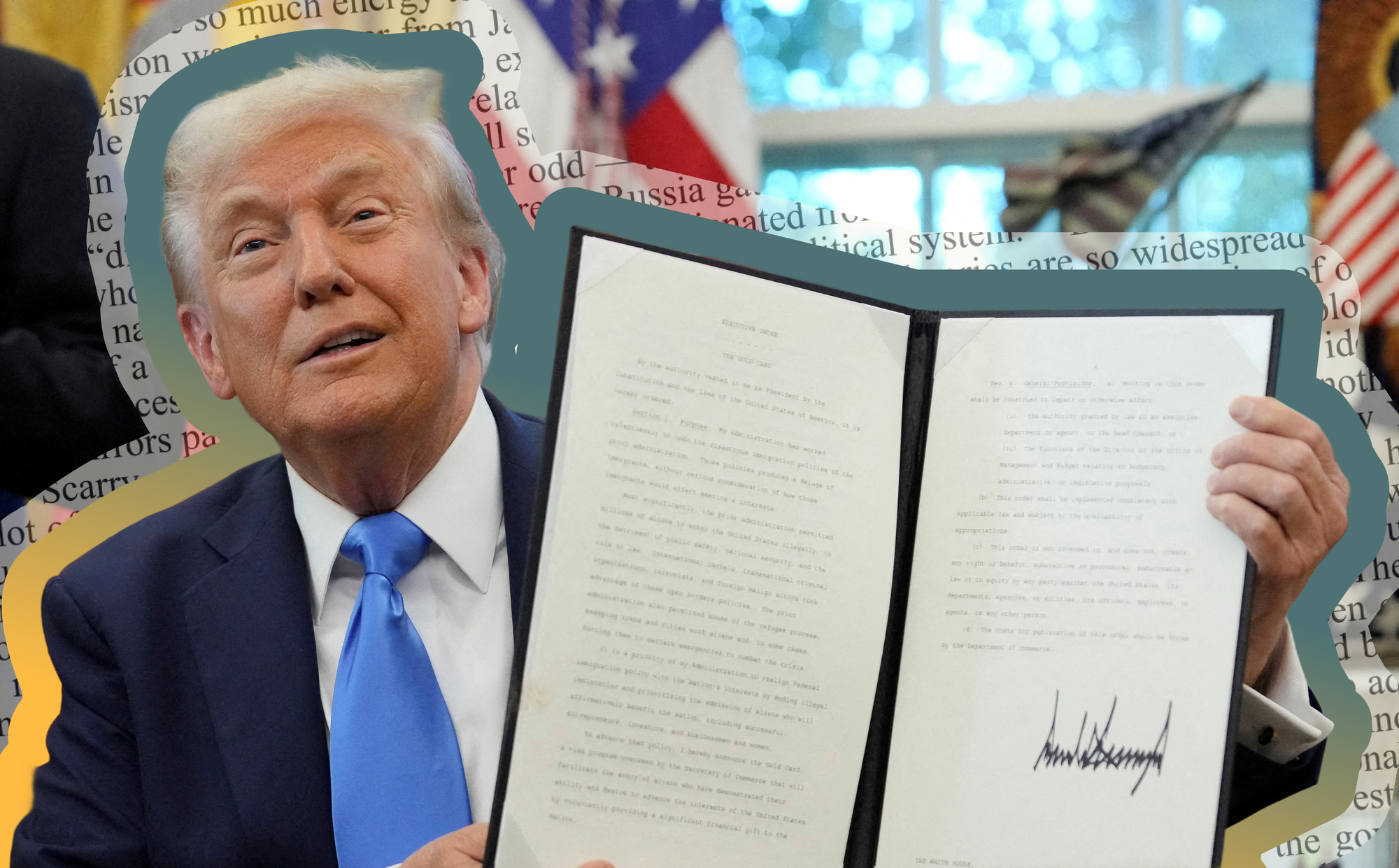
The new H-1B visa requirements. On Friday, President Donald Trump signed a proclamation adding new requirements for H-1B visas, which grant temporary work authorization to noncitizens in specialty occupations. The new rules compel new applicants to pay $100,000 to apply for the visa (with exceptions granted by the secretary of Homeland Security) and directs the secretary of State to ensure compliance with the new regulations. The $100,000 fee will begin to apply at the start of the next H-1B lottery cycle in March 2026.
Back up: H-1B visa holders typically work in STEM (Science, Technology, Engineering, and Mathematics) fields, and the program has existing provisions meant to protect U.S. workers from being adversely affected. Visa applicants must have the equivalent education of a bachelor’s degree, and visa holders can stay in the country for up to six years (an initial three-year period that can be extended for another three), and fees for new applicants have typically maxed out at $5,000. Prior to the start of President Trump’s second term, the program generated disagreement between Trump allies and White House Adviser Elon Musk over the merits of hiring foreign workers for U.S. STEM jobs and the American tech industry’s reliance on the H-1B program.
We covered the debate over H-1B visas in January.
Initially, White House officials gave conflicting descriptions of the changes to the program. On Friday, Commerce Secretary Howard Lutnick said visa holders (or their company) would have to pay the $100,000 fee annually, but added that some details were “still being considered.” The next day, White House Press Secretary Karoline Leavitt posted on X, “This is NOT an annual fee. It’s a one-time fee that applies only to the petition,” adding, “Those who already hold H-1B visas and are currently outside of the country right now will NOT be charged $100,000 to re-enter.”
The White House said the policy change was intended to encourage companies to hire U.S. workers, accusing some businesses of “spamming the system and driving down wages” under existing H-1B rules. In his proclamation, President Trump also claimed that abuses under the current system made it “more difficult to attract and retain the highest skilled subset of temporary workers.”
However, many industry and business groups have expressed concern that the new rule would create confusion and make hiring more difficult. Shortly after Trump signed the proclamation, several major U.S. companies advised their employees with H-1B visas who are currently outside the United States to return to the country before the restriction took effect on Sunday. Others suggested that H-1B employees exercise caution traveling outside the U.S.
Today, we’ll break down the debate over the new rules, with views from the left, right, and industry experts. Then, my take.
What the left is saying.
- The left is mixed on the new policy, with some saying it will be detrimental to the tech industry.
- Others argue Trump is taking necessary action to address abuses of the H-1B system.
In Noahpinion, Noah Smith said “the Trump administration goes after Asian immigrants.”
“The tech industry is very international; often the people who bring key ideas to a startup are at first only able to come work in America via H-1B. A lot of universities initially depend on H-1B visas to bring over faculty and researchers. In general, critical knowledge workers will eventually get employment-based green cards, but this takes a lot of time and effort; usually, they have to come on H-1B first, and apply for green cards while working in America,” Smith wrote. “As a result, a lot of very successful and famous Americans needed the H-1B to get their start in the country.”
“If the $100,000 fee holds up in court, it’ll still place a significant burden on H-1B employers and workers, but not an insurmountable one. And it looks like foreign students may be exempted from the fee, which would bias the visa program toward people who study at U.S. universities and away from people who are hired directly from overseas,” Smith said. “That would actually be good, since the former are especially desirable. But in any case, the order, in whatever form, is still a significant attack on skilled immigration.”
In Bloomberg, Patricia Lopez suggested the “$100,000 H-1B visa is a gamble that could protect US jobs.”
“President Donald Trump is taking yet another gamble on immigration, betting that he can force companies to compete for skilled American engineers and tech workers rather than hire foreign workers through the popular H-1B visa program. Employers won’t like it — but reform of the program is long overdue,” Lopez wrote. “Trump is correct… that H-1Bs had been ‘deliberately exploited’ and that ‘systemic abuses’ have created large-scale replacement of skilled American labor with lower-paid workers. American STEM graduates, led to believe their degrees would result in plentiful opportunities and well-paid jobs, are instead scrounging for work.”
“Loopholes abound. Middlemen flood the program with applications and scoop up as many visas as possible, then contract out those workers to a handful of large companies. In 2023, there were 446,000 applications in a program limited to 85,000 private sector slots,” Lopez said. “Trump’s policy carries risk. The H-1B overhaul dramatically escalates costs at a time when companies are already struggling to find the skilled labor they need. If companies can’t find competitive labor sources, expansion plans may slow, resulting in fewer jobs overall. Frustrated companies could move such jobs overseas.”
What the right is saying.
- The right is also mixed on the policy, but many praise Trump for prioritizing U.S. workers.
- Others say the fee will disproportionately hurt small businesses.
In American Thinker, Brian C. Joondeph said the new H-1B fee “put[s] America first.”
“The H-1B program was initially created to help U.S. companies fill rare, high-skilled roles when American expertise was unavailable. However, in practice, it has become a pathway for cheap foreign labor. According to the Economic Policy Institute (EPI), in 2022, the top 30 H-1B employers brought in 34,000 new visa workers even as they laid off at least 85,000 Americans,” Joondeph wrote. The new fee “is meant to give employers pause. Is the skill truly so scarce that it justifies paying $100,000 annually to Washington, D.C., in addition to salary and benefits?”
“Allowing tens of thousands of foreign nationals, many from strategic competitors like China, to work in sensitive sectors such as semiconductors, defense, and telecommunications poses serious national security risks. Intellectual property theft, espionage, and divided loyalties are real threats, not just theories. They have been repeatedly documented by U.S. intelligence agencies,” Joondeph said. “By tightening the H-1B pipeline, Trump’s executive action reduces this exposure. America cannot afford to have its cutting-edge military and technology sectors mainly staffed by non-citizens.”
In The American Spectator, David Hebert called the new rule “an exercise in crony capitalism.”
“The president is once again showing that he is not afraid to shake things up when it comes to protecting domestic workers. But if we look beyond the surface-level details, we can plainly see that this is a policy that will alarm anyone who believes in free markets and fair competition,” Hebert wrote. “Rather than promote domestic employment, this new fee will only do more of the same: protect large, established, and politically connected firms at the expense of smaller, newer, and less-connected firms and increase the cost of [what is] presently done with H-1B visas.”
“For tech giants like Amazon, Google, and Microsoft, who collectively employ thousands of workers on H-1B status, an additional $100,000 per worker is annoying but not devastating,” Hebert said. “But what about a small tech startup in, say, Austin, trying to hire a new programmer from India to help them get off the ground, or a family-owned engineering company in Ohio that found a perfect candidate from Germany? For these smaller operations, which are the backbone of America’s workforce and the creators of our world-leading dynamism, an extra $100,000 annual fee is a crushing barrier that effectively prices them out of the global talent market.”
What industry experts are saying.
- Some experts note the outsized effect this policy will have on India.
- Others say the rule can help U.S. workers and industries if it’s properly executed.
In Bloomberg, Andy Mukherjee suggested Indian Prime Minister Narendra Modi “will pay a price for H-1B visa curbs.”
“It’s hard to say what President Donald Trump’s extraordinary attack on immigration will mean for the future of US tech dominance. What’s clearer, however, is the immediate challenge he has created for his friend Narendra Modi — days after wishing him a happy 75th birthday,” Mukherjee said. “Indians account for more than 70% of all H-1B visas. A steep $100,000 entry fee, paid by employers, for every worker entering the US under the program will effectively gut it, forcing large outsourcing companies such as Bengaluru-based Infosys Ltd. to rethink their business strategy.”
“To immigrant families, an already-arduous pathway to permanent residency in America will look like an impossible dream now. Naturally, even many employees currently in the US would ask companies to move them elsewhere. But where? Canada, Australia, Singapore? Somewhere within India?” Mukherjee wrote. “The US tech and finance industries have at least a couple of options besides mass relocation of foreign-born talent. They could challenge the legality of the entry fee… For India, the problem is much bigger.”
In The Free Press, Josh Code interviewed Minn Kim, an immigration startup founder, about “the fallout in Silicon Valley” from the new rule.
“I think this is probably a long time coming. It’s an important, incremental step for a visa program that has existed for decades but has faced a tremendous amount of scrutiny and, frankly, some amounts of abuse. And so I think this is directionally a great step in curbing some of the concerns that people on both sides of the political aisle have had with the program at large… What do we deem to be in the national interest?” Kim said. “There are occupations that truly are absolutely necessary and important in order for us to win the AI race, and continue the revitalization of the energy and manufacturing industries.”
“A proposed suggestion on how to improve it, broadly, is this: If we’re really looking to revise this program to select for the ultra-elite talent, then prioritizing by compensation is a good proxy for that. And so raising the salary floor has been a long-suggested improvement to the overall program,” Kim said. “The rollout may have been confusing, and still there are lots of open questions, but it seems the administration is getting at an important element, which is this: We, America, want to be attracting the absolute best talent in the world, but not at the expense of those who are already here.”
My take.
Reminder: “My take” is a section where I give myself space to share my own personal opinion. If you have feedback, criticism or compliments, don't unsubscribe. Write in by replying to this email, or leave a comment.
- Trump wants to prevent companies from abusing the system and restricting jobs for U.S. workers.
- This policy could certainly work — it could also just as easily create new advantages for the companies already abusing this system.
- I don’t think the H-1B program needs a sledgehammer, but it needs reform.
I’ve seen opinions on this policy ranging from explicit opposition to lukewarm defense. But I haven’t seen a lot of enthusiastic support for it.
Personally, I’d put myself in the “wait and see” camp. Something about the overall policy is very Trumpian — it has the “shock and awe” value of an eye-catching sticker price, and it has the characteristic bluntness of his “blow it all up” approach to bureaucracy. I can also see the upside, and I’m curious how businesses will react in practice (as opposed to in press releases).
Before analyzing the policy, I want to engage with the motivations behind it. What is the administration’s goal?
The White House believes that U.S. companies are abusing the H-1B system — gaming it to their advantage, suppressing wages, and supplanting the U.S. workforce rather than supplementing it. By introducing a large one-time fee, the administration hopes to force companies into only using H-1B visas for the absolute “best of the best” workers.
When we wrote about the Elon Musk vs. MAGA blow-up over the H-1B program (which feels like three years ago but was really just eight months ago) I addressed some of these framing arguments. To wit: Little evidence exists that H-1B workers actually depress the wages of American workers, the program is explicitly designed to avoid harming U.S. workers, and we probably want the flexibility to hire a lot of skilled immigrants into sectors like tech (where H-1B visas are popular among both large companies and startups).
At the same time, the program does suffer from some of the problems the administration has identified. It has gotten much bigger than it was ever intended to be, and is now dominated by recipients from one country (India). Employers game the system, middlemen exploit loopholes in the application process, and the whole process has genuinely suffered in the shadows. In some specific industries, the outcome has been exactly what the president suggests: U.S. workers are getting boxed out for cheaper labor from abroad.
And it’s not just that employers are gaming the system to the detriment of U.S. workers — H-1B visa holders have suffered even more. Last year, we published an insightful reader essay from Yash Sharma, a legal immigrant in the U.S. on an H-1B visa, about some of the harsh realities of working here under this program. H-1B workers have their travel options restricted (in some cases, they’re unable to leave the country even to go home for a family member’s funeral), and they have next to no job flexibility within the country because leaving (or losing) their jobs could mean losing their immigration status. Without being able to quit or take another job, workers can become trapped in a position where they can’t ask for a raise or more competitive salary; in turn, companies can insulate their immigrant labor from normal free-market pressures to incentivize their workers to stay instead of looking for more money elsewhere.
Simply put: If H-1B workers will accept lower wages and not try to leave their jobs, which many of them will, that can suppress wages and block out native born workers, all while creating exploitative conditions for those employees.
Yet, despite these dynamics, there isn’t that much evidence that the H-1B program has been overly disruptive for the native-born labor market. As the economist Noah Smith explained in 2022, H-1B workers make up just shy of half a million workers in the tech sector, which has 5–12 million employees overall. So these visa holders just do not comprise that large a proportion. At the same time, hiring H-1B workers is already discouragingly difficult, since the government rejects over 80% of H-1B applications.
Given that the existing program is already competitive for employers and employees, what will the Trump administration’s new rule do? One potential effect is that it could address the narrow kind of abuse from large companies, who flood the lottery with applications, grab hundreds or thousands of visas, and then box out smaller companies from the H-1B visa program (and American workers from applying to their jobs). The $100,000 fee makes that path a lot more cost prohibitive and will change even large companies' cost-benefit calculations.
At the same time, it’s just as easy to imagine the opposite effect: If wealthier corporations have a huge advantage over smaller employers, raising the fee could only make that advantage more uneven. For instance, if I wanted to hire a programmer on an H-1B visa, I might consider doing so for a $10,000 fee — which Tangle could afford. But there’s no way I would do that for a $100,000 fee. Maybe that’s what Trump wants — companies like Tangle to be boxed out of the system — but is that really going to stop Amazon, Google or Apple, which offer the vast majority of these H-1B jobs? Of course not. It’s just going to make it easier for them to dominate the marketplace.
Another possibility is that larger American companies who have international offices just start hiring workers abroad. This was already happening, but there’s good reason to suspect this policy might accelerate the process. Imagine you control hiring for a company like Apple, which has offices across the world. Instead of recruiting through the H-1B program, why not just start sending foreign workers to the United Kingdom, where the barrier for entry won’t include a $100,000 fee? Indeed, some British companies are already calling on the UK to take advantage of this opportunity.
To that end, I think we know what the impact is going to be for smaller U.S.-based companies: We just won’t hire H-1B workers. I’m less sure of what the larger, dominant tech companies will do. And their reaction is probably the most important thing to know in order to judge this policy. The administration is correct that American STEM graduates are struggling to find jobs, and many of them are applying for positions that go to H-1B workers. As Bloomberg’s Patricia Lopez put it, “The unemployment rates for physics, computer science and chemistry majors are far worse than those of college graduates overall — and nearly double those of ‘what are you going to do with that degree?’ graduates of art history and performing arts programs.” This discrepancy could result from other factors, like the prevalence of AI, but we only know for sure that the discrepancy is real, and we should probably do something about it.
One smart aspect of Trump’s approach is that the massive tilt he just applied to the playing field will level out again after a year, at which point the administration says it will re-evaluate the impact of the new fee. I’d prefer, as always, that a gigantic policy change like this was worked out in Congress; but if you’re going to throw around disruptive executive power, limiting it to a year-long experiment before taking a look at how the policy is performing is certainly my preferred approach.
When we first covered Trump’s tariff policy, I made the mistake of not considering the possibility that the whole thing would come down with legal challenges — that lesson applies here: It’s very possible this executive order is struck down by the courts.
But if this order does hold up, I’d like to wait and see what happens under this policy in 2026 and how these larger U.S. companies react. I’m both skeptical the program needed a sledgehammer and sympathetic to the idea that the status quo was broken — yet until we see what the people gaming the system actually do in response to this challenge from Trump, I think the wisest thing to do is to wait and see.
Take the survey: What do you think of the H-1B system? Let us know.
Disagree? That's okay. My opinion is just one of many. Write in and let us know why, and we'll consider publishing your feedback.
Your questions, answered.
Q: Can you clarify when an immigrant to the U.S. has protection under the Constitution? If a person is an illegal or undocumented immigrant, why would they be protected under the Constitution?
– Georgette from British Columbia
Tangle: Any foreigner in the United States is subject to most protections under the Constitution. The framers intentionally wrote the rights described in the document (and the amendments in the Bill of Rights) to apply to “persons” and not “citizens,” as they envisioned these rights to be endowed in everyone by a creator (and not granted by the government). The Supreme Court has clarified this interpretation a few times since.
In 1886, the court found in Yick Wo v. Hopkins that even a citizen who is a subject of a foreign country is still afforded equal protection rights under the Fourteenth Amendment. Then in 1903, the Supreme Court clarified in Yamataya v. Fisher (or, Japanese Immigrant Case) that the right to due process applies to “an alien who has entered the country, and has become subject in all respects to its jurisdiction, and a part of its population.” This ruling was affirmed in Mathews v. Diaz (1976), which stated clearly that the Fifth and Fourteenth Amendments applied to everyone in the United States, including those who had entered unlawfully.
On a practical level, it makes sense to afford noncitizens these rights. If we don’t, all the government has to do to violate someone’s rights is presume they aren’t a citizen (or treat them as if they aren’t).
However, court rulings have placed some limits on these protections. The Supreme Court found in 1904 that the First Amendment does not protect aliens advocating for anarchy. Additionally, noncitizens are not explicitly granted the right to vote under the Fifteenth Amendment (though several jurisdictions permit them to vote in local elections), and a U.S. Circuit Court of Appeals found in 2023 that unauthorized immigrants do not have the right to bear arms.
One way to think about this is that anyone on American soil is granted the kind of protective rights (like due process) where “their lives, liberty, or property are at stake,” while not everyone is granted the more participatory rights (like voting or the right to bear arms) just by virtue of being here.
Want to have a question answered in the newsletter? You can reply to this email (it goes straight to our inbox) or fill out this form.
Under the radar.
On Monday, the State Department posted new restrictions on Iranian diplomats, barring them from making wholesale or luxury purchases in the United States without State Department approval. In recent years, Iranian diplomatic personnel and their families have frequented wholesale stores like Costco, buying consumer goods that aren’t available in Iran in bulk and shipping them back to their country. The State Department said the restrictions are part of its “maximum pressure” campaign against the Iranian government and aid in “supporting the Iranian people in their pursuit of accountability for the regime and for a better life.” NewsNation has the story.
The Science-Backed Gut Health Breakthrough
Top university scientists discovered how to manufacture live Akkermansia—a powerful probiotic that naturally boosts GLP-1*, strengthens gut lining, and supercharges digestive health.
With 4,500+ scientific publications, 16,000+ medical recommendations, and Halle Berry's endorsement, results speak for themselves.
Tangle readers save 20% on first membership order. HSA/FSA accepted.
*Based on preclinical studies. Not intended for weight loss.
Numbers.
- 1990. The year Congress created the H-1B visa category.
- 65,000. The current annual cap on H-1B visas.
- 20,000. The additional number of H-1B visas made available for foreign professionals who graduate with a master’s degree or doctorate from a U.S. school.
- +52%. The percent growth in the median wage for H-1B workers between 2003 and 2021.
- 279,386. The number of H-1B visa approvals for initial and continuing employment for applicants from India between September 2022 and October 2023, the most of any country.
- 45,344. The number of H-1B visa approvals for initial and continuing employment for applicants from China between September 2022 and October 2023, the second most of any country.
- 4,619. The number of H-1B visa approvals for initial and continuing employment for applicants from the Philippines between September 2022 and October 2023, the third most of any country.
The extras.
- One year ago today we covered Israel’s pager attack in Lebanon.
- The most clicked link in yesterday’s newsletter was our Friday edition with reader feedback about Charlie Kirk.
- Nothing to do with politics: The sordid history of popcorn ceilings.
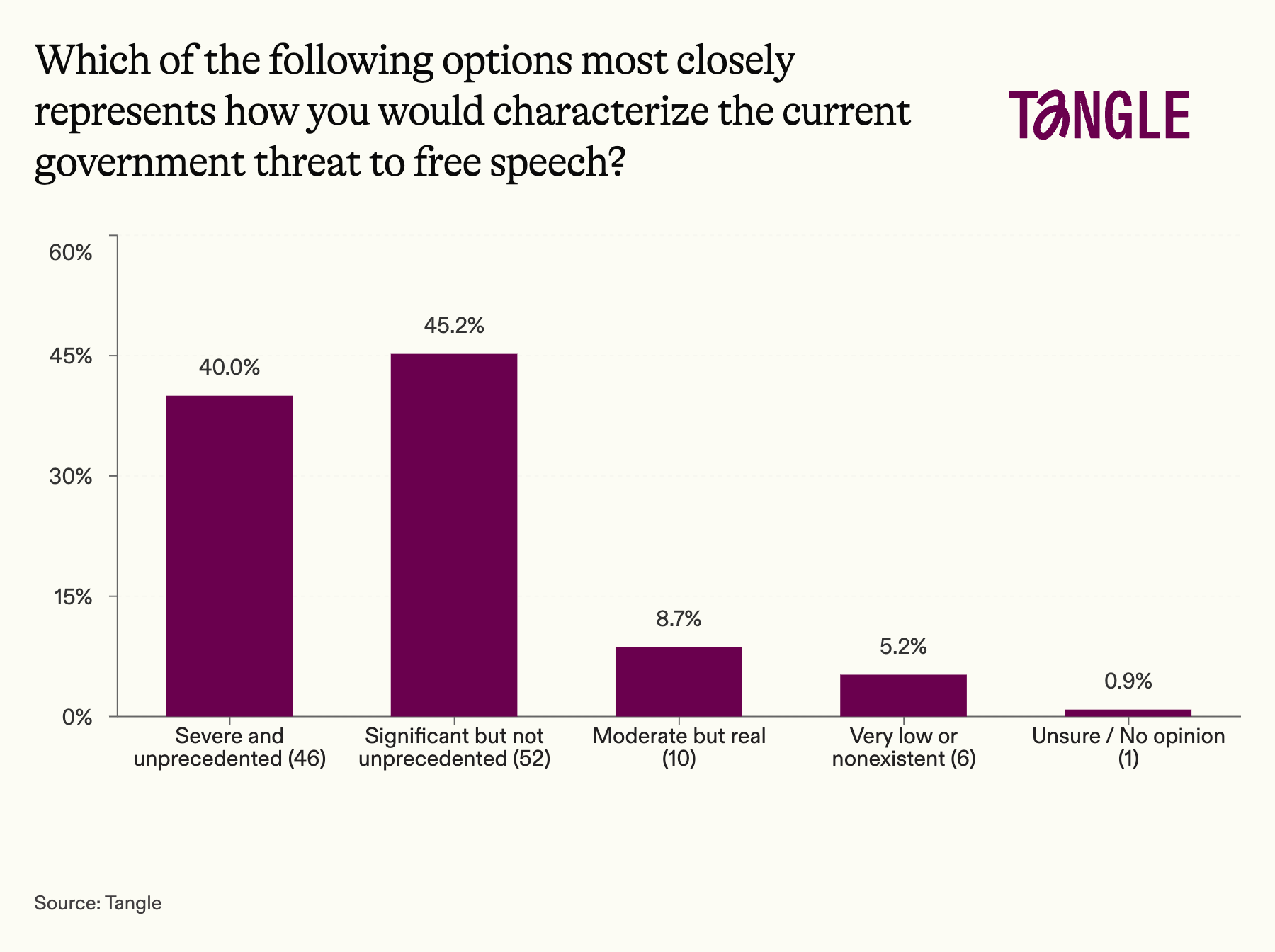
- Yesterday’s survey: Due to an error, we did not include a link to our survey in our initial email. Therefore, a smaller sample of 115 readers responded to our survey on Jimmy Kimmel’s suspension with 45% calling it significant but not unprecedented. “I would say severe but not unprecedented,” one respondent said.
Have a nice day.
On his first day back to school, 14-year-old Cody Trenkle got to meet his hero, Daryl. While skateboarding near his Missouri home in July, Cody crashed and fell 240 feet into a forested ravine. Cody suffered a brain bleed and contracted pneumonia while he fought to survive as a rescue team frantically searched for him; after 80 hours, he was finally found by Daryl, a police K-9. Cody spent 11 days in a medically induced coma and weeks more in the hospital, but he and his family finally got a chance to thank Daryl in person. “He was on a mission that day, which I’m grateful for,” Cody’s mother, Stephanie, said. “But just seeing him today and seeing Cody get to meet him, it’s pretty amazing.” KSDK has the story.

Member comments