
I’m Isaac Saul, and this is Tangle: an independent, nonpartisan, subscriber-supported politics newsletter that summarizes the best arguments from across the political spectrum on the news of the day — then “my take.”
Are you new here? Get free emails to your inbox daily. Would you rather listen? You can find our podcast here.
Today’s read: 15 minutes.

Dry Eyes? The Problem Isn’t on the Surface
If you’re constantly reaching for eye drops, you’re not alone—but you are treating the symptom, not the cause.
Chronic dry eyes often stem from internal inflammation and omega-3 deficiency, not just surface irritation. That’s why eye drops give only temporary relief.
NativePath Krill Oil is rich in highly absorbable omega-3s and the powerful antioxidant astaxanthin—both shown to support tear production, reduce inflammation, and protect eye tissue from further damage.
Thousands are switching to this simple daily capsule to get lasting comfort—without the constant need for drops.
Want to know why the drops aren’t cutting it—and what actually does work?
👉 5 Reasons Drops Won’t Work (and What Does).
*This is a sponsored post
Correction.
In response to yesterday’s reader question on the conflict between Cambodia and Thailand, we wrote that the former country of Siam was a French colony. This is not true. While France colonized neighboring countries Vietnam, Laos and Cambodia, and Siam did cede territory to France, the country maintained its independence throughout the colonial era. We conflated Siam’s breaking into the countries Cambodia and Thailand with other post-colonial partitions, and deeply regret the error.
This is our 143rd correction in Tangle's 313-week history and our first correction since August 4. We track corrections and place them at the top of the newsletter in an effort to maximize transparency with readers.
Three announcements.
We have some quick announcements to make today.
First, we are going to be taking our annual summer recess next week — August 11–17. This means no Tangle newsletter (or podcast, or Sunday edition) for the whole week (though we are going to be releasing a special YouTube video on Monday). Congress is in recess, and we think it’s a good time to get a little rest and allow you (and us!) to breathe.
That being said, we’ll be giving you a lot to think about while we’re out. Tomorrow, we’re announcing some exciting new changes in our annual “state of Tangle” newsletter to celebrate the sixth anniversary of the first-ever Tangle edition.
Lastly, we’re releasing Isaac’s interview with economist Noah Smith today; it’s the third time Noah has sat down for an interview with Tangle, and it’s a fascinating conversation on the outlook for the U.S. debt and deficit in the wake of the One Big Beautiful Bill becoming law. You can listen to the interview here.
Quick hits.
- President Donald Trump’s new tariffs on most U.S. trading partners went into effect at midnight. (The tariffs) Separately, Trump announced a 25% tariff on India after determining that the country was “directly or indirectly importing Russian Federation oil.” The new levies bring the total U.S. tariffs on India to 50%. (The levies) Separately, President Trump said he would impose approximately 100% tariffs on semiconductor chips, with exemptions for technology companies that have made assurances that they plan to manufacture their products domestically. (The announcement)
- An Army sergeant shot five soldiers at Fort Stewart in Georgia. The injured soldiers are all expected to survive, and the shooter is in custody. (The shooting)
- President Trump and Russian President Vladimir Putin will reportedly meet in the coming days, their first in-person meeting of Trump’s second term, to discuss the war in Ukraine. (The report)
- A group of Texas lawmakers who left the state to attempt to stall a GOP-led redistricting bill were temporarily evacuated from their hotel outside Chicago, Illinois, because of a bomb threat. (The evacuation)
- President Trump ordered the Commerce Department to begin work on a new census that doesn’t tally people in the U.S. illegally. (The order)
Today’s topic.
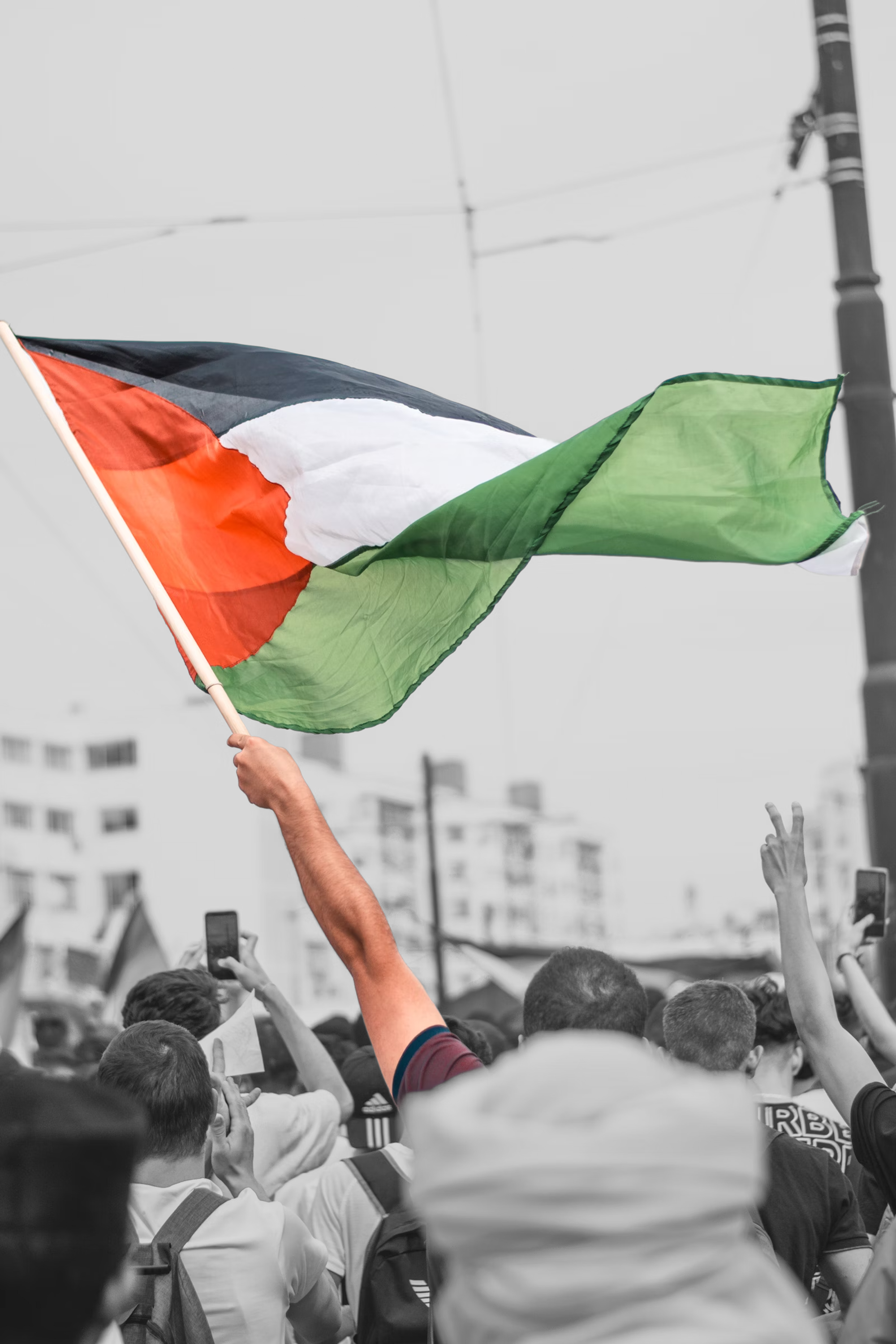
Recognition of Palestinian statehood. On July 25, French President Emmanuel Macron said France will formally recognize a Palestinian state at the United Nations General Assembly in September. The next week, on July 30, British Prime Minister Keir Starmer said Britain will also recognize a Palestinian state unless “the Israeli government takes substantive steps to end the appalling situation in Gaza, agree to a ceasefire and commit to a long-term, sustainable peace, reviving the prospect of a two-state solution.” Finally, on July 31, Canadian Prime Minister Mark Carney announced Canada will recognize Palestinian statehood, citing humanitarian concerns in Gaza. Meanwhile, the United Nations and other international organizations have accused Israel of deliberately starving Gazan civilians.
Refresher: Recognition of another entity as a state is a political and diplomatic position that can allow the countries to enter into treaties, establish embassies, and agree to trade deals. Recognition of Palestinian statehood in particular also functions as a rebuke of Israel, and if enough states recognize Palestine’s statehood, it could formally join international organizations, like the United Nations (UN). Since 2012, Palestine has been a “non-member Permanent Observer State” of the (UN), allowing it to participate in the body’s proceedings but without voting power. 147 of 193 UN member states have already recognized a Palestinian state, including European Union members Spain and Ireland.
Palestine is generally recognized as being divided into two separate enclaves — Gaza, which is governed by Hamas, and the West Bank, which is governed by the Palestinian Authority (though much of the area is under Israeli occupation). France, Britain, and Canada’s announcements all called on Hamas to release its hostages and agree to a ceasefire.
On Tuesday, The Washington Post reported that 13 House Democrats had sent a letter to President Donald Trump and Secretary of State Marco Rubio asking the Trump administration to recognize a Palestinian state, arguing that doing so would both fulfill the “legitimate national rights” of Palestinians and “ensure the state of Israel’s survival.” Rep. Ro Khanna (D-CA) spearheaded the effort and told Axios that the response from lawmakers has been “overwhelming.”
The Trump administration is critical of the movement to support Palestinian statehood. On July 31, White House Press Secretary Karoline Leavitt said, “The president expressed his displeasure and his disagreement with the leaders of France, the United Kingdom and Canada… He feels as though that’s rewarding Hamas at a time where Hamas is the true impediment to a ceasefire and to the release of all of the hostages.” Secretary of State Rubio called the recognitions “irrelevant,” and the State Department imposed new sanctions on Palestinian Authority officials and members of the Palestine Liberation Organization.
Israeli Prime Minister Benjamin Netanyahu also rebuked the announcements, saying that Prime Minister Starmer in particular “rewards Hamas’s monstrous terrorism & punishes its victims.” Simultaneously, the Israeli Security Cabinet is reportedly preparing to authorize a new military operation to occupy the entire Gaza Strip.
Today, we’ll share perspectives from the right, left, and writers abroad on the growing international recognition of Palestinian statehood. Then, my take.
What the right is saying.
- The right is critical of the countries’ declarations, and many say they only serve to embolden Hamas.
- Others argue world leaders should focus their efforts on the hostages’ release.
The Wall Street Journal editorial board said the recognitions “make a Palestinian state less likely.”
“Reveling in French, U.K. and Canadian plans to recognize a state of Palestine, Hamas has hardened its position and rejected new cease-fire talks. But even if recognizing a Palestinian state weren’t a gift to Hamas now, it would still be a policy error,” the board wrote. “The Soviet bloc and its allies recognized Palestine in 1988, but the West has long insisted that recognition follow the creation of a Palestinian state, not precede it. And to create such a state, the Palestinians would have to agree to end the Israeli-Palestinian conflict. Otherwise, a state would merely be a base from which to expand the fighting.”
“The U.K. makes no demands on the [Palestinian Authority (PA)], whose state it looks to recognize. France and Canada satisfy themselves with PA ‘commitments’ of reform they know it has no ability or intent to keep. Real actions aren’t forthcoming, so much of the world has stopped asking,” the board said. “The good news is that the decisions that matter aren’t made in Paris, London or Ottawa… International recognition can serve as a launchpad for legal warfare against Israel. But by showing Hamas that war works when fought cynically enough, and by showing the PA that it need never compromise, it pushes Palestinian statehood further away.”
In The Washington Examiner, Hugh Hewitt wrote “a Palestinian state requires the end of Hamas.”
“The Israelis will never allow a Hamas-dominated state to be established on their borders. Never. Any attempt to impose one by the Security Council of the United Nations would be vetoed by the United States,” Hewitt said. “The lame duck president of France, Emmanuel Macron, can strut and declare and could even stand alongside others such as Keir Starmer, whose Labour government was elected with 34% of the overall vote, and the U.N. absurdist General Secretary Antonio Guterres and demand such a Hamasistan, but it will not happen.”
“The Gulf States would like to see a modernized and rebuilt Gaza, but not one run by Hamas. They would like a ‘two-state’ solution as well, but behind closed doors, they are realists. They are, for the most part, done with extremist Islamist ideologies and would prefer to return to the path laid out in the Abraham Accords,” Hewitt wrote. “That path requires the end of Hamas. Every single statement by useful idiots such as Macron that impedes the release of the hostages and the surrender of Hamas and their exile to Iran or Turkey puts peace another day away.”
What the left is saying.
- The left is mixed on the recognitions, with some suggesting they are empty gestures.
- Others say they are important steps toward peace and an eventual two-state solution.
In The New York Times, Zinaida Miller wrote “the promise of Palestinian statehood is ringing hollow.”
“A new wave of recognition would represent a clear affirmation of Palestinian political independence and territorial integrity — no small matter after decades of diplomatic ambiguity and Israel’s longstanding violation of the Palestinians’ right to self-determination,” Miller said. “Yet this recognition is far too little and much too late. It is also a radically inadequate response to starvation — let alone genocide, as many human rights groups, genocide and Holocaust studies scholars and U.N. special rapporteurs have categorized Israel’s actions in Gaza after almost two years of war there. Moreover, it has been shamefully tethered to conditions.”
“Meanwhile, despite widespread consensus that Israel has committed international human rights violations and crimes, Israel faces few restrictions or conditions on the billions of dollars it receives in military aid,” Miller wrote. “The declaration promises ‘irreversible steps’ toward statehood, but for those who are starving today, the only irreversible step is death. Until statehood recognition brings action — arms embargoes, sanctions, enforcement of international law — it will remain a largely empty promise that serves primarily to distract from Western complicity in Gaza’s destruction.”
In MSNBC, Hussein Ibish argued “recognition of Palestine is not a ‘gift’ to Hamas.”
“If there were a viable ‘two-state solution’ negotiation process in place, or even conceivable under current circumstances, perhaps then there would be compelling arguments against the French move. It could force both sides into defensive crouches or provoke Palestinians to overplay their hands,” Ibish said. “But no negotiating process exists. Instead, Israel is trying to position itself to annex much or all of the West Bank, thereby cutting off the only pathway to a genuine peace. Religious extremist settlers regularly rampage through villages, further squeezing West Bank Palestinians into smaller and smaller parcels of land.”
“The French decision brings the international community back to the fundamental choice that faces the world. Israelis and Palestinians live in virtually equal numbers in a de facto Israeli state that simultaneously denies both citizenship and independence to the overwhelming number of Palestinians,” Ibish wrote. “International recognition of a Palestinian state in the occupied territories is a fraught but imperative step to preserve the only pathway for these two long-suffering peoples to live together in neighboring states in peace, security and dignity. France has shown the way.”
What writers abroad are saying.
- Some writers abroad question the logic of recognizing Palestinian statehood based on Israel’s actions.
- Others say the declarations are a symbolic step but insufficient to address the suffering in Gaza.
In The Washington Post, Tom Tugendhat, a Conservative member of the British Parliament and former security minister, called Britain’s decision “reckless.”
“France simply declared its position. Britain, however, made recognition contingent on Israeli behavior, a conditional approach that reveals the fundamental incoherence of Prime Minister Keir Starmer’s foreign policy,” Tugendhat wrote. “Palestinians either have an inalienable right to statehood or they don’t. The legal conditions are set out clearly in the Montevideo Convention on the Rights and Duties of States of 1933. Four criteria are necessary: a permanent population, defined territory, a government and the capacity to enter into relations with other states. Recognition acknowledges these facts. It doesn’t create them based on third-party behavior.”
“Starmer’s government now argues Palestinians’ rights depend entirely on another state, Israel, and on an outcome that cannot be achieved without the acquiescence of a ruthless terrorist group, Hamas,” Tugendhat said. “This logic would be absurd if applied elsewhere. Could Westminster decide that France or Ireland was no longer a state if Paris or Dublin misbehaved? Or if the actions of Germany or Italy were deemed unacceptable? Of course not. Even after the Taliban’s takeover of Afghanistan, there was no question about the country’s statehood. The change in regime didn’t invalidate the existence of the state.”
In Newsweek, Alia Brahimi said “recognizing a Palestinian state is important but no substitute for ending the atrocities in Gaza.”
“In July, 63 people died from Israel's enforced starvation. Alongside, more than 1,000 men, women, and children have been shot dead by Israeli forces while seeking food at the few remaining aid sites,” Brahimi wrote. “After 21 months of medieval destruction in Gaza, and after the worst-case scenario of famine has already been realized, the international community is finally groping for a response… For G7 states like Britain and France, the central line of effort is promising to officially recognize a Palestinian state at the U.N. in September.
“Acknowledging Palestinian self-determination is an overdue and essential symbolic step. However, it is unclear how the lightening rod of Palestinian statehood will end the daily massacres in Gaza or reverse the ongoing famine, particularly as Israel remains both defiant and cosseted by the U.S.,” Brahimi said. “Alone, the recognition of Palestinian sovereignty will surely represent cold comfort to the mothers rendered bystanders as their infants waste from hunger, to the famished civilians who will be shot by Israeli snipers while queuing for food, or to the children who will be murdered, maimed, or orphaned by Israeli bombs.”
My take.
Reminder: “My take” is a section where I give myself space to share my own personal opinion. If you have feedback, criticism or compliments, don't unsubscribe. Write in by replying to this email, or leave a comment.
- Demanding Palestinian statehood is pointless right now, while Israel militarily occupies Gaza and Hamas refuses to abdicate.
- I appreciate these countries want to do something, but lasting change has to come from Palestinians and Israelis.
- Statehood will only be possible after several arduous, years-long steps towards peace.
For a long time, I considered myself “a Zionist who supported a two-state solution.” I suppose that description might feel a little disingenuous now, but I genuinely cannot imagine a peaceful solution that doesn’t end with Palestinian statehood.
I’ve held out on writing a lengthy piece about possible solutions to the Israel–Palestine crisis in large part because doing so feels naive, pollyannish, and absurd given what is happening in Gaza right now. Similarly, discussing Palestinian statehood right now feels just as naive, pollyannish, and absurd. As I write these words, Israel’s Prime Minister Benjamin Netanyahu is rallying support around a full Gaza occupation (the predictable conclusion to this protracted war). There is no two-state solution coming — not anytime soon, at least, and certainly not because of a few sternly worded press releases from a few NATO countries.
These declarations, ironically, come at the nadir of the Palestinian cause. Many Palestinians have been angling for this kind of recognition or support from the West for years, yet it only comes when their territory is in nearly complete ruin, they are scattered across the Gaza strip, and they are oppressively ruled by a terrorist organization. The statements of support are not meant to trigger a Palestinian state next week; they are meant to signal “we don’t support this war, and we think one day Palestinians should have true self-determination.” This on its own is admirable, but still, to make this call now constitutes little more than an empty gesture.
Critics of this sudden push for statehood make two obvious and compelling points. First, exactly what is being recognized as a state? The borders for Gaza and the West Bank are not clearly defined, and no existing governing body can be entrusted with such a state (or, for that matter, has a rightful claim to govern both enclaves). Second, what is the rationale for awarding statehood now, after all the events of the last two years? Hamas and Israel have been incapable of landing a peace deal; Hamas is releasing videos of starving hostages in an obvious effort to maximize its leverage (it is, probably, having the opposite effect); and Hamas continues to have a stranglehold on the population in Gaza and make unreasonable demands for a ceasefire, like Israel abdicating control of Jerusalem.
At the same time, I can see the arguments for pursuing statehood, or making it part of the conversation, right now. Many Israelis, and many Zionists, make a case for fighting this war to the bitter end like this: “We always do the same thing over and over again. We get attacked, we respond with force, and we pull out before actually destroying Hamas or sufficiently bringing the extremists to heel. This time, we are going to finish the war.”
As I’ve said before, “finishing” the war sounds a lot to me like an ethnic cleansing or genocide. It always seems to imply the removal not just of Hamas but much of the Palestinian population from Gaza, and the proposal has garnered much less resistance among Israelis than I had hoped.
I’ve found this logic not only cruel but frustratingly unimaginative; there’s more than one way to “not do what we’ve always done.” Rather than taking control of Gaza and pushing Palestinians out, what if Israel took an actual step towards reconciliation? They could use statehood as a carrot to end this current war, propose real terms for a free Palestinian state that are acceptable to both sides, and let the Palestinian people decide whether they’d rather live under Hamas oppression and Israeli fire or free of both.
It’s an appealing prospect — it certainly appeals to me. But, to go back to my first point, I can’t even begin to discuss it today without feeling totally naive, pollyannish, and absurd.
The truth — the hard but unavoidable truth — is that we are not months, or years, but probably decades away from a peace project with any staying power. My opinion, which I understand differs from others, is that the very first step towards that future is to end this war. That has been true for many months. Israel has to leave Gaza and stop bombing it; Hamas has to surrender, release the remaining hostages and stop firing rockets into Israel. Nothing else moves until that happens.
Then, Gaza has to be rebuilt. It has to become livable again. People need to be able to worship, kids need to go to schools, food and water need to flow freely, hospitals need to function. A genuine governing coalition has to be formed that is not based on the idea of destroying Israel or ejecting Jews from the region — that government doesn’t stand a chance unless it is freely elected by Gazans, not imposed through press release dictates from foreign leaders. All of this would be much easier with a political and cultural revolution that embraces moderation and coexistence (this, by the way, is now a problem among Israel’s right as well).
And only then — after the war ends, after the rebuilding begins, after the reforms start, after political movements toward the center, and after a governing coalition is formed — can negotiations for lasting peace between Israel and a Palestinian state begin. The foundation for peace would likely require years to build. It will involve Israeli officials pointing to all the territorial offers they’ve made in the past that have been rejected or ruined, and demanding that Palestinians accept responsibility for getting less now than they could have 50 years ago. It will involve Palestinians demanding access to holy sites they’ve been prohibited from for decades, and demanding bare minimums that have been included in many of the deals they have refused in the past. This will all be predicated on drawing up a territorial agreement that is amenable to enough Palestinians and enough Israelis that leaders on both sides can manage the fear and fury from their own people who will inevitably reject it. In other words, it will involve compromise.
This would all need to happen amid generational healing between the millions of Palestinian and Israeli children currently living through this war. They will have to unlearn their hate to allow the next generation not to be taught that the people across their territorial lines are enemies.
This is the honest path — the only way, the only realistic description of what is to come. It is a low-probability but high-reward path, which is why it repeatedly and continuously fails — until, one day, it won’t.
I’ll offer this closing thought, too: A disastrous, horrific episode like October 7 and the years since could be a genuine opportunity — that part is not naive, absurd, or pollyannish. It’s a real opportunity for a generation of Palestinians to see clearly the futility of Hamas’s vision, the futility of trying to destroy Israel, and the inevitable failure of militant Islamist leadership. It’s also a real opportunity for a generation of Israelis to see clearly the folly of Netanyahu’s post-October 7 response, the unspeakable pain it has wrought, and the impossibility of living next to a nation of people you are consistently and repeatedly suppressing with violence in the name of self-defense.
The harsh reality is that such an opportunity can’t be realized in a matter of weeks, months, or years. It certainly can’t be achieved through meaningless gestures by other countries in the middle of a war; it will take genuine work, years and decades of hardship and negotiations, and true leadership. Anyone selling anything simpler or easier than that is selling a lie.
Take the survey: Do you support Palestinian statehood? Let us know.
Disagree? That's okay. My opinion is just one of many. Write in and let us know why, and we'll consider publishing your feedback.
Your questions, answered.
Q: What’s Tangle’s opinion on the fighting that broke out in Cambodia and Thailand?
— Alicia from West Virginia
Tangle: Note: This is part two of a two-part answer to this question. Yesterday, we discussed the historical context behind the conflict and described the recent fighting along the border. Today, we’re focusing on Thailand’s Prime Minister Paetongtarn Shinawatra’s scandal and our overall analysis of the conflict.
In researching the history leading up to the recent fighting, we found that the conflict reveals fascinating aspects of Thailand's government.
When you read about the ceasefire Cambodia and Thailand reached, you learn that the people responsible for the agreement were Cambodian Prime Minister Hun Manet and Thai Acting Prime Minister Phumtham Wechayachai. A name you don’t read is Paetongtarn Shinawatra, Thailand’s suspended prime minister. On July 1, Thailand’s Constitutional Court suspended Paetongtarn — the 38-year-old who, in August 2024, became Thailand's youngest and second-ever female prime minister — over a phone call between her and Cambodian Senate President Hun Sen.
In that call, which Hun Sen’s office leaked, Paetongtarn used casual language with the Cambodian Senate president and criticized members of Thailand’s military. In particular, Paetongtarn called Hun Sen “uncle” (a regional term of respect) and said that a Thai lieutenant general “was an opponent of Thailand and would say anything to make himself look cool.”
The Shinawatra family may be the most politically influential in the country’s history. The suspended prime minister’s father, Thaksin Shinawatra — who also served as prime minister of Thailand, and is now the 11th richest person in the county — considers himself a “godbrother” of Hun Sen. Despite its fortune, the family is a mainstay in the working-class, populist movement that opposes the country’s establishment power structures in the monarchy and military. In 2006, after consolidating a great deal of political power and facing charges of abuse and corruption, the military deposed Thaksin Shinawatra in a coup d’etat (Thaksin is currently on trial for insulting the monarchy).
Thailand has a long history of political upheaval and military coups, experiencing at least 12 successful coups (and even more political crises) since the country instituted its modern-day constitutional monarchy in 1932. Recently, protesters have demanded that suspended Prime Minister Paetongtarn resign, claiming the phone call proves she is disloyal and “endangering national interests.” Now, after a major party has left Paetongtarn’s governing coalition and while the court considers her case, the prime minister seems to be on her way out — and the country appears to be on the verge of another coup.
We're not really in a position to offer an opinion on a conflict that we, too, are learning about in real time. But from where we're sitting, the good news is both sides seem sincere in wanting to avoid an all-out war. Hopefully this write up allows you to better understand, contrast, and contextualize the news you are reading about the conflict — and come away with your own conclusions.
Want to have a question answered in the newsletter? You can reply to this email (it goes straight to our inbox) or fill out this form.
Under the radar.
On Monday, Illinois Gov. JB Pritzker (D) signed a bill banning artificial intelligence (AI) therapy, making it the first state to enact AI regulations for mental health services. The bill passed both chambers of the state legislature unanimously, with lawmakers highlighting instances of AI chatbots providing dangerous suggestions to users in mental health crises to explain the necessity of the new policies. The law bars AI chatbots or tools from acting as a stand-alone therapist and prohibits licensed therapists from using AI to make “therapeutic decisions” or perform any “therapeutic communication.” Companies or individuals found to violate the law face $10,000 in fines. Engadget has the story.
Stop Chasing Temporary Relief—Fix Dry Eyes at the Source
Constantly using eye drops? You're treating the symptom, not the cause.
Chronic dry eyes stem from inflammation and omega-3 deficiency—that's why drops only provide temporary relief.
NativePath Krill Oil delivers omega-3s and astaxanthin to support tear production and reduce inflammation for lasting comfort.
Numbers.
- 19. The number of countries in the Group of 20 (G20) industrialized nations.
- 10. The number of G20 countries that have recognized a Palestinian state (not counting Britain, Canada, or France).
- 34%. The percentage of Palestinians in the Gaza Strip who expressed support for a two-state solution that involved the establishment of a Palestinian state in September 2023, according to The Palestinian Center for Policy and Survey Research.
- 62%. The percentage of Palestinians in the Gaza Strip who expressed support for a two-state solution in March 2024.
- 34%. The percentage of Palestinians in the Gaza Strip who expressed support for a two-state solution in May 2025.
- 35% and 46%. The percentage of Israeli adults in 2023 who said there is and is not, respectively, a way for an Israeli and an independent Palestinian state to coexist peacefully, according to Pew Research.
- 26% and 50%. The percentage of Israeli adults in 2024 who said there is and is not, respectively, a way for an Israeli and an independent Palestinian state to coexist peacefully.
- 21% and 50%. The percentage of Israeli adults in 2025 who said there is and is not, respectively, a way for an Israeli and an independent Palestinian state to coexist peacefully.
The extras.
- One year ago today we covered Kamala Harris picking Tim Walz as her running mate.
- The most clicked link in yesterday’s newsletter was our recent Friday edition on the future of climate change.
- Nothing to do with politics: Go to the coast for National Lighthouse Day.
- Something to do with politics: The Smithsonian removed references to President Trump in their exhibit on presidential impeachments. Was it political placation, or is there a mundane explanation? Senior Editor Will Kaback broke it down in an Instagram reel here.
- Yesterday’s survey: 1,857 readers responded to our survey on greenhouse gas emission regulations with 27% characterizing the EPA’s regulations as far too little. “This is not a today issue as much as a tomorrow issue,” one respondent said.

Have a nice day.
Beekeeper Molly Earl set up a bee-removal company, Bees Off, to save bees that would otherwise be killed by pest controllers. The company grew quickly, and she soon ran out of room for all her bee colonies. In seeking a solution, Earl began setting up hives in overlooked “pockets of nature” — by power stations, in replanted quarry sites, near docks. Earl’s bees have thrived in these spaces, and are producing award-winning honey. Positive News has the story.
Don’t forget...
🎧 We have a podcast you can listen to here.
💵 If you like our newsletter, drop some love in our tip jar.

Member comments