Sign up for the Free Tangle Newsletter Highly curated unbiased news for busy, open-minded people.
Processing your application
Please check your inbox and click the link to confirm your subscription.
There was an error sending the email
Written by: Tangle Staff

What we disagree about when we disagree about meat.

Why reasonable people can look at the same evidence — and eat very differently.

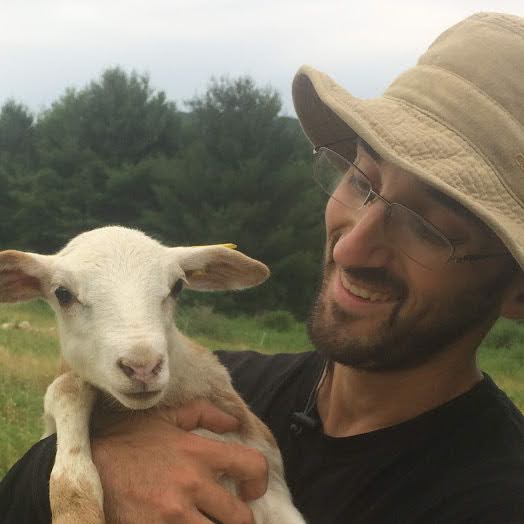
Photo of the author working on a livestock farm in Ithaca, New York, 2017 | Photo from Matthew Kessler

By Matthew Kessler


Twenty-two heritage breed turkeys. Sixteen chickens. Three geese. The farm crew, all five of us, knew our assignments. We were out in the field early that Monday morning before Thanksgiving. I still vividly remember the line of four cones strung between trees to contain the chickens’ necks; the bumps and sounds created by the violently rotating 27-inch rim plucker; and my cold, visible breath as I walked down the hill that morning in the Moapa Valley desert in Nevada. I didn’t stop eating meat on that day, fifteen years ago — but it did profoundly change my relationship with eating animals.

This wasn’t my first or final shift. A few years earlier, when I turned twenty, I accidentally became a vegetarian. 

I was living on a farm in Hawaii, eager to learn some skills I missed while growing up in the Long Island suburbs — skills like growing my own food, basic carpentry, and how to skip winters. It turns out the pests enjoyed the “winter skipping,” too, and they made vegetable growing a lot harder. 

In addition to producing locally grown value-added products like hot sauces and banana breads, the farm had a sizable kitchen garden. This produce went straight to feeding the ten people working and living on the farm. We grew some vegetables alongside perennial shrubs and fruit trees — mango, avocado, banana, papaya, and starfruit trees — and lilioquoi (passionfruit) vines grew throughout the farm. And the kitchen garden contained no livestock, unless you count the earthworms. 

After half a year on that farm, I hardly realized I wasn’t eating meat. The flavors, colors and smells were so new and exciting, so incredibly different from what was available in the suburbs I grew up in, that I hardly noticed. I didn’t crave the Wendy’s spicy chicken sandwich that I ate for lunch most days in my senior year of high school. Becoming an incidental vegetarian wasn’t about making a point, taking the moral high ground, or thinking about the environmental impact of eating animals. It was much more about fitting in.

Over the last two decades, I’ve eaten animals from time to time, but not routinely. I’ve worked on farms and kitchens across the U.S. and a handful abroad. Over the past five years, I’ve worked at TABLE, a global platform that approaches food-systems debates with a commitment to understanding competing perspectives similar to Tangle’s. That work has brought my attention squarely back to the question of meat.

At TABLE, I led a two-year podcast project exploring four different futures for meat: efficient meat, less meat, “alternative” meat, and no meat. Alongside the researchers on the project team, I spoke to livestock farmers, vegan activists, investors in lab-grown meat, and scientists of all disciplines to try to understand the different motivations, evidence bases, and visions behind a “good” meat — or meatless — future. 

Occasionally, I was confronted with two wildly different worldviews on the same day. In the morning I’d interview an entrepreneur who wrote a book laying out the case against eating meat, and in the afternoon, a poultry geneticist would tell me why their research on optimizing feed conversion was crucial from a social and environmental perspective.

I was struck by how every person I spoke to was acting in good faith, working towards their version of a just world, yet arriving at almost opposite conclusions. The primary difference between the people I spoke to was a different set of values, formed through life experiences, education, jobs, politics. 

To illustrate this, consider how much you agree or disagree with the following two statements:

  1. It is immoral to kill and eat animals when alternatives exist.
  2. It is unfair that some people can access nutritious animal protein while others cannot.

The vegan writer and entrepreneur I spoke to would strongly agree with the first statement, grounded in a moral commitment to minimizing harm to other sentient creatures. The poultry geneticist would strongly agree with the second, rooted in the belief that access to affordable, nutritious food is a matter of equity and social justice. 

When values sit this deep — touching morality, dignity, and responsibility — we rarely approach the evidence we encounter neutrally. We tend to, often unconsciously, seek out facts and arguments that affirm what already feels right.

This helps explain why debates about meat often feel so intractable, and why they so easily slide into shouting matches that rival any political mudfight you might read in Tangle. 

Livestock has become a flashpoint where very different values collide. For many farmers, criticism of meat production feels like an attack on their livelihoods, identities, and ways of life — on systems they inherited rather than designed. For many climate advocates, industrial livestock represents one of the largest levers we should pull to reduce emissions and delay feels like a planetary risk we can no longer afford. Both positions are animated by real stakes, and both can feel morally urgent.

Today’s digital media ecosystem does little to hold that tension. Online, the meat debate is often framed as farmers versus environmentalists, tradition versus progress, rural survival versus urban moralizing. The amplification of these framings are far better at hardening positions than at clarifying trade-offs. 

Before turning to the evidence on meat production and consumption, I want to acknowledge that two things can be true at the same time. 

First, eating meat can be core to someone’s identity. It is rarely just about nutrition or emissions.  It connects people to family traditions, religious practices such as halal and kosher, and formative memories that shape belonging and comfort (you may remember the classic reveal scene of food critic Anton Ego in Ratatouille). Food is deeply personal, and meat — because it involves the deliberate killing of an animal — is especially charged. Arguments against it can feel less like policy proposals and more like judgments on one’s values or way of life.

The second acknowledgment is that the scale of industrial animal production in the twenty-first century is unprecedented and increasingly difficult to defend on environmental grounds. More than 70 billion chickens are slaughtered each year, alongside roughly 1.3 billion ruminants (mostly cows, sheep, and goats). The issue is not only represented through number of animals but in the land, feed, water, and emissions embedded in producing meat at this scale.

Now, what’s behind those  numbers? Every animal is different, as are plants, so broad generalizations can mislead. Still, on average, animal-based foods are less efficient than plant-based foods at converting biomass into edible calories.. TABLE has done a deep dive on the contested evidence. Ruminants in particular require more land and feed, emit more greenhouse gases, and tend to exert greater pressure on biodiversity. Chickens and fish, depending on how they are produced, generally have lower associated emissions. At the same time, efficiency is not the only metric people care about. A cow raised largely on pasture may live a longer, arguably better life than a broiler chicken bred to reach slaughter weight in under two months, highlighting how different values elevate different harms.

Social aspects matter, too. Labor conditions, fair wages, food affordability, and impacts on surrounding communities and ecosystems all shape how different people evaluate the same system. 

It’s worth pausing here to ask what we picture when we talk about the “average” production system. For many people, the image swings between two extremes: idyllic pastures and small family farms on the one hand, or grim industrial facilities on the other. In reality, production systems vary widely by country, species, and welfare standards — and in the United States, many cattle move through both systems over their lifetimes. That said, the vast majority of animals raised for meat in the U.S. — an estimated 99 percentare ultimately produced or finished in what are commonly called factory farms, more precisely known as Concentrated Animal Feeding Operations, or CAFOs.

These systems produce high yields by concentrating animals, feed, and infrastructure, but they are not without costs. Criticism of industrial livestock is not limited to their environmental footprint such as manure management, water pollution, or high fossil fuel use; it extends to social impacts including low wages, dangerous working conditions, consolidation that squeezes farmers, and the disproportionate burdens placed on nearby communities. When people argue about the harms of meat production, this is usually the system they are arguing about, whether they name it or not.

Supporters of livestock respond by pointing to alternatives. When we move from industrial animal production to a small- or mid-sized farm in the United States, the tradeoffs look different. Some sustainable agricultural practices take animal welfare seriously, steward land in ways that can support biodiversity, and treat workers with dignity. 

I’ve studied and worked on such farms.  One of them includes the college in North Carolina I graduated from, where the students managed a 300-acre, rotationally grazed, integrated crop-livestock farm. Over a 5–7-year rotation, the same farm field could be growing row crops like corn, forage crops such as alfalfa, or grasslands for sheep and cattle to graze. 

These systems often align well with values around animal welfare, care for the environment and dignified labor. They also require more labor and a broader knowledge base, as farmers work with multiple species across the same landscape. At the same time, such systems typically produce less food at a higher price tag than industrial meat, and because animals often live longer, they can carry a higher carbon footprint per unit of meat. This raises difficult questions about food affordability, equity, and whether smaller farms can alone meet demand at a national or global scale.

This is where the meat question becomes most interesting to me. Not strictly because people hold different values, but that they can reach different conclusions while looking at  the same evidence. Here’s one example, based on a statistic that came up repeatedly in my podcast conversations. Roughly half of the world’s habitable land is used for agriculture, and more than three quarters of that agricultural land is devoted to livestock, including both grazing and the production of animal feed. At the same time, meat provides only about 17 percent of global calories and roughly a third of global protein. 

For some of my guests, that settled the matter. Livestock-heavy food systems appear profoundly inefficient, even irresponsible. One food systems researcher described what underlies the land-use discrepancy: “The problem is the inefficiency of converting all those calories and all that protein into animal meat through the medium of an animal’s body.” This helps explain why so much land ends up contributing relatively few calories. It is also often the same land that could otherwise support forests, wetlands, or peatlands — ecosystems that store carbon, sustain biodiversity, and buffer us against climate change.

But others heard the same numbers very differently. As one UK cattle farmer told me, “My cows are bringing in nutrition from a part of the landscape that I cannot otherwise make part of my food system. Much of what’s counted as “livestock land” is grassland that can support animals but cannot support arable crops — and often cannot be converted into forests or wetlands. “They’re an additional ecological benefit as well as a source of nutrition.” From this view, the question isn’t whether animals use land, but whether they compete with crops that humans could otherwise eat.

What makes producing a clear winner from this debate even harder is that none of these questions exist in isolation. As incomes have risen and the global population has grown beyond eight billion, meat consumption — alongside the pressures it puts on the planet — has increased. At the same time, meat remains a highly nutrient-dense food, with negative health impacts not as much linked to modest intake but to over-processing and overconsumption. 

What emerges from looking closely at the evidence is a clearer map of the choices we’re making and the trade-offs they entail. Land, climate stability, nutrition, affordability, and cultural continuity all matter — but they cannot all be optimized at once. Recognizing this helped me see how different people, trying to optimize for different factors, can look at the same statistics and accept some compromises are reasonable and deem others unreasonable.

That brings me to my final reflection on how to navigate this complicated terrain. I’ve spent years immersed in conversations, debates, scientific evidence and hands-on work across farms, kitchens, and food supply chains. And still, I find the question of meat terribly challenging. 

For me, eating less meat and more plants than we do today in highly industrialized countries is imperative, but taking that position politically, in the United States or elsewhere, is unlikely to win elections. In fact, the current Trump administration is advocating to consume more animal protein under the newly released dietary guidelines for Americans.

My personal abstraction falls away when my decision becomes immediate, as it does for most people. What do my vegan wife and I decide to feed our two young children? And to what extent does that individual choice shape the kind of world we want them to live in?

Do we serve them meat: a nutrient-dense food that connects us to family, cultural traditions, and our long-standing relationships with land and animals? Or do we avoid it, knowing that this nourishment comes from a resource-intensive system and the death of a sentient creature that did not need to die?

For now, at least while we are making decisions on the behalf of our children, we’ve landed somewhere in between. We’re raising them on pescetarian diets — some eggs, some yogurt, some fish — not because we believe this is nutritionally essential, but because it reflects the balance of concerns we’re trying to hold at once: nourishment and care, environmental responsibility, respect for animals, and an awareness of the systems that make food accessible for others.

I don’t offer this as a model to be copied. What I’ve learned throughout this journey is that values matter, and so does context. The conditions under which food is produced and accessed shape which choices are even on the table. In some regions, livestock is one of the few viable ways to turn land into food. In others, high levels of meat consumption persist less because of necessity than habit, even when affordable and nutritious alternatives are readily available.

That’s why people who take the meat question seriously can still land in different places. Depending on which concerns impact you most acutely — the cost of food, fairness to farmers, environmental limits, animal welfare, cultural continuity, or simply pleasure at the table — you may arrive somewhere else than I have. 

The harder question is whether that landing reflects your constraints, or simply your comforts. I’ve been on both sides of that line, and as our circumstances and contexts change, I suspect our relationship with meat may change with them. Bon appétit.


Matthew Kessler is the creator of Feed: A Food Systems Podcast and has spent the past 15 years moving between farms, kitchens, universities, and recording studios. A native New Yorker, he now lives in Sweden, where he makes bagels and pizza for his family.

Member comments

More from Tangle News related to this article

Recently Popular on Tangle News