
I'm Isaac Saul, and this is Tangle: an independent, nonpartisan, subscriber-supported politics newsletter that summarizes the best arguments from across the political spectrum on the news of the day — then “my take.”
Are you new here? Get free emails to your inbox daily. Would you rather listen? You can find our podcast here.
Today’s read: 13 minutes.
Revisiting Project 2025.
Tomorrow, Executive Editor Isaac Saul and Editor Russell Nystrom will revisit Tangle’s coverage of Project 2025. Together, they’ll explore how much the Trump administration is following Project 2025, how much its contributors are involved with the administration, and how our coverage (and Isaac’s take) has held up since 2024.
Reminder: Friday editions are members-only content. This month, we’re offering a 20% discount on a membership — so it’s a great time to join 70,000+ subscribers!
Are you following us on YouTube?
If you aren’t, you should be. We’re releasing full-length video episodes of our podcast Suspension of the Rules every Friday, putting out more deep dives — like our recent look into agency reassignments — every month, and publishing more interviews with interesting guests. Recently, Isaac sat down for a conversation with Supreme Court expert Sarah Isgur, and you can watch that conversation here!
Quick hits.
- Border czar Tom Homan announced the Trump administration will end its immigration operation in Minnesota, saying that federal agents assisting the operation will return to their home stations or deploy elsewhere in the next week. (The announcement)
- Several outlets reported that the U.S. military shot down a party balloon that it initially believed to be a foreign drone near El Paso, Texas. The incident led the Federal Aviation Administration to announce a 10-day shutdown of the airspace around the El Paso airport, which it lifted a few hours later. (The reports)
- The House voted 219–211 to pass a resolution repealing President Donald Trump’s tariffs on Canada, terminating his national emergency declaration used to impose the duties. Six Republicans joined all Democrats in supporting the resolution; it now heads to the Senate. (The vote) Separately, the House voted 218–213 to pass the SAVE America Act, which would require proof of citizenship to register to vote and photo identification to vote in federal elections. The bill now heads to the Senate. (The vote)
- Attorney General Pam Bondi testified before the House Judiciary Committee, with lawmakers questioning her about the Justice Department’s handling of files related to Jeffrey Epstein and its investigations into political opponents of President Trump. Bondi repeatedly clashed with Democrats over her actions as attorney general. (The hearing)
- Ukrainian President Volodymyr Zelensky accepted a U.S. offer to hold further talks with Russia over a potential peace agreement. Russia has not yet agreed to the talks. (The update)
Hey, it’s Isaac.
If you’ve been a regular Tangle reader, then you know I joke about being a prepper. Except... it's not really a joke anymore, is it?
Between extreme weather, infrastructure failures and political instability, having a plan just makes sense.
The Disaster Playbook is what I personally use because it gives you a complete system: straightforward checklists, gear lists, and disaster drills with silly jokes & illustrations that make it easy for my entire family to engage with it and get prepared.
Click here to get the Disaster Playbook and get 15% off with code "TANGLE."
*Our sponsors like Disaster Playbook help keep Tangle free — thank you for supporting them when you can!
Today’s topic.
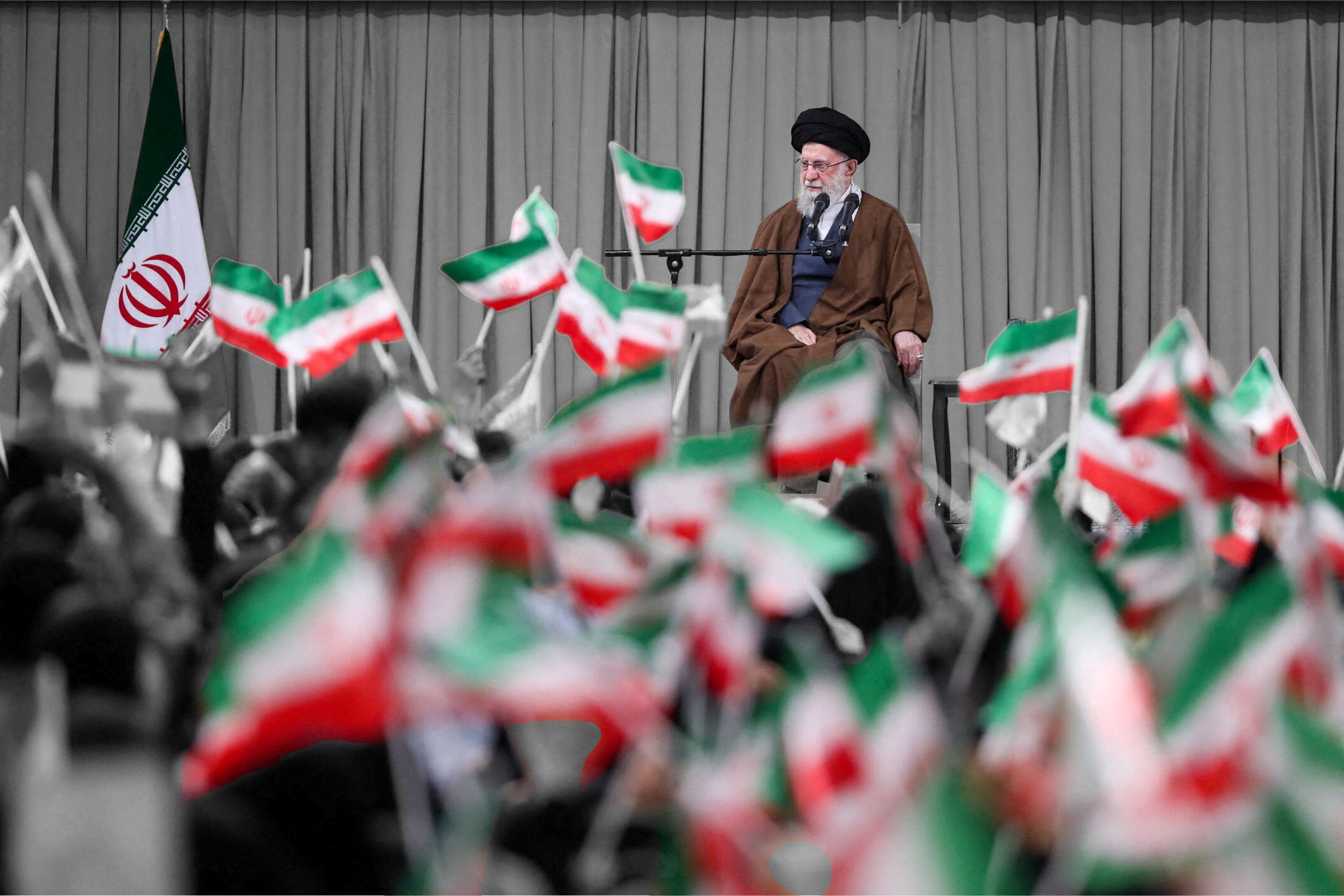
Tensions with Iran. In recent weeks, the United States has built up its military presence in the Middle East while conducting negotiations with Iran over its nuclear program. The aircraft carrier USS Abraham Lincoln and its strike group arrived in the Arabian Sea on January 26, bringing an additional 5,700 U.S. troops to the region. On Wednesday, the Pentagon reportedly told a second aircraft carrier group to prepare for deployment, while President Donald Trump met with Israeli Prime Minister Benjamin Netanyahu to discuss diplomatic and potential military strategy. Meanwhile, U.S. and Iranian officials met for indirect talks in Oman on Friday, February 6, for the first negotiations between the countries since the U.S. struck Iranian nuclear sites in June 2025.
Back up: A mass protest movement sparked by economic dissatisfaction swept through Iran from December 2025 through mid-January. The Iranian government responded to the protests with force, cutting off the country’s internet access and using the military against protesters. Roughly 7,000 people — including at least 6,500 protesters — have been confirmed dead in protest-related incidents, according to the Human Rights Activist News Agency (HRANA), but the true death toll may be as high as 30,000. President Trump previously threatened military action against Iran if the government were to harm any protesters.
The negotiations in Oman centered on Iran’s nuclear program. President Trump described the talks as “very good,” and Iranian foreign minister Abbas Araghchi called the talks “a good start.” However, President Trump has continued to threaten military action, and the U.S. Maritime Administration has warned U.S.-flagged ships sailing in the Middle East to avoid Iranian waters as much as possible.
During the Wednesday meeting between President Trump and Netanyahu, Trump stressed that negotiations with Iran would continue. Netanyahu reportedly presented Trump with additional intelligence on Iranian military capabilities and advocated for Israeli security interests, though no guarantees from the U.S. have been confirmed.
Below, you’ll hear from the right, left, and international writers about the ongoing tensions. Then, Senior Editor Will Kaback gives his take.
What the right is saying.
- The right favors military action against the regime, not concessions.
- Some on the right are skeptical that revolution in Iran will succeed on its own.
The Wall Street Journal editorial board wrote “the ‘deal’ in Iran is regime change.”
“Before June’s 12-day war, Mr. Trump gave Ayatollah Ali Khamenei two months to dismantle his nuclear program. The Supreme Leader refused, so Jerusalem and Washington did it for him, burying Iran’s nuclear material deep underground. Concessions now on the enrichment of nuclear fuel — if the regime is even willing to make them — are far less meaningful,” the board said. “Tehran presumably would demand sanctions relief in return, but that would help the regime shore up its power with more money to fund repression. What message would that send to the Iranian people after so many risked their lives to protest?”
“There is a better way for President Trump: Help the protesters topple the ayatollah and his enforcers. Don’t crush the Iranian people’s hopes; give them the confidence to keep pushing against a regime that has no answer but bullets to any of their problems. If Iran’s revolutionary regime falls, the whole region gets better. China and Russia lose the third spoke in their axis of U.S. adversaries,” the board wrote. “Iran’s regime and its proxies are at their weakest, and its people are waiting. Mr. Trump has forged his opportunity, and this is his moment to seize it.”
In The Free Press, Niall Ferguson explored “the myth of revolution in Iran.”
“True restorations are few and far between… But in each case these restored regimes were fragile and ephemeral,” Ferguson said. “The harsh reality is, therefore, that most counterrevolutions fail. That was true in the Vendée in 1793–1796, when the devout peasants opposed to the new regime in Paris were slaughtered by the revolutionaries. It was true in the Russian Civil War, when the White armies ultimately failed to oust the Bolsheviks from what had been St. Petersburg.”
“I passionately wish it could be otherwise. The images of the slaughter in Iran — of the corpses in body bags strewn contemptuously on the ground — are agonizing to contemplate. For the people of Iran, I have little doubt, it would be far preferable if the genial Mr. Pahlavi could resume his father’s Peacock Throne with the support of the United States and its allies,” Ferguson wrote. “If President Trump can do anything at all to impede, if not destroy, the Islamic Republic’s massacre machine, I wish Godspeed to those who receive the orders to strike.”
What the left is saying.
- The left says that striking Iran could backfire and escalate the conflict.
- Some compare President Trump’s strategy in Iran to President President Bush’s in Iraq.
The Bloomberg editorial board argued “it will take more than bombs and missiles to fix Iran.”
“It’s impossible to know whether the US president will carry out his threats to strike Iran, how the regime might retaliate or what the long-term fallout would be. What’s surer is that neutering the threat posed by Iran and encouraging a better future for its people will take more than bombs and missiles,” the board said. “Assassinating Supreme Leader Ayatollah Ali Khamenei might unify the regime rather than bring it down. Destroying missile factories and air defense sites would aid US allies in the region more than Iranian protesters. A sustained air campaign would likely be required to shake the foundations of the government, risking retaliatory attacks on Israel and shipping in the Persian Gulf.”
“Meanwhile, the US should offer incentives — including the possibility of sanctions relief — to those willing to break with the regime. Leading civil-society figures have united around a demand for a new constituent assembly, so Iranians themselves can decide what form of government they want. The US should back their efforts,” the board wrote. “There’s no quick solution. Regime change now would almost certainly result in a military-led dictatorship, which might only redouble efforts to build a nuclear bomb. Whatever the president’s objectives, helping Iranians find a better future will be the work of months and years, not days.”
In The Los Angeles Times, Jon Duffy said “the U.S. military strategy in Iran feels eerily familiar.”
“If this sequence sounds familiar, it should. In late 2002 and early 2003, the U.S. followed a similar path. Military power accumulated faster than political clarity. The administration cited shifting rationales for invading Iraq — first terrorism, then weapons of mass destruction, even regional stability — while promising that speed and overwhelming force would secure American interests,” Duffy wrote. “Our failure was never seriously articulating how force was meant to shape what came next politically. Two decades later, the circumstances are different, but the failure is unmistakable.”
“The broader consequences of using force as the default tool of statecraft extend well beyond any single strike. Repeated military action taken without clearly articulated objectives erodes U.S. credibility and weakens the connection between American demands and American restraint,” Duffy said. “This is not an argument for passivity. It is an argument for seriousness and accountability. If the administration believes military force is necessary, it owes the American public more than movement and threats. It owes a clear explanation of what it is trying to achieve, why military force is appropriate and how success will be measured.”
What international writers are saying.
- Some writers abroad say the first round of negotiations signals some progress, but a near-term breakthrough is unlikely.
- Others say U.S. bombing and broad sanctions would only strengthen the Iranian regime.
In Al Jazeera, Muhanad Seloom wrote “Iran-US talks in Muscat bought time, not a deal.”
“Iran had previously insisted on communicating with the US only through Omani intermediaries. Crossing that barrier, even partially, suggests both sides recognise the limits of indirect talks once bargaining becomes technical,” Seloom said. “The fundamental dispute over what the talks are about remains unresolved. Iran won the first procedural battle: The venue moved from Turkiye to Oman, regional observers were excluded, and Araghchi claims only nuclear issues were discussed. Secretary of State Marco Rubio said before the talks that the agenda needed to include ‘all those issues.’ If the second round begins with the same fight over scope, it will signal that even the basics remain unsettled.”
“If Washington continues to layer new economic penalties between rounds of talks, Tehran will treat it as evidence that diplomacy is performance rather than process,” Seloom wrote. “The most probable short-term outcome remains neither breakthrough nor war, but a managed deadlock in which both sides maintain maximal public positions while avoiding steps that would make future talks impossible. In practice, this is a pause sustained by caution rather than a settlement anchored in confidence. For the broader region, the distinction matters urgently.”
In The Free Press, Haviv Rettig Gur suggested “the Iranian regime is stronger than we think.”
“We have to understand that we cannot defeat a catastrophe-tolerant regime by increasing the level of catastrophe. Blunt, broad-based economic punishment won’t work. Mass bombing campaigns that spark an even small-scale rally-around-the-flag effect would be counterproductive,” Gur said. “The Islamic regime doesn’t derive legitimacy from prosperity or peace, so Iran getting even poorer won’t undermine it. This would only cause the public to suffer while the state uses scarcity to tighten control. And giving the regime an external enemy would only enable a more aggressive crackdown domestically.
“Nothing would shore up the internal sense of regime legitimacy faster than a foreign adversary. The Islamic Republic is very good at finding such adversaries whenever it’s threatened domestically, and Western policy must avoid giving it one,” Gur wrote. “A regime willing to mass murder its own people on its way down can’t be bombed out of existence. It must be delegitimized.”
My take.
Reminder: “My take” is a section where we give ourselves space to share a personal opinion. If you have feedback, criticism or compliments, don't unsubscribe. Write in by replying to this email, or leave a comment.
- I think U.S. military action is more likely now than it was a month ago.
- Trump’s strategy in Venezuela informs how he could approach an attack.
- Whatever happens, the administration’s foreign policy is creating more chaos.
Senior Editor Will Kaback: Since nationwide protests broke out in Iran in December, the realities on the ground have stayed pretty much the same. The ayatollah is still in power, the U.S. hasn’t carried out any military operations, and the Iranian economy remains in freefall.
When we covered the protests in early January, I wrote that Iran’s government seemed to be on its last legs, but I doubted this would be the moment it falls. I based my conclusion on a few expectations: The regime would violently crack down on protesters, Trump wouldn’t intervene with military force, and the protests wouldn’t have enough power to overcome the state violence on their own. So far, that’s almost exactly what has happened — but I’m not taking a victory lap. For one, conditions remaining intolerable for the Iranian people is not a good thing. Second, the regime’s predictable brutality has likely resulted in thousands of deaths and even more arrests. And third, the situation could still change quickly; after all, President Trump has proven difficult to predict in Iran.
For all the prognosticating in the U.S. and abroad, I don’t think anyone knows what President Trump will do. I suspect the president himself hasn’t made up his mind. But as I take stock of the situation today, my feelings about U.S. intervention have changed. I now think we’re more likely to attack Iran than not.
Before diving into what changed my mind, I want to steelman the argument that strikes against Iran are unlikely. First, the U.S. may have missed its window to respond. The reports out of the country are harrowing; HRANA estimates that over 6,400 protesters were killed and over 51,500 arrested during the demonstrations, with an additional 11,000 deaths under review. Some Iranian officials have put the number of dead closer to 30,000. The regime’s brutality had its desired effect — the mass demonstrations have abruptly subsided. While Trump could still authorize an attack, he can’t aid protests that aren’t happening.
Second, President Trump has, in several instances, backed down from conflicts that he initially escalated, usually by accepting a minor concession and trumpeting it as a diplomatic win. This happened last year when he backed off imposing tariffs on Mexico and Canada in return for tepid commitments. More recently, it happened again when he touted a “framework of a future deal” on Greenland, then eased up on his public rhetoric about the U.S. acquiring the island by force. Now, the same dynamic could be playing out with Iran.
At the height of the demonstrations in January, Trump publicly aligned himself with the protesters, even strongly implying that U.S. military support was imminent. On January 2, he said the U.S. was “locked and loaded and ready to go” if Iran killed protesters (which it did). On January 10, he posted, “Iran is looking at FREEDOM, perhaps like never before. The USA stands ready to help!!!” On January 13, he wrote, “Iranian Patriots, KEEP PROTESTING - TAKE OVER YOUR INSTITUTIONS!!!,” adding, “HELP IS ON ITS WAY.” No such help materialized; instead, the Trump administration has undertaken negotiations with the regime. These talks could stretch out for more weeks before Trump walks away with a purported breakthrough agreement that doesn’t meaningfully address the regime’s abuses or its nuclear program.
Third, Trump has a pragmatic reason not to attack: He’s attempting to see through phase two of a tenuous ceasefire in Gaza and negotiate a peace deal between Ukraine and Russia. Iran is a factor in both of these conflicts, and the president might decide that switching focus to ousting the ayatollah would set back these higher-priority goals.
So if this argument presents a strong case against U.S. strikes, why have I changed my mind from one month ago?
For one, I don’t think the U.S.–Iran talks are progressing in a way that will yield a face-saving agreement for both sides. While Trump has described the meetings as productive, neither side seems willing to budge on the core issue: Iran’s nuclear program. Since President Trump pulled out of the Obama-era nuclear deal, progress on a new agreement has been fleeting. Nothing I’ve read or heard so far suggests to me this moment will be different.
Simultaneously, all the pieces are now being assembled to carry out strikes. The president has already sent one aircraft carrier strike group to the Middle East, and he’s reportedly preparing to send another. A similar buildup preceded the Maduro operation in Venezuela, and Trump’s second term has demonstrated a pattern of quick, decisive military intervention. For all his balking on trade threats, Trump has carried out swift action in Venezuela, Nigeria, Yemen, and Iran itself already in his term. Unless U.S. and Iranian officials can achieve a breakthrough in the next couple of weeks (which I doubt), I think we’re headed down a similar path.
Lastly, the unfolding events in Venezuela have changed my thinking since I said that decisive military action wasn’t a viable response for Trump to the protest crackdowns in Iran. Since we last covered Iran on January 7, we’ve learned a lot more about the Trump administration’s strategy in Venezuela: The administration hasn’t pursued a maximalist intervention strategy, opting instead to recognize Maduro’s vice president, Delcy Rodríguez, and work with the existing government instead of supporting an opposition figure, like María Corina Machado. Whether or not this strategy is right, it still offers a blueprint for possible U.S. action in Iran.
Not only could Trump supplant Ayatollah Khamenei with another figure from the ayatollah’s inner circle as he did with Maduro, he could also follow the same playbook with seeking to control Iran’s oil reserves. Obviously, Iran isn’t Venezuela, and repeating that strategy here is not as simple as cut and paste; but as the smoke has cleared from the Maduro operation, I think Trump could look to that approach in Iran.
To be clear, my view on possible strikes hasn’t swung wildly in the past month — the case that the U.S. won’t attack is still strong. But the combination of unproductive negotiations, the military buildup in the Middle East, and the emerging U.S. strategy in Venezuela leads me to think some kind of operation is more likely than not.
A lot can still change. President Trump is unpredictable, and his decision making often seems to be dictated by sudden whims or the opinion of the last person he talked to. In foreign policy, this trait is an asset and a liability, keeping both adversaries and allies on edge. In Iran, this means developments we can’t anticipate could alter the range of outcomes.
Whatever happens, though, I’m growing weary of this foreign-policy approach. Just over a year into Trump’s second term, global tensions are only mounting, even in light of ostensible breakthroughs like the Gaza ceasefire deal. Isaac has written before about how Trump looks at the world stage like a CEO looks at his competitors, and that framework feels especially relevant in his approach to Iran. In business, volatility can be an effective tactic; losses are absorbed by markets, shareholders, or balance sheets. But in international affairs, volatility can mean regime collapse, refugee crises, and mass death. Treating geopolitical rivals like corporate adversaries may produce short-term leverage, but it overlooks the fragility of the people caught in between.
I keep returning to the thousands of Iranians killed for the crime of protesting their government. That’s not the Trump administration’s fault, but we should ask whether its strategy of tactical volatility is helping achieve short- or long-term gains for ourselves or the Iranian people. Right now, I think the answer is no, and whatever path Trump takes, I worry that more disorder will follow.
Take the survey: Do you think U.S. military intervention in Iran is likely? Let us know.
Disagree? That's okay. Our opinion is just one of many. Write in and let us know why, and we'll consider publishing your feedback.
Your questions, answered.
Q: Can you describe Puerto Rico’s relation to the U.S.? I know residents are U.S. citizens but they cannot vote, please help me understand this distinction. Are there other territories that have the same status as Puerto Rico? What’s incorporated vs unincorporated territory?
— Hannah from Conshohocken, PA
Tangle: This is a timely question we’ve gotten a few times, following Puerto Rican pop star Bad Bunny’s halftime show at the Super Bowl last Sunday. The distinction here is somewhat straightforward, but also a little complicated.
Puerto Rico is an unincorporated U.S. territory — like Guam, the U.S. Virgin Islands, the Northern Mariana Islands, and American Samoa. Residents of almost all of these territories are U.S. citizens granted full rights afforded by the U.S. Constitution, as well as a representative in Congress either called a “resident commissioner” or a “delegate to the House of Representatives.” Similar to Washington, D.C.’s elected U.S. House delegate, a resident commissioner can serve on committees but cannot vote on legislation. However, unlike D.C., Puerto Rico and other U.S. territories receive no votes in the Electoral College, meaning residents of these territories can’t vote in presidential elections.
The only unincorporated territory whose residents are not U.S. citizens is American Samoa, where residents are U.S. nationals — meaning that they have some restrictions on their rights. Some Samoans say this makes them “citizens of nowhere” and want to change this status, while others worry U.S. citizenship would imperil Samoan culture.
Citizens who live in U.S. territories do not pay federal taxes on income earned in the territories, but they do pay payroll taxes (Social Security/Medicare), customs duties, and some other federal taxes. As such, Puerto Ricans receive some federal benefits through Social Security as well as assistance through Medicaid, nutrition assistance, and FEMA — though those services are capped by Congress.
Lastly, incorporated territories differ from unincorporated territories in that the federal government considers the former to be a fully integrated part of the United States. Historically, incorporation has been granted as a step towards statehood — both Alaska and Hawaii were incorporated territories before becoming the 49th and 50th states, respectively. Today, the U.S. only has one incorporated territory: Palmyra Atoll, a small Pacific island with no permanent residents that was used as a naval air station in World War II.
Want to have a question answered in the newsletter? You can reply to this email (it goes straight to our inbox) or fill out this form.
Under the radar.
North Korean leader Kim Jong Un is close to officially designating his teenage daughter as the country’s future leader, according to South Korea’s National Intelligence Service (NIS). Officials from the NIS believe Kim’s daughter is named Kim Ju Ae and is about 13 years old, and the intelligence agency has updated her status from “successor training” to “successor designate” following recent developments: Kim Ju Ae accompanied her father on a trip to China last year, joined her parents on a New Year’s Day visit to Pyongyang’s Kumsusan Palace of the Sun, and recently appeared with Kim Jong Un before thousands of delegates at the upcoming Workers’ Party Congress. Kim Jong Un has ruled North Korea since 2010, when the then-26-year-old replaced his father, Kim Jong Il, continuing the family’s dictatorial rule over the country. The Independent has the story.
Numbers.
- 7,002. The estimated number of confirmed fatalities related to the Iranian protests, according to HRANA.
- 52,941. The estimated number of confirmed arrests related to the Iranian protests.
- 25,022. The estimated number of civilians injured in the Iranian protests.
- 19. The approximate approximate number of U.S. military bases in the Middle East.
- 40,000. The approximate number of U.S. troops in the Middle East as of January 30.
- 3. The number of guided missile destroyers in the carrier strike group now deployed in the Middle East.
4.3 million Americans were displaced by disasters in 2024. Are you ready?
It's time to get prepared with the system that Isaac himself uses and loves. The Disaster Playbook makes prepping simple: clear checklists, practical drills, and a complete plan you'll actually finish.
From go bags to disaster drills, you'll be ready for whatever comes next.
The extras.
- One year ago today we covered Trump defunding the Consumer Financial Protection Bureau.
- The most clicked link in yesterday’s newsletter was Rep. Ro Khanna (D-CA) reading off names of men “likely incriminated” in the Epstein files.
- Nothing to do with politics: A glimpse inside this year’s Olympic Village.
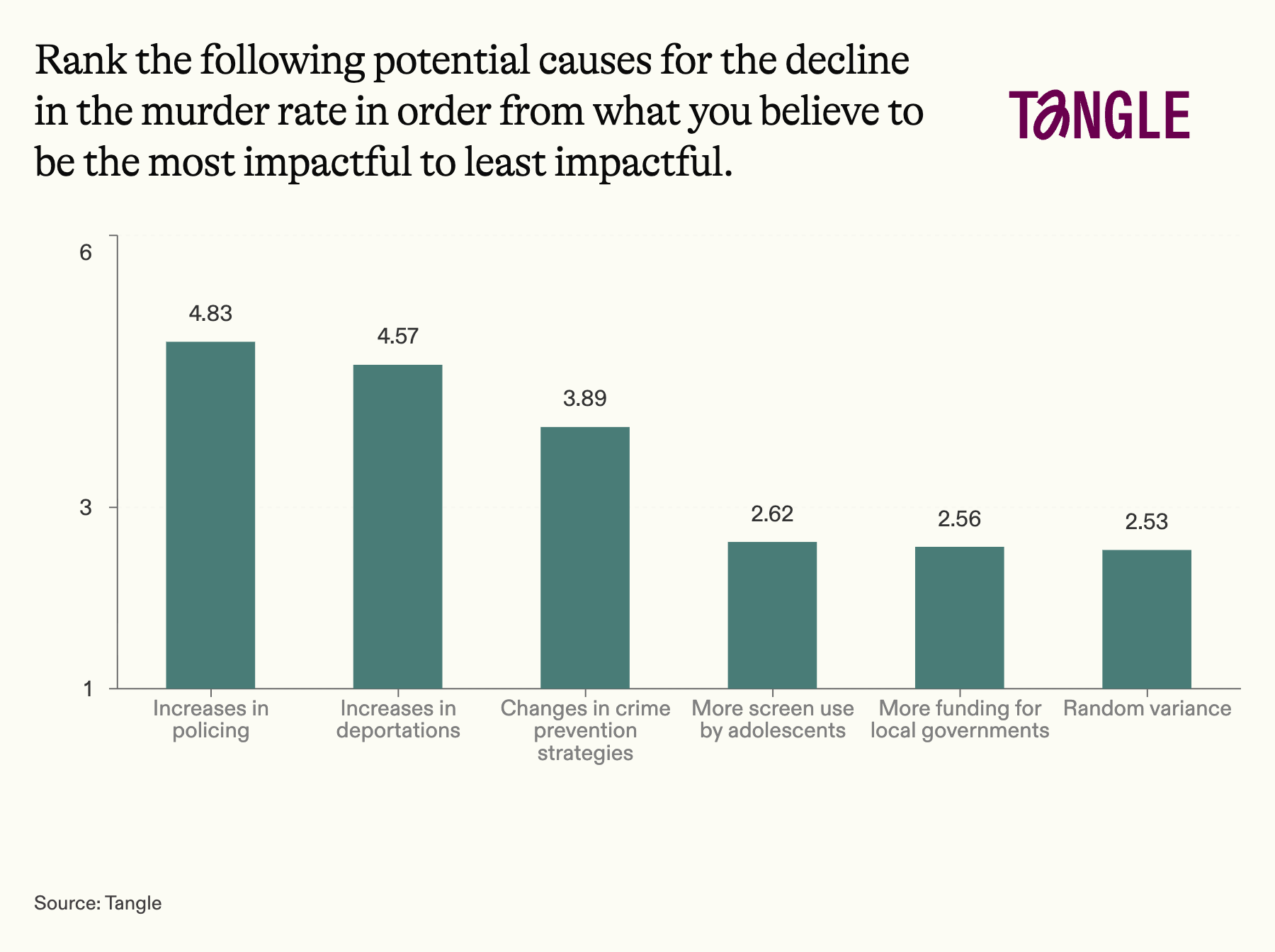
- Yesterday’s survey: 1,655 readers responded to our survey ranking potential causes for a recent decline in homicide and violent crime with “increases in policing” ranked as the top option. Several readers offered other explanations than the ones we gave. “You should add the end of covid related social/societal disruptions as an option” one respondent said. “Cameras everywhere. Criminals are less likely to feel they will get away with it.” said another.
Have a nice day.
A record-setting year for potato yields in Germany has put the country in the midst of a Kartoffel-Flut (“potato flood”), leaving farmers with an overwhelming surplus of spuds. After one of his sales fell through, one farmer offered to donate 4,000 tons of potatoes, and in January, two Berlin-based organizations launched an operation to distribute them around the city. The potato “rescue mission” designated hotspots for people to come pick up baskets free of charge and delivered them to food banks, schools, churches, and even the Berlin Zoo. Asked how many potatoes she grabbed from one of the 174 distribution points, one Berliner said, “I stopped counting at 150. I think I’ve got enough to keep me and my neighbors going until the end of the year.” The Guardian has the story.

Member comments