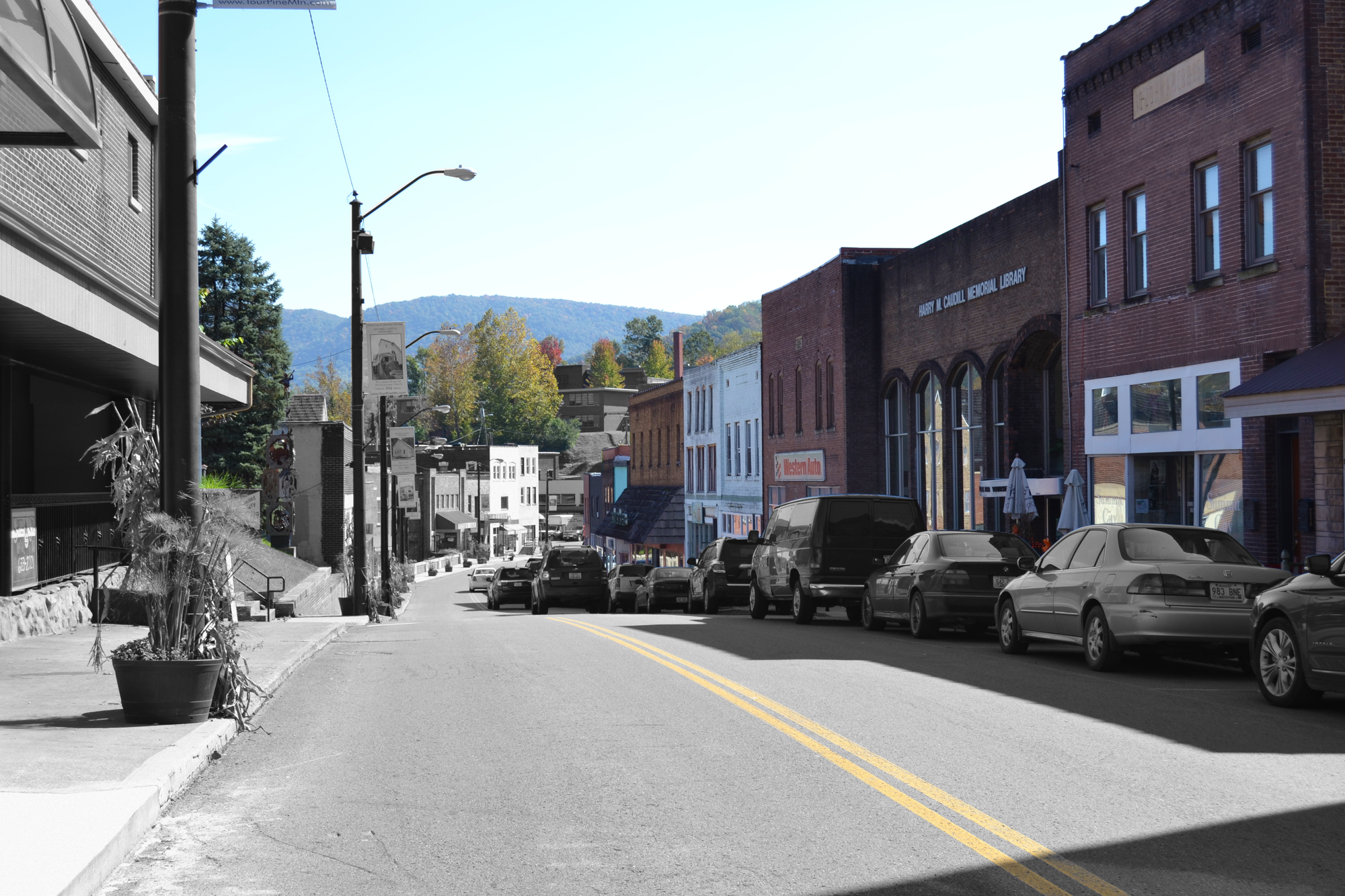
At Tangle, we don’t discriminate against good ideas based on where they come from. A person on our sales team can have a fantastic pitch for an editorial change we should make, and just because it came from the sales side and not a senior editor doesn’t mean we’re going to ignore it.
I’ve learned over the years that I have the great privilege of working with a lot of brilliant people, with smart ideas, who have interesting things to say, who can also write even though they aren’t on our editorial team.
So when Candida Hall, our head of product (and featured employee in the October 2025 edition of Press Pass), pitched the idea for a story about small-town revitalization and her experiences in Appalachia, I was immediately intrigued. Over the last few months, Candida has been working on this story with our Managing Editor Ari Weitzman, and today, I’m thrilled to share it with our audience. I hope you all enjoy.
— Isaac
In mid-July, 1997, I was a carefree ten-year-old sitting between my granny and my aunt in our little Ford Ranger, waiting to drop off the week’s paychecks to the couple of drivers employed by our modest trucking company. Roughly 428 million tons of coal were being produced every year in Appalachia in the 1990s, and we were in the midst of a boom. During a particularly good month, my aunt leaned over and said, every word covered with a hint of pride and elbow grease, “Remember, if you work hard, you can get big checks like this too.”
Coal was, and I guess still is, in our DNA. My family owned a couple of trucks to transport coal from the mines to processing plants. My dad drove one of them until he opened his own garage repairing coal trucks from all over the county. My papaws, uncles, and neighbors joined the nearly 13,000 other coal mine employees in the area in the early aughts. Downtown Whitesburg, Kentucky, where we lived, was not only beautiful; it was full of places to gather, eat, and shop.
But as I got a little older, things started to change. The explosion of natural gas and increased automation made other areas a lot more attractive than Southeastern Kentucky for energy companies. The checks became less a source of pride and more a reason for an apology as the number of coal loads decreased. Whispers in hushed tones about another mine closing, about our neighbor being out of work, and the “did you hear that Johnny’s dad went to jail for selling dope?” followed by the obligatory “it’s a shame,” started replacing the laughter at backyard gatherings. Our neighbors started moving. Mines kept closing.
In 2016, Letcher County’s unemployment rate sat at 10.7%, and the population had decreased by about 26% from its high in 1981.
During that 2016 election cycle, it was impossible to escape talk of the rural/urban divide and how people in rural areas were being “left behind.”
But Americans had been “left behind” long before 2016.
By 1981, the Rust Belt had lost nearly 30% of total jobs over three decades and was suffering from higher unemployment rates than the rest of the country amidst a nationwide recession. That year, Ronald Reagan stood before the nation to deliver his inaugural address, where he vowed to get the government out of the way so that our economy could begin recovering from a period of high inflation and unemployment. In one of the more memorable lines, he declared, “Idle industries have cast workers into unemployment, human misery, and personal indignity.”
The people left behind in today’s economy live in areas all over the country, not just rural counties. More than 79 million Americans, or roughly one in four, reside in a small- to mid-sized city (SMC). These SMCs include cities with up to 150,000 people, like Dayton, Ohio, and towns of about 50,000, like Hickory, North Carolina. Many of those cities have endured multiple periods of hardship: the Rust Belt decline, the manufacturing shock caused by open trade with China, and general urban decay — defined as a lack of investment in infrastructure, a loss of population, high unemployment rates, and a slide into poverty.
These days, walking downtown in my new home of Johnson City, Tennessee — an Appalachian SMC in the midst of revitalization efforts — and thinking about Reagan’s speech, I wonder how revitalization happens at all.
What motivates private industries — or any company, for that matter — to set up shop in areas that have lost a chunk of their workforce or population? And beyond that, where does the money for those efforts come from?