

 400,000+ readers just today.



The mass shooting in Australia.
I'm Isaac Saul, and this is Tangle: an independent, nonpartisan, subscriber-supported politics newsletter that summarizes the best arguments from across the political spectrum on the news of the day — then “my take.”
Are you new here? Get free emails to your inbox daily. Would you rather listen? You can find our podcast here.
Today’s read: 16 minutes.
Get 45% off the stocking stuffer they'll actually use
Ever had your phone die right when you needed to make a phone call, grab an Uber, or use your GPS for directions? Meet the AquaVault ChargeCard — the absolute best stocking stuffer you can possibly give. Nobody likes walking around with a dead phone, yet somehow it always happens at the worst time. The ChargeCard fixes that. It’s a credit-card sized portable charger that slips right into the credit card slot of your wallet, so it’s always with you (unlike bulky chargers that live in a drawer).
With built-in cables for both iPhone and Android, there’s nothing extra to carry and nothing to forget. It’s sleek, genius, and ridiculously useful — the kind of gift that gets used daily. Featured on Forbes, Fox, and Good Morning America for a reason, the AquaVault ChargeCard is truly a one of one.
Tangle readers: Use code TANGLE45 to get 45% OFF your order today.
*This is sponsored content.
Correction.
In our March 12 edition on the U.S.–Canada trade war, we referred to then-Rep. William McKinley as a Democrat and then-presidential candidate Grover Cleveland as a Republican. We mistakenly swapped their parties — McKinley was a Republican, and Cleveland was a Democrat. We did not initially catch this error, but we appreciate the eagle-eyed reader who recently flagged it to us.
This is our 148th correction in Tangle’s 332-week history and our first correction since December 10. We track corrections and place them at the top of the newsletter in an effort to maximize transparency with readers.
Need a last-minute gift?
The holiday season is here, which is a good time to remind you: You can give the gift of Tangle to friends and family! There are two great options:
- Gift a Tangle subscription. Whether it’s an earnest present to a friend or family member who would love our work, or a passive-aggressive gift for your favorite relative who doesn’t share your politics, a Tangle subscription is a great way to find some common ground and keep your loved ones informed. It takes thirty seconds!
- Hit the merch shop. We have hoodies, shirts, mugs, stickers, hats, and even onesies for the little ones. Snag something fresh with our new logo or grab a vintage Tangle brain on any garment you’d like. You will want to hop on these quickly to make sure they arrive before the holidays!
Quick hits.
- A gunman killed two students and injured nine others at Brown University on Saturday. The suspect remains at large; authorities detained, and then released, a person of interest on Sunday. (The shooting)
- Two U.S. soldiers and a U.S. civilian interpreter were killed and three other service members were injured in an ambush attack by a lone gunman in Syria. The U.S. Central Command identified the attacker, who was killed, as a member of the Islamic State. (The attack)
- A court in Hong Kong found businessman and activist Jimmy Lai guilty of violating the territory’s national-security and sedition laws for funding an advertising campaign in his newspaper that called for sanctions on Chinese and Hong Kong officials. Lai was arrested in 2020 shortly after the national-security law was passed, part of a crackdown on pro-democracy advocacy. Lai faces a maximum sentence of life in prison. (The conviction)
- President Donald Trump reportedly plans to issue an executive order directing federal agencies to change cannabis’s classification from a Schedule I to a Schedule III drug. The order is expected as soon as Monday. (The report)
- Ukrainian President Volodymyr Zelensky said he would drop his effort to secure North Atlantic Treaty Organization membership for Ukraine as part of negotiations to end the war with Russia, acknowledging that the move lacked support from the United States and other European countries. (The update)
Today’s topic.
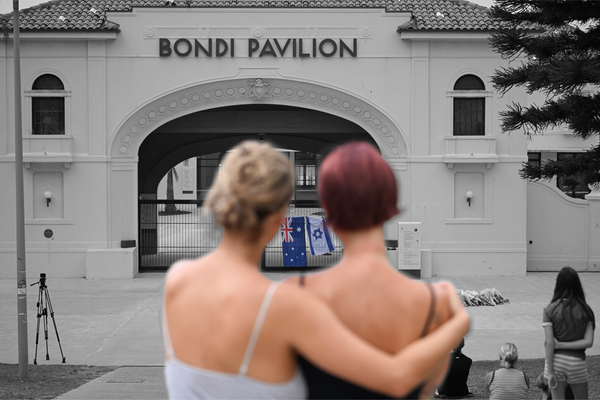
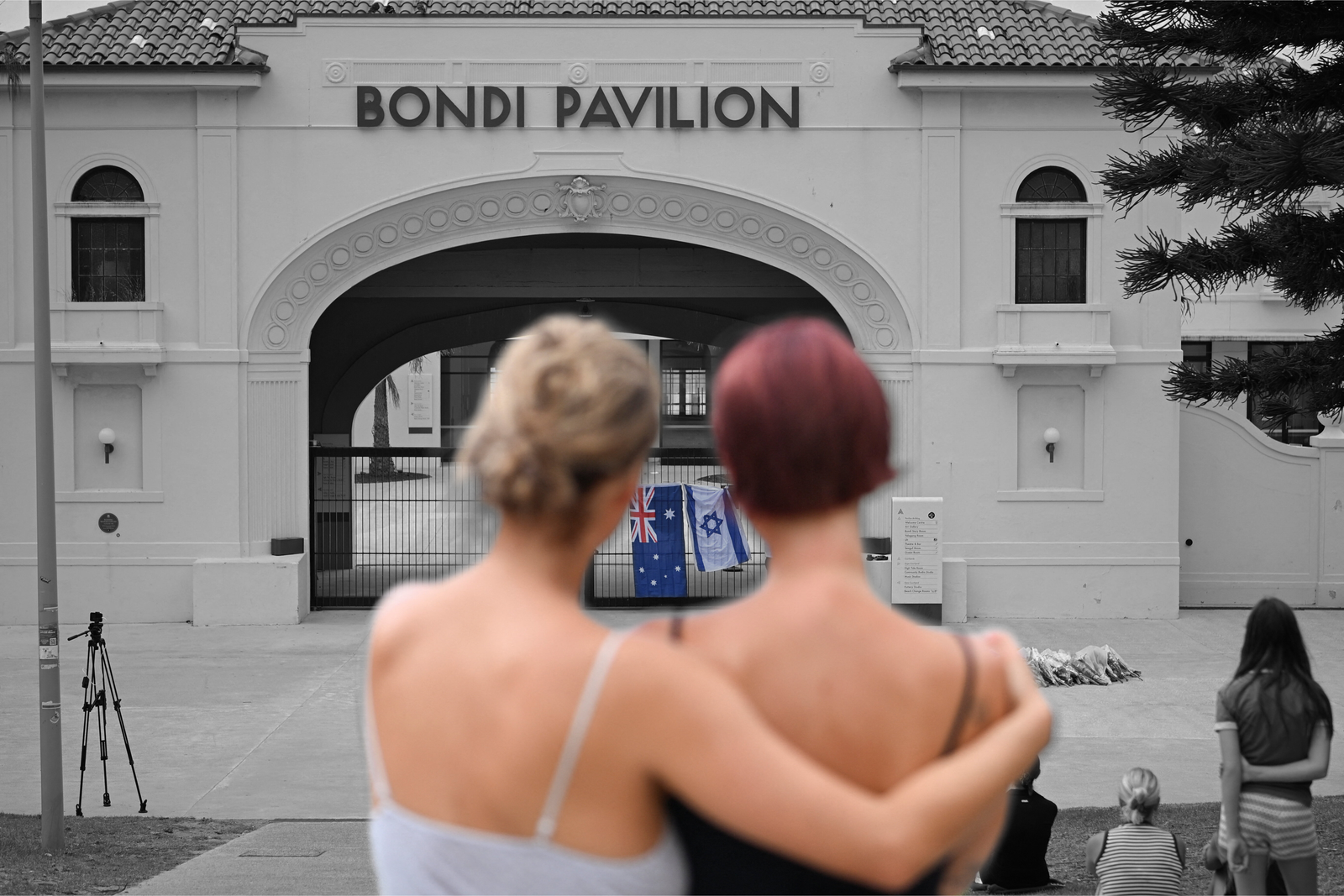
The mass shooting in Australia. On Sunday, two gunmen opened fire on a Hanukkah celebration at Bondi Beach in Sydney, Australia, killing 15 people and injuring dozens of others in the country’s deadliest mass shooting since 1996. According to authorities, the shooters were a father and son, and the father was shot and killed by the police while the son sustained “critical injuries.” Australian Prime Minister Anthony Albanese called the shooting “an act of evil, antisemitism, terrorism”; investigators have said they are still working to understand the shooters’ motives.
Note: Tangle does not typically name mass shooters because of the documented contagion effect.
At approximately 6:45 PM local time, emergency services began receiving calls of shots fired at the beach, where an estimated 1,000 people were attending a celebration marking the first night of Hanukkah. Footage of the scene showed the gunmen firing from a footbridge leading to the beach. At one point, a bystander — identified as fruit shop owner Ahmed al Ahmed — tackled one of the shooters, disarming him while the other shooter continued firing. Ahmed was shot twice but is expected to recover. Law enforcement exchanged fire with the suspects, eventually incapacitating them both.
As of Monday morning, 42 victims were hospitalized, with several in critical condition. Those killed ranged from 10 to 87 years old and included Rabbi Eli Schlanger, who was assistant rabbi at Chabad of Bondi, as well as two Holocaust survivors.
New South Wales Police Commissioner Mal Lanyon said that the older gunman had a firearms license and six weapons registered in his name. Four firearms (including a rifle and a shotgun) were recovered at the scene, as well as two improvised explosive devices. The Australian Broadcasting Corporation reported that the Australian Security Intelligence Organisation (ASIO) had investigated one of the gunmen six years ago over suspected ties to a Sydney-based Islamic State (IS) terrorist cell and believed he had pledged allegiance to the group. Additionally, two IS flags were reportedly found in the suspects’ car.
World leaders condemned the attack and expressed support for the Jewish community. President Donald Trump called the shooting “a purely antisemitic attack,” adding, “Today we can say loudly we celebrate Hanukkah.” Separately, Israeli Prime Minister Benjamin Netanyahu criticized Australian Prime Minister Albanese, saying, “You did nothing to curb the cancer cells that were growing inside your country.” Netanyahu noted Albanese’s decision to recognize a Palestinian state in August, suggesting that it had “pour[ed] fuel on the antisemitic fire.”
Today, we’ll share responses to the shooting from the left, right, and Australian writers. Then, Executive Editor Isaac Saul gives his take.
Agreed.
- Commentators on the left and right condemn the shooting and view it as clearly motivated by antisemitism.
- Many also say that Australia’s leaders must do a better job of addressing rising hatred toward Jews.
What the left is saying.
- Many on the left highlight the ongoing devastation caused by gun violence around the world.
- Others say political leaders and ordinary people must play a role in addressing the root causes of these attacks.
In CNN, Stephen Collinson wrote “two mass shootings many time zones apart shatter communities and expose fraught politics.”
“At Brown, two students were killed and nine others were injured. At least 15 people died at Bondi Beach, and more than three dozen remain in the hospital,” Collinson said. “There’s little, circumstantially, linking the outrages. Both featured the now-routine rituals of mass shootings, including jerky cellphone footage of people fleeing for their lives. And two communities were left shattered by the same incomprehensible reality — of death that came suddenly for people gunned down as they went about daily life.”
“In 20th century Europe, the legacy of two world wars that killed millions was palpable. It was hard to believe antisemitism would again become a global scourge. But as the last survivors of Nazi death camps fade away, history’s lessons are being forgotten,” Collinson wrote. “The Australia attack will renew huge scrutiny of the huge global demonstrations in solidarity with tens of thousands of Palestinians in Gaza killed during Israel’s onslaught against Hamas. The chant ‘globalize the intifada’ has come to epitomize more radical aspects of the pro-Palestine movement. This latest antisemitic attack underscores why some Jewish people interpret it as a threat.”
In The Forward, Dan Perry offered “3 responses to the Bondi Beach Hanukkah attack that could make Jews safer.”
“Antisemitic attacks have increased across the Western world, and the way the Gaza war unfolded has only accelerated the trend. The narrative of ‘genocide’ has become increasingly entrenched, making it harder for Jews to occupy the once-unquestioned moral space: I still defend Israel and should not be attacked for it,” Perry wrote. “So, what can be done? First, Jewish communities must assume that maximal security at every event, and certainly on holidays and around landmarks, is essential, not optional.”
“Second, political leadership matters. World leaders must speak clearly and forcefully against antisemitic violence. Silence or hedging is read as permission. Muslim leaders, in particular, should speak plainly: Condemning attacks on Jews is not an endorsement of Israel, nor a betrayal of Palestinian suffering,” Perry said. “Finally, Israel itself must confront its role. The current government has become a strategic liability — not just for Israel’s security, but for Jews worldwide. Its policies, tone, and posture have helped create the conditions in which antisemitism flourishes abroad.”
What the right is saying.
- The right says that Australia’s leaders have failed to heed the increasing prevalence of antisemitism in the country.
- Some link the attack to anti-Israel rhetoric that has taken hold globally since October 7.
The New York Post editorial board argued “Australia’s government failed its Jews in the long runup to Bondi Beach attack.”
“Prime Minister Anthony Albanese failed to heed multiple warnings about the rising tide of hate — including from human-rights lawyer Arsen Ostrovsky (himself wounded Sunday), who spoke out Dec. 1 after graffiti reading ‘F–k Zionist Israel,’ and ‘Israel has blood on their hands,’ appeared on Bondi Beach overnight,” the board wrote. “And Israel’s Benjamin Netanyahu wrote Albanese months ago, thundering that his call to recognize a Palestinian state ‘pours fuel on the antisemitic fire’ and ‘emboldens those who menace Australian Jews and encourages the Jew hatred now stalking your streets.’ That hate has been growing ever-worse since Hamas’ Oct. 7, 2022, atrocities.”
“Antisemitic graffiti has grown common, as well as attacks on Jewish-owned shops; a group of nurses made global headlines for cutting a video where they announced they wouldn’t treat Jews. In the year leading up to Sept. 30, the Executive Council of Australian Jewry counted 2,062 antisemitic incidents across the country,” the board said. “In August, Albanese blamed Iran for the Melbourne synagogue-burning and an attack on a Sydney kosher restaurant, and expelled Tehran’s ambassador and three other diplomats. But Albanese the next month chose to pander to his domestic Jew-haters, joining a pack of left-wing leaders of Western governments in announcing recognition of a Palestinian state.”
In The Free Press, Ayaan Hirsi Ali wrote “the intifada comes to Australia.”
“Families were gathered in joy when men with guns got out of a car and began firing. The violence arrived with speed and cruelty, and though the scale differs, the pattern is unmistakable; it mirrors October 7 in Israel. A holiday. A crowd. Daylight. Attackers who targeted the most vulnerable, and knew precisely what they were doing,” Ali said. “This way of killing has been studied, praised, and spread for years. It appears in pamphlets, videos, and online posts. It is celebrated in slogans shouted at marches and emblazoned on placards. It is excused as rage, sanitized as politics.”
“The Bondi Beach atrocity was horrific, but it wasn’t unforeseen. It was the result of long indulgence. It was tolerated into being. Ideas matter because they shape what people come to accept, especially when they are repeated unchallenged,” Ali wrote. “When crowds call for intifada, they are calling for the most brutal form of violence. When Jewish symbols are burned, and Jews singled out as symbols of evil, this is not dissent, and certainly not ‘resistance,’ but preparation. It is a rehearsal for what follows.”
What Australian writers are saying.
- Many Australian writers view the attack as a consequence of unchecked antisemitism in the country.
- Others call on Australians to reject the hate that motivated the shooting.
The Australian editorial board said the “Bondi attack has changed our nation.”
“It was the Australian Jewish community’s worst nightmare, happening in their heartland. At sunset, with bodies strewn on the ground, as paramedics worked frantically to save lives, the area was crowded with dozens and dozens of ambulances and police cars. Nearby businesses were locked down. The scene was so unlike the Bondi so many of us know well, it seemed like something from a foreign place,” the board wrote. “The timing was telling, and cowardly. It was the first night of Hanukkah, from the Hebrew word for dedication, the commemoration of the dedication of the Second Temple. Hanukkah also celebrates the resilience, survival and the enduring strength of Jewish identity.”
“In Australia, the signs of anti-Semitism have been ominous for a long time. It began in the Sydney Opera House forecourt two nights after the October 7 attack. It should have been nipped in the bud then. The ineptitude of officialdom set a pattern for appalling scenes to come. For more than two years, the unbridled rise of anti-Semitism ran largely unchecked,” the board said. “The ramifications of Sunday’s events will be felt by the local Jewish community for years. These attacks will also change the nation, like the Port Arthur attack of 1996. Some people left Bondi on Sunday night to go home to light their Hanukkah candles. The spirit of hope over despair will endure.”
In The Guardian, George Newhouse, the former mayor of Waverley council in Sydney, wrote “all Australians must support the right of Jews to live without fear.”
“Over the years, in my official role, I attended many Hanukah ceremonies. They were always occasions of light, joy and belonging. That is why these murders have been so shocking to the peace-loving citizens of Bondi, and especially to the Jewish community,” Newhouse said. “We are a small community. I know some of those who were murdered and injured. This is not an abstract tragedy for us; it is profoundly personal. My heart breaks for the victims, their loved ones, and for all those who experienced the trauma of this act of terrorism. At the same time, I am in awe of the extraordinary heroism of those who stepped forward, at great personal risk, to defend innocent congregants and bystanders.
“What compounds the grief is fear. In recent years, Jewish people in Australia have felt threatened, dismissed, alienated and, at times, openly vilified. There is a temptation to explain away or qualify this by reference to political differences or debates about events in the Middle East. But that misses the point. Every Jew is not responsible for every decision made by the Israeli government. The right to live free from fear in Australia should not depend on a person’s politics, their views on the Middle East, or their religion,” Newhouse wrote. “This is not a demand for special treatment. It is a call for basic decency, equal concern and the simple acknowledgement that Jewish Australians are entitled to live without fear.”
My take.
Reminder: “My take” is a section where we give ourselves space to share a personal opinion. If you have feedback, criticism or compliments, don't unsubscribe. Write in by replying to this email, or leave a comment.
- Bad information about the shooting is everywhere, but we can confidently say that this was a terror attack targeting Jews.
- These events are a rarity in Australia, and the attack is already prompting a national reckoning.
- The most challenging debate will center on the links between the suspects and Islamic extremism.
Executive Editor Isaac Saul: Last night was my 10-month-old son’s first Hanukkah. The light of the menorah blinked across his face in our dark living room as my wife held him in her lap, saying the brachot. I handed him a book from my mom, A Day in the Snow With The Very Hungry Caterpillar, and as he sifted through it with that goofy infant smile on his face, I wondered about the world he is entering.
Perhaps some part of me felt a tragedy like this coming, or perhaps this just fits a larger trend we’ve been witnessing for a few years now. Either way, I just got done writing about the uneasiness of this moment for Jews in Friday’s members-only piece on antisemitism. An excerpt:
“We Jews have been in the headlines a lot recently. Historically speaking, this is not a good sign. Ask any self-aware Jew about whether it’s good when The Jews are being talked about, and the answer will probably be ‘no, please stop talking about us.’ Even when the attention might sound positive — like, ‘wow, Jews sure win a lot of Nobel prizes!’ — you know the conversation will inevitably turn dark.”
It’s hard to describe the feeling of writing that piece on Friday and waking up to this news on Sunday. I grasp for words: Despondent? Horrified? Eerie? Affirmed? All of the above?
Details about the shooting and the shooters are still coming to light. I always preach caution in breaking-news situations, especially regarding mass shooters, and this shooting is no different. Without a single shred of evidence, one former Gaza correspondent for the BBC claimed that “Zionist Mossad Fingerprints” were all over Sydney. A separate post on X alleged the shooter was a former member of the Israel Defense Forces; that post garnered nearly five million views before it got a community note. Multiple other posts claimed Google searches for the shooter’s name spiked in Israel before the shooting. This supposedly proved some kind of conspiracy; it turned out the users just didn’t understand time zones.
This is the information ecosystem we’re operating in: corrupted and broken. Still, we can reach one safe conclusion based on law enforcement statements so far: This was a terror attack targeting Jews. The shooters’ motives are still unknown, but one of them had been investigated in 2019 for ties to the Islamic State, and two Islamic State flags were found in their car. The father-son duo were Pakistani, though the son is Australian-born. For now, that’s about all we can say with confidence.
If all those details stay consistent, they will force a reckoning in Australia on its problems with antisemitism. Incidents have been on the rise since 2023; last year, the country established a special envoy to combat antisemitism, but its effectiveness seems shaky at best. This is now the deadliest terrorist attack to ever take place on Australian soil.
In the U.S. and Australia, the shooting will spark plenty of debate on issues beyond antisemitism, likely starting with immigration and gun control. On Sunday, I spoke on the phone with a close childhood friend of mine who is a senior constable for a state police force in Australia. I asked him for his thoughts on the situation and what I might be missing watching from abroad. He made a few observations I felt were worth sharing.
First, Bondi Beach is an iconic location in Australia, emblematic of its beach and surf culture. He’s been there more times than he could count, and he emphasized how unthinkable it is that it would be the setting for violence of this kind. Second, he said the rage from Australians is going to be immense. The desire for more restrictionist immigration policy has been growing in recent years, and this is just going to pour gasoline on the fire. He expects Prime Minister Anthony Albanese to face some major political challenges going forward.
Third is the country’s gun laws. Many Americans may not understand how successful the societal buy-in from Australians on gun control has been up until now, and how genuinely earth-shattering that makes this event. Here in the states, we mourned this weekend, too, after the horrifying news of the mass shooting at Brown University. Yet the dark, ugly, shameful reality is that we are almost numb to these headlines now. In Australia, that isn’t true.
After the Port Arthur massacre in 1996, nearly every Australian bought into the country’s ban on assault rifles. The government bought back and destroyed over one million firearms and implemented provisions like mandatory locked storage, bans on mail-order purchases, and uniform gun registration. Gun laws are now so strict that, even as a police officer, my friend has to go through an arduous process to carry a firearm when he’s not on duty (so arduous that he still hasn’t done it). As an American, he understands how these laws may seem draconian through our lens, but emphasized the obvious point that many Australians will tell you: They work.
Mass shootings in Australia are almost nonexistent, and instances of gun violence are rare, too — typically limited to things like biker gang violence. While 3D gun printing has created a fresh problem in the country, its levels of gun ownership and violence still pale in comparison to ours. That the shooter was a legal gun owner is less likely to be viewed as an indictment of Australia’s gun laws than to prompt the country to adopt even stricter gun control. We don’t need to go as far as Australia did, but as I’ve argued before, the country provides a good case study to support the general principle of adding more friction between the desire to purchase a gun and actually accessing one.
As we get clarity on the ideology of the shooters, and if initial reports are confirmed, all of this — the gun control debate, the immigration debate, the antisemitism debate — is going to get wrapped up in a debate about Islamic extremism. Part of that debate overlaps with immigration: We’ll likely see increased calls for restrictions on immigrants from Muslim-majority countries. Another part will center on speech — the Australian government is already facing pressure to crack down on antisemitism, which could manifest as increased surveillance of Muslim or Islamic groups critical of Israel.
As with any fraught, complex issue like this one, context is key. Globally, the overwhelming majority of terrorism is committed by Islamic extremists in Muslim-majority countries against fellow Muslims. Terrorism is ascendant again in the West, with seven Western countries now ranked among the 50 most impacted by terrorism, according to the 2025 Global Terrorism Index. In the U.S., right-wing extremism is the most common source of violence; in Europe, ethno-nationalist terrorism is the most common, and left-wing violence is more common than right-wing violence. Australia is fighting a rising tide of both Islamic and right-wing extremism. I expect Australians are going to want a show of force against extremist groups in their country, and given the details of this shooting, the focus will largely be on Islamists. The challenge, as always, is going to be walking the fine line between rooting out Islamic extremism and not blaming or punishing innocent Muslims for the actions of terrorists who share their faith.
Perhaps nothing illustrates this challenge more clearly than the facts of this story: The heroic civilian — who risked his life to disarm one of the terrorists, was shot twice, and is now recovering in the hospital — is himself a Muslim. In fact, the older shooter and the hero both reportedly worked at fruit stands in Australia. One was murdering innocents while the other nearly died trying to save them.
In my piece on Friday, I wrote that Jews are “not uniquely evil” and “not a monolith,” and the same is true of all religious, ethnic, and racial groups. Australia’s challenge now, an admittedly big one, is holding that ideal close while ensuring the safety of its citizens amid a rising tide of antisemitism.
Take the survey: How do you think Australia should respond to this attack? Let us know.
Disagree? That's okay. Our opinion is just one of many. Write in and let us know why, and we'll consider publishing your feedback.
Get 45% off the ultimate stocking stuffer for the person who is always at 2% battery life. Meet the AquaVault ChargeCard — a credit-card-sized portable charger that lives in your wallet, so it’s always there when you need it. With built-in iPhone and Android cables, it’s sleek, practical, and genuinely useful. Get 45% off with code TANGLE45.
Your questions, answered.
We're skipping today's reader question to give our main story extra space. Want to have a question answered in the newsletter? You can reply to this email (it goes straight to our inbox) or fill out this form.
Under the radar.
On Thursday, Amnesty International released a report accusing the Palestinian militant group Hamas of war crimes in its October 7, 2023, attack on Israel, calling it a “systematic attack directed against a civilian population.” The human rights organization alleged that Hamas deliberately targeted civilians and that some of those captured in the attack were subjected to physical and sexual violence. Hamas rejected the claims and said the report was “flawed and unprofessional.” Last year, Amnesty International became the first major international rights organization to accuse Israel of committing genocide in Gaza in its response to the October 7 attack, a charge which Israel denies. In response to Thursday’s report, Israel’s Ministry of Foreign Affairs said the investigation “falls far short of reflecting the full scope of Hamas’s horrific atrocities.” The New York Times has the story.
Numbers.
- 116,967. The estimated Jewish population of Australia, comprising 0.46% of the national population, according to the 2021 census.
- 84%. The estimated percentage of Jews in Australia who live in Melbourne or Sydney.
- 1,654. The number of reported anti-Jewish incidents in Australia between October 1, 2024, and September 30, 2025, according to an Executive Council of Australian Jewry report.
- 2,062. The number of reported anti-Jewish incidents in Australia between October 1, 2023, and September 30, 2024.
- 342. The average annual number of anti-Jewish incidents in Australia in the 10 years prior to October 2023.
- 1996. The year Australia enacted the National Firearms Agreement, which restricted access to semi-automatic weapons and implemented new gun control provisions.
- 13. The number of shootings in Australia that killed five or more people (not including the shooter) in the 18 years prior to the National Firearms Agreement.
- 0. The number of shootings in Australia that killed five or more people in the first 22 years after the law was passed.
- 70% and 9%. The percentage of Australians who think gun laws should make it harder and easier, respectively, to access a gun, according to a September 2024 Australia Institute poll.
The extras.
- One year ago today we had just published a Friday edition responding to reader criticisms of our coverage of the UnitedHealthcare CEO’s killing.
- The most clicked link in Thursday’s newsletter was the countries that consume the most coffee.
- Nothing to do with politics: Why we have two nostrils instead of one big hole.
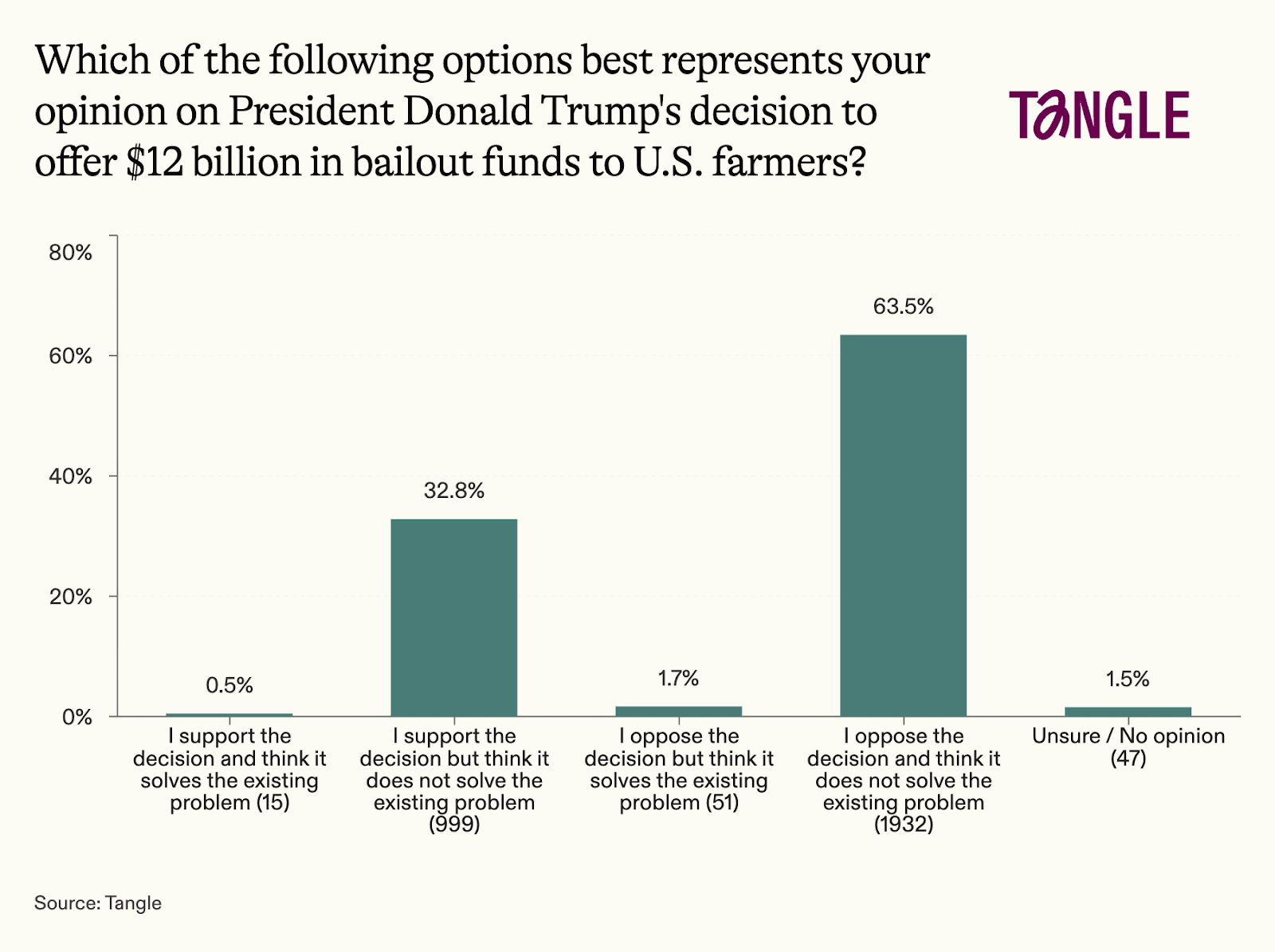
- Thursday’s survey: 3,044 readers responded to our survey on the $12 billion farm bailout with 64% opposing the decision and thinking it does not solve the underlying problem. “I thought the use of tariffs to bring in money was to pay down our debt, not to bail out farmers,” one respondent said. “Our farmers need to be rescued right now, but even more, they need to be guided off the current road to self-destruction that the government has pushed since WW2,” said another.
Have a nice day.
Marine Corps veteran Stacy Batiste has logged over five million accident-free miles in his 34-year career as a truck driver. That kind of reliability can go underappreciated, but his best friend took notice, nominating Batiste for the 2025 Road Warrior award; he was selected as the winner in November. In addition to the title, Batiste received $50,000 and a custom-made semi truck. The trucker credited his military discipline and patience for his exemplary record, and gave all drivers some good advice. “You have to watch everyone out there,” Batiste said. “I back off and take my time. I’m always early.” Good News Network has the story.