
I'm Isaac Saul, and this is Tangle: an independent, nonpartisan, subscriber-supported politics newsletter that summarizes the best arguments from across the political spectrum on the news of the day — then “my take.”
Are you new here? Get free emails to your inbox daily. Would you rather listen? You can find our podcast here.
Today’s read: 14 minutes.
Answering your questions about ICE.
The Trump administration’s heightened immigration operations have prompted a flood of questions about how different immigration agencies work, the legality of their tactics, and the rights of citizens and noncitizens alike. In last week’s Friday edition, we tackled the most frequently asked questions about Immigration and Customs Enforcement and Customs and Border Protection, featuring insights from a wide array of experts. You can read it here.
Reminder: Friday editions are for premium subscribers. To read the full piece on ICE and CBP, you’ll need to upgrade your membership.
Quick hits.
- Senate Majority Leader John Thune (R-SD) said that he does not expect Congress to reach a deal to fund the Department of Homeland Security (DHS) by the end-of-week deadline, saying Democrats’ demands were unreasonable. Democrats signaled that they will not support a second short-term funding extension for DHS. (The latest)
- The United States and Iran held their first in-person meeting since June 2025 to discuss Iran’s nuclear program. President Donald Trump said the meeting produced “very good talks” and that the U.S. is demanding Iran agree to “no nuclear weapons.” (The update)
- President Trump announced his support for Nexstar Media’s proposed $6.2 billion acquisition of Tegna, which would consolidate ownership of approximately 80% of U.S. television stations. Trump previously opposed the deal, but supported it on Saturday as a counter to “Fake News National TV Networks.” (The comments)
- British Prime Minister Keir Starmer’s Chief of Staff Morgan McSweeney resigned over backlash to his role in the appointment of Peter Mandelson as the country’s ambassador to the United States. Starmer fired Mandelson in September 2025 over his relationship with convicted sex offender Jeffrey Epstein; the controversy renewed after recently released files show Mandelson sent Epstein market-sensitive information during the 2008 global financial crisis and maintained a friendship after Epstein’s sex-crimes convictions. (The resignation)
- Japanese Prime Minister Sanae Takaichi’s Liberal Democratic Party won a supermajority in Japan’s lower house in the country’s snap election, allowing it to override the upper house. (The results)
Here's how to stop Google and ChatGPT from sharing your private info
With a quick search, you’d be shocked to find out what anyone can find out about you on Google or ChatGPT. Your phone number, home address, and what you owe on your mortgage are just the beginning.
Anyone deeply researching can access details about your family members, health records, financial accounts, employment history, and even your Social Security number.
When you remove your sensitive data with Incogni, you reduce the risks not just from targeted marketing spam but also identify theft, financial manipulation, and insights into your most private circumstances.
And it's easy and cheap with Incogni’s Unlimited plan. It will remove all that data for you, so that you’re safe from being found by simple Google search results or AI conversations.
Use code TANGLE today to get an exclusive 55% discount on unlimited removals from anywhere that exposes your data.
Today’s topic.
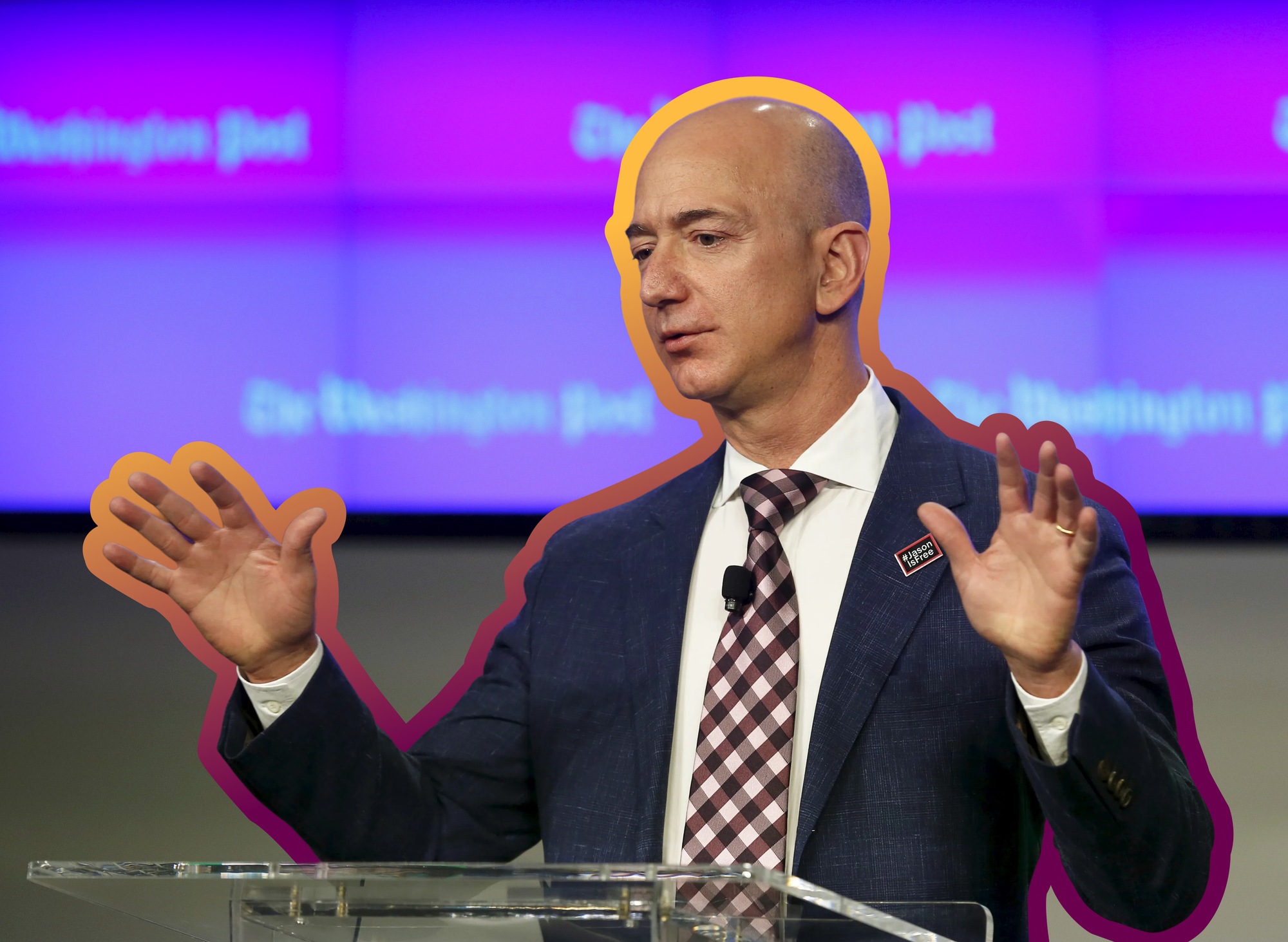
The layoffs at The Washington Post. On Wednesday, The Washington Post laid off approximately one third of its staff, including hundreds of reporters in its newsroom. Executive Editor Matt Murray announced the cuts to the company, saying its approach required “a new way forward and a sounder foundation.” The layoffs have created uncertainty about the future of the outlet, which has long served as a leading U.S. news source but has recently struggled to retain readers and improve its business model.
Back up: Amazon founder Jeff Bezos bought The Washington Post in 2013 and has overseen significant changes to its news and editorial departments in the past two years. In October 2024, CEO and publisher William Lewis announced that the paper would not endorse a presidential candidate, returning to a pre-1976 practice, prompting hundreds of thousands of subscribers to cancel their memberships. In January, 2025, the company laid off 4% of its staff in a cost-cutting effort, though the newsroom was not impacted. Then, in February 2025, Bezos announced the editorial board would shift its focus toward “personal liberties and free markets” as The Post hired several conservative opinion writers, suggesting a concerted rightward editorial shift.
In a statement, The Post said the staff cuts were “designed to strengthen our footing and sharpen our focus on delivering the distinctive journalism that sets The Post apart and, most importantly, engages our customers.” Separately, Bezos said the paper “has an essential journalistic mission and an extraordinary opportunity,” adding, “The data tells us what is valuable and where to focus.”
The Post’s sports and books sections were eliminated, while its metro section was significantly downsized. Additionally, all of the paper’s Middle East correspondents and editors were fired. The Washington Post Guild, which represents many of the outlet’s newsroom employees, said in a statement, “Continuing to eliminate workers only stands to weaken the newspaper, drive away readers and undercut The Post’s mission… If Jeff Bezos is no longer willing to invest in the mission that has defined this paper for generations and serve the millions who depend on Post journalism, then The Post deserves a steward that will.”
On Saturday, Lewis announced his resignation as CEO and publisher, saying it was “the right time” to step down. Bezos hired Lewis in 2023 amid the paper’s protracted financial difficulties, and he oversaw significant changes to its business and newsroom. The Washington Post Guild criticized Lewis’s tenure in response to his announcement, saying, “His legacy will be the attempted destruction of a great American journalism institution.”
Today, we’ll share perspectives from the left and right on the layoffs at The Post, followed by Executive Editor Isaac Saul’s take.
What the left is saying.
- The left blames Bezos for The Post’s struggles, saying he undermined the paper to curry political favor.
- Some suggest Bezos’s stewardship has been both damaging and contradictory.
- Others say The Post exemplifies the challenges facing modern media.
In Slate, Alex Kirshner argued “Jeff Bezos killed the Washington Post.”
“Bezos wanted the Post to die, because a vigorous, well-resourced Washington Post does not suit his vision for the world or his own bottom line. The end of the Post is a matter not of journalistic economics but of Bezos’ incentives,” Kirshner wrote. “Whatever the Post is worth today is immaterial to Bezos’ wealth. It’s barely even what you’d call a rounding error. Bezos could sustain the Post’s operating losses for hundreds of lifetimes without even threatening his current wealth… from his stakes in Amazon, Blue Origin, and who knows what else. A man worth more than $240 billion does not care even a little bit, in pure dollar terms, about a $100 million annual loss running a prestige business.”
“Whether or not you think billionaires should be obligated to fund public-interest projects, Bezos did not merely rest on his laurels as a legacy paper declined. He accelerated the decline on purpose. Not even Rupert Murdoch has chosen that path; the Journal continues to churn out damning reportage on Trump and defend its reporters against threats,” Kirshner said. “Bezos (who, it’s worth noting, is married to a former journalist) does not express that view of a free press. He recently had nothing to say when the FBI raided the home of one of his reporters… Bezos has no love for reporting but lots for sycophancy.”
In The Verge, Tina Nguyen said “there isn’t even a cynical explanation for Jeff Bezos destroying The Washington Post.”
“Bezos, who purchased the legendary publication in 2013, has driven his reputation into the ground by using his vast empire to churn out content designed to make President Donald Trump happy: Amazon MGM Studios spent $40 million to produce a fawning documentary about Melania Trump, which premiered days before the Post sent out mass layoff notices,” Nguyen wrote. “Bezos’ media plays… seem self-contradictory. Financing a fawning documentary about Melania Trump does not mesh with owning a media company with a 150-year-old legacy of holding politicians accountable, especially one that famously held Trump accountable during his first administration.”
“The Post, which had grown its digital audience throughout Bezos’ ownership, would have immediately attracted buyers: last year, tech journalist Kara Swisher announced that she and several investors were prepared to purchase the Post from Bezos, but reportedly never heard back from him,” Nguyen said. “There’s no clear and logical explanation for why Bezos is going about his supplication: not one that makes financial sense, nor one that immediately furthers his own political standing with Trump, nor one that reaffirms the commitment he once made to protecting the First Amendment.”
In MS NOW, Zeeshan Aleem wrote “The Washington Post bloodletting symbolizes our great media crisis.”
“Since the advent of the internet, there has rarely been a day of good news about the news industry itself — but Wednesday’s bloodbath feels particularly bleak. What’s happening at the Post is the latest example of a billionaire oligarch devastating our information environment and, with it, our democracy,” Aleem said. “Biotech billionaire Patrick Soon-Shiong is pushing the Los Angeles Times to the right, and the billionaire Ellison family is transforming CBS News into a MAGA-friendly news operation. This is to say nothing of the social media sector, where mega-billionaire Elon Musk wrecked Twitter, Meta’s weather vane billionaire CEO Mark Zuckerberg alters algorithms depending on who controls the government and TikTok is now partially in the hands of billionaire Trump allies.
“We are in an acutely dangerous place when huge swaths of the media ecosystem are owned by untouchably rich people. Their primary interest is in enriching themselves using their highly profitable assets, and they possess no obligation to protect democratic norms if it doesn’t strike their fancy,” Aleem wrote. “Most of them are decidedly not in the mood these days: During this authoritarian turn, the capitalist class has found that muzzling politico-intellectual freedom is a way to curry favor with the president and protect their bottom line.”
What the right is saying.
- The right views The Post’s cuts as a rational business decision by Bezos.
- Some argue the paper’s left bias is responsible for its downfall.
- Others say Bezos’s attempts to rebrand the outlet were poorly conceived.
National Review’s editors said “Jeff Bezos isn’t obligated to subsidize the losses of the Washington Post.”
“Whatever the longer-term future holds for the Washington Post, it has opted for retrenchment in the short run. The Post’s coverage horizons have undeniably contracted, and in its present state it is neither fish nor fowl as a newspaper: Having dropped both its aspirations to be a leader in national and global news coverage, as well as any local focus on the D.C./Maryland/Virginia metro region, it will need to decide what kind of paper it wants to be,” the editors wrote. “The near-universal hysteria among media commentators about the Post’s layoffs is curiously misplaced. The cries are utterly predictable and notable only for their monolithic nature: Owner Jeff Bezos is truly to blame.”
“Hidden behind the complaint is the implicit idea that the Washington Post is a ‘public good’ of a higher sort — like a waterworks or highway system. It is not… While the paper has dug itself a very large hole in terms of branding, it is under no obligation to continue to bleed money to satisfy the pieties of people who clearly aren’t paying to read it,” the editors said. “It is deeply unfortunate when people lose their jobs — particularly in an industry where there are fewer than ever to go around. But Jeff Bezos is a businessman. He is not required to absorb limitless financial losses, particularly to maintain an institution whose ideological focus he feels to be misplaced. Demanding that he act otherwise reeks of entitlement.”
In The Daily Signal, David Harsanyi wrote “don’t cry for The Washington Post, it helped destroy media.”
“Over the past decade, the Post has been one of the leading culprits in the collapse of public trust in journalism. The once-venerable outlet has spent the past 10 years participating in virtually every dishonest left-wing operation, including giving legitimacy to the Brett Kavanaugh group rape accusations, delegitimizing the Hunter Biden laptop story, spreading the Gaza ‘genocide’ lie, covering up Joe Biden’s cognitive decline, sliming the Covington children, and countless others,” Harsanyi said. “The Washington Post has also been one of the worst offenders of the unsound journalistic practice in which reporters hand-pick useful partisan ‘experts’ or ‘scholars’ to act as opinion-writing proxies.”
“To understand the activist mission of the Post, note that it fired 13 climate change reporters and one reporter whose only job was covering ‘race disparity.’ Let’s not forget, either, that contemporary ‘fact-checking’ ruse, wherein left-wing opinion columnists playact as arbiters of truth and offer partisan arguments and value judgments under a patina of impartiality, was basically invented by the Post,” Harsanyi wrote. “Everyone sees the news through the prism of their experiences and worldviews. But there should always be an expectation of factual coverage. And The Washington Post often failed that low bar.”
In The Dispatch, Nick Catoggio explored “the fatal identity crisis of ‘The Washington Post.’”
“To all appearances, Jeff Bezos looked at the results of the 2024 election, drew an inference about the trajectory of America’s political zeitgeist, and concluded that the market (not to mention the Trump-run federal government) would reward a somewhat more right-wing Washington Post,” Catoggio said. “But having kissed off its sizable hardcore ‘Resistance’ readership, the Post is no longer really competing with the [New York] Times at this point, either. It’s neither fish nor fowl, an entity in search of a centrist readership that’s receptive enough to right-wing politics to appreciate its new editorial direction yet also intellectual enough to appreciate the thoughtful commentary for which a newspaper of the Post’s caliber is known.”
“The reason right-wing slopaganda exists to begin with is because the audience to which it caters despised and distrusted left-leaning establishment media like the Washington Post, the paper that brought down Richard Nixon,” Catoggio wrote. “And so the Bezos Post’s task in attracting Trump-era Republican readers isn’t a mere matter of providing content that might tear them away from the latest Tucker interview with a Holocaust revisionist or whatever. Its task is to overcome a degree of fear and loathing of the mainstream media that’s downright foundational to the modern right’s identity. How was that supposed to happen, exactly?”
My take.
Reminder: “My take” is a section where we give ourselves space to share a personal opinion. If you have feedback, criticism or compliments, don't unsubscribe. Write in by replying to this email, or leave a comment.
- The Washington Post was my childhood paper, and I’m sad to see so much of it go.
- Jeff Bezos has to do what he can to keep it alive; he shouldn’t be asked to permanently eat the costs of bad decisions.
- Ultimately, these cuts are the necessary result of a business that failed to adapt to a new landscape.
Executive Editor Isaac Saul: When I was a kid, my dad used to read me The Washington Post almost every morning at the breakfast table.
He and my mom both grew up in the D.C. area, so the paper was a staple of my household — especially the sports section. As a ravenous Redskins (now Commanders) football fan, I remember running downstairs first thing in the morning to hear how the Post’s sports writers covered the previous day’s games and trying to memorize stats from the box score to throw at my friends. I remember listening to my parents sigh and huff and yell at the paper while reading various stories from the news section.
I credit those mornings for my love not just of sports but writing and journalism more broadly, and I’m sure they had something to do with my first journalism job as a sports reporter at The Pitt News. All these years later, I still have old copies of special Post papers in storage, including the editions that came out the days after the Redskins won their three Super Bowl championships, which my dad held onto and then passed down to me.
Even in this era of newspapers dying left and right, the sports section, the metro section, and so many international reporters getting jettisoned from The Washington Post is genuinely hard to fathom. It doesn’t just feel like the end of an era; it feels closer to the end of an industry.
All of this is just to say that I’m personally sad about this news. I’m sad for the journalists who lost their jobs, many of whom are normal people making working-class salaries. I’m sad for the reporters now stuck in war zones whose colleagues are resorting to GoFundMe to give them a helping hand. I’m nostalgic for my childhood, and mournful for all the column inches I’ll never get to read to my own son when we’re (hopefully) bonding over Commanders football in the next few years.
Yet for me, that sadness isn’t turning into classist anger at Jeff Bezos. Peter Baker, the New York Times’s chief Washington correspondent, shared a post on X saying that Bezos has a net worth of $249.4 billion and could absorb five years of the Post’s $100 million losses with what he makes in a single week. Putting aside that Bezos doesn’t “make” his net worth every year, if a normal person like me could pay, say, $500 to save The Washington Post, wouldn’t that be worth the cost? I think yes, of course, that’d be worth it — and I could easily use this framing to make Bezos look like a bad, selfish guy for not subsidizing a failing business (and let’s be honest: That’s the ask of him here).
But what if I had to keep buying The Post for $500 dollars every year for 10 years, only for the paper to continue to lose money and fail to adapt? Would that be worth it? And again, what “feels like” $500 to me is actually $100 million — think of how many better things that money could be put to use for other than propping up a failing business. That’s just about the entire annual expense for Washington D.C.’s largest food bank. Bezos already does a great deal of good with his wealth. He also spends a great deal on frivolous vanity. But whatever he'd choose to do with the money he's losing on The Post is hypothetical — those losses, however, are stubbornly real.
Asking Bezos to perpetually shoulder this cost would be one thing if The Post were a new start-up with a clear growth trajectory, but we’re talking about a 148-year-old institution that’s been struggling for some time now. Not many people aside from journalists and tech bros think it's okay to expect a wealthy backer to continually float their ventures for $100 million without a clear growth plan. That’s not just an unrealistic expectation of the market, it’s a childish and naive expectation of life. If there’s a lesson here, it’s not that Bezos is selfish; it’s that it’s unwise to bet the sustainability of a newspaper on the generosity of a billionaire rather than great coverage and a strong business plan.
Others say Bezos isn’t killing The Post through selfish apathy but some combination of incompetence and greed. Ashley Parker, a reporter whom I respect a great deal, penned a piece in The Atlantic titled “The murder of The Washington Post.” Like me, Parker has her own moving personal tale of a childhood attachment to The Post; unlike me, she got to live it out when she became a Post reporter as an adult. But her story, despite being latent with some classist anger, does not depict a premeditated killing of the paper; if anything, it speculates loosely about whether incompetence or intention is behind its downfall, even as she herself admits she doesn’t know the answer to the paper’s financial woes.
For years, the Post’s challenge has been trying to be everything at once; it’s a D.C. insider paper and an international newsroom and an outlet for local issues, all adjacent to an editorial board focused on national politics. I agree with Parker’s diagnosis that The Post should have doubled down on continued coverage of Washington (its politics, but also its sports and local issues), yet I understand how that plan may not have seemed appealing to corporate executives looking at raw numbers. International news is expensive, and local news is limited, but national politics is irresistible. The Post’s leadership choosing the widest lane is not the same as first-degree homicide.
Former Post reporter Katherine Boyle pointed out on X that when Bezos took over the paper, it was already struggling — bleeding subscribers and attempting a rebrand. For more than a decade, Bezos injected the paper with cash; he tried to expand its offerings, invested in its technology, and housed the paper in a refurbished headquarters — basically immolating money in an effort to save an institution of journalism. That story is less appealing than the “eat the rich” narrative of an anti-democracy billionaire who doesn’t care if the paper dies, but it’s probably more accurate (why would he buy it in the first place if he doesn’t care about the institution?).
In fact, the Post’s own readers are just as responsible as Bezos or Lewis for the paper’s financial hit. Lest we forget, in 2024, more than 250,000 Washington Post subscribers canceled their subscriptions over the paper’s decision to stop endorsing presidential candidates. At its standard rate of about $140 per year, that’s $35 million dollars in annual revenue eliminated because subscribers wanted to protest what, in my view, is actually a pretty reasonable editorial decision to avoid accusations of partisanship.
How many of the same readers who canceled their subscriptions over that decision are now upset to see the paper shutting down departments and laying off journalists? At the same time, The Post does not seem to be winning back the trust of the conservative readers its changes were trying to appeal to. David Harsanyi (under “What the right is saying”) laid out the conservative view on the paper’s mistakes and bias, and while some examples are stronger than others, there’s no doubt The Post’s efforts seem to have alienated its liberal readers while not meaningfully moving the needle to win back the conservative ones.
So yes, the Post’s story is a sad one. But it isn’t a story of avarice, it’s a story of change: changing dynamics in the market, where advertising dollars and subscriptions don’t flow as freely anymore, and a changing environment for news, from dogged, scrappy journalists to filter-faced TikTokers and Instagram influencers. Within that broader story is a smaller one of one institution’s inability to adapt: a struggling paper, failed leadership, bad hires, poor decision making and insufficient plans to meet the moment.
So I don’t see a murder, or an evil rich guy killing a national treasure; I see a death from natural causes. We can mourn, sure, but let’s not peg this on the people who actually tried to help.
Take the survey: Who do you think is responsible for layoffs at The Washington Post? Let us know.
Disagree? That's okay. Our opinion is just one of many. Write in and let us know why, and we'll consider publishing your feedback.
Your questions, answered.
We're skipping the reader question today to give our main story some extra space. Want to have a question answered in the newsletter? You can reply to this email (it goes straight to our inbox) or fill out this form.
Under the radar.
On Thursday, the Office of Personnel Management (OPM) issued a final rule that will create an easier pathway for career officials in the federal government to be disciplined or fired. The rule establishes a new category of worker for high-ranking career employees whose work focuses on implementing the executive branch’s policies; these workers will now be excluded from long-standing job protections for federal employees. Specifically, workers under the new classification will no longer be able to appeal disciplinary actions, suspensions or firings to an independent board, enabling the president to remove employees involved in policymaking perceived to be in opposition to the administration’s agenda. Approximately 50,000 workers could be affected by the new rule. The Wall Street Journal has the story.
What Google and ChatGPT Know About You Is Unsettling
Your phone number, address, mortgage balance, even family details—all discoverable with a quick search. That data fuels identity theft, financial scams, and targeted manipulation.
Incogni's Unlimited Plan automatically scrubs your info from broker sites and AI training data. Easy setup, affordable protection.
Use code TANGLE for 55% off.
Numbers.
- 1877. The year The Washington Post was founded.
- 10,000. The paper’s initial circulation.
- 76. The number of Pulitzer Prizes won by The Post between 1936 and 2024.
- $250 million. The amount Jeff Bezos paid to buy The Post in 2013.
- $75 million and $100 million. The reported annual losses by The Post in 2023 and 2024, respectively.
- 250,000. The approximate number of Washington Post readers who cancelled their subscriptions in the five days after the paper’s publisher announced its editorial board would no longer make presidential endorsements in October 2024.
The extras.
- One year ago today we had just written a Friday edition on the Washington, D.C. plane crash.
- The most clicked link in Thursday’s newsletter was the Supreme Court rejecting a challenge to California’s electoral map.
- Nothing to do with politics: See the news from 40 years ago with Forty News.
- Thursday’s survey: 3,773 readers responded to our survey on the latest Epstein files with 74% believing the government possesses information incriminating powerful people. “The issue here goes beyond sex trafficking and sexual abuse. It tells a tale of power elites, influence and power peddling which implies corruption. It should be investigated in great detail,” one respondent said. “If there is nothing more to be learned from the rest of the files then just release them and be done with it,” said another.
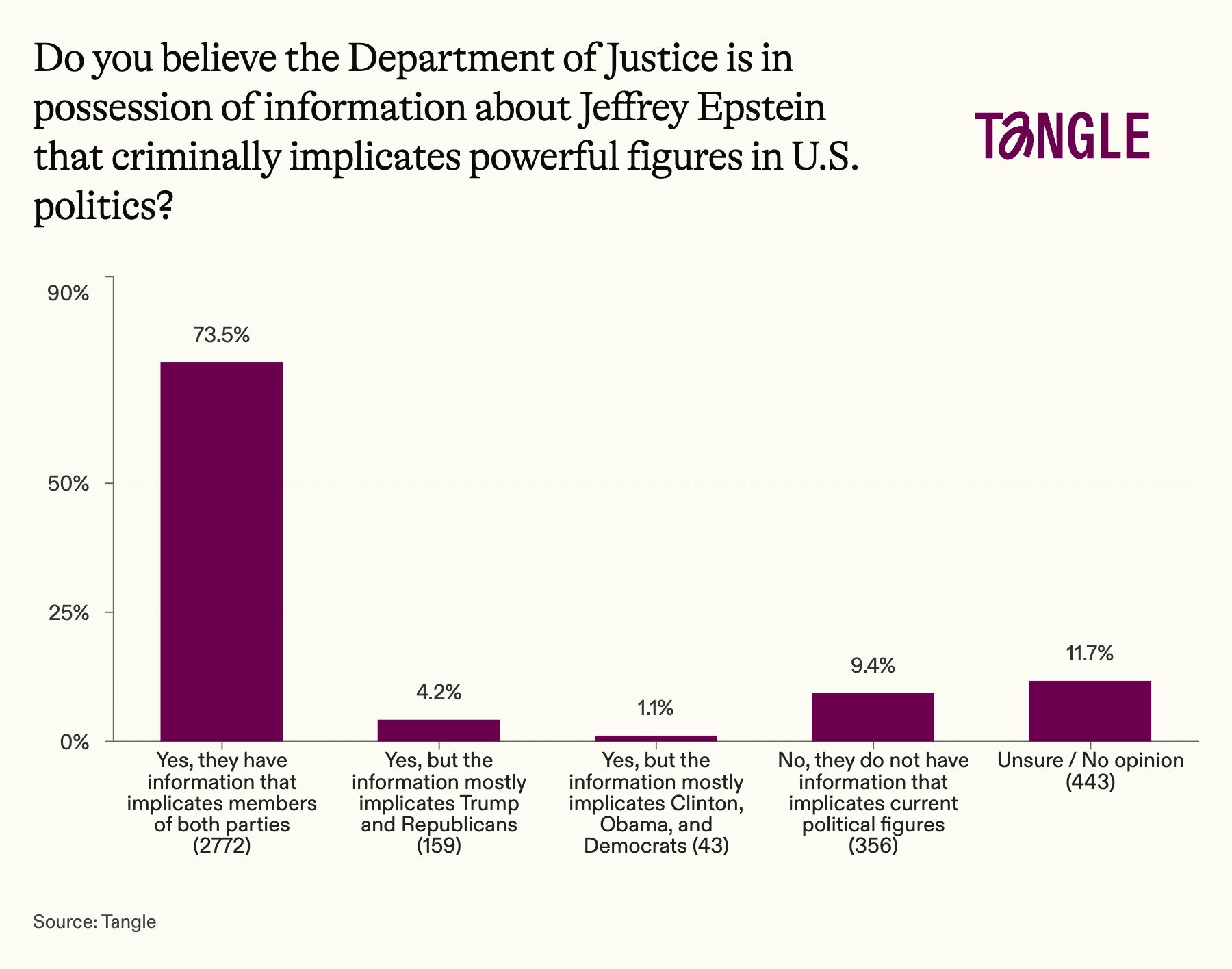
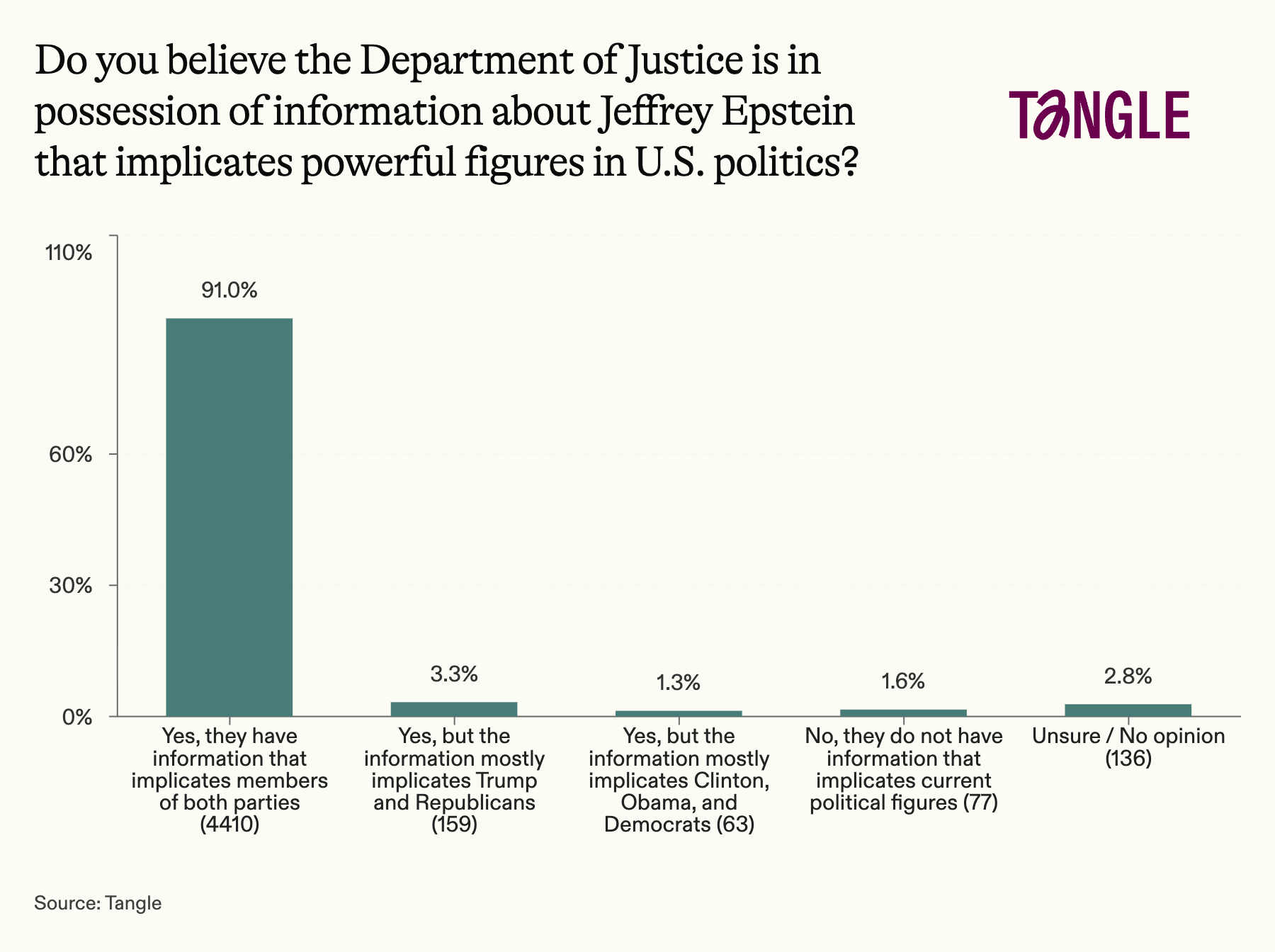
We previously asked a version of this question — without the word “criminally” — on November 17, 2025. 4,845 readers responded, and those results are below.
Have a nice day.
In 2022, Leovigildo Ramirez lost his dog, Cipi, when she ran away while Ramirez was bringing groceries into his house. Four years later, in January, the Animal Care & Control Team took in a stray dog and discovered via a microchip that it had been reported missing in the area years earlier. The chip identified her as Cipi, and the rescue service contacted Ramirez to tell him she had been found. Ramirez had since moved to Wisconsin, but he drove 16 hours through a major snowstorm to reunite with his dog. “That was incredible,” Ramirez said. “She is my best friend.” UPI has the story.

Member comments