
I'm Isaac Saul, and this is Tangle: an independent, nonpartisan, subscriber-supported politics newsletter that summarizes the best arguments from across the political spectrum on the news of the day — then “my take.”
Are you new here? Get free emails to your inbox daily. Would you rather listen? You can find our podcast here.
Today’s read: 13 minutes.
Coming tomorrow...
A backlash is brewing. I’m seeing it on the front pages of the country’s biggest newspapers, in fringe corners of the internet, and among my friends and family: People are tiring of tech. Tomorrow, I’m going to write about what’s happening, and what I think the future might hold. — Isaac
Quick hits.
- A gunman opened fire at an Immigration and Customs Enforcement (ICE) facility in Dallas, killing one detainee and injuring two others. The Department of Homeland Security identified the shooter, who died of a self-inflicted gunshot wound, but has not shared information on a possible motive. However, law-enforcement officials said bullets found near the shooter were inscribed with “anti-ICE” messages. (The shooting)
- The Justice Department will reportedly seek to indict former Federal Bureau of Investigation Director James Comey for allegedly lying to Congress about his role in investigating efforts to influence the 2016 presidential election. (The report)
- Google said it will offer to reinstate all YouTube accounts that were permanently banned for political content. The company claimed that Biden administration officials had repeatedly pressured it to ban accounts, particularly for content related to the Covid-19 pandemic. (The announcement)
- A federal judge found that President Donald Trump unlawfully fired several inspectors general at the start of his term; the judge said that she did not have the authority to reinstate them to their positions. (The ruling)
- The North American Aerospace Defense Command said that U.S. fighter jets were scrambled to identify and intercept four Russian warplanes near U.S. and Canadian sovereign airspace. (The interception)
Remove your personal data from Google and ChatGPT
Have you ever searched for your personal information on Google or ChatGPT? You'd be shocked to find out what people can find out about you.
Your name, phone number, and home address are just the beginning.
Anyone deeply researching you can find out about your family members and relationships, SSN, health records, financial accounts, and employment history.
Incogni's Unlimited plan puts you back in control of your online privacy, keeping you safer from harmful scams, identity theft, financial fraud, and other threats impacting your physical safety.
Use code TANGLE to get an exclusive 55% discount on unlimited removals from anywhere that exposes your data.
*Supporting our sponsors like Incogni helps keep Tangle free.
Today’s topic.
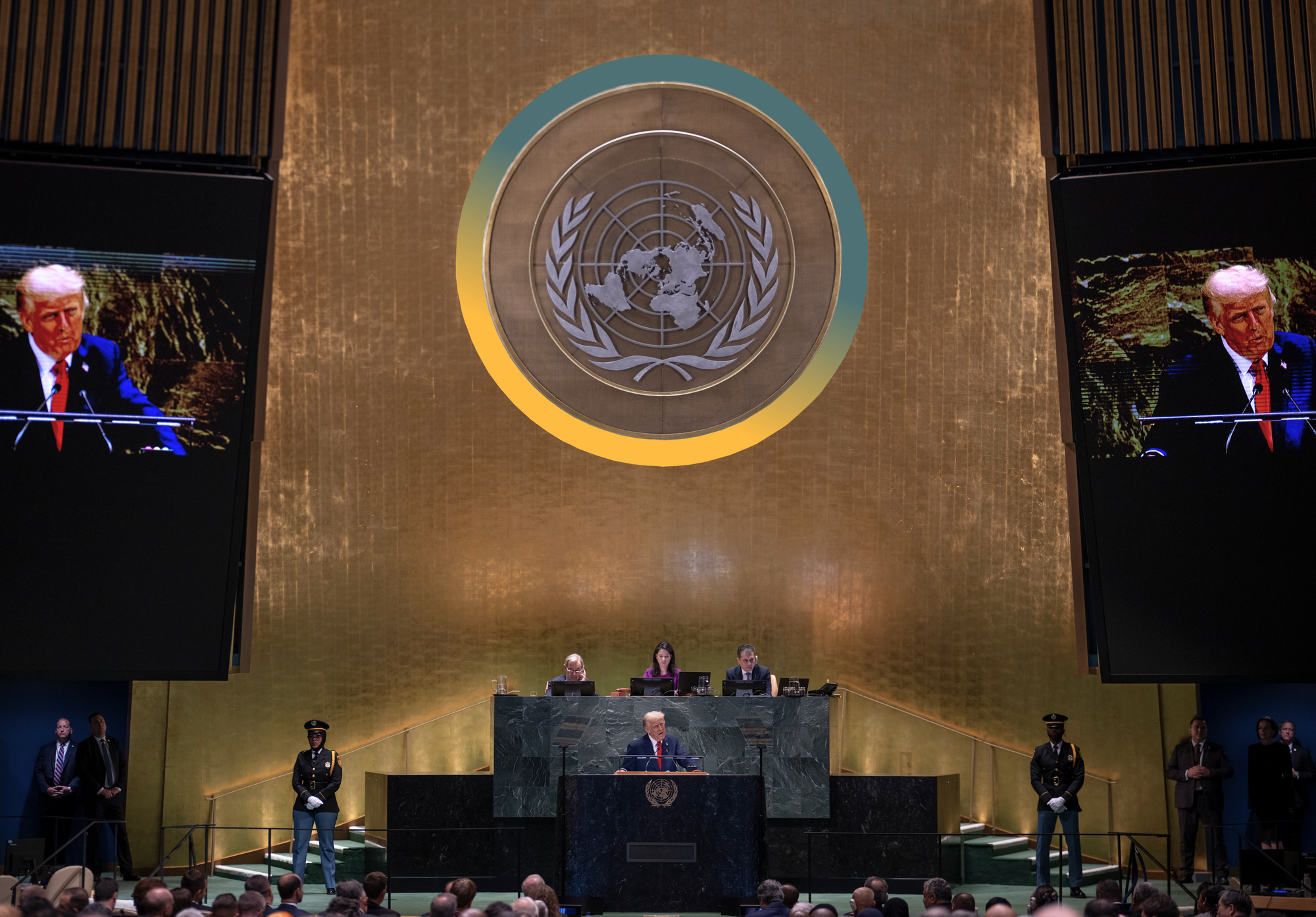
Trump’s UN speech and Ukraine comments. On Tuesday, President Donald Trump delivered an address to the United Nations (UN) General Assembly in New York sharply critical of the international organization and member countries over immigration, climate policy, and other issues. The president also touted his efforts to resolve global conflicts, suggesting that the UN was hindering his push for peace. After his speech, President Trump met with Ukrainian President Volodymyr Zelensky, then posted on Truth Social that he believes Ukraine can win back all of the land taken by Russia since its all-out invasion in 2022.
Back up: The UN General Assembly is the organization’s main policymaking body, made up of delegates from all 193 UN member states and two non-member observer states. It meets regularly from September to December each year and votes on a host of key issues and initiatives.
President Trump began his speech by declaring a “golden age of America” under his administration, promoting his deportation actions and efforts to resolve global conflicts. He added that he would “offer the hand of American leadership and friendship to any nation in this assembly that is willing to join us in forging a safer, more prosperous world.” Trump also suggested that European countries were “going to hell” because of their immigration policies and criticized their investment in renewable energy, calling their energy ideas “suicidal” and climate change “the greatest con job ever perpetrated on the world.”
Separately, the president said Europe needs to “step it up” in pressuring Russia over the war in Ukraine, saying they should agree to join a new U.S. tariffs package and immediately cease all energy purchases from Russia. “Empty words don't solve war,” Trump said. “The only thing that solves war and wars is action.”
After his speech, Trump met with President Zelensky and issued a statement on the war in Ukraine. “After getting to know and fully understand the Ukraine/Russia Military and Economic situation and, after seeing the Economic trouble it is causing Russia, I think Ukraine, with the support of the European Union, is in a position to fight and WIN all of Ukraine back in its original form,” Trump wrote. “With time, patience, and the financial support of Europe and, in particular, NATO, the original Borders from where this War started, is very much an option.”
Zelensky said Trump’s comments surprised him but called them a “positive signal” that the United States “will be with [Ukraine] to the end of the war.” He added, “I think the fact that Putin was lying to President Trump so many times also made a difference between us.” Several other Eastern European leaders also praised Trump’s post.
Russian leaders and commentators rejected the notion that Ukraine could win the war. Kremlin spokesman Dmitry Peskov suggested that President Trump was trying to stop European purchases of Russian oil and gas to boost U.S. sales.
Today, we’ll explore the responses to Trump’s speech and comments about Ukraine, with views from the left, right, and writers abroad. Then, my take.
What the left is saying.
- The left is critical of Trump’s speech, with many saying it embarrassed the U.S.
- Others suggest Trump’s evolving stance on Ukraine is encouraging but remains fickle.
In MSNBC, Zeeshan Aleem called the speech “mortifying for America.”
“Trump was bogged down by constant frivolous tangents and a fixation on trumpeting, often deceptively, what he counts as his accomplishments. And given that the backdrop of Trump’s speech is his all-out assault on democracy in his own country, his lecturing world leaders on how to run a great nation was shocking in its audacity,” Aleem said. “More significantly, he worked to undermine the credibility of the U.N. as an institution for peacekeeping and global governance… Trump falsely claimed to have ended seven ‘unendable’ wars in seven months this term, and he declared, ‘It’s too bad I had to do these things instead of the United Nations doing them.’”
“Trump praised his own record constantly in what at times resembled more of a State of the Union speech than a U.N. speech. He rambled about how the U.S. had become the ‘hottest country anywhere in the world’ — and trashed countries that don’t share his worldview. He trumpeted his extreme right-wing crackdown on immigration as a model for the world,” Aleem wrote. “There’s something about Trump’s degradation of the republic that hits harder before an international audience; sometimes it feels as if the full impact of what Trump is putting us through is most evident when we’re forced to think about it from the eyes of outsiders.”
In CNN, Stephen Collinson said “Trump’s ‘right about everything’ rant offers no answers to a world on the brink.”
“Tensions have hit Cold War levels in Eastern Europe after Poland threatened to shoot down any more encroaching Russian aircraft. Strange drones — possibly Moscow’s — are zipping around over Scandinavia. Fears are growing of an intifada-style eruption on the West Bank if Israel follows through on hints of annexation to add to its onslaught on Gaza,” Collinson wrote. “Yet President Donald Trump, who holds the job once reserved for the leader for the free world, had no words of reassurance or poetic invocations of democratic values for America’s alarmed allies in an address to the UN General Assembly.”
“The confusing new developments on Ukraine show why, for all Trump’s contemptuous hostility, foreign powers — especially those in Europe — still try to work with him, to direct him and to avoid the open confrontation some of his threats might merit,” Collinson said. “But the first speech to the UN of the president’s second term still offered a sobering picture of the new global reality. The United States, the nation that did more than any other to build the United Nations and to support it for so many decades, is now its most vicious critic, a situation that raises questions about the once vital-world body’s capacity to survive in its current form.”
What the right is saying.
- The right mostly supports Trump’s criticism of the UN, and some suggest the speech was directed at populist movements in Europe.
- Others say Trump should follow through on his critiques by trying to fix the UN.
In RedState, streiff wrote about the true purpose of Trump’s speech.
“Trump is not interested in the approval of anyone in the UN, and no one thinks laughing at him is going to dissuade him from his America First philosophy,” streiff said. “Tuesday's speech at the UN was not aimed at the diplomats in the room or those watching remotely. It wasn't aimed at the leaders of governments. It really wasn't even aimed at the world. It was, in my opinion, aimed directly at populist movements gaining momentum in Northern and Eastern Europe. The goal was to put Trump and his successor at the helm of an international movement to ‘Make Western Civilization Great Again.’”
“The message was clear. Your leaders have sold you out. If you don't act, your countries will be swamped by foreigners who don't share your culture. Without a reliable energy supply and slamming the door on Third World migration, Europe, as we know it, will cease to exist. Trump framed the situation of national leadership that has allowed the situation to develop, serving as a warning call to populations who are inattentive and being taken advantage of,” streiff wrote. “All in all, it suggests that Trump's retreat from the EU and NATO is more a rebuke of national elites than a withdrawal from the theater.”
In The Washington Post, John R. Bolton argued “Trump should fix the U.N., not just grandstand.”
“With the U.N. turning 80 years old, now is precisely the right moment to focus on the U.N.’s failings — and even to start imagining some remedies,” Bolton said. “The General Assembly has almost never had a coherent purpose other than offering a backdrop for authoritarian leaders to practice their rhetoric. And the Security Council is as gridlocked now as during the height of the Cold War. Disputes among its five permanent members mean that truly important issues are addressed elsewhere and brought to the council only for a splash of U.N. holy water — if they’re brought at all.”
“Meanwhile, huge organizations such as the World Bank Group, technically affiliated with the U.N., deserve scrutiny and enormous reform or retrenchment, especially given their programmatic overlap with various U.N. components and regional development banks,” Bolton wrote. “To make a lasting impact, hard work will be required. Washington will need to assess the merits of each of the agencies that make up the ungainly U.N. system. The system is resilient — it knows how to theatrically gasp at any insults hurled its way while continuing to do business as usual. Drive-by speeches, even those of Trumpian duration, just come and go, like all the other hot air that has coursed through U.N. headquarters for decades.”
What writers abroad are saying.
- Some writers say Trump failed to account for how his administration has weakened the international order.
- Others argue it epitomized Trump’s vision of a U.S.-led global order.
The Le Monde editorial board said Trump has “set out to undermine the credibility of the United Nations.”
“No one can dispute the fact that the UN is struggling. Its marginalization and powerlessness to affect the world's major ongoing conflicts, be they in Ukraine, Gaza or Sudan, serve as unfortunate daily reminders of its troubles. The rise of groups such as the BRICS and the Shanghai Cooperation Organization also reflects the frustration among Global South countries,” the board wrote. “Examining the roots of this paralysis inevitably leads to highlighting the responsibility of the United States, the country that set the precedent for force to have supremacy over international law with its 2003 invasion of Iraq. That same country now paralyzes the UN Security Council.”
“The lecture [Trump] delivered to the nations on September 23 also followed the brutal elimination of US international aid programs, the devastating effects of which are now beginning to be felt. Trump's latest about-face on Ukraine, as he now claims that Kyiv is capable of retaking all the territory that Russia had conquered, has only increased the confusion,” the board said. Trump “gave the embarrassing impression of being a passenger who rails and grumbles about the aimless drift of a ship, after having made its rudder unusable and slashed its sails.”
In The Spectator, Sam Olsen wrote about “Trump’s new world order.”
“Trump’s support for Ukraine was presented not as multilateral solidarity but as an extension of the sovereignty-first doctrine he set out from the UN podium,” Olsen said. “Trump’s message on Ukraine was striking less for any promise of American firepower than for how seamlessly it slotted into his broader creed. He threatened Moscow with ‘powerful tariffs’ and told Zelensky that Ukraine could ‘fight and WIN all of Ukraine back in its original form.’ The meaning was unmistakable: sovereignty should be defended, but with national tools like tariffs, economic pressure, and demands on Europe. By contrast, international institutions or indefinite US commitments are not the answer.
“The logic fits neatly with how he sees alliances. For Trump, they are transactional, conditional, and designed to protect America’s primacy rather than sustain any abstract ‘order’,” Olsen wrote. “This was not just another Trump tirade. It was a doctrine, delivered in broad brushstrokes but internally consistent. Sovereignty was cast as the only safeguard against threats, whether from migrants, hostile states or the green lobby. Multilateral institutions, once the proud architecture of the US-built order, were painted as part of the problem. For the president, they are complicit in disorder, not guarantors of it.”
My take.
Reminder: “My take” is a section where I give myself space to share my own personal opinion. If you have feedback, criticism or compliments, don't unsubscribe. Write in by replying to this email, or leave a comment.
- The UN certainly isn’t perfect, and many of Trump’s critiques at the General Assembly were valid.
- At the same time, Trump had some cringeworthy boasts and diversions.
- I remain frustrated by the constant changes but fully welcome the president’s newest turn on Ukraine.
Fun fact about me: I used to report on the UN. I had a UN press pass and access to its headquarters, which were a few blocks from the Manhattan office where I worked. So for a couple of years, I’d mosey over there and try to find a story anytime it hosted a big event (like a general assembly).
I really can’t emphasize enough how much these UN gatherings are basically glorified summer camps for world leaders. Assemblies come with some organization, and obviously some closed-door meetings, but for the most part, diplomats and world leaders will roam the hallways, mingle in conference rooms, and try to get facetime with counterparts from across the world they might need for any particular initiative. Seeing so many people from so many different places all crammed into one building made the events mildly interesting; but, truthfully, they often felt protracted and meaningless.
In that regard, parts of Trump’s speech rang true to me: The efficacy of the UN is very much in question, and its importance (to me, at least) has often felt overstated. Too many world leaders, including many of its most authoritarian, use it as the headline stop of propaganda tours to whitewash whatever they are doing back home.
Trump was also right that the organization, as it was imagined, was supposed to prevent wars through collective security and peacekeeping operations — and, in that respect, it seems increasingly fickle. Look at the wars in Gaza, Ukraine, and Sudan — where is the UN’s power? How have they flexed it? How important is their influence?
As is typical for our president at events like this, Trump had his highs and lows. The first ten minutes of his speech, which he read off paper notes when the teleprompter malfunctioned, were actually quite impressive. And despite all the headlines focusing on his most provocative statements, Trump made a lot of good points throughout: He emphasized the way investments and free trade in the Middle East and Northern Africa are bringing together previously warring nations through commerce, he restated his commitment to ending wars across the globe, and he announced a new initiative to end the production of biological weapons.
One quote in particular felt like a fantastic summation of Trump’s personality:
“Everyone says that I should get the Nobel Peace Prize for each one of these achievements, but for me, the real prize will be the sons and daughters who live to grow up with their mothers and fathers because millions of people are no longer being killed in endless and un-glorious wars. What I care about is not winning prizes. It's saving lives.”
It’s funny: He’s delivering an admirable, powerful message, but when you hear him say it, winning the Nobel Peace Prize does, actually, seem pretty important to him.
Of course, the contradiction of Trump reared its head quite quickly. A few minutes after touting all the wars he’s ended and signaling his desire for a Nobel, he started riffing about the new U.S. policy of striking boats off the coast of Venezuela. “Please be warned that we will blow you out of existence,” he said. “That's what we're doing.”
Trump also spouted off some outright absurdities: He claimed that London wants to enact “Sharia Law,” that the U.S. should be proud of his effort to destroy solar and wind energy, and insisted that everyone in Europe was sitting by as their countries were “going to hell.” This is the kind of obvious nonsense that makes me cringe, and I wish I could just pull out the 50% or 60% of the speech that felt encouraging, hopeful, peace-focused and unifying, and then trash the rest. But that’s not how he works, and his UN appearance was a nice encapsulation of the eternal frustration of Trump.
Ultimately, I don’t think Trump’s address had much utility as a table setter for global affairs going forward. I think it was akin to a stump speech, with an international bent. As streiff argued (under “What the right is saying”), it was also a message to the populists in Europe — a roadmap for their own messaging and a nod of support for their growing popularity — and one we’d be wise to take note of. Trump is smart to recognize that his brand of politics is spreading across Europe, and he clearly wants to leverage that reality while he’s pushing for concessions and policy changes from European leaders.
Speeches and teleprompters and escalator malfunctions aside, by far the most important and interesting thing to come out of the assembly was Trump’s Truth Social post on the war in Ukraine, an about-face so remarkable that it’s really hard to put into words. It took him eight months, but Trump is now touting an even more “pro-Ukraine” position than Biden did, a stated view that Ukraine could win back all the territory Russia has taken. This view is, to put it mildly, a bit fanciful (unless the U.S. were to get involved directly) and perhaps fleeting, but it’s still an incredible pivot given where Trump was just a few months ago.
Of course, it’s also another data point for a particular universal theory of Trump that I subscribe to, which is that he is easily convinced by whatever argument he hears last. This is why he calls Zelensky a dictator days after meeting with Putin and why he leaves UN meetings with Ukrainian representatives believing they can win the war. It doesn’t explain everything, but this theory explains a lot of his erratic positions and often fluid perspectives — and I think it’s what happened again here. This approach has a huge downside: Trump’s mercurialness creates a moving target not just for Ukraine and Russia, but for all our allies across Europe. The result, in plain terms, is that his administration so far has put us no closer to a resolution in Ukraine. This is not a good way to navigate these conflicts.
Will it stick? It’s hard to be sure. But it does seem like the Trump administration is shifting toward a new posture, one that isolates Russia, pressures European countries to find new sources for their oil and gas, and insists on shooting Russian planes out of the sky if they cross into NATO territory. The culmination of this new approach could force a deal, or it could be the first step toward a direct Russia–NATO conflict. One of those outcomes is obviously better than the other, but personally, I’m grateful to see the president’s evolution on this issue.
Take the survey: What do you think of the UN? Let us know.
Disagree? That's okay. My opinion is just one of many. Write in and let us know why, and we'll consider publishing your feedback.
Your questions, answered.
Q: I am very curious about why, out of everything that has been slashed in the last 6 months, PEPFAR seemed to be the one thing that gave some senators pause. I think it's a very worthy program, but so are lots of others. What is different about PEPFAR?
— Kate from Cascade, CO
Tangle: To start, PEPFAR — the President’s Emergency Plan for AIDS Relief, which focuses in Sub-Saharan Africa — isn’t the only thing that senators hesitated over cutting. Even if we’re talking only about Republican senators, they still resisted cuts to Medicare, NIH grants, food stamps, public broadcasting, education, and state-specific initiatives. And on foreign assistance programs, Republican Senators Lisa Murkowski (AK), Susan Collins (ME), and Mitch McConnell (KY) all voted against major cuts to the United States Agency for International Development (USAID).
Of course, major cuts to those programs still passed despite that resistance, whereas funding for PEPFAR has been spared due to support from many Republican senators. What makes this program different? A few things.
First, it is enormously effective. The State Department estimates that PEPFAR has saved 25 million lives and prevented 5.5 million babies from being born with HIV. The program is focused solely on AIDS treatment and prevention, and its resources go directly to achieving that goal. It is also the single largest financial commitment to international disease prevention from any country (the second highest single-disease commitment in the U.S. is the President’s Malaria Initiative, which costs under $1 billion), so defunding PEPFAR would have had a major impact.
Second, it is funded sustainably. PEPFAR’s FY2024 budget was $7.1 billion, and its FY2026 appropriation is smaller at $6.2 billion (a cut from its FY2025 total cost of $6.5 billion, which was itself a cut from its FY2024 costs due to operational pauses under the Trump administration). The program not only saves tens of millions of lives but also benefits the United States in its expression of soft power globally. Of the program’s 2023 budget, $2.5 billion came from USAID — about 40% of PEPFAR’s overhead and about 12% of the agency’s budget. This shielded it from holistic attacks on USAID.
Lastly, and this is more speculation, but it may be relevant that the program was started by a Republican president, George W. Bush. Many of Trump’s cuts and rescissions so far have been framed as attacks on bloat from Presidents Biden and Obama, and its origins under a Republican president could have made the program much harder to attack as a wasteful Democratic boondoggle.
Want to have a question answered in the newsletter? You can reply to this email (it goes straight to our inbox) or fill out this form.
Under the radar.
On Tuesday, President Trump reportedly told Arab and Muslim leaders that he would not allow Israeli Prime Minister Benjamin Netanyahu to annex the West Bank. Israel has expanded its de facto control of the West Bank under Netanyahu, but some influential members of the Israeli government have pushed the prime minister to pursue full annexation in response to several Western countries’ formal recognition of a Palestinian state. However, Arab and Muslim leaders reportedly told Trump that annexation would lead to the collapse of the Abraham Accords, which normalized relations between Israel and multiple Arab states. POLITICO has the story.
Protect Your Digital Privacy Today
Your personal information—name, address, phone, SSN, health records, and financial data—is easily searchable online, exposing you to identity theft and fraud. Incogni's Unlimited plan removes your data from hundreds of sites, keeping you safe from scams and threats.
Use code TANGLE to get an exclusive 55% discount on unlimited removals from anywhere that exposes your data.
Numbers.
- 1945. The year the United Nations General Assembly (UNGA) was established under the Charter of the United Nations.
- 56. The length, in minutes, of President Trump’s speech to the UNGA.
- 5. Prior to Tuesday, the approximate number of years since Trump’s last address to the UNGA.
- 7. The number of times Trump mentioned “climate” in his speech.
- 6. The number of times Trump mentioned “immigration” in his speech.
- 22. The number of times Trump mentioned “energy” in his speech.
- 10. The number of times Trump mentioned “tariffs” in his speech.
- 10. The number of times Trump mentioned “Russia” in his speech.
The extras.
- One year ago today we covered the Mark Robinson controversy.
- The most clicked link in yesterday’s newsletter was the ad in the free version for the Christian newsletter The Pour Over.
- Nothing to do with politics: Contestants were caught cheating at the international stone-skipping championship.
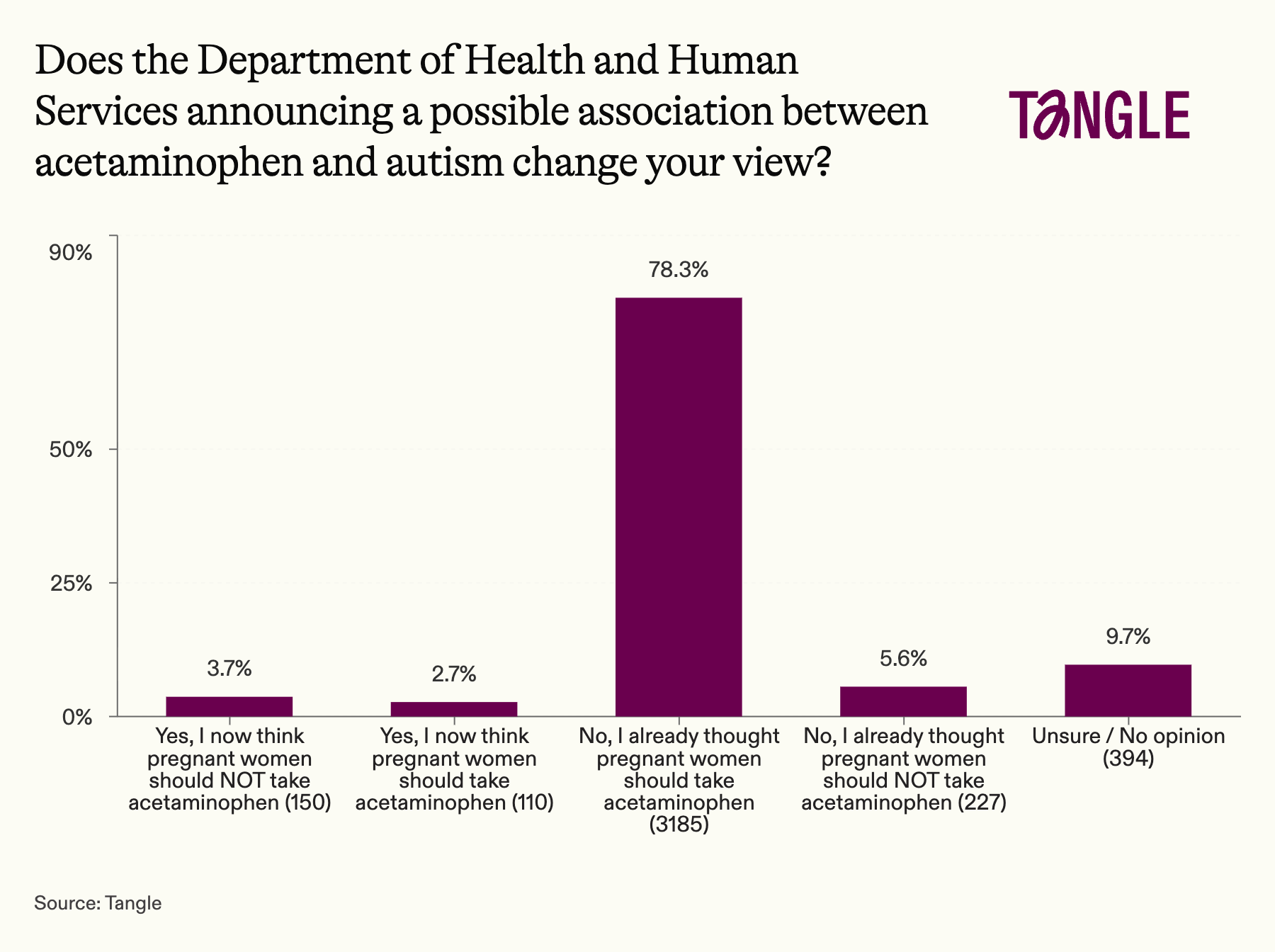
- Yesterday’s survey: 4,066 readers responded to our survey on HHS announcing a possible association between autism and acetaminophen with 78% saying they will continue to see the drug as safe. “The FDA making such a brash, sweeping pronouncement while ignoring contradictory evidence is highly irresponsible and unethical,” one respondent said.
Have a nice day.
Over a century after Titanic’s sister ship HMHS Britannic’s explosion in the Aegean Sea, a Greece-led exploration has recovered artifacts from the wreck. An 11-person deep-sea diving team set off on a week-long operation in May to retrieve objects from the vessel, which remains the world’s largest intact passenger ship on the sea floor. Like the Titanic, the Britannic was designed as a cruise liner offering luxurious amenities to its passengers, but it was converted to a hospital ship during World War I before it sank in 1916. The recovered artifacts will be displayed in Athens’s Museum of Underwater Antiquities and include a lookout bell, a navigation lamp, and ceramic tiles from a Turkish bath. CBS News has the story.

Member comments