
I’m Isaac Saul, and this is Tangle: an independent, nonpartisan, subscriber-supported politics newsletter that summarizes the best arguments from across the political spectrum on the news of the day — then “my take.”
When I was 14 years old, I traveled to the Big Bend region of West Texas for the first time.
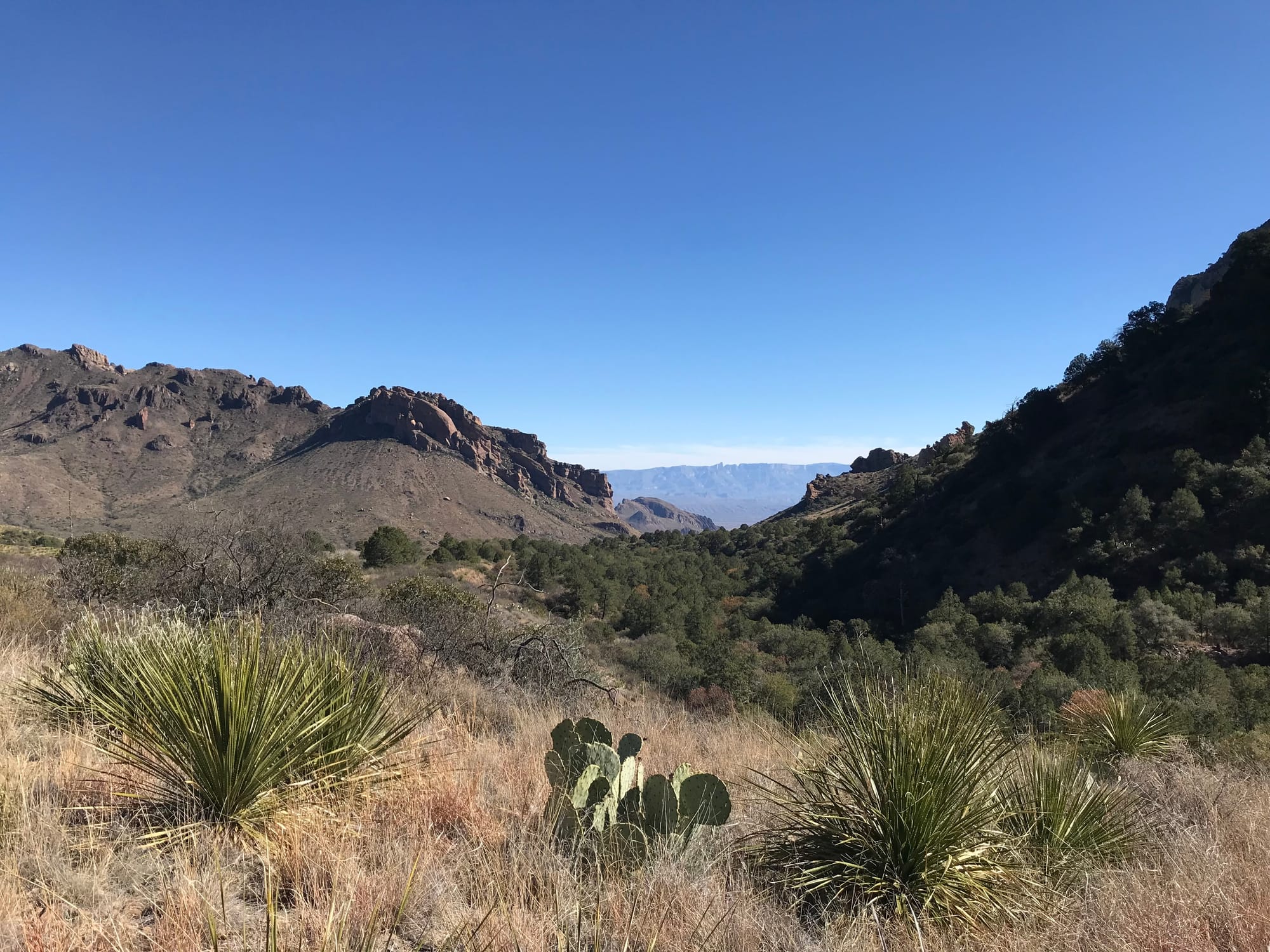
My extended family had lived along the U.S.–Mexico border since the 1970s, but this was my first time visiting them. As a suburban kid from Philadelphia, I’d never seen anything quite like it. Counties nearly the size of New Jersey held no more than a couple thousand permanent residents. Mountains, rivers, desert arroyos, cattle ranches — miles and miles of wild, untouched land stretched out in every direction, mostly unobstructed. The land is populated by ocotillo and agave plants, pig-like mammals called javelinas, coyotes, mountain lions, bears, snakes, deer and (more recently) majestic mountain sheep called aoudads. It was and remains the Western Frontier — alive and well, still unmarred by oil fields or residential buildings or government overreach.
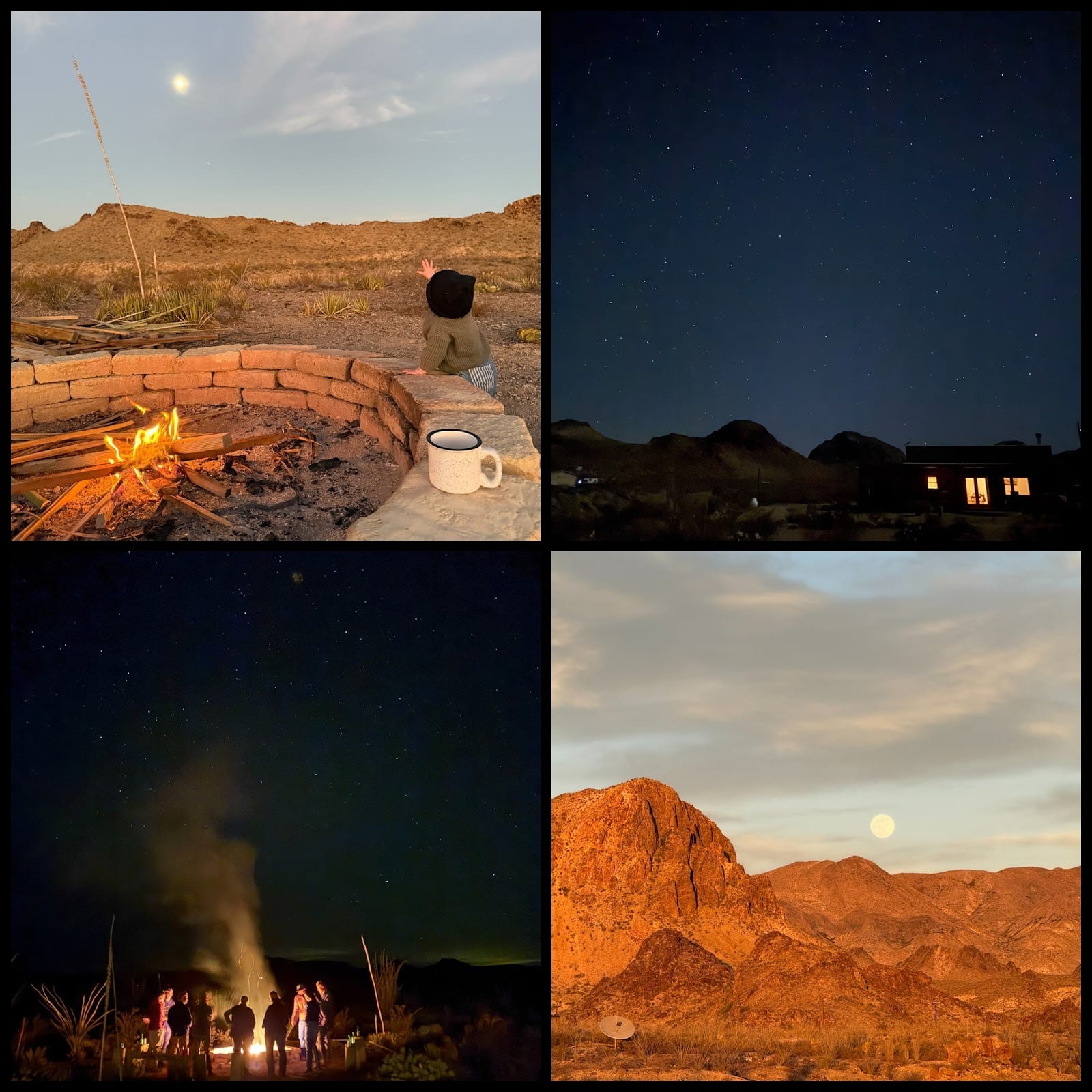
After my first summer working for my cousin in Big Bend, I went back every summer until I was 18 years old. I learned to drive manual transmission cars, dirtbikes, forklifts, and backhoes; I learned to shoot guns, ride horses, hike, camp, make fires, run rivers, and tow a trailer. I learned to work — backbreaking, hard work in the 115-degree sun. I was surrounded by people who knew how to live off the land, fix their own cars, and make ends meet with the bare minimum in a place where jobs (along with water, food, and people) were sparse. After I went to college, I kept coming back — usually once or twice a year, often for weeks or months at a time, until a few years ago when I finally bought a 10-acre plot of dirt and started construction on an adobe home for my family, which was completed last year.
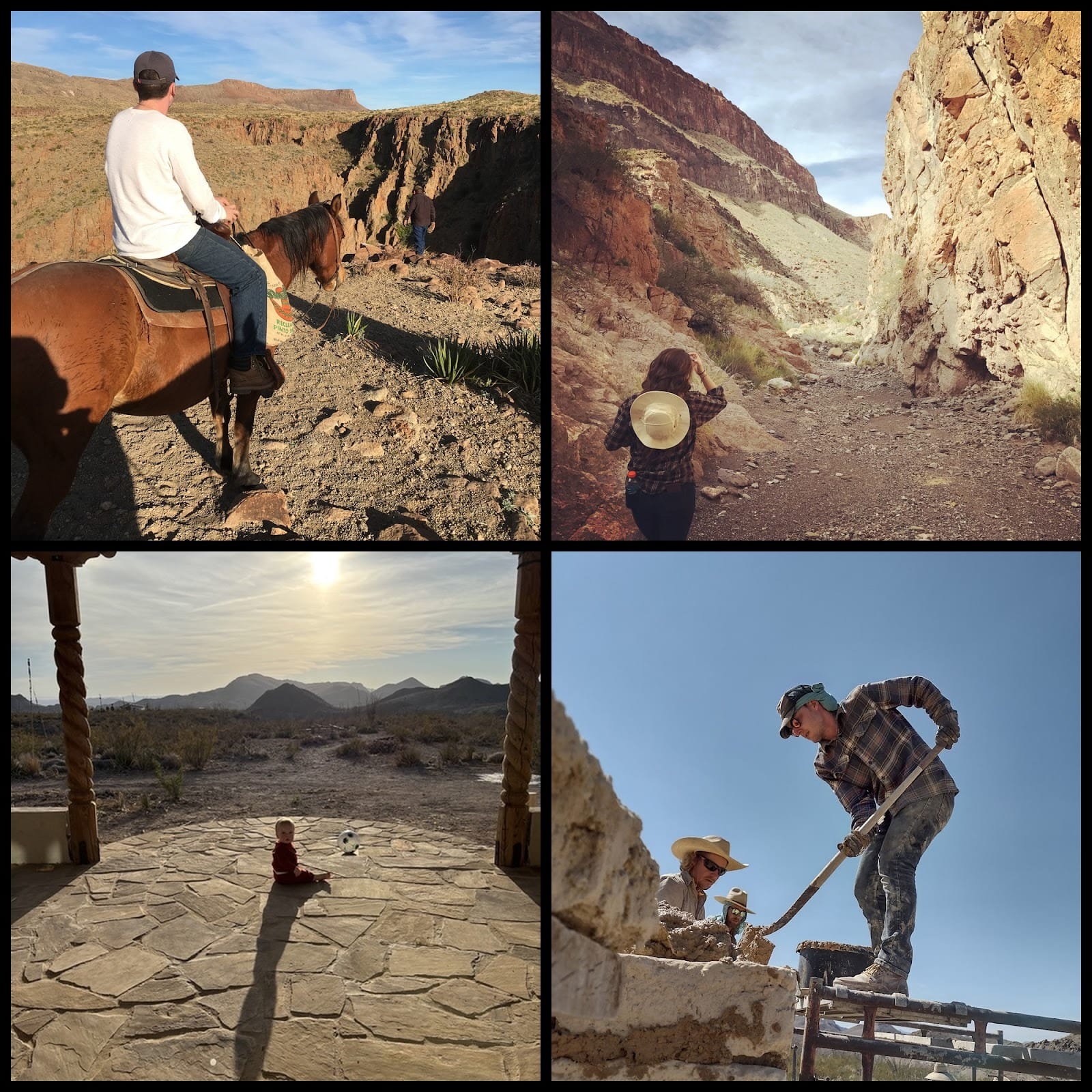
It is, without exaggeration, my favorite place in the world. My happy place. My getaway spot. My hope, with any luck, is that in a few decades my son will be inheriting the home and the land, shepherding it, and passing it along to his own children.
And now, once again, I’m facing the prospect of President Donald Trump building a border wall through my backyard, potentially destroying the very land I hoped to care for into the future.
I’m hardly some obsessive critic of Trump’s border policies. Some areas of the Southwestern border already benefit from a border wall, fencing, or physical barriers to reduce crossings, and plenty of border communities support such barriers in their areas. I’ve criticized Biden for the border crisis his policies created and praised Trump for curtailing illegal immigration within months of taking office. The plain truth is that Trump’s promise was to reduce border encounters, and he’s done that — bringing them to near zero — without any more wall than we already have.
I also understand the desire from Trump and his supporters for border barriers. Our immigration system has repeatedly been overwhelmed in the last few decades by migrants coming north, and it feels like common sense that a border wall might prevent this from happening again in the future. People watching their towns be overrun with drugs or seeing immigrants working without papers inspires resentment, and lots of people just want a president to do something. Trump has campaigned repeatedly on a border wall, many Texans voted for him, he won, and now he’s trying to fulfill that promise. Even more, the Department of Homeland Security (DHS) can waive legal requirements to construct border crossings.
Yet even taking all of this into account, a border wall in the Big Bend region is an absurd, wasteful, counterproductive idea that is loathed by nearly every person who has ever lived or visited there.
To illustrate why, let’s consider this action through the lens of what President Trump says he cares about: illegal immigration, jobs, and American strength.
For starters, the Big Bend region is one of the most remote, unnavigable terrains in all of the United States. Border crossers aren’t going to be more dissuaded by a 30-foot wall than the thousand-foot sheer cliffs that already litter the Mexican landscape south of the Rio Grande River. Supposing desperate border crossers also happened to be experienced rock climbers who trudged up from Central America with gear to navigate the mountains, cliffs and arroyos, they’re still likely to die of heat exhaustion or thirst in a place where the temperature routinely exceeds 100 degrees Fahrenheit from April to October. And if they come in the winter, well, they’re liable to get hypothermia in the desert night, when the temperatures routinely drop below 40 degrees. That’s to say nothing of finding water or food in an area where locals with wells, rain catchment systems, and city lines are frequently struggling to collect potable drinking water; and the arid desert provides no easily accessible sources of food on such a journey.
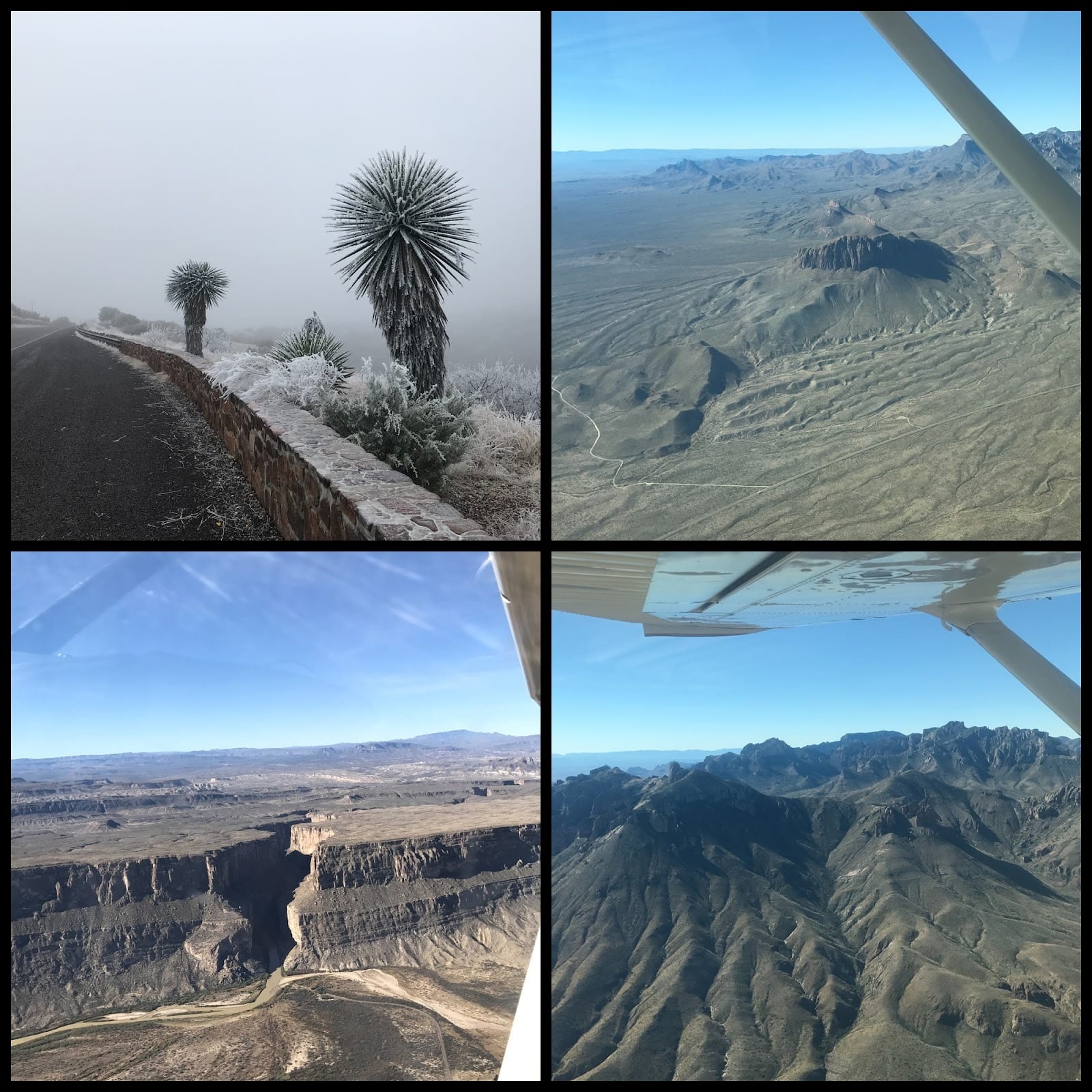
If, by some miracle, a migrant were to actually pass the mountains, survive the heat (or cold), travel with enough water to even reach the border, they’d have nowhere to go. The moment they crossed the Rio Grande they would likely get nabbed by the Border Patrol officers that regularly monitor the area, or be spotted by one of the hundreds of cameras, motion sensors, or drones that patrol the river and the surrounding areas looking for migrants; and even if they were lucky enough to accrue consecutive miracles and then avoid detection to make it to American soil, they would be trapped.
Every road out of the region runs directly into Border Patrol stops (not ports of entry, but Border Patrol stops) that are a few miles north, east, and west of the border in every direction. For instance, when I leave my property to drive back to the airport and fly home, I have to stop about 30 minutes into my drive to get searched, questioned, and scanned by CBP. There is no way out or around these checkpoints, unless you’re up for (once again) crossing hundreds of miles of desert, private lands, and mountains on foot.
For all those reasons, vanishingly few migrants actually try to cross the border in this region. Locals and family members of mine so infrequently see migrants arriving that they talk about any time they actually do encounter a border crosser for years afterward. For example, I once heard a story from my cousin about a migrant arriving on the doorstep of his business, one who’d somehow survived all of the above and managed to walk into town, only to ask, “Which way to Los Angeles?”
Uh, about 1,200 miles west of here. Good luck.
That’s why the majority of the brave, desperate, lucky few who even make it end up turning themselves in. They’re either too near death or too lost to carry on, and most have no intention of going undetected at all. In Fiscal Year 2025, CBP recorded 3,096 border encounters in the Big Bend sector — which spans 517 miles. In FY2024, crossings in the Big Bend sector accounted for about 0.3% of all Southwestern border encounters.
And then there are the jobs. Again, in this part of the country, employment is sparse. Many of the people who can work only do so seasonally, as construction, tourism, and outfitting jobs are close to impossible to find in the summer heat. In Brewster County — where I built my home and where Big Bend National Park and Big Bend State Park are located — about 20% of all employment is tied to tourism. Most of that tourism consists of activities like river guiding, horseback riding, and other outfitting experiences (such as guided fishing trips, park stays, hikes, or off-road experiences). Most of the other employment opportunities support the tourism industry (shuttle driving, office admin work, lodging and hotels, park jobs, etc).
To be candid: You do not visit or live in Big Bend to try the restaurants or bars or meet your future spouse. Honestly, you don’t even go there for the people (though the unique and eccentric people are probably the best part). The entire allure of Big Bend is to experience the most remote, rural, untouched place you can find within the boundaries of the lower 48, so an influx of construction infrastructure to build hundreds of miles of barriers through the region would immediately damage the tourism industry and upend life for locals. The remote and unique beauty of these parks and the Rio Grande would be choked by forklifts, steel beams, and workers. It would be a disaster.
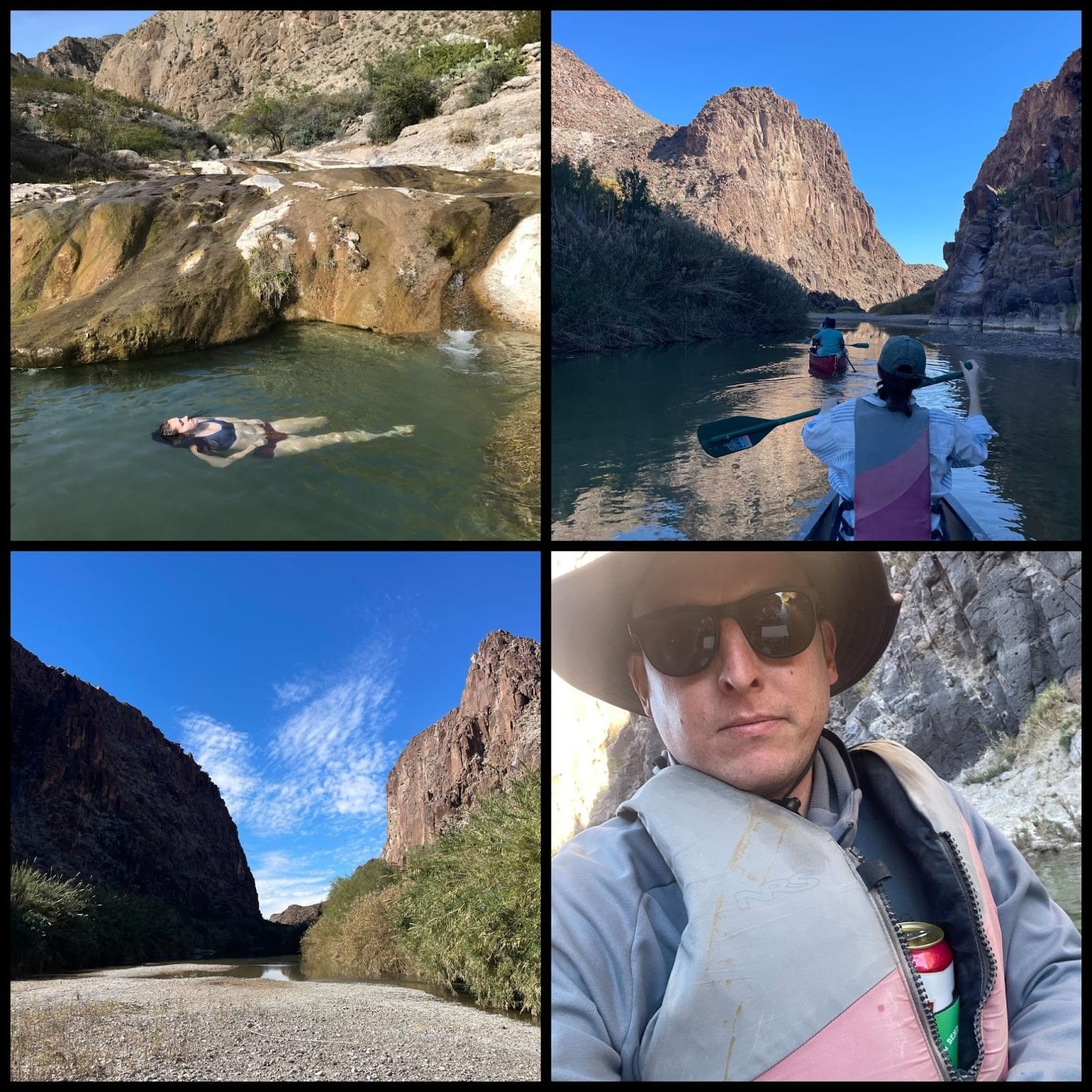
More practically, West Texas and Mexico already have a natural border — the Rio Grande. Since we can’t build a wall in Mexico, the construction of a giant border wall would go through the national park, state park, and the surrounding counties, which DHS has just waived a laundry list of laws to attempt to do. It would mean building a wall in the river or on the banks of it on the U.S. side, thus cutting access to it off from U.S. residents. In other words, the Rio Grande would become impassable or unapproachable in places; alternatively, water would be diverted and dammed. This would immediately destroy the river-guiding and fishing industries. It would reduce the already limited water for ranchers and locals who use it. And that same construction would impede miles and miles of horseback riding, off-roading, and hiking trails.
And, finally, bringing in all the people and construction materials necessary to make this happen would also add light pollution to the night skies, which are some of the darkest in the entire world, not just the United States. This may sound low-stakes, but it’s a feature of the region international travelers flock to Big Bend to witness themselves, and entire tourist industries (like clear, domed hotels and skywatching trips) are built around the dark night sky. I can attest, personally, that there is nothing quite like staring up at a clear, star-filled, Big Bend sky.
Which brings me to my final point: American strength. This plan would, in all practical terms, hand the river over to Mexico, from El Paso down into the Big Bend valley.
Think of this for a moment. President Trump, the ultimate dealmaker, is proposing cutting Texans off from one of the most important natural resources in Texas and handing it over to Mexico wholesale. Again: Any barriers along the border will have to be built on the American side; that means building roads through Americans’ property and our parks to build and maintain the barrier, which would cut those same Americans off from the river that provides the lifeblood of the region (and for some farmers and ranchers, the lifeblood of their irrigation systems). And we’d be putting our tax dollars toward handing Mexico complete access to this great natural resource.
All of this would, in short order, permanently scar these pristine lands, do next to nothing to reduce overall migrant flows in the Southwest, and kill the already limited jobs in the region while giving up access and control of a river that has long been tended to and cared for by the United States. That’s to say nothing of how much it would damage the livelihoods of the locals while also devaluing and damaging the homes and property they own.
Some people have downplayed the seriousness of the Department of Homeland Security’s plans, claiming that the administration merely wants to add “surveillance” along the border. This is wishful thinking. DHS has already sent out fliers notifying land owners in the region of “175 miles” of planned primary barrier through several counties along the border and into the Big Bend region.
According to the letter, images of which were forwarded to me, the “border barrier design will feature 30-foot-high barrier made of six-inch-squared diameter steel bollards, spaced approximately four inches apart with anti-climb features.” The operation will require “fiber optic cables, lighting poles, artificial lighting, power cables, surveillance cameras, access and patrol roads and utility shelters along the international border.” There will be “manually operated drainage gates ranging from 8- to 10-feet in width” and “routine vegetation removal along the border barrier, maintenance of the patrol road, and/or repair of the barrier will be conducted as needed.” All of this will require “12-foot-wide” maintenance roads and “up to a 24-foot-wide” patrol roads. Also, “water is anticipated to be needed for construction and dust suppression” while “shelters will be needed to house fiber optic cables and CCTV equipment,” and “shelter dimensions will be 30 x 30-feet, with a height of 9 feet.”
This is all about to happen in the beautiful, pristine and untouched area I just described to you, which (right now) has just two paved single-lane highways running through what is otherwise nothing but dirt roads and wild landscape. It’s all so obviously absurd and silly that it is being panned by the Republicans who govern the region. Greg Henington, a family friend and the Republican county judge in Brewster, got a standing ovation in a room full of Republicans at a recent water board meeting when he pledged to oppose any wall construction. Hudspeth County Judge Joanna “JoJo” Mackenzie, also a Republican, said the plan was a “Band-Aid to make people feel better who don’t live here and don’t see it.” Republican State Rep. Wesley Virdell said, “It doesn’t make sense to destroy our national park simply to put the border in there when we have such low crossings already."
While all of that should be enough to dissuade the president and his supporters against any border wall in Big Bend, they aren’t the only considerations.
For starters, this region is incredibly safe. People leave their cars and homes unlocked. Run-ins with cartel members, other criminals, or dangerous migrants are non-existent. In the 20 years I’ve been traveling to Big Bend or living there for extended periods of time, I’ve never once witnessed a border crosser or a border crime of any kind (like drug smuggling or cartel violence). Shoot, I struggle to think of a time I’ve even seen a screaming match. The communities surrounding Big Bend National and State Parks are some of the most tranquil and tight-knit I’ve ever seen.
On top of that, wall construction would, inevitably, disrupt and destroy the wildlife of West Texas that makes it so unique. Some ranches used for hunting would go out of business because the migratory flows of that wildlife would be disrupted. Any wall would require using eminent domain to seize property from ranchers and private land owners, a whole controversy of its own. It will cost hundreds of millions or billions of dollars to complete (again, to — at best — stop 0.3% of migrant flows). It would disrupt and potentially cut people off from the hot springs and swimming holes that dot the desert.
Legally speaking, actually completing this project would create a dangerous precedent, too. The land and river in this area are protected by the National Environmental Policy, Endangered Species, and Clean Water Acts; the river is also under the Wild and Scenic River designation, which is supposed to be the highest level of river corridor protection we have in our country. This is not the urban borderlands around El Paso or the desert of Tijuana; if these lands and these environmental laws can be tossed aside at a moment’s notice, what power do any of these protections actually have? What does that mean for all the wildlife, rivers, national parks, and private land owners across the country?
“Nobody's really pointed out that we've just decommissioned a national park,” Steve Harris, from Rio Grande Restoration and Further Adventures, told me. “The Secretary of DHS has just decommissioned a national park in a National Wild and Scenic river without any Congressional approval or review, and that's deeply disturbing.”
On top of all of this, it will be so incredibly politically unpopular that it could worsen an already important problem for Trump, which is that he is losing Republican voters all across South Texas. This swath of land is so beloved by Texans across the state that I think damaging it is a genuine electoral threat for local and state Republicans. My social media feeds, which include Texas residents from across the political spectrum, are full of outrage and alarm bells right now.
On Tuesday night, in his State of the Union address, President Trump assured the nation that from “the rugged border towns of Texas to heartland villages of Michigan,” the golden age of America “was upon us.” He paid homage to the brave Americans who “ventured out across the daunting and dangerous continent,” and “carved through an unforgiving wilderness, settled a boundless frontier and tamed the beautiful but very, very dangerous Wild West.”
His mistake was speaking about these rugged borderlands and tamers of the Wild West in the past tense, as if they were dead and left in some bygone era. They’re not. They’re still there, chasing Trump’s golden era vision, taming the wild lands of our nation, living off its pristine and rugged offerings, and welcoming visitors from across the world to experience it themselves. The president, though, is putting that frontier at risk — all for the sake of an unnecessary, expensive, and useless wall.
Someone ought to let him know.
Member comments