This is the Tangle Sunday Edition, a brief roundup of our independent politics coverage plus some extra features for your Sunday morning reading.
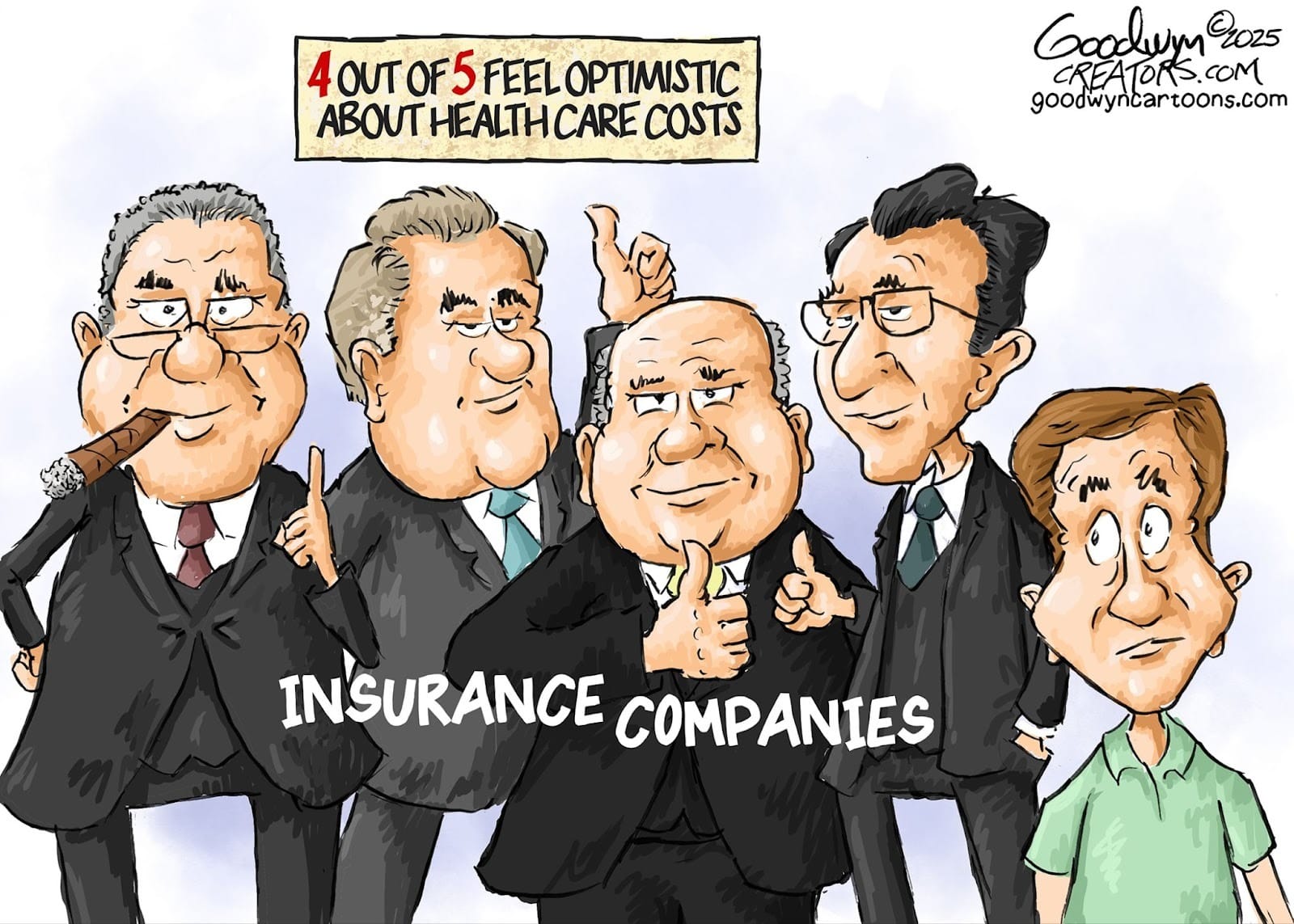
What the right is doodling.
Al Goodwyn | Creators Syndicate
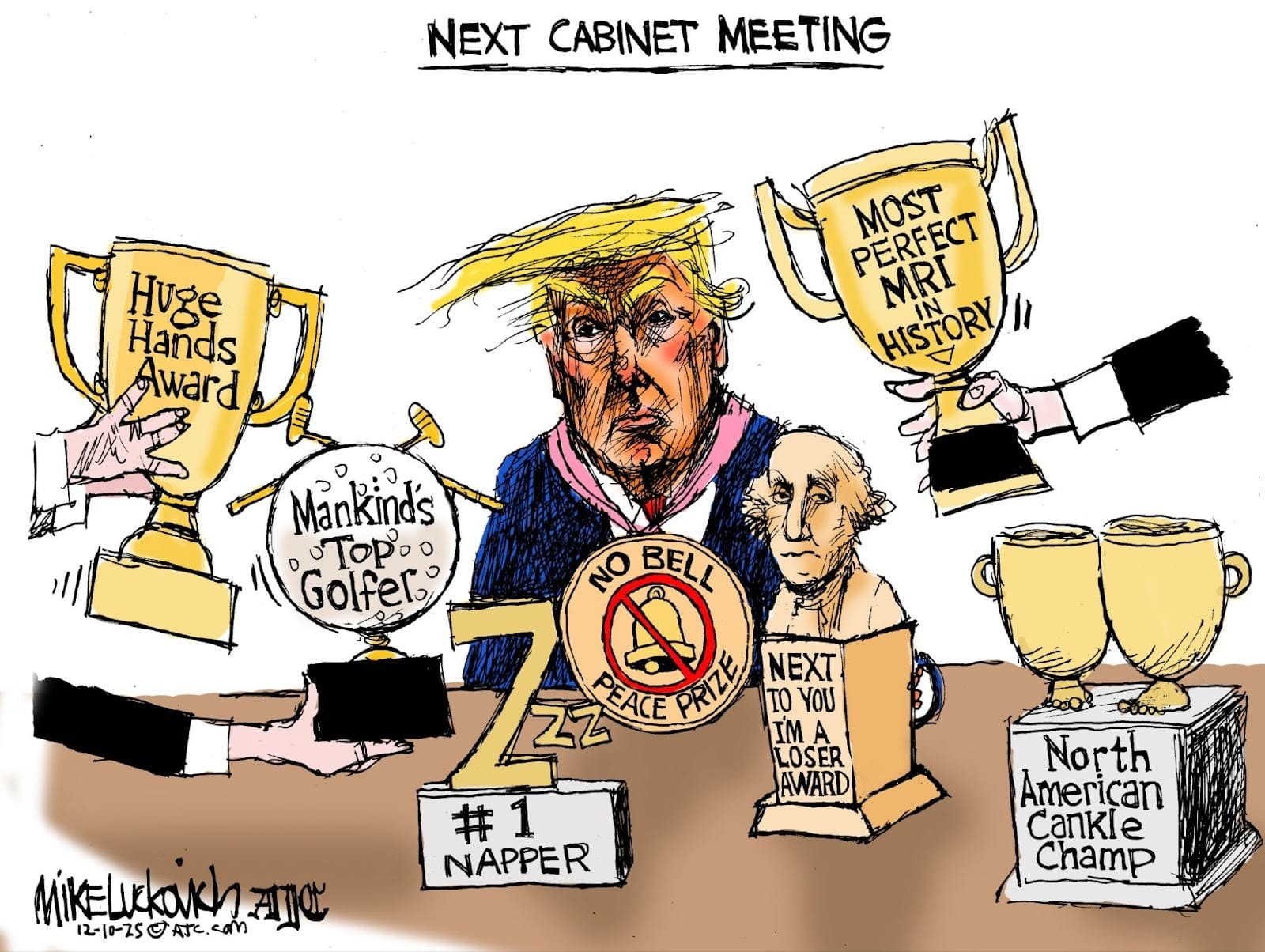
What the left is doodling.
Mike Luckovich | Creators Syndicate
Monday, December 8.
The new hepatitis B vaccine guidance. On Friday, December 5, the Advisory Committee on Immunization Practices (ACIP) voted 8–3 to eliminate a longstanding recommendation that all newborns receive a first dose of the hepatitis B vaccine. The committee instead recommended that women who test negative for hepatitis B should consult with their doctors to determine whether their babies should be given the first dose of the vaccine, suggesting that the initial dose be administered after the infant is at least two months old. The committee voted on the change after it heard presentations from several vaccine critics; no Centers for Disease Control and Prevention (CDC) subject-matter experts presented to the panel.
Our take:“I’m not a health expert, but as a new parent, this new recommendation creates more confusion than clarity. The commentators I trust give me good reason to oppose ACIP’s recent change. I always seek out multiple opinions, but Kennedy’s Health Department isn’t modeling good scientific dialogue.”
Reader Survey:
We asked our audience the same question on September 8. You can see how the results have shifted since then by comparing the above chart to the 4,497 responses represented below.
Tuesday, December 9.
The new national security strategy. On Thursday, December 4, the Trump administration released its 2025 National Security Strategy (NSS), a document outlining the administration’s priorities for U.S. foreign policy. In the document, the administration provides overviews of its policies in the Western Hemisphere, Asia, Europe, the Middle East, and Africa. Key goals include refocusing on regional relationships, increasing economic power while avoiding conflict in the Pacific, protecting freedom and security in Europe, pursuing lasting peace and economic partnership in the Middle East, and maintaining U.S. dominance in the technological sector.
Our take:“The NSS elevates a new regional focus over more urgent global threats. Furthermore, the administration’s actions seem to be working against its stated goals. While some individual provisions are strong, the document as a whole poorly prioritizes our national security threats.”
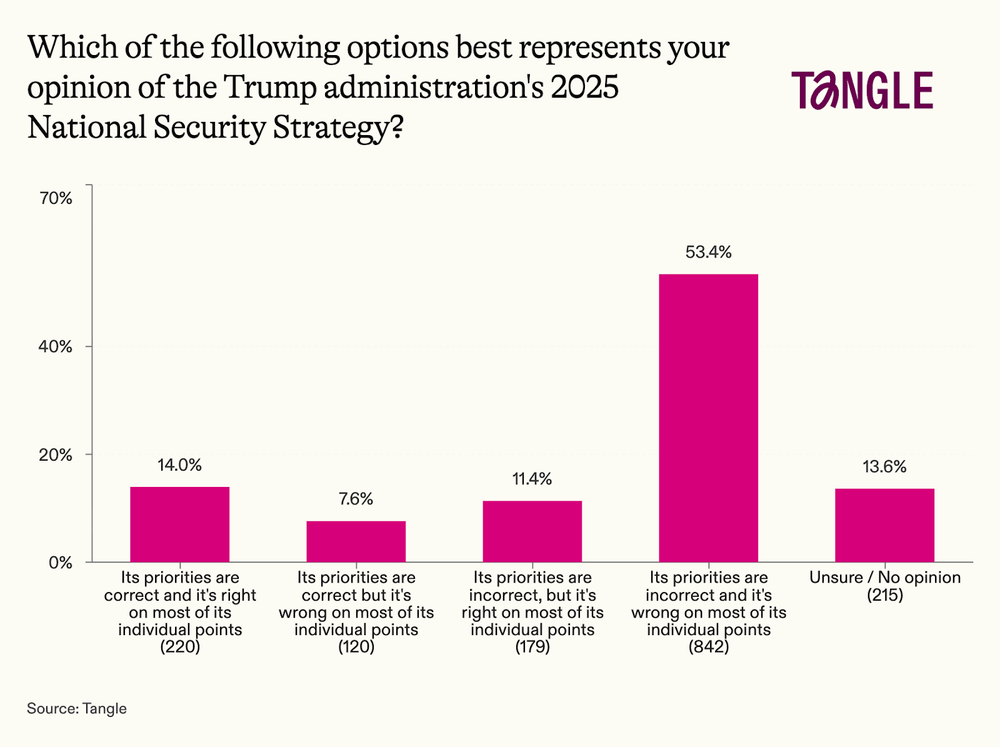
Reader Survey:
Wednesday, December 10.
X versus the EU. On Friday, December 5, the European Commission (the executive arm of the European Union, or EU) announced that it is fining the social media company X $140 million for breaching transparency obligations under the Digital Services Act (DSA). The European Commission accused the U.S.-based social media company of deceptive use of its “blue checkmark” validation feature, lack of advertisement transparency, and failure to provide access to public data. The announcement marks the first major sanctions issued by the EU under the DSA. X owner Elon Musk responded to the European Commission’s announcement of the fine by calling the post “Bullshit.”
Our take:“I’m no X apologist, but I think the EU is overreaching here. Europe is essentially attempting to regulate a U.S. company through a broad law ripe for uneven application. Musk is right to resist and call out Europe’s climate of censorship.”
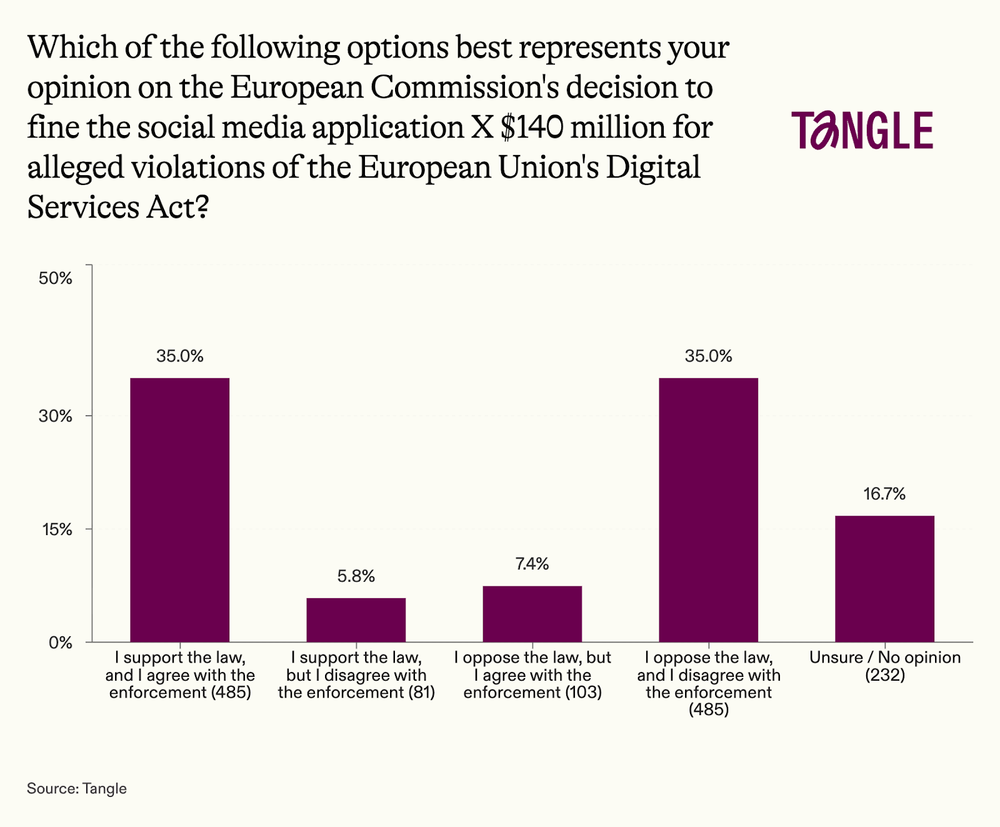
Reader Survey:
Thursday, December 11.
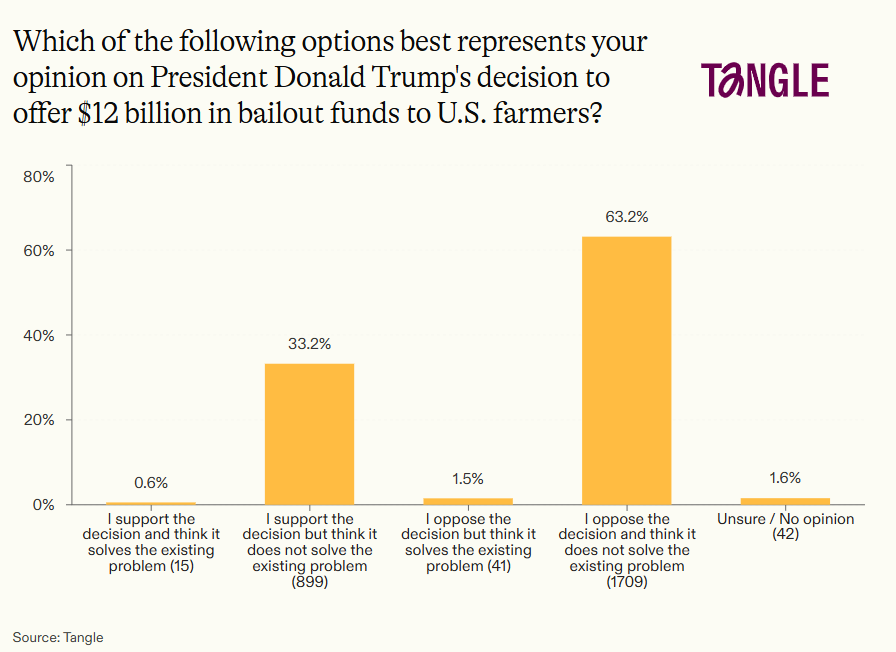
The new aid for farmers. On Monday, December 8, the Trump administration announced a $12 billion bailout for farmers in response to “temporary trade market disruptions and increased production costs.” Most of the money — $11 billion — will be distributed as one-time payments through the Farmer Bridge Assistance (FBA) program, which supports row-crop farmers producing goods like corn, soybeans, oats, and cotton. The remaining funds will be used to support farmers producing crops not covered by the FBA. The aid comes as U.S. farmers report persistent challenges caused by trade disruptions linked to President Donald Trump’s tariff agenda.
Our take:“Every writer we quoted criticized the bailout as a solution to a problem caused by tariffs. The actual problem is much broader and pervades our entire agricultural system. We have some solutions to that problem, but this bailout moves us further away from them.”
Reader Survey:
Friday, December 12.
In this week’s Friday edition, Executive Editor Isaac Saul addresses the explosion of antisemitism and conspiratorial thinking about Jews over the last few years. Speaking from personal experiences and with historical context, Isaac talks about the factors that lead people into antisemitic conspiracy theories and explores how we can combat them by talking more directly about them. You can read Isaac’s piece here.
What just happened.
Here are a few stories that have broken since our last newsletter on Thursday.
On Thursday, Reuters reported that the United States is preparing to seize additional Venezuelan oil tankers after it seized one on Wednesday. (The report)
On Thursday, Ukrainian President Volodymyr Zelensky said he had presented the U.S. with a revised version of a previous 20-point plan to end the Ukraine–Russia war. Zelensky said that negotiations over Ukraine ceding land to Russia remain a sticking point. (The update)
On Thursday, the Senate failed to pass two healthcare bills — one offered by Democrats, one by Republicans — in anticipation of significant increases in premiums for insurance plans on the Affordable Care Act (ACA) Marketplace in 2026. The Democratic bill would have extended enhanced ACA credits for three more years, while the Republican bill would have changed eligibility rules for the insurance marketplaces and offered more money for health savings accounts. (The votes)
On Thursday, the Republican-controlled Indiana Senate voted 31–19 against a new Congressional map designed to help Republicans pick up two additional seats in the U.S. House. President Donald Trump and other national Republicans had publicly lobbied state lawmakers to pass the map ahead of the vote. (The vote)
On Thursday, Disney announced a $1 billion investment in OpenAI, the creator of ChatGPT. As part of the deal, OpenAI will be able to use licensed Disney characters and properties to generate video content using the company’s artificial intelligence technology. (The investment)
On Saturday, Brown University reported that a shooting on its campus had killed two people and put eight others in critical condition. As of Saturday night, the shooter was not yet in custody. (The shooting)
Reader essay.
Dr. Will Cole and Dr. Jessica Knurick hug after participating in the author's panel discussion | Photo from Jeff Krasno
In early November, Tangle reader Jeff Krasno moderated a panel at the Eudemonia Summit health conference. The panel was called “MAHA vs. Anti-MAHA,” pitting a critic of the Trump administration’s health initiative against a supporter of the grassroots MAHA movement. In this week’s reader essay, Krasno talks about his experience moderating the panel, as well as his understanding of how both MAHA believers and critics can work together to address the real public health issues facing us today.
This post is for paying subscribers only
Sign up now and upgrade your account to read the post and get access to the full library of posts for paying subscribers only.