
I'm Isaac Saul, and this is Tangle: an independent, nonpartisan, subscriber-supported politics newsletter that summarizes the best arguments from across the political spectrum on the news of the day — then “my take.”
Are you new here? Get free emails to your inbox daily. Would you rather listen? You can find our podcast here.
Today’s read: 13 minutes.
16 Nearly Secret Things To Do If You Have Amazon Prime
If you shop on Amazon regularly, you're probably leaving money on the table. Most shoppers don't know about the simple tools and settings built right into Amazon that can help you save more and even earn cash back on purchases you're already making.
We've put together 16 lesser-known Amazon hacks that unlock serious savings.
These tips help you lower prices, earn cash back, stop paying for unused subscriptions, and avoid common charges most people never notice.
The best part?
You don't need to buy anything new or change how you shop. No complicated setup or learning curve — just straightforward tricks you can use right away, whether you shop weekly or monthly.
Considering how much the average household spends on Amazon each year, even a few of these hacks add up to meaningful savings over time. Instead of paying full price and moving on, start getting more value out of purchases you're already making.
We’re over 1,000… 2,500 to go.

Hey everyone! We’re over 1,000 paid subscriptions in our end-of-year drive to hit 3,500 new subscribers. We only have 48 hours to go, so… we’re a bit behind. If just 1 in 300 free readers reading this paragraph jump to a paid subscription, we can hit our goal.
Quick hits.
- The U.S. is pursuing an oil tanker near Venezuela that it says is flying under a false flag and under a judicial seizure order. The attempted interdiction follows President Donald Trump’s announcement of a blockade on all sanctioned oil tankers moving in and out of Venezuela; the U.S. has seized two ships so far. (The interdictions)
- Gunmen killed nine people and injured 10 others in a mass shooting at a bar near Johannesburg, South Africa. A manhunt is underway for the suspects. (The shooting)
- Over the weekend, the U.S. military conducted strikes against suspected Islamic State sites. Defense Secretary Pete Hegseth said the strikes were “a direct response to the attack on U.S. forces that occurred on December 13th in Palmyra, Syria,” killing two U.S. service members and a civilian U.S. interpreter. (The strikes)
- New York Gov. Kathy Hochul (D) signed a major artificial intelligence (AI) safety bill into law. The bill includes incident reporting requirements, creates financial penalties for violations and establishes a new AI oversight office, the same provisions in California’s recently passed AI safety law. (The bill)
- Shortly before it was scheduled to air, CBS News pulled a 60 Minutes segment about the maximum security prison in El Salvador where the Trump administration deported groups of unauthorized immigrants earlier this year. Correspondent Sharyn Alfonsi accused CBS News Editor-in-Chief Bari Weiss of pulling the segment for political reasons; Weiss said the piece requires more work. (The story)
Today’s topic.
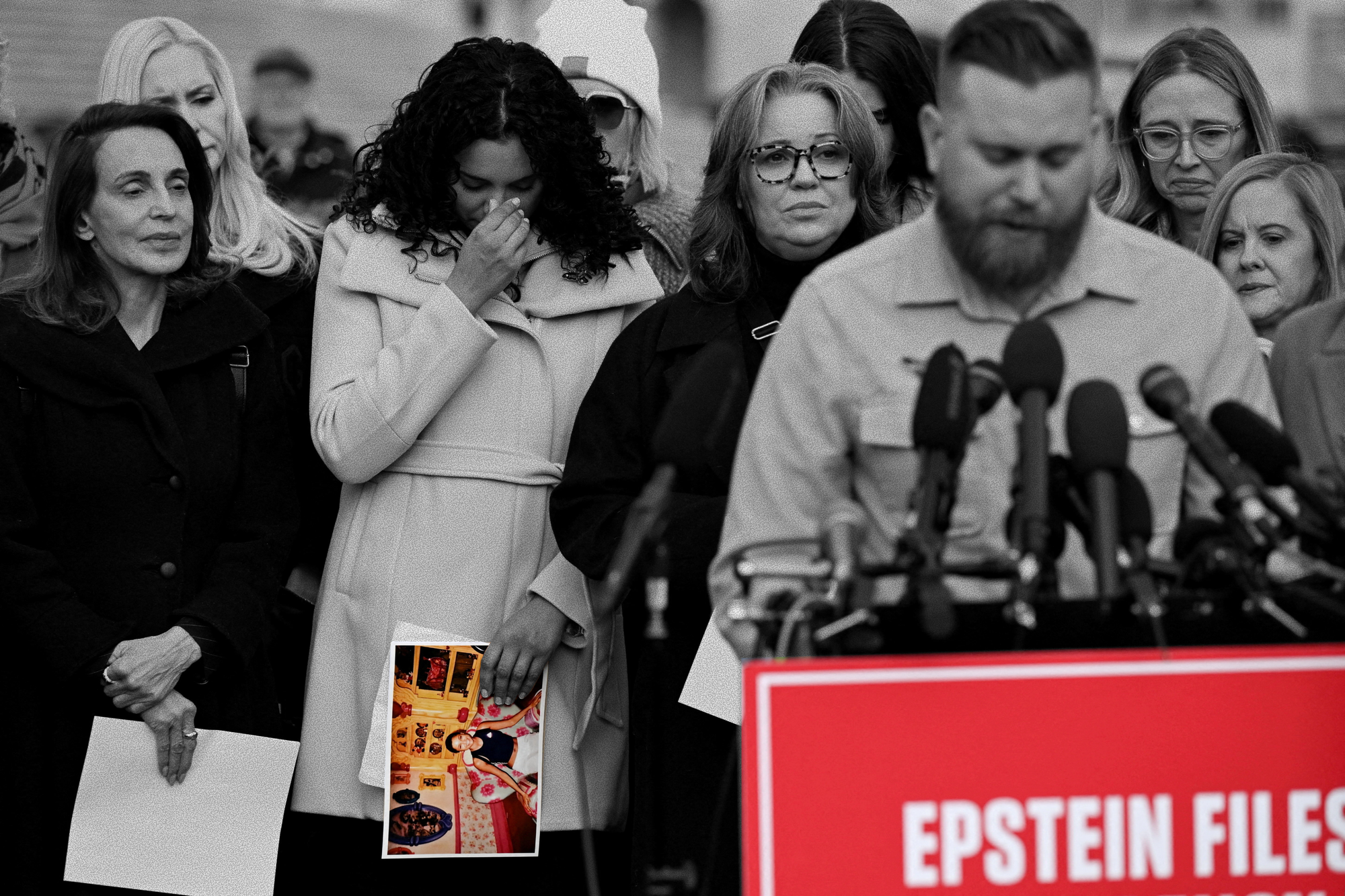
The new Epstein files. On Friday, the Justice Department (DOJ) released a trove of files related to the government’s investigation into convicted sex offender Jeffrey Epstein, including photographs, handwritten notes on his stationery, and evidence seized at his properties. The latest release is the most substantive disclosure of documents related to Epstein yet; however, lawmakers from both parties immediately raised concerns about significant redactions and omissions from this batch. Over the weekend, the DOJ released additional documents and removed others from the government website.
Back up: The Senate passed the Epstein Files Transparency Act in November by unanimous consent immediately after a 427–1 vote in the House. President Donald Trump initially called on Republicans to oppose the bill but later announced his support after the measure’s passage appeared inevitable; he signed the bill into law on November 19. The law requires the DOJ to publish “all unclassified records, documents, communications, and investigative materials in DOJ’s possession that relate to the investigation and prosecution of Jeffrey Epstein,” though it allows the department to withhold information “such as the personal information of victims and materials that would jeopardize an active federal investigation.” The deadline for the release was Friday.
The release included several photos of former President Bill Clinton and other public figures, though none appear to show any of them engaged in illegal conduct. Other notable documents include transcripts of convicted co-conspirator Ghislaine Maxwell’s July interviews with Deputy Attorney General Todd Blanche, surveillance video from the prison where Epstein committed suicide in 2019, grand jury transcripts from cases against Epstein, and police interviews with his victims.
On Friday, The New York Times reported that the document release included a complaint from Maria Farmer, a former employee of Epstein’s, alerting the Federal Bureau of Investigation (FBI) about Epstein’s interest in “child pornography” in 1996. Specifically, Farmer alleged that Epstein had asked her to take pictures of young girls at swimming pools and stolen nude photos of her younger sisters (who were minors at the time). The FBI never acknowledged the report and did not contact Farmer until it launched an investigation into Epstein roughly one decade later.
Separately, on Saturday, the DOJ removed 16 undated images from its Epstein files website, one of which showed framed photos of famous individuals, including Donald Trump. Deputy Attorney General Blanche said that the photos were not removed to protect Trump but at the request of victim-advocacy groups; Blanche said the photos would be restored to the website after officials review whether additional redactions are necessary. On Sunday, the photo containing Trump’s picture was re-added to the DOJ website.
Both Republicans and Democrats have criticized the DOJ’s handling of the release, questioning why only a portion of the files were published by the deadline. Reps. Ro Khanna (D-CA) and Thomas Massie (R-KY), who co-authored the Epstein Files Transparency Act, announced on Sunday that they may bring contempt of Congress charges against Attorney General Pam Bondi for the incomplete release, which would impose fines on the attorney general until all the documents are published.
Today, we’ll break down the latest on the released documents, with views from the left and right. Then, Executive Editor Isaac Saul gives his take.
What the left is saying.
- The left criticizes the DOJ’s rollout, saying the release seems deliberately difficult to navigate.
- Some suggest the limited release downplays the Trump–Epstein relationship.
- Others urge caution in reading too much into individual files.
In New York Magazine, Chas Danner called the release “a mess.”
“‘Trump’ isn’t the only term that fails to return any search results. No term does. There’s a disclaimer about how some of the files may not be searchable, but for now, apparently none of the files are. It’s unclear if that’s because the search function can’t keep up with demand or if the DOJ just shouldn’t have added a search field before making sure searching was possible,” Danner wrote. “If you do want to actually scan through what the DOJ has released, you’ll need to click on specific court cases and then select PDFs named only with numbers. There’s virtually no context.”
“There are a lot of redactions. This one was expected, as the law allowed the Justice Department pretty wide latitude to make redactions — and not just to protect Epstein’s victims. That flexibility undoubtedly meant there would be tons of material kept from public view and a lot of frustration over what was left out. Still, if you start looking through the files, expect to see a lot of black boxes and no explanations as to why.”
In The Guardian, Sam Levine wrote “[the] trickle release of Epstein files on a Friday signals move to bury Trump ties.”
“By the time the department eventually did release thousands of pages of materials on Friday evening — not the hundreds of thousands Blanche promised — many of the documents had been heavily or completely redacted. Other than a few pictures, the materials made no mention of Trump, even though attorney general Pam Bondi reportedly told Trump earlier this year his name was in the files,” Levine said. “The release underscores how the Trump administration is trying to balance both the demand to release the files — something encouraged in large part by the Maga base — while also obfuscating with a slow trickle of document dumps to prevent any embarrassment to Trump.”
“While Trump barely made an appearance in Friday’s release, Bill Clinton appears in several images. The Daily Wire, a Trump-friendly site, obtained a photo of Clinton and Epstein on Thursday, a day before the release,” Levine wrote. “Several other celebrities appeared in the images released on Friday, including Mick Jagger, Michael Jackson, Richard Branson, Chris Tucker, David Copperfield and Kevin Spacey. Like Clinton, none has been accused of any crime in connection to Epstein. But their immediate appearance in the files benefits Trump, creating the impression that it was not unusual for famous men to hang out with Epstein.”
In POLITICO, Ankush Khardori shared “rules for reading the Epstein files.”
“There is a difference between being liable for criminal conduct and engaging in embarrassing, even morally offensive conduct. The principal purpose of releasing the files was supposed to be to reveal the elites who participated in Epstein’s crimes but evaded accountability — but already, we are very far afield from that concept. You may detest former Treasury Secretary Larry Summers or find his sleazy behavior sleazy, but there is no reason to believe that he engaged in criminal misconduct,” Khardori said. “That distinction is worth maintaining. You are free to harshly judge Summers — or anyone else for that matter — for being close with Epstein, particularly after his 2008 conviction, but being friends with a felon is not a crime.”
“There is a potent risk of literal guilt-by-association that is important to avoid. This is not an idle matter, or part of some effort to downplay what might be revealed in the days and weeks to come. This is about maintaining the integrity of the American legal system,” Khardori wrote. “Trump has already pushed Attorney General Pam Bondi to launch criminal investigations of adversaries for their alleged dealings with Epstein, which she agreed to with alacrity… The government should not be prosecuting people — or threatening to prosecute people — who did not commit actual crimes.”
What the right is saying.
- The right says that Democrats’ attempts to link Epstein’s crimes to Trump are looking increasingly far-fetched.
- Some stress that association with Epstein does not prove wrongdoing.
- Others say the DOJ’s handling of the release invites legitimate questions.
In The Washington Examiner, Byron York asked “are Democrats getting desperate about Epstein?”
“For months now, disgraced financier Jeffrey Epstein has been the Democratic Party’s go-to subject for attacks on President Donald Trump… Democrats always return to Epstein, much as they did with Russia in the early years of Trump’s first term,” York wrote. “To an extraordinary degree, Democrats have based their opposition to Trump on the hope that somehow, somewhere, they will find evidence of Trump involved in improper behavior related to Epstein.”
“For all the talk about ‘releasing the Epstein files,’ the fact is that a lot of the material in the Epstein case has already been made public. Why do we know what Giuffre said under oath about Trump? Because six years ago, a court released her deposition in a lawsuit she had filed against Epstein’s accomplice, Maxwell. There has been plenty of other litigation in the case, and many documents have been made public,” York said. “Maybe it will change. Maybe there will be some future discovery that will give Democrats the incriminating evidence they so desperately want. But it doesn’t seem likely. And until then, Democrats appear to be happy to make things up.”
In PJ Media, Matt Margolis wrote “when it comes to the Epstein files, transparency triumphs over frenzy.”
“The Department of Justice released thousands of pages of files on Jeffrey Epstein and Ghislaine Maxwell late Friday, triggering a predictable online frenzy over a parade of famous faces appearing in the photos,” Margolis said. “Each image comes with the same caveat, that appearing in a photo does not necessarily imply wrongdoing. However, that distinction did little to slow Democrats eager to weaponize the release against Trump, despite the timing and contents pointing elsewhere.”
“Epstein cultivated relationships with influential people in entertainment, tech, business, and even royalty for decades. Democrats tried to take innocuous photos of Trump and portray them as smoking guns, even though they weren’t,” Margolis wrote. “As the flood of Epstein files continues, clear eyes and a level head are essential. The political frenzy surrounding every new photo or document serves only those looking to score points. Not every image proves criminal activity.”
In The Free Press, Eli Lake said “the country descends into a new stage of the scandal.”
“Angel Ureña, Clinton’s deputy chief of staff, took to X on Friday to blast the Donald Trump administration. ‘They can release as many grainy 20-plus-year-old photos as they want,’ he wrote. ‘But this isn’t about Bill Clinton. Never was, never will be,’” Lake wrote. “Ureña has a point — sort of. Among the more than 13,000 photos, files, receipts, scans, and other items released on Friday, only one photo of President Trump appears to have been released. Trump also had a relationship with Epstein, which he says he broke off around 2004. It strains credulity that the files do not include more photos of Trump.”
“[The files also] compromise former Trump adviser Steve Bannon, who gave public relations advice to Epstein in 2019 at the same time he was making a documentary about Epstein, after the financier had been charged a second time for sex crimes. Yet giving indicted billionaires media advice is also no crime,” Lake said. “None of the files yet released prove the elaborate theory that has spread about Epstein: that he was running a sex-trafficking ring to blackmail America’s power elite. Instead, the release has fed another round of innuendo while eroding long-standing rules to keep the politics of personal destruction far away from our justice system.”
My take.
Reminder: “My take” is a section where we give ourselves space to share a personal opinion. If you have feedback, criticism or compliments, don't unsubscribe. Write in by replying to this email, or leave a comment.
- After so many years, we’re finally starting to get answers to some questions about Epstein.
- These releases also raise more questions, like how Steve Bannon and Alex Acosta fit into the story.
- I doubt we’ll ever get a trajectory-shifting smoking gun, but the drip of new information is likely to continue for some time.
Executive Editor Isaac Saul: Anyone waiting for a smoking gun to imprison Donald Trump or Bill Clinton or some other big name is likely to be disappointed; yet, slowly but surely, more questions about Jeffrey Epstein are getting answers.
Questions like: How did this go on for so long? How did nobody notice? And how did he get away with it?
One new detail from this release gives us the beginnings of an answer. In 1996, a woman who worked for Epstein actually tried to tell the FBI that he was interested in child pornography — almost a decade before the bureau officially started to investigate Epstein. The woman, Maria Farmer, said that Epstein stole two photos of her younger sisters — ages 16 and 12 — in which they were nude. Farmer said she had taken the photos for her own personal art work (which, on a separate note, strikes me as odd) but Epstein stole them and the negatives. She also alleged Epstein asked her to take more photos of young girls at swimming pools and then threatened to burn her house down if she told anyone about the request.
When Epstein’s crimes came to light, Farmer shared her story publicly, including an interaction she had with Trump in 1995. According to Farmer, she was wearing running shorts in Epstein’s office when Trump entered and began hovering over her, staring at her legs, before Epstein came in and told Trump “no, she’s not here for you.” She claims to have overheard Trump commenting that he thought she was 16 years old as she left the room.
The FBI never responded to the report about the photos, and no evidence of any such report was ever produced. For years, Farmer endured accusations that she fabricated the entire thing. Yet the latest Epstein files release shows the FBI received and filed the report and never did anything about it.
Other elucidating details come from interview transcripts with Alex Acosta, the former U.S. attorney for the Southern District of Florida. In 2008, Acosta approved a plea deal for Epstein that was widely panned as a sweetheart deal. Trump appointed him Labor Secretary during his first term, and after Epstein’s high-profile sex-trafficking arrest in 2019, Acosta stepped down over controversy related to the 2008 deal.
In a now-disclosed closed-door interview with the DOJ’s Office of Professional Responsibility, Acosta answers questions about an 11-month gap in his email records. This gap comes right around the time his office was constructing the plea deal for Epstein, and despite the legal requirement for a U.S. attorney to maintain and archive his records. Acosta also said he has “no idea” where the allegation that he had called Epstein an intelligence asset came from. He then defended the prosecution and the approach his office took, which will not win him much praise from the people who have been following this case. The same files also redacted the names of the prosecutors involved in the case, inviting questions about whether lesser-known prosecutors are being shielded from responsibility.
As the Acosta interview answers some questions, it raises more. That has become a theme with this latest release — and is one that I expect to see repeated again and again as additional files continue to come out. Among other unanswered questions, I was left wanting more information about the Steve Bannon–Jeffrey Epstein relationship. The latest batches of photographs show the two together repeatedly, and Bannon has never sufficiently explained their seemingly close relationship — or what happened to the dozens of hours of recordings he says he has of Epstein.
The DOJ is also opening itself up to questions about how it is handling this disclosure. In one blatant example, Trump’s name is redacted from a damning and explicit part of the files where one of his sexual relationships is described in detail by an Epstein victim. We know it’s Trump because this same document was released in 2024 with his name unredacted; yet this time, the DOJ redacted it. That’s in addition to the 16 (or more) files that disappeared from the DOJ webpage of these documents after publication, including one that featured a photo of Trump (that photo has now been restored).
Importantly, clarity about who Epstein was and what he did for a living is not only coming from the government’s file dumps. Earlier this month, The New York Times released a tour de force of reporting that examined the question of how Epstein made his millions. This has been a central curiosity about his life, and in a vacuum of credible narratives, explanations like “he was a Mossad agent” have filled the gaps. But The Times reporting offers new light: ruthless cons; cunning schemes; and a lot of young, beautiful women used as leverage. Reporters David Enrich, Steve Eder, Jessica Silver-Greenberg, and Matthew Goldstein found a trail of scorned former colleagues and bosses and partners who regretted working with or hiring Epstein, who then shared stories of how he tricked them into handing over money or equity or trust.
Here’s one illustrative example: In the late 1980s, Epstein was tapped by debt collector Steven Hoffenberg to help manage a slush fund and help run a massive Ponzi scheme that bilked investors out of close to $500 million for takeover attempts of iconic companies (he eventually was sentenced to 20 years in prison). Epstein allegedly helped him solicit millions of dollars for what he said were “win-win” investments, and then the two would announce a takeover bid of the company. When news broke and the stock shot up, they’d cash out their funds and secure a profit. The legal market manipulation was no secret, but The Times reporting uncovered that dozens of the investors who gave Epstein money were never repaid their investment; he walked away with millions of dollars and no consequences.
These kinds of stories permeate The Times piece, and they do a lot to explain how Epstein amassed his fortune and climbed the social ladder despite being a college dropout who did not come from wealth.
Obviously, given the partial answers and new questions, the sum total of the last few weeks is not going to satisfy a lot of people. Some of Epstein’s victims, whose stories should continue to be centered here, have already expressed their displeasure with the DOJ’s release. They want ground-moving news to change the trajectory of all this, and they want the Department of Justice to take down some well known, powerful people in Epstein’s orbit. Who can blame them? But that was, unfortunately, never how this was going to work.
Far more likely is what we’ve gotten so far and what I expect we’ll continue to get: A drip-drip-drip of new details, disclosures and stories, and hundreds of intrepid reporters and internet sleuths trying to put together the pieces after the fact. With persistence, hopefully we’ll eventually have more answers than we do questions.
Take the survey: Do you think DOJ will release files that incriminate any of Epstein’s associates? Let us know.
Disagree? That's okay. Our opinion is just one of many. Write in and let us know why, and we'll consider publishing your feedback.
Your questions, answered.
Q: Regarding the $1,776 Warrior Dividend, if this money was already appropriated in the One Beautiful Bill, weren’t these service members already going to receive this housing supplement? In that case, is this really anything new?
— Tracey from Greenwell Springs, LA
Tangle: Yes, you are correct the money was already appropriated in the One Big Beautiful Bill Act (OBBBA). But how Trump decided to disburse this benefit is the story here.
The text of the OBBBA apportions $2.9 billion for the Department of Defense (DoD) to supplement the military’s Basic Allowance for Housing (BAH), which was instituted in 1998 to help members of the armed service afford basic housing. The warrior dividend that Trump announced is funded by that clause in the bill, and that funding is new this year. So, in effect, what Trump is framing as a “bonus” to military members is him drawing on previously appropriated money to cut a one-time check. The administration says pulling from this will not impact the future of BAH, but Congress will have to appropriate more money to replenish the program down the line for that to be true.
Here are a few important additional facts to add context:
- For those unfamiliar with the BAH, it is calculated based on a number of factors (experience, cost of living, and number of dependents) and is part of a service member’s regular payments.
- For those receiving the BAH, the warrior dividend will not change your normal monthly BAH, according to the Trump administration.
- DoD will send these payments outside the regular payment cycle, but more specific details have not been announced yet.
- The OBBBA did not specify how this supplement was to be apportioned.
- Over the next four years, the OBBBA has authorized a $150 billion increase in the DoD’s budget; the BAH supplement (and, thus, the warrior dividend) is a portion of that budgetary increase.
All this taken into account, the dividend Trump announced does appear to be an additional payment on top of benefits that service members are eligible for — though we’re still waiting for more details about its implementation.
Want to have a question answered in the newsletter? You can reply to this email (it goes straight to our inbox) or fill out this form.
Under the radar.
On Monday, a Russian general was killed in Moscow by a bomb that detonated underneath his car, making him the third Russian general to be killed in a bombing in the past year. Lieutenant General Fanil Sarvarov served as the head of the operational training department of the General Staff of Russia’s Armed Forces for nearly a decade and was involved in military campaigns in Chechnya and Syria. No suspect in the bombing has been identified, but Russian authorities said they were looking into possible involvement by Ukrainian intelligence services. The Moscow Times has the story.
Amazon shoppers: You're probably overpaying
If you shop on Amazon regularly, you're likely leaving money on the table.
We've compiled 16 lesser-known Amazon hacks that help you save more and earn cash back on purchases you're already making.
No complicated setup — just straightforward tricks that work whether you shop weekly or monthly.
Numbers.
- 550. The number of pages in the Epstein files released by the Justice Department on Friday that were fully redacted, according to a CBS News analysis.
- 15. The number of days after the release by which the government is required to give Congress a list of redactions.
- 200. The approximate number of Justice Department attorneys involved in reviewing the files before they were released, according to Deputy Attorney General Todd Blanche.
- 23% and 52%. The percentage of U.S. adults who say they approve and disapprove, respectively, of President Trump’s handling of the Epstein case, according to a December 2025 Reuters/Ipsos poll.
- 17% and 54%. The percentage of U.S. adults who said they approved and disapproved, respectively, of President Trump’s handling of the Epstein case in July 2025.
- 70% and 9%. The percentage of U.S. adults who think the federal government is and is not, respectively, hiding information about Epstein’s alleged clients.
The extras.
- One year ago today we had just published a Friday edition from Isaac about his beliefs on class and politics.
- The most clicked link in Thursday’s newsletter was FBI Deputy Director Dan Bongino’s resignation.
- Nothing to do with politics: The best movie performances of 2025.
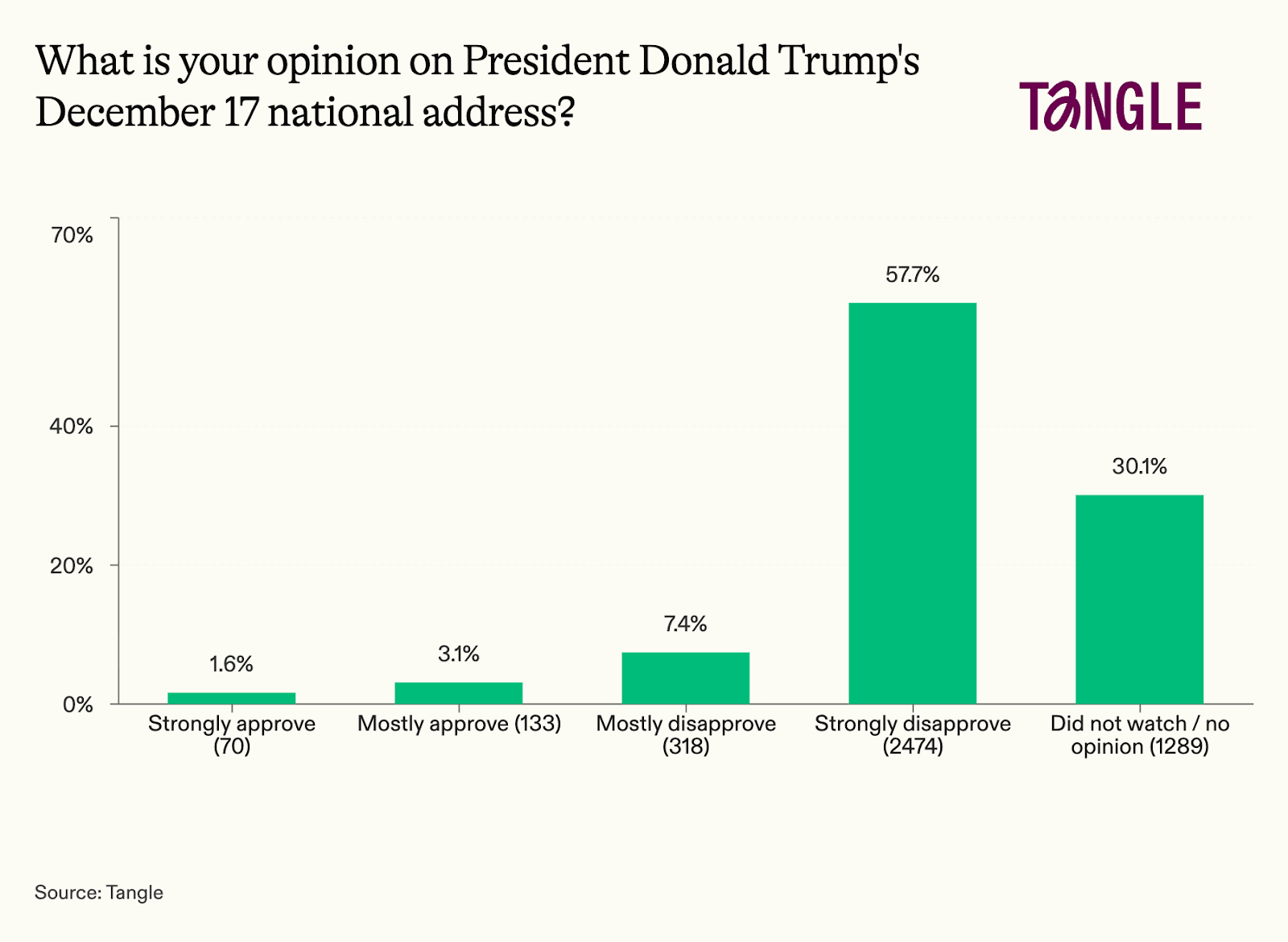
- Thursday’s survey: 4,284 readers responded to our survey on President Trump’s December 17 address with 65% disapproving. “A nothingburger of narcissistic self aggrandizement and railing at Biden again,” one respondent said. “It was a waste of time and a distraction. People are talking about the pointless speech instead of anything of substance,” said another.
Have a nice day.
Scientists have discovered a site in Bolivia that boasts the largest number of dinosaur footprints anywhere in the world. So far, researchers have documented 16,600 footprints, forming dozens of “trackways” in what is now the coastline in Bolivia’s Carreras Pampas. The tracks belong to a group of dinosaurs called theropods, meat-eating bipeds that include the T. Rex, and provide insight into how the animals actually moved in the soft mud between 101 million and 66 million years ago. Scientists say the tracks are not only informative, but also very cool. “When you visit Carreras Pampas, you know you are standing where a dinosaur walked,” said Dr. Jeremy McLarty, director of the Dinosaur Science Museum and Research Center at Southwestern Adventist University in Texas. CNN has the story.

Member comments