
I'm Isaac Saul, and this is Tangle: an independent, nonpartisan, subscriber-supported politics newsletter that summarizes the best arguments from across the political spectrum on the news of the day — then “my take.”
Are you new here? Get free emails to your inbox daily. Would you rather listen? You can find our podcast here.
Today’s read: 13 minutes.
"You Owe $5 in Tolls. Click Here to Avoid Penalties."
Would you click it? Thousands do.
They enter their address. Credit card number. Sometimes even their Social Security number. That's how scammers get you.
Here's the thing: The scam text isn't the real problem. It's that data brokers are selling your personal information—birthdate, email, phone number, even car ownership records—to make these scams more convincing.
Incogni automatically removes your data from over 420 brokers and any site where it appears. No scam texts means scammers never had your info in the first place.
Let’s talk about “The Jews.”
Tomorrow, Executive Editor Isaac Saul is going to address the explosion of antisemitism and conspiratorial thinking about Jews that we’ve seen over the last few years. Speaking from personal experiences and with historical context, Isaac will present the factors he thinks underlie the current rise in antisemitic beliefs and offer some strategies to counter them in practice.
Quick hits.
- The Federal Reserve’s policymakers voted to lower the federal funds rate by 25 basis points, the third rate cut in 2025. Fed Chairman Jerome Powell said inflation remains persistent as the central bank also contends with a weakening labor market. (The cut)
- U.S. Customs and Border Protection published a notice in the Federal Register of a proposed rule for foreign tourists from 42 countries, requiring them to provide their social media histories from the last five years to enter the United States. A Department of Homeland Security spokeswoman said the proposal is not final. (The notice)
- President Donald Trump said the U.S. seized an oil tanker off the coast of Venezuela. Attorney General Pam Bondi said the tanker is part of an “illicit oil shipping network supporting foreign terrorist organizations.” (The seizure)
- The House of Representatives voted 312–112 to pass the National Defense Authorization Act, which authorizes $901 billion in Pentagon spending for the year. The bill now heads to the Senate. (The passage)
- A federal judge ruled that the Trump administration must immediately end its deployment of the California National Guard to Los Angeles. The judge said that allowing the troops to remain under Trump’s control would “wholly upend the federalism that is at the heart of our system of government.” The ruling will not take effect until December 16 to allow the administration to appeal. (The ruling)
Today’s topic.
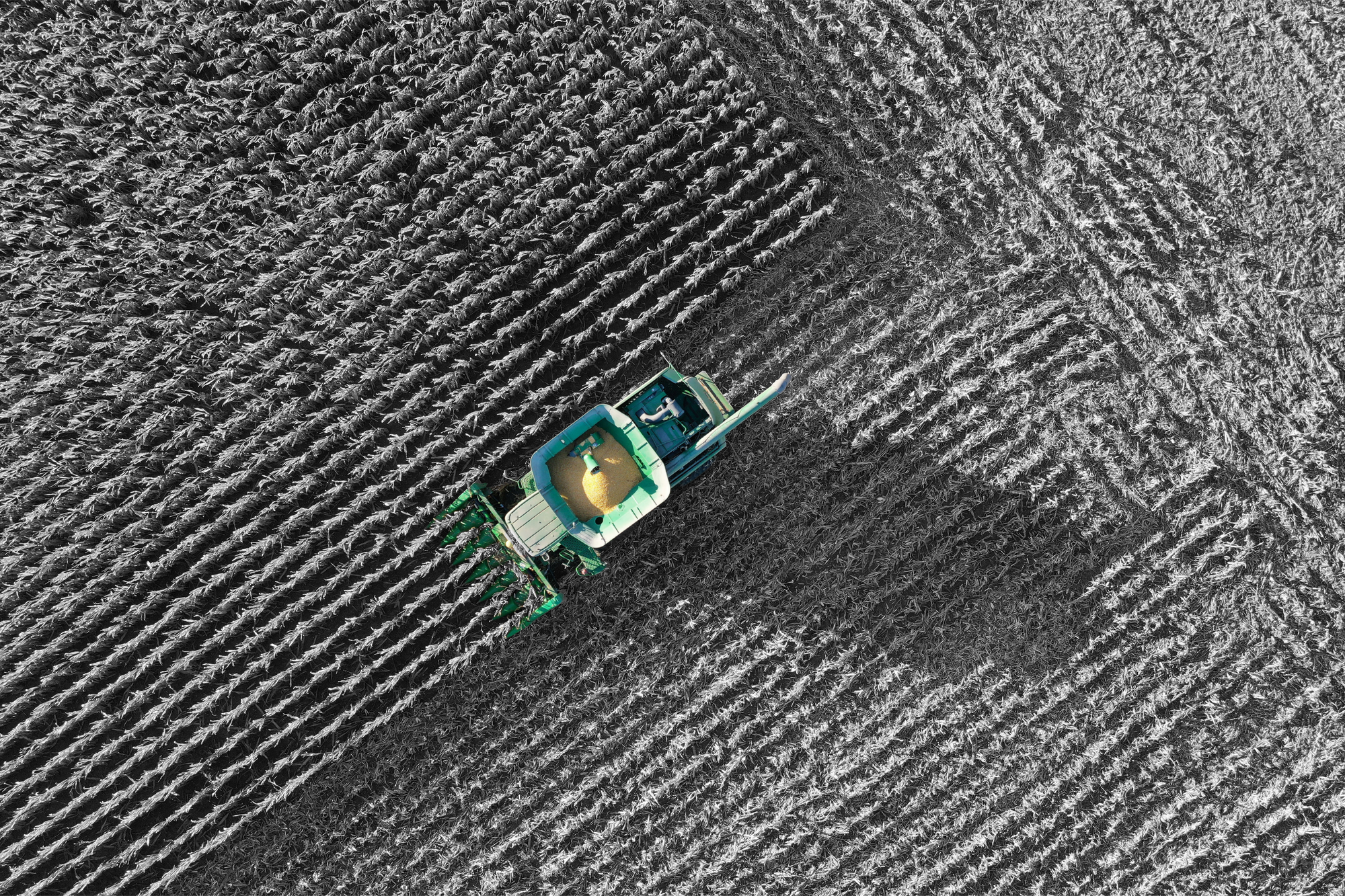
The new aid for farmers. On Monday, the Trump administration announced a $12 billion bailout for farmers in response to “temporary trade market disruptions and increased production costs.” Most of the money — $11 billion — will be distributed as one-time payments through the Farmer Bridge Assistance (FBA) program, which supports row-crop farmers producing goods like corn, soybeans, oats, and cotton. The remaining funds will be used to support farmers producing crops not covered by the FBA. The aid comes as U.S. farmers report persistent challenges caused by trade disruptions linked to President Donald Trump’s tariff agenda.
U.S. farmers with an adjusted gross income average below $900,000 for the 2022–2024 tax years are eligible for the new relief funds as long as they submit acreage reporting data by December 19. The Trump administration said payments will be released by February 28, 2026.
Back up: Bankruptcy filings for farmers were up roughly 60% in the first two quarters of 2025 compared to the same period last year, with over 180 farmers filing for bankruptcy protection. Soybean farmers have been hit especially hard amid U.S.–China trade disputes; earlier this year, China began buying more soybeans from Brazil and Argentina in response to new U.S. tariffs, leading to significant losses for farmers. Labor, fertilizer, fuel, oil, and seed costs have also all risen.
The U.S. and China subsequently reached a trade agreement that includes China buying 12 million metric tons of soybeans. Agriculture Department data shows they have so far purchased 2.85 million metric tons as of October 30, and Treasury Secretary Scott Bessent said that they were on pace to fulfill their part of the deal.
On Monday, President Trump said that the U.S. would fund aid for farmers through tariff revenue. “The United States will be taking a small portion of the hundreds of billions of dollars we receive in tariffs… and we’re going to be giving and providing it to the farmers in economic assistance,” the president said. Trump and Agriculture Secretary Brooke Rollins also suggested that foreign-owned agricultural companies were to blame for rising input costs for farmers.
Today, we’ll cover the $12 billion farmer bailout, with views from the right, left, and U.S. farmers. Then, Managing Editor Ari Weitzman gives his take.
What the right is saying.
- Some on the right say the bailout is a product of Trump’s flawed tariffs.
- Others say Trump must proceed with caution or risk angering a key voting bloc.
National Review’s editors wrote “Trump bails out the farmers he kneecapped with tariffs — again.”
“It’s becoming part of the Trump playbook. It goes like this: (1) Farmers overwhelmingly vote for Donald Trump to be president. (2) Trump imposes enormous tariffs unilaterally, wrecking the export markets that farmers rely on to sell their crops at profitable prices,” the editors said. “(3) Farmers lobby the Trump administration to give them money at taxpayers’ expense to cope with the effects of the same administration’s trade policy. (4) Trump bails out the farmers with billions of federal dollars and changes nothing about the tariffs that hurt them in the first place.”
As crimped export markets have caused a glut of corn and soybeans, tariffs have also raised the prices of crucial farm inputs such as fertilizer and machinery. Complicated duty schedules and trade-policy uncertainty have combined to tighten supply. The average tariff rate on agricultural inputs has risen from less than 1 percent at the beginning of the year to 9.4 percent,” the editors wrote. “The proper solution to farmers’ financial woes in 2025 is the same as it was in 2018: end the tariffs. Instead, the Trump administration has chosen to paint over the problem with a $12 billion bailout.”
In Hot Air, Ed Morrissey explored Trump’s “tariff reinvestment.”
“Donald Trump has used trade wars and tariffs to muscle through better terms with trading partners, resetting the table to undo what Trump argues were deals that robbed the US. In the meantime, however, the brinksmanship has done its own damage, especially to the agricultural industry, where farmers have lost significant income from exports that normally would have taken place,” Morrissey said. “Farmer subsidies generally have widespread bipartisan support, but an attempt to redirect tariff revenue may generate pushback from Democrats, as Trump’s tariffs are too much his signature policy to incorporate into bipartisan solutions.
“Of course, there are other options. Congress could fund the program itself apart from tariff revenues. It sounds a little absurd to suggest that $12 billion is a relatively minor outlay for the federal government, but FY2026 at the moment has a budget of $1.69 trillion in discretionary spending (and far more in mandatory or statutory spending),” Morrissey wrote. “They will likely need to choose quickly… This was ‘urgently needed’ in mid-October. It’s likely at a crisis level at the moment. And with that crisis comes political risk for Trump and the GOP, which will face a very bleak harvest season at the midterms if farmers don’t turn out for Republicans.”
What the left is saying.
- Many on the left say the bailout is a temporary measure that won’t fix a problem of Trump’s making.
- Others say Trump is making the same mistakes he made in his first term.
In MS NOW, Hayes Brown called the bailout “duct tape on a broken pipe.”
“The recent deescalation between Washington and Beijing has led to an uptick in Chinese soybean purchases — but the shift came late enough in the harvest season to ensure that prices depressed from reduced demand stayed low. Likewise, moves to cut tariffs on imports such as fertilizer have helped some, but the economic damage Trump began inflicting back in the spring is still reverberating,” Brown wrote. “A one-time federal intervention doesn’t correct the strife that Trump’s tariff regime continues to fuel. The same was true during Trump’s first administration.”
“When the president began unveiling his tariff levels, I argued that Trump’s trade policy mostly consists of patching together half-considered solutions to problems that Trump himself has created and calling it a win,” Brown said. “The money that is poised to be paid out to America’s farmers shouldn’t be mistaken as anything more substantial than duct tape on a broken pipe: It may give the appearance of helping while doing little to fix the underlying problem — which threatens to rupture again at any moment.”
In InForum, Rob Port said “farmers need competent trade policies, not a bailout.”
“Trump would like you to believe this is a reinvestment of the ‘hundreds of billions of dollars we receive in tariffs’ from foreign countries… [This] isn’t how tariffs work. They’re a tax (which is also why Trump implementing them through executive orders is unconstitutional) and they are built into the price of imported goods and services,” Port wrote. “The money isn’t coming from foreign countries. It’s coming from Americans, including, ironically enough, the very farmers who Trump is now bailing out in part because tariffs have driven input costs through the roof.”
“There’s no question that America needs better trade deals. There’s no question that China, among others, has not been playing fair. While completely free trade would be ideal, we can’t do that if the nations we trade with aren’t going to play by the same rules,” Port said. “But as pressing as that problem is, where’s the evidence that Trump’s approach is accomplishing anything other than higher prices for Americans and an increasing degree of economic isolation from the rest of the world? Worse, Trump’s approach is further entangling our farmers and ranchers in government dependence.”
What farmers are saying.
- Some farmers say the aid will provide little relief without changes to trade policy.
- Others argue the U.S. should stop subsidizing crops like soybeans.
In The Kansas Reflector, Kansan farmer Ben Palen said “Trump promises handouts to farmers. Politicians promise development benefits. We pay for it all.”
“The Trump administration will provide several billion dollars in bailouts to farmers, with an emphasis on corn and soybean growers. Only a small portion may go to Kansas wheat farmers. Predictably, political dances followed the announcement, with various farm groups issuing statements supporting release of this money,” Palen wrote. “It’s pathetic… How about some honest conversations about what this regime has done to American farmers via a patchwork of actions that show little understanding of international trade and so many other issues?”
“Farmers are receiving just a few breadcrumbs. The fundamental challenges of trade policy remain unsolved, and our competitors are gleeful as they take market share from U.S. farmers,” Palen said. “The peril in farm country is real. In less than 12 months, damage done to Kansas farmers and their peers across the nation is only just beginning to be felt. This latest bailout completely fails to address the underlying issues.”
In the Brownstone Institute, Virginian farmer Joel Salatin wrote “ditch the subsidies, grow what actually works.”
“Farmers have many choices as to what to grow. Although farmers are known for their product (dairy farmer, orchardist, vegetable grower, livestock) they are really caretakers of a spot of creation. As a farmer, the deed recorded at the county clerk’s office says I own this land, but in reality I’m a sojourner on something I did not create. The soil, water, and sunlight hitting my fields are ultimately not possessions as much as resources I have the privilege to steward,” Salatin said. “Any land that will grow soybeans is inherently good land; nobody grows row crops on rock piles. The better the land, the more diversified the options.”
“Why should the American taxpayer guarantee the viability of soybean farming when the world has too many soybeans? Markets—and farmers—are supposed to respond to supply and demand,” Salatin wrote. “The crop insurance safety net prejudices decisions and incentivizes dependence on one crop and one agency. Sooner or later, making the same choice every year because it’s easy due to a safety net will show its weakness, because safety nets eventually shatter, especially if they depend on politics.”
My take.
Reminder: “My take” is a section where we give ourselves space to share a personal opinion. If you have feedback, criticism or compliments, don't unsubscribe. Write in by replying to this email, or leave a comment.
- Every writer we quoted criticized the bailout as a solution to a problem caused by tariffs.
- The actual problem is much broader and pervades our entire agricultural system.
- We have some solutions to that problem, but this bailout moves us further away from them.
Managing Editor Ari Weitzman: I could describe the majority of perspectives on the bailout in under 50 words: Tariffs levied against the entire globe raised costs for importers and consumers of all domestic products, setting off trade wars that diminished our exports of soybeans and other crops. This motivated the government to use some of the revenue it raised to offset losses for farmers.
That’s a simple story, with a simple lesson: We are robbing Peter and Paul to pay Paul. The lesson changes slightly depending on the author’s angle of attack, but the problem is either government tariffs or government bailouts (or both).
But there’s a deeper story here that tariffs and bailouts are only an addendum to, and if we focus solely on tariffs then we’ll learn the wrong lesson. It’s a story of how the incentive structure we’ve created for our food production makes Americans less healthy, makes farmers poorer, and has far-reaching consequences that hurt us in ways we never even think about. That story starts with the root problem, which is not China buying too few soybeans.
The root problem is that U.S. farmers are not growing crops for food.
Think of a U.S. farm. What do you think it’s growing? If you said corn or soy, you’re probably right. In 2024, the two crops accounted for 45% of all cash crop receipts. They are easy to grow in rotation with one another, and together have been common agricultural staples since U.S. soy production took off to meet the demand for fat and oils caused by trade disruptions in the lead-up to World War II. If you reflect on what you eat, you’ll probably note that corn and soy aren’t 45% of your diet; so where does all that corn and soy go? A lot of it goes abroad to countries like China or Mexico while we import other crops. Somewhere between 10–20% of corn is exported and roughly 50% of all soy is exported, but most of it is used domestically. How much of the domestic yield of our most widely produced crops would you guess becomes food? 60%? Half? Even less than that?
In fact, less than 10% of the corn and soy farmers grow each year is used in food products, almost all of which is highly processed. The food products that do come from American yields usually take the form of corn starches and high-fructose syrups — and even though those products don’t provide much of the nutrition in the average American diet, they are added to seemingly everything, where they have become leading contributors to our epidemically high incidences of diabetes, heart disease, and obesity.
That’s the small portion of what we grow that feeds us; the other 90% goes to animal feed and biofuels. If instead of asking what the average U.S. farm grows, I asked “what is most U.S. agricultural land used for,” the answer would be different: About two-thirds of agricultural land is used for grazing animals — cows, pigs and chicken, but predominantly cows. That’s a lot of land, but not nearly enough to support the number of cattle Americans consume every year on the grasses they evolved to eat. Instead, cows are fed grains that are not healthy for the animal, and that research shows generally produce less nutritious beef.
Biofuels, meanwhile, are no more beneficial to humans. Compared to petroleum, corn ethanol itself burns cleaner and produces less greenhouse gas, but when you consider all the inputs — the oil used to drive the machinery, the fertilizers and pesticides used in growing, and the land use itself — it produces a net increase in greenhouse gas emissions. Without subsidies to drive corn and soy production, using farmland to grow fuel would be an absurd proposition.
As a result of our land management practices, we do a remarkably poor job feeding ourselves off of our own land. Here’s a quote from a 2013 Scientific American article that remains tragically accurate today:
The average Iowa cornfield has the potential to deliver more than 15 million calories per acre each year (enough to sustain 14 people per acre, with a 3,000 calorie-per-day diet, if we ate all of the corn ourselves), but with the current allocation of corn to ethanol and animal production, we end up with an estimated 3 million calories of food per acre per year, mainly as dairy and meat products, enough to sustain only three people per acre. That is lower than the average delivery of food calories from farms in Bangladesh, Egypt and Vietnam.
None of this is good for the American farmer, creating a collective action problem: Don’t grow enough and you don’t earn enough, so individual farmers grow like crazy and turn out record yields in corn and soy. But that oversaturates the global market to the point that soybeans now cost more to grow than they do to buy, a boon for the buyers’ market dominated by a small number of companies, requiring taxpayer subsidies to keep individual farmers afloat.
None of this is good for the American consumer, either. The prices of the foods people actually eat stay high — because, again, most of what farmers grow isn’t turned into food. The farmer and blogger Beth Hoffman put it best, writing, “In Iowa, we have to import something like 80 to 90% of what we eat, while we are one of the biggest agricultural states in the country. I like to say that if something happened like a pandemic or competing tariffs for example, we could starve here in Iowa, and most of the land is farmed.”
On the heels of the pandemic and in the midst of tariff wars, farmers have only a few options to help sustain themselves. First, they can turn away from soy temporarily, since such a large portion of the U.S. soy crop is exported. That decision can produce an immensely wide-reaching set of effects. Skipping a soy rotation in the field means turning to the other crop in their rotation: corn. Less rotation means more monocropping. Which means importing more pesticides and fertilizers (and which increase input costs). Which means soil erosion and nutrient wash-off that flows into the vast Mississippi drainage basin and ends up in the Gulf of Mexico. Which means algae blooms that hurt ecosystems, which means fewer fish, which means fishermen get hurt (among other externalities). All of which means an increasingly brittle agricultural system.
Second, farmers can turn to the other asset they can control: their land itself. While crops are incredibly cheap, land values are at record highs and investors are rushing to buy up farmland. As someone involved in agricultural finance told me, farmers most often sell the land to another farmer in the area — further incentivizing row-crop rotations that rely on soy and corn. The prospect of selling land that has been run by their family for generations can be painful, but the cash influx of a one-time sale can be an attractive prospect to bridge the hard times.
Lastly, farmers can rely on government assistance to provide that bridge to better times, as is happening today with the new tariff bailouts.
But what better times are coming? Providing assistance to farmers now is essential in the short term, but our subsidies for corn and soy perpetuate a dual-crop system that keeps food expensive and unhealthy, keeps farmers dependent on external assistance, and degrades local and far-reaching environments. If we don’t change the incentives, we won’t fix the problem.
I’ll end with some good news and some bad news. First, the good news: We have the tools to address this problem in both the public and private sectors today. Publicly, the USDA administers the Conservation Reserve Program to offer assistance to farmers — it is designed not to continue to perpetuate the cycles of financial dependency, but to encourage practices that help prevent soil erosion and improve water quality. Privately, some companies are popping up that offer discount financing rates to farmers for incorporating regenerative farming practices that will improve the long-term health of their farms. Profitable farmers, hearty cropland, and healthy diets aren’t mutually exclusive — in theory, they should go hand in hand.
The bad news you can probably already tell for yourself: We are currently going in the wrong direction. Tariffs don’t help our farm system, and bailing out farmers so they can turn to corn won’t help either. Our agricultural issues are far more likely to turn into a full-blown crisis before they take a turn for the better. Something’s got to change.
Take the survey: What do you think of the farm bailout? Let us know.
Disagree? That's okay. Our opinion is just one of many. Write in and let us know why, and we'll consider publishing your feedback.
Your questions, answered.
Q: What became of the measles outbreak? Seems like a media blackout of late.
— Jeff from The Villages, FL
Tangle: Timely question. In January, measles was reported in a largely unvaccinated Mennonite community in West Texas. The disease spread from there, with 762 cases in Texas reported by June. That sparked a lot of coverage about the spread of the disease, which was the largest single outbreak of measles in the United States since 2000, when the disease was declared eliminated in the country. However, after 42 days without a new reported case, the Texas State Department of Health declared the outbreak over on August 18.
That marked the end of the measles chapter in Texas — however, cases are now being reported in other regions. On December 5, Colorado reported a new case of measles, and South Carolina reported its 114th case so far this year (at least 105 of those infected were not vaccinated for the disease).
If the cases continue, the U.S. could lose its elimination status, which the World Health Organization would revoke after 12 consecutive months of sustained transmission. Canada recently lost their 27-year measles elimination status following an outbreak in New Brunswick, and the United States is now entering its 11th month since the initial outbreak in Texas.
All told, over 1,800 cases of measles have been reported in the U.S. this year. So the outbreak from June did not turn into the worst-case scenario, but the spread of measles hasn’t been resolved, either.
Want to have a question answered in the newsletter? You can reply to this email (it goes straight to our inbox) or fill out this form.
Under the radar.
On Monday, María Corina Machado — the Venezuelan opposition leader who has been in hiding for a year — escaped the country via boat, seeking to reach Norway in time to receive her Nobel Peace Prize. According to a person close to the escape effort, Machado and two associates passed through 10 military checkpoints without detection over the course of 10 hours before reaching the coast. Then, they arrived in Curaçao by wooden fishing boat on Tuesday afternoon, took a plane to Miami, then flew to Oslo. Machado’s team reportedly informed the Trump administration of the escape route to ensure they would not target the boat as part of their strikes on alleged drug vessels in the Caribbean. The Wall Street Journal has the story.
How Scammers Know Exactly What Car You Drive
Data brokers compile your personal details—phone number, address, vehicle registration, birthdate—and sell them to anyone who pays.
That's why scam texts feel so convincing. They're built using real information about you.
Incogni automatically removes your data from 420+ broker sites, cutting off the source scammers use to target you.
Numbers.
- $10.67. The price per bushel of soybeans on January 21, 2025.
- $10.91. The price per bushel of soybeans on December 10, 2025.
- $176 billion. The approximate value of U.S. agricultural exports in 2024.
- 20%. The average percentage of total agricultural production that the U.S. exports annually.
- $24.47 billion. The total export value of U.S. soybeans in 2024.
- 2.6%. The compound average growth in export value for U.S. soybeans between 2015 and 2024.
- 46% and 33%. The percentage of U.S. farmers who say the country is or may be, respectively, on the brink of a farm crisis, according to a September 2025 National Corn Growers Association survey.
- 65%. The percentage of farmers who say they are more concerned about their farm’s financial situation than a year ago.
- 77.7%. The percentage of the vote received by Donald Trump in the 2024 election in farm counties, defined as counties where 25% or more of average annual earnings were derived from farming or 16% or more of jobs were in farming.
The extras.
- One year ago today we covered the Daniel Penny verdict.
- The most clicked link in yesterday’s newsletter was the 1883 letter to Santa.
- Nothing to do with politics: Which countries consume the most coffee?
- Yesterday’s survey: 1,386 readers responded to our survey on the EU fining X with an equal 35% supporting the EU’s law and its enforcement and opposing the law and enforcement. “If you want to do business in Europe, you have to comply with European law. It’s not a difficult concept to follow,” one respondent said. “The law seems poorly written and poorly applied. Freedom of speech which encourages exchange of ideas and civil debates should be the law all over the world,” said another.

Have a nice day.
In 2022, 13-year-old Alyssa was diagnosed with T-cell acute lymphoblastic leukemia. Today, she’s cancer-free after researchers from University College London treated her blood cancer with a novel gene-editing procedure that transformed the DNA in her blood cells into a cancer-fighting “living drug.” They have now treated eight more children and two adults with T-cell acute lymphoblastic leukemia — out of the 11 people they’ve treated, seven remain disease-free, and nine achieved a deep remission that enabled them to have a bone marrow transplant. That includes Alyssa, who says she wants to grow up to be a blood cancer researcher. “I’m looking into doing an apprenticeship in biomedical science, and hopefully one day I’ll go into blood cancer research as well,” Alyssa said. The BBC has the story.


Member comments