
I’m Isaac Saul, and this is Tangle: an independent, nonpartisan, subscriber-supported politics newsletter that summarizes the best arguments from across the political spectrum on the news of the day — then “my take.”
Are you new here? Get free emails to your inbox daily. Would you rather listen? You can find our podcast here.
Today’s read: 13 minutes.
Tired of news sources that bury the lead — or worse, don’t have one?
We’ve got the answer: The Daily Upside.
The Daily Upside delivers sharp, clear-eyed reporting on the forces shaping markets, finance, and the global economy — written by veteran journalists and former Wall Street pros.
Recent headlines include:
• Dismal Jobs Data Gives Fed a Wake-Up Call on Interest Rates
• May AI Take Your Restaurant Order, Please?
• Exxon and Chevron, Rivals Turned Frenemies, Face Profit Pressure-Cooker
Join over 1 million daily readers who choose clarity over clickbait.
Subscribe for free.
Happy birthday to us!

Six years ago today, Executive Editor Isaac Saul sent the first edition of Tangle to just over 130 people. Thank you to those who have been with us since the beginning, and the 405,000 of you who have joined since!
Quick hits.
- BREAKING: The House Oversight Committee issued a series of subpoenas to the Justice Department and Democratic and Republican figures — including Bill and Hillary Clinton, former Attorney General William Barr, and former special counsel Robert Mueller — for files and information related to the late convicted sex offender Jeffrey Epstein. (The subpoenas)
- The European Union announced it will pause its planned retaliatory tariffs on the United States for six months while it seeks to formalize a trade deal with the Trump administration. (The pause)
- Israeli Prime Minister Benjamin Netanyahu's government voted unanimously to fire Attorney General Gali Baharav-Miara, who is prosecuting the ongoing corruption case against Netanyahu. The Israeli Supreme Court issued an injunction blocking the move. (The firing) Separately, Netanyahu reportedly plans to solicit support from his cabinet for a plan to fully occupy the Gaza Strip. (The report)
- Special Envoy Steve Witkoff is expected to travel to Russia this week to pursue a deal to end the war in Ukraine. President Donald Trump’s 10-day deadline to reach an agreement — which he set last week — is set to expire on Friday. (The latest)
- Attorney General Pam Bondi directed the Justice Department to open a grand jury investigation into Obama administration officials’ handling of intelligence about Russian interference in the 2016 election. (The order)
- Rep. Nancy Mace (R-SC) announced her candidacy for governor of South Carolina. (The announcement)
Today’s topic.
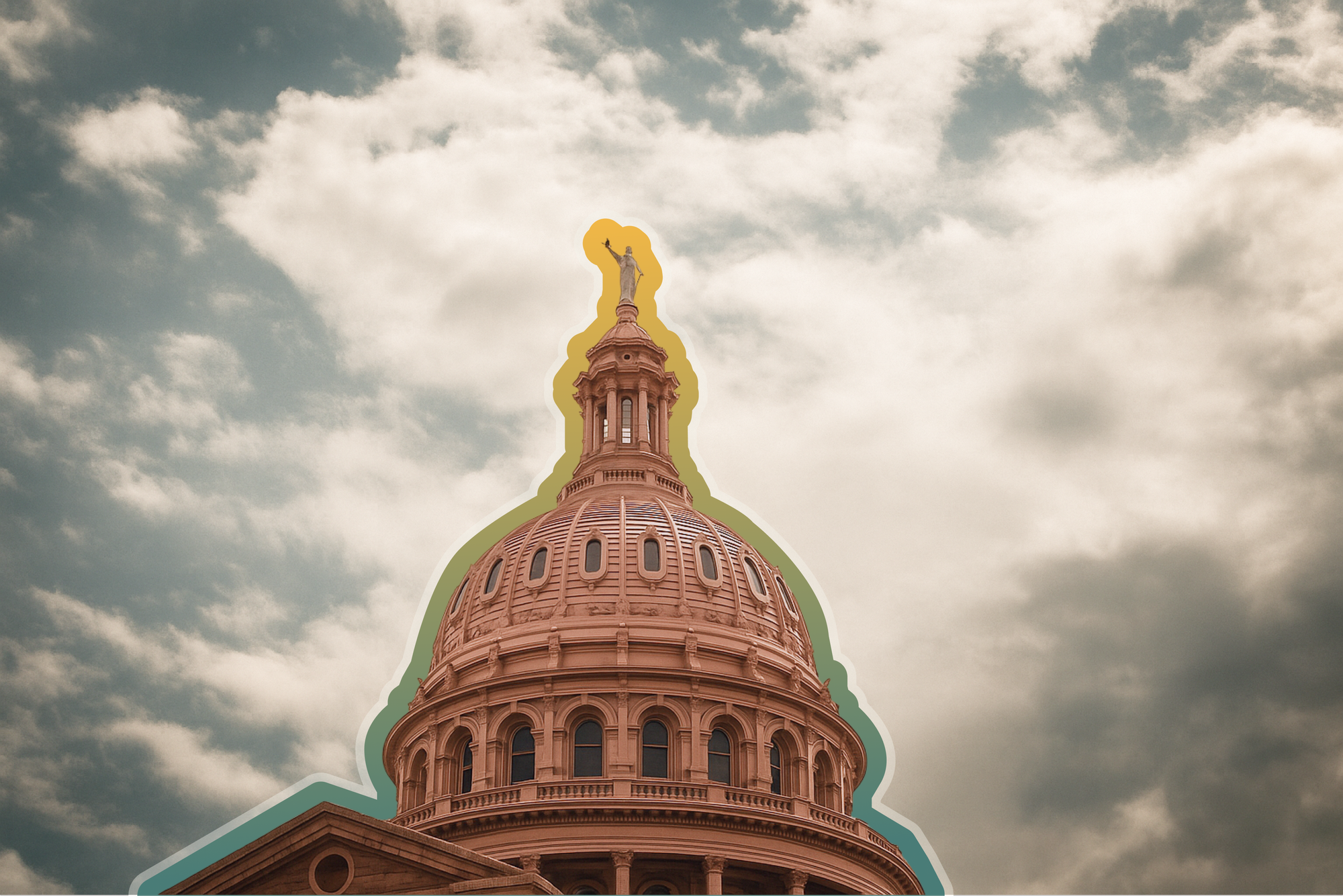
Redistricting efforts in Texas and California. On Sunday, a group of Democratic lawmakers in Texas left the state to deny the Republican-controlled state House the quorum necessary to vote on a new congressional map designed to give the GOP five additional seats in the U.S. House next year. In late July, President Donald Trump spearheaded the plan to redraw Texas’s Congressional map, years in advance of the typical decennial redistricting. In response, California Gov. Gavin Newsom (D) is considering a special election this November to ask voters to approve a redistricting plan that would aim to benefit Democrats in the House. Several other state governments have also started to consider early redistricting.
Back up: In modern U.S. history, redistricting has occurred every ten years to ensure proportional representation following population shifts reported by the most recent census. In most states, the legislature directly controls the redrawing of state and federal legislative districts, though some have empowered independent commissions to do so.
In Texas, the state House redistricting committee released its proposed map on Wednesday, and a House panel advanced the map on Saturday, setting up a floor vote for its approval. Texas Republicans’ proposed map would redraw district lines in five districts currently held by Democrats, theoretically making them more favorable to Republicans by putting more Democratic voters into urban districts that are already safely Democratic. Furthermore, the new map would increase the number of majority-Hispanic districts, likely responding to Republicans' improved standing with the demographic group in recent years. State Rep. Todd Hunter (R) said the new districts were drawn “based on political performance.”
On Monday, Texas Gov. Greg Abbott (R) said he will begin a process to remove Democratic lawmakers from office if they do not return to the state to take part in the House’s business. Abbott’s ability to take this action is unclear, but the governor cited a 2021 opinion by Texas Attorney General Ken Paxton that stated, “A district court may make a determination that a legislator has forfeited his or her office due to abandonment and can remove the legislator from office.” Separately, the state House voted on Monday to issue civil arrest warrants for Democrats who fled the state. State House Democratic leader Gene Wu said he did not know how long this group would remain absent but that they “will do whatever it takes” to stop the bill.
Separately, in California, Gov. Newsom faces a tight timeline to initiate redistricting in time for the 2026 midterm elections. State law requires county elections offices to send a mail ballot to every registered voter a month before election day, so those materials must be prepared by late September to be considered in a special election this November. The state legislature is also in recess until August 18, and any ballot measure must win a two-thirds majority in both chambers to make it to a public vote.
Newsom has argued that California Democrats must “fight fire with fire” in response to Texas Republicans’ redistricting efforts. “They’re doing a midterm rejection of objectivity and independence, an act that we could criticize from the sideline, or an act that we can respond to in kind,” Newsom said.
Today, we’ll share arguments from the right and left on the potential redistricting plans. Then, my take.
What the right is saying.
- The right mostly supports the effort in Texas, saying that Republicans are only adopting Democrats’ tactics.
- Some say Democrats’ prospects in the House are dim even if California and others succeed with their own redistricting.
- Others question Texas state Democrats’ decision to flee the state.
In PJ Media, Matt Margolis wrote “Democrats were never against partisan gerrymandering.”
“The moment Texas made its move, Democrats in blue states started scrambling to redraw their own maps — some even looking to override their supposedly sacred ‘independent’ commissions. So much for their high-minded rhetoric. Texas didn’t just redraw lines — it exposed the Left’s dirty little secret: Democrats hate gerrymandering only when they’re not the ones doing it,” Margolis said. “That high ground vanishes the moment Democrats get the pen. When Republicans redraw lines, it’s a ‘crisis.’ When Democrats do it in places such as Illinois or New York, it’s rebranded as a noble fight for representation.”
“In recent years, Democratic lawmakers in New York, Maryland, and Illinois have aggressively redrawn congressional maps to favor their party, often sidestepping legal norms,” Margolis wrote. “In New York, Democrats bypassed an independent commission and passed a mid-decade map that the state’s highest court struck down as unconstitutional. Maryland’s legislature overrode a veto to push a map aimed at eliminating the state’s lone GOP seat, which a judge labeled ‘extreme partisan gerrymandering.’ Illinois Democrats moved early to lock in a heavily favorable map. These cases reveal a clear pattern of Democrats manipulating redistricting to secure political advantage for their party in Congress.”
In Hot Air, Ed Morrissey argued “Dems will lose the redistricting war with the GOP.”
“Democrats have total control in fewer states, but those tend to be the most populous: New York, California, Illinois, Massachusetts, and Maryland, mainly. That offers Democrats a chance to put the squeeze on more seats — at least theoretically,” Morrissey said. “In practice, though, Democrats may have already beaten themselves… Most blue states forced redistricting into the hands of supposedly non-partisan commissions, which means the fight could be over in the redistricting war before Democrats can even take the field.”
“In most of these states, including California, Colorado, and New Jersey, changes to the state constitution would have to go to voters first. New York actually tried this in 2022 and got shot down in court over their absurdly gerrymandered map. None of these efforts would finish up in time to help out in 2026, with the possible exception of New Jersey, which has a regularly scheduled general election this November,” Morrissey wrote. “The biggest problem for Democrats is time in a different context. The states they want to redistrict are bleeding voters to red states over economic and cultural differences. Even if they successfully squeeze a half-dozen seats or a dozen seats through these efforts for the 2026 election — and I doubt they'd outdo the GOP — they will lose that much or more in 2032 after the next census.”
In The Fort Worth Star-Telegram, Ryan J. Rusak criticized “Democrats fleeing Texas over redistricting.”
“Trump does not want to see his final two years in office thwarted (and investigated) by a Democratic majority. So, he demands creative cartography to forge five more districts likely to elect Republicans. Texas Republicans are happy to help, even if it means using outdated population data, wiping out Black and Hispanic lawmakers and, worst of all, doing it in the middle of the decade, absent a court order,” Rusak said. “It’s so egregious, Democrats say, they had to leave the state to prevent a House quorum and thus a vote Monday on the new maps. Here’s the problem: It’s super-important to them as politicians, to their amped-up base voters and donors, and to the national party. And just about no one else cares.”
“Schlepping to Chicago, Boston and Albany, New York, will probably grind the gears in Austin enough to force a second special session, assuming the lawmakers can afford to stay there. It will cost them, though. Democrats have lost the moral high ground when it comes to the other important business of the state,” Rusak wrote. “Texas must respond to the failures of the Hill Country floods, but the quorum break prevents that, too. Had they stayed, they could have railed against Republicans prioritizing the congressional power play before passing a single bill to help flood victims or prevent future tragedies. Now, they bear the blame.”
What the left is saying.
- The left strongly opposes Texas’s redistricting effort, but many caution that Democrats should not follow suit.
- Some push back on claims that Democratic gerrymandering is as bad as Republican efforts.
- Others suggest the move by Texas Republicans could backfire.
The Washington Post editorial board explored “how GOP gerrymandering in Texas could spiral into partisan warfare.”
“Advanced technology enables redistricting with a precision that the founders could never have dreamed of. Splicing and dicing the electorate in this way after every election reduces the number of truly competitive seats, which leads lawmakers to worry more about primary challengers than the general election,” the board wrote. “Efforts to redraw congressional district maps are especially troubling this year — five years before the end of the decade, when redistricting is supposed to happen… Although it’s true that plenty of states have reworked their maps mid-decade, they have typically done so after a court ruling required the change.”
“The GOP’s power play invites Democratic-controlled states to further weaponize their own congressional maps… Former Texas congressman Beto O’Rourke (D) [said]: ‘We have to be absolutely ruthless about getting back in power. So, yes, in California, in Illinois, in New York, wherever we have the trifecta of power, we have to use that to its absolute extent,’” the board wrote. “These are dangerous words that Democrats need to resist. Yes, in the short term, responding in kind to Republican gerrymandering might preserve Congress’s balance of power. But it would be a disservice to voters in the long run.”
In CNN, Aaron Blake wrote “no, both sides don’t gerrymander the same.”
“Republicans pretty clearly benefit more from gerrymandering, and there’s an increasingly strong case to be made that they go further in using the tools available to them. Gambits like what Texas is doing are rare, and it’s been Republicans who have led the charge,” Blake said. “A big reason more maps appear to have a GOP bias is that Republicans simply get more opportunities to gerrymander. They have full control of more states because they hold the ‘trifecta’ of the governor’s mansion and both chambers of the state legislature. In the most recent round of post-Census redistricting, Republicans controlled the drawing of 177 districts (estimates on this vary slightly), compared to just 49 for Democrats.”
“The reason Texas is so controversial isn’t just that Republicans are drawing such a slanted map; it’s mostly when they have chosen to do it… We’ve seen three or four modern attempts like this at mid-decade redistricting,” Blake wrote. “The GOP did this in Texas and Colorado in 2003 (though the Colorado map was struck down) and in Georgia in 2005. They also redrew the maps in North Carolina in 2023… Indeed, Republicans seem to be leaning in on a mid-decade redistricting arms race, knowing they have superior capabilities and can take things further — just like they have before.”
In The Houston Chronicle, Michael Li said Texas’s redistricting “puts Washington D.C. over the rights of Texans.”
“In 2019, when the Supreme Court said federal courts would not set limits on partisan gerrymandering, some wondered how bad it could get. Texas is about to provide an answer — and it’s not good. Republicans are doing everything possible to help politicians pick their voters rather than the other way around, putting requests from Washington D.C. over the rights of Texans,” Li wrote. “The Texas map already rates as one of the country’s most extreme gerrymanders. Republicans are virtually assured of winning two-thirds of the state’s seats even though Democrats now regularly win around 45 percent of the vote in statewide elections.”
“But gerrymanders this aggressive are not without risks. For starters, maximizing seats will, by necessity, mean making safe GOP seats less safe, as map drawers spread reliable Republican voters among more districts to knock off Democrats. That move could easily backfire with Texas’ rapid growth and changing demographics,” Li said. “Just consider last decade’s map. More than half a dozen Republican districts that seemed rock solid at the start of the decade became highly competitive by the end. District populations diversified so quickly and white suburban voters shifted so sharply toward Democrats after 2016 that the districts became a nightmare for Republicans.”
My take.
Reminder: “My take” is a section where I give myself space to share my own personal opinion. If you have feedback, criticism or compliments, don't unsubscribe. Write in by replying to this email, or leave a comment.
- Partisan gerrymandering is among the most important issues in American politics.
- Gerrymandering drives polarization, discourages participation, and challenges the very heart of democratic representation — no matter who’s doing it.
- I support Texas Democrats doing whatever they can to push back; the issue is that important.
I spend every day of my life reading about the biggest political controversies in the world, trying to make sense of them, and then writing about them for this newsletter. And of all the issues we cover, I think gerrymandering is one of the top three most critical political issues in America. It legitimately impacts nearly every modern political problem in the country, and is a genuine scandal every time a state legislature takes part in it.
Imagine for a moment that your neighborhood was deciding whether to allow the construction of a new 10-story apartment building. A city council member comes to your house and tells you that they are going to base their decision on a survey of the 100 adults who live in the neighborhood; if more people vote in support than against, they’ll begin construction immediately. You oppose the construction of the building because it would be right next to your house. The city council says the neighborhood approved the building and construction will move forward. Then, after the survey is over, you find out that they actually polled 25 people from your neighborhood and 75 people from the next neighborhood over, knowing that they’d get the result they wanted if they conducted the poll that way.
You’d be enraged. And you’d have every right to be. That is, in effect, what gerrymandering is for all Americans: Instead of us choosing our representatives by vote, our two major political parties are choosing the voters they want. They are not doing this in dimly lit back rooms, huddled over binders of voting records. They are doing it in broad daylight, using sophisticated computer systems to draw up the perfect, serpentine, totally self-motivated maps that allow them to get exactly the voters they want within the lines they like in order to maximize their political representation at the state and national levels. The process is surgical. Scientific. And nearly perfected.
Most Americans probably don’t spend much time thinking about this issue; after all, why would they? Health care, immigration, inflation, and crime all have direct effects on their actual lives. But, in the big picture, gerrymandering supersedes them all by attacking our principle of self governance, the very fundamental question of representation: Who are the people in office trying to solve our problems?
In 2024, about 87% of the entire House of Representatives was decided by primary voters, meaning close to 9 in 10 House races were noncompetitive after the primaries. The Democrat who wins the primary race in, say, California’s 12th District (+39 for Democrats) will go on to win the general election every time. That incentivizes candidates to focus on winning the Democratic primary, which means playing to the party’s fringes, which means a less moderate and more polarized Congress when it happens in district after district. This is happening in nearly nine out of every ten House races in America — as well as many mayoral, gubernatorial, and Senate races — resulting in a less representative government and a less participatory electoral system.
I’ve written before about the groups (like Unite America and FairVote) working to solve this problem by pushing for ballot measures to introduce open primaries and ranked-choice voting across the country. While I don’t endorse candidates, I strongly support these organizational efforts, and frankly I think it’s a travesty that so many Americans are comfortable settling for the system we currently have. As I wrote in 2022, gerrymandering is a bipartisan crisis; while today’s story is about Trump and Republicans further degrading democratic norms in Texas, Democrats were the ones sparing little opportunity to change the maps in their favor in 2022. You can trace this tit for tat back decades.
However, both parties don’t share an equal portion of blame in this race to the bottom. Democrats, to their credit, have proposed, introduced, and even passed legislation to limit or end gerrymandering, often replacing partisan map-drawers with independent redistricting commissions across the country. Similar efforts from the right have been far narrower and garnered far less support. These “non-partisan” commissions aren’t perfect, obviously, and they don’t solve the problem on their own — fully fixing our system requires additional electoral reforms, like open primaries and ranked-choice voting, which we wrote about last year. Unfortunately, the escalation in Texas is quickly evaporating whatever momentum the left had to push for a better system. As New York Gov. Kathy Hochul (D) expressed this week, “I’m tired of fighting this fight with my hand tied behind my back.”
In other words: The situation is already bad, but President Trump just made it a whole lot worse. By pushing for a new map in Texas outside the 10-year census cycle, by framing the redraw as an attempt to protect the Republican House majority and by ignoring threats from Democrats to respond, Trump has effectively opened a new frontier in the bipartisan war against fair representation. He is doing this because Republicans are in the much more advantageous position. Democrats will lose an arms race because they’ve mostly gerrymandered as far as they can go, unless they end up undoing state constitutions across the country, and because Republicans have full control of more state legislatures.
Kudos, at least, to Rep. Kevin Kiley (R-CA), who responded to all this by introducing a bill to block all 50 states from gerrymandering ahead of the 2026 midterms. Kiley is almost certainly motivated by the fact he’ll lose his seat if Democrats draw new maps in California, but I couldn’t care less. He’s doing the right thing, regardless of his personal motivations, and I think anyone who views gerrymandering as the crisis it is should get behind his charge.
For now, I’ll offer this potentially controversial take: I’m glad to see Texas Democrats fleeing the state and grinding the legislature to a halt. I think this issue is important enough to justify the spectacle, and dire enough to go to the limit to try to slow the process down.
If Gov. Abbott wants to try to punish them, he can go right ahead. But if Democrats in Texas can force everyone to press pause, think about what they are doing and draw the nation’s eyes to this scandalous power grab, then that’s a good thing. And if they can somehow manage to kill this effort by Trump and Republicans altogether, thereby keeping California and New York and other Democratic states from undoing years of the right reforms, they’ll have my lasting gratitude.
For all those reasons, I’m rooting for them. Not out of any preference for one party or support for or opposition to any one politician, but because gerrymandering is that big of a crisis — with that much potential to get worse — that I’d support just about any political maneuver from any politician to stand in its way.
Take the survey: What do you think of gerrymandering? Let us know!
Disagree? That's okay. My opinion is just one of many. Write in and let us know why, and we'll consider publishing your feedback.
Your questions, answered.
Q: I haven't seen anywhere a history of the rescissions process, specifically what problem it was intended to resolve. It was created in 1974 — would that have been a change in response to something Nixon did? I am just not sure I see why Congress would appropriate funds and then un-appropriate them. Maybe wartime?
— Kate from Cascade, CO
Tangle: In 1974, Congress passed the Impoundment Control Act (ICA) to restrict the impoundment power that allowed the executive to underspend Congressionally approved funding. Before the ICA, presidents could withhold funds without approval from Congress, a power used by presidents since Thomas Jefferson.
The impoundment process wasn’t enshrined in the Constitution; rather, it was justified as an extension of the “take care” clause that allows the executive to decide how best to execute laws enacted by Congress. Through the early twentieth century, presidents used the impoundment power based on the understanding that the total funds appropriated by Congress were available for use, but spending it all was not mandatory. Presidents could withhold funds if they felt that the particular purpose of the appropriations had already been fulfilled or become unnecessary.
Presidential use of impoundments reached its peak under Richard Nixon, who impounded billions of dollars and gutted entire programs. Congress argued that this impeded the congressional power of the purse and, in response, enacted the ICA to better define the president’s powers of impoundment. The ICA created two distinct uses of that power: deferrals, where the president delays the use of funds but intends to spend them before their expiration, and rescissions, where the president formally requests Congress to cancel a certain budget authority. This created the rescissions process we just witnessed in Congress.
Want to have a question answered in the newsletter? You can reply to this email (it goes straight to our inbox) or fill out this form.
Under the radar.
In May, Senior White House Adviser Stephen Miller said the White House had set a goal for Immigration and Customs Enforcement officers to arrest 3,000 or more immigrants per day. However, on Wednesday, a Justice Department attorney said in court that no such quota had ever been given, suggesting the claim stemmed from “anonymous reports in the newspapers.” The comment came as the Justice Department attempts to defend the administration’s deportation agenda in courts across the country, and several judges have already cited the “3,000 arrests” goal in rulings against the administration. Those judges have held that the appearance of an arrest quota raises constitutional questions about whether law enforcement is improperly detaining people to attempt to meet enforcement goals. POLITICO has the story.
Cut through the noise. Get straight to what matters.
The Daily Upside delivers sharp, clear-eyed reporting on markets, finance, and the global economy — written by veteran journalists and former Wall Street pros.
Join over 1 million daily readers who choose clarity over clickbait.
Subscribe for free.
Numbers.
- 150. The number of members in the Texas House of Representatives.
- 100. The number of members that must be present to establish a quorum.
- 62. The number of Democrats in the Texas House.
- 51. The confirmed number of Texas House Democrats who left the state to attempt to block the redistricting bill.
- $500. The daily fine for Texas lawmakers who abscond from the legislature.
- $600. Texas state legislators’ monthly salary.
- 19% and 24%. The percentage of U.S. adults who said they were satisfied and dissatisfied, respectively, with how redistricting was handled in their state, according to a January 2022 Pew Research poll.
- 41%. The percentage of U.S. adults who said they had heard “nothing at all” about the redistricting process in their state.
The extras.
- One year ago today we wrote about the prisoner swap with Russia.
- The most clicked link in yesterday’s newsletter was the video of the Israeli man held hostage by Hamas.
- Nothing to do with politics: The mascot for the Seattle Kraken NHL team had a close encounter with a bear in Alaska.
- Yesterday’s survey: 2,870 readers responded to our survey on the state of the economy with 61% calling it mixed. “The economy is somehow holding on. I am worried that we will have to question numbers in the future as I do not trust Trump to put somebody in that position that will tell the truth,” one respondent said.

Have a nice day.
In 2019, the Environmental Protection Agency reported that the United States generated 66 million tons of food waste, and about 60% of that waste ended up in landfills. A pair of researchers at the Massachusetts Institute of Technology is developing a creative solution to minimize the impact of food waste, designing a 3D printer that converts food scraps into coasters, cups, and other everyday kitchen items. The invention adds to the growing portfolio of use cases for 3D printers, with applications across medicine, construction, and food. Popular Science has the story.
Don’t forget...
📣 Share Tangle on Twitter here, Facebook here, or LinkedIn here.
🎧 We have a podcast you can listen to here.

Member comments