By Michael Cohen
If you’re a parent, you’ve heard it: Don’t live vicariously through your children. It’s said so often it feels like common sense. Teachers repeat it. Therapists caution it. Parenting books shout it in bold type. The “good” parent, we’re told, folds up their own ambitions and lets the child “find themselves.” Anything else would be selfish. Immature. Maybe pathological.
The cliché, to be fair, warns against even worse cliches: the mediocre pianist dad forcing his kid through endless scales, or the soccer mom trying to wring a World Cup out of her ten-year-old. Nobody wants to become that.
But this mantra doesn’t just guard against unhealthy projection that goes too far, it can be taken too far itself. If fear of projection casts suspicion on any degree of continuity between parent and child, that’s where it loses me.
I should say this clearly: I never pushed my children hard at school. I didn’t map their careers or tell them what to be; they made their own choices. Nevertheless, when the achievements came, I was proud. And when people congratulated me but added the inevitable warning — “You’re not living vicariously through him, right?” — that stuck. It didn’t sound like advice, it sounded like dogma.
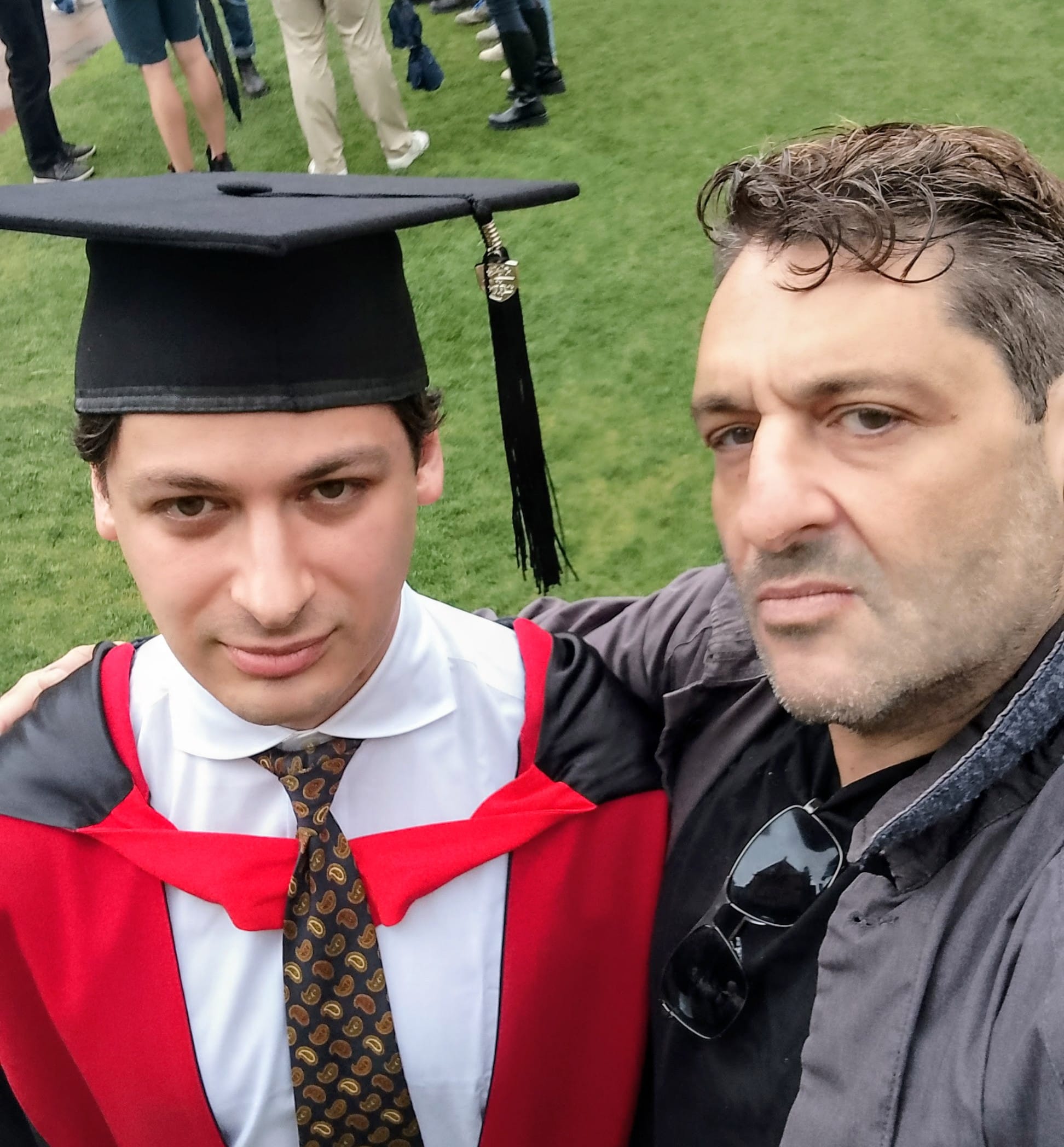
My son finished his Honours degree and was named top graduating student in their state by The Australian Institute of Physics. Later, he earned a doctorate and co-founded a quantum computing start-up that is thriving. Watching it unfold, I wasn’t just proud in the ordinary “that’s my kid” way. I felt something deeper — like pieces of my own unfinished story had found a second life through him.
That, apparently, is the very feeling I’m not supposed to have. The cultural script says it’s too personal, too pressuring, to want something for our children that we ourselves want. But this kind of pride didn’t feel pathological, it felt like continuity. Isn’t that the point of family, for one generation to provide the chance for the next one to go further?
This “rule” wasn’t handed down on stone tablets, so where did it come from? It was built. In the mid-20th century, psychology’s big names — Fromm, Erikson, Winnicott, Bowlby — proclaimed independence and separation as the ultimate signs of health. Parenting guides in the 1950s wagged their fingers at mothers who “sought personal triumph in the achievements of their sons.” By the 1970s, the gender had been neutralized but the sermon was the same: Don’t dream for your kids, don’t try to live twice, don’t imagine continuity.
As Erich Fromm warned: “Another form of projection is the projection of one’s own problems on the children. … When a person feels that he has not been able to make sense of his own life, he tries to make sense of it in terms of the life of his children.”
Here’s the twist. The very families who bankrolled this psychology — the Rockefellers, for example — never lived by it themselves. In the 1920s and ’30s, Rockefeller money poured into psychiatry departments at Yale, Columbia, Chicago, and even Munich’s Max Planck Institute of Psychiatry.¹ Those grants helped build modern psychiatry and child-guidance programs. Publicly, the family promoted independence; privately, they groomed heirs and built dynasties.
That wasn’t hypocrisy. It was strategy.
And you don’t need to comb archives to see how the double standard survives. Look at Trump. Whatever you think of him, he didn’t sit back to see “what the kids wanted to be.” He cast them in roles extending his own persona: Ivanka as the polished surrogate, Don Jr. as the fighter, Eric as the operator. Even Barron is already framed as a future heir. Among the wealthy, living through your children isn’t looked down upon as a sin but admired as responsibility.
For the rest of us, the message is drilled in: Don’t consolidate, don’t build dynasties, don’t imagine continuity. Nepotism must be avoided, and every generation must start from scratch. What gets called “healthy parenting” doubles as class discipline.
For me, the truth was simple. When I felt pride in my son’s award, or in the early success of his company, it didn’t feel like theft. It felt like my life refusing to end at the borders of my own body.
That’s the part the cultural rule erases. And not by accident. The prohibition on vicarious ambition is less psychological and more political, an expression of power. It’s a way to convince ordinary families to surrender continuity while elites fortified theirs.
Which brings us back to the bigger picture.
The warning not to live through your children has always been framed as neutral, scientific, obvious. But it isn’t neutral. It was amplified by experts, institutions, and media funded by those with a vested interest in spreading it. Once you ask who’s paying for the microphone, the rule stops looking like timeless wisdom and starts looking like privilege disguised as truth.
So the next time your child reaches a milestone and someone leans in with the usual warning, “don’t live vicariously through them,” you don’t have to nod along. You can smile, thank them, and move on. Because pride in your children’s triumphs isn’t a pathology. It’s continuity. It’s lineage. It’s one of the oldest human instincts we have.
The elites who bankrolled psychological messaging know it. So should you.
¹ Rockefeller Foundation grants in the 1920s–30s included major subsidies for psychiatry departments and child-guidance clinics at Yale, Columbia, Chicago, and the Munich Institute of Psychiatry (~US $325,000).
Michael Cohen is a Sydney-based Australian journalist and writer. He has written for outlets including The Independent Australia, Green-Left, The Opinion Pages, The Telegraph, and HuffPost, and often explores the intersections of politics, history, and culture. You can find his recent work here and here.
Member comments