By Kaitlin Jarema
When I tell people at parties I was an archaeologist, they look at me in shock and interest, and immediately ask about where I’ve worked overseas. I expect disbelief, and occasional disappointment, when I tell them I worked primarily in Pennsylvania.
“Archaeology? On the east coast? How is that possible?”
Not only is it possible, it’s common. Most of the archaeology conducted in the United States is triggered by Section 106 of the National Historic Preservation Act (NHPA) of 1966 and the National Environmental Policy Act (NEPA) of 1969. Any project that uses federal money, or requires a federal permit, has to comply with the environmental permitting process and consider the “cultural resources” that could be impacted by their project. Archaeological projects are lumped into these constraints along with environmental surveys like wetland delineation, geological surveys, and environmental impact surveys.
But why do we bother recording archaeological sites? The NHPA was a response to the urban renewal policies of the 1940s and 50s. The rapid development after World War II resulted in the destruction of countless historically significant places. Congress responded to this loss in the 1960s by passing the NHPA, which stated that “the historical and cultural foundations of the Nation should be preserved as a living part of our community life and development in order to give a sense of orientation to the American people.” Additionally, “the preservation of this irreplaceable heritage is in the public interest so that its vital legacy of cultural, educational, aesthetic, inspirational, economic, and energy benefits will be maintained and enriched for future generations of Americans.”
I’ve worked on hundreds of projects, but there is one I keep thinking about, inevitably, as people rage about over-regulation and “negative histories of America.” After six years of field work, I saw what happened after all the permits were given.
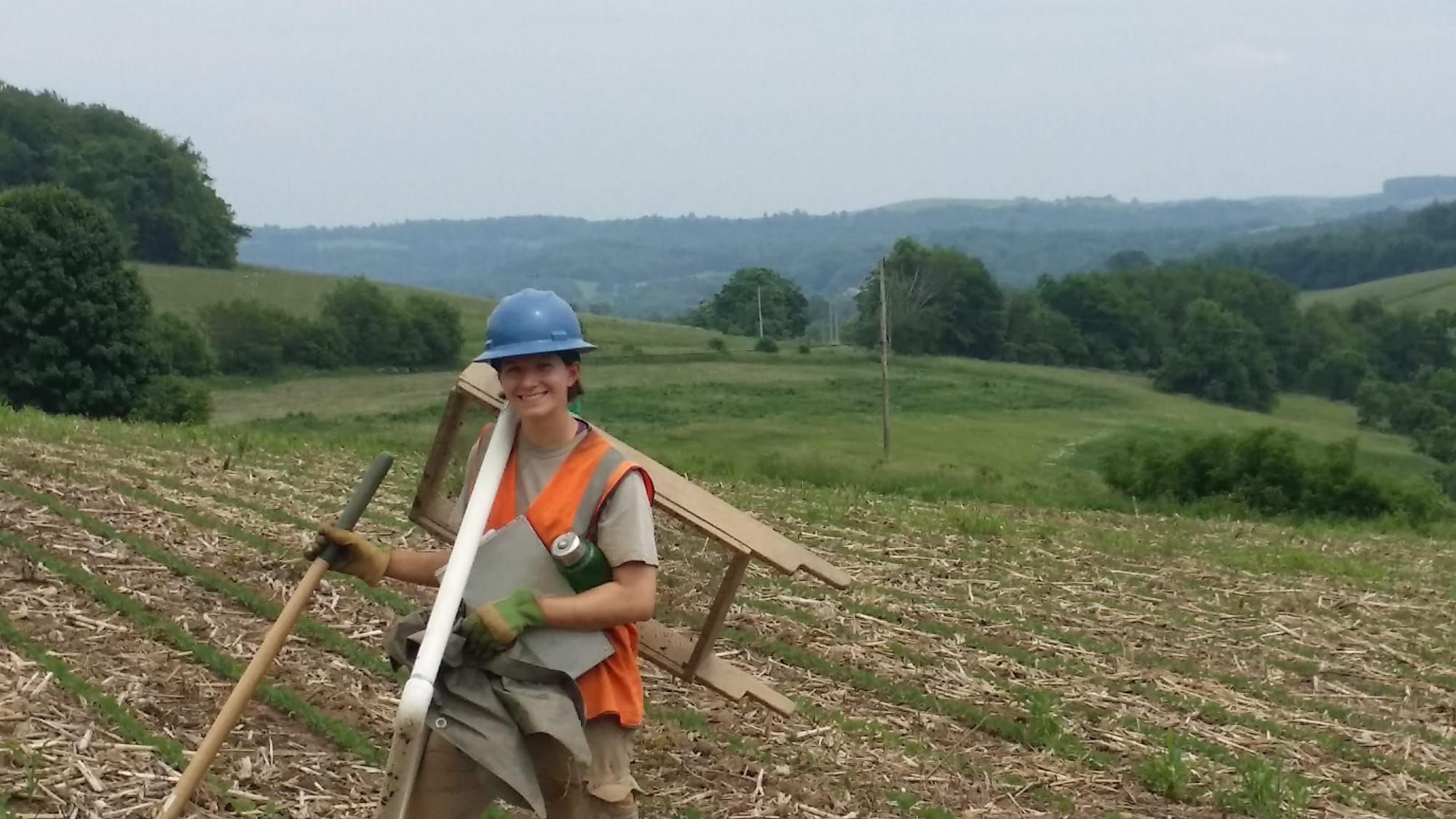
The project was a large-scale survey for a coal mine. I was part of the crew sent to complete the archaeological survey. We would put up to ten adults in a van and travel from the office to the project area, off and on for nearly six years. Shovels, the tool bucket, and screens for sifting dirt squeaked and bounced in the trunk of the van for the entire ride. We lost cell phone service less than a minute off the highway exit. We would drive by old project sites we had previously surveyed, like a new gas line along a stream or a grazing pasture with a large shed that never got developed after all.
Eventually, we’d get to the top of a ridge and turn down into one of the valleys in the project area. Within the valleys themselves, there were houses, barns, fields, ruins, and herds of curious cows. According to our project paperwork, these valleys were called CRDA 4 and CRDA 5.
I worked there in the heat of summer when the fields were littered with fresh cow patties. In hunting season, I wore a hi-visibility vest. I’ve also been there on the coldest days before and after Christmas, wind cutting through my winter coat and no matter the quality of my socks and boots, the damp and chill leeching its way up my body through my feet. I’ve bagged thousands of artifacts from these valleys, washed and cataloged and labeled them so they could be studied and sent to the state museum in Harrisburg. I loved standing in the fields of goldenrod in the fall and taking in the silence. I loved stumbling upon piles of old sandstone foundations, delighted by discovering a remnant of this place’s history.