Sign up for the Free Tangle Newsletter Highly curated unbiased news for busy, open-minded people.
Processing your application
Please check your inbox and click the link to confirm your subscription.
There was an error sending the email
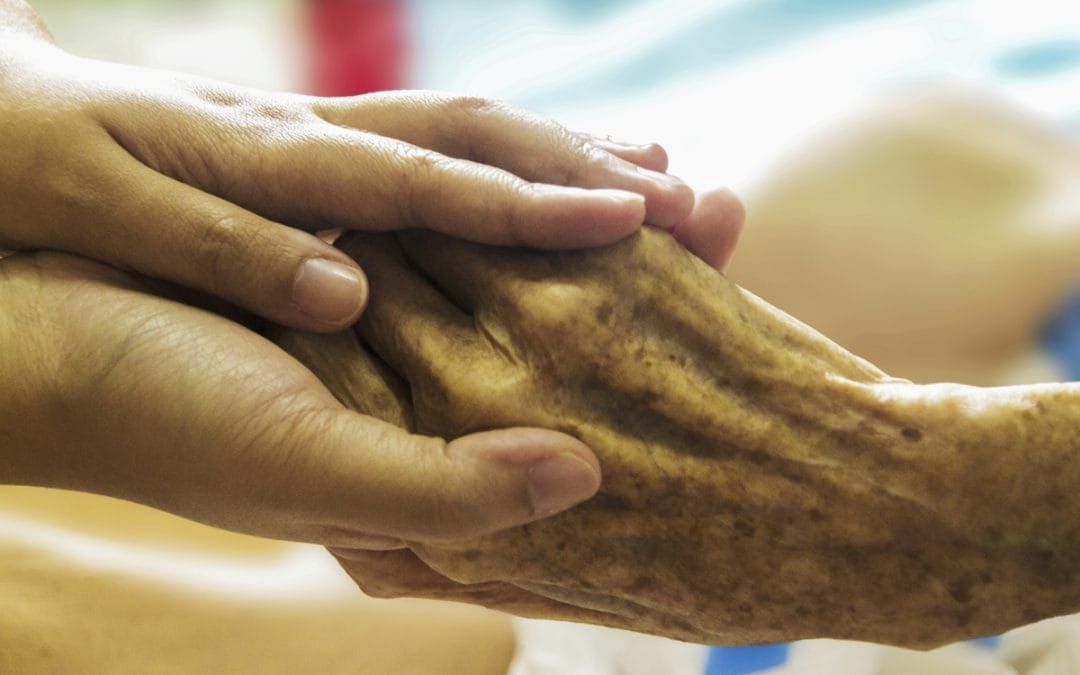
Image: Rawpixel
Image: Rawpixel

By Zoe Clarke


Earlier this year, my grandfather almost died. Not from an accident or a terminal disease. He almost died because he wanted to. 

My grandfather is a very tough, and very loving, person. He spent many years bossing around cattle on his farm with his wooden cane, but anyone could make him start tearing up if you got him talking about how much he loved his family. He had a laugh that could light up a room, which we all got to see at family birthday parties and get-togethers.

About two years ago he was diagnosed with prostate cancer, and it would eventually spread to his spine. He was prescribed many drugs to try to combat the further spread of the cancer and treat his chronic heart issues. Various medications were destroying his appetite and impacting his memory, causing him to wake up in the middle of the night confused. After several months, he started saying that he wished we could just take a gun and shoot him — put him out of his misery. It was devastating. My grandfather had stopped enjoying life, and that incredible laugh of his was gone.

After watching my grandfather struggle severely for over a month, my parents helped him arrange for Medical Assistance In Dying (MAID). 

In Canada, when somebody decides to end their life through MAID, they must first qualify based on various criteria mostly related to their level of suffering. They then meet with multiple healthcare providers who ensure that it is the right decision for them. On the day of their final treatment, nurses and doctors help set everything up wherever the patient chooses to die, before the patient gives their consent and presses the button that ends their life. Throughout this experience, doctors and nurses are looking into the eyes of their patients, trying to see if they harbor doubt or regret. If the individual gives any indication that they want to stop the process, this can be done immediately at any time.

About a week before his MAID appointment, my grandfather stopped taking all of his medication except for his pain relievers. Miraculously, day by day, he started feeling better. Nobody knew this was going to happen — not us, the doctors, or the nurses. The day of his appointment, the nurse looked into his eyes and asked him several times if he was sure he wanted to go through with this. One of those times he said no, and everyone involved in the procedure went home. My grandfather is still with us today.

My grandfather's story obviously has an underlying message about the potential pitfalls of overmedication, or about optimizing for quality of life rather than length of life. But that’s not the part that sticks with me. For us, on that day, we were all trying to go forward and help my grandfather make the best decision that he could for himself on a personal level. And in Canada, we have the freedom to do that.

In Canada, we are lucky that we did not have to worry about whether or not my grandfather would qualify for MAID based on an estimated prognosis. We had no idea how long he had left to live or if his condition would eventually kill him. What we did know is that he was suffering. That he had severely limited mobility. That he was in near constant pain. That he couldn’t live his life the way he wanted to. 

I think there are many who would take my story as an example of MAID being a bad idea. “Imagine what would have happened if the process had been just a little easier, imagine how many lives may be lost.” A part of me is sympathetic to that view. I am, afterall, grateful that my grandfather is still around. But realities are more nuanced, and in my opinion — the opposition to MAID fails to grapple with that nuance. 

Canada is a country with one of the most permissive sets of MAID laws in the world, and still my grandfather was given a hundred opportunities to change his mind. Yes, sometimes people get better, and I am exceedingly happy that our case was one of those times. But often, the world is not so kind, and thousands of people aren’t so lucky. 

I doubt I have to justify this position to those of you who have had loved ones die after long protracted medical battles. In many ways, the hardest part is not the end, but the days, weeks, months or even years that comprise the long goodbye, in which the person you love struggles to live as the person they’d been their whole life — struggles not to lose themselves to the pain. I have watched family members become ghosts in front of me long before their passing. I have watched as the joy fades from their eyes, as the pain takes over their every waking moment, as they fight to hold on for the sake of those around them. As they give up. As they quietly await the end. It is hard to imagine that a process that relieves that pain could be categorically wrong.

I would never say that any one of those people shouldn’t have the option to keep fighting. Nor do I regret the time I spent with them in those final days of their lives. But I do not believe that the decision should rest with me, or with anyone else. 

Supporters of MAID are not claiming that every death should be a perfect clinical procedure. Only that these people, who have fought as hard as they felt they were able, who have pushed themselves and been pushed as far as they could go, have the right to decide that their time has come. That they deserve the right to go peacefully into the night, instead of kicking and screaming in their final moments — or worse.

Last week, I ran into a friend whose grandfather was in an uncannily similar situation to mine: Prostate cancer had spread to his spine and was causing him intense pain. Her grandfather was unsure if he would qualify for MAID and attempted suicide, overdosing on his pain medication. 

That, to me, is the other thing that opponents of MAID seem to miss. If someone truly wants to die, they will try. They will hide it from those around them. They will attempt to go out, scared and alone, instead of at peace and surrounded by loved ones. Liberal access to MAID without prognosis restrictions prevents such desperate and traumatic suicide attempts, allowing individuals to end their pain and suffering at will and often with the blessing and support of friends and family.

Death is messy, and not every case will be black and white. In Québec, individuals with dementia can request that MAID be pre-approved, even if they can’t consent later on. In other provinces, questions arise when a patient with a degenerative illness loses the ability to clearly communicate pain or suffering, leaving families and doctors uncertain about whether to proceed. Canadian children’s book author, Robert Munsch, was just approved for MAID in Ontario after a dementia diagnosis so that he will be able to quickly set up an appointment if he notices his memory suddenly starting to fade. These issues are complicated. There is no silver bullet. But just because the legal definitions are complicated at the margins (as is almost always the case) doesn’t mean the policy isn’t worthwhile or good overall. 

Concern over the worst-case scenario should not dictate the way that we govern, particularly on issues of an individual's bodily autonomy. MAID is a consensual procedure, with a thorough and rigorous approval process handled on a case-by-case basis with input from trained medical professionals and where the final decision ALWAYS rests with the patient. For those who are afraid of their future and the pain it may bring, being approved for MAID can offer peace of mind. It allows people to approach their final days with dignity, comfort, and even joy. Should we really let our apprehensions prevent people from making the choices that make sense for them?

Ultimately, I do not know, nor do I want to imagine, how I will depart from this world. But when I think of my own loved ones, of the ones who passed with and without help, I am tremendously glad that they had that choice.


Zoe Clarke is a PhD candidate in the department of Molecular Genetics at the University of Toronto in Canada studying liver cancer. She lives out in the country near Fergus, Ontario, with her parents, grandparents, brother, dog, and many, many wild chipmunks.

Member comments

More from Tangle News related to this article

Recently Popular on Tangle News