
I'm Isaac Saul, and this is Tangle: an independent, nonpartisan, subscriber-supported politics newsletter that summarizes the best arguments from across the political spectrum on the news of the day — then “my take.”
Are you new here? Get free emails to your inbox daily. Would you rather listen? You can find our podcast here.
Today’s read: 12 minutes.
The best place for breaking news.
The Tangle newsletter is designed to give you a comprehensive deep dive on the big issues in U.S. politics, one topic at a time. But for more up-to-the-minute coverage of breaking news, the Tangle Instagram has you covered. There, you’ll find timely clips from major announcements, the latest reporting on developing stories, and succinct breakdowns of the daily newsletter. Check us out here, and consider giving us a follow!
Quick hits.
- President Donald Trump published a 20-point peace proposal for the war in Gaza. The plan would require Hamas to return all living and dead Israeli hostages within 72 hours of a ceasefire; it would also create a “Board of Peace” to oversee the rebuilding of Gaza. (The proposal) Hamas is reportedly leaning toward accepting the plan and will give its official response to Egyptian and Qatari mediators on Wednesday. (The report)
- President Trump and Democratic leaders did not reach an agreement on a possible deal to fund the government ahead of Wednesday’s midnight funding deadline. Democrats are seeking to increase healthcare spending and reverse Medicaid cuts in return for supporting a Republican-led seven-week funding extension. (The negotiations)
- YouTube agreed to pay $24.5 million to settle a 2021 lawsuit brought by President Trump, who sued the platform for banning his account after the January 6, 2021, Capitol riots. (The settlement)
- The Health and Human Services Department initiated the process of blocking Harvard University from receiving future research grants — also known as debarment — as a result of a previous finding that the school failed to adequately address the harassment of Jewish students on campus. (The process)
- Defense Secretary Pete Hegseth and President Trump addressed a gathering of U.S. generals and admirals. Hegseth outlined a plan to overhaul the culture of the military, including new fitness standards. (The meeting)
Don’t wait to become a victim. Take control of your identity.
Over 422 million people had their personal data exposed last year alone. And the easiest targets? People whose info is still floating around online.
Incogni tracks down and removes your personal details from over 420+ data broker sites, people-search pages, public records, and more—automatically.
They periodically check if your information appears on the data broker sites and remove it, so you get total peace of mind.
And with their Unlimited Plan, you can go even further. Google yourself and send them any link you find with your info on it. Their privacy team will assist you in getting it wiped.
Stop making it easy for identity thieves. Lock down your personal data before criminals take advantage of it.
Remove your data now—55% off with code TANGLE.
*Supporting our sponsors like Incogni helps keep Tangle free.
Today’s topic.
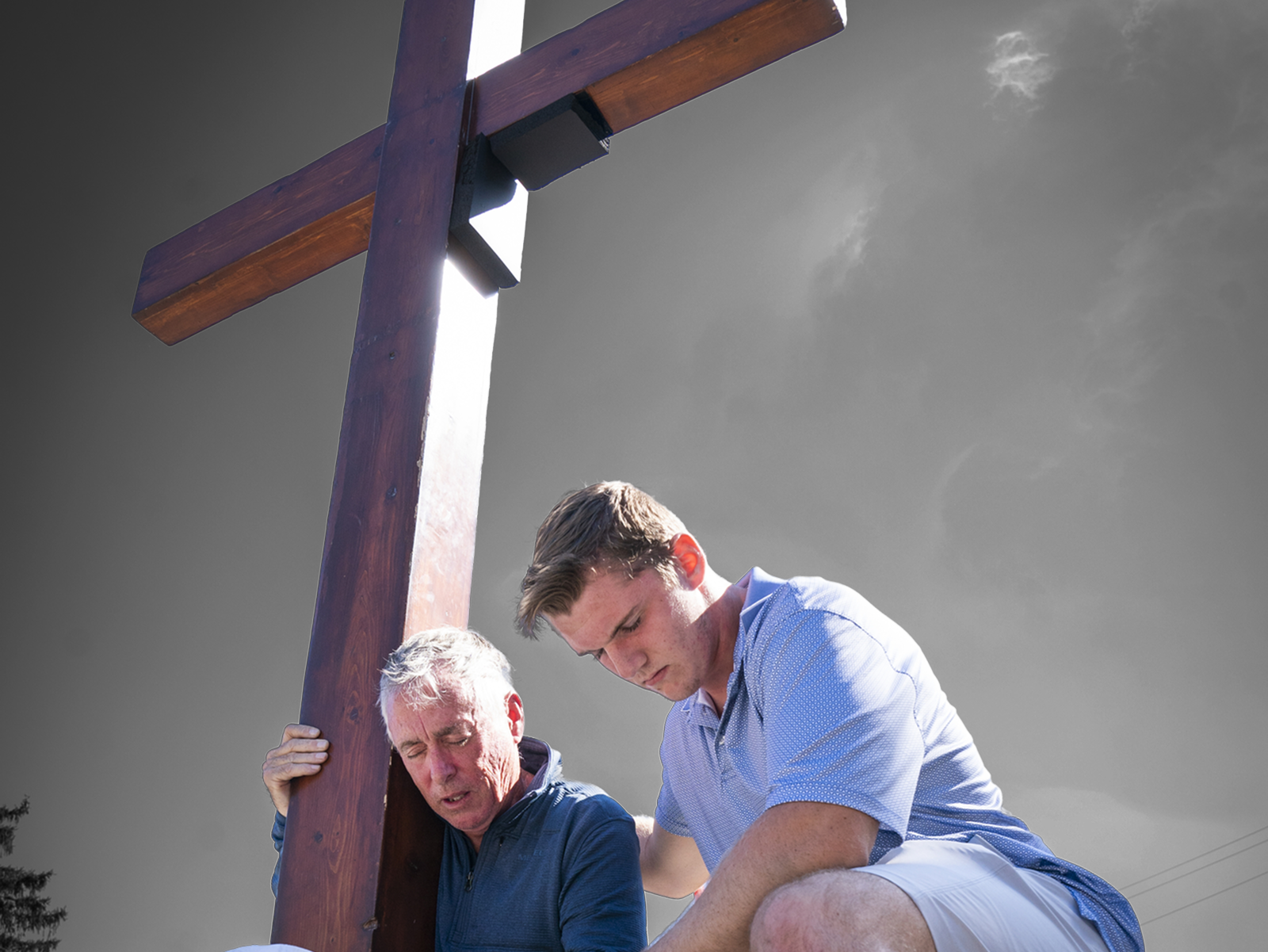
The shootings in Michigan and Texas. On Sunday, an attacker drove a pickup truck into a Church of Jesus Christ of Latter-day Saints (LDS) chapel in Grand Blanc, Michigan, subsequently opening fire on churchgoers and setting the building on fire. At least four people were killed and eight others wounded, and the suspect was killed by law enforcement responding to the scene. Grand Blanc police confirmed Monday afternoon that all churchgoers had been accounted for, and it does not expect to find more victims. Officials have not identified a possible motive for the attack, but local reports and interviews have suggested that the suspect — a 40-year-old former Marine — harbored ill will toward the Church. The Federal Bureau of Investigation is investigating the event as an act of targeted violence.
Note: Due to the well documented contagion effect, Tangle does not name shooters or suspects in high-profile attacks.
According to authorities, the attacker drove a pickup truck into the front of the chapel while services were underway, then exited the vehicle and began shooting at the hundreds of worshippers inside. Law enforcement also believes he set the building on fire using gasoline as an accelerant, and investigators reported that they discovered suspected explosive devices at the scene.
On Monday, local city council candidate Kris Johns said he believes he interacted with the suspect while canvassing less than a week prior to the attack. Johns described the man as “extremely friendly” but said that he sharply criticized the LDS church and described the religion as “the antichrist.” The FBI has taken over the investigation and said they have interviewed over 100 people so far but are still working to determine a motive.
Separately, on Wednesday, a shooter opened fire at a U.S. Immigration and Customs Enforcement (ICE) field office in Dallas, Texas, killing two detainees and injuring another as they were arriving at the facility in a transport van. The shooter later died of a self-inflicted gunshot wound.
The Department of Homeland Security (DHS) reported that agents found shell casings inscribed with “anti-ICE” messages near the suspect. Although the attacker shot ICE detainees, the DHS described the shooting as an attack on ICE officers, which the Dallas FBI later corroborated. Vice President JD Vance claimed on Wednesday that he had reviewed evidence that shows the shooter was a “left-wing extremist” who was “politically motivated to go after people who are enforcing our border.”
Today, we’ll share reactions to the shootings from the left and right. Then, Associate Editor Audrey Moorehead gives her take.
Agreed.
- Both sides mourn the lives lost in the shootings and share concern over the spate of high-profile attacks across the United States.
What the left is saying.
- Many on the left condemn the Dallas shooting and the rising tide of political violence.
- Some criticize the Trump administration for hiding information about the shooting that doesn’t fit its narrative.
- Others say lawmakers must renew their efforts to pass gun control legislation.
The Washington Post editorial board said the “ICE shooting shows how easily political violence boomerangs.”
“A shooter at a Dallas Immigration and Customs Enforcement facility on Wednesday was apparently targeting law enforcement but shot three detainees instead. The horrific episode serves as an allegory for how politically motivated violence almost never achieves its intended goal,” the board wrote. “Something similar happened in Atlanta last month when an anti-vaccine shooter fired hundreds of bullets at six buildings at the headquarters of the Centers for Disease Control and Prevention. His rampage killed a responding police officer… who had nothing to do with vaccines.”
“Political violence, like school shootings, risks inspiring copycats unless forceful steps are taken. The ICE facility where Wednesday’s shooting happened faced a bomb threat last month. Just two months ago, Patel said an individual ambushed officers at a nearby ICE facility,” the board said. “No one who perpetrates political violence deserves even the slightest sympathy, regardless of their ideological background or motives. This is essential to prevent attacks from being effective.”
In The Philadelphia Inquirer, Will Bunch wrote about “what the Trump regime doesn’t want you to know about [the] Dallas ICE shooting.”
“The blood hadn’t yet dried after a deadly Wednesday morning sniper attack on the U.S. Immigration and Customs Enforcement (ICE) detention site in Dallas when top government officials started flooding the zone with the story they wanted to tell the public about it,” Bunch said. “So often these days, what the Trump regime says is highly predictable — but what’s much more revealing is what it doesn’t say. The ‘thoughts and prayers’ politicians effortlessly and often mindlessly spout for most mass shooting victims were few and far between, despite speedy news reports that one man had been killed by the Dallas sniper and two were critically wounded.
“Even worse was what the Trump regime didn’t want you to know about the three detained immigrants who were the victims of the Dallas ICE shooting. Their names,” Bunch wrote. “The victims’ identities aren’t the only part of the story ICE wants to sweep under the rug. Only under questioning did officials concede that the detainees were handcuffed and shackled, and thus struggled, unsuccessfully, to flee when the shots began raining down… It’s its foundational lie that immigrants who came to the United States seeking a better life are not human beings, or at least not worthy of human dignity — even when they are unjustly murdered or disabled by a madman, leaving their wives, children, and mothers to ask why.”
In the Detroit Free Press, Bonnie A. Perry called on Michigan lawmakers to act “on gun violence.”
“The Sept. 28 shooting and fire at the Church of Jesus Christ of Latter-day Saints congregation in Grand Blanc is reprehensible. We can presume that the shooter was angry. Clearly, he was violent. There also may have been mental health issues involved,” Perry said. “But what we know with complete and absolute certainty is that he had ready access to an assault-style rifle. The availability of firearms makes this crime commonplace in the United States of America, and unthinkable in most every other country in the world.”
“Right now, the Michigan Legislature is debating how much to cut from gun violence prevention and mental health programs — when we should be talking about how much more money we can invest in saving lives. What will it take for us as people of faith and people of good will to come together and create a commonsense gun culture? What will it take? Faith in God, who reconciles all people. And it will take you. It will take you calling your legislators.”
What the right is saying.
- Many on the right see the Dallas shooting as the result of increasingly heated rhetoric about ICE.
- Some say the shooting is another example of rising left-wing violence.
- Others note the increasing rate of attacks on places of worship.
The Wall Street Journal editorial board wrote about “the ‘anti-ICE’ shooting in Dallas.”
“Investigators said they had discovered a handwritten note. ‘Hopefully,’ [the suspect] wrote, ‘this will give ICE agents real terror, to think, “is there a sniper with AP rounds on that roof?”’ (AP presumably refers to armor-piercing bullets.) The authorities say that [the suspect] also compared the work of ICE employees to human trafficking,” the board said. “The Dallas shooting is another reminder to politicians and the press of the need to lower the rhetorical temperature. Americans want vigorous debate on the issues, but opponents of President Trump’s deportation policies and ICE raids can criticize them without portraying federal agents as fascist members of a Gestapo.”
“A friend recalled [the suspect] as ‘passionate’ about the plight of illegal migrants in a conversation years ago. Like other recent killers, he wrote a message on his ammunition for law enforcement to find,” the board wrote. “The public will learn more about [the suspect] in the investigation to come, but it isn’t hard to envision him as a troubled young man, the kind prone to act out, seeing warnings about a rising fascism and taking them seriously. It isn’t too soon for politicians to quit sending such messages to unstable listeners.”
In National Review, Jim Geraghty called the Dallas shooting “another case of left-wing violence.”
“Considering how quickly a false narrative that a right-wing lunatic had killed Charlie Kirk spread, I wonder if authorities were eager to fill the vacuum with clear facts about the crime and likely motive,” Geraghty said. “While everyone has the right to criticize our immigration policies and ICE is not above criticism, you start to wonder whether months and months of calling ICE agents ‘fascists’ and ‘jackbooted thugs’ are convincing left-wing nutjobs that this really is the time for violent resistance to the U.S. government. It’s not hard to find figures on the left arguing that ‘ICE agents deserve no privacy.’
“I’m not a particularly big fan of federal agents wearing masks as they perform their duties, but it’s undeniable that there are people out there who would like to harm ICE agents, who thus have a reasonable concern that exposure of their faces might make them easier targets,” Geraghty wrote. “Considering how many progressives chose the more pleasant alternative realities where Kirk was killed by an ‘ultra-MAGA’ or a ‘White Supremacist Gang Hit,’ I think we’ll see a lot of denial that this perpetrator was doing so in the name of the left as well.”
In The Deseret News, Norman Hill said “another week, another violent act.”
“In the aftermath of a horrific scene in Grand Blanc, Michigan following a gunman ramming his truck into a Latter-day Saint chapel this past Sunday, setting it on fire and shooting at members as they exited the building; people across the country are trying to make sense of an utterly senseless act… No explanation will ever be sufficient ” Hill wrote. “It is not the first time senseless acts of violence have occurred this year in a place of worship. Two children were killed in an attack prior to a back-to-school Catholic Mass in Minnesota on Aug. 27, two women were fatally shot in Lexington, Kentucky at a Baptist Church on July 13.”
“There are plenty of things which reasonable people can disagree on these days from sports teams to music to politics to religion. But when we cross a fundamental line between expressing differences respectfully and doing so in a way that inflicts harm — physical, emotional or personal — we relinquish both our dignity and our humanity,” Hill said. “Regardless of our differences, we all benefit when we stand up for each other. It preserves our own dignity and protects others’ dignity. It makes us a community, not merely a group of strangers.”
My take.
Reminder: “My take” is a section where I give myself space to share my own personal opinion. If you have feedback, criticism or compliments, don't unsubscribe. Write in by replying to this email, or leave a comment.
- Two acts of targeted violence in the space of a week fill me with despair.
- While early evidence suggests anti-religious motivations for the Michigan shooter, the Dallas shooting proves that we should wait for more information.
- I fear that we’re entering a new era of quasi-religious politics that will fuel more violence.
When I think about the two targeted shootings perpetrated in the space of a week, I can’t help but feel a new sense of despair come over me.
It’s uncomfortable to write this, but Sunday’s attack during a church service has personally disturbed me more than the attack in Dallas. Attacks on places of worship — whether it’s an African Methodist Episcopalian Bible study, a Shabbat service, a Jumu’ah, a Catholic Mass, or a Latter-day Saint sacrament meeting — always hit closer to home.
As a Christian, the unity of worship is an essential part of my faith and a peaceful and sacred experience. To hear of that peace being shattered by senseless destruction — especially on a day already marked by mourning in the Church of Jesus Christ of Latter-day Saints after the death of its president — makes me feel the despair of violence all the more intimately, even if I don’t share their beliefs.
I think worship shootings hit me so hard because they feel so much more personal. School shootings are almost always purely senseless acts carried out by mentally ill people with access to extraordinarily destructive weapons, with neither rhyme nor reason nor ideological motivation. The average school shooter seems to act out of suicidal anger, pure destructive nihilism, or a desire for attention and infamy (which is why we don’t name shooters in Tangle).
But events like the Michigan shooting — carried out against a specific religious group — are often motivated by different principles. Rather than desiring the destruction of life itself, these shooters envisage themselves as righteous actors fighting against “the wrong kind” of people or beliefs. In the 2007 Colorado shootings at a Youth With a Mission training center and New Life church, a former congregant hoped to kill as many Christians as possible, blaming them for “most of the problems in the world.” In the 2015 Charleston church shooting, a young white supremacist believed he might ignite a race war by murdering black worshippers. In the 2018 Tree of Life synagogue shooting, a virulent antisemite and believer of the “great replacement” conspiracy theory wanted to stop the Jews from importing foreigners to replace white people.
Based on local reporting, Sunday’s shooter may have had similar motivations. He apparently expressed anti-LDS sentiment to a local city council candidate, calling Latter-day Saints “the antichrist.” The candidate, Kris Johns, said the shooter’s views resembled commonplace anti-LDS rhetoric on social media. Other friends and acquaintances later corroborated this account of the shooter’s sentiments. We certainly shouldn’t discount this possible motive: According to a February Pew Research Center study, a quarter of Americans held somewhat or very unfavorable feelings toward Latter-day Saints, and nearly every religious group — including most other Christian groups — feels negatively about them. Further reporting has also suggested the shooter was a Trump supporter, but there’s no evidence connecting his political leanings to his anti-LDS sentiment.
But at the same time, we must not overrate the importance of the first available evidence, and the shooting at an ICE facility in Dallas shows why.
Hours after the Texas shooting, FBI Director Kash Patel posted a picture of one of the bullet casings engraved with “ANTI-ICE.” From this, Patel, Vice President JD Vance, and other right-wing figures declared that the shooter must have been motivated by left-wing ideology. But subsequent reporting cast the ICE shooter’s motivations into question. The shooter’s online presence doesn’t reveal a coherent political ideology or even a strong interest in politics. In interviews, his former friends doubted that he harbored sincere political opinions passionately enough to motivate such an atrocity in the name of ideology. Yes, the shooter still chose to shoot at ICE and their detainees, which is an overtly political act of violence, but the evidence that his motivation was more cynical is pretty convincing to me.
My fear about the ICE shooter, as well as the church shooter, is that both of them were motivated by the same nihilism that catalyzes random acts of mass violence, like school shootings. But these individuals latched onto larger and more abstract identities — the political and the religious — to carry out explicitly targeted acts. And in the wake of their choices to target specific groups of people, the American media and politicians are champing at the bit to assign the blame for these tragedies to their political opponents:
“The ICE shooter was left-wing, like Charlie Kirk’s assassin. Left-wing violence is on the rise. They hate everyone. They want to destroy us.”
“The church shooter was a Trump supporter. He was a hateful bigot. Right-wing violence is on the rise. They hate everyone. They want to destroy us.”
In the short history of American politics, the times of most fraught conflict are deeply intertwined with religious sentiment, for better and for worse. Prominent thinkers of the American Revolution believed that their struggle against British tyranny was the will of God; prominent abolitionists believed they were the inheritors of that righteous struggle, as did later Civil Rights advocates. But religious radicalism has also motivated some of the bloodiest sectarian conflicts in our history. The Salem witch trials were partly fueled by anti-Catholicism; slaveholders and white supremacists justified their actions with twisted Biblical teachings. In fact, thinkers like Frederick Douglass viewed the conflict over slavery as a holy war between two competing forms of Christianity, identifying that the American church had abandoned their focus on the spiritual and the precepts of the Bible — grace, humility, selflessness — in favor of ignoring or, at worst, directly supporting earthly political systems created to benefit some people more than others.
Of everything that has changed in American society since its founding, the decrease in overall religious sentiment is one of the starkest differences. But I firmly believe the sectarianism that informs religious conflicts has not gone away. We still see it in acts of anti-religious violence like the church shooting — but, increasingly, we see it in acts of political violence, too.
Rather than feeling a particular dedication to a higher deity, many Americans — even those who claim religious identities — dedicate themselves purely to their sociopolitical movements. We approach the political realm with quasireligious fervor; and like the antebellum church, we set aside our commitments to higher principles, focusing only on how we can attack our enemies.
In some ways, I think these shootings are taking us “across the Rubicon” into a violent borderland beset by evil acts from the religiously political and nihilistically violent. I worry that at the heart of these shooters’ actions is a desire for attention and infamy, but they’ve decided that simple mass murder isn’t enough to achieve that goal. Instead, they want the media to spend days and weeks and even months trying to pick apart their politics. My fear is that, the more attention we give to these shooters and their motivations, the more we give them exactly what they want — and destroy ourselves in the process.
Take the survey: Do you think political violence will continue to increase? Let us know.
Disagree? That's okay. My opinion is just one of many. Write in and let us know why, and we'll consider publishing your feedback.
Help share Tangle.
I'm a firm believer that our politics would be a little bit better if everyone were reading balanced news that allows room for debate, disagreement, and multiple perspectives. If you can take 15 seconds to share Tangle with a few friends I'd really appreciate it — just click the button below and pick some people to email it to!
- Email Tangle to a friend by clicking here.
- Share Tangle on X/Twitter by clicking here.
- Share Tangle on Facebook by clicking here.
Your questions, answered.
Q: How did Bill Pulte at the Federal Housing Finance Agency determine that some important government employees had missteps in their mortgage applications? Did his staff sift through old mortgage applications looking for problems? Is that a legal or ethical use of their authority over those records?
— Ann from Fairfax County, VA
Tangle: We don’t know exactly how Bill Pulte, the director of the Federal Housing Finance Agency (FHFA) and chairman of government-sponsored enterprises Fannie Mae and Freddie Mac, found out about Federal Reserve Governor Lisa Cook’s mortgage applications. The only quote he’s given about the discovery is that the papers “came across our desk” at the FHFA. Given that he has also accused Sen. Adam Schiff (D-CA) of mortgage fraud, and that he oversees the largest lenders on the secondary mortgage market, it is reasonable to question whether Pulte used lender information uniquely available to him through his position (which, yes, is illegal).
However, Pulte did not need to leverage his role at the FHFA — which may not have any details of Cook’s mortgages, as the agency collects data from lenders on the secondary market — to make this claim. The information that backs Pulte’s allegation against Cook comes from loan applications that are searchable in the public record. Those records from 2021 showed Cook, a Georgia native and at the time a professor at Michigan State University, listed two homes as her “primary residence.” Furthermore, since his allegation is undercut by a separate loan estimate from Cook that described her Georgia condo as a “vacation home,” it appears that he only used this publicly available information to make his allegation.
It seems likely that Pulte, who is extremely active on social media, was looking to score points with the Trump administration by raising politically expedient allegations and went to sources that he knew to find dirt: mortgage applications. Pulte is not only currently the head of the FHFA but was a very successful builder in the private sector before joining the government, so he’s likely quite familiar with how to search for and access home records.
But that’s all informed speculation based on what information is publicly available to us about Pulte. As we said at the start, we don’t know for sure how Cook’s records came across his desk.
Want to have a question answered in the newsletter? You can reply to this email (it goes straight to our inbox) or fill out this form.
Under the radar.
On Monday, the head of the Russian parliament’s defense committee said that any United States military specialists who help Ukraine launch Tomahawk missiles at Russia would be considered military targets. The comments follow reports that the Trump administration is weighing whether to supply the missiles to Ukraine, with Vice President JD Vance confirming on Sunday that the administration is considering the move. Russia has said such an authorization would constitute a major escalation in the conflict, as the missiles have the range to reach Moscow. Reuters has the story.
422 Million People Got Their Data Stolen Last Year.
Don't be next. Incogni automatically scrubs your personal info from 420+ data broker sites and people-search pages before identity thieves find it.
Their Unlimited Plan even removes data from any site you discover yourself.
Lock down your data—55% off with code TANGLE.
Numbers.
- 415. The number of acts of hostility against U.S. churches in 2024, according to the Center for Religious Liberty.
- 2%. The percentage of U.S. adults who identify as Latter-day Saints, according to Pew Research's 2023–24 U.S. Religious Landscape Study.
- 7%. The percentage of U.S. adults who identify as Latter-day Saints who live in the Midwest.
- 40% and 49%. The percentage of U.S. adults with a favorable and unfavorable view, respectively, of Immigration and Customs Enforcement (ICE), according to an August 2025 Pew Research survey.
- 72% and 13%. The percentage of Republicans and Democrats, respectively, with a favorable view of ICE.
- 79% and 18%. The percentage of U.S. voters who say the United States is and is not in a political crisis, respectively, according to a September 2025 Quinnipiac poll.
- 83% and 10%. The percentage of U.S. voters who think political leaders are more interested in blaming others and in finding real solutions, respectively, to address gun violence.
- 31% and 33%. The percentage of U.S. adults who say left-wing violence and right-wing violence, respectively, is a bigger problem in the United States today, according to a September 2025 YouGov poll.
The extras.
- One year ago today we wrote about the Eric Adams indictment.
- The most clicked link in yesterday’s newsletter was the karaoke rapping grandpas.
- Nothing to do with politics: Matthew Wilcock’s “everyday sonification” turns short videos into ambient music.
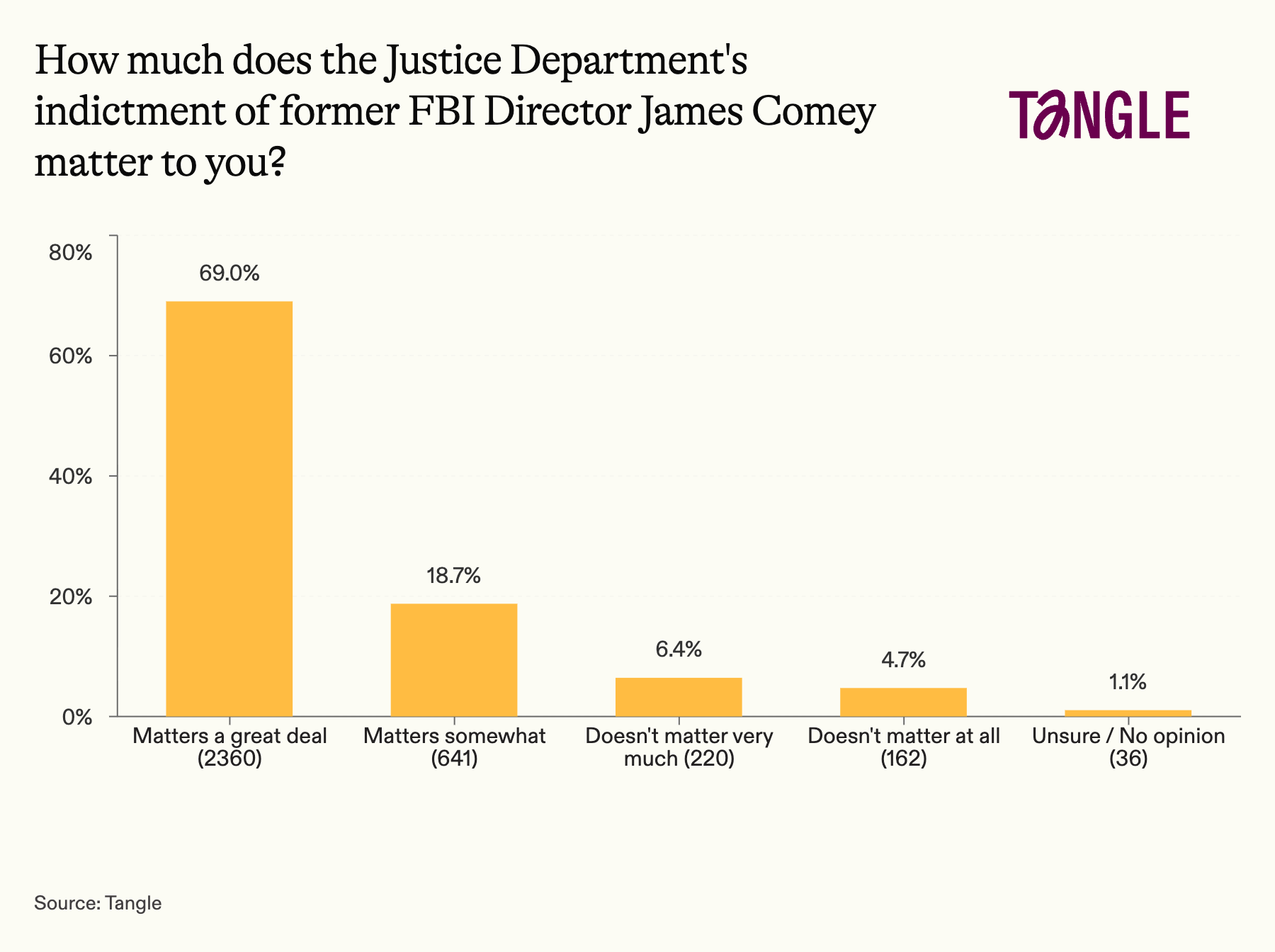
- Yesterday’s survey: 3,419 readers responded to our survey on former FBI Director James Comey’s indictment with 69% saying it matters a great deal to them. “This is a corrupt misuse of the Justice Department,” one respondent said.
Have a nice day.
Brazil faced its worst outbreak of dengue fever last year, with more than six million cases and over 6,000 deaths from the tropical, mosquito-borne disease. Last month, the country kicked off a randomized controlled trial of a new approach: releasing swarms of mosquitoes infected with Wolbachia bacteria, which studies have shown can reduce confirmed dengue cases by up to 77%. Dengue researcher Katie Anders said that, if successful, the Brazilian trial might push the World Health Organization to recommend the Wolbachia strategy to other countries battling the virus. “I think it will open the door to them having confidence and unlock the pathways for policy adoption,” Anders said. Nature has the story.
Member comments