
I'm Isaac Saul, and this is Tangle: an independent, nonpartisan, subscriber-supported politics newsletter that summarizes the best arguments from across the political spectrum on the news of the day — then “my take.”
Are you new here? Get free emails to your inbox daily. Would you rather listen? You can find our podcast here.
Today’s read: 13 minutes.
Remove your personal data from Google and ChatGPT.
Have you ever searched for your personal information on Google or ChatGPT? You'd be shocked to find out what people can find out about you.
Your name, phone number, and home address are just the beginning.
Anyone deeply researching you can find out about your family members and relationships, SSN, health records, financial accounts, and employment history.
Incogni's Unlimited plan puts you back in control of your online privacy, keeping you safer from harmful scams, identity theft, financial fraud, and other threats impacting your physical safety.
Use code TANGLE to get an exclusive 55% discount on unlimited removals from anywhere that exposes your data.
*Supporting our sponsors like Incogni helps keep Tangle free. Thank you for supporting them when you can!
Now more than ever….
We need your support. Trust in media is at an all-time low. News outlets across the country are facing dire cuts or being bought up by billionaire owners. In an era where the media is increasingly fragmented and partisan, we’re trying to build a big-tent organization for everyone — regardless of their political backgrounds. If you want to keep Tangle thriving into the future, please consider becoming a member. It’s where we get 85% of our revenue, and it’s how we maintain our independence. Subscribe here.
Quick hits.
- President Donald Trump announced the U.S. military carried out a fifth confirmed strike against a boat allegedly trafficking drugs near Venezuela. Trump said six people were killed in the strike. (The strike)
- Israel confirmed the identity of three additional hostages returned by Hamas but said a fourth body was not a hostage. Israel says the bodies of 21 deceased hostages have not been returned. (The identifications)
- The Supreme Court declined conservative media personality Alex Jones’s request to hear his challenge to a lower court judgment requiring him to pay $1.4 billion for making false claims about the 2012 school shooting at Sandy Hook Elementary School. (The decision)
- President Trump posthumously awarded conservative activist Charlie Kirk the Presidential Medal of Freedom in a ceremony at the White House. (The award)
- Argentina’s President Javier Milei visited the White House, where he and President Trump discussed the United States’s efforts to stabilize the Argentinian economy. Trump said that U.S. support would be contingent on Milei’s party’s performance in Argentina’s midterm elections later this month. (The meeting)
Today’s topic.
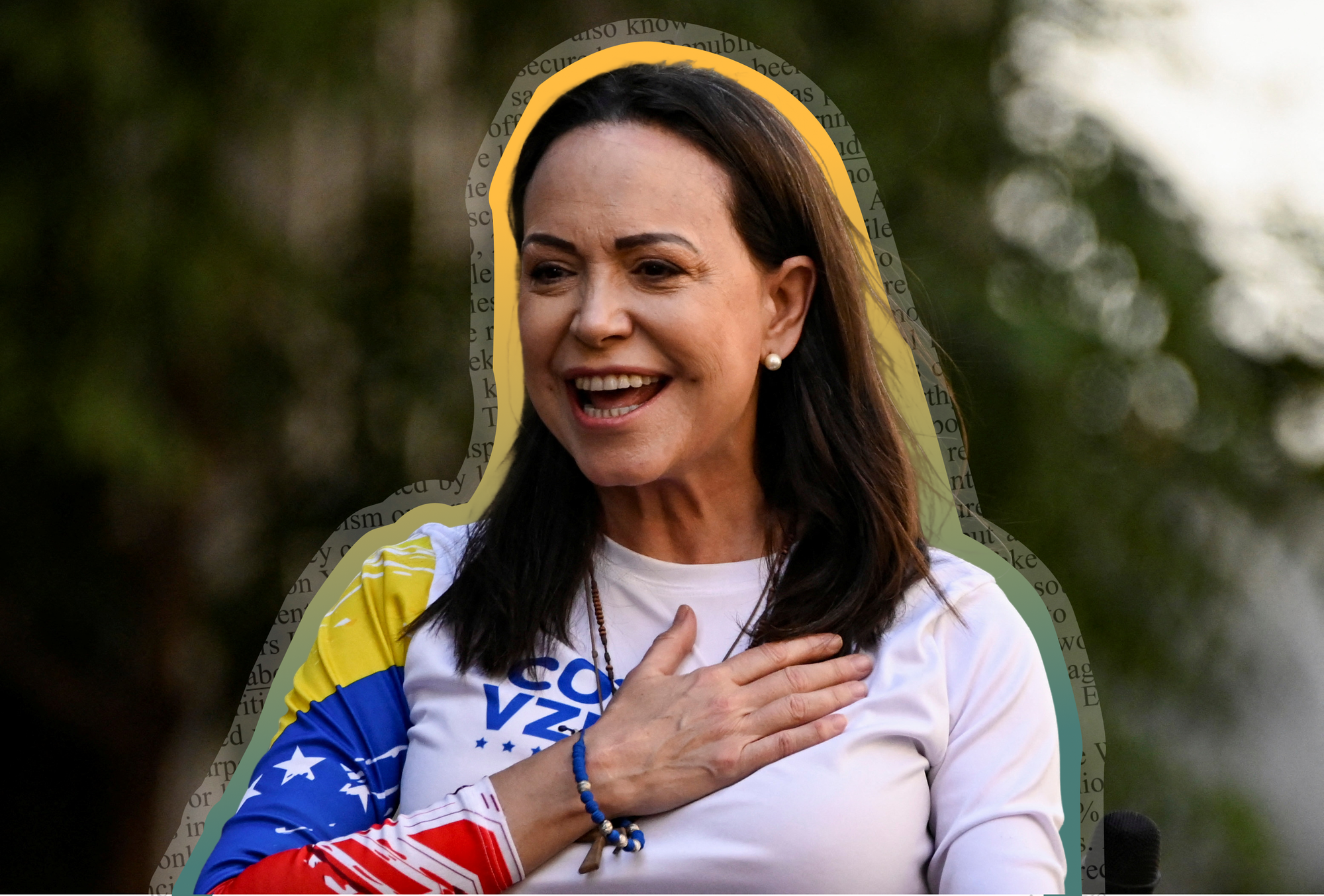
The Nobel Peace Prize. Last Friday, the Norwegian Nobel Committee announced the Nobel Prize winners for 2025. Each year, the Norwegian and Swedish Nobel Committees award prestigious honors for advancements in the fields of physics, chemistry, medicine, literature, economics, and peace. This year’s Peace Prize recipient was María Corina Machado, one of the leaders of the opposition in Venezuela and founder of the center-right party Vente Venezuela.
Back up: In 2023, Machado announced her candidacy for president in the 2024 election and decisively won an opposition primary election, in which more than 2.4 million Venezuelans voted. However, Venezuela’s highest court barred her from running over claims of financial impropriety as a national legislator. She then threw her support behind the opposition’s alternative candidate, Edmundo González Urrutia, who lost to incumbent Nicolás Maduro in an election that was deemed fraudulent by the United States, several Latin American countries, and international human rights organizations.
We covered the Venezuelan election here.
The Nobel Committee credited Machado “for her tireless work promoting democratic rights for the people of Venezuela and for her struggle to achieve a just and peaceful transition from dictatorship to democracy.”
However, the committee’s decision has generated controversy. Machado has been criticized for recently advocating for non-peaceful means to depose Maduro, saying that only a “credible threat” of international force could convince him to step down. Machado has also faced scrutiny for her friendly relationships with leaders like El Salvadoran President Nayib Bukele, Brazilian President Jair Bolsonaro, and Israeli Prime Minister Benjamin Netanyahu. Furthermore, Machado recently suggested that the U.S. should forcefully remove Maduro from power.
The committee’s decision has also drawn considerable attention due to comments from the White House and President Donald Trump. The White House has claimed that the president has ended seven conflicts, and Trump said that “it would be an insult to our country” if he were not awarded this year’s Peace Prize. Trump administration officials criticized the Committee’s decision, though President Trump acknowledged that the award primarily recognized actions from 2024.
On Saturday, President Trump said that Machado had accepted the award in his honor in a private phone call, which the president called “a very nice thing to do.” Machado also publicly dedicated the award to Trump, as well as the people of Venezuela.
Venezuelan President Nicolás Maduro responded to Machado’s award by calling the opposition leader a “demonic witch,” and Venezuela closed its embassy in Norway on Monday as part of what it said was a reallocation of resources to the Global South.
We’ll cover what the right, left, and Latin American writers are saying about this year’s Nobel Peace Prize below. Then, Senior Editor Will Kaback gives his take.
What the right is saying.
- The right mostly supports Machado’s win and says Trump deserves the prize in 2026.
- Some worry that the award tacitly endorses military action against the Maduro regime.
In The Washington Examiner, Christopher Tremoglie wrote “no, Trump was not snubbed of the Nobel. Machado is a worthy recipient.”
“What would you call a political activist who went head-to-head with a bloodthirsty, communist leader, suspected of killing tens of thousands of people and viciously silenced opposition? How would you describe a woman who stood up to a corrupt, brutal dictator who stole a country’s presidential election and arrested citizens of his country who protested? In Venezuela, such a person is called Maria Corina Machado,” Tremoglie said. “[Her Peace Prize] will surely disappoint, or even outright anger, many hoping that President Donald Trump would be named this year’s Nobel Peace Prize recipient. However, Machado being named this year’s winner should not be considered a slight.”
“[Trump has made] monumental and groundbreaking achievements. However, they occurred within his first year, not his first 12 days, and, unless there are rules to the process that the public is not aware of, these fantastic achievements don’t really play into consideration for this year’s Nobel Peace Prize evaluation,” Tremoglie wrote. “I would argue that people who are quick to denounce Machado winning the award are not familiar with her efforts in resisting the left-wing, communist government of Nicolas Maduro. If they were, they might be more receptive to her win. One can objectively realize that Machado is a worthy recipient without disparaging her or dismissing her efforts because Trump was not declared the winner in 2025.”
In The American Conservative, Joseph Addington said “the walls are closing in on Maduro, and the Norwegians have made their own contribution.”
“Not too long ago, the situation for Venezuela’s ‘Iron Lady’ looked bleak. Machado headed up the effort to oust current Venezuelan presidential strongman Nicolás Maduro democratically during the 2024 election — an effort that failed when the Venezuelan electoral commission blatantly falsified the results to secure yet another term for Maduro. The domestic protest movement she headed up also fizzled out after key opposition leaders were arrested, disappeared, or fled the country,” Addington wrote. “Now she’s in hiding, coordinating the remaining resistance inside the country and stumping outside the country for support via social media.”
“Events are swinging Machado’s way, and she has flexed her political talents to the utmost to steer them in her desired direction. The latest coup comes with her acquisition of a Nobel Peace Prize, for showing ‘that the tools of democracy are also the tools of peace’ — a description that may go down as one of the more ironic tributes, as Machado has been quick to turn her Peace Prize award into one more weapon of war,” Addington said. “Trump may already have a good case for the next award of the prize he covets, if his peace settlement in Gaza holds. But he may consider—not unreasonably—that kicking a certain South American dictator out of office would be a very strong addition to his resumé.”
What the left is saying.
- The left is mixed on the award, with some saying Machado’s resume does not suggest a commitment to peace.
- Others see her sustained activism in the face of persecution as worthy of the honor.
In Common Dreams, Michelle Ellner argued “‘peace’ has no meaning when right-wingers like Maria Corina Machado win the Nobel Prize.”
“[Machado is the] smiling face of Washington’s regime-change machine, the polished spokesperson for sanctions, privatization, and foreign intervention dressed up as democracy,” Ellner wrote. “Machado’s politics are steeped in violence. She has called for foreign intervention, even appealing directly to Israel Prime Minister Benjamin Netanyahu, the architect of Gaza’s annihilation, to help ‘liberate’ Venezuela with bombs under the banner of ‘freedom.’ She has demanded sanctions, that silent form of warfare whose effects… have killed more people than war, cutting off medicine, food, and energy to entire populations.”
“Machado was also one of the political architects of La Salida, the 2014 opposition campaign that called for escalated protests, including guarimba tactics. Those weren’t ‘peaceful protests’ as the foreign press claimed; they were organized barricades meant to paralyze the country and force the government’s fall,” Ellner said. “She praises Trump’s ‘decisive action’ against what she calls a ‘criminal enterprise,’ aligning herself with the same man who cages migrant children and tears families apart under ICE’s watch, while Venezuelan mothers search for their children disappeared by US migration policies.”
In The Atlantic, Anne Applebaum said “Machado deserved the Nobel Peace Prize.”
“When announcing the award, the committee chair described her as ‘a woman who keeps the flame of democracy burning amidst a growing darkness,’” Applebaum wrote. “This metaphor is apt. Machado is in hiding, deep inside a country that is failing. I spoke with her twice late last year, without knowing where she was. A few months before, the country had just held presidential elections. The opposition movement that she leads had won. Even though activists were being picked up off the streets, or simply shot and killed, they had held a primary, run a presidential campaign — Machado herself was barred, so Edmundo González was the candidate — and made sure that votes were counted accurately.”
“Lately, Americans have been hearing little about Venezuela other than drugs and gangs, but the country has long been the home of one of the world’s most impressive grassroots-democracy movements. At this moment, when citizens in many of the world’s most successful liberal democracies are giving up, even questioning whether popular participation in politics has any value, Venezuelans fight violence with nonviolence, and oppose corruption through bravery,” Applebaum said. “Machado continues to be a fierce, uncompromising optimist. She founded an election-monitoring group more than two decades ago. Since then, she has continued to argue that engagement matters, and that change is possible.”
What Latin American writers are saying.
- Some Latin American writers celebrate Machado’s award, viewing it as a blow against Maduro.
- Others criticize Machado’s decision to link her cause to Trump.
In El Nacional, Carlos Pérez-Ariza called the award “a Nobel Prize for the coming peace.”
“The committee wisely chose MCM [María Corina Machado], as a symbol of a people who have managed to resist, at a very high cost, the greatest tyranny ever imposed on Venezuelans by a narco-dictatorial regime sheltered by that spurious invention they call ‘21st-century socialism,’ the very embodiment of great misery,” Pérez-Ariza wrote. “[The award] further legitimizes her and the citizen movement that voted against the narco-regime. That faction, in its final stages, has maintained a sepulchral silence about the award. With the Caribbean maritime borders guarded by US ships, they are being strangled by the loss of drug trafficking routes to the United States through the Sinaloa cartels.”
“This prize also provides international support to the Venezuelan people’s struggle for freedom, which MCM represents. It sheds light on that horizon, closer now, where Venezuela may regain its democratic development,” Pérez-Ariza said. “It breathes life into the cause for justice to recover a path that the narco-regime has ruthlessly defiled. Peace lies in the hands of Venezuelan civil society, represented by MCM, not in those of Maduro and his gang. As Machado has said: ‘The only one responsible for what is happening here is Nicolas Maduro. And he must choose: leave through negotiation or without negotiation, but he leaves.’”
In El Universal, Adolfo Pérez Esquivel, recipient of the 1980 Nobel Peace Prize, published an “open letter” to Machado.
“I was surprised by your nomination of the Nobel Peace Prize by the Nobel Committee. It reminded me of the struggles against dictatorships across our continent and in my country under military regimes we endured from 1976 to 1983,” Esquivel wrote. “In 1980, the Nobel Committee awarded me the Nobel Peace Prize. Forty-five years have passed, and we continue working in service of the poor and alongside the peoples of Latin America. I accepted this high distinction on behalf of all of them, not for the Prize itself, but for the commitment it represents to share in the struggles and hopes of the people… At 94, I remain a student of life and am troubled by your social and political decisions.”
“I'm surprised at how you cling to the United States, and you must know that it has no allies or friends, only interests. The dictatorships imposed in Latin America were instruments of those interests of domination, destroying the social, cultural, and political life and organization of the peoples fighting for their freedom and self-determination. We, the people, resist and fight for the right to be free and sovereign, not to be a colony of the United States,” Esquivel said. “I'm concerned that you didn't dedicate the Nobel Prize to your people, but rather to the aggressor to Venezuela. I think, Corina, you need to reflect on and understand where you stand.”
My take.
Reminder: “My take” is a section where I give myself space to share my own personal opinion. If you have feedback, criticism or compliments, don't unsubscribe. Write in by replying to this email, or leave a comment.
- Machado is a surprising choice for the award, but her efforts in 2024 to promote change through democracy are worthy of it.
- Her more recent embrace of U.S. military action to oust Maduro is less deserving.
- Venezuela has no good options, but I think any lasting change has to come from within.
Will Kaback, Senior Editor: First, let’s address the president in the room.
No matter how you feel about his qualifications, President Trump simply wasn’t snubbed for the Peace Prize; the nomination period ended on January 31, less than two weeks into his second term, so the events of the past month weren’t a part of the Committee’s considerations. Trump will have a strong case in 2026 if his Gaza peace plan results in a lasting ceasefire and progress toward rebuilding the strip, but the agreement still has a long way to go to be considered a total achievement. Remember: The Biden administration also secured the release of 50 Israeli hostages under a ceasefire deal negotiated in 2023, but that deal, along with another in January of this year, collapsed.
Candidly, I felt pretty indifferent about all the Trump-inspired furor leading up to the prize announcement. While a Nobel Peace Prize is a major achievement for the recipient, its impact doesn’t typically extend outside their immediate circle. The prize also has a checkered history, having recognized people like Henry Kissinger (who contributed more to global disorder than peace) and Yasser Arafat (who had led the Palestinian Liberation Organization in support of terrorism in the past). This year, however, the Nobel Committee’s decision to honor María Corina Machado feels conspicuous, given the backdrop of rising U.S. aggression toward Venezuela.
Machado's nomination is understandably controversial — and it certainly surprised me.
The opposition leader’s current position between the Maduro and Trump administrations actually indicates the opposite of a person working towards peace. Machado has tacitly endorsed the Trump administration’s military actions against alleged drug traffickers in Venezuela and even suggested the U.S. should go further. “The regime in Venezuela is a criminal structure,” she told the BBC last week. “We need the international community to cut those flows that are not only used for corruption, but also for repression, violence, and terror.” She has also said Venezuelan President Nicolás Maduro won’t agree to leave power unless “there is a credible threat,” and claimed, “You cannot have peace without freedom, and you cannot have freedom without strength.” Combine these statements with her effusive praise for President Trump after she won the award, and she evidently wants the U.S. to continue its military buildup around Venezuela, which could quickly spiral into open war.
But again, the Nobel Committee is rewarding Machado for her actions in 2024, and in that timeframe, she’s a worthy recipient. After Venezuela’s highest court banned her from running for president (on dubious grounds), she remained a visible figure in the race, campaigning alongside her replacement (and de facto stand-in) and continuing to speak out against the abuses of the Maduro regime. As the Nobel Committee noted, she not only unified a previously fractured opposition movement but also activated and trained hundreds of thousands of volunteers to ensure an accurate vote count. Even when Maduro (allegedly) manipulated the results, Machado’s movement ensured that the international community had ample proof that the outcome was fraudulent. She did all this in the face of constant threats, which eventually forced her into hiding after the election. This perseverance and bravery are exactly what the Nobel Peace Prize should honor.
It’s hard to fault her actions in recent months, either. Remember what she’s up against: Maduro leads a repressive government that has overseen a protracted humanitarian crisis and a lengthy record of human rights offenses. The vast majority of Venezuelans live in poverty, and millions have fled the country since Maduro came to power. Arbitrary detention for protesting against the government is common, and the United Nations has documented repeated instances of the state torturing perceived political opponents.
“Peace” is impossible in Venezuela with Maduro in charge. Machado knows this, as do millions of Venezuelans who voted for change in 2024 but had their voices silenced. Her critics and contemporaries have certainly raised reasonable objections to her recent strategy of inviting military pressure from the U.S., but consider the situation from her perspective: It’s hard to democratically reform an autocratic government, and impossible to vote out a dictator.
When you zoom out, this year’s award has an unfortunate irony: The loudest campaigner for the Peace Prize and its actual recipient may be bringing their two countries to the brink of war. Members of the Trump administration are reportedly considering military strikes within Venezuela, which could eventually lead to U.S. boots on the ground.
It may go without saying, but that would be calamitous for Venezuela and the United States. Military intervention may succeed in removing Maduro, but it risks seriously destabilizing the country and the region. As some analysts have noted, this move would likely drive Latin American countries to bolster their ties with China while worsening humanitarian conditions in the region. The U.S. has tried regime change in Latin America before, and the results have largely been disastrous. These actions have often hurt democratic efforts and the economies of Latin American countries; in the cases of Chile and Brazil, U.S. involvement led to even more brutal leaders coming to power.
The outlook for Venezuelans is truly bleak — the status quo under Maduro is untenable, but U.S. intervention is likely to make the situation worse. The country doesn’t have any “good” options, but I think the best path forward is to recommit to the idea that earned Machado a Nobel Peace Prize: that the determination of the Venezuelan people will eventually win out. The U.S. can and should offer support for Machado and her movement, of course, but there are other tools than the sword: Targeted sanctions against senior officials and corrupt actors, coordinated diplomatic pressure, and direct humanitarian assistance are just a few. But the inescapable reality, to me, is that genuine change will have to come from within Venezuela, even if that change comes at a high price and on an uncertain timeline.
I realize this is all completely aspirational. As I began writing this take, news broke of a fifth confirmed U.S. strike against an alleged drug boat near Venezuela. President Trump has yet to waver from his current course, and I expect we’ll see more boat strikes and threats against Maduro in the days and weeks ahead. The twisted irony of Machado’s victory is that the added legitimacy offered through the Nobel Peace Prize could, actually, increase the odds of a direct U.S.–Venezuela confrontation.
Take the survey: What do you think of Machado winning the Nobel Peace Prize? Let us know.
Disagree? That's okay. My opinion is just one of many. Write in and let us know why, and we'll consider publishing your feedback.
Protect Your Digital Privacy Today
Your personal information—name, address, phone, SSN, health records, and financial data—is easily searchable online, exposing you to identity theft and fraud. Incogni's Unlimited plan removes your data from hundreds of sites, keeping you safe from scams and threats.
Use code TANGLE to get an exclusive 55% discount on unlimited removals from anywhere that exposes your data
Your questions, answered.
Q: Is Qatar having an air force base in the U.S. as unprecedented as the media is making it seem? Do other countries have similar arrangements on U.S. soil?
— Sherrie from Columbus, OH
Tangle: The headlines certainly grabbed our attention, too. From CNN: “US announces it will allow Qatar to build an Air Force facility in Idaho.” A Qatari Air Force base? On U.S. soil? With the stories about President Trump accepting an Air Force One jet from Qatar, and U.S. Middle East Envoy Steve Witkoff reportedly wooing Qatari investors while mediating the Israel–Gaza deal, it certainly seems off.
That’s all to say that we also initially responded with skepticism, but further details make the news seem a lot less alarming than a 150-character push notification might imply. To your question: This arrangement is not unprecedented. It’s not very common, but it certainly is far from unique.
First, the Idaho facility that Secretary of Defense Pete Hegseth announced over the weekend is not a Qatari Air Force base — it is a training facility. The U.S. often trains military personnel from other nations, and our Air Force has trained pilots from NATO countries like the United Kingdom, the Netherlands, and Germany for decades.
Secondly, these arrangements have not been limited to NATO countries, and the deal to train pilots is part of an existing agreement. Qatar recently purchased an F-15 squadron from the U.S., and the two sides mutually selected Idaho for a training facility because the topography in the area the 366th Fighter Wing operates in Mountain Home, Idaho, is similar to Qatar’s. Additionally, Singaporean pilots already train out of the Mountain Home facilities.
Third, and finally, the U.S. military has trained pilots from Middle Eastern allies in the U.S. before. In 2016, the Air Force trained Israeli pilots for the F-35 in Luke Air Force Base in Arizona. The timing of the announcement certainly was conspicuous, and the U.S. hasn’t trained pilots from an Arabic nation before (though that isn’t even a genuine first — Saudi pilots have graduated from U.S. military programs here), but the story is probably not the bombshell that it may have seemed to be.
Want to have a question answered in the newsletter? You can reply to this email (it goes straight to our inbox) or fill out this form.
Under the radar.
At least 30 news organizations have declined to sign a new Pentagon press policy that asks journalists to acknowledge that they may lose access and be labeled a security risk if they solicit classified information and some types of unclassified information from department employees. Both right- and left-leaning outlets have refused to acknowledge the policy, including The Associated Press, Bloomberg News, The New York Times, The Wall Street Journal, The Washington Post, CNN, Fox News, and Newsmax. Furthermore, on Tuesday, all five major broadcast networks issued a joint statement saying the policy “is without precedent and threatens core journalistic protections.” Reuters (which also refused to sign) has the story.
Numbers.
- 1901. The year the first Nobel Peace Prize was awarded.
- 106. The number of times the Nobel Peace Prize has been awarded in the prize’s history.
- 440. The approximate number of days since María Corina Machado went into hiding, following Venezuela’s 2024 election.
- 2010. The year Machado was elected to Venezuela’s National Assembly.
- 2014. The year Machado was removed from the National Assembly, following her speech to the Organization of American States in Peru.
- 25% and 58%. The percentage of U.S. adults who say President Donald Trump did and did not deserve, respectively, the 2025 Nobel Peace Prize, according to an October 9 YouGov poll.
The extras.
- One year ago today we covered FEMA’s response to storms in the Southeast.
- The most clicked link in yesterday’s newsletter was this Sunday’s reader essay on Israel.
- Nothing to do with politics: 80 of the most iconic guitar intros of all time.
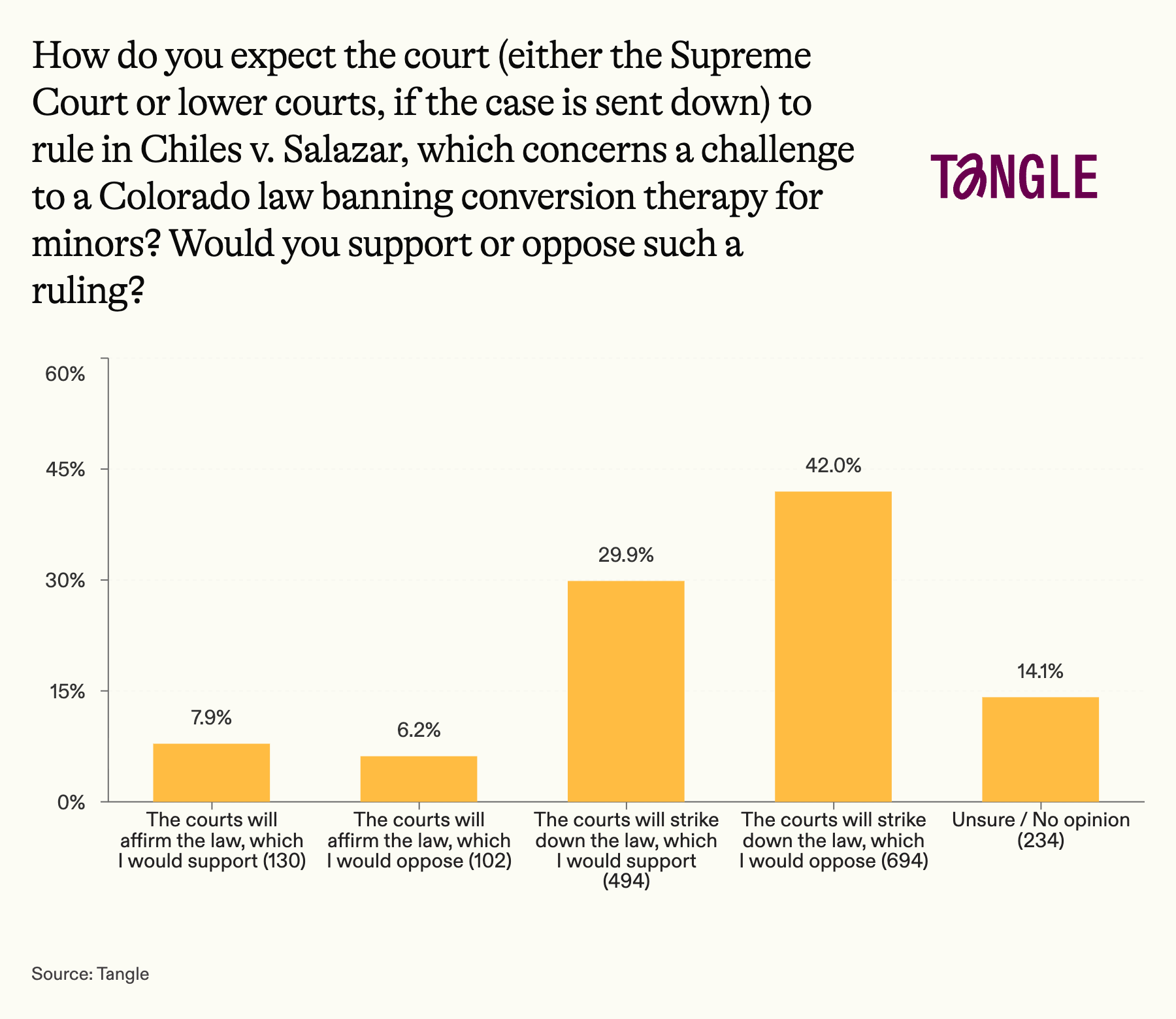
- Yesterday’s survey: 1,654 readers responded to our survey on Chiles v. Salazar with 42% predicting the courts will strike down the Colorado law at the heart of the case and opposing such a decision. “I’m unsure how the courts will rule in any case before them, ever,” one respondent said. “I share Lindsey Knuth’s concerns about the real reason why this case was brought (i.e. so parents can force their kids to change sexual orientation or gender identity, not so the kids can request help), but I also think the law is too broad,” said another.
Have a nice day.
About 25 years ago, Manolo Betancur emigrated from Colombia to the United States to attend college — then created an unusual way to support people in his community. Betancur moved to Charlotte, North Carolina, in 2005 and opened a bakery, which he says is the “oldest immigrant Latino bakery in the Carolinas.” For the past 12 years, in addition to serving his regular customers, he’s partnered with Raise You Up Ministries to deliver free birthday cakes to the homeless population in the city. “To me, that was the coolest idea ever, because nobody thinks about their birthdays,” Betancur said. This year, his bakery delivered its 300th free cake through the charity. TODAY has the story.
Member comments