
I'm Isaac Saul, and this is Tangle: an independent, nonpartisan, subscriber-supported politics newsletter that summarizes the best arguments from across the political spectrum on the news of the day — then “my take.”
Are you new here? Get free emails to your inbox daily. Would you rather listen? You can find our podcast here.
Today’s read: 14 minutes.
The Ancient Trend Transforming Bodies
What happens if you start this ancient routine tomorrow?
Well, by February, you’ll likely see improved strength, posture, balance, brain function. Rooted in a centuries-old practice, Tai Chi Walking blends movement, breath, and mindfulness into slow, purposeful steps.
Unlike extreme diets — which consistently fail long term — this method supports the body’s natural systems.
Because after 40, high-intensity exercise can increase injury risk. This ancient practice is proven to be gentle yet effective in supporting sustainable fat loss. Even for people who haven’t exercised in years, as little as 9 minutes a day can lead to measurable improvements.
Take the quick quiz to receive your personalized Walking Plan, along with coaching, additional workouts, and nutrition guidance from the app that's helped users lose over 18M pounds.
What we got right & wrong.
Every year, we use our first Friday edition of January to reflect on our coverage from the previous year. We review our takes, assess what we got right and wrong, and then give ourselves a letter grade. This year, we’re continuing that tradition — with the added element of reviewing some takes from writers on staff other than Executive Editor Isaac Saul. Keep an eye out for the two-part edition coming this Friday.
Quick hits.
- President Donald Trump said that the United States was not at war with Venezuela but that the U.S. would take an active role in the country following its operation to remove President Nicolás Maduro. Trump also said he does not expect Venezuela to hold elections in the next 30 days. (The comments) Separately, President Trump said Venezuela’s interim leaders had agreed to give the U.S. 30–50 million barrels of oil. (The announcement)
- Danish Prime Minister Mette Frederiksen criticized President Trump’s recent comments about potential U.S. military action to take control of Greenland, saying that any attack would effectively end the North Atlantic Treaty Organization. (The warning)
- Leaders from the U.S., Canada and Europe agreed to provide Ukraine with security guarantees in a potential peace deal with Russia, including military equipment and air, land, and sea support. (The commitment)
- The Wyoming Supreme Court ruled that abortion and the use of abortion pills will remain legal in the state, finding that Wyoming had not proven its anti-abortion laws were “‘reasonable and necessary restrictions’ on the right to make one’s own health care decisions.” (The ruling)
- Hilton Hotels cut ties with an independent hotel owner in the Minneapolis area after claims surfaced that the hotel was denying bookings to immigration enforcement officials. (The severing)
Today’s topic.
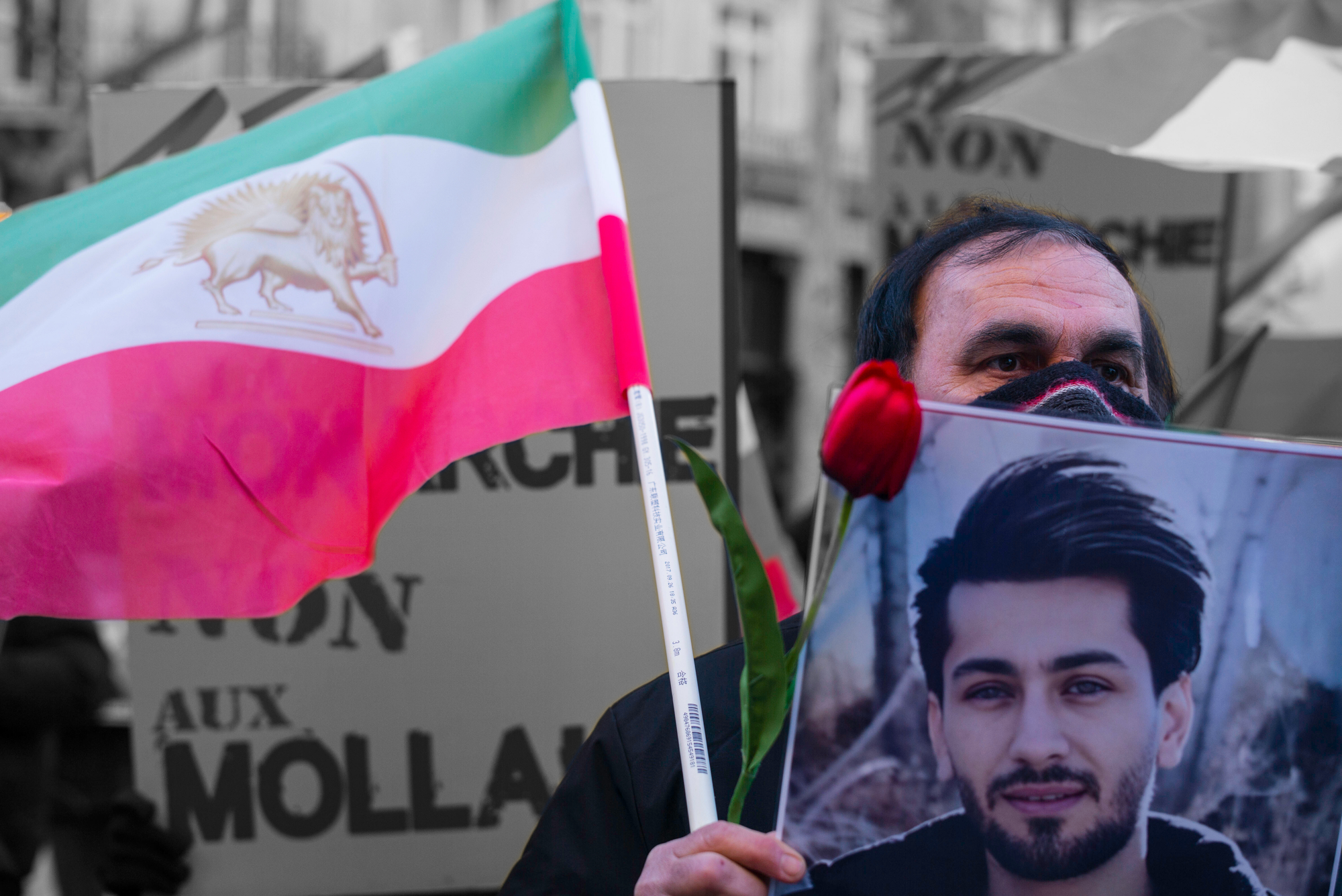
The protests in Iran. In late December, protesters in Tehran, Iran, took to the streets over rising costs and economic conditions in the country. Larger demonstrations erupted across Iran in the following days, with crowds gathering in major cities and provincial centers to protest economic conditions, government restrictions, and broader grievances with the country’s political system. Iranian authorities responded with a mix of violent suppression and internet disruptions; a spokesman for the Iranian government has claimed the unrest is driven in part by foreign interference. President Donald Trump said the United States supports the Iranian people’s right to protest and threatened Iran not to harm protesters, posting on social media on Friday, “We are locked and loaded and ready to go.”
Back up: Iran is an Islamic republic governed by a dual system that combines elected institutions with clerical oversight. The Supreme Leader, Ayatollah Ali Khamenei, has broad authority over the military, judiciary, and key media. Over the past decade, the country has faced persistent economic strain from U.S.-led sanctions tied to its nuclear program, high inflation, currency depreciation, and high unemployment. Tensions heightened after President Trump withdrew the United States from the 2015 nuclear agreement, the Joint Comprehensive Plan of Action (JCPOA), and reinstated sweeping sanctions, a move Tehran says has worsened living conditions. Then in June, the United States engaged in targeted attacks on the country’s nuclear program during Iran’s brief war with Israel.
The recent demonstrations reportedly began on December 29 in Tehran’s Grand Bazaar after a spike in prices for basic goods. Footage of the protests spread through social media before authorities restricted access to several platforms. According to the Human Rights Activists News Agency (HRANA), security forces used tear gas and live ammunition to disperse crowds. As of Wednesday morning, 34 protestors have been killed, more than 60 have been injured and over 2,000 have been arrested over the last ten days of protests.
The Iranian government has acknowledged the country’s poor economic conditions, which have significantly worsened in the past year. On Tuesday, the Iranian rial was priced at more than 1.47 million to the U.S. dollar in the open market in Tehran, an all-time low. Iranian officials announced limited economic relief measures, including subsidies and price controls.
Ali Larijani, the secretary of Iran’s Supreme National Security Council, warned the U.S. not to intervene. “U.S. interference in this internal matter would mean destabilizing the entire region and destroying America’s interests,” Larijani said.
Below, we’ll look at what the right, left, and Iranian writers are saying about the protests in Iran, and the U.S. response. Then, Senior Editor Will Kaback gives his take.
What the right is saying.
- The right supports the protesters, though many doubt they will topple the regime.
- Some say Trump is right to threaten intervention if state violence continues.
National Review’s editors wrote about “the unrest in Iran.”
“What’s known as the Arab Spring was initially set off by the self-immolation of a Tunisian street vendor protesting against harassment by local officials. Authoritarian regimes are typically strong, but they can often be surprisingly brittle too,” the editors said. “In Iran, the economy has gone very wrong indeed. The current unrest began in Tehran with shopkeepers and bazaaris, the latter a merchant class traditionally supportive of the regime, closing their doors as a protest against a further collapse in Iran’s already collapsed currency.”
“The regime is responding with vaguely conciliatory admissions… that some of the complaints about the economy are valid. But it has not abandoned its time-tested repertoire of threats, talk of external enemies, and the use of force,” the editors wrote. “There is no chance, however, that a Trump White House will repeat the mistakes made by the Obama administration, which allowed hopes of a deal with the mullahs to lead it to rein in its support for the massive unrest that followed rigged Iranian elections in 2009. On the other hand, President Trump’s threat that the U.S. is ‘locked and loaded’ and ready to come to the rescue in the event that the regime kills peaceful protesters is hard to credit. Iran is not Venezuela.”
In The Washington Examiner, Ani Chkhikvadze praised “Trump’s righteous warning to Iran’s leaders.”
“Iran has found allies in its authoritarianism. From Belarus and Syria to Georgia and Serbia, repressive governments have reinforced each other. The result is that authoritarian regimes have grown more aggressive, while those defending liberties have become increasingly unsure that their righteous resistance will lead anywhere,” Chkhikvadze said. “Trump’s statement may change that calculation. It does more than any U.S. presidential statement in the past two decades to signal to those resisting repression in Iran that they are not entirely on their own. That America might come to their defense. It thus tells the oppressors in Tehran that violence may cost them dearly.”
“Trump has introduced ambiguity in U.S. policy. He doesn’t promise intervention, but neither does he exclude it. That ambiguity over what might come out of Trump’s White House makes regimes afraid of crossing lines,” Chkhikvadze wrote. “But there is a danger: if Washington issues this warning and does nothing when Tehran kills more protesters, it won’t just fail Iranians. It will teach every dictatorship watching that Trump’s threats mean nothing, undermining the credibility of the American president as well as U.S. power.”
What the left is saying.
- Many on the left say the protests have roots in Trump’s first-term foreign policy.
- Others question the president’s motives for getting involved in the conflict.
In MS NOW, Ali Velshi explored “how the protests in Iran can be traced back to Trump’s first term.”
“To better understand how we got here, we must go back eight years, to May 8, 2018. That’s when, in his first administration, Trump withdrew the United States from the Joint Comprehensive Plan of Action, better known as the Iran nuclear deal,” Velshi said. “That landmark agreement was signed in the summer of 2015 during the Obama administration, following years of intense negotiations. It was designed to prevent Iran from obtaining a nuclear weapon, essentially by limiting Tehran’s uranium enrichment capabilities and stockpiles. According to the United Nations and Trump’s own government, the deal was working at the time his administration ended it.”
After the U.S. withdrew from the deal, Iran “buil[t] up the so-called Axis of Resistance, a loosely associated alliance of groups in the region that are trained, funded, supplied and supported by Tehran… After Oct. 7, the Axis of Resistance kicked into overdrive and acted much more aggressively. However, it has since been significantly weakened by Israeli and U.S. attacks, which have, in effect, weakened Iran’s overall influence and power,” Velshi wrote. “U.S. sanctions are indeed causing tremendous ongoing economic suffering in Iran. That appears to be coming to a head right now, as these protests have erupted in several cities in the country.”
Also in MS NOW, Steve Benen said Trump’s “sudden interest in the rights of protesters is hardly in line with the vision he has espoused for decades.”
“The demonstrations in Iran — an authoritarian society where mass protests are not common — are real and sizable. The unrest appears to have been caused initially by the collapse of Iran’s rial currency, but as NPR reported, it has become increasingly common to see crowds chanting anti-government slogans,” Benen wrote. “It was against this backdrop that Trump used his social media platform to publish a message that appeared intended to get Tehran’s attention. ‘If Iran shots [sic] and violently kills peaceful protesters, which is their custom, the United States of America will come to their rescue.’”
“Time will tell whether, and to what degree, Trump is serious about further intervention in Iran, and whether the U.S. military is actually ‘locked and loaded’ for another Middle East operation. But it’s worth noting for context that his sudden interest in the rights of protesters is not altogether in line with his broader vision,” Benen said. “On the contrary, in the recent past, Trump has gone to great lengths to celebrate ‘strongman’ and ‘iron fist’ leaders abroad, including those who seem to revel in cracking down on dissent… Is he now suddenly concerned about violence toward protesters in Iran, or is the incumbent American president looking for an excuse to push fresh threats toward a foe in the Middle East?”
What Iranian writers are saying.
- Some Iranian writers welcome U.S. support of the protests and the regime’s fall.
- Others say the protests were primarily caused by sanctions.
In The Washington Post, Reza Pahlavi, a leader of the Iranian democratic opposition, wrote “Iran is ready for a democratic transition.”
“As 2026 begins, Iran is on the verge of a profound transformation. Across our country — from Tehran’s Grand Bazaar to cities, towns and villages far from the capital — Iranians are risking their lives to reclaim their future. Their message is unmistakable: The Islamic Republic has exhausted its legitimacy, and after almost 47 years, the country wants to be free,” Pahlavi said. “The courage of these men and women deserves more than sympathy. It demands clarity, preparation and responsible leadership — inside Iran and among those who influence global affairs. Because Iran’s liberation will mean much more than a restoration of dignity to Iranians. It will bring a global peace dividend of almost unimaginable proportions.
“That’s why I welcome President Donald Trump’s clear and firm support for the Iranian people. His message that the United States stands with those who seek freedom rather than with a regime that exports terror and instability has resonated deeply inside Iran,” Pahlavi wrote. “Supporting the Iranian people is not an act of charity or interference; it is an investment in global stability. For almost 47 years, the Islamic Republic has fueled regional conflict, pursued nuclear blackmail and wrought global chaos. A free and democratic Iran will be a force for stability in the Middle East — not a source of endless crisis.”
In Middle East Eye, Mohammad Reza Farzanegan argued “Iranian protests are not for ‘regime change’ but for relief from US economic war.”
“In Washington and Tel Aviv, the narrative being pushed is one of a ‘regime on the brink’, where economic failure is framed as a precursor to total collapse… [However] what we are witnessing is not a political revolution, but the desperate gasps of a society whose economic buffer, the middle class, has been systematically hollowed out by an inhumane, punitive policy of international isolation,” Farzanegan said. “The primary driver of this economic death spiral is no secret. The US weaponisation of the global financial system, imposing the ‘maximum pressure’ campaign and targeting Iran’s oil exports has effectively hit at the life savings of every Iranian teacher, nurse, and small business owner.”
“The Iranians currently in the streets are not asking for their country to be dismantled; they are asking for the restoration of their dignity, for economic relief, and for an end to the collective punishment that has hollowed out their lives,” Farzanegan wrote. “The tragedy of the current US–Israeli strategy is that it has destroyed the very segment of society, the middle class, most capable of pushing for a stable, reformist, and less confrontational future. By weakening this centre, external powers alongside domestic structural problems such as high corruption have removed the moderate buffer that typically values incremental change over chaotic violence.”
My take.
Reminder: “My take” is a section where we give ourselves space to share a personal opinion. If you have feedback, criticism or compliments, don't unsubscribe. Write in by replying to this email, or leave a comment.
- These protests have many similarities to past uprisings in Iran — and some key differences.
- I’m doubtful that Trump will take military action to support the protesters.
- Still, I think the Iranian regime is on its last legs.
Senior Editor Will Kaback: Many questions are swirling around the protests in Iran, chief among them whether they’ll lead to the end of the Islamic Republic. For a lot of reasons, it’s fair to be skeptical that this is the moment. Just consider the similarities between this protest and other upheavals in Iran since 2009 that also did not result in regime change.
Each nationwide protest of the last 17 years was sparked by a specific issue, then grew to encompass a set of wider societal issues. The 2009 Iranian Green Movement began in opposition to the country’s presidential election, but evolved into a push for greater democratization. The 2017–18 Dey Protests were rooted in economic complaints, but eventually became a challenge to the Islamic Republic as a whole. The 2022 Women, Life, Freedom movement was kicked off by the death of Mahsa Amini, who died in custody after the Iranian morality police arrested her for wearing her hijab improperly; it then grew into a larger call for freedom of expression. And today, what started as an uprising among merchants has now catalyzed much of the country to protest spiraling economic conditions, water shortages, and worsening air pollution.
Another similarity: economic hardship caused by sanctions. As the economist Mohammad Reza Farzanegan noted (under “What Iranian writers are saying”), U.S.-led sanctions have had a devastating effect on Iran’s economy and turned life’s essentials — food, water, medicine — into scarce resources. Over time, this has left the regime with fewer tools to address public discontent without resorting to force.
Most significantly, each protest provoked a violent response from the government, and the strong-fisted reaction stopped each previous movement short of dislodging the current regime. That same dynamic could be playing out right now.
However, something about this moment does feel different, a sense heightened by reports that Ayatollah Ali Khamenei has made plans to flee if the unrest escalates. President Trump’s overtures about U.S. involvement have also taken on a different feel in light of last weekend’s operation to capture Venezuelan President Nicolás Maduro. We’re living in a new world, one in which leaders can fall suddenly, public discontent can affect genuine change, and military might means more than international norms. In that global context, a few key aspects of the current protests differ from the past — and suggest the outcome could be different, too.
Most notably, the U.S. bombed Iran last summer, overwhelming its air defenses and causing — in the U.S. account — enormous damage to Iran’s main nuclear facilities. These strikes decisively proved that the Trump administration is willing to act, and they revealed the limitations of Iran’s defenses. That makes Trump’s threat to intervene if protesters die, which they have, serious and believable. Relatedly, Iran suffered defeat in its short-lived war with Israel in June, further weakening the government’s capabilities. These two events paint a picture of a regime on its last legs.
Furthermore, the economic situation this time is not just poor but dire. Iran’s currency lost about half its value against the dollar in 2025, and government figures pegged inflation at roughly 42% in December alone. Food and medical item prices are up 72% and 50%, respectively, over the past year. Meat is now considered a luxury item. Meanwhile, Iran’s Jomhuri-ye Eslami newspaper reported that the country’s poverty rate is approximately 50%. Perhaps most striking of all, the same repressive government that ruthlessly — and immediately — cracked down on past protest movements accepted the protesters’ complaints as “legitimate” and promised to act on them. The head of the country’s central bank also stepped down, and Supreme Leader Khamenei publicly acknowledged the economic crisis. Would any of that have happened if the government had control of the situation?
These differences are significant. But weighing the history against the present, I still don’t think this moment will lead to the end of the Islamic Republic without significant U.S. intervention — which I don't see coming anytime soon.
For one, the current gap between Trump’s threats and tangible action is much larger than it was last summer, when the U.S. had a clear target and objective. The president is clearly comfortable with military interventions, but he also prefers short, decisive actions. Would bombing an Iranian weapons depot or military base change the situation in a way that would compel him to act? I don’t think so.
I also doubt that Trump wants to open up yet another foreign conflict at this moment. The administration is now “running” Venezuela, opening up new bombing campaigns in Africa and the Middle East, and reigniting its push to control Greenland. To some, that’s the kind of emboldened behavior that makes military action in Iran more plausible; my read is that the administration is more likely to keep its focus on Venezuela and let the Iranian protests play out on their own. Israel is a wild card in this dynamic, and Prime Minister Benjamin Netanyahu has shown his willingness to act independently of the U.S., but he seems to be approaching this situation cautiously for now.
Absent U.S. involvement, I expect internet blackouts, mass arrests, and the threat of violence will be enough for the regime to manage the protests for the time being. But managing unrest is not the same as resolving the conditions that produced it, and whether the Islamic Republic can rebuild economic stability, regional leverage, or domestic legitimacy is far less clear. Personally, I doubt that the regime can reassert itself on any of these counts, but I also doubt it will fall in a matter of days or weeks. Instead, a combination of internal and external pressure is likely to grind down what remains of the government’s legitimacy over the next several years.
If I squint, I can see a future where this turmoil births something more positive — new leadership for the Iranian people and reforms aimed at democratization. A new nuclear deal that eases sanctions and creates a pathway to a more stable economy. A less antagonistic relationship with the U.S. and Israel. Yes, you really have to squint to see it (and maybe indulge in some utopian thinking), but in this moment of great uncertainty for Iran, a window of opportunity may also follow.
Take the survey: Do you think the current protests will lead to the end of the Islamic Republic? Let us know.
Disagree? That's okay. Our opinion is just one of many. Write in and let us know why, and we'll consider publishing your feedback.
Your questions, answered.
Q: I would be curious to hear what the Tangle opinion is of the investigation that included “spying” on Republican senators. I’ve only seen reference to it in right-wing reporting so not sure how concerning it actually was.
— Adam from New Mexico
Tangle: Backing up a bit, the bill to reopen the government in November included a provision allowing senators to sue the government for up to $500,000 when federal investigators search their phone records without notifying them. As an aside, that provision is a nightmare — it gives legislators additional rights that normal citizens don’t have, and it lets members of Congress collect fines from taxpayer dollars. But it was responding to something real.
In September, a file leaked from Jack Smith’s investigation into President Trump’s alleged attempts to overturn the results of the 2020 presidential election. That file listed nine Republican members of Congress whose phone records the FBI searched: Rep. Mike Kelly (PA) and Sens. Lindsey Graham (SC), Bill Hagerty (TN), Josh Hawley (MO), Dan Sullivan (AK), Tommy Tuberville (AL), Ron Johnson (WI), Cynthia Lummis (WY), and Marsha Blackburn (TN).
The FBI performed a method of surveillance called “toll analysis,” which records the time and duration of phone calls (and both correspondents) but not the contents of the messages. According to Supreme Court precedent from 1979, this metadata is not protected by the Fourth Amendment’s prohibition on illegal searches and seizures. And since the Biden Justice Department obtained subpoenas to pull these phone records, it didn’t step outside the bounds of the law.
What the Biden DOJ did was legal; it was not “worse than Watergate,” as Sen. Chuck Grassley (R-IA) claimed, and the legislative response was an overreaction. However, pulling phone records of elected representatives is a big deal. Jack Smith defended the subpoenas, saying he wanted to better understand the actions of Trump’s inner circle leading up to January 6. But since Biden’s DOJ subpoenaed the records, and they didn’t notify those representatives subpoenaed until just recently, the tactics can easily look political.
Want to have a question answered in the newsletter? You can reply to this email (it goes straight to our inbox) or fill out this form.
Under the radar.
According to recent reports, Italy now plans to back a free-trade agreement between the European Union and the Mercosur trade bloc of South American countries (Argentina, Brazil, Paraguay, and Uruguay), paving the way for the EU to approve a deal that has been in the works for more than 25 years. Last month, Italy and France opposed signing the agreement, citing concerns about safeguards for the agricultural industries in their countries; Italian Prime Minister Giorgia Meloni also sought additional funds for Italian farmers. Italy is now expected to approve the measure in a vote scheduled for January 9, allowing the EU and Mercosur to sign the treaty by January 12. If approved, the trade agreement would create an integrated market of 780 million consumers, ease tariffs between Mercosur and EU countries, diversify trade for both regions, and allow the EU to grow its influence in South America. France24 has the story.
Do you dread the "New Year, New Me" crowd?
All the pressure, extreme diets, and all-or-nothing mindset can be exhausting. But don’t worry, we’ve found a better way.
Simple Life is a clinically proven weight loss tool that has helped users lose over 18 million pounds.
Best of all, there’s no restrictive dieting.
You simply take a quiz, and Simple builds a plan personalized to you.
It even keeps you accountable with Blinky, a furry friend who cheers when you log meals, sulks when you don't, and spirals when ignored.
Simple, science-backed, and effective — start now and enter 2026 with real tools to become your best self.
Numbers.
- 31. The total number of provinces in Iran.
- 27. The number of Iran’s provinces that have been sites of anti-government demonstrations.
- 10. The number of days since protests began in the Tehran Bazaar in Iran.
- 36. The number of people killed in the Iranian protests as of January 6, according to the Human Rights Activists News Agency (HRANA).
- 2,076. The number of people arrested in connection to the protests, according to HRANA.
- 42.5%. Iran’s inflation rate in December 2025, the month the protests began, according to Reuters.
- $7. The dollar equivalent of the Iranian government’s proposed monthly payment to citizens in response to the protests.
The extras.
- One year ago today we wrote about the H-1B debate.
- The most clicked link in yesterday’s newsletter was our 2026 end-of-year survey (reminder: respond by Sunday for a chance to win a $500 gift card).
- Nothing to do with politics: A printable one-page calendar to help plan your 2026.
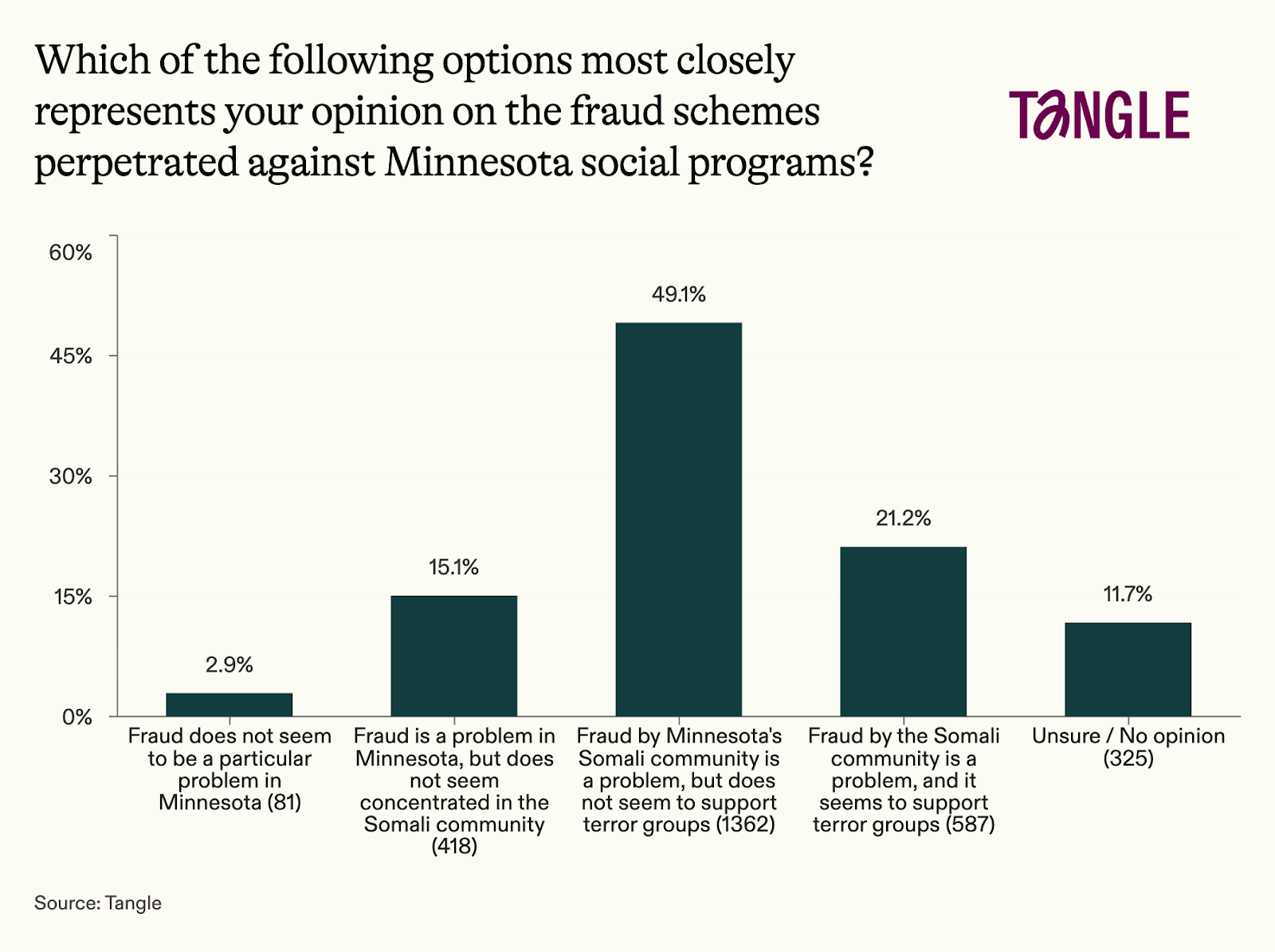
- Yesterday’s survey: 2,773 readers responded to our survey on the Minnesota fraud schemes with 49% saying fraud seems concentrated among Somalians but does not seem to support terror networks. “Fraud is prevalent in Minnesota, and the Somali community has taken advantage of the opportunities given to them after being given citizenship in our country,” one respondent said. “If the question is referring to all types of fraud, it becomes much bigger and less centralized among Somalians,” said another.
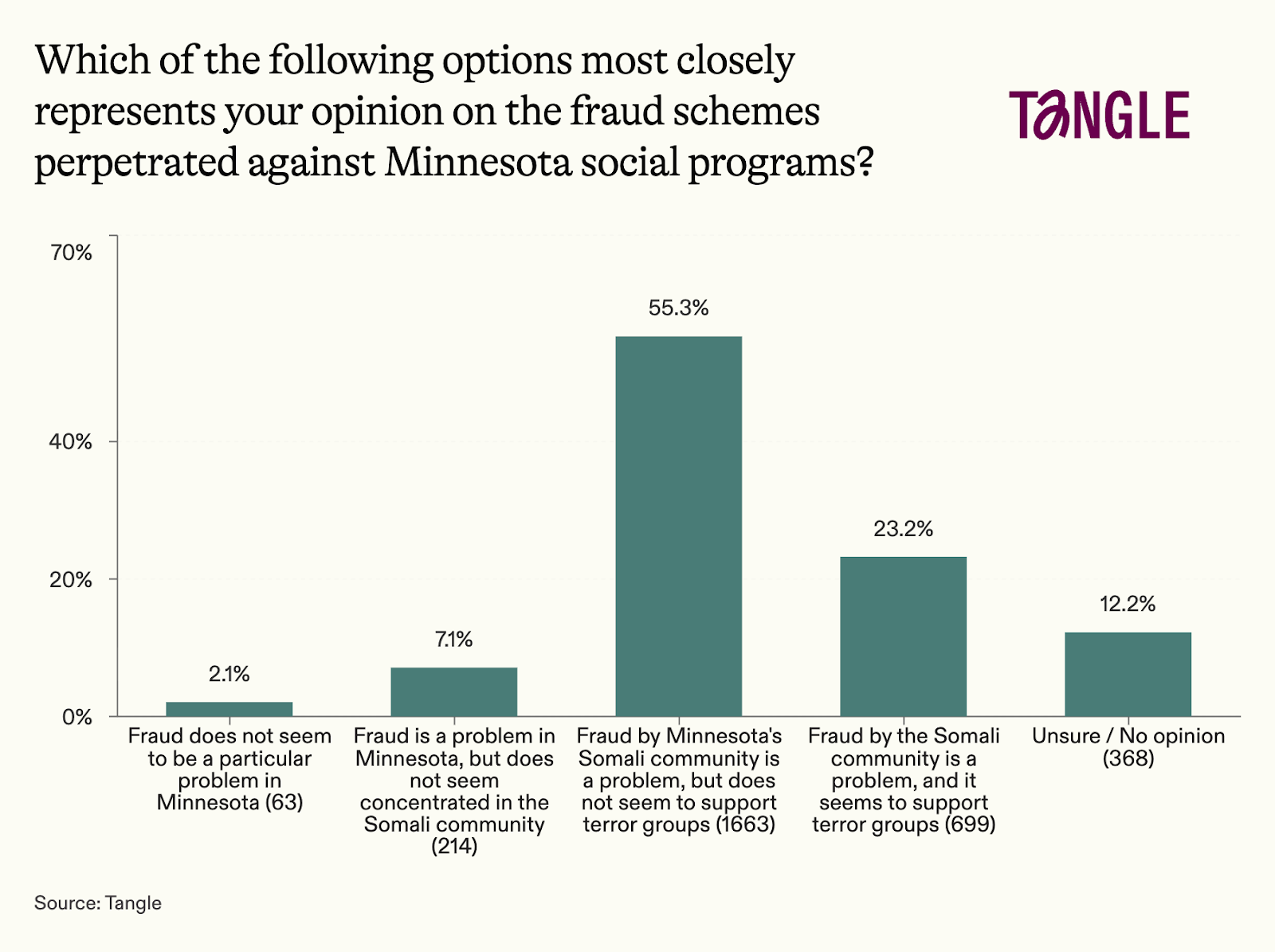
3,007 readers responded to the same question when we covered the issue in December; those results are below.
Have a nice day.
Liver fibrosis is a common condition that affects hundreds of millions of people worldwide and, over time, can worsen into cirrhosis or liver cancer. Despite decades of research, scientists still have difficulty treating the condition. In December, a research team from China Pharmaceutical University may have made a breakthrough — and one that’s highly accessible. The team found that two common drugs used together, silybin and carvedilol, sharply reduced collagen production and stellate cell activation in human and rat cell cultures. Additionally, experimental models show that the drug combination can reverse liver scarring. Now, since the two drugs are commonly used and inexpensive, the treatment is on the inside track towards clinical trials. Science Daily has the story.
Member comments