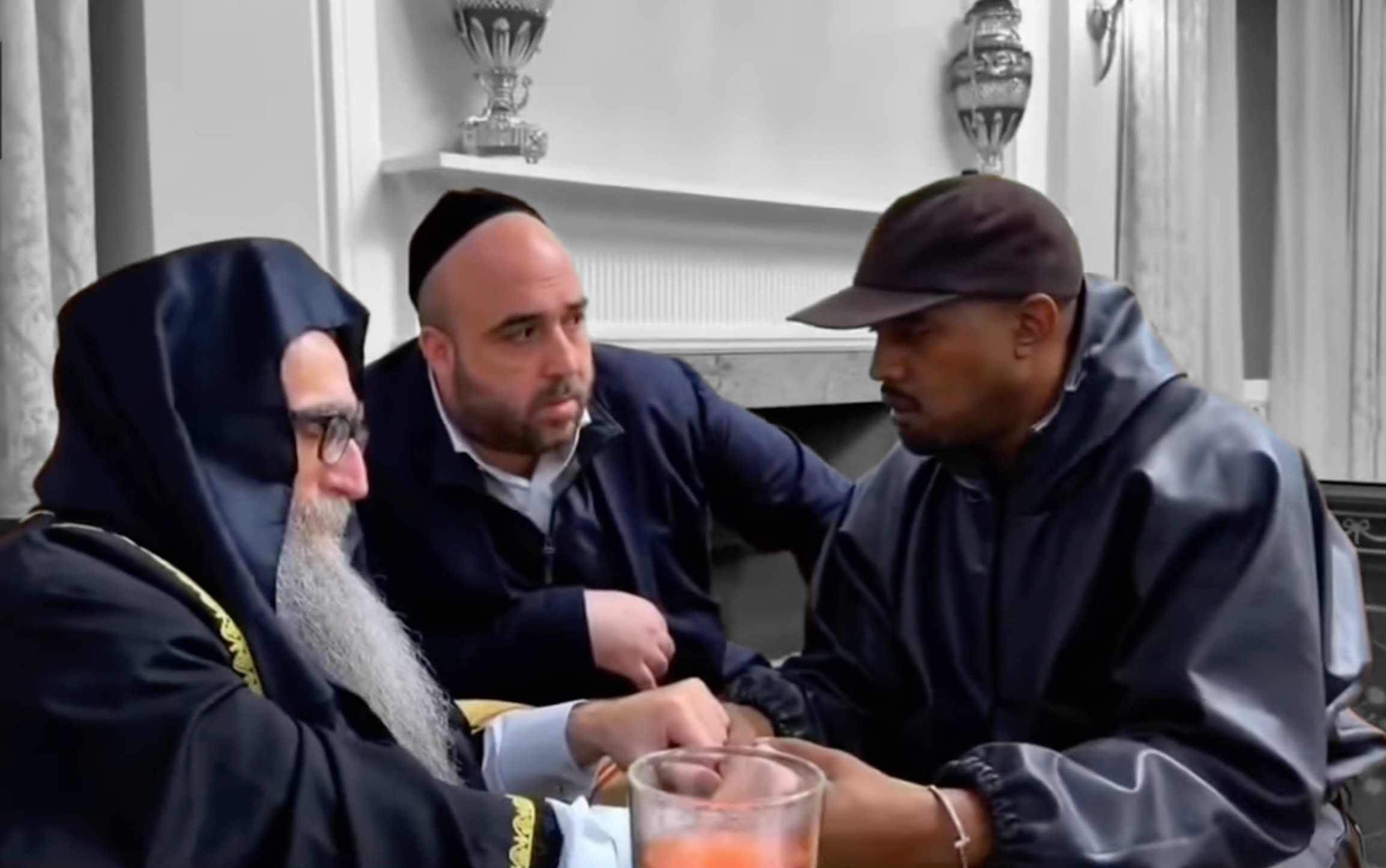
Kanye West says he’s sorry.
And I forgive him.
I first wrote about West’s antisemitic rants in 2022, when he began engaging with the world of antisemitism. And, in some narrow ways, I defended him: I pleaded with people to accept that some of the stereotypes he was calling out were actually tied to realities we should discuss, that we can explain the overrepresentation of “The Jews” — my people — in the entertainment industry, while also calling out West when his ranting tipped into paranoia and conspiracy.
In the months and years since, West — who now goes by Ye — has been using increasingly unhinged language. His reality has become more and more divorced from the one you and I share. He apologized in 2023, then took it back; by 2025, he was back to posting Nazi propaganda on social media, selling merchandise adorned with swastikas, and dropping club anthems lionizing Hitler. His social media activity made clear that he was either all the way down the rabbit hole or in the depths of a mental crisis, and following him went from angering to amusing to alarming. I stopped defending him and started blaming him for the rise in antisemitism among his fans, and more broadly for the normalization of antisemitism across our culture.
In no uncertain terms: Ye emboldened antisemites everywhere, and probably recruited a few to the cause. I’ve long been a fan of his music, but calling him a “rapper” or “hip-hop” artist doesn’t really do him justice. He’s among the most significant cultural icons of the past two decades — not just in the United States, but globally — and, for a period in 2020, he was a prominent political figure. He’s viewed, rightly, as an artistic genius. His words matter, and his actions have consequences. Over the last several years, he’s used this considerable influence to mainstream antisemitism in a way that he will probably be incapable of undoing.
In his apology, which came in the form of a full-page ad in The Wall Street Journal (there’s a joke there somewhere about him thinking that was the place where he could reach the most Jews), Ye wrote that the scariest part of his illness was that it made him believe he wasn’t sick. “It makes you blind, but convinced you have insight,” he wrote. “I lost touch with reality.” Ye, like a lot of people who suffer from Bipolar I disorder, managed to destroy in a matter of months a life that had taken him decades to build. That self-destruction is a hallmark of the disease, and is undoubtedly tragic. The same is true for his denial of his illness.
Reading the apology, I found it humble and direct. Ye didn’t mince words about his actions or his illness. He didn’t shroud his apology in euphemism. He blamed his behavior on his mental illness, yes, but the way he described his state of mind and its impact on him felt both vulnerable and believable, describing an “out of body” experience during his manic episodes, and suicidal thoughts when he bottomed out (“I didn’t want to be here anymore”).
He also did not apologize as though he expected to just move on; instead, he sounded committed to repairing what was broken. In an odd, almost funny moment of normalcy, he confided that he’d been finding community in Reddit forums, an online space famous for bringing together regular people to hash out some of their biggest problems (for some reason, the image of Ye scrolling Reddit at the same time I am was one I couldn’t shake).
But today’s social, cultural, and political landscape leaves very little room for contrition — and even less for reconciliation. The cultural mainstream has not been keen to embrace West’s apology. His timing, right before an album release, is convenient. So, too, is extending a clinical explanation for his antisemitic, paranoid outbursts. One representative example of his apology’s landing came from Ari Ingel, David Renzer and Steve Schnur, the heads of an organization called Creative Community for Peace, which purports to leverage prominent members of the entertainment industry to promote peace. They co-authored a piece in The Hollywood Reporter titled “Ye’s Apology Is Not Nearly Enough.” Here’s an excerpt:
Mental illness and neurological injury can explain impaired judgment, impulsivity, or disinhibition. They do not explain the repeated adoption of an extremist ideology, and they do not absolve responsibility for amplifying hate. The overwhelming majority of people living with bipolar disorder or traumatic brain injury do not praise Hitler, promote Nazi symbolism, or traffic in antisemitic conspiracy theories.
These were not isolated remarks or misunderstood metaphors. They were deliberate, repeated actions that amplified extremist ideas to a massive audience, with real-life consequences. The ADL stated that numerous incidents — including violent attacks — were tied to Ye’s previous antisemitic rants.
His apology alone cannot undo that.
Accountability — real accountability — requires more than a statement. It requires sustained action, especially when the behavior spans years and has contributed to real-world consequences. Organizations that track antisemitism have documented how rhetoric from high-profile figures correlates with spikes in harassment and violence. This is not theoretical harm.
The three go on to suggest Ye remove his song, “Heil Hitler,” from all social media platforms; that he unequivocally reject “Nazism and antisemitism” in all its forms; and that he acknowledge his behavior was not constrained to a single four-month period. They add, separately, that “real accountability” means “accountability for the people and platforms he has chosen to associate with, individuals and movements that traffic in antisemitism and extremist rhetoric.”
Furthermore, they condition their forgiveness on “sustained engagement with credible organizations that combat antisemitism and extremism, not as a public relations exercise, but through listening and reparative action,” adding, “Performative outreach and engagement with fringe figures does not constitute accountability.” Finally, they imply that West has now done damage to mentally ill people everywhere, as he’s blamed mental illness for actions most mentally ill people purportedly don’t take.
There is a lot to unpack, and most of it makes my blood boil.