
I’m Isaac Saul, and this is Tangle: an independent, nonpartisan, subscriber-supported politics newsletter that summarizes the best arguments from across the political spectrum on the news of the day — then “my take.”
Are you new here? Get free emails to your inbox daily. Would you rather listen? You can find our podcast here.
Today’s read: 14 minutes.
Keep Your SSN Off The Dark Web
Every day, data brokers profit from your sensitive info—phone number, DOB, SSN—selling it to the highest bidder. What happens then?
Best case: companies target you with ads. Worst case: scammers and identity thieves breach those brokers, leaving your data vulnerable or on the dark web. It's time you check out Incogni.
Incogni scrubs your personal data from the web, confronting the world’s data brokers on your behalf and unlike other services, it helps remove your sensitive information from ALL broker types.
Tangle readers get 55% off Incogni using code TANGLE.
Click here to get started.
*This is a sponsored post. Advertise with us here.
Behind the scenes.
Last week, we released a documentary on our three days with Rep. Jake Auchincloss (D-MA). We got inundated with questions about the video, specifically about what happened off camera that viewers didn’t get to see.
Tomorrow, in our members-only Friday edition, we’re going to answer those questions — we’ll cover how the video came together, why we didn’t see Auchincloss fundraising, what his staff actually does, and whether the influence of lobbyists was apparent.
Quick hits.
- The Texas House of Representatives voted 88–52 to pass a new state congressional map, advancing the Republican-led mid-decade redistricting effort. (The vote)
- President Donald Trump called for Federal Reserve Governor Lisa Cook’s resignation, citing unconfirmed claims that she committed mortgage fraud. Trump is reportedly considering firing Cook if she does not resign. (The call)
- A federal district court in Texas issued a preliminary injunction temporarily blocking a new law requiring public schools to display the Ten Commandments in every classroom in the state. (The injunction)
- Israel said it will call up 60,000 reservists in advance of an expanded military operation in Gaza City. (The mobilization)
- The Office of the Director of National Intelligence reportedly plans to reduce its workforce by 30–40% and cut its annual budget by approximately $700 million. (The plan)
Today’s topic.
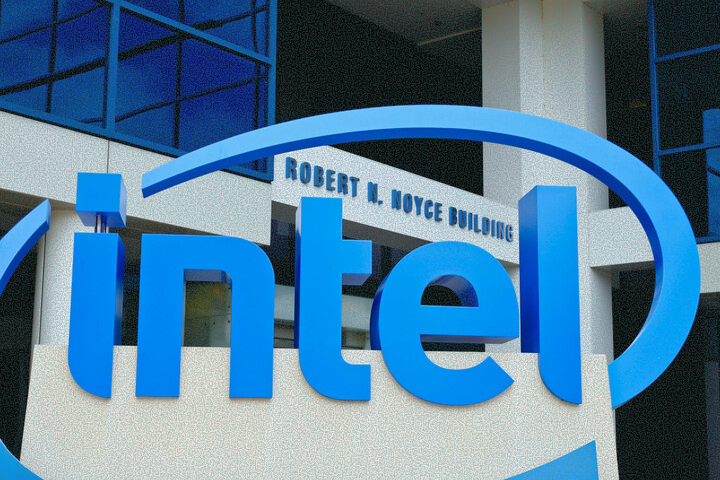
Trump’s potential deal with Intel. On Tuesday, White House Press Secretary Karoline Leavitt confirmed reports that the Trump administration is working on a deal with Intel that would grant the U.S. government a 10% stake in the computer technology company. The possible agreement, first reported on August 14, may involve converting roughly $10.86 billion in federal grants issued to Intel during the Biden administration into equity in the company, though the exact mechanism for doing so is unclear. Under the deal, the government would not have voting or governance power, according to Commerce Secretary Howard Lutnick, and any agreement will likely require approval by Intel’s board of directors.
Back up: Intel is the only U.S. company with leading-edge semiconductor manufacturing capabilities. The CHIPS Act of 2022 allocated $39 billion in grants to support semiconductor production in the United States, and Intel has been the largest recipient of those funds. The company has since spent billions of dollars building chip-fabrication facilities in Ohio, with additional plans to build in Arizona, New Mexico, and Oregon.
On Tuesday, Commerce Secretary Lutnick criticized the Biden administration for giving billions to Intel and other companies without a tangible return. “The Biden administration literally was giving Intel for free, and giving TSMC [Taiwan Semiconductor Manufacturing Company] money for free, and all these companies just giving them money for free,” Lutnick said. “Donald Trump turns that into saying, ‘Hey, we want equity for the money. If we’re going to give you the money, we want a piece of the action.’”
U.S. government intervention in private companies is rare but not unprecedented. During the 2008 financial crisis, the government authorized spending roughly $1 trillion to stabilize banks and financial institutions facing insolvency and spent billions to prop up Chrysler and General Motors and support the U.S. auto industry. While Intel is not facing insolvency, the chipmaker is experiencing protracted struggles. Despite surging demand for semiconductor chips, it has fallen behind its competitors and has faced significant manufacturing setbacks over the past decade, leading to CEO Pat Gelsinger’s resignation in 2024. Under new CEO Lip-Bu Tan — and with billions in federal grants — Intel is seeking to modernize its operations.
However, President Trump recently called for Tan’s resignation over alleged conflicts of interest, following Sen. Tom Cotton’s (R-AR) claims that Tan has extensive ties to Chinese businesses. Tan met with the president earlier this month at the White House, where the two discussed “Intel’s commitment to strengthening U.S. technology and manufacturing leadership,” according to a statement from Intel.
On Tuesday, the Japanese investment company SoftBank announced it would invest $2 billion in Intel, viewed as a vote of confidence in the company’s future and the Trump administration’s efforts to bolster U.S. semiconductor manufacturing.
Today, we’ll explore reactions to the potential deal from the right, left and technology writers, followed by my take.
What the right is saying.
- Many on the right acknowledge Trump’s desire to bolster U.S. chipmaking but see Intel as a failed company not worth the investment.
- Others argue a government stake in Intel would violate conservative economic principles.
In The Spectator, Matthew Lynn said “Trump may regret investing in Intel microchips.”
“There is a case to be made for state support. Microchips are a key strategic industry, and, just like Joe Biden, President Trump wants to make sure that the United States has enough manufacturing capacity on its home soil. He wants to ensure the country is not completely reliant on imports from South Korea, Japan or, most worryingly of all, Taiwan, given that it could be invaded by China one day,” Lynn wrote. “The trouble is, [Intel] also faces huge challenges. The days when laptops proudly boasted ‘Intel Inside’ are long in the past. The company’s share price has halved over the last five years.”
“In the mass market, Samsung has overtaken it, and Chinese manufacturers are snapping at its heels. It may have been one of the pioneers of the computer age, but it is now looking well past its prime,” Lynn said. “In reality, Intel has become hooked on subsidies and grants. The company has become very good at hustling cash out of governments. It has not been so good at making chips or serving customers. It is very hard to see how a few more billions from the White House is going to turn that around now.”
In The Wall Street Journal, Daniel J. Smith wrote about “Trump, Intel and the road to serfdom.”
“The Trump administration is pursuing federal ownership stakes in companies such as Intel and U.S. Steel, ostensibly to advance national security and domestic manufacturing. Yet these moves risk leading us down the road to serfdom that Friedrich Hayek warned against in 1944. Such actions pave the way for future administrations to impose DEI, environmental and regulatory mandates on businesses through back-door control,” Smith said. “Hayek warns in ‘The Road to Serfdom’ that state ownership threatens both prosperity and liberty. As he defined it, socialism involves state ownership and direction of the economy, which President Trump’s policies increasingly resemble.”
“A government stake in Intel could override market-driven innovation, favoring bureaucratic priorities over consumer needs. State ownership also expands public-sector employment, leading to concentrated special-interest groups and the suppression of dissent. Even a moderate share of federal ownership would be a powerful bargaining chip for striking unions, especially if a Democrat sat in the White House,” Smith wrote. “Even if well-intentioned, Mr. Trump’s actions erode the GOP’s free-market credentials. Lawmakers will soon argue that if chips and steel are too important to leave to free markets, food and medicine are as well.”
What the left is saying.
- The left is also critical of the potential deal, suggesting it is an extension of Trump’s desire to exert control over the entire U.S. economy.
- Some note how Trump’s supporters have seemingly abandoned their pro-market principles.
In The American Prospect, Harold Meyerson said “the U.S. goes in for state capitalism.”
“To be sure, there have been times in our history when the government has involved itself directly in businesses’ affairs and taken temporary stakes in them, but until now, that’s always been during particular and time-limited emergencies. When the domestic auto industry faced the prospect of collapse in the wake of the 2008 financial crash, the government took a temporary stake in both General Motors and Chrysler in return for bailing them out,” Meyerson wrote. “While also bailing out the largest banks, however, it did not take a stake in them. And while the Biden administration boosted the strategically important green-energy industry with tax credits, it took no stake in those companies.”
“It’s impossible to imagine Trump, or Republicans generally, supporting any form of state capitalism, however, if it occurred under anyone else’s presidency. It’s happened under Trump because, like Louis XIV, Trump adheres to the doctrine ‘L’état c’est moi’ — I am the state. Under his rule, the state has become primarily the vehicle through which he can maximize his personal control of whatever he wishes to control,” Meyerson said. “No broader doctrine — not nationalism, not mercantilism, not liberalism’s preference for regulated capitalism or a mixed economy, and certainly not social democracy or any form of socialism — is at the root of Trump’s embrace of state capitalism.”
In CNN, Allison Morrow and Phil Mattingly questioned corporate America’s silence “as Trump abandons free-market principles.”
“Not long ago, American conservative orthodoxy held that when it comes to doing business, the government that governs least governs best. The orthodoxy manifested itself in familiar ways. Groups that claimed the mantle of individual liberties would decry new legislation. Talk radio and podcasts would mock unnamed bureaucrats for ham-fisted overreach. And powerful business lobbies were quick to denounce — in press releases and even lawsuits — regulations or taxes they saw as government overreach,” Morrow and Mattingly wrote. “But when faced with President Donald Trump’s efforts to seize control of private enterprise… those same groups have gone quiet.”
“The silence from Corporate America to Trump’s incursion into private businesses isn’t entirely unexpected. Businesses have lost their appetite for the kind of socially progressive rhetoric many adopted in response to the 2020 murder of George Floyd. At the same time, Trump’s return to the White House came with a cost-benefit analysis for any business leaders thinking of speaking out: Make yourself a target, or fall in line and wait for the massive tax cuts the president has promised.”
What technology writers are saying.
- Some tech writers see the merits of Trump’s idea but suggest he should do more to save Intel.
- Others worry government investment could make it harder for Intel to compete.
In SiliconANGLE, Dave Vellante explored “Trump’s Intel pivot.”
“President Donald Trump’s 180 on Intel Corp. is at least directionally correct, certainly more so than calling for the ouster of Lip-Bu Tan, Intel’s CEO. But a contemplated investment by the U.S. in Intel… without a significant restructuring of Intel’s entire business, is a recipe for failure,” Vellante said. “Specifically, we continue to urge Intel’s board to spin out its foundry business. Every day it waits further decreases foundry’s value. Moreover, we call on the U.S. government to use money from the CHIPS Act and its influence on large U.S. chip designers, and Taiwan Semiconductor Manufacturing Co., to secure a position for a U.S.-domiciled company in advanced semiconductor manufacturing.”
“U.S. taxpayers — via a combination of CHIPS Act funding and direct equity injections under the Trump administration’s manufacturing push — would take a controlling 51% stake. That majority position is designed not just to inject capital, but to guarantee U.S. leverage over advanced semiconductor manufacturing capacity at a time when supply chain security is a national priority,” Vellante wrote. “TSMC’s participation at 30% brings not only a massive $30 billion commitment, but also the critical intellectual property and operational expertise required to make the venture globally competitive… This mix of public capital, TSMC expertise, domestic assets and private funding could give the U.S. its most credible shot in decades at not only re-shoring, but controlling a meaningful share of advanced semiconductor production.”
In The Financial Times, John Foley said “Uncle Sam taking a stake in Intel is sane in an absurd world.”
“For a transactionally minded president, the calculus is pretty clear: given all that largesse, why not demand something back? Previous administrations presumably realised that rewards come in other forms, such as national prosperity and global greatness. But converting grants and other goodies earmarked for Intel into equity creates a more tangible return on that investment,” Foley wrote. “The company is too important to fail, since it still commands the only substantial US-controlled source of leading-edge chip production… Why not invest pre-emptively instead, if doing so might make failure less likely?”
“The risk is that government investors have an incentive to urge companies to do things other shareholders would rather they didn’t. For example, Intel recently slowed construction of its Ohio mega-plant, the kind of move that might prove harder with the government on the shareholder register,” Foley said. “One important question is whether the White House really needs shares to get its way. Companies have generally kowtowed to President Trump readily without such linkages… Trump’s recent fleeting call for Intel chief Lip-Bu Tan to be ousted undoubtedly focused minds.”
My take.
Reminder: “My take” is a section where I give myself space to share my own personal opinion. If you have feedback, criticism or compliments, don't unsubscribe. Write in by replying to this email, or leave a comment.
- I’m generally pro free-market, but chipmaking is important enough to justify government investment.
- This deal has risks, like Trump personally profiting or the government coaxing Intel into making bad business decisions.
- A deal, structured to avoid some obvious pitfalls, would be novel, but could end up being very effective.
Government involvement in a company like Intel could go south for a few obvious reasons.
Most importantly, government stakeholders have different motivations than private investors. For instance, Intel could take billions of dollars from the federal government to invest in manufacturing and then determine the best location for a new foundry is, say, New York instead of Pennsylvania. Would a Republican President, like Trump, publicly rethink the government’s investment, given the political upside of sending those jobs to Pennsylvania? Maybe a future Democratic president could determine the Intel board or leadership group wasn’t diverse enough, even if it was doing its job well, and push for a disruptive shake-up that corporate shareholders would grit their teeth over.
These kinds of mixed incentives drive most conservatives’ free market instincts. I tend to share these ideals; I think capitalism is flawed, but it’s still the best economic system for prosperity, wealth, and quality of life that anyone has come up with. In general, I want the government to regulate our collective industries but stay out of our individual businesses. Laws governing fair enterprise are one thing, but I’m not particularly keen to see the government take over private entities — whether they’re grocery stores in Manhattan or multinational chipmakers like Intel.
Nevertheless, I was surprised to see that so many people on the right and left opposed this plan, because my initial reaction was that the idea has some merit.
The devil will be in the details, but it seems possible for President Trump to convert already allocated support from the CHIPS Act into a non-voting equity stake in the company. This is a clever, albeit fairly novel, way to turn subsidies into an investment — and it would do so while avoiding giving the government direct power over high-level decisionmaking.
The government already acts in myriad ways to stimulate the economy, and investing directly in Intel can be seen as an extension of the CHIPS Act that passed with bipartisan support under President Biden. Elsewhere, the Pentagon has already approved what could be a model for an Intel deal, purchasing 15% equity in a rare earth company contingent upon it selling products to defense contractors, with a goal of doubling the company’s stock value. To me, the counterargument that the government “shouldn’t pick winners” fails because it already picks companies like Intel (or SpaceX) to support through grants or contracts — this would just give a more tangible potential return for that support.
Maybe more to the point is just how critical this industry is to our economy and national security — advanced semiconductors and microprocessors are in everything from refrigerators to missiles. Current and past administrations would literally consider going to war with China to protect Taiwan, in large part due to the role it plays in supplying semiconductor chips to the U.S. (though most political leaders will emphasize its strategic location and democratic government). A 10% government stake in Intel won’t magically create total independence from foreign suppliers of these critical chips in the next year; but if this industry is critical enough for us to stare down China, is it not so critical to justify taking an unusually aggressive stake in the industry’s premier American manufacturer?
Most commentators have focused on the downside risk of the U.S. government interfering or putting taxpayer dollars toward a company that’s bleeding out billions, but have not considered the upside. Imagine a world where Intel turns its business around — a public equity stake could significantly offset the cost of the CHIPS Act if Intel’s share price increases and the company succeeds in onshoring more semiconductor factories and jobs.
Again: The details of any deal will matter a lot. The government’s stake would have to be non-intrusive and non-voting, an agreement would have to set clear milestones for Intel to hit on U.S. capacity, and Intel would have to build that capacity domestically (not entirely unlike the provisions in the Pentagon’s recent deal). And a properly structured deal would need to include automatic “sell-downs” to exit the government’s stake once Intel passes those milestones.
That’s the upside — now for the downside. For one, President Trump, who is reportedly negotiating the deal, has shown an unusual penchant for profiting from his position in office. We found out yesterday that Trump added $100 million in government bonds to his investment holdings since taking office. By some estimates, the Trump family has made about $3.4 billion — with a “b” — dollars off five separate crypto ventures attached to Trump’s name or brand. In his first term, his son-in-law Jared Kushner scored a $2 billion investment from Saudi Arabia in his firm, and Kushner raised over $1 billion more from Qatari and Emirati firms after Trump won a second term. Of course, Trump has also sold tens of millions of dollars of merchandise — from Bibles to hats — and collected millions more in fees at his club, all since taking office.
If Trump negotiates a deal with a gigantic corporation like Intel, I’ll be very concerned that he finds a way to profit personally — and any worthwhile deal would need to avoid that outcome.
Second, there’s all the usual risk that comes with government intervention. Even with a well structured deal, a large equity stake comes with the implication that the money could disappear if the company does something to upset its giant investor (especially given the way Trump has treated government grants for other institutions). All the while, the government is having the public underwrite corporate risk (without consent, aside from electing Trump) and sending a negative market signal (that a giant like Intel needs our help, which actually sent Intel’s stock lower) — and if Intel’s fortunes continue to go south, that’s a lot of public money down the drain.
Third, and maybe most convincing, is the precedent this sets. Historically speaking, the U.S. government directly intervening in businesses has been reserved for the most extreme and desperate circumstances — like the 2008 financial crisis. No such crisis exists now. Even though the federal government does pick “winners” to some degree, this would be a step further and could open the door to more meddling in specific companies like this in the future.
Ultimately, my free-market inclinations are not dogmatic enough to oppose a deal that resembles what’s being discussed here. I think this sector is important enough, Intel is strong enough, and our position is vulnerable enough to justify unusual action. But I do appreciate the significant risks of this proposal. Until we see the details of a deal that gives the government a light touch, ensures the president or his family do not profit in any way and sets clear benchmarks for how the government will get out, it’s hard to know if the risks are worth taking.
Take the survey: What do you think of the government owning equity in Intel? Let us know!
Disagree? That's okay. My opinion is just one of many. Write in and let us know why, and we'll consider publishing your feedback.
Your questions, answered.
Q: If ICE is raiding work places and capturing people who they say are illegal, why isn’t anything happening to the company who is hiring them? Isn’t it illegal to hire someone without proper work documents?
— Perry from Fitzwilliam, NH
Tangle: You’re correct, hiring someone who does not have legal residency status in the United States is illegal. The Immigration and Nationality Act (INA) of 1952 contains a provision which states, “It is unlawful for a person or other entity to hire, or to recruit or refer for a fee, for employment in the United States an alien knowing the alien is an unauthorized alien,” with an exemption for employers contracting an “unauthorized alien” for seasonal farm labor (as long as the employer is compliant with the Migrant and Seasonal Agricultural Worker Protection Act). This law was later amended and further defined in 1986 by the Immigration Reform and Control Act.
Employers who are shown to have illegally hired someone not authorized to work in the United States can be fined up to $3,000 for each violation. Furthermore, employers face civil fines for violating I-9 requirements ranging from several hundred dollars to over $27,000 for repeat violations. And, in extreme cases, employers who violate the law may be fined hundreds of thousands of dollars, imprisoned, or have their personal assets seized.
While we primarily hear about ICE raiding worksites to deport undocumented workers in the news, employers are also facing punishments. In April, ICE said it fined three Denver businesses over $8 million, and a San Diego manager was prosecuted by the U.S. attorney for employing unauthorized workers and was sentenced to one year probation in June. Additionally, ICE has increased its I-9 audits “tenfold” since January, ramping up pressure on employers to comply with the law.
That said, the Trump administration has mostly focused on prosecuting the workers themselves possibly because it has a burden to prove that an employer has “knowingly” hired unauthorized workers, making the law difficult to enforce. In general, the administration looks to be following a policy of maximizing deportations but not penalizing employers — of raiding workspaces, but not prosecuting companies.
Want to have a question answered in the newsletter? You can reply to this email (it goes straight to our inbox) or fill out this form.
Under the radar.
On Tuesday, the American Academy of Pediatrics (AAP) released its recommendations for Covid-19 vaccinations for children, which differed from current U.S. government guidelines. The AAP strongly advised that children aged 6 months to 2 years should receive a Covid vaccine and said that older children should also get the shot at their parents’ discretion. Conversely, the Centers for Disease Control and Prevention’s guidelines, released under Health Secretary Robert F. Kennedy Jr., don’t recommend Covid vaccinations for healthy children of any age. The AAP has not substantially differed from the government in its vaccine recommendations in 30 years. “It is going to be somewhat confusing. But our opinion is we need to make the right choices for children to protect them,” Dr. James Campbell, vice chair of the AAP infectious diseases committee, said. The Associated Press has the story.
Protect Your SSN From Dark Web Criminals
Data brokers sell your sensitive info—phone number, DOB, SSN—to the highest bidder, leaving you vulnerable to scammers and identity thieves.
Incogni scrubs your personal data from ALL broker types on your behalf.
Tangle readers get 55% off using code TANGLE.
Numbers.
- 1968. The year Intel was founded.
- 1971. The year Intel became a public company.
- 5. The number of chief executive officers Intel has had since 2019 (including co-CEOs from 2024–2025).
- $63.1 billion. Intel’s approximate annual revenue for 2022, a 20.2% decline from 2021.
- $54.2 billion. Intel’s approximate annual revenue for 2023, a 14.0% decline from 2022.
- $53.1 billion. Intel’s approximate annual revenue for 2024, a 2.1% decline from 2023.
- $7.9 billion. The amount of money Intel received in CHIPS Act grants to support its domestic investment plans.
- $3.0 billion. The amount of money Intel received in CHIPS Act grants to support its semiconductor manufacturing for national security.
- 2030. The year that Intel’s new semiconductor chip factory in Ohio is scheduled to start operations.
The extras.
- One year ago today we published a special edition of reader responses to Isaac’s latest essay on Israel.
- The most clicked link in yesterday’s newsletter was the ad in the free version for The Penny Hoarder.
- Nothing to do with politics: An Australian lawyer filed a legal submission filled with AI hallucinations.
- Yesterday’s survey: 2,269 readers responded to our survey on Trump’s replacement to head the Bureau of Labor Statistics with 69% saying E.J. Antoni is highly unqualified. “This is just another example of Trump politicizing government operations,” one respondent said.

Have a nice day.
A long day of frustrating delays on an Alaska Airlines flight got a spontaneous burst of positivity last Tuesday when musicians from a jazz group pulled out their instruments and played an impromptu concert on the plane. The plane had been delayed on the ground for three hours before being diverted to a different city… and then delayed again. Saxophonist Dave Koz said he and the other passengers were “at their breaking point” when a flight attendant asked if the band would be willing to play a song. A few moments later, they whipped out their instruments and launched into Stevie Wonder’s “You Haven’t Done Nothin’.” “We were just taking a moment trying to make lemonade with lemons, and it tasted very good,” fellow saxophonist Marcus Anderson said. Good Morning America has the story and the video of the performance.
Don’t forget...
📫 Forward this to a friend and tell them to subscribe (hint: it's here).
🛍 Love clothes, stickers and mugs? Go to our merch store!

Member comments