
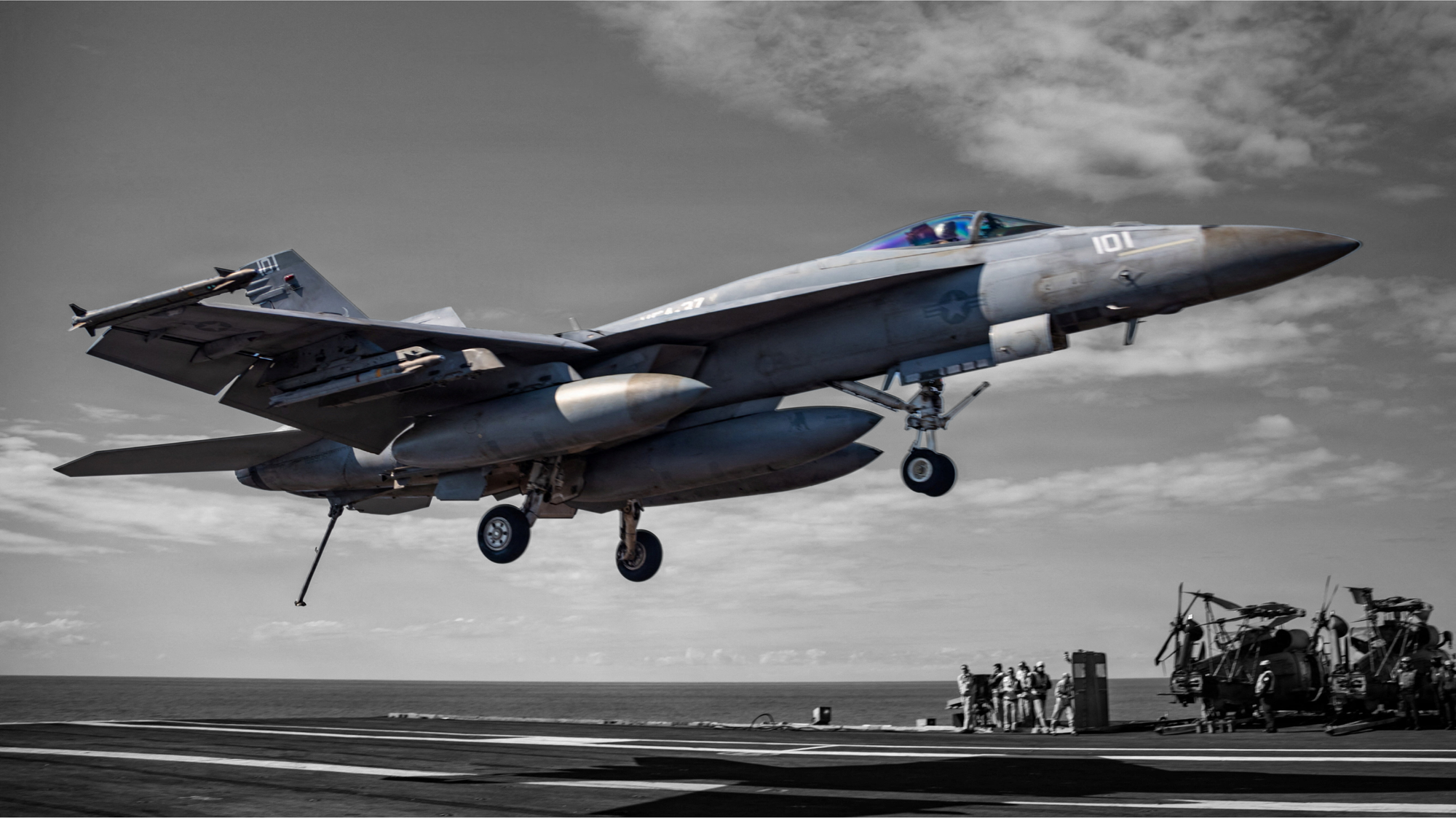
I'm Isaac Saul, and this is Tangle: an independent, nonpartisan, subscriber-supported politics newsletter that summarizes the best arguments from across the political spectrum on the news of the day — then “my take.”
Are you new here? Get free emails to your inbox daily. Would you rather listen? You can find our podcast here.
Today’s read: 15 minutes.
Upcoming livestream.
At 8:00pm ET tonight, Executive Editor Isaac Saul is going live on YouTube with updates on the situation in Iran and to answer questions from the Tangle community about the conflict. You can submit your questions ahead of time here, or tune in to the livestream at 8:00pm and ask in the chat.
Quick hits.
- A gunman killed two people and wounded 14 others at a bar in Austin, Texas. The suspect was shot and killed by police, and he was identified as a naturalized U.S. citizen originally from Senegal. He was reportedly wearing clothes with an Iranian flag design and a sweatshirt that read “Property of Allah” during the shooting. (The shooting)
- Artificial intelligence company OpenAI announced a deal to allow the Pentagon to use its AI models, with restrictions on domestic mass surveillance and fully autonomous weapons. The announcement followed President Trump’s Friday directive to federal agencies to “immediately cease” using AI company Anthropic’s products after the company refused to accept the Pentagon’s terms for use of its models. (The deal)
- The Supreme Court will hear arguments on Monday in a case centering on if and when illegal drug users may possess firearms. (The case)
- A top aide to Ukrainian President Volodymyr Zelensky said that, in recent trilateral talks, Russia agreed to accept U.S. security guarantees for Ukraine as part of a peace deal to end the war. (The comments)
- The Department of Justice charged 30 people in connection with a protest against Immigration and Customs Enforcement at a Minnesota church in January. Nine others, including former CNN anchor Don Lemon, were previously charged. (The charges)
Science Links Mitochondria & Muscle Strength
As we age, our muscles naturally lose mass, strength, and functionality, which can lead to fatigue and weakness beginning as early as our 30s. Recent studies indicate that our mitochondria — the cellular powerhouses that generate 90% of our energy — play a crucial role in this decline, contributing to reduced muscle function as we age.
A new way to support and improve muscle health as we age, Mitopure® by Timeline is clinically shown to meaningfully boost our mitochondrial health to improve muscle strength, without any change in exercise required.
Ready to feel stronger, for longer with Mitopure? Tangle readers can take 30% off their first month with code 30NEWSLETTER for a limited time. While supplies last.
Today’s topic.
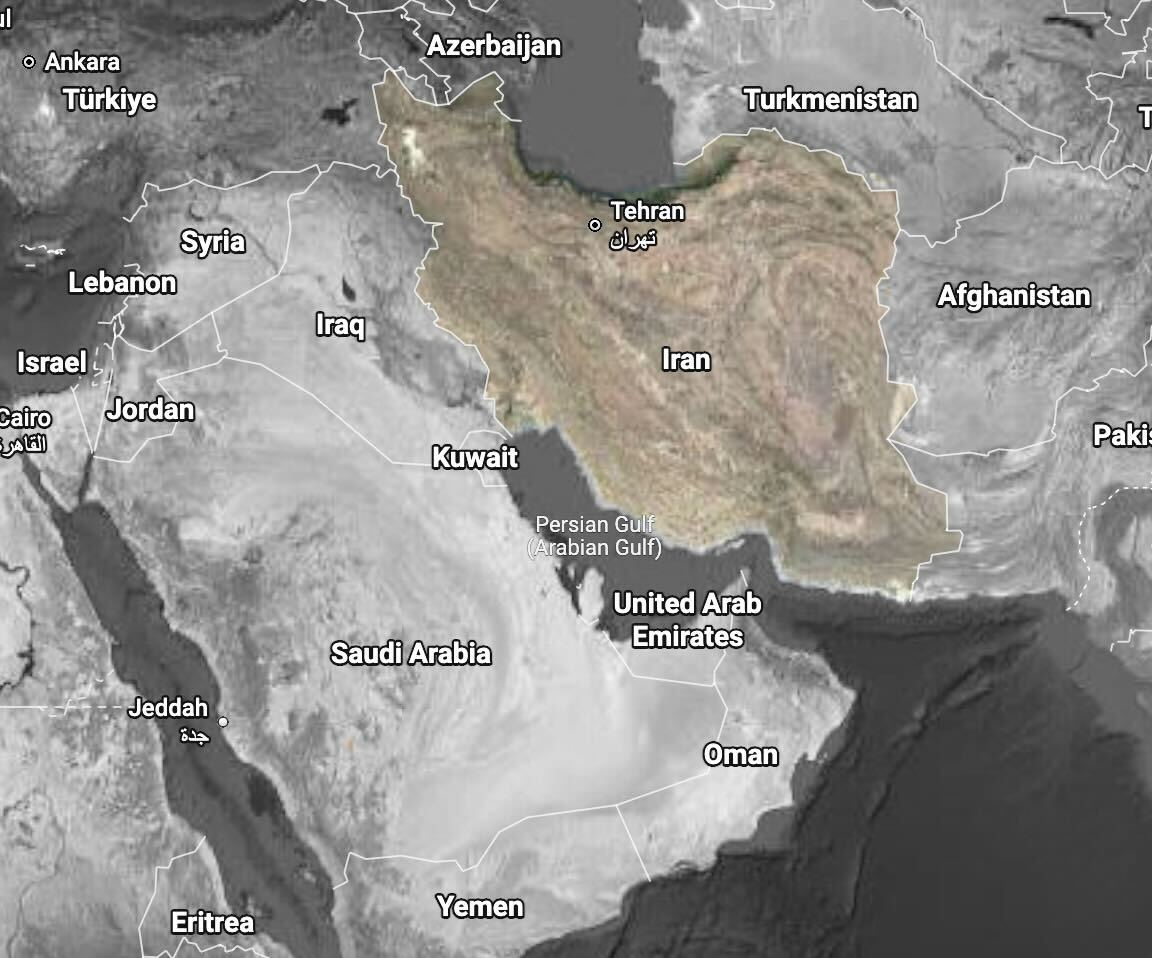
The attack on Iran. On Saturday morning, the United States and Israel carried out airstrikes against Iran, killing Iran’s Supreme Leader Ayatollah Ali Khamenei and other leaders. President Donald Trump said the ongoing mission, called Operation Epic Fury, will target Iran’s nuclear facilities, military capabilities and regime leaders, adding that Iranian citizens should prepare to take over the government. The attack marks the Trump administration’s second operation against Iran, following airstrikes targeting the country’s nuclear facilities in June 2025.
Back up: Tensions between the United States and Iran have been rising in recent months. In December 2025, protests broke out across Iran in response to declining economic conditions in the country, leading to a violent crackdown by the Iranian regime. President Trump vowed to aid protesters but held off on military action. In the weeks since, U.S. and Iranian negotiators have met for several discussions regarding Iran’s nuclear program but failed to reach any agreements. During that time, the U.S. built up a significant military presence in the Middle East in anticipation of an attack.
In a statement on Saturday, President Trump said, “For 47 years, the Iranian regime has chanted ‘Death to America’ and waged an unending campaign of bloodshed and mass murder, targeting the United States, our troops and the innocent people in many, many countries… The United States military is undertaking a massive and ongoing operation to prevent this very wicked, radical dictatorship from threatening America and our core national security interests.”
The Israeli military said it struck approximately 500 targets in Iran as of Saturday evening, with many targeting missile launchers and aerial defense systems. In a national address, Israeli Prime Minister Benjamin Netanyahu said, “Together with the United States, we will strike hard at the terror regime and create conditions that will allow the brave Iranian people to cast off the yoke of this murderous regime.”
On Sunday, the U.S. military said three service members were killed and five seriously wounded in an Iranian attack at a base in Kuwait, the first deaths of U.S. troops in the conflict. On Monday, U.S. Central Command said one of the wounded service members had passed away, bringing the death total to four. Separately, Iranian strikes have killed at least nine people in Israel. Iran also carried out strikes in the United Arab Emirates, Kuwait, Qatar, Bahrain and Oman, killing at least four people and injuring over 100 more. The strikes targeted U.S. military bases in the Persian Gulf countries, though civilian structures were also hit. The foreign ministers of those countries met virtually on Sunday to coordinate a response to the strikes. Meanwhile, Iranian state television said that over 200 people had been killed and approximately 750 injured in U.S. and Israeli assaults.
Ayatollah Khamenei’s death prompted celebrations and public mourning in Iranian cities. Khamenei had served as supreme leader since 1989 and positioned the country as an adversary to the United States and Israel while trying to establish Iran as a nuclear power. On Sunday, the regime named Ayatollah Alireza Arafi to its interim leadership council, which will lead the country until a permanent leader is chosen. The council also includes Iran’s president and head of the judiciary.
In the U.S., many Republican lawmakers praised President Trump’s decision to launch strikes, while a smaller number of Republicans and most Democrats suggested that the president should not have attacked without Congressional authorization. House Minority Leader Hakeem Jeffries (D-NY) said Democrats will attempt to force a vote on a war powers resolution, authored by Reps. Thomas Massie (R-KY) and Ro Khanna (D-CA), to limit Trump’s ability to carry out further military action.
Today, we’ll share views from the right, left, and writers in the Middle East on the strikes. Then, Executive Editor Isaac Saul gives his take.
What the right is saying.
- The right is mixed on the strikes, but many support Trump’s decision to attack.
- Some question the rationale for launching a war.
The Wall Street Journal editorial board wrote “Trump enforces his red line on Iran.”
“The U.S.-Israeli attack on Iran that began Saturday morning is a necessary act of deterrence against a regime that is the world’s foremost promoter of terrorism. It carries risks as all wars do, but it also has the potential to reshape the Middle East for the better and lead to a safer world,” the board said. “Mr. Trump is enforcing the red lines he drew when the regime slaughtered its people as they protested in January. He said he’d come to their aid, and now he has. He also gave Iran’s Supreme Leader, Ayatollah Ali Khamenei, ample chance to strike a deal on nuclear weapons and its missile force, but the ayatollah refused and he was killed in the attack.
“Mr. Trump has unduly criticized his predecessors for ‘forever wars’ in the Middle East, but he understands deterrence. In Yemen, Iran in June, Venezuela and now in Iran again, he has taken action against manifest threats in his second term that Barack Obama and Joe Biden refused to take,” the board wrote. “The larger gamble is regime change, and no one knows if this will happen. Air campaigns alone rarely topple a dictatorship. But if the U.S. and Israel take long enough to kill enough regime leaders, basij militia and Islamic Revolutionary Guard Corps, the chance for an internal coup or popular revolt might open up.”
In The Federalist, John Daniel Davidson said “the administration’s justifications for action against Iran keep shifting.”
“If we ‘totally obliterated’ Iran’s nuclear capabilities just eight months ago, then why are we about to go to war with Iran? After all, the justification for U.S. strikes on Iran has always been that we cannot allow the regime in Tehran to obtain a nuclear weapon… But we were assured, over and over for months, that Iran’s nuclear program had been totally destroyed,” Davidson wrote. “During his State of the Union speech on Tuesday, President Trump accused Iran of restarting its nuclear program and working to build missiles that would ‘soon’ be able to reach the United States. Really? How is that possible if we utterly destroyed their nuclear program in June of last year?”
“What we’re getting from Trump is inconsistent. Last month when Iran was killing protesters, Trump threatened military action against Tehran, suggesting that targeting protesters was a red line. But today the issue seems to be Iran’s supposedly obliterated nuclear program, which is inexplicably once again a major threat to American interests,” Davidson said. “At a certain point, it begins to look like the Trump administration is fishing for a reason to strike Iran.”
What the left is saying.
- Many on the left say Trump’s rationale for war is lacking.
- Others criticize the decision as short-sighted and baseless.
In The Wall Street Journal, Sen. Tim Kaine (D-VA) criticized the strikes as “unwise and unconstitutional.”
“There was no imminent threat from Iran to America sufficient to warrant committing our sons and daughters to another war in the Middle East — especially without the congressional debate and vote that the Constitution requires. The American people don’t want to be dragged into another forever war under false pretenses,” Kaine said. “The U.S. and Iran have both constructed narratives whereby the other is the aggressor in this longstanding conflict. More war isn’t the answer. If it were, the past 70 years would have produced a better outcome than what we see today.”
“Mr. Trump suggests the war is to aid Iranian protesters. This claim is hard to accept from a president who, at the same time, is deporting refugees back to Iran, where they are likely to suffer the persecution he pretends to care about. Mr. Trump suggests the war is about regime change. But he promised to avoid wars for that reason given the history of U.S. disasters in attempting regime change in Vietnam, Iraq, Afghanistan and Libya,” Kaine wrote. “Finally, he suggests that Iran faces war because it interfered in the 2020 presidential election, which he still can’t admit that he lost. Is this a reason to force our sons and daughters into war?”
In Jacobin, Branko Marcetic called Trump the “warmonger-in-chief.”
“Of all the dumb, pointless wars the United States has waged in the Middle East, the one it launched today against Iran may go down as the dumbest and most pointless. This is a war that didn’t need to happen; even the man waging it doesn’t seem to know why he launched it,” Marcetic wrote. “Mere hours before Trump launched it, the foreign minister of Oman… revealed the enormous concessions the Iranians had made in negotiations: not just agreeing to not stockpile uranium, making it impossible to build a bomb, but diluting the uranium it currently holds and agreeing to full verification by International Atomic Energy Agency inspectors.”
“Didn’t matter. Trump spent the week lying that the Iranians were refusing to make that promise, and in one of his last public statements before launching the war, lamented how they had supposedly failed to move far enough in negotiations. Trump had a deal if he wanted it, and one he could have spent the rest of his life bragging was better than Obama’s. But he didn’t want it,” Marcetic said. “So whose interest does this serve? The obvious answer is a war-hungry Israeli leadership increasingly under the sway of a deranged, neo-Biblical fantasy of using the United States to burn the Middle East to the ground and annex whatever’s left.”
What writers in the Middle East are saying.
- Some Middle Eastern writers suggest Khamenei’s killing could galvanize an anti-Western movement within Iran.
- Others criticize Iran’s decision to strike within Gulf countries.
In Al Jazeera, Mohammad Reza Farzanegan wrote about “Iran after Ayatollah Ali Khamenei.”
“The regime in Iran is different in many ways from the ones that collapsed in Afghanistan, Iraq and Libya. The assassination of leader Ayatollah Khamenei may have a profound impact that does not result in state collapse,” Farzanegan said. “Within the symbolic universe of Shia Islam, to which the majority of Iranians belong, Khamenei’s death can be interpreted as the fulfillment of a martyrological script. Death at the hands of perceived enemies of Islam can be framed as redemptive passage rather than defeat; it is not a bitter collapse, as is the case with other Middle Eastern rulers who were ousted or killed. It is instead an idealised closure: the sacralisation of political life through sacrificial death.
“This martyrological framing has the potential to rally a significant portion of the population, including those who were previously critical of the leadership, around a narrative of national defence,” Farzanegan wrote. “By transforming a fallen leader into a martyr of ‘foreign aggression’, the state can trigger a surge of nationalist cohesion and deep-seated resentment towards external intervention, potentially unifying the security forces and traditionalist sectors of society in a way that proponents of regime change did not anticipate.”
In Arab News, Faisal J. Abbas explored “how Tehran lost the Gulf.”
“Iran has unfortunately lost any sympathy or solidarity it could have garnered through its indiscriminate response to the weekend’s attacks carried out by Israel and the US,” Abbas said. “Even Tehran’s closest regional friends, the Omanis, who until a few days ago were negotiating on its behalf and trying to spare it a fatal blow, were attacked by Iran — needless to say, Oman also does not have a US military base. This is a serious escalation that undermines the role of mediators worldwide.”
“It is a shame that it had to come to this, after we all believed that the Kingdom and Iran could have worked together to stabilize the region,” Abbas wrote. “This indiscriminate Iranian aggression against Gulf countries is a major own goal, resulting only in the increased isolation of Tehran at a critical moment. Tehran’s escalation does nothing but confirm the fears of those that see Iran as the main source of danger to the region and its missile program as a permanent symbol of instability.”
My take.
Reminder: “My take” is a section where we give ourselves space to share a personal opinion. If you have feedback, criticism or compliments, don't unsubscribe. Write in by replying to this email, or leave a comment.
- Debating war becomes a lot trickier when it isn’t hypothetical.
- Overthrowing Iran’s regime is a worthy goal, but people across the political spectrum are leery of military involvement.
- Trump needs to have a good plan, but I’m not optimistic that he does.
Executive Editor Isaac Saul: Talking about war is easy when it’s hypothetical. It’s a lot harder when the real thing arrives.
For weeks, the Trump administration has been sending significant military resources to the Middle East. Speculation about the president’s plans ran rampant, but as with Trump’s build-up outside Venezuela, this outcome should have been obvious.
In an eight-minute address to the nation, President Trump justified the decision to dive headfirst into this conflict by declaring that Iran could not be allowed to build a nuclear weapon. This raised the eyebrows of anyone paying attention over the last eight months. In June, the president said the U.S. “utterly destroyed their [Iran’s] nuclear capability.” The White House website still has a page declaring that “Iran’s nuclear facilities have been obliterated — and suggestions otherwise are fake news.” Trump has repeated this claim a half dozen times in recent months. Why are we going to war to stop Iran from getting a nuclear bomb they supposedly can’t build?
Trump also warned Americans in his address that troops may die. Tragically, that prediction didn’t take long to come to fruition. So far, four American troops are confirmed dead, and Trump is warning that more strikes are coming and that more troops may die. The U.S. is not the only place suffering casualties. In Israel, at least nine people have been confirmed killed. Four more people were killed across the UAE, Kuwait, Bahrain, and Oman. And in Iran, hundreds have been confirmed dead, including at least 153 who died in a strike near a Naval base that hit an elementary school, according to Iranian state media.
The cost of war is already adding up in other ways, too: Shipping in and out of the Persian Gulf has shut down, and Red Sea routes are being disrupted. In Dubai, the business capital of the Middle East, buildings have been struck by the Iranian response, and airports are overcrowded as people try to evacuate. U.S. bases in Bahrain and Iraq have both been hit, and a U.S. consulate in Pakistan was stormed by protesters (at least 22 people were killed). Hezbollah announced it was joining the fight for Iran and began firing missiles into Haifa, Israel, from Lebanon (and then said 31 people were killed by Israeli strikes south of Beirut). Rockets are breaking through air defense systems in Tel Aviv and landing perilously close to the Old City in Jerusalem. A friendly fire incident in Kuwait brought down three U.S. F-15 fighter jets (though the airmen survived).
In short: The out-of-control regional war many of us feared last summer when Trump struck Iran’s nuclear facilities appears to have arrived in earnest.
For how long will the president tolerate all this? Major military actions during this administration have conspicuously fallen on days when the markets were closed; these strikes began on a Saturday, the capture of Maduro happened on a Saturday, the June strikes in Iran happened on a Saturday, and the strikes in Nigeria happened on Christmas. Trump is notoriously reactive to market movements, and the price of crude oil rose 7% on Sunday; will market pressure, combined with the deaths of American troops (and the potential for more), move him to deescalate? What if the markets tumble, or if U.S. forces are hit by a particularly deadly attack?
Among conservatives, a philosophical war bubbled to the surface again this weekend. The divide touches all corners of the conservative movement. On one side are those cheering Trump on. Stalwart right-wing publications like National Review and The Wall Street Journal are cautiously making the case that the death of Ayatollah Ali Khamenei is a major victory for the West, and celebrating Trump’s gumption to do the brave and difficult thing. Other, less reasonable people like Mark Levin are urging “no off-ramps” and calling for Trump to “destroy” the “subhuman barbarians” in Iran.
On the other is an anti-war isolationist wing who feels betrayed. It consists of mainstream conservatives, from center-right moderates like Saager Enjeti, who called this the most “profound campaign betrayal in modern US history,” to more MAGA right-wing voices like Tucker Carlson, who have been warning about this conflict for months. Less credible, but still influential figures like Nick Fuentes, are now urging people to vote for Democrats in the midterms.
Democrats, obviously, are criticizing Trump. But their reasons for doing so seem to differ. Some attack him for not seeking Congressional authority but avoid criticizing the effort to take out Iran’s regime; others view the whole thing as a major mishap, both the “what” and the “how.”
Since protests broke out in December, there has been a robust debate (that we participated in) about whether or not the U.S. should, or would, strike Iran. But that debate is now in the past. We did it. So… now what? Of course, I’m happy to see Ayatollah Ali Khamenei go. Iran’s regime is despotic and oppressive, and I support efforts to “free” the Iranian people — but that thought leaves out a lot of detail. The U.S.-Israel military alliance will, at some point, overwhelm and overpower Iran, and I’m once again shocked and morbidly impressed by the capabilities of the U.S. and Israeli militaries. We will “win.” Obviously. But this is all the easy stuff to say — it’s dunking on a toddler, it’s close to meaningless.
The harder and more important question is what happens now? What will the war cost, and what will rise in the vacuum? A debate about Congressional war powers feels archaic, if not borderline parody at this point. Congress has surrendered those powers to the executive branch over and over for years on end, showing no interest in reclaiming them. The Middle East has already been thrown into turmoil, from Iraq, Kuwait and Bahrain to Israel, the UAE, and even Oman. Hundreds of thousands of armed personnel operate in Iran and soon may be untethered from any central command structure. Pro-democracy and pro-Islamist camps, each divided among themselves in their own rights, will be fighting it out in the streets. In the West, we imagine every single living Iranian hating this regime, but that’s a delusion; many celebrated the death of the ayatollah, yes, but thousands poured into the streets to mourn Khamenei’s death. All this is ripe for long-term sectarian violence in Iran and long-term destabilization in the region.
Like Sen. Tim Kaine (D-VA) (under “What the left is saying”), I have a hard time stepping back and looking at the history of Iran-U.S. relations and imagining that this action will somehow bring peace. For decades, we’ve been attacking each other in sporadic proxy wars, each framing the other as the aggressor, each setting off a new round of violence. The Trump administration says it wants to bring about a new regime, but who? When? How?
They don’t seem to know. Trump seems to be stress-testing arguments, giving different explanations to different news organizations about what will happen next. He told The Washington Post we were aiming for “freedom for the people” of Iran. Axios was told the war could end in “two or three days.” The New York Times was told “four to five weeks” with “three very good choices” who may take control. That was on Sunday; this morning, I started my day reading a stunning interview with ABC’s Jonathan Karl, where Trump conceded that all three of the people he thought might succeed Khamenei had actually been killed in the initial strike.
Meanwhile, U.S. air defense stockpiles are being stressed to defend against the barrage of cheap drones Iran is firing across the region, just as Joint Chiefs Chairman Gen. Dan Caine warned the White House last week. Iran seems to have miscalculated by attacking other Arab nations in the region, hoping that would inflict a cost that would stop the U.S.–Israeli barrage but is instead turning their neighbors against them. After cutting funding for Voice of America, the U.S. is now having a harder time reaching the Iranian people with the messages they want to disseminate. And everyone who warned that killing the Iran nuclear deal would inevitably lead to war is feeling vindicated right now.
In April of last year, I said I was getting nervous about a war with Iran. In June, I said I was not optimistic, but hopeful, for peace in the region after the joint U.S.–Israel strikes. In January, I expressed outright concern and predicted Trump would attack Iran, and in February, Senior Editor Will Kaback began sharing that concern. It’s surreal to actually be here now, with all-out fighting, dead U.S. soldiers, and a region in turmoil. One would hope we have a plan — an off-ramp, a future for Iran, a way out — but the honest truth is that it’s not clear at all to me that we do. Now we wait, and pray for the best.
Take the survey: What do you think about going to war with Iran? Let us know.
Disagree? That's okay. Our opinion is just one of many. Write in and let us know why, and we'll consider publishing your feedback.
6 Reasons to Take Mitopure® for Longevity.
Supporting cellular energy, muscle strength, and cellular renewal.* Backed by 15+ years of research and gold-standard clinical trials, with benefits that begin in about four months and build over time. Curious how it works — and whether the science holds up? Read more and decide for yourself. Tangle readers get 30% off their first month.
Disclosure: *500mg Mitopure® have been shown to (1) induce gene expression related to mitochondria function and metabolism and (2) increase the strength of the hamstring leg muscle in measures of knee extension and flexion after 4 months in overweight 40-65 year olds.
Your questions, answered.
We're skipping the reader question today to give our main story some extra space. Want to have a question answered in the newsletter? You can reply to this email (it goes straight to our inbox) or fill out this form.
Under the radar.
On Friday, a Federal Emergency Management Agency (FEMA) spokesperson said the agency disbursed roughly half of its disaster relief fund — $5 billion — over the past week, warning of “dire consequences” if the Department of Homeland Security (DHS) shutdown continues. While DHS Secretary Kristi Noem previously said that FEMA would scale back to only “bare-minimum, life-saving operations” during the shutdown (FEMA is an agency within DHS), the funds sent out last week went toward a range of recovery projects, some for disasters that occurred over 15 years ago. Some Democrats have proposed funding FEMA and other non-immigration agencies within DHS amid the shutdown, but those negotiations have so far stalled. Politico has the story.
Numbers.
- 36. The number of years Ayatollah Ali Khamenei served as Iran’s supreme leader before his death on Saturday.
- 48. The number of senior members of the Islamic Republic’s regime killed in U.S. and Israeli airstrikes, according to President Trump.
- 20%. The approximate percentage of Iranians who supported the Islamic Republic remaining in power in a June 2024 Group for Analyzing and Measuring Attitudes in Iran poll.
- 40%. The percentage of Iranians who said regime change was a precondition for reform in the country.
- 27% and 43%. The percentage of U.S. adults who approve and disapprove, respectively, of U.S. military strikes against Iran, according to a Reuters/Ipsos poll conducted on February 28 and March 1.
- 7%, 55%, and 19%. The percentage of Democrats, Republicans and independents, respectively, who approve of U.S. strikes against Iran.
The extras.
- One year ago today we published a Friday edition about Tangle’s mission and values.
- The most clicked link in Thursday’s newsletter was once again the Supreme Court’s ruling about the Postal Service.
- Nothing to do with politics: A simple game to see how well you can recall colors.
- Thursday’s survey: 2,900 readers responded to our multi-select survey on banning stock trading with 87% supporting a ban. “I’d consider a raise conditional on reform, but 300,000 is just too much,” one respondent said. “Being in Congress should itself be incentive enough. To take a direct role in the American experiment. Anyone complaining about $174,000/year shouldn’t say a word about the ‘working man,’” said another.

Have a nice day.
As part of Florida’s celebration of the 250th anniversary of the U.S., the state is erecting statues of the founding fathers and other prominent figures in American history. On February 25, Gov. Ron DeSantis (R) unveiled a statue and plaque in St. Augustine’s Plaza de la Constitución commemorating a speech prominent abolitionist Frederick Douglass gave in 1889. At the ceremony, DeSantis said, “His speech here… [was] very impactful on the community at the time, and obviously, he was fighting for liberty; he was fighting for the principles that we’re celebrating on July 4th, 250 years later.” News4JAX has the story.

Member comments