
I'm Isaac Saul, and this is Tangle: an independent, nonpartisan, subscriber-supported politics newsletter that summarizes the best arguments from across the political spectrum on the news of the day — then “my take.”
Are you new here? Get free emails to your inbox daily. Would you rather listen? You can find our podcast here.
Today’s read: 15 minutes.
A look into college readiness.
In a recent study of English majors at two Kansas universities, a shockingly low number of them were found to be comprehending their assigned texts — even when they were allowed to look up unfamiliar terms.
“I wish I could tell you I had been shocked at these results, or that I thought the study was a fluke,” Tangle Associate Editor Audrey Moorehead writes in tomorrow’s newsletter. “Instead, they only confirmed what I had already seen among my own peers in high school and college: Young Americans aren’t comprehending the things they read.”
Quick hits.
- Turkey’s Defense Ministry said that North Atlantic Treaty Organization defense systems intercepted an Iranian ballistic missile headed toward Turkey’s airspace. (The intercept)
- Sen. Steve Daines (R-MT) announced he will not run for reelection and retire at the end of his current term. He is the sixth sitting Republican senator not to seek reelection in 2026. (The announcement)
- The House Oversight and Government Reform Committee voted 24–19 to subpoena Attorney General Pam Bondi, demanding she appear to testify as part of the committee’s investigation into files related to convicted sex offender Jeffrey Epstein. (The subpoena)
- The House Ethics Committee launched an investigation into allegations of sexual misconduct against Rep. Tony Gonzales (R-TX). On Wednesday, Gonzales confirmed that he had an affair with a staffer, who later committed suicide, calling the affair “a lapse in judgment.” (The probe)
- A federal judge ruled that companies that paid tariffs levied under the International Emergency Economic Powers Act (IEEPA) were due refunds from the federal government, citing the Supreme Court’s ruling in February striking down the IEEPA tariffs. (The ruling)
Why does ChatGPT know THAT about you? Erase it.
A quick search might reveal more than you’d expect: your address, phone number, mortgage details — even your family members. Creepy, right?
The real problem? It’s not just marketers poking around. Identity thieves, scammy data brokers, and shady AI scrapers are all in the mix. Even ChatGPT knows everything about you.
That’s where Incogni comes in. Their Unlimited Plan scrubs your sensitive info from data broker sites so it doesn’t show up in Google searches or AI chat responses.
Fast, affordable, and automatic. No tedious forms. No awkward calls. Just fewer strangers knowing your business.
Use code TANGLE for an exclusive 55% off. Because privacy shouldn’t be optional.
Today’s topic.
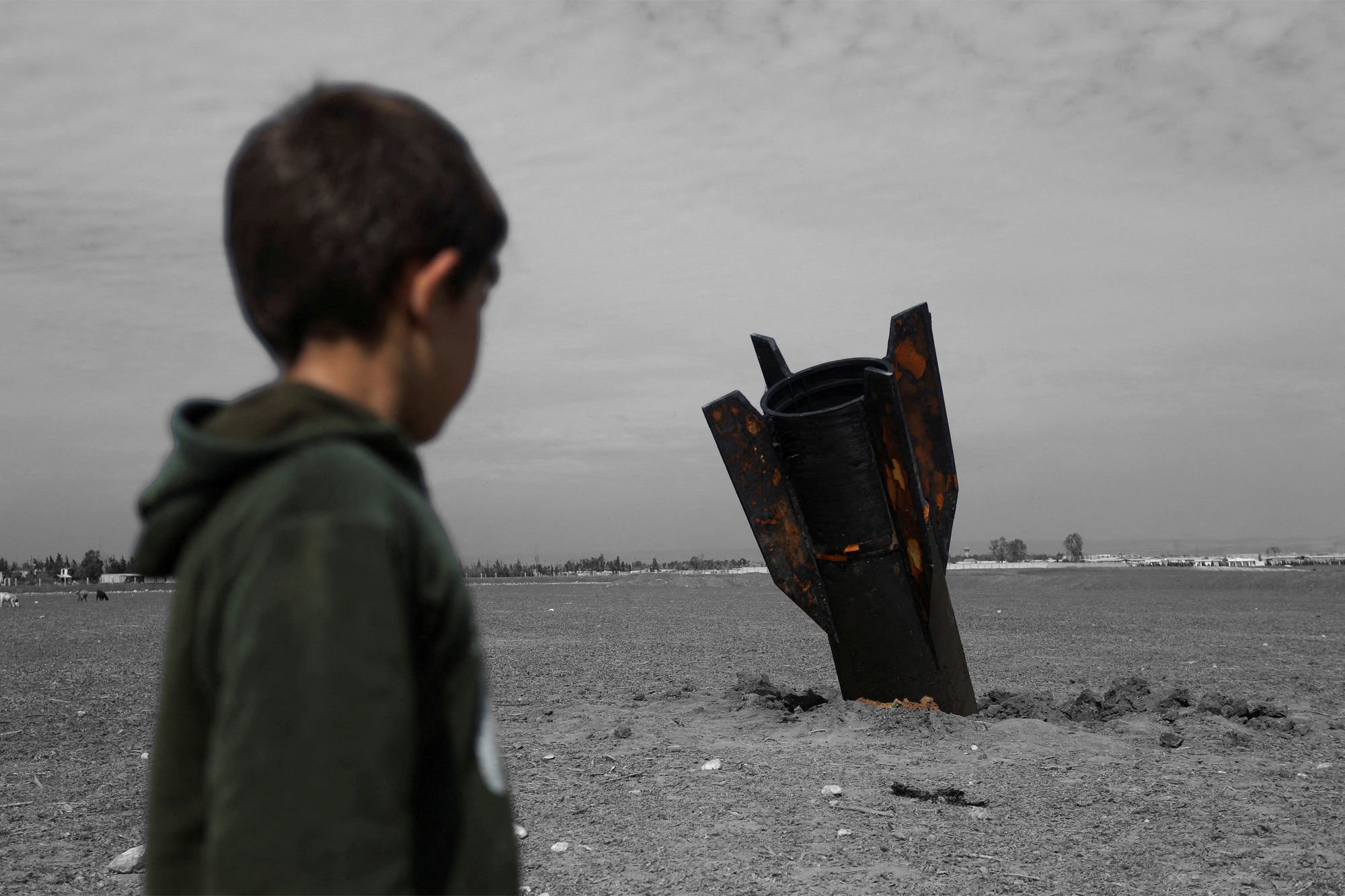
The war in Iran. On Thursday, the conflict in Iran, which began over the weekend with U.S. and Israeli airstrikes that resulted in the death of Supreme Leader Ayatollah Ali Khamenei, some members of his family, and several other top Iranian officials, continued into a sixth day. Since the initial strikes on Saturday, Israel has ramped up its attacks, with heavy strikes against Hezbollah in Lebanon and Iranian military infrastructure in Tehran. As part of Operation Epic Fury, the U.S. military has struck nearly 2,000 targets in Iran and “struck or sunk” over 20 Iranian ships, according to U.S. Central Command. According to human rights group HRANA, more than 1,000 civilians — including 181 children under the age of ten — have died so far in the conflict.
Iran has retaliated with its own attacks, launching airstrikes against Israel and targeting U.S. bases and other sites across several Gulf nations, including Iraq, Saudi Arabia, the United Arab Emirates, Bahrain, Kuwait, Oman, Qatar, and Jordan.
The fighting has displaced thousands of civilians, disrupted international shipping routes, and impacted market activity. U.S. crude oil prices soared on Tuesday, and then eased after President Trump announced a plan to escort and insure tankers traveling through the Strait of Hormuz. Additionally, following drone strikes or attempted strikes on U.S. diplomatic facilities, the State Department ordered nonessential personnel and their families to depart from several posts in the region and urged American citizens to immediately leave countries across the region.
The White House has framed the operation as both an effort to degrade Iranian nuclear capability and end the threat posed by the country’s repressive regime. President Donald Trump said that many of the replacement leaders he had in mind had been killed in the strikes, and when asked on Tuesday about U.S.-based opposition leader Reza Pahlavi taking over, he said, “Somebody from within, maybe, would be more appropriate.” On Tuesday, senior clerics responsible for choosing Khamenei’s successor reportedly named Khamenei’s eldest son, Mojtaba, as their top pick for the country’s next Supreme Leader. As of Thursday morning, no successor has been officially announced.
Several U.S. officials have signaled their intent to continue attacks in Iran. At a Pentagon briefing on Wednesday morning, Defense Secretary Pete Hegseth said the U.S. military is “accelerating, not decelerating.” Additionally on Wednesday, Joint Chiefs Chairman Gen. Dan Caine said the U.S. will continue striking Iran and expand its attacks further into the country to “creat[e] additional freedom of maneuver for US forces.” He added that Iran’s missile launches have dropped sharply since fighting began, down 86% from Saturday and and reduced by an additional 23% in the past 24 hours.
On Wednesday, the Senate voted 47–53 to reject a war powers resolution that would have required U.S. forces to withdraw from the operation until Congress granted approval. Sens. John Fetterman (D-PA) and Rand Paul (R-KY) were the only senators to break with their parties in the vote. The House is expected to vote on a similar resolution on Thursday.
Below, we’ll share perspectives from the left and right on the ongoing conflict. Then, Managing Editor Ari Weitzman offers his take.
What the left is saying.
- Many on the left ask about Trump’s strategy after the initial strikes.
- Some criticize the administration for seemingly allowing Israel to dictate the terms of the conflict.
- Others say Congress must rein in the president’s war powers.
The Bloomberg editorial board wrote “Iran strikes won’t succeed without a real strategy.”
“The airstrikes now raining down on Iran, a joint US-Israeli effort that quickly eliminated Supreme Leader Ayatollah Ali Khamenei and other high-ranking officials, have no doubt been well-planned. Yet it remains entirely unclear why they were necessary,” the board said. “After last year’s airstrikes, the regime is further from a nuclear bomb than it’s been in years, and the Pentagon estimates it couldn’t build an arsenal of missiles capable of reaching the US for a decade. No imminent threat required such force.”
“There’s virtually no evidence that airstrikes alone can topple a regime as entrenched as Iran’s. Even if the US and Israel end operations in a few days without suffering major casualties, most retaliatory strikes are intercepted, and Iranian military and nuclear capabilities are severely degraded, hard-liners from the Islamic Revolutionary Guard Corps would still have a far better chance of seizing power than unarmed and leaderless civilians,” the board wrote. “Without a clearer plan for what comes next… the US risks an outcome that will be worse for Iranians and quite likely for Americans, too.”
In The Nation, Jack Mirkinson said “the Iran war could be catastrophic for the US-Israel alliance. Good.”
“Trump’s ever-shifting justifications for his war on Iran are breathtaking. Every few hours seems to bring a new explanation for why the United States and Israel decided that it was a good time to launch an illegal, unprovoked, open-ended assault on another country,” Mirkinson wrote. “There’s just one problem: other people are also talking about why we’re suddenly at war. And a lot of them are giving the same reason: because Israel wanted it. That has the potential to erode both the US-Israeli relationship and Israel’s already-shaky standing with the American people.”
“It is, for want of a better phrase, an extremely bad look for top US government officials to be sending the message that the reason this country finds itself plunged into a bloody, spiraling conflict with no clear justification, no legal authority, and no end in sight is because a different country had a war itch it needed to scratch,” Mirkinson said. “The implication that Israel is the driving force behind a deeply unpopular war with Iran… only bolsters the truth that more and more people have come to understand over the past two years of genocide and repression: that, time and again, the United States does terrible things, both domestically and internationally, in service of its alliance with Israel.”
In Fox News, Rep. Ro Khanna (D-CA) argued “Congress must reclaim war powers from an out-of-control Trump over Iran.”
“As James Madison wrote, ‘War is in fact the true nurse of executive aggrandizement.’ That’s why they entrusted the authority over war and peace ‘fully and exclusively’ to the people’s representatives in Congress — not the president,” Khanna wrote. “Trump once seemed to understand this. In his 2024 election night victory speech, Trump promised, ‘I’m not going to start a war. I’m going to stop wars.’... The administration is [now] promoting a new set of lies, including the false claim that U.S.-Israeli airstrikes were actually preemptive.”
“The longer this war drags on, the more dangerous it becomes. Iran is a complex society of 90 million people — more than three times larger than Iraq in area and more than triple its population when we invaded Iraq in 2003. Top U.S. military advisers warned that with limited stocks of air defense systems, American and Israeli forces will be forced to absorb incoming fire from Iran’s missile arsenal in the coming days and weeks,” Khanna said. “After decades of wars launched by presidents of both parties, it’s time for Congress to build a new bipartisan majority: Congress must reclaim these war authorities from an out-of-control Executive Branch.”
What the right is saying.
- Many on the right say the conflict is progressing favorably for the U.S. so far.
- Some suggest the risk of a prolonged, costly war is growing.
- Others argue Trump acted within his authority in launching the operation.
In The Wall Street Journal, Gerard Baker made “the case for cautious optimism about Trump’s war in Iran.”
“Few regimes have been undermined in the way Tehran’s has in the past two years,” Baker wrote. “It has just witnessed the awesome combination of a U.S.-Israeli intelligence and military capability pulverize its supreme leader of almost four decades and much of his leadership team. It has seen the countries it vowed to destroy rain down fire and destruction on its military facilities for a year, its top military commanders taken out with breathtaking precision, its conventional and nuclear facilities badly damaged, its air defenses essentially destroyed. It has watched as its close ally in Syria was overthrown in a civil war, its proxies in Gaza and Lebanon decimated.”
“So if regime change doesn’t come now, what kind of regime survives? Leaderless, impoverished, isolated, besieged, mostly disarmed, is Iran likely to be stronger after being on the receiving end of a campaign from the most technologically sophisticated and best-equipped militaries in the world?” Baker asked. “There are risks, and news of the first U.S. casualties reminds us that the costs are dear. But for an opportunistic president, there may never be a better opportunity.”
In The American Conservative, Andrew Day wrote “in Iran, Trump’s luck runs out.”
“In his second term, Trump’s cabinet members and enthusiastic supporters have tended to see him as a quasi-mystical being whose political and financial success bespeaks a preternatural ability to rack up victories and defeat enemies. The perception intensified following the successful military raid in Venezuela this January,” Day said. “Evidently, Trump still feels he’s got the Midas touch, that he’s a geopolitical savant who can eliminate the dastardly Islamic Republic and bring ‘freedom’ to Iranians — his professed top priority in launching the war.”
“But the results of the combat operations thus far don’t inspire confidence that a golden age is dawning in the Middle East. Indeed, after the joint U.S.–Israeli attack began early Saturday, Tehran started blowing up the Middle East, hitting U.S. bases as well as civilian and commercial targets. In airports and city centers and energy markets, mayhem ensued,” Day wrote. “Knocking the bejesus out of Iran is easy, and no one doubts the U.S. possesses enough air and sea power to escalate, but military action needs to serve a coherent political strategy — and so far, the administration hasn’t shown any signs of having formulated one.”
In National Review, John Yoo said “Congress had plenty of opportunities to stop the Iran strikes.”
“Congress has had every opportunity to stop Trump’s Iran policy. Trump had not only telegraphed for weeks that these attacks were in the offing, but he had already launched attacks on Iran’s nuclear facilities in June,” Yoo wrote. “The controversy over ICE operations in Minneapolis shows that Congress knows full well how to stop presidential initiatives — at least when it really wishes to do so. Though only a minority in the House and Senate, Democrats prevented any appropriations from passing — effectively shutting down much of the government.”
“Operation Epic Fury rests on the same core presidential authority over national security at a time when Iran’s nuclear ambitions, ballistic missile development, and support for proxies were converging — and when the window of opportunity was closing. Faced with those circumstances, Trump as commander in chief determined there was no responsible alternative to the use of force,” Yoo said. “If Congress disagrees, it has the tools that the Framers gave it: the power of the purse, the power to impeach, and the power to appeal to the American people. But the Constitution does not require the president to wait for Congress before acting against a foreign threat.”
My take.
Reminder: “My take” is a section where we give ourselves space to share a personal opinion. If you have feedback, criticism or compliments, don't unsubscribe. Write in by replying to this email, or leave a comment.
- The U.S. military is accomplishing its goals efficiently, but its goals are not clearly defined — and its efforts are costly and may be illegal.
- Most of the writers who are shaping public opinion about the war effort have never served.
- I deeply worry that too many Americans are completely disconnected from this fight.
Managing Editor Ari Weitzman: Taken together, the opinion pages of news outlets across the political spectrum are telling the story of this war well.
As The Wall Street Journal editorial board wrote, the war (and yes, despite the lack of Congressional authority, if we’re deploying carrier groups and exchanging fire for a full week, then you can call it a war) has been remarkably successful so far. Ayatollah Ali Khamenei and his top generals have been killed, the regime that has allied itself with Russia and China and chanted “death to America” for years is getting punched in the mouth, and the U.S. has suffered relatively few casualties. As PJ Media’s David Manney wrote, Iran’s missile stores are being rapidly depleted — and despite what you may have been led to believe by critics in the media (like Isaac and me), the latest polling suggests between 41% and 50% of Americans approve of Operation Epic Fury, a rating higher than most federal departments.
And yet, even as the military takes out Iranian assets, the administration’s goals have been mercurial. As Reason’s Matthew Petti wrote, the United States says it is going into Iran to destroy a nuclear weapons system (that was already destroyed), but also to quickly decapitate a despotic regime (which has already been re-capitated), but also to ensure the freedom of the Iranian people (something the military cannot deliver through bombs alone). Depending on when and whom you ask, you get different answers.
Already, six service members stationed in Kuwait have died. And as Vox’s Eric Levitz wrote, the war is going to incur additional costs on top of Iranian and American lives — the price of gasoline in the U.S. is rising, and U.S. allies in the region are being hit. Furthermore, as The American Prospect’s Ryan Cooper wrote, the war costs actual dollars to wage, too — by some estimates, the first 24 hours cost $779 million. And as The Dispatch’s Jonathan Ruhe opined, the worst is yet to come; you can expect Iran to broaden the fight regionally in an effort to expend U.S. and Israeli weaponry (and for the trillion-dollar U.S. military to ask for more money).
The Atlantic’s Adam Serwer rightly noted that only Congress has the power to declare war, not the president. But, as CNN’s Zachary Wolf reminded us, presidents have been routinely waging “military actions” for decades; and as National Review’s John Yoo affirmed, members of Congress have been all too willing to allow the president to do their jobs for them.
Taken together, these writers weave a convincing narrative on a complicated issue: The U.S. military appears to be accomplishing its goals with breathtaking efficiency, but its goals are not clearly defined to the public, and its efforts are quite costly — perhaps even illegal. However, this narrative as I told it feels uncomfortably incomplete.
I name-dropped eight people above. Those eight people are intelligent and represent views from across the political spectrum, all with sincere convictions and beliefs they came to honestly — yet as far as I can tell none of them have served any time in the U.S. military. Neither have I, and neither has anybody on Tangle’s staff. And that’s not a poor sample, either. While veterans and service members comprise roughly 6% of the general population, only 2% of media workers are military veterans.
What’s more, these views only represent one side of the conflict. Iran is an enormous and diverse country of 93 million people. Some people cheered in the streets when Ayatollah Ali Khamenei was killed, while others mourned. Some are eager to start a new chapter, others are trepidatious, and others terrified. And that is only part of the spectrum of reactions coming from the residents of a country where this war is actually being waged, very far from American shores.
I can’t help but feel deeply unsettled by how the opinions that are shaping public sentiment on this war are so far removed from those tasked with carrying it out (or, for that matter, the Iranian civilians on the receiving end of our firepower). So I have to ask: What do those who have actually served in the armed forces think?
A recent Fox News poll showed that 59% of veterans support the war in Iran, a number very similar to the group’s job approval for President Trump. However, only 37% of veterans said Trump’s actions in Iran have made the United States safer, compared to 44% who said they have made the country less safe.
It’s fair to say that veterans have mixed feelings. “Even if there was a noble mission to seek justice for 9/11 in Afghanistan, the protracted conflict afterwards with mission creep or the lack of weapons of mass destruction in Iraq and the subsequent loss of lives and destruction has caused a lot of moral injury and PTSD amongst the veterans’ community,” Alex Plitsas, a former Army staff sergeant who deployed to Iraq in 2008, told Task & Purpose. “But at the same time, Iran again has been a party to this conflict over the last 25 years, albeit in the background, providing lethal aid and support to a number of non-state actors who were engaged in fighting against the United States and responsible for hundreds of U.S. deaths.”
Some veterans also seem to hold suspicion about the failure to produce a declaration of war from Congress, or even so much as an authorization for use of military force, leading to deep-seated fears that another forever war could be on the horizon. “If force is used, it must be tied to a strategy that protects American service members, advances our core national interests, and avoids another open-ended conflict,” said John Vick, executive director of the conservative veterans group Concerned Veterans for America. “It is essential the elected leaders in Washington debate and vote on these actions in line with the Constitution.”
As members of the media, we get to ask pointed questions about military actions — it’s our job to ask — but in this era, we are afforded an almost incomprehensible luxury to work unimpeded by the effects of those actions. We take for granted that our country can just decide to drop bombs on another country without an industrial overhaul, a draft to bring more service members to action, or a call to the populace to tighten our belts and pitch in — a societal anomaly over the sweep of history.
Admiral Brad Cooper, commander of U.S. Central Command, gave a summary two days ago on Operation Epic Fury in Iran. I highly recommend watching his five-minute update, which is informative and professional. According to Admiral Cooper, 17 Iranian ships had been destroyed (that number may now be over 20), including every Iranian ship in the Persian Gulf. Cooper says that a total of 50,000 troops are supporting the effort, and — it bears repeating — six service members have already died in Kuwait.
50,000 troops, six dead. By comparison, 73,000 U.S. troops stormed the beaches of Normandy on June 6, 1944; 2,501 were killed on that day, which drew the eyes of the world to Northern France. Today, the U.S. military can deploy a force similar in size and most of the country will barely flinch.
I feel deeply conflicted about this dynamic. On the one hand, we civilians are incredibly blessed to be shielded from the bloody side of geopolitics thanks to the service of our military personnel. That speaks to the decades of development and excellence of our armed forces, and we should be extremely grateful for that. But on the other hand, I think it’s far too easy to feel disconnected from that service — and that disconnect scares me. What decisions will our government make when most of the country is so well insulated from the impacts?
As this war continues, it will be tempting to think of its costs in terms of economic disruption, oil prices, and approval ratings. In reality, half the world away, a country with a population of 93 million will have its fate impacted by how we deploy a standing army of roughly 1.3 million people. The most immediate costs will be paid by the hundreds of millions of people living in the Middle East, and they will be felt and witnessed by an even smaller contingent of several thousand uniformed personnel.
I worry that, as a voting public, we’re trying to understand a war that we can’t really feel. I worry that we can only interpret major events through a partisan lens and will only react to matters of life and death and global stability as if we’re watching characters in a TV show. And more than anything, I worry that the vast majority of the country composed of civilians will not be able to appreciate the actual, on-the-ground costs in blood and lives.
Take the survey: How has your life been impacted since the U.S. launched a direct attack on Iran? Let us know.
Disagree? That's okay. Our opinion is just one of many. Write in and let us know why, and we'll consider publishing your feedback.
Further viewing.
In yesterday’s Suspension of the Rules podcast, Isaac, Ari and Kmele discuss the argument for the Iran war, the primary results in Texas, and the “Good guy of the week” — Sen. John Kennedy. You can watch the whole thing on YouTube.
Your questions, answered.
Q: In light of the attack on Iran — what is Congress doing about the shutdown? I feel like this has been forgotten news even though it impacts many people.
— Kathy from Blanco, TX
Tangle: As a quick reminder, the Department of Homeland Security (DHS) is partially shut down as Congress debates its funding levels for the next fiscal year. DHS contains the immigration enforcement agencies Customs and Border Protection (CBP) and Immigration and Customs Enforcement (ICE), and Democrats are pushing for reforms to those agencies’ activities before funding the department.
However, both agencies received specific funding in last year’s One Big Beautiful Bill Act and are still operational, while the rest of DHS — which includes the Federal Emergency Management Agency (FEMA), the U.S. Coast Guard (USCG), and the Transportation Security Administration (TSA) — is facing difficulties. FEMA’s operational budget is becoming stressed, civilians at the USCG are receiving delayed pay, and TSA agents will miss their first round of paychecks this week.
Two developments show how far apart Republicans and Democrats in the Senate are from reaching a deal to end the DHS shutdown. First, Republicans have advanced a vote on the funding package that Democrats already denied last month. Second, Democrats continue to say they won’t relent on their demands to make funding the department contingent on ICE and CBP reforms.
However, two other developments show that Democrats might be getting more leverage for a deal. First, DHS Secretary Kristi Noem faced stern questions from the Senate Judiciary Committee on Tuesday about DHS’s enforcement in Minnesota, showing that some Republicans — notably Sens. John Kennedy (LA) and Thom Tillis (NC) — were losing patience with Noem’s leadership. Second, Senate Majority Leader John Thune (R-SD) indicated that Republicans might be willing to reallocate some funding from ICE and CBP during the shutdown to continue to pay for operations across the rest of the department.
All together, the Senate doesn’t appear ready to fund DHS anytime in the next week — but agreements over priorities could provide common ground to pass funding that both sides could agree to.
Want to have a question answered in the newsletter? You can reply to this email (it goes straight to our inbox) or fill out this form.
Under the radar.
On Tuesday, a jury in Georgia found the father of a mass shooter guilty on 27 charges, including second-degree murder. Colin Gray’s son allegedly killed two of his classmates and two teachers in a shooting at Apalachee High School in September 2024. In bringing charges against the suspect’s father, prosecutors cited the case of James and Jennifer Crumbley, who were convicted of involuntary manslaughter in connection to a school shooting carried out by their son in 2021. Barrow County District Attorney Brad Smith said Colin Gray’s wife raised the Crumbley case with her husband before the shooting, advising him to take away their son’s guns. Gray now faces up to 243 years in prison. NBC News has the story.
AI Already Knows Your Address, Phone Number, and More
That data didn't come from nowhere — brokers sold it, scrapers grabbed it, and now it trains models like ChatGPT.
Incogni's Unlimited Plan automatically removes your info from broker sites, keeping it out of search results and AI responses. No forms, no calls.
Numbers.
- 11. The number of times Congress has declared war in U.S. history.
- 1812. The year that Congress first declared war (against Great Britain).
- 1942. The year that Congress most recently declared war (against Bulgaria, Hungary, and Romania).
- $630 million. The estimated cost of the U.S. military buildup in the Middle East prior to the start of its operation against Iran, according to former Pentagon budget analyst Elaine McCusker.
- $88,000. The approximate cost per hour to operate B-2 bombers.
- $4 million and $13 million. The approximate cost per shot of Patriot and THAAD missile interceptors, respectively.
The extras.
- One year ago today we wrote about Trump’s address to Congress.
- The most clicked link in yesterday’s newsletter was our video about the measles outbreaks.
- Nothing to do with politics: Could you be related to royalty?
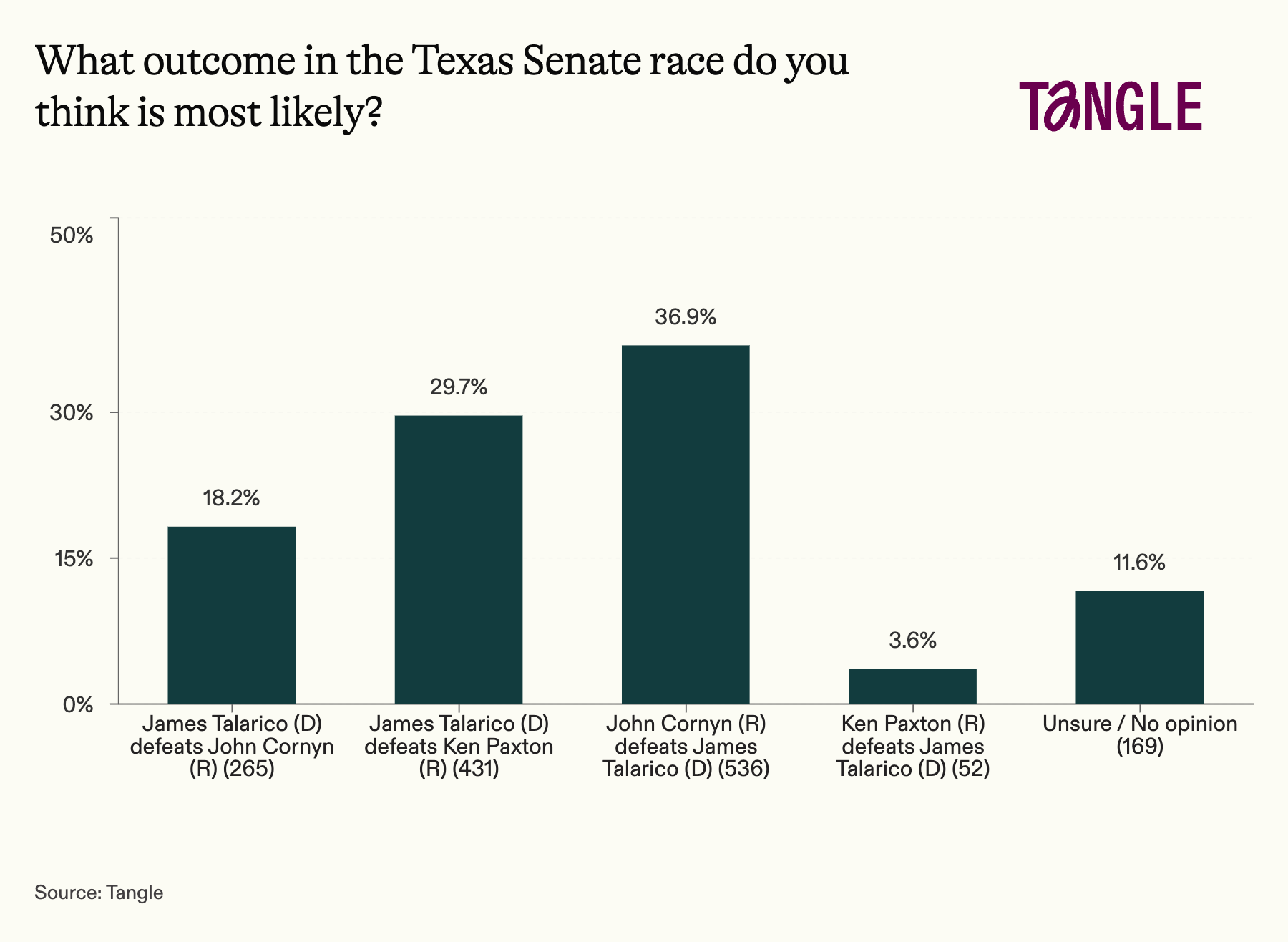
- Yesterday’s survey: 1,453 readers responded to our survey on the upcoming Senate race in Texas with 37% predicting James Cornyn to beat James Talarico. “I refuse to get baited into thinking a Democrat can win in any Texas state-wide election,” one respondent said. “It’s too soon to tell. With the daily drama that occurs in our government, anything could happen!” said another.
Have a nice day.
Floreana Island in Ecuador’s Galápagos archipelago was once home to thousands of giant tortoises, but the last of the species were removed from the island roughly 150 years ago. In February, they made a triumphant return, with 158 juvenile tortoises released back into the habitat. The reintroduction plan will release 700 total giant tortoises over time, who will join the abundant plant and animal species on the island. The Associated Press has the story.

Member comments