
I'm Isaac Saul, and this is Tangle: an independent, nonpartisan, subscriber-supported politics newsletter that summarizes the best arguments from across the political spectrum on the news of the day — then “my take.”
Are you new here? Get free emails to your inbox daily. Would you rather listen? You can find our podcast here.
Today’s read: 14 minutes.
In the foxhole.
In this month’s members-only edition of Press Pass, Executive Editor Isaac Saul wrote about the challenges facing the media industry, how our political divisions are starting to show up as a business challenge, and some changes to Tangle on the horizon. Plus, our employee feature this month is Associate Editor Lindsey Knuth. In case you missed it, the edition went out at 3 am ET last night (instead of the intended 3 pm) — but you can read it here.
Reminder: Press Pass is our once-a-month, members-only newsletter that pulls back the curtain on the inner workings of Tangle. To become a member and receive Press Pass, go here.
Quick hits.
- Convicted sex offender Ghislaine Maxwell, a longtime associate of Jeffrey Epstein, pleaded the Fifth Amendment during a closed-door House Oversight Committee deposition. Maxwell’s attorney said that she would only answer questions if granted clemency by President Donald Trump. (The deposition)
- The U.S. military boarded a Panamanian-flagged oil tanker in the Indian Ocean. The ship is under U.S. sanctions for transporting illegal shipments of Russian oil, and the Pentagon said it was “operating in defiance of President Trump’s established quarantine of sanctioned vessels in the Caribbean.” (The incident)
- Iran’s security forces began a crackdown on political opponents of the government, arresting at least seven politicians and summoning seven others to court. (The crackdown)
- A Hong Kong court sentenced Jimmy Lai to 20 years in prison. The businessman and newspaper owner was convicted of publishing seditious articles and violating Hong Kong’s national-security law, and he has called himself a political prisoner. (The sentence)
- The Cuban government said international airlines can no longer refuel in the country as it experiences a shortage of aviation fuel. President Trump has threatened tariffs on countries that supply Cuba with oil. (The announcement)
16 Nearly Secret Things To Do If You Have Amazon Prime
If you shop on Amazon regularly, there’s a good chance you’re leaving real money on the table every single month.
Many shoppers don’t realize there are simple tools, features, and settings built right into Amazon that can help you save more and even earn extra cash on purchases you’re already making.
We’ve put together 16 lesser-known Amazon hacks that can unlock serious savings. These tips can help you lower prices, earn cash back, stop paying for subscriptions you don’t use, and avoid common Amazon charges most people never notice.
And the best part?
You don’t need to buy anything new or change how you shop. There’s no complicated setup or learning curve here. Instead of paying full price and moving on, you can start getting more value out of purchases you’re already making.
Today’s topic.
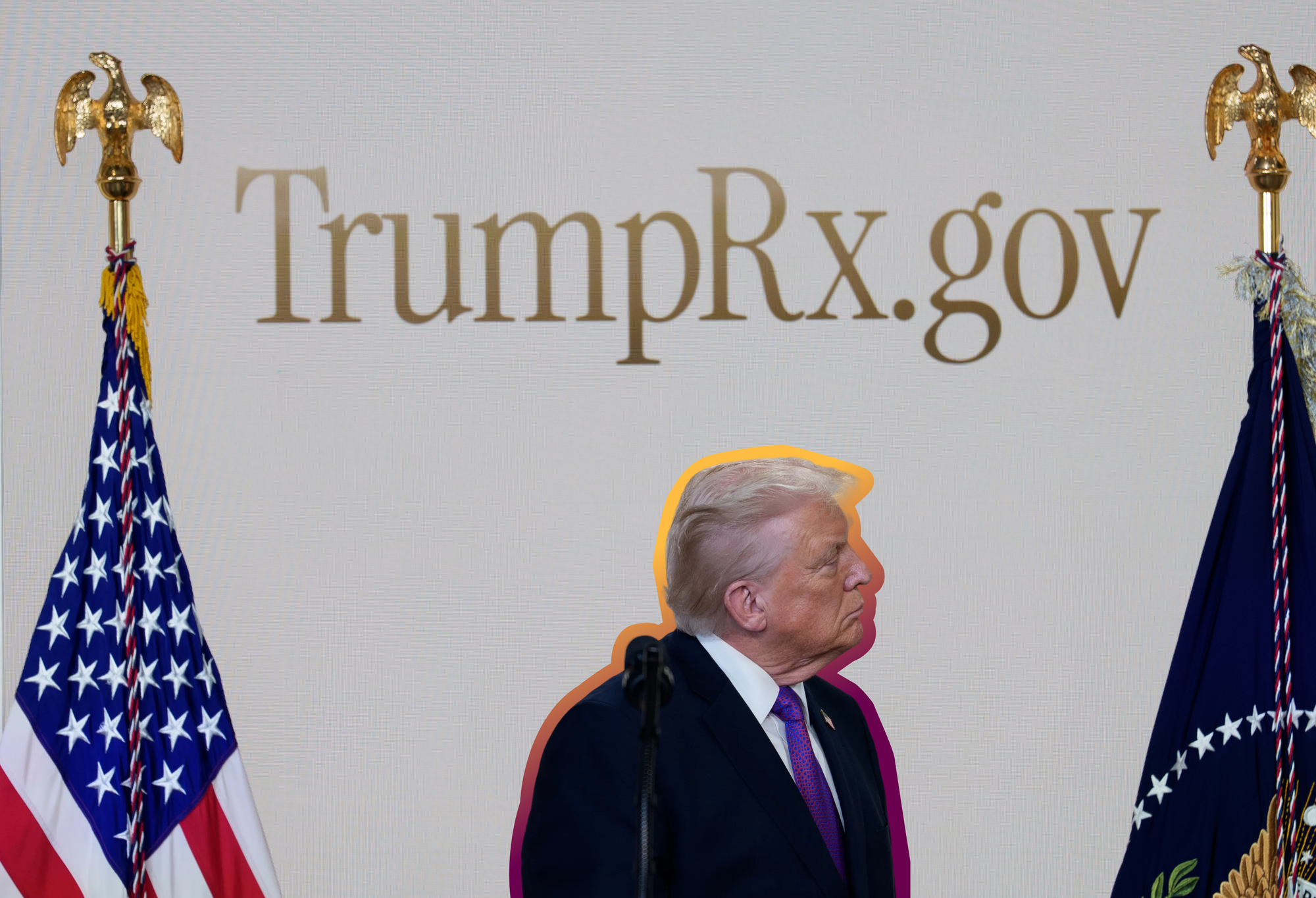
The TrumpRx launch. On Thursday, the Trump administration rolled out TrumpRx, a government website offering consumers discounted prices for common prescription drugs. The platform functions as a hub for consumers, connecting them to manufacturers’ sites or offering coupons for purchases at pharmacies. President Donald Trump said TrumpRx will create millions in consumer savings, with those savings likely concentrated among the uninsured.
Back up: In September, President Trump announced TrumpRx as part of a series of initiatives to bring down prescription drug costs. In the first year of his second term, the president negotiated agreements with several major pharmaceutical companies to sell their products at lower prices in the U.S., in some cases pegged to the prices they charge in other countries (known as Most-Favored Nation pricing). Prior to striking those deals, Trump threatened to cap how much drug manufacturers could earn from Medicare if they did not agree to lower prices.
TrumpRx had 43 drugs listed at launch, with savings between 33% and 93% off the list price. In a Thursday post, the White House highlighted examples of the expected price reductions for common medications. It said the monthly cost of GLP-1 medications like Ozempic will drop from $1,028 to an average of $350, while fertility drugs like Gonal-F will drop from $966 to $168 on average. It also said that additional drugs will be added to the site as Trump negotiates additional deals with manufacturers.
“Americans have long been paying the highest drug prices anywhere in the world, while other countries often paid pennies on the dollar for the exact same drugs,” President Trump said on Thursday. “Under the agreements my administration has negotiated, the United States will pay the lowest price paid by any other country.”
Some healthcare experts have questioned how many consumers will benefit from the savings. In many cases, the list prices on TrumpRx are higher than what insured patients pay for the same prescription, even with the significant discount applied. As such, the savings may be limited to those without insurance, particularly if insured consumers are not able to count the cost of drugs purchased through the site toward their deductible or out-of-pocket maximum. Currently, TrumpRx only offers discounted pricing to consumers paying in cash.
Today, we’ll break down the TrumpRx launch, with views from the right, left, and health policy experts. Then, Managing Editor Ari Weitzman gives his take.
What the right is saying.
- The right is mixed on TrumpRx, with many saying it delivers on the president’s promise to lower drug costs.
- Others argue the site subverts free-market principles.
In PJ Media, Matt Margolis wrote “Trump reduces medication costs, and the left isn’t happy.”
“Democrats love talking about affordability, but they rarely follow through. If they genuinely cared about bringing down drug costs, they’d be applauding President Trump’s latest effort to slash prescription drug prices. Instead, they’re attacking him,” Margolis said. “[TrumpRx] promises to deliver massive savings on medications, including wildly expensive weight loss drugs like Ozempic and Wegovy… In every sense, it achieves something that Democrats have talked and talked and talked about, but never succeeded in doing.”
“For decades, American patients have been subsidizing drug costs for Europeans and their so-called ‘free’ healthcare systems. Europeans typically pay far less for new medications than Americans do, which means that U.S. patients should theoretically benefit from Trump's pricing changes,” Margolis wrote. “So why is the left more outraged over the fact that Trump’s program is causing prices to go up in other countries than the fact that the Americans have been subsidizing socialized medicine abroad?”
In Reason, Marc Oestreich called the new site “Obamacare in Trump’s handwriting.”
“For most people, the ‘discounts’ aren't really discounts. Roughly 90 percent of Americans are insured, and their co-pays are almost always cheaper than TrumpRx’s cash prices. Medicaid patients already get the steepest rebates — more than 60 percent off by law — so TrumpRx adds little there,” Oestreich said. “All of this bypasses the way Americans actually get prescriptions. CVS, Walgreens, and the rest are cut out entirely, replaced by a federally branded coupon pop-up that punts you to a manufacturer’s checkout page. TrumpRx looks like a deal, but in practice, it helps almost no one.
“If this sounds familiar, it’s because the blueprint was drawn a decade ago. Washington shoved through the Affordable Care Act (ACA) with the same central-planning arrogance, resting on monopolistic dealmaking and government-dictated price regulation,” Oestreich wrote. “TrumpRx employs the same toolkit: One company receives favorable treatment, the government demands discounts in exchange for tariff protection, and Washington exerts raw power with no regard for the consequences. This leads to squeezed margins, less research, smaller generic drugs being driven out, and higher prices in the long run.”
What the left is saying.
- The left is skeptical of TrumpRx’s value, with some noting it only covers a small number of drugs so far.
- Others say the logic of Trump’s approach to drug pricing is flawed.
In The Atlantic, Nicholas Florko described “the real winner of TrumpRx.”
“The big winners of yesterday’s announcement seem to be not patients, but drug companies. The Trump administration got drugmakers to the negotiating table last year by writing letters to the companies threatening to ‘deploy every tool in our arsenal to protect American families from continued abusive drug pricing practices,’” Florko said. “Drugmakers were able to turn the threat into a PR opportunity: When Pfizer cut a deal to participate in the program, the company’s CEO, Albert Bourla, was brought to the West Wing, where Trump called the drug company ‘one of the greatest in the world.’
“Drug companies have also successfully protected their ability to charge whatever they please for some of their biggest moneymakers… many of the pharmaceutical industry’s best-selling products — some of which also are among their more expensive offerings — are absent from the website,” Florko wrote. “Take Keytruda, Merck’s cancer drug that was the world’s best seller until it was recently surpassed by the weight-loss and diabetes injection tirzepatide: That drug retails for roughly $12,000 for a three-week course of treatment, and it is missing from TrumpRx. Of the top 10 best-selling prescription drugs in 2024, only one — Ozempic — is listed on TrumpRx.”
In Bloomberg, Lisa Jarvis said “the push for lower US drug prices uses bad logic.”
“In exchange for tariff relief, companies agreed to match Medicaid prices to those paid by peer countries, to invest in research and manufacturing in the US, and to sell certain drugs at a discount on… TrumpRx,” Jarvis wrote. “That might sound like a win for patients and taxpayers. But… the lack of concrete details about the benchmark being used — the prices paid by other countries are confidential — makes it nearly impossible to evaluate the deals. Earlier legislation is already working to reduce Medicaid drug costs, meaning the US might already be getting a better deal than its peers.”
“It’s also easy to imagine how countries and companies could game the system. Manufacturers, for example, could raise list prices abroad, making the benchmark the US uses appear higher, while quietly offering backdoor discounts,” Jarvis said. “None of this is to suggest that the astronomical cost of health care in the US or the system’s emphasis on treatment over prevention aren’t problems in desperate need of fixing. Rather, it is to say that we should price drugs based on the system in which they are delivered. That would require developing a thoughtful, transparent process for evaluating the cost-effectiveness of drugs — something peer nations with lower prices already have.”
What health policy experts are saying.
- Some experts say government intervention in drug costs risks driving up prices.
- Others suggest TrumpRx’s out-of-pocket payment requirement will hurt those it intends to help.
In Cato, Jeffrey A. Singer wrote “TrumpRx: when government tries to build a market.”
“Third-party payment arrangements tend to drive up drug prices. When insurers or government programs are paying most of the bill, patients have little incentive to resist high prices,” Singer said. “In fact, they often push back when payers try to steer them toward lower-cost drugs or pharmacies because any savings go to the insurer, employer, or government — not to them. Insurers, for their part, know that denying coverage or refusing to pay list prices can cause backlash from beneficiaries who feel entitled to whatever their plan covers.”
“Injecting government into this space risks crowding out private innovation and inviting the familiar problems of political favoritism, coercion, and regulatory corruption,” Singer wrote. “If the administration wants to expand direct-to-consumer drug purchasing, the most effective role it can play is not to build a federal platform but to eliminate policy barriers that hinder private actors from competing, innovating, and lowering prices on their own… [TrumpRx risks] substituting political allocation for consumer choice in a space that is only now beginning to function like a real market.”
In STAT, Sean D. Sullivan and Ryan N. Hansen said “TrumpRx has a fundamental flaw.”
“The promise is seductive: lower prices on brand-name medications, available to anyone willing to bypass their insurance and pay out of pocket. But for most Americans, this initiative represents not a solution to our prescription drug price dilemma, but rather a distraction from it,” Sullivan and Hansen wrote. “The fundamental flaw in the TrumpRx model lies in a misunderstanding — or perhaps a willful misrepresentation — of how most Americans pay for their prescription medications. Most insured people pay far less out of pocket when using their insurance coverage than they would by paying ‘discounted’ cash prices, even when those prices are subsidized by manufacturers.”
“Consider a common but hypothetical scenario for older Americans: A patient with diabetes and high cholesterol needs two brand-name medications: Januvia and Repatha. Through insurance, they might pay a $35 copay for each drug per month ($840 per year). The TrumpRx website will offer Januvia for diabetes at $100 per month and Repatha for cholesterol management at $239 per month — a ‘discount’ from existing manufacturer list prices of $330 and $573 per month, respectively ($4,068 per year),” Sullivan and Hansen said. “Paying cash requires an additional $3,228 out-of-pocket, or nearly 6% of their total income. For seniors already choosing between medications and groceries, this isn’t a discount. Using TrumpRx would represent the equivalent of a tax on those least able to afford it.”
My take.
Reminder: “My take” is a section where we give ourselves space to share a personal opinion. If you have feedback, criticism or compliments, don't unsubscribe. Write in by replying to this email, or leave a comment.
- TrumpRx makes some fertility treatments and GLP-1s much more affordable.
- For most people, the new government website will do nothing.
- With complicated approvals and patent protections, drug pricing is really complicated — and any step towards affordability should be celebrated.
Managing Editor Ari Weitzman: There’s an old saying about drug pricing that goes like this: “It costs the drug company five cents to make each pill, but it costs them $2 billion to make the first one.” At the end of the day, a legislative framework that finds a way to offer fair prices to consumers under that dynamic is simply going to be complicated, and any step forward should be celebrated. TrumpRx doesn’t help most people in general, but it will help people who need GLP-1 drugs and fertility medication when those treatments aren’t covered by their insurance, and we should celebrate that.
That’s the bottom line. Any other claims are noise.
But why GLP-1 and fertility drugs? Out of all the discounts TrumpRx is offering, how does the benefit get narrowed down to only a few options for only certain people?
Let’s start with what TrumpRx is, which I think Forbes’s Jesse Pines summed up best (emphasis added): “TrumpRx is not a government-run pharmacy. Instead, it’s a centralized directory and coupon generator that connects cash-paying patients to pre-negotiated manufacturer discounts on 43 specific brand-name drugs.” And now let’s unpack each of those four emphasized elements.
First, pre-negotiated manufacturer discounts. This is important context for making sense of drug prices: Drug companies sell their product for a “list price,” which — frankly — is a gratuitous sham. Based on exclusivity or perceived value, pharmaceutical companies charge whatever they want for their drugs, then negotiate those prices down through considerable discounts to pharmaceutical benefit managers (PBMs). This process obfuscates the true “net price” insurance providers pay for these drugs, and often leaves uninsured people paying exorbitant prices that effectively serve as added profit margin for manufacturers. So, if you are uninsured and looking for a prescription drug, TrumpRx may provide a benefit.
Second, cash-paying patients. What if you’re insured? If you have insurance, and your insurance covers the medication you need, then that’s it — TrumpRx probably won’t offer you any better price than what you get through insurance. If your insurance doesn’t cover a drug you want or need, that’s a different story. Just under 85% of Americans have some form of prescription drug coverage, and about 80% of drugs are covered by those plans. The prescription drugs most commonly not covered by insurance are those prescribed for weight management, sexual dysfunction, hair growth, and fertility. If that’s your situation, then TrumpRx may provide a benefit to you, too.
Third, the 43 drugs TrumpRx covers. TrumpRx discounts come in one of two ways: negotiated discounts to manufacturer prices or coupons to be presented at pharmacies. For example, I take an albuterol inhaler for occasional asthma. The TrumpRx offer for their covered name-brand albuterol inhaler, AstraZeneca’s Airsupra, shows how I can buy an inhaler from AstraZeneca for a helpful 60% reduction of $201 from its extortionist list price of $503.93. I don’t even need TrumpRx for that price; I can go straight to the website and receive the discount that the government negotiated. Other drugs have rebates in the form of printable coupons: If I want Pristiq to help treat depression, I can print out a 54%-off coupon, get a prescription for the drug from my doctor, and go to a pharmacy and receive this discount off the list price. But I have better options for both of these cases.
Fourth, name-brand drugs. Most drugs offered through TrumpRx are available through generic alternatives. Pristiq’s generic form, desvenlafaxine, is available for about $30, and I can get a generic albuterol inhaler for under $50 (if not better) with a similar coupon through GoodRx. I’d have to be severely underinformed to choose instead to go through the manufacturer (though, happily, I’m one of the 85% of Americans with health insurance coverage, and albuterol is one of the 80% of drugs covered by my insurer). For almost all the other drugs offered through TrumpRx, generics beat out the discounted prices. So that leaves two kinds of drugs that I can get cheaper from the government website than through other alternatives (unless I have really good insurance coverage): fertility drugs and GLP-1s.
But that’s still not the whole story. To get us the rest of the way there, I need to expound on our coverage of the Biden administration’s Medicare Part D negotiations in 2023. We missed an important piece of context in our coverage that has haunted me for years, and providing that context from three years ago helps provide a fuller picture today.
Essentially, Medicare was able to negotiate down the prices for 10 drugs — including diabetes treatments, cancer treatments, and blood thinners — for people covered by Medicare Part D, thanks to a rule passed in the Inflation Reduction Act (IRA) allowing the government to negotiate prices. We focused on how much these changes would actually help consumers, whether “price-fixing” was a better word than “negotiating” to describe the changes, and what externalized costs would come from bringing these prices down. All of those were good aspects to cover.
We didn’t explore why these 10 drug prices were coming down without much of a fight from pharmaceutical companies. The IRA said that Medicare could negotiate the prices of the 10 most expensive drugs in the program in 2023, but only the ones that had already been FDA-approved for a long time — 7 years for small-molecule (chemical) drugs and 11 years for biologics (derived from living organisms). FDA exclusivity regulations and patents protect pharma companies from competitors — for five years after approval for small-molecule drugs and 12 years after approval for biologics. Usually these protections get extended, meaning the IRA really took a few years of maximal profitability off the drugs covered by the law.
Later this year, the next 15 most expensive drugs with nearly expired patents will be negotiated for Medicare Part D or B to take effect in 2028, then another 20 will be negotiated in 2029. Those Medicare wins are time-limited, since generics will soon come to market to beat out those prices. The discounts offered for GLP-1 and fertility drugs through TrumpRx are similarly time-limited — however, and importantly, that bill’s due date is much further out.
For GLP-1s, the semaglutide (Ozempic and Wegovy) patent expires in 2026. A Brazilian alternative is currently facing the long FDA approval process, but secondary patents will inhibit the availability of generic semaglutide in the U.S. market until the early 2030s. Meanwhile, tirzepatide (Mounjaro and Zepbound) is patent-protected through the late 2030s.
As for fertility treatments, many drugs used to help stimulate gamete production aren’t available in the United States through generics or biosimilars — despite the fact that patents aren’t restricting their development. In particular, recombinant HCG (Ovidrel) and FSH (Gonal-F) have competitors in Europe but not in the U.S. TrumpRx offers Gonal-F for $168, an incredible savings of about $1,800 over its availability through GoodRx. It also offers Cetrotide, name-brand cetrorelix acetate, which is already available as a generic. However, the TrumpRx pricing offers another strong discount over what you can get in the market, slashing the price from about $200 to $20.
For people who will be helped by GLP-1 medication and fertility drugs, insurance often doesn’t provide much savings, and these discounts through TrumpRx will be an enormous benefit. Maybe, in the future, other drugs will fall under that umbrella; but for now, the new government site takes a small bite out of the enormous health care affordability problem in the United States. That isn’t a monumental achievement, but it is a step forward. And that’s worth appreciating.
Take the survey: What do you think of TrumpRx? Let us know.
Disagree? That's okay. Our opinion is just one of many. Write in and let us know why, and we'll consider publishing your feedback.
Your questions, answered.
Q: How does Tangle avoid creating a cult of personality around the “My Take” section? If the goal of Tangle is to help liberals and conservatives see across the aisle, what prevents the creation of a Tangle bubble where Isaac’s take is now the standard of truth?
— Will from Boulder, CO
Executive Editor Isaac Saul: This has always been something I’ve consciously tried to avoid. I first added in the “My take” section only after beta-testing this newsletter; when this newsletter was just what the right and left were saying, the #1 response I got from readers was, “Well, what do you think? You’re a politics reporter, I’m curious for your opinion.” People wanted some kind of closing analysis to round out the newsletter, so I added a section sharing my own view. Immediately, the touch of personality seemed to make the product more interesting and engaging for readers, and it gave me a chance to be transparent about my views.
Still, from the very start, I never wanted my voice to be the part of the newsletter responsible for defining the truth. That’s why every take starts with this disclosure: Reminder: ‘My take’ is a section where we give ourselves space to share a personal opinion. If you have feedback, criticism or compliments, don’t unsubscribe. Write in by replying to this email, or leave a comment.
As we’ve grown, we’ve also consciously taken a few steps to try to ensure my opinion remains what it was always intended to be: just one voice of many.
First, we’re including more voices. So far in 2026, we haven’t gone a single week where I’ve written every take. Tangle has an editorial staff of diverse and challenging thinkers — like Ari Weitzman, Will Kaback, Audrey Moorehead, and Lindsey Knuth — and you’re going to keep hearing more from them (including today).
Second, we’ve added in staff dissents to show that diversity of thought in other ways. We might not always have a dissent to feature, but showing readers our internal disagreements when we have them helps keep Tangle true to its goal of providing multiple perspectives in every edition.
Third, we’re simply trying to limit the size of the “My take.” That’s easier said than done, but we’re slowly trying to bring the word count of that section down so it doesn’t dominate our newsletter.
And, of course, we make an effort to reflect on our work. We grade our own reporting at the start of each year, I write pieces all the time about being wrong or changing my mind, and we encourage our audience to challenge us, debate each other, and continue to have dialogue about these messy, complex ideas. None of this, to me, is a recipe for a cult of personality — though I do think it’s a way to make nonpartisan, balanced, and open-minded news much more engaging and interesting.
Want to have a question answered in the newsletter? You can reply to this email (it goes straight to our inbox) or fill out this form.
Under the radar.
On Monday, lawyers for Rumeysa Ozturk, a Tufts PhD student arrested in March by Immigration and Customs Enforcement agents, disclosed in a letter that an immigration judge had terminated her removal proceedings. Ozturk was reportedly targeted for co-authoring an op-ed calling for U.S. divestment from Israel; in their letter, the lawyers said the court dropped the case after concluding that the government did not meet its burden of proof to show she needed to be removed from the country. The letter states that Ozturk could be subject to re-detention if the Trump administration appeals the ruling to the Justice Department’s Board of Immigration Appeals, the highest administrative body overseeing U.S. immigration law. Reuters has the story.
You're Probably Overpaying on Amazon
Most Prime members miss built-in tools that lower prices, earn cash back, and cancel forgotten subscriptions automatically.
We compiled 16 lesser-known features that unlock real savings on purchases you're already making — no new apps, no complicated setup. Just a few minutes to stop leaving money on the table.
Numbers.
- 43. The number of drugs listed on the TrumpRx website.
- 20. The number of those drugs that have generic alternatives, according to a tally by a drug pricing expert.
- 16. The number of companies that struck “most-favored-nation” deals with the U.S. to cut medication prices in return for tariff exemptions.
- 5. The number of those companies with products listed on the TrumpRx platform as of Friday, February 6.
- 8.2%. The percentage of U.S. adults who went without health insurance in 2024, according to the most recent data from the Centers for Disease Control and Prevention.
- 21% and 23%. The percentage of U.S. adults who say they have not filled a prescription in the past year and opted for an over-the-counter alternative, respectively, due to cost, according to a January 2025 KFF poll.
The extras.
- One year ago today we covered the DOGE budget cuts.
- The most clicked link in yesterday’s newsletter was our Friday edition answering your questions about ICE.
- Nothing to do with politics: Have fun jumping to conclusions with Tyler Vigen’s spurious correlations.
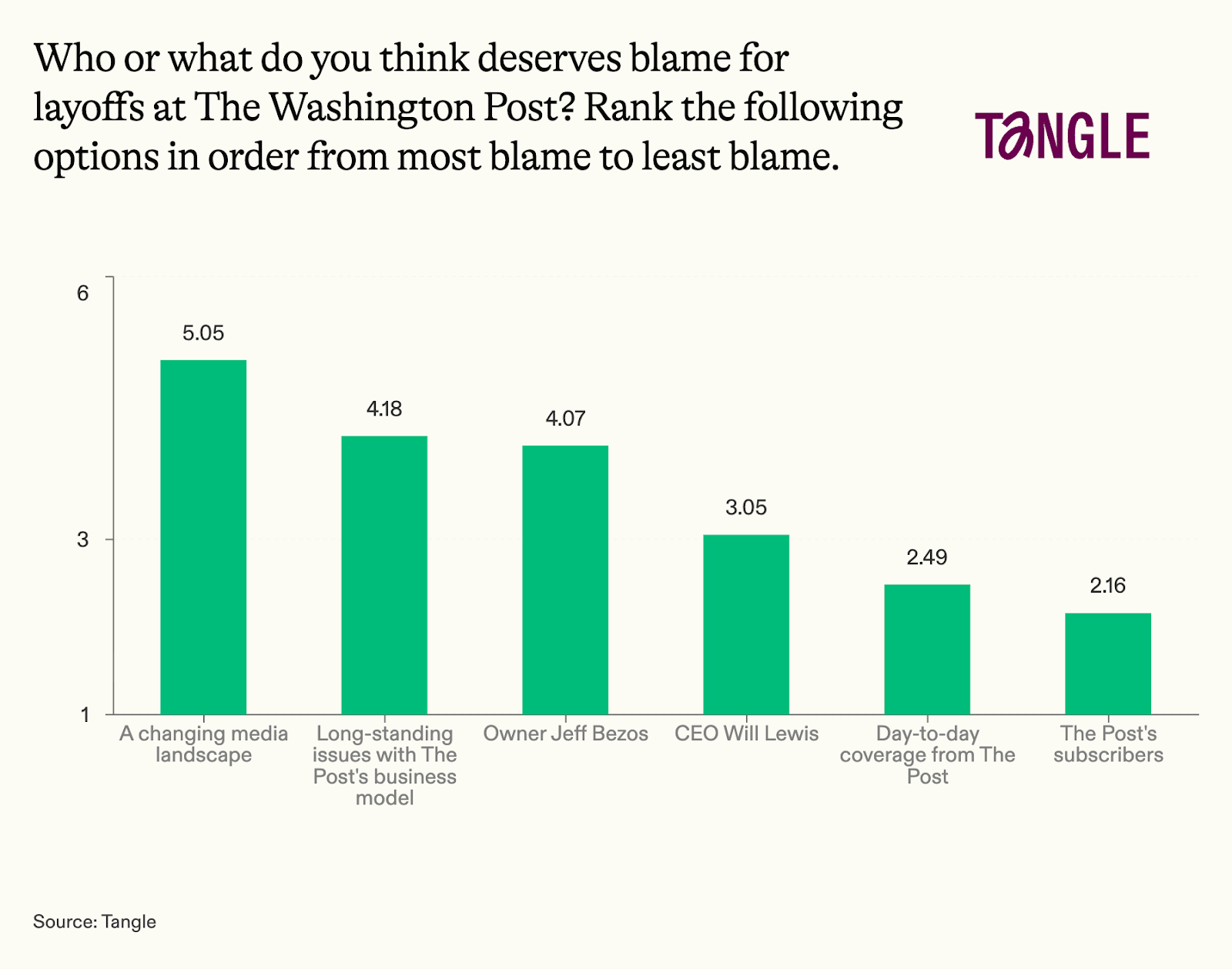
- Yesterday’s survey: 2,105 readers responded to our survey asking them to rank who or what is to blame for layoffs at The Washington Post with most blame placed on a changing media landscape. “I think the post didn’t change with the times both technologically or culturally. Their material was largely left leaning and what business model leaves out 50% of its possible customers?,” one respondent said. “I was one of many, who canceled my subscription, when it was announced that WP would only have conservative viewpoints in their Op-Eds,” said another.
Have a nice day.
Guinea worms are parasites contracted by consuming contaminated water, sometimes growing up to one-meter long before painfully exiting the body through a blister. Although it is rarely lethal, Guinea worm infections were common not long ago, affecting 3.5 million people in 20 countries across Africa and Asia in 1986. However, thanks to an initiative started by former President Jimmy Carter, Guinea worm infection is now close to becoming the second human disease to be eradicated (after Smallpox). Only 10 cases of infections were reported last year, an all-time low and a 33% decrease from 2024. “We think about President Carter's legacy,” said Adam Weiss, director of The Carter Center’s Guinea worm eradication program. “We continue to charge ourselves with his mission of alleviating as much pain and suffering as we can.” ABC News has the story.

Member comments