
I'm Isaac Saul, and this is Tangle: an independent, nonpartisan, subscriber-supported politics newsletter that summarizes the best arguments from across the political spectrum on the news of the day — then “my take.”
Are you new here? Get free emails to your inbox daily. Would you rather listen? You can find our podcast here.
Today’s read: 13 minutes.
Hoping to keep track of all the wild stories happening in the U.S. without losing your mind?
The What A Day newsletter has you covered.
Whether it’s politics, policy, or the absurdity of the headlines, What A Day keeps you informed without leaving you feeling overwhelmed.
It's a quick, smart, and sometimes funny take on the news, minus the doom scrolling spiral. From Supreme Court bombshells to the latest antics in Congress, What A Day helps readers cut through the noise and focus on what actually matters.
Recent stories include: an in-depth look at the future of public broadcasting in America, a report on the rise of private space companies and the fate of NASA, and a breakdown of theories about the government controlling the weather.
What A Day delivers a smart, critical snapshot of the news that actually matters.
Calling all businesses.
Interested in reaching over 340,000 people for your brand? If you want to become an advertising partner with us — and get your message in front of an audience of informed and curious independent thinkers — take 30 seconds and apply here.
Quick hits.
- Poland said that it shot down multiple Russian drones that entered its territory. Belarus claimed that the drones had gone off course after being jammed, but some European leaders alleged the incursion was deliberate. (The incident)
- The Supreme Court agreed to hear two cases on the legality of the Trump administration’s tariffs, with oral arguments planned for the first week of November. (The cases) Separately, Chief Justice John Roberts issued a temporary administrative stay allowing the Trump administration to pause disbursement of roughly $4 billion in foreign aid while the move is challenged in court. (The stay)
- Hamas said that its primary leaders survived Israel’s airstrike on its senior political leadership in Qatar, but five of its members were killed. Press Secretary Karoline Leavitt said the Israeli military notified the Trump administration of the impending attack; however, President Trump criticized Israel for striking inside Qatar. (The latest)
- A federal judge ruled that Federal Reserve Governor Lisa Cook can remain in her position while her legal challenge to President Trump’s attempt to fire her plays out. The Trump administration is expected to appeal the decision. (The ruling)
- Nepalese Prime Minister KP Sharma Oli resigned amid widespread protests catalyzed by the government’s ban on social media platforms. At least 19 protesters have been killed in clashes with the police. (The protests)
Today’s topic.
The Charlotte stabbing. On Friday, August 22, 23-year-old Ukrainian refugee Iryna Zarutska was stabbed to death on a light-rail train in Charlotte, North Carolina. Police arrested 34-year-old ex-convict Decarlos Brown Jr. as a suspect in Zarutska’s death and charged him with murder. On Tuesday, the Justice Department also charged Brown with a federal crime.
The incident has sparked a national debate about public safety and criminal justice reform, as well as criticism from conservative commentators about media coverage of the attack. Officials said that Brown and Zarutska appeared to have had no interaction prior to the stabbing, according to a public affidavit, and police have not offered a motive for the attack. Zarutska had immigrated to the United States from Ukraine in 2022 and was returning from work at a local pizzeria when she was killed.
On September 5, the Charlotte Area Transit System released surveillance video of the attack. The video appears to show Zarutska entering the train car and sitting in front of Brown, who appeared agitated, before Brown unfolds a knife and stabs Zarutska three times, at least once in the neck. Brown can then be seen walking down the train car before removing his sweatshirt and exiting the train.
Brown had an extensive criminal record prior to the stabbing. In 2014, he was convicted of felony breaking and entering. Later that year, Brown was sentenced to five years in prison for robbery with a dangerous weapon and possession of a firearm by a felon; he was released on parole in 2020.
In January 2025, Charlotte-Mecklenburg police arrested Brown for a third time for allegedly misusing 911. Brown told officers he had been given a “man-made” substance that controlled his behavior and dialed 911 in front of officers when he was dissatisfied with their response. A magistrate released Brown on a promissory note to appear before the court, and on July 28, Judge Roy Wiggins directed him to get a forensic evaluation.
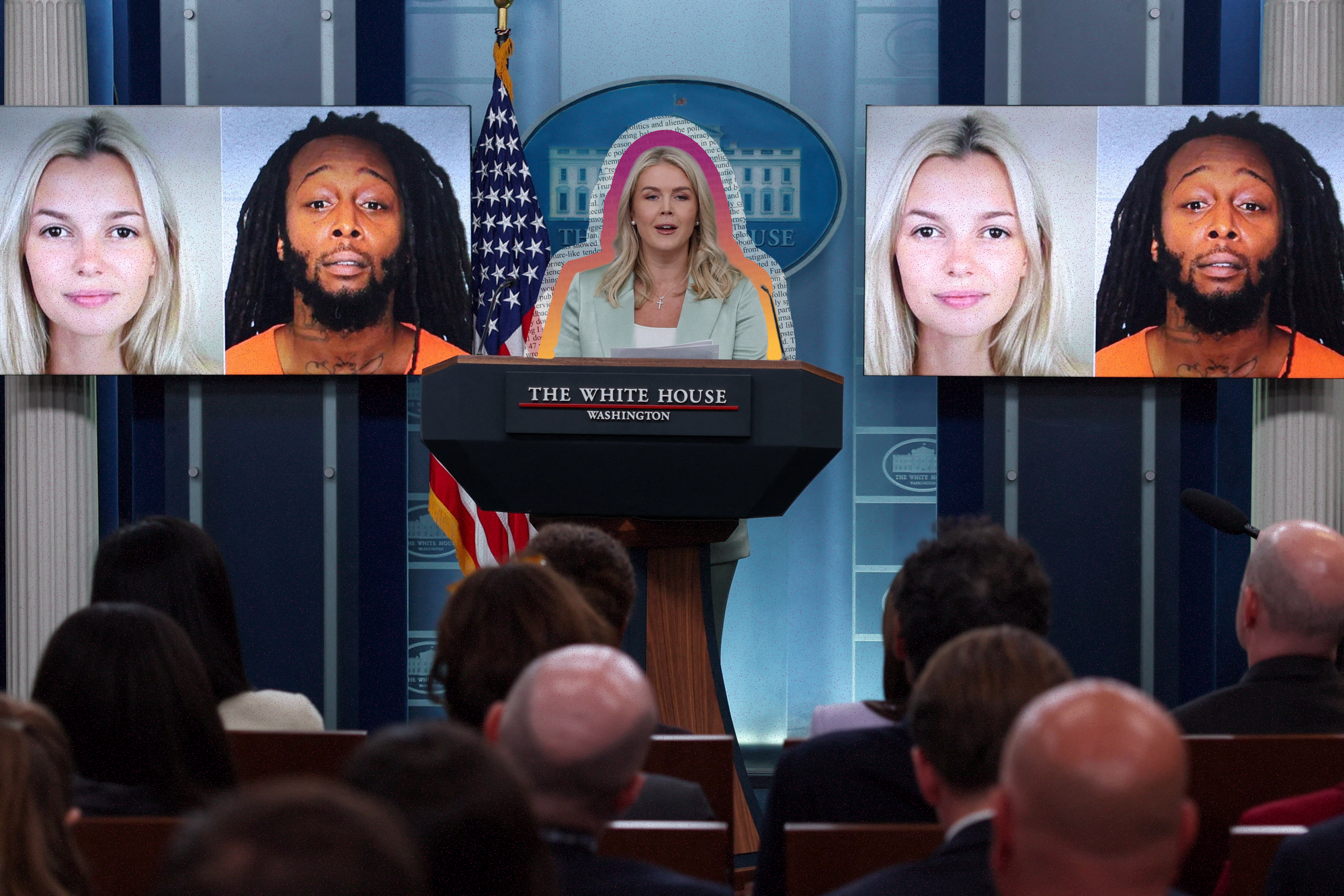
Members of the Trump administration blamed the criminal justice policies in Charlotte for Zarutska’s death. “The public transportation system in a major American city was more dangerous than the war zone [Zarutska] left behind,” White House Press Secretary Karoline Leavitt said on Monday. “If mayors can't keep their trains and buses safe, they don't deserve the taxpayers’ money,” U.S. Transportation Secretary Sean Duffy said in a statement.
North Carolina Democrats also expressed dismay over the stabbing, but said the state’s policies were not to blame for the attack. Instead, a spokesperson for former Governor and current Senate candidate Roy Cooper (D) criticized “federal policies that cut local and state law enforcement funding.” Charlotte Mayor Vi Lyles faced criticism for her initial statement on the attack, which some said focused more on the assailant than the victim. Lyles later said that she supports legislation to keep repeat offenders like Brown off the streets.
Below, we’ll get into what the left and right are saying about the stabbing. Then, I’ll give my take.
Agreed.
- Writers and lawmakers on the left and right express horror at the attack and sympathy for the victim.
What the left is saying.
- The left is alarmed by Zarutska’s killing but disputes that Democratic policies are to blame.
- Some reject the notion that the attack was motivated by racial animus.
- Others call on lawmakers to invest more in mental health services.
In The Charlotte Observer, Paige Masten wrote “Trump is making Charlotte light rail killing a partisan issue. It’s not that simple.”
“Of course, there is a legitimate discussion to be had about public safety in Charlotte, and legitimate questions about the failures that might have allowed this incident to occur. Safety is an issue that has dogged the city for some time, and it’s one that leaders can’t afford to ignore. Mayor Vi Lyles announced in a statement Monday that the city is taking action to increase transit safety, including increasing fare enforcement and police patrols,” Masten said. “That’s a start, but it’s unfortunate that it took such intense politicization of this tragedy to get Lyles and CATS to finally act on one facet of it.”
“But this isn’t a Democrat vs. Republican issue, and it’s wrong to treat it as one. While the focus is often on crime in blue cities and blue states, it’s an issue in red cities and red states, as well. In fact, data shows that homicide rates tend to be highest in blue cities located in red states, suggesting that neither party is solely to blame. In fact, red states tend to have higher homicide rates than blue states, in part due to higher rates of gun homicides,” Masten wrote. “That’s something Trump and Republicans don’t tend to acknowledge. Using a tragedy like this to advance a particular political narrative, or promote one candidate over another, is distasteful and divisive.”
On NewsNight with Abby Phillip, Van Jones argued the right is “race-mongering” in response to the murder.
[Note: This is a transcription of Jones’s comments.] “What happened to that young woman was horrible, and it's everybody's nightmare — if you're in any public space or a subway, something bad's gonna happen to you or somebody you care about. So it does strike a chord,” Jones said. “We don't know why that man did what he did, and for Charlie Kirk to say we know he did it because she's white, when there's no evidence of that, is just pure race mongering, hate mongering — it's wrong.”
“[Kirk] says that if something like that had happened the other way, there would be sweeping changes imposed on society. Where is the George Floyd policing act? It didn't pass. Even when you had a white police officer murder a black man on live television — the whole world saw — there were no sweeping changes. In fact, not one law was passed at the federal level,” Jones said. “What happened was horrible, but it becomes an opportunity for people to jump on bandwagons, and then for someone like Charlie Kirk, he should be ashamed of himself. No one mentioned the word race — white, black, or anything — except him. What people mentioned is the horror of what happened to this young woman.”
In her Substack, Andrea Burkhart said “criminalizing mental illness is getting us killed.”
“Retribution sells; rehabilitation doesn’t. Like every other state in the nation, North Carolina has a severe shortage of psychiatric beds. Mental health treatment and crisis intervention are not funding priorities for legislatures,” Burkhart wrote. “I’ve seen a lot of criticism of ‘woke’ and ‘leftist’ policies as contributing to Ms. Zarutska’s horrendous demise, but Republicans control North Carolina’s legislature and have not taken the opportunity to provide the mental health system the resources it needs to fulfill its function. President Trump recently supported ‘reopening insane asylums’ in an interview. The thing is, there is no legal impediment to rebuilding a robust mental health system.”
“What stands in the way of more and better psychiatric resources is nothing more than political will… [but] legislators that are far more skilled at deflecting their own responsibility for public safety failures onto others than doing the hard work of actually addressing public safety failures,” Burkhart said. “And around we go, promoting more of the same retributive policies that have led us to imprison more people than China, despite having less than a quarter of the population and an ostensibly ‘freer’ society. In the meantime, Mr. Brown will almost certainly be pursuing the most foreseeable insanity defense ever.”
What the right is saying.
- The right sees the stabbing as symptomatic of lenient policies toward crime from Democratic leaders.
- Some call for stricter laws to keep repeat offenders off the streets.
- Others say the left’s internal politics prevent it from reckoning with this issue.
In The Charlotte Observer, Andrew Dunn argued the attack “should jolt Charlotte awake.”
“No murder is acceptable, but some shock the conscience more than others. Random killings of young people in places where they should have every expectation of safety leave us shaken in a way others do not,” Dunn wrote. “Three days after the stabbing, the Charlotte-Mecklenburg Police Department published a graphic bragging about ‘the real picture’ of crime in our city, claiming that homicides and armed robberies are down 30% from last year. That may be true, or it may not be. But Iryna Zarutska’s murder makes a mockery of the comfort we try to take in statistics.”
“Too often, Charlotte’s leaders have talked about crime as if it’s a perception problem. Uptown business groups launch PR campaigns, new slogans and billboard ads to assure people it’s safe. They talk about vibrancy and image, about whether visitors feel comfortable. But this is not a marketing issue. It’s a human one,” Dunn said. “That culture of permissiveness has to end. Riders should know every person on that train has paid to be there. CMPD and CATS must post a visible security presence on platforms and trains. And judges must stop releasing violent offenders back into the community on little more than a promise.”
In Fox News, Rep. Mark Harris (R-NC) said “Iryna Zarutska fled Ukraine for safety but Democrats' soft-on-crime policies failed her.”
“This was not a random act. It was a preventable tragedy, a failure of our system to protect the vulnerable. America failed Zarutska, and we must ensure it does not fail others like her,” Harris wrote. “This incident reflects a broader crisis unfolding across our nation, where soft-on-crime policies allow dangerous criminals to evade accountability. Charlotte Mayor Vi Lyles has claimed, ‘We will never arrest our way out of issues such as homelessness and mental health.’ I disagree. Though addressing root causes is important, we cannot ignore the immediate need to protect our communities by ensuring repeat offenders face consequences.”
“The Left’s approach of prioritizing leniency for offenders over justice for victims has left too many, like Iryna, vulnerable. In Democrat-led cities, from Charlotte to Chicago, we see a troubling pattern of downplaying lawlessness while overlooking the pain of those who suffer,” Harris said. “To address this crisis, we need a balanced approach: immediate, robust law enforcement to remove dangerous offenders from our streets and long-term investments to tackle the root causes of crime. It also means reforming bail systems to ensure violent repeat offenders are not easily released to harm innocent people like Zarutska.”
In The Free Press, Kat Rosenfield wrote about “the taboo that killed Iryna Zarutska.”
Until the “security footage from that night was released… the story oddly flew under the radar. It did so for the same reasons that it’s now become a flashpoint in the online discourse about crime, disorder, and public safety in American cities today,” Rosenfield said. “For conservatives, this incident seems a slam-dunk indictment of the progressive attitudes toward policing and criminal justice that emerged in the wake of the 2020 police killing of George Floyd… But while this vicious crime plausibly represents the policy chickens of 2020 coming home to roost, that only halfway explains why the story has so captured the public imagination.
“The greater issue is a cultural one: a growing frustration with what often feels like limitless tolerance for public disorder and antisocial behavior — and with it, a sense that one must not only avoid discussing these things to remain a liberal in good standing, but actively pretend they don’t exist,” Rosenfield wrote. “In shying away from what is politically inconvenient, ugly, or otherwise uncomfortable, we not only cede the conversation to racist idiots, but relinquish with it all hopes of a better future. The problem is not politics per se, but an inability to course correct when what seemed like progress turned out to be a misstep.”
My take.
Reminder: “My take” is a section where I give myself space to share my own personal opinion. If you have feedback, criticism or compliments, don't unsubscribe. Write in by replying to this email, or leave a comment.
- It’s not hard to see why this incident captured national attention, but I think the conversation is focused on the wrong thing.
- Isolating individuals like Brown is necessary but we can do better than prisons.
- For all the talk of cash bail policies, there is very little focus on the lack of other options for addressing people like Brown.
If you watch the video of Iryna Zarutska’s killing (which I did, and don’t recommend), it is truly stomach-turning. The incident shows everyone’s worst nightmare about public spaces: a random, unprovoked attack — violent and sudden — while onlookers do quite literally nothing to help or aid you as you die in front of them.
The moment I saw it, I knew the story would gain national attention. Not because the assailant, Decarlos Brown Jr., is black and Zarutska was white. Not even because Zarutska was a Ukrainian refugee, though of course the symbolism of her surviving and fleeing a war only to be murdered on American public transport is a little too on the nose.
I knew it would become national news because the lead-up is just so familiar and the brutality is so plain: One minute Zarutska is casually scrolling on her phone on a train car, the same way we all do, surrounded by people all in their own little worlds, zoning out as they roll along. The next minute the seemingly calm, hooded man behind her completely snaps, stabbing her several times in the neck before walking away as if he were just getting up for his stop — all the while, she bleeds out with onlookers frozen in shock or apathy.
What do you say? I grasp at words like mortifying or horrific, but they honestly don’t come close.
Zarutska’s death did draw national attention — mostly focused on the societal tendency to ignore people acting erratic in public, or how Brown was arrested and released more than a dozen times, or how the liberal-lefty-corporate-sleazy-mainstream-media didn’t cover it the same way they covered Daniel Penny — a white man who killed a black man on public transportation.
These narratives strike me as both superficial and unhelpful. Unlike some writers, I did not think Zarutska sat in a seat we should all avoid. I’ve lived in major American cities my entire adult life, and I have a pretty good radar for the kinds of people to steer clear of. The scariest part of this incident to me is that Brown didn’t look dangerous — he looked mostly like the kind of sleepy, exhausted patron of public transportation you see all the time. That he’s black or has dreads or is wearing a red hoodie shouldn’t set off alarm bells — if any one of these qualities did, then just existing in public would be an intolerable adventure. Brown didn’t appear agitated until long after Zarutska had sat down, and by then it was too late. To me, that’s what makes it so difficult to process, and so unsettling to the core.
I also don’t give much credence to the idea the national outlets tried to bury this story. Here at Tangle, what to give attention to — and what to show our readers — is usually one of the toughest questions we ask every day. While the release of the surveillance video sparked a robust debate, the actual stabbing occurred on August 22; before this weekend, even local coverage of the murder was sparse. It’s not as if all these media critics were on top of the murder the day after it happened — the larger reaction was caused by how graphic the video is.
That an outlet like The New York Times would not dedicate coverage to a murder in Charlotte two weeks after it happened is not at all surprising to me. “Why did The New York Times cover Daniel Penny killing Jordan Neely so much but ignore this?” is not a hard question to answer: It’s The New York Times, and Penny killed someone on the New York subway. Also, multiple videos of Neely’s death were circulated publicly hours after the incident. That Penny claimed to be a good samaritan trying to protect a train full of people from an erratic passenger was also novel; that’s what made the story such a sensational source for rich dialogue and debate. That’s why it was bigger. To be frank, I think it’s harder to justify dedicating limited space to a single violent crime in Charlotte than it is to just ignore it; however, the story the Times eventually produced of how this killing “ignited a firestorm” for the right certainly rubbed me the wrong way.
Instead, I think the public conversation should focus on the “treatment vs. punishment” question.
Personally, I don’t think the solution is as simple as many people think (“lock him up”). I’ve articulated my most extreme political view in this newsletter, which is that I don’t think humans belong in cages. Full stop. Anyone trying to convince you they do — or that prisons can consistently fix people, or that they genuinely improve public safety — is describing prisons as they wish them to be but not as they are. Better arguments might be that removing dangerous people from society keeps us safe, or that victims deserve justice and that imprisoning people is an appropriate form of justice. Yet when these arguments only view the options for isolating people as narrowly tailored to prison, they don’t grapple with the reality that delivering justice for present-day victims might be creating more victims in the future.
But I also readily admit that this is in a lot of ways a squishy, emotional appeal without a tangible solution. And I don’t yet have a fleshed out alternative. People deserve safety, and if someone proves they can’t operate in civilized society — if they infringe on the safety and freedom of others — then it is just and fair to temporarily remove them from society. Brown was one such person. He had been arrested 14 times in North Carolina for everything from assault to firearms possession to felony robbery.
Should we blame a lack of cash bail in Charlotte? I’ll put it this way: Would you have felt better about the murder had one of Brown’s friends or family paid the government $1,500 to get him released before he killed Zarutska? Is our society better off if someone with a few thousand dollars handy can commit crimes and walk free while someone without that money can’t? I honestly don’t find that argument particularly compelling, and it isn’t at all clear to me that this crime doesn’t happen if Brown had posted bail.
Everything we learned about Brown after he was identified as a suspect can help inform this conversation. Brown served five years in prison for armed robbery, yet this did not dissuade him from future crime. His own mother told a local TV station that he was schizophrenic; he was forcefully admitted for two weeks and diagnosed. When he became so aggressive she couldn’t handle him, she kicked him out of her house. He was recently arrested for abusing the 911 system; he had told police he was being poisoned, and that how he ate, walked, and talked was being controlled, a classic manifestation of schizophrenia. A judge heard these details and then released him with a promise to appear before court at a later date — that was the last contact he had with the justice system before he killed Zarutska.
How do we want to handle people like this? Maybe he should have been placed in jail pending trial, but what next? For a convicted criminal diagnosed by a professional team with a treatable but challenging mental illness, do we think putting him in a prison cell is the best response? Or a psych ward? Or something at the intersection of the two? Do we think these people should get a say in their own fate, or have they forfeited that right by making it clear they can’t control their behavior? Do we want the public to fund services to isolate and treat these people, or do we want the burden to be on the families and the private sector?
These are the kinds of meaningful, actionable questions at the heart of this story. I don’t have all the answers, but I know a few things about how I would have considered Brown’s case before the murder (which will rightfully land him in jail for life, and possibly garner the death penalty). 1) I’d rather that Brown be isolated from society than walking free. 2) I’d rather he be in a place where he is getting treatment, so he can one day have a chance to be reintegrated into society, rather than getting punishment (which, again, did not seem to help him reintegrate). 3) I’d gladly give over a larger chunk of my tax dollars to funding such treatment centers if I knew it would meaningfully make our streets safer and citizens healthier, and give Brown at least a fleeting chance at a redemption story.
Most of the country shares the horror of this murder and most of us seem to agree we can’t keep living like this — with so many demonstrably unwell and potentially dangerous people left to their own devices. If our options are prison or help, I think we can — and should — recognize that prison often fails people like Brown. Effective help — the centers and treatments we have or the ones we have yet to build — is hard and complicated and expensive. But so are most good things.
For all the talk of “lefty” criminal justice policies being conceptual failures, there’s very little chatter about how these policies have not been followed through on in North Carolina. The state has a shortage of psychiatric beds and lacks funding for rehabilitation programs. If we want to break this cycle and change the trajectory of these public spaces and this troubled population, I think we ought to not only imagine something better than a cage, but actually follow through on creating a better system — not just for us, but for future victims, and future perpetrators, too.
Take the survey: What do you think the appropriate response to Brown should be, or should have been? Let us know.
Disagree? That's okay. My opinion is just one of many. Write in and let us know why, and we'll consider publishing your feedback.
Your questions, answered.
We're skipping the reader question today to give our main story some extra space. Want to have a question answered in the newsletter? You can reply to this email (it goes straight to our inbox) or fill out this form.
Under the radar.
In September, the Department of Health and Human Services (HHS) is expected to release a report identifying potential causes of autism at the behest of HHS Secretary Robert F. Kennedy Jr. The review will reportedly highlight the use of the pain reliever Tylenol during pregnancy as one cause, as well as low levels of folate, a vitamin that assists in the production of DNA and RNA. Some studies have suggested that Tylenol poses a risk to fetal development, but major medical associations say it is safe to use in pregnancy with a doctor’s consultation. The report is not finalized, and whether Kennedy and HHS plan to allege a link between vaccines and autism in the final version is unknown. The Wall Street Journal has the story.
Stay Sane While Staying Informed
The What A Day newsletter delivers the U.S. news chaos you need without the mental breakdown you don't.
Get smart, funny takes on politics and policy that cut through noise and skip the doom spiral. From Supreme Court drama to Congress antics, you'll be informed instead of overwhelmed.
Numbers.
- 3. The approximate number of years that Iryna Zarutska had lived in the United States after immigrating in August 2022 to escape the war in Ukraine.
- 14. The number of times Decarlos Brown Jr. was arrested prior to being charged with murdering Zarutska.
- $50 million. The approximate amount of federal transport funding the city of Charlotte, North Carolina, receives.
- 12%. The percentage of Charlotte’s total transit operating budget covered by federal funds.
- 733 per 100,000. The approximate violent crime rate (violent crime incidents per 100,000 residents) in Charlotte, according to FBI data.
- 11 per 100,000. The approximate murder/non-negligent homicide rate in Charlotte.
- 359 per 100,000. The approximate violent crime rate in the United States in 2024.
The extras.
- One year ago today we wrote about the Georgia school shooting.
- The most clicked link in yesterday’s newsletter was the Epstein birthday book note allegedly authored by President Trump.
- Nothing to do with politics: A lost wallet finds its owner 51 years later.
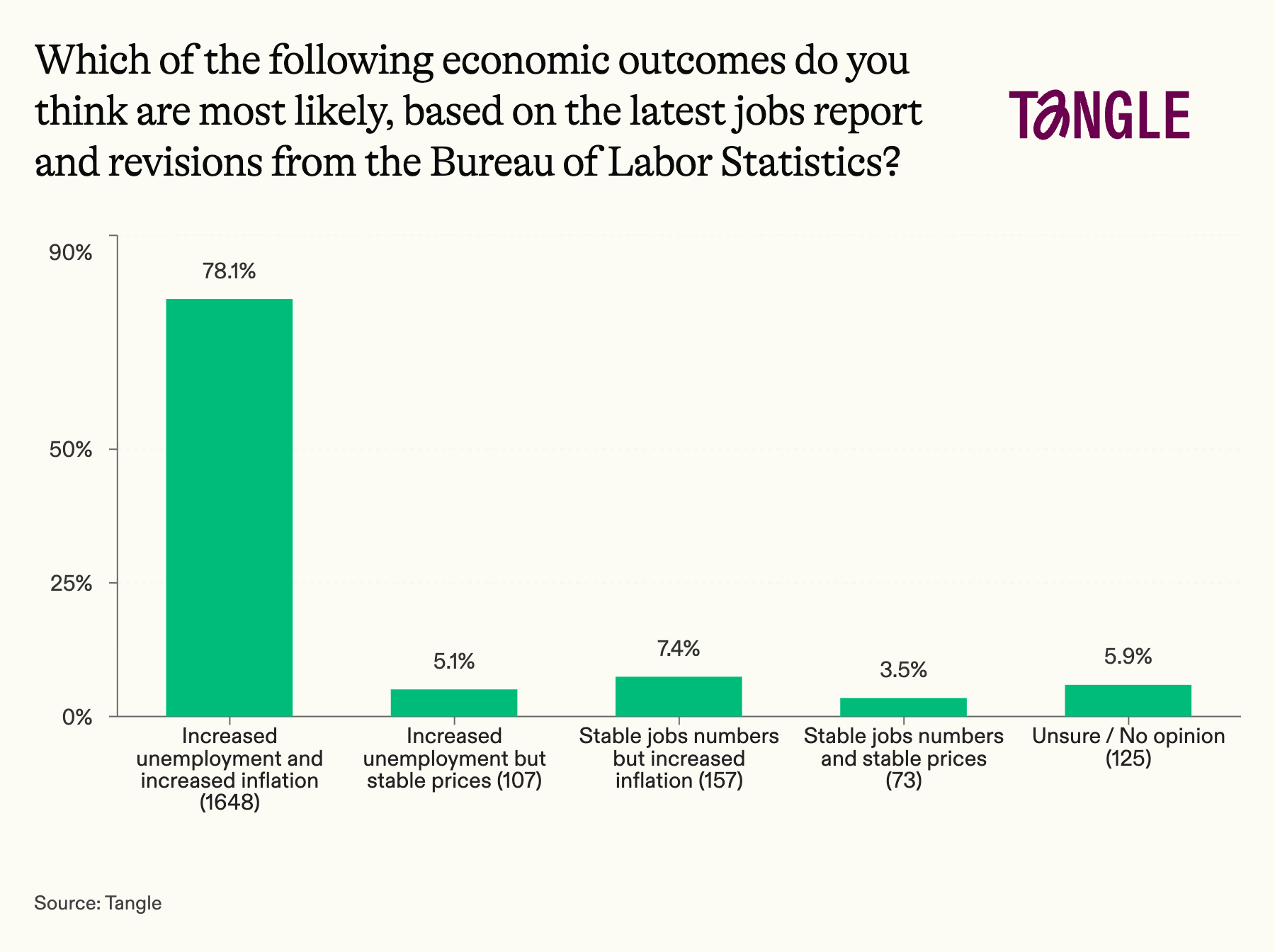
- Yesterday’s survey: 2,110 readers responded to our survey on the latest economic outlook with 78% saying they expect increased unemployment and inflation. “Aggressive tariffs across most trade partners levied all at the same time will definitely bring instability to our economy for a while (years), especially if Trump keeps promulgating these tariffs at his whim,” one respondent said.
Have a nice day.
Guinness World Records recently celebrated 70 years since its first book of amazing and unusual achievements, marking the anniversary by highlighting some of the uplifting stories of record holders. One such person is Zaila Avant-Garde, who holds the record for the most bounce juggles in one minute with four basketballs (255). Avant-Garde, 18, has gone on to win the Scripps National Spelling Bee, author a bestselling book, and be named Sports Illustrated Kids’ “SportsKid of the Year.” In addition to sharing these stories, Guinness World Records identified 70 potential records that have yet to be broken, including the fastest 400-meter sack race, farthest distance to bounce a coin into a cup, and the most headbands worn at once. Nice News has the story.

Member comments