




I'm Isaac Saul, and this is Tangle: an independent, nonpartisan, subscriber-supported politics newsletter that summarizes the best arguments from across the political spectrum on the news of the day — then “my take.”
Are you new here? Get free emails to your inbox daily. Would you rather listen? You can find our podcast here.
Today’s read: 13 minutes.
Enter by August 30th to Win the Trip of a Lifetime
If you’re dreaming of a nature-filled summer vacation, the National Park Foundation is offering the perfect opportunity: It’s giving one lucky winner the chance to explore any national park of their choice.
You could win $10,000 in cash for travel expenses from Forbright Bank and 500,000 American Airlines AAdvantage® miles to help you get there.
The National Park Foundation is the official nonprofit partner of the National Park Service, and by entering the giveaway, you’ll help sustain the places you love for current and future generations — and maybe win the trip of a lifetime.
Enter Now to Win - Ends 8/30
*This is from one of our sponsors. Advertise with us here.
What does bipartisan work look like?
During our time with Rep. Jake Auchincloss (D-MA), we got a surprise visitor: Rep. Dusty Johnson (R-SD), one of the most influential conservatives in the House. Isaac sat down with Johnson and Auchincloss for a 30-minute interview, just a tiny snippet of which was included in our documentary on Auchincloss. Today, we’re releasing that interview in full — which includes a conversation about how the two representatives have remained friends in this ever-divided world, what kinds of issues they work on together, and where they disagree:
Quick hits.
- A shooter killed two children and injured 17 others at a church in Minneapolis, Minnesota; the shooter died by suicide. FBI Director Kash Patel said the bureau is investigating the incident as an act of domestic terrorism and a hate crime against Catholics. (The shooting)
- The White House fired Susan Monarez, director of the Centers for Disease Control and Prevention, just weeks after she was confirmed to the position. Monarez reportedly resisted pressure to step down after refusing to agree to rescind certain approvals for Covid vaccines. Her firing prompted the resignation of the agency’s chief medical officer and other key officials at the agency. (The departure)
- Transportation Secretary Sean Duffy said his department plans to take over management of Washington, D.C.'s Union Station, saying he believes the agency can better manage the station. Washington Mayor Muriel Bowser endorsed the move. (The plan)
- The United Kingdom, France, and Germany are expected to begin reimposing United Nations sanctions on Iran over its alleged violation of a 2015 deal that sought to curb Iran’s nuclear program. (The sanctions)
- The United States’s 50% tariffs on Indian imports took effect on Wednesday. President Donald Trump doubled the tariffs from an initial 25% rate in retaliation for India buying Russian oil. (The tariffs)
Today’s topic.
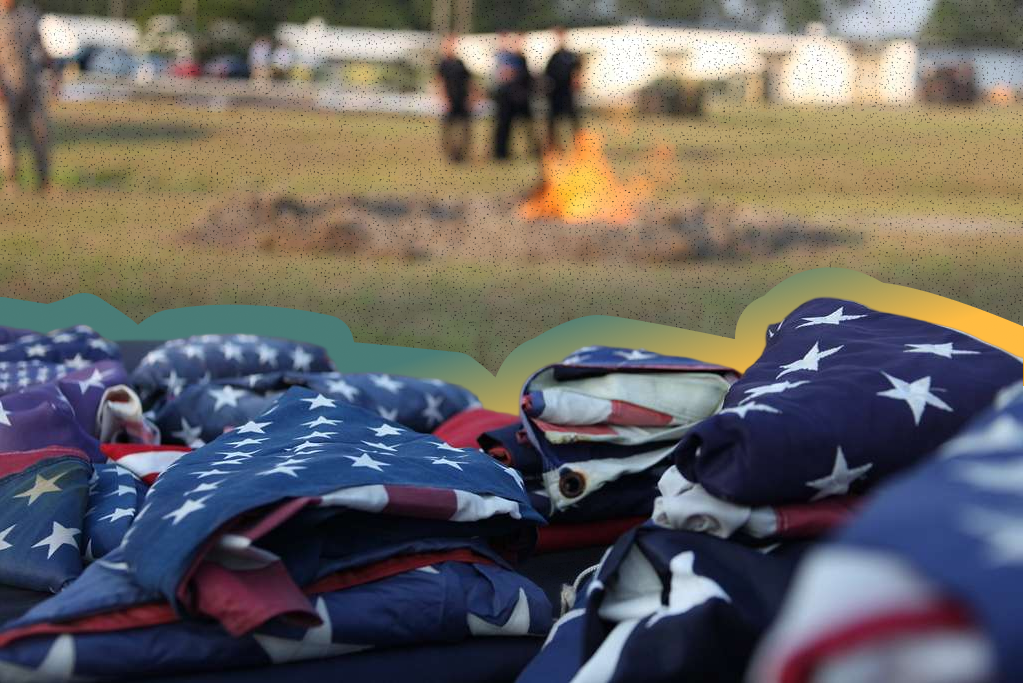
Desecrating the American flag. On Monday, President Donald Trump signed an executive order instructing the attorney general to prosecute unlawful acts that involve desecrating the American flag. The order directs the attorney general to refer acts involving flag destruction that may violate state or local laws to the relevant local authorities; it also calls for litigation to clarify the extent of First Amendment protections for such acts. Though the order does not stipulate a specific punishment, President Trump said that violators will face one year in jail.
Back up: In Texas v. Johnson (1989), the Supreme Court ruled 5–4 that burning the American flag is a constitutionally protected act. The majority found that flag burning is a form of symbolic speech and thus covered by the First Amendment. In dissent, Justice John Paul Stevens argued that the government could outlaw flag burning because of the flag’s unique symbolic status in the United States. In 1990, the same five-justice majority voted to strike down a law passed by Congress criminalizing the conduct of anyone who “knowingly mutilates, defaces, physically defiles, burns, maintains on the floor or ground, or tramples upon” a U.S. flag.
President Trump’s executive order does not ban flag burning — or other acts of flag desecration — outright. Instead, it directs the attorney general to prosecute those who vandalize the flag “in a manner that is likely to incite imminent lawless action,” listing violent crimes, hate crimes, and illegal discrimination against American citizens as examples. Separately, the order instructs various federal agencies to “deny, prohibit, terminate, or revoke” visas and other immigration benefits for foreign nationals who desecrate the flag.
After Trump signed the order on Monday, federal authorities arrested a man who set an American flag on fire across the street from the White House. The man claimed to be a 20-year combat veteran and said he was burning the flag in protest of the executive order, according to video of the incident. Park Police said they arrested the man for violating a statute that prohibits lighting a fire in a public park.
Many legal scholars suggested the order could violate the First Amendment, and The Foundation for Individual Rights and Expression (FIRE), a nonprofit focused on defending civil liberties, criticized it in a statement, writing, “While people can be prosecuted for burning anything in a place they aren’t allowed to set fires, the government can’t prosecute protected expressive activity — even if many Americans, including the president, find it ‘uniquely offensive and provocative.’”
Today, we’ll break down the debate over desecrating the American flag, with views from the right and left. Then, my take.
What the right is saying.
- The right is mixed on the order, with some saying it properly distinguishes between protected and unprotected speech.
- Many, however, suggest it runs afoul of the Constitution.
- Others suggest the Supreme Court is likely to side with a challenge to the order.
In Newsweek, Josh Hammer argued “flag burning is not protected ‘speech.’”
Trump’s “bold move is not merely symbolic; it's a restoration of allegiance to the foundational totems that unite us as a people and a nation,” Hammer wrote. “The American flag is not a mere inanimate banner. It is the embodiment of our national identity, the collective sacrifice of generations, and the unity of otherwise-diverse peoples under shared principles and a shared polity. When reprobates desecrate the American flag, they assault not merely fabric, but our American heritage and way of life. By enforcing tangible consequences for such rogue behavior, President Trump sends a clear message: National unity requires national respect.”
“Many legal critics are predictably howling, citing Texas v. Johnson (1989) and U.S. v. Eichman (1990)... But Trump's executive order, on its face, only narrowly targets actions that genuinely provoke danger, riot, or civil unrest,” Hammer said. “There is, or at least was intended to be, a massive First Amendment distinction between protected speech and non-protected conduct. That distinction has been blurred by decades of left-liberal and right-liberal constitutional jurisprudence, but the distinction remains for all who have any cursory familiarity whatsoever with the history and political theory of the American Founding.”
In Reason, Robby Soave called the executive order “unconstitutional.”
“It's understandable why people don't like flag burning. The flag is a visual representation of the principles upon which America was founded, and when it's disrespected, many Americans take it as a sign that those values are being treated with contempt,” Soave wrote. “Free speech, though, is among the most fundamental American values of all. The right of Americans to speak their minds is enshrined in the First Amendment; importantly, this right does not apply solely to benign, polite, socially acceptable speech.”
“The executive order grapples with the actually existing Court precedents in creative fashion, introducing the idea that while flag burning itself might be protected speech, flag burning ‘that is likely to incite imminent lawless action’ could still be criminalized. This is true to the extent that incitement is one of the exceptions to the First Amendment. It isn't specific to flag burning though — an expressive action that incites other people to engage in specific, direct lawlessness might be outside the bounds of the First Amendment, whether or not the action has anything to do with the flag,” Soave said. “The key word there is might, however. There's obviously a fundamental difference between engaging in speech to directly advocate for a lawless action and burning the American flag.”
In Fox News, Jonathan Turley said the order sets up a “big fight down the road.”
“The president may be hoping the Supreme Court might salute and reverse long-standing precedent declaring flag burning to be protected speech under the First Amendment. If so, he is likely to be disappointed. The proposed prosecutions would be unconstitutional and, absent an unlikely major reversal of prior precedent by the court, flag burning will remain a protected form of free speech,” Turley wrote. “Consider the implications of laws enhancing prosecution and penalties for selective speech. A liberal president could seek enhancements for views deemed hate speech or disinformation.”
“Flag burners can still be prosecuted for burning material on streets or public property. However, those laws must be neutrally written and neutrally applied. Otherwise, Trump and others could seek a constitutional amendment to create an exception for flag burning under the First Amendment,” Turley said. “This is never an easy fight for free speech defenders. No one relishes being accused of defending flag burners. However, free speech often demands that we fight for the rights of those we despise or views we deplore. We do not need the First Amendment to protect popular speech.”
What the left is saying.
- The left argues the order is unconstitutional, but many worry the Supreme Court could ignore precedent to uphold it.
- Some note that the action tramples on traditional conservative views on free speech.
- Others suggest the order is toothless.
In The Nation, Elie Mystal called the order “a total set-up.”
“The order purports to ‘restore respect and sanctity to the American Flag and prosecute those who incite violence or otherwise violate our laws while desecrating this symbol of our country, to the fullest extent permissible under any available authority,’” Mystal wrote. “A three-by-five-foot American flag (which Google tells me is a standard size for an American home) costs around $25 bucks on Amazon. I don’t know a lot of people who like setting twenties on fire given Trump’s economy, so I am confident we are not currently experiencing an epidemic of flag burning such that we need an entire executive order to ‘restore respect’ to the nylon. More likely, this executive order will create the problem it purports to solve.”
“Flag burning was settled constitutional law, but that’s not the whole story… The Supreme Court left open the possibility that flag burning could still be criminal if it were likely to inspire ‘imminent lawless action,’” Mystal said. “The current Supreme Court has shown no respect for its own precedents, even the ones it laid down only a few years ago. This gang of Republicans masquerading as judges will have no problem overturning a 36-year-old case that their side only barely lost anyway. If the Republican supermajority wants to make flag burning unconstitutional, it certainly can.”
The Washington Post editorial board wrote about “Donald Trump vs. Antonin Scalia.”
“Trump’s order targets flag-burning for precisely the reason Scalia thought it was constitutionally protected: because it ‘is a statement of contempt’ for the United States, as the order puts it,” the board said. “Like both men, we find flag-burning contemptible — and understand the visceral emotion that virtually all Americans feel when they see Old Glory set ablaze. Scalia was correct, however, that the First Amendment protects contemptuous speech.”
“Like many of Trump’s executive orders, this one seems intended less for its policy effect than as a provocation. If left-wing activists start burning flags to make a point, they will play right into Trump’s hands. He wants to wrap himself in the American flag,” the board wrote. “The challenge for opponents of the president is to behave more like Scalia — that is, to project their patriotism while also refusing to yield on core constitutional rights.”
In Techdirt, Mike Masnick criticized Trump for “criminaliz[ing] free speech.”
“The executive order is so weak because, as it acknowledges, the Supreme Court has made it clear that the burning of the American flag is almost always protected expression under the First Amendment… It also highlights the point that flag burning is not just highly expressive, but the fact that America allows for the burning of its flag as a form of speech highlights American ideals,” Masnick said. “Of course, the MAGA crowd knows all of this even if they’re pretending to forget it this week. You may recall that just last year the Heritage Foundation chose to fly the American flag upside down over its headquarters after Donald Trump was found guilty by a jury.”
“The executive order pretends to get around all of this by pretending that it’s only talking about ‘unconstitutional’ ’versions of flag burning, which they claim are when it amounts to ‘fighting words’ or likely to incite imminent lawless action,” Masnick said. “This is constitutional nonsense on multiple levels. The ‘fighting words’ exception has been effectively neutered by decades of Supreme Court decisions, and the Brandenburg ‘imminent lawless action’ standard sets an incredibly high bar that peaceful flag burning never meets.”
My take.
Reminder: “My take” is a section where I give myself space to share my own personal opinion. If you have feedback, criticism or compliments, don't unsubscribe. Write in by replying to this email, or leave a comment.
- The fundamental question of whether flag burning is protected speech or not is in no way clear cut, and hinges mostly on context.
- Trump is smartly trying to define this issue around incitement, which is one of the few ways flag burning loses its protected status.
- That being said, incitement is already a crime and I don’t think he’ll succeed in moving the needle much.
One odd reality of American politics is that most Americans greatly misunderstand our country. Perhaps my favorite chart illustrating this idea comes from YouGov, which shows how we overestimate the size of minority groups and underestimate the size of majority groups:
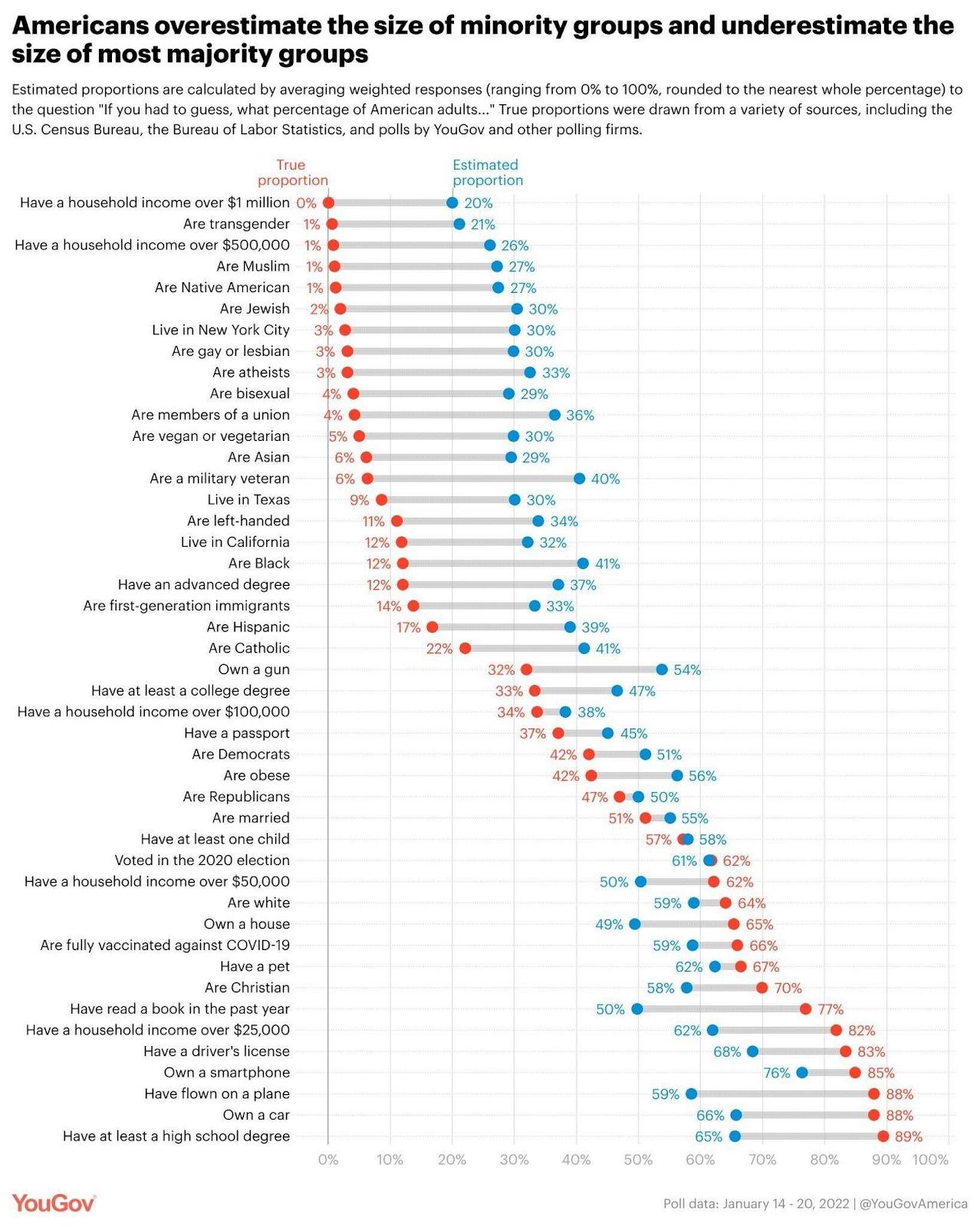
A belief you could probably add to this list is “tolerates burning the American flag.” We see images of protesters or rioters burning the flag pretty regularly, and I bet Americans would vastly overestimate the number of Americans who support this act. According to a CBS News poll, two-thirds of Americans think burning or destroying the flag should be outright illegal. While a third think it should be legal, or protected speech, I suspect a tiny fraction of Americans — maybe 1% or less — would ever support or participate in an actual flag-burning protest.
Which is all just to say that burning or desecrating our flag remains a deeply unpopular act, one that grates at my own personal sensitivities. Our flag reminds me of all the things I love about our country — it evokes a sense of unity, duty, and freedom. When I see the flag, I think of the Olympics and World War II and prosperity, not costly wars or corruption or gerrymandering. And when I see someone desecrating the flag, my emotional, knee-jerk reaction is that I would feel perfectly alright if that person gets punished for it.
But whether you abhor flag burning or not is a separate question from whether or not it should be protected speech.
Here, the question is a lot more interesting. The oft cited Texas v. Johnson ruling that constitutionally protects flag burning as political expression was a narrow 5–4 decision because there’s actually a sizable gap between speech the law obviously protects and speech the law obviously criminalizes. This executive order makes the scope of what is criminal a little broader.
If Trump’s goal is to prosecute more flag-burning down the road, then this is smart. Incitement is a key crossroads where some speech loses its protection. The Texas v. Johnson case concerned a man who had burned a flag outside the Dallas City Hall to protest the Reagan administration. He wasn't inciting violence; he was just expressing his displeasure with the administration’s actions. It would make sense to treat burning a flag in front of a crowd preparing to storm the White House differently from someone just burning one in their backyard, whether in protest or in adherence to the Department of Defense’s guidelines for respectfully disposing of a worn-out flag.
This incitement test applies to all speech. For instance, if I tell a friend I hate my boss and want to hurt him, that is constitutionally protected. However, that same statement would not be constitutionally protected speech if I say it to my colleagues and ask if they’ll help me. The context matters in this case, just as it does with flag burning.
Ultimately, I think the line is not going to budge. One of the most critical sentiments that came from the Texas v. Johnson ruling was the now well supported idea that the government doesn’t get to determine symbolic meaning. In that case, the Supreme Court determined that state officials did not have the authority to determine that some symbols (like an American flag) could only be used to communicate a limited set of messages. From the ruling:
[I]f there is a bedrock principle underlying the First Amendment, it is that the Government may not prohibit the expression of an idea simply because society finds the idea itself offensive or disagreeable.
The jurisprudence of the decades since has, fortunately, supported more speech, not less. But the reaction to Trump’s order certainly illustrates how the ground is moving under our feet on speech issues. To me, the most persuasive argument that flag burning should be criminalized comes from Josh Hammer (under “What the right is saying”), who argues both that the flag is a unique symbol with special meaning worth protecting and that Trump is protecting some kind of social fabric and order by enforcing penalties for desecrating it.
The problem with Hammer’s position is that it presumes — and enforces — his and Trump’s view of the flag onto everyone else. The fundamental point of free speech rights is that the government can’t impose its understanding or meaning of a symbol like the flag onto me, or police how I treat or express that symbol. For Hammer, for Trump and for me, the flag symbolizes something stirring and patriotic; but for some people it represents the way the promise of America has let them down. Our constitution affords them the right to express that view, and an order like this inches us closer to abandoning this right.
A surprising number of people on the MAGA right have also insisted that flag burning should be illegal because burning a pride flag or Black Lives Matter flag is illegal. This is a salient comparison, but for the opposite of the intended reason: burning those flags is also legal. You can burn a pride flag or Black Lives Matter flag a million times over and not face any charges. What you can’t do is burn one of those flags in specifically criminal ways — you can’t steal someone else’s flag and burn it, you can’t burn it in a public place where fires are prohibited, and you can’t burn the flag in certain contexts where the act is motivated by hate (For example, I could burn a pride flag in my own backyard and upload a video expressing a viewpoint like “I reject homosexuality” without facing criminal charges, but if I uploaded the video with a message threatening to attack my gay neighbor I’m no longer protected).
One of the best-known cases of burning a pride flag involved a man named Adolfo Martinez, who stole one from a church and then burned it outside a strip club. Before burning the flag, Martinez was making threats toward people at the club, then left the club, went to the church, stole the flag, returned with the flag, and burned it in the street. He also threatened to burn down the bar. He then told the media that it was an “honor” to burn the flag, and he did it because he “opposed homosexuality.” He got 15 years in prison.
Now imagine if someone went to a veterans bar, said he hated the military, came back with a stolen American flag, burned it in the parking lot, and said he'd burn the bar down while calling veterans slurs. He’d get arrested, but the simple act of burning the flag would not be the thing that got him in trouble. We don’t need an executive order that blurs the lines of free speech to prosecute this act; it’s already criminal. In that sense, this order is probably a nothingburger, albeit a provocative one.
Given most Americans’ patriotism and attachment to our flag, this order is going to be popular. Trump, smartly, has once again put a lot of Democrats and liberals on the losing side of an issue. But popular sentiment can easily morph into rights infringement, which is all the more reason to think carefully about what’s really at stake here. This isn’t about protecting some “communist filth” so they can light up the flag to whip up a frenzy in the streets, it’s about maintaining a bright red line between how I’m allowed to express my thoughts and the government’s authority to determine my meaning or restrict my liberty over that expression.
Remember: The majoritarian instinct to squash the kinds of political expression you don’t like will always come back around — especially when you attempt to codify it into law.
Take the survey: Do you think flag burning should be illegal? Let us know!
Disagree? That's okay. My opinion is just one of many. Write in and let us know why, and we'll consider publishing your feedback.
Your questions, answered.
Q: When Isaac says capitalism is flawed, is he comparing it to an as-yet unknown perfect alternative? Or does he have specific flaws he could correct under another economic approach? He does say capitalism is generally superior, so I’m not sure whether the “flawed” comment has any real meaning in this context.
— David from Cranston, RI
Isaac Saul, Executive Editor: Capitalism can be the best economic system humans have developed so far and still be imperfect. I can appreciate the fundamental and powerful benefits of being free to choose what you buy, owning the fruits of your own labor, and having a market system set fair prices — and still say that this system has flaws.
When I mention capitalism’s “flaws,” the biggest flaw I can think of is how it drives wealth inequality. Capitalism makes increasing your wealth progressively easier with the more money you have, which drives inequality. When you pay your bills on time, your credit score goes up — then you get more favorable loan terms. When you make money from investments, you can diversify your portfolio more — then you have an easier time generating returns. When you succeed in a venture, you can get a controlling share of a company — which allows you to earn income passively (and if you can get paid in shares, you can get a tax benefit). On the other hand, even getting a loan or being able to get easy transportation is almost impossible for someone without means, which makes advancement hard.
On a personal note, I went from living on $38,000 a year in a five-bedroom apartment in New York to running a successful media business in seven or eight years, and I experienced first hand how the more money I had, the easier it was to make more money. To me, this illustrates both the incredible opportunity capitalism provides and the cyclical way it can keep some people poor while other people get richer and richer.
Capitalism has provided a pathway to bring millions of people out of poverty and it creates immense prosperity. I don’t have a better idea, and I’d choose capitalism over any other system in a heartbeat — but I’m not blind to its flaws.
Want to have a question answered in the newsletter? You can reply to this email (it goes straight to our inbox) or fill out this form.
Under the radar.
On Tuesday, OpenAI (the company behind ChatGPT) shared that it is making changes to its artificial intelligence products to better recognize and respond to signs of mental and emotional distress in users. The announcement follows reports of people turning to ChatGPT in the midst of mental health crises, expressing feelings and ideas that the chatbot may not recognize or respond to appropriately. In a blog post about the updates, OpenAI said that it is enhancing the suggestions ChatGPT provides to users over the course of extended interactions, while working toward additional features such as simplified access to emergency services and connections to trusted contacts. You can read the announcement here, and The Wall Street Journal has the story.
Win $10,000 + 500K Miles for Your Dream National Park Trip
The National Park Foundation is giving one lucky winner the chance to explore any national park of their choice.
You could win $10,000 in cash for travel expenses from Forbright Bank and 500,000 American Airlines AAdvantage® miles.
Enter by August 30th to win the trip of a lifetime.
Numbers.
- 48. The number of U.S. states that had laws prohibiting various forms of flag desecration in 1989.
- $2,000. The amount that Gregory Lee Johnson was fined for burning an American flag at the Republican National Convention in Dallas in 1984 (he was also sentenced to one year in jail).
- 69% and 27%. The percentage of Americans who supported and opposed, respectively, a Constitutional amendment to allow laws making the burning of the American flag illegal in a 1990 Gallup poll.
- 56% and 41%. The percentage of Americans who supported and opposed, respectively, a Constitutional amendment to allow laws making the burning of the American flag illegal in a 2006 Gallup poll.
- 34% and 49%. The percentage of U.S. adults who said it should be legal and illegal, respectively, to desecrate the American flag in a protest demonstration in a 2020 YouGov poll.
- 34% and 66%. The percentage of U.S. adults who said it should be legal and illegal, respectively, to desecrate the American flag in a protest demonstration in a 2024 CBS News/YouGov poll.
The extras.
- One year ago today we covered the Israel–Hezbollah conflict.
- The most clicked link in yesterday’s newsletter was the shooting in Minneapolis.
- Nothing to do with politics: An extinct volcano in Arkansas that is also the world’s only public diamond mine.
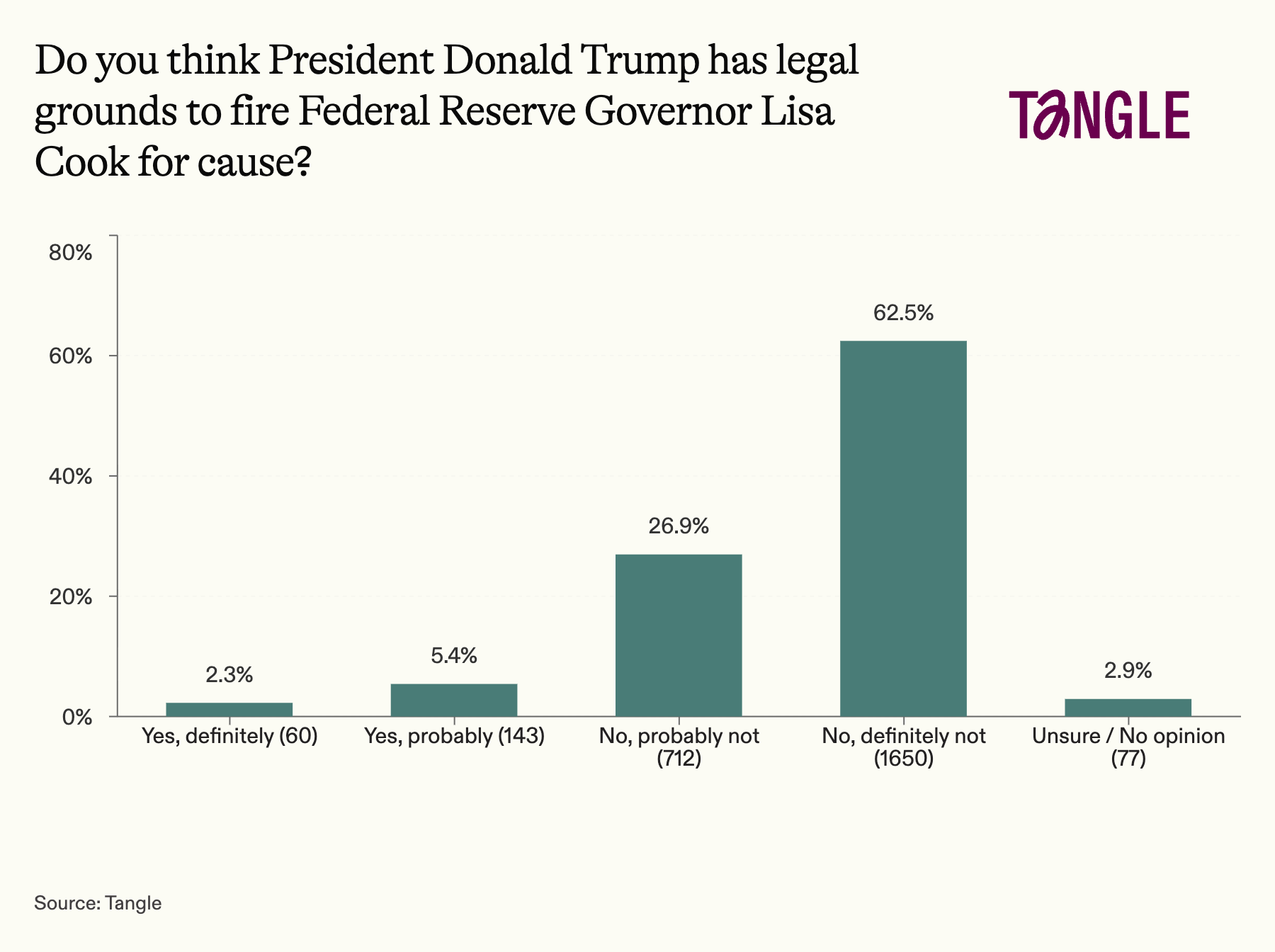
- Yesterday’s survey: 2,642 readers responded to our survey on Donald Trump firing Lisa Cook with 63% saying he definitely does not have legal cause. “Why is he fighting battles that the people are not interested in?” one respondent asked.
Have a nice day.
16-year-old Sam Heintz played first base for the Southside Strikes in Grand Rapids, Michigan, this summer. That Sam can continue his family’s baseball tradition is thanks in no small part to the medical team at Helen DeVos Children's Hospital. When Sam was eight years old, he underwent a surgical transplant to replace his failing kidneys — and since he is a left-handed batter, his family made an unusual request: to place the new kidney on his left side. “They said that's never been a request before,” said Sam’s mom, Alicia. “They were happy to do it. They were happy to make it happen.” ABC13 has the story.
Don’t forget...
📣 Share Tangle on Twitter here, Facebook here, or LinkedIn here.
🎧 We have a podcast you can listen to here.
Member comments