
I'm Isaac Saul, and this is Tangle: an independent, nonpartisan, subscriber-supported politics newsletter that summarizes the best arguments from across the political spectrum on the news of the day — then “my take.”
Are you new here? Get free emails to your inbox daily. Would you rather listen? You can find our podcast here.
Today’s read: 14 minutes.
The rise of measles.
Last month, we covered measles outbreaks in different states across the country, leading the United States to the brink of losing its elimination status with the disease for the first time in over two decades. For our latest YouTube video, Associate Producer Aidan Gorman takes a look into what’s driving the rise in cases, and the role that vaccines have to play.
You can watch the video here!
Quick hits.
- Defense Secretary Pete Hegseth said a U.S. submarine sank an Iranian warship in the Indian Ocean amid ongoing operations in Iran. (The latest) Separately, the Pentagon identified four of the U.S. soldiers killed in the conflict, all of whom were members of an Iowa unit of the U.S. Army Reserve. (The identifications)
- The Pentagon announced that the United States and Ecuador began joint military operations against “designated terrorist organizations” in Ecuador. U.S. troops are not believed to be taking part in ground operations, instead providing intelligence and support to Ecuadorean forces. (The operations)
- President Donald Trump said he will cut off U.S. trade with Spain after the country rejected a U.S. request to access its military bases as part of operations against Iran. (The comments)
- Homeland Security Secretary Kristi Noem testified before the Senate Judiciary Committee, facing pointed questions from Republican and Democratic lawmakers about the Trump administration’s immigration enforcement actions. Noem will testify before the House Judiciary Committee today. (The hearing)
- A federal judge ruled that New York City’s congestion pricing can continue, finding that the Trump administration’s effort to terminate the program was illegal. (The ruling)
The Internet Used to Be Quieter
Remember browsing without pop-ups stalking you across every site?
CleanWeb from Surfshark brings that back — blocking ads, trackers, and malware with one install.
Pages load faster, creepy banners vanish, and your data stays yours.
Tangle readers get it for $1.99/month (87% off) plus 3 extra months free.
Today’s topic.
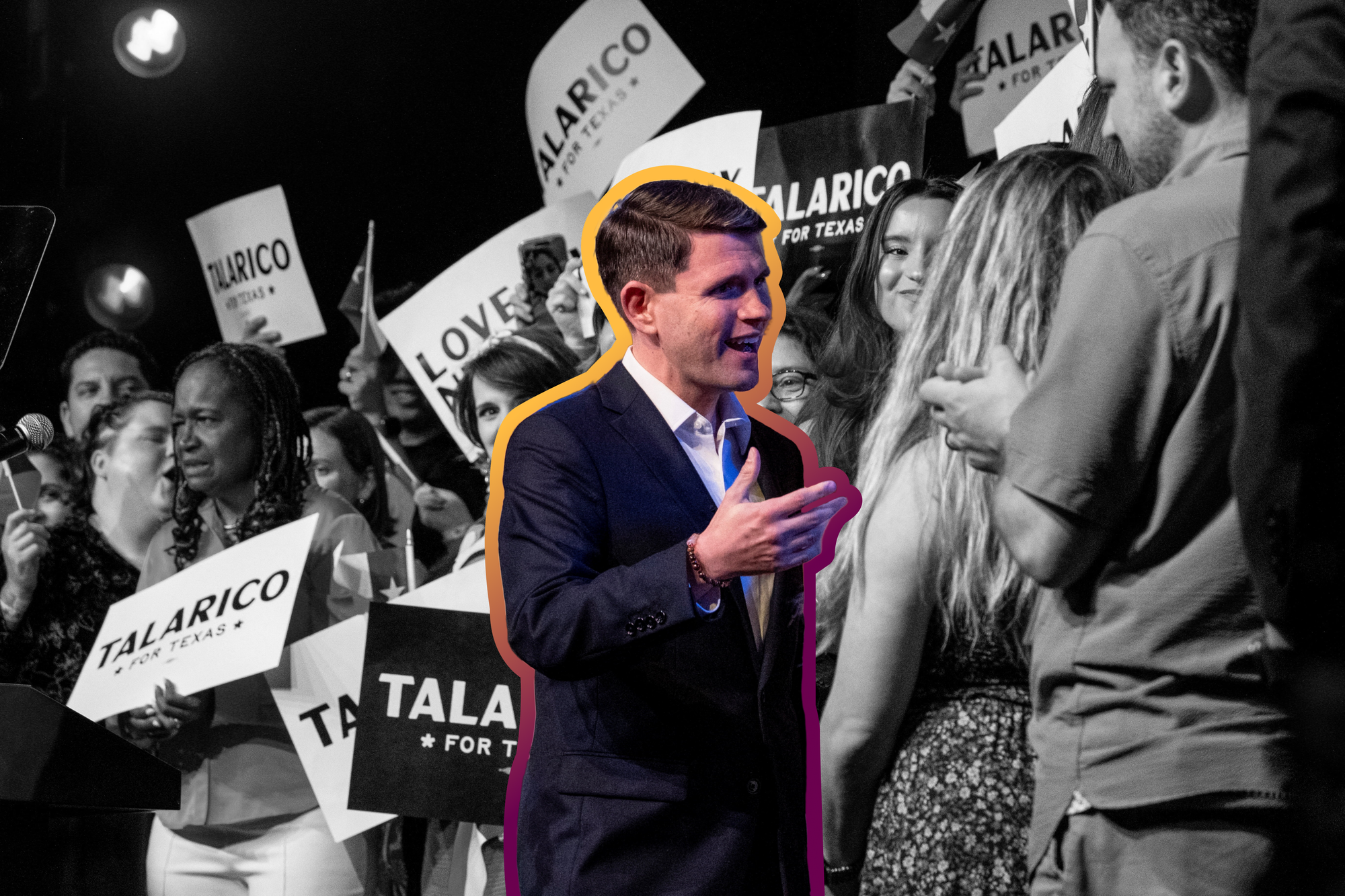
The first primaries of the midterm elections. On Tuesday, voters in Arkansas, North Carolina and Texas voted in party primaries to elect candidates for federal, state, and local offices in the 2026 midterms. In the Texas Democratic Senate primary, state Rep. James Talarico defeated Rep. Jasmine Crockett, while Sen. John Cornyn and Attorney General Ken Paxton will head to a runoff in the Republican Senate primary. In North Carolina, former Republican National Committee Chairman Michael Whatley and former Gov. Roy Cooper (D) won their respective party’s Senate primaries. Meanwhile, Sen. Tom Cotton (R) won renomination for a third term in Arkansas’s Republican Senate primary and will face farmer Hallie Shoffner (D) in the general election.
In Texas: Sen. Cornyn has held his seat for four terms but faces a difficult renomination effort against Paxton (and the later addition of Rep. Wesley Hunt). Cornyn highlighted allegations of Paxton’s corruption and bribery, while Paxton questioned Cornyn’s conservative bona fides. Cornyn currently leads Paxton 41.9%–40.7% with >95% of the votes tallied; the runoff will be held on May 26.
On the Democratic side, Talarico, who has served in the Texas state House since 2018, ran on a faith-based, populist platform. Crockett, who has served in the U.S. House since 2023, has built a national profile as an outspoken critic of President Trump and Republicans. With 94% of the votes counted, Talarico leads 52.8%–45.9%, and most decision desks have called the race in his favor.
Crockett conceded on Wednesday, though a dispute remains over ballots cast in Dallas County, where she has a base of support. On Tuesday evening, a state judge ruled that polls should stay open two extra hours after voters were reportedly turned away for arriving at the wrong precinct (Dallas and Williamson Counties adopted new voting rules ahead of this primary). Paxton, acting in his capacity as attorney general, then requested the Texas Supreme Court block that ruling; it did, ordering votes cast after 7:00 PM be separated from the main pool.
Elsewhere in Texas, state Rep. Steve Toth defeated incumbent Rep. Dan Crenshaw in the Republican primary for TX-02, and Reps. Christian Menefee and Al Green appear headed to a runoff in the Democratic primary for TX-18. Green opted to challenge Menefee after his current district, TX-09, was redrawn to favor Republicans. The Democratic primary for TX-33 will go to a runoff between Rep. Julie Johnson and former Rep. Colin Allred, as will the Republican primary for TX-23 between Rep. Tony Gonzales and activist Brandon Herrera.
In North Carolina: The race to replace outgoing Sen. Thom Tillis (R) is one of the most high-stakes contests in the 2026 midterms, as Democratic leaders see the seat as one of their strongest opportunities to narrow Republicans’ 53–47 majority in the Senate. Cooper, a former two-term governor, won the Democratic primary with 92% of the vote, while Whatley won the Republican primary decisively with 64.6% of the vote.
In the state’s 1st Congressional District, five candidates sought the Republican nomination to challenge incumbent Rep. Don Davis (D) after the state legislature redrew the district’s lines in 2025 to improve Republicans’ chances of winning. Laurie Buckhout, a retired Army colonel who challenged Davis in the general election in 2024, won the GOP nomination.
In Arkansas: Sen. Tom Cotton (R) faced two Republican challengers in Tuesday’s primary, but won renomination with 81.6% of the vote. Elsewhere, Gov. Sarah Huckabee Sanders (R) ran unopposed for renomination for a second term, as did the state’s lieutenant governor, attorney general, auditor and treasurer, all Republicans.
Today, we’ll explore the results of Tuesday’s biggest races, with views from the right and left on the Texas Senate primaries. Then, Executive Editor Isaac Saul shares his take.
What the right is saying.
- The right sees Cornyn vs. Paxton as a stark choice for GOP voters.
- Some say the party faces electoral challenges if it nominates Paxton.
- Others suggest Talarico will be a formidable opponent in the general election.
In USA Today, Nicole Russell said Texas voters are “not yet convinced of what they want.”
“I'm not surprised to see a runoff but as a conservative, I’m concerned. It’s clear that Texans seem to be torn about which direction they want the GOP to go — Cornyn represents the old guard establishment and Paxton the scandal-ridden MAGA,” Russell wrote. “A runoff between Cornyn and Paxton will likely force President Donald Trump to endorse one of the two. My guess is he’ll choose Cornyn to keep the Senate majority, because the incumbent has a better chance of beating the Democratic candidate than the attorney general does.”
“I still think either Cornyn or Paxton will ultimately beat Talarico, but it will be a tighter race now. That’s not a bad thing for Republicans. They still need to prove to Texans why conservatism is better for them at a local and national level,” Russell said. “A high Democratic turnout in a presidential midterm year should concern Republicans just as much as the fact that the quality of the candidates Democrats have chosen to represent them has also improved. Talarico is a far cry from the abysmal and unqualified former Rep. Beto O’Rourke.”
In The New York Times, Kevin D. Williamson asked “is [Paxton] what G.O.P. voters want?”
“Mr. Trump is sui generis. But what about Attorney General Ken Paxton of Texas? Throughout his career and in the Republican Senate primary, he has explored the outer limits of the troll-as-tribune model of politics,” Williamson wrote. “So far, that’s been working out pretty well for him. Sure, he forced his way into a primary runoff against John Cornyn, a four-term incumbent senator who received tens of millions of dollars of support, a lopsided financial advantage in the most expensive Senate primary on record. All that money didn’t close the deal.”
“The fact that Mr. Paxton has come so far without explicit support from the White House cannot be seen as anything other than a victory for the Texas attorney general and his brand of politics,” Williamson said. “The notion that Ken Paxton would take a sudden turn for the serious and the statesmanlike — that he is capable of such a thing — is implausible. With Americans now in danger and being killed in the Middle East, the taste for Paxton-style performative buffoonery could diminish. But it has been a disappointing decade for those who have been waiting for the Republicans to come to their senses.”
In The Fort Worth Star-Telegram, Ryan J. Rusak suggested the “Crockett, Talarico race came down to electability and a flawed campaign.”
“Here’s the thing about electability: It’s something of a self-fulfilling prophecy. In the 2008 Democratic presidential contest, Barack Obama was widely thought to be struggling. Some Democrats openly feared that the country simply wouldn’t vote for a Black candidate for president. Then, he won the first nominating contest in an almost entirely white state, Iowa. Suddenly, he was plenty electable,” Rusak wrote. “Talarico, to be clear, is not Barack Obama. He’s not even 2018-vintage Beto O’Rourke. But he is young and delivers a crisp message.”
“Democrats such as Crockett are fond of saying that most Texans are with them but that ours is a nonvoting state. A nonvoting state where turnout keeps rising? Weird, right?,” Rusak said. “Crockett got into the race late, didn’t raise enough money and had a poor campaign organization that got distracted by trifling matters, such as ejecting a supposedly unfriendly Atlantic reporter from a rally. Voters don’t care about or even notice such incidents, but they say something about a campaign’s ability to keep its eyes on the prize.”
What the left is saying.
- Many on the left bemoan the continued appeal of Republican candidates in Trump’s mold.
- Some praise Talarico’s faith-based approach to politics.
- Others say Talarico can win if Republicans nominate Paxton.
In Salon, Amanda Marcotte wrote “Texas primary shows that MAGA loves a villain.”
“If Texas Republican voters wanted an effective, strong leader who has been successful at pushing right-wing policy, they could not do better than Cornyn. As it turns out, that is not what the Lone Star State’s GOP primary voters wanted. On Tuesday, a slim plurality of Republican voters picked Cornyn as the nominee in November’s Senate race, a dismal result that sends the contest into a run-off against MAGA firebrand Ken Paxton,” Marcotte said. “In today’s Republican Party, scandal and corruption don’t hurt candidates. To the contrary: Being the worst has become a selling point to GOP voters, who conflate odious behavior with being a ‘fighter’ on behalf of their increasingly tribalistic interests.”
“On top of the relentless odor of scandal emanating from Paxton, his actions in office would likely alienate swing voters in a general election. He loves wasting taxpayer money on go-nowhere lawsuits that excite bigots and conspiracy theorists, but that annoy everyone else,” Marcotte wrote. “There’s not a shred of evidence that people like Paxton or Trump are actually warriors for any cause outside of their own ambition. The great irony is that Cornyn, and others like him, has done far more to advance conservative policies than Paxton, with his flashy but groundless lawsuits, ever has.”
In MS NOW, Guthrie Graves-Fitzsimmons said “James Talarico is living up to the hype — by staying true to his faith.”
“James Talarico’s victory in the Texas Democratic Senate primary is bigger than state politics… Talarico has a lot of powerful qualities, but his unapologetic embrace of his Christian faith sets him apart from other rising Democratic stars — and it could maybe even help reshape American politics,” Graves-Fitzsimmons wrote. “For decades, Democrats have ceded religious language to Republicans. Republicans claim the mantle of faith, while Democrats too often respond by criticizing the GOP’s ‘God talk’ and emphasize the separation of church and state. In the process, millions of progressive Americans have become politically voiceless, despite the fact that the majority of Democrats are people of faith themselves. Talarico changes that.”
“Talarico’s message is not about moderating progressive commitments to win over religious conservatives. It is about courage. It is about saying plainly that support for LGBTQ+ equality, reproductive freedom, public education and church-state separation can flow directly from Christian faith. He’s openly Christian and firmly pluralistic,” Graves-Fitzsimmons said. “That does more than close a messaging gap: Talarico and those like him can change the terrain. When leaders speak about faith with confidence instead of defensiveness, they show that democracy and devotion are not in conflict.”
In The New Republic, Perry Bacon argued “Talarico can win the Texas Senate seat.”
“The broader political environment is ideal for Talarico. Trump’s poll numbers keep dipping, even in Texas. His approval there is now around 45 percent, while around half of voters disapprove. The Democratic base is very fired up, and swing voters are turning away from the GOP, which is why Democrats have done very well in virtually every race across the country since the 2024 election,” Bacon wrote. “Crockett and Talarico differ in persona, but they are both liberal Democrats who speak frankly about the radicalism of today’s Republicans. That’s what the Democratic base is demanding, both in Texas and around the country.”
“If Paxton defeats Cornyn in the May runoff, Democrats have one of their best chances in recent memory to win in Texas. The downside is that if Paxton defeats Cornyn, the most likely outcome is that the Senate gets a new member (Paxton) who is a bit more conservative than Cornyn and way, way more corrupt and unethical,” Bacon said. “Perhaps Democrats can’t ever win Texas. But James Talarico in 2026 could be the Democrats’ breakthrough in the Lone Star State.”
My take.
Reminder: “My take” is a section where we give ourselves space to share a personal opinion. If you have feedback, criticism or compliments, don't unsubscribe. Write in by replying to this email, or leave a comment.
Executive Editor Isaac Saul: With the first round of statewide primaries in the books, the midterm elections are officially here. Last night’s races decided candidates in three states and touched on all manner of nationally relevant stories, even for people not living in North Carolina, Texas, or Arkansas. There’s a lot to cover. Here are 13 thoughts on what we just witnessed.
- In North Carolina, State Senate leader Phil Berger (R), who some consider the most powerful man in the Tar Heel State, is at the center of the state’s Senate race. More than 26,000 people voted in the Republican primary, as of this writing, and Berger is down by two votes. With all precincts reporting and the election now coming down to overseas and provisional ballots, the two are currently separated by the choice of one primary voter. Among many other reasons, this exemplifies why I always encourage you to vote.
- Big picture for Republicans: The GOP establishment mostly got what it wanted. In Texas, GOP-backed House Republicans took care of business. In North Carolina, the Trump- and party-backed Senate candidate Michael Whatley won easily. Notably, House Rep. Dan Crenshaw (R-TX) lost his primary to a Trump-branded (and Sen. Ted Cruz-backed, though not officially Trump-backed) challenger, completing a rather stunning fall from political celebrity (it doesn’t feel that long ago that the guy was doing SNL hits). Crenshaw lost some credibility in the MAGA movement, and it seemed to cost him.
- Big picture for Democrats: The party just let out a big exhale in Texas, where James Talarico won over Jasmine Crockett. Talarico is generally viewed as much more “electable” in a general election for the Senate in Texas, especially if he’ll face Republican Ken Paxton (who’s headed to a run-off with Sen. John Cornyn, but looks to be in the weaker position). In North Carolina, progressives scored wins in state legislative contests while the party’s establishment held on in their House and Senate races. Mostly, these races went to chalk. If I could define a theme for Democratic victories yesterday, it’d be that economic populism beat out identity politics — that’s a relatively new phenomenon in the Democratic Party, but we’re seeing it again and again.
- Arkansas is very different from, and much less competitive than, either Texas or North Carolina. Still, Democrats flipped a GOP state House seat, while incumbents Gov. Sarah Huckabee Sanders (who ran unopposed) and Sen. Tom Cotton cruised to victories in their primaries.
- Talarico’s win in Texas seems like the obvious choice for most notable event of the evening to me. This was a head-to-head battle between two decidedly different styles. Talarico is a faith-first candidate who spoke in dulcet tones to Texans across the state about returning to a better body politic; he had a message of inclusion, courting everyone from pro-Trump Republicans to far-left progressives to Joe Rogan. Crockett is a progressive firebrand who called the state’s wheelchair-bound governor “hot wheels” and went scorched earth on Trump and MAGA every chance she got. Their ideologies aren’t honestly that different — both are staunch progressives — but their styles very much are. I can’t say I’m sad to see the maximally partisan style Crockett embodies take a clear loss; I just don’t believe it’s good for our country to have more politicians like that.
- Speaking of Talarico–Crockett, last night featured some very unnerving news about voting access in the Dallas–Fort Worth area. This was Crockett’s home base, and the reversal to stop accepting votes after 7:00 pm, after a judge had extended the hours, struck me as both unusual and a very bad outcome (Crockett called for polls to remain open and, to Talarico’s credit, he also did). I think it’s fair to blame the entire mess on Republicans. Last fall, the Dallas County GOP voted to change from a county-wide system to a precinct-wide system for primaries to better enable hand-counting of ballots, causing confusion about what polling place voters should show up to. After voters filed complaints about being turned away from what they thought were their precincts, a state judge extended the time the polls would stay open at the Democratic Party chair's request. That confusion was then exacerbated when Republican candidate and state Attorney General Ken Paxton successfully petitioned the state Supreme Court to reverse the state judge’s decision to extend poll hours last night.
- Broadly speaking, I am more on the side of making it easier, not harder, for polling places to accept and count votes. I do think the legal basis here for extending poll hours might be flimsy (voters being confused about where to go is much less compelling than, say, technical problems with voting machines), but the context is relevant: A major change to rules clearly confused many voters, causing an inordinate number of people to be turned away. I don’t see the downside of adding two more hours of voting time to help address that issue.
- Given that Crockett’s rise to stardom began when she was fighting for voting rights in Texas as a state representative, it’s a cruel and sad irony that her Senate campaign, years later, would end amid controversy over her core constituents having their votes suppressed (in Crockett’s telling). If Talarico’s margin of victory had been smaller, this would have been a major scandal.
- Kamala Harris endorsed Crockett, who led Talarico in many different polls in the weeks leading up to the primary. You could have a couple different takeaways from that, but neither reflect well on Harris. Either the endorsement shows poor political instincts from the former vice president, or Harris’s endorsement actually hurts Democrats in Texas, or both. Personally, I wouldn’t be surprised if the Crockett campaign is now having some second thoughts about aligning itself with the former vice president.
- Talarico put up some pretty absurd numbers in Texas’s blue spots like Austin. One New York City journalist described his margins as “Mamdani in Bushwick numbers,” with 90% support in certain precincts. Talarico has also been all over the Big Bend wall story I’ve written about in Tangle that is lighting up rural Southwest Texas politics right now. He went from relatively unknown to star status in a matter of months, and benefitted from the Streisand Effect after CBS canceled his interview with Stephen Colbert. Can he flip a Senate seat in Texas? It would take a very bad candidate running against him, an extremely good campaign and a perfect national atmosphere, so I’ll bet against Democrats until they prove me wrong. But if Paxton pulls it out after what will almost certainly be a contentious 12-week runoff, I think Talarico presents the party with the best opportunity to turn Texas blue they’ve had in decades.
- Whom will Trump endorse in the Texas Senate primary runoff? Now… we wait. Cornyn has only lost one election in his career — in a 1994 Texas State Railroad Commission primary. He’s a serious politician, a serious fundraiser, and a serious Senate operator who has repeatedly won over Texans year after year after year. He has, at times, broken from Trump and the GOP, but he’s still a party guy. Conversely, Paxton is a scandal-ridden attorney general who has been indicted on securities fraud charges, impeached on bribery charges, faced whistleblower complaints of illegal activities, made all manner of inflammatory comments, and even faced allegations of infidelity. From a purely political standpoint, their records are night and day — one candidate does nothing but win, the other is toxic in almost every way. But the one thing Paxton has in spades is an abiding, unconditional love and support for President Trump. Obviously, that carries a lot of weight for the president. But is that loyalty worth risking a Senate seat in Texas?
- Best-case scenario for Democrats is that Trump takes his time and lets these two guys (who seem to genuinely loathe each other) fight it out for months, spend tons of money, and leave Talarico to own the spotlight and put the focus on the failures of the Republican state party. Worst-case scenario for Democrats is that Paxton submits quickly, especially if Trump immediately endorses Cornyn, putting Talarico toe-to-toe with the more formidable opponent before an expensive general election.
- In some counties in South Texas, Democratic turnout was higher among Hispanics in yesterday’s primary than it was in the 2024 presidential election. In North Carolina, Democratic candidate for Senate Roy Cooper got hundreds of thousands of more votes than the Republican candidates for Senate combined. It’s hard to glean too much from numbers like this, but they’re probably encouraging to Democratic strategists surveying the field.
Take the survey: Who do you think will win this year’s Texas Senate election? Let us know.
Disagree? That's okay. Our opinion is just one of many. Write in and let us know why, and we'll consider publishing your feedback.
Your questions, answered.
We're skipping the reader question today to give our main story some extra space. Want to have a question answered in the newsletter? You can reply to this email (it goes straight to our inbox) or fill out this form.
Under the radar.
On Tuesday, the Justice Department filed a motion to reverse its request from the day prior to end its cases against four law firms targeted by President Trump. In February 2025, Trump issued a series of executive orders severing the federal government’s relationship with firms he claimed engaged in “conduct detrimental to critical American interests” — those firms had previously represented clients or hired lawyers who opposed the president. Some firms sued and won their initial challenge, but the Trump administration appealed to the D.C. Circuit Court of Appeals. While the Justice Department appeared ready to abandon the cases on Monday, it abruptly changed course on Tuesday and will attempt to continue its appeal. Neither the Justice Department nor the White House has commented on the decision. The New York Times has the story.
Browse Like It's Y2K
Remember when "pop-ups" meant toys, not annoying ads?
Back when the only thing tracking you was your neighbor's nosy cat?
Today's internet is loud, cluttered, and secretly collecting your data. CleanWeb from Surfshark is the digital bouncer you never knew you needed.
It blocks ads, trackers, and malware. Just one install, and boom — pages load faster, creepy banners disappear, and your browsing feels like the internet used to: clean, simple, and yours.
Tangle readers can get it now for just $1.99/month (87% off), plus enjoy 3 extra months free.
Numbers.
- 1.3 million. The approximate number of votes cast during the early voting period in Texas’s Democratic Senate primary.
- 2.8 million. The approximate total number of votes cast in Texas’s 2008 Democratic presidential primary, the state’s current record for Democratic primary voting.
- 1.1 million. The approximate number of votes cast during the early voting period in Texas’s Republican Senate primary.
- 2.8 million. The approximate total number of votes cast in Texas’s 2016 Republican presidential primary, the state’s current record for Republican primary voting.
- 1994. The most recent year that a Democrat won a statewide office in Texas.
- $69 million and $4 million. The approximate amount spent on advertising by Sen. John Cornyn (and his supporters) and Attorney General Ken Paxton (and his supporters), respectively, in Texas’s Republican Senate primary, according to AdImpact.
- $24.5 million and $5 million. The approximate amount spent on advertising by State Rep. James Talarico (and his supporters) and Rep. Jasmine Crockett (and her supporters), respectively, in Texas’s Democratic Senate primary.
- 9.6%. Former Gov. Roy Cooper’s (D) average polling lead over former Republican National Committee Chairman Michael Whatley (R) in a projected matchup for North Carolina’s open Senate seat, according to RealClear Polling.
The extras.
- One year ago today we covered a potential federal cryptocurrency reserve.
- The most clicked link in yesterday’s newsletter was Isaac’s special report on the border wall in Southwest Texas.
- Nothing to do with politics: Ryan Gosling gives an interview to a reporter who was stranded on the side of the road.
- Yesterday’s survey: 2,527 readers responded to our survey on the military using AI systems with 70% comfortable with it under hard restrictions. “I’m uncomfortable with ANY government agency or any company using AI technology without hard restrictions,” one respondent said. “I wouldn’t say I’m ‘comfortable’ with the military using AI, but I believe we need to develop its use in order to counteract other countries’ use,” said another.

Have a nice day.
HIV has never truly been cured — the virus hides in immune cells, dormant and undetectable, ready to rebound the moment treatment stops. Now, researchers at Weill Cornell Medicine and Rockefeller University have isolated those hidden cells for the first time, opening a potential path to eliminating them entirely. “For decades, we have known that HIV hides in long-lived immune cells,” senior author Dr. Brad Jones said. “If we can properly arm the immune system to kill those cells, we may be able to tip the balance toward curing infection.” Weill Cornell Medicine has the story.

Member comments