
I’m Isaac Saul, and this is Tangle: an independent, nonpartisan, subscriber-supported politics newsletter that summarizes the best arguments from across the political spectrum on the news of the day — then “my take.”
Are you new here? Get free emails to your inbox daily. Would you rather listen? You can find our podcast here.
Today’s read: 13 minutes.
Cloud seeding and climate change.
Today, we’re answering a reader question about cloud seeding in Texas. On Friday, Tangle Managing Editor Ari Weitzman will discuss the practice in more detail in a piece on the latest advances in climate change modeling. He’ll also get into other alarming questions (Do we only have five years to avoid catastrophe? Is the planet actually cooling?) before describing how climate models work and what they’re telling us about our future.
Quick hits.
- BREAKING: The Israel Defense Forces announced that it had struck a target near the Syrian Defense Ministry’s headquarters in Damascus in response to the Syrian government’s ongoing clash with armed Druze groups in southern Syria. (The strike)
- President Donald Trump expressed support for a potential redistricting plan in Texas that could improve Republicans’ odds of maintaining control of the House of Representatives in the 2026 midterm elections. (The plan)
- The Pentagon announced it is ending the deployment of 2,000 National Guard troops in Los Angeles. The servicemembers had been deployed to the city in early June in response to protests over the Trump administration’s deportation efforts. (The announcement)
- Russian Deputy Foreign Minister Sergey Ryabkov rejected President Trump’s call for a peace deal to end the war in Ukraine in the next 50 days, calling the demand “unacceptable.” (The response)
- House Speaker Mike Johnson (R-LA) called on Attorney General Pam Bondi to offer a more substantive explanation for her decision to end further disclosures on the Jeffrey Epstein case, adding that the Trump administration should “put everything out there and let the people decide it.” (The comments)
- President Trump said he had reached a preliminary trade deal with Indonesia, which will reportedly include a 19% U.S. tariff on Indonesian imports and no tariffs on U.S. exports to Indonesia. (The deal) Separately, the Trump administration will impose a 17% duty on most fresh Mexican tomatoes imported to the U.S. (The tariffs)
Today’s topic.
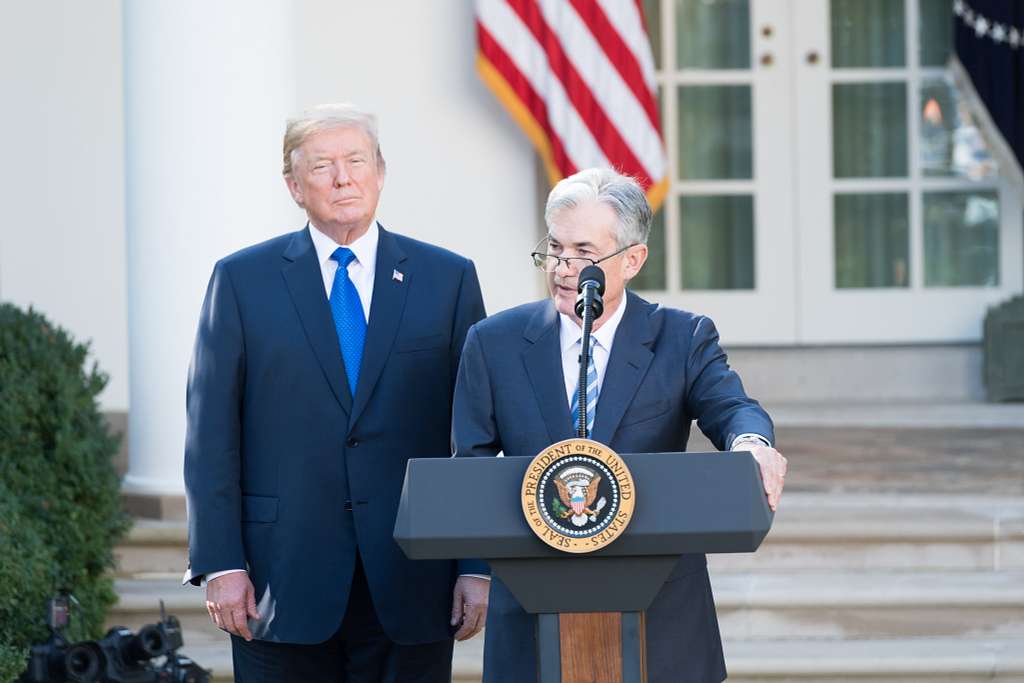
Jerome Powell, Trump, and inflation. In recent weeks, President Donald Trump has escalated his criticisms of Federal Reserve Chair Jerome Powell over Powell’s decision to maintain interest rates at current levels. The comments follow reports that Trump is considering removing Powell from his position, and Treasury Secretary Scott Bessent said that the administration has begun vetting replacement candidates. Separately, on Tuesday, the Bureau of Labor Statistics (BLS) released its monthly Consumer Price Index (CPI) report, which showed prices rising faster than in May. The report added to existing concerns from economists and lawmakers that President Trump’s tariffs would be inflationary, a possibility that Powell has cited as his rationale for holding off on cutting the Fed’s interest rate.
Tuesday’s BLS report said the Consumer Price Index (CPI) — a measure of the average change in the prices consumers pay for a collection of goods and services — increased 2.7% in June from the year prior, roughly in line with economists’ expectations; the annual CPI was 2.4% in May. Core inflation, which excludes more volatile food and energy prices, rose by 0.1% in May and 0.2% in June, with annual core inflation increasing by 2.9%. Energy prices increased 0.9% and food prices rose 0.3%. The only price categories to decrease month over month were new vehicles, used cars and trucks, and airline fares; the categories declined 0.3%, 0.7% and 0.1%, respectively.
In a series of posts on Truth Social, President Trump framed the inflation numbers as a positive development and called on Powell to cut interest rates by three points from its current rate of 4.5%. Trump has criticized Powell for several months over his refusal to cut rates and has suggested that he might fire the Fed chair if rates do not decrease soon. In May, the Supreme Court ruled that the Federal Reserve was exempt from the president’s firing power over other federal agencies.
Congressional Republicans have also scrutinized the Federal Reserve over a planned $2.4 billion renovation of its Washington, D.C., headquarters. In a Senate hearing in June, Senator Tim Scott (R-SC) called the renovations “luxury upgrades that feel more like they belong in the Palace of Versailles.” Senate Republicans and White House officials have accused Powell of lying before Congress for underselling the cost of the renovations, leading to speculation that the president may use the controversy to oust Powell from his position.
Powell has denied the accusations and requested an inspector general review of the renovation.
Today, we’ll explore perspectives on the economy and the Trump–Powell feud from the left and the right, then my take.
What the left is saying.
- The left strongly opposes Trump’s attacks on Powell, worrying that a move to replace him could trigger widespread economic fallout.
- Some urge caution in reacting to the latest inflation numbers.
- Others argue that politicized central banks have ravaged the economies of other countries.
The Washington Post editorial board said “Trump’s attacks on the Fed are worse than you think.”
“If Trump fires Powell — an unlikely outcome — immediate disaster would result: Investors would lose confidence in the Fed’s ability to make politically tough but economically necessary decisions. Investors would abandon U.S. assets, bond markets would go haywire, and the dollar would plummet,” the board wrote. “But Trump risks politicizing the Fed even if he lets Powell stay through the end of his term as chair in May. He has signaled that Powell’s successor must be willing to cut rates to get the job, which means that markets will perceive any nominee — whether Scott Bessent, Kevin Warsh, Kevin Hassett or someone else — as pre-politicized.
“That would bring bad economic consequences, even in the best-case scenario. Suppose the new chair, unwilling to totally compromise his legacy, refuses to sharply cut rates like Trump wants. Instead, he delivers just a quarter-point cut — a concession to political pressure, perhaps, but a small one,” the board said. “Politicians aren’t good at monetary policy. They face a powerful temptation to goose the economy in the short term, even at the cost of future growth. (Just look at how Trump’s budget bill will explode the national debt.) That’s why independent central banks exist: to take the long view and make decisions based on economic fundamentals rather than the political calendar.”
In Bloomberg, Jonathan Levin praised “Powell’s caution on tariff-driven inflation.”
“Trump’s needling aside, the latest inflation data show that Powell’s wait-and-see approach is the exact right tack for today’s economic outlook,” Levin wrote. “The Bureau of Labor Statistics said Tuesday that the core consumer price index rose 0.2% in June from a month earlier, a slightly encouraging surprise that leaves the year-over-year rate at 2.9%. But the reading remains well above the Fed’s 2% target, and the details of the report show that tariffs are starting to fan higher prices and that larger effects might start to feed through over the next couple of months.”
“Still, this was neither a month to panic nor celebrate. With the backdrop of a steady unemployment rate, it’s time to do as the embattled Fed chair — whom Trump has committed to replacing when his term is up next year — has been advising all along: Wait for more data,” Levin said. “It’s entirely possible, of course, that tariff impacts could spread further and that the Fed will still lower policy rates. The central bank doesn’t have to wait for inflation to return to 2% to start lowering rates again; rates are clearly at a level that the median Fed policymaker would deem restrictive. Powell and his colleagues just need to gain confidence that it remains on the right trajectory.”
In The New York Times, Rebecca Patterson wrote “if you like 35 percent inflation, go ahead, fire the Fed chair.”
“Let’s look at Hungary and Turkey. Leaders of both countries, faced with budget deficits, inflation pressures and a desire to increase growth (sound familiar?) have broken institutional standards and changed laws to ensure that their central banks support the government’s political aims,” Patterson said. “Not surprisingly, Hungary’s currency has been weakening against the euro since 2011, more so than other regional currencies… [In Turkey, President Recep] Erdogan fired the central bank’s governor (who had kept rates high to slow inflation) and selected his replacement. Over the next few years, he continued to fire and replace governors and deputy governors. Not much good came from lower interest rates. Since the 2018 election, the Turkish lira has lost 88 percent of its value against the dollar.”
“There is a reason both Republican and Democratic presidents in recent decades have publicly supported central bank independence. They have agreed on financial accountability and rule of law. They have also understood that even if the Fed makes mistakes, acting independently of politics supports its credibility, and that helps make the United States a more reliable, more attractive place to invest,” Patterson wrote. “Without that stability and predictability, the nation is in danger of losing what makes its economy and financial markets exceptional.”
What the right is saying.
- Many on the right question Powell’s tariff-driven rationale for resisting an interest rate cut.
- Some say Trump’s effort to oust the Fed chair could backfire.
- Others suggest Powell should be replaced if he doesn’t change course soon.
In Understanding America, Oren Cass wrote “something is rotten at the Federal Reserve.”
“One might look at the economy’s current state, with inflation approaching the 2% target and unemployment holding near 4% and conclude that everything looks fine, interest rates should hold steady. If that were Powell’s position, it would seem respectable,” Cass said. “Instead, he has made a point of going on the record that, ‘If you just look at the basic data and don't look at the forecast, you would say that we would've continued cutting. The difference, of course, is at this time all forecasters are expecting pretty soon that some significant inflation will show up from tariffs.’”
“But tariffs are not inflationary. Obviously, tariffs can cause changes in prices. In some respects, that’s their entire purpose. But a change in relative prices, or even a one-time shift upwards in the overall price level, is not ‘inflation’ of the type cognizable for monetary policy,” Cass wrote. “Perhaps you could construct an inflation story from the concern expressed by many economists that tariffs will reduce output. But raising interest rates would be an odd response; and asking the Federal Reserve to sit in preemptive judgment on which economic policies it believes will be best and worst for growth… would transform and politicize the Fed’s role irrevocably.”
In The Wall Street Journal, Gerard Baker suggested “Trump may end up sorry he tried to control the Fed.”
“I shall refrain from the pearl-clutching of much of the media about Mr. Trump’s efforts to pressure the Fed to be more accommodating. Since the Fed gained true independence in the 1950s, almost every president has complained that the central bank was holding back the economy with high interest rates,” Baker wrote. “What’s more, there are reasonable grounds for thinking Mr. Powell has gotten things badly wrong. Even the Fed agrees it was too slow in responding to the inflationary surge that followed the Covid-19 pandemic.”
“The problem, though, is that replacing him with someone committed to doing Mr. Trump’s bidding would make things much worse… However bad Fed policy is, if markets think the central bank is run according to the president’s priorities, the likely consequence will be tighter, not easier, money,” Baker said. “If Mr. Trump could really find a person on the planet who thinks rates should be ‘3 points lower’ than they are — pushing the policy rate down to 1.25%, a negative real rate of about 1.5% in an economy the president himself touts as ‘booming’ — yields on everything from Treasurys to corporate bonds would surge on confident expectations that the Fed was lighting an inflationary bonfire.”
In The Washington Times, White House Senior Trade Counselor Peter Navarro argued “Powell’s Fed [is] imposing enormous costs on America.”
“Powell’s stubborn refusal to lower interest rates — despite ample evidence calling for such action — is inflicting serious economic damage on America. Even keeping rates just half a percentage point higher than economic conditions justify carries heavy costs in growth, employment, household finances and the federal budget,” Navarro wrote. “Moreover, about a quarter of the nation’s debt is financed through short-term Treasurys. These instruments are acutely sensitive to interest rate hikes. Keeping rates unnecessarily elevated by 50 basis points means taxpayers face an additional $100 billion in debt-service costs over the next decade. Mr. Powell’s rigid policies thus impose a double fiscal burden.”
“This isn’t Mr. Powell’s first costly error. Recall that during President Trump’s first term, Mr. Powell erroneously raised rates in 2018, choking off robust economic growth. History is repeating itself in Trump’s second term, as the Fed chair again misjudges economic conditions and refuses to rectify his mistake,” Navarro said. “It’s past time the Federal Reserve Board of Governors intervened. Mr. Powell appears incapable of acknowledging, let alone correcting, his profound miscalculations. If he will not voluntarily adjust course, the board must act decisively to prevent further economic harm.”
My take.
Reminder: “My take” is a section where I give myself space to share my own personal opinion. If you have feedback, criticism or compliments, don't unsubscribe. Write in by replying to this email, or leave a comment.
- The economy has been doing great, but June’s CPI report suggests the first tariff-induced price spikes are here.
- Whether these spikes constitute inflation is debatable, as is whether the Fed should cut interest rates.
- Powell certainly should not be fired for his decision or for the Fed’s renovation, and replacing him with a yes man could be disastrous.
Let’s start with a quick reality check: The economy is doing very well.
Unemployment may have ticked up in the past year, but it continues to hover at about as low a level as it has sustained since the Nixon administration. Job growth also continues to hum, surpassing economists’ expectations. The stock market (and crypto) are hitting all-time highs. And, up until two days ago, inflation has continued to fall. Trump’s tariffs are on pace to raise hundreds of billions of dollars of new revenue — if not for that, I’d probably be praising their potential to eat into the deficit if not for the massive deficit bomb Trump just signed into law.
Well, that and yesterday’s Consumer Price Index. The latest report showed prices went up basically across the board last month; that increase was in line with economists’ expectations, but it’s not exactly great when economists are expecting rising prices.
On Friday, I wrote that I had been wrong about the impact of tariffs on inflation. By now, I said, I would have expected price increases from tariffs to start to show up for Americans — mostly because that’s what nearly every economist on the planet told us to expect. I’ve been looking for an increase in prices for products that were being tariffed, or whose supply chains were hit by increased levies.
This week, that may have finally happened. The economist Mike Konczal produced this chart, showing price spikes for appliances and household furnishing and supplies:

Economist Parker Ross further explained the importance of appliance and furniture prices, posting on X, “If you know where to look, it seems pretty clear that inflationary pressures are building in the product categories most exposed to tariffs.” Ross had predicted tariffs would cause price increases in household furnishings first, since so many of the imports the administration has tariffed fall into that category. Household furnishings jumped by 1% in June, Ross noted, the largest bump in the sector since the peak of pandemic-era inflation in 2022.
These price increases aren’t debatable — they’re happening. What is debatable is whether they actually constitute inflation, in the traditional sense. Oren Cass (under “What the right is saying”) thoughtfully argued that any price increases tariffs may cause are not technically inflationary since they aren’t a result of too much money chasing too few goods, or the economy “overheating,” or anything else caused by monetary policy. The higher prices caused by tariffs are typically one-time increases (as long as the tariff rate doesn’t change again) that do not compound — a company gets taxed, it raises its prices, and then the event is over. Cass is essentially arguing that because these price increases aren’t caused by monetary policy, and because they might not be sustained, we should describe them differently. As a counterpoint, his critics have argued that he’s moving the goalposts, and that inflation is definitionally an increase in the cost of goods or services; regardless of whether the government is intending it, increased prices are still inflation (and intentionally causing inflation through tariffs is less excusable than accidentally through monetary policy).
Regardless of what we call increased consumer prices, I think that context provides plenty of good reason for Fed Chairman Jerome Powell to stand pat on interest rates for now. Obviously, that decision carries some risk. For instance, weekly mortgage demand just plummeted and the housing market seems desperate for some kind of relief. Also, as we learned during the Biden administration, inflation can be a self-fulfilling prophecy, and Powell’s worried projection could result in actual behavior that leads to inflation. But on the whole, I think Powell has done a genuinely good job shepherding the U.S. economy to its position today. Far too many people take for granted our current economic position, which is much rosier than any other nation’s coming out of the pandemic.
You can certainly criticize Powell on the margins, for being a cycle too late to raise rates or a cycle too slow to lower them, but that kind of criticism lands far short of justifying his removal. I’ll state that bluntly: Trump should not fire him. Supplanting Powell with an overtly political appointee would be a disaster, an argument Rebecca Patterson lays out in convincing terms (under “What the left is saying”). Every president of my lifetime has disagreed with the Fed chairman over some decision or another, but none has ever gone as far as trying to replace them. Other countries have tried it; politicizing a national bank is a disaster — not just for the long-term health of the institution, but for the nation’s economy.
I also find the attacks on Powell over the renovation of two federal buildings to be a total distraction. The project has been underway for years (going back to Trump’s first term). Yes, the $2.4 billion price tag for a building renovation certainly feels obscene (even though the initially approved budget was $1.9 billion), but Powell posted a helpful FAQ explaining how things went sideways. He even welcomed an inspector general to review the costs of the project, which the administration would pursue if they really wanted to do something productive. It’s not as if Powell conjured that money from the central bank and is leading the project management. He’s the chairman of the Fed, he sets the nation’s monetary policy. And not to beat a dead horse, but it’s hard for me to get excited about this project when Congress just voted to add trillions of dollars to our deficit.
In other words: One could argue that it's time to cut rates and that tariffs are not inflationary in the traditional sense. Honestly, I don’t have a fully formed opinion about that. What’s much harder to do is argue that Jerome Powell, the person who oversaw an objectively excellent monetary response to the pandemic, is incompetent and should be fired for not seeing things the same way. Firing the Fed chair would get the president some headlines, another round of legal challenges, and another sycophant to do his bidding (this time at one of the last remaining independent institutions in the U.S. government); the rest of us would get nothing but economic disruption.
Take the survey: What do you think about cutting rates or removing Powell as Fed chair? Let us know!
Disagree? That's okay. My opinion is just one of many. Write in and let us know why, and we'll consider publishing your feedback.
Help share Tangle.
I'm a firm believer that our politics would be a little bit better if everyone were reading balanced news that allows room for debate, disagreement, and multiple perspectives. If you can take 15 seconds to share Tangle with a few friends I'd really appreciate it — just click the button below and pick some people to email it to!
- Email Tangle to a friend by clicking here.
- Share Tangle on X/Twitter by clicking here.
- Share Tangle on Facebook by clicking here.
Your questions, answered.
Q: I was wondering if you could speak about cloud seeding? I live in Texas and I am hearing more and more about how cloud seeding is responsible for the increased rain and storms in the area. I can only assume this is extrapolated to mean that this is also somehow responsible for low pressure systems, tropical storms and hurricanes, increased death and destruction, etc. I would like help connecting the dots for how this farming practice can possibly be connected to a changing and more volatile climate.
— Christy from Texas
Tangle: We appreciate you coming to us to learn more about this! Here are the basics about cloud seeding in Texas:
First of all, cloud seeding is indeed happening; it’s also true that the government has experimented with hurricane seeding in the past as a way to mitigate more intense storms. However, it’s not the shadowy conspiracy that some claim it is. The hurricane-seeding program was paused due to public pressure and eventually canceled as scientists found they could not have a measurable effect on these storm systems. Cloud seeding, as it is used today, has a pretty narrow application: It causes moisture in the atmosphere to form into clouds.
Several western U.S. states use cloud seeding primarily for one of two reasons: to increase snowfall or to dispel hailstorms. Texas uses cloud seeding to prevent hailstorms, but it also uses it to increase rainfall. But remember, Texas is enormous. It contains regions, sub-regions, and 23 distinct drainage basins. The portions of the state that use cloud seeding are in the drier, western parts of the state, and they do not operate over the drainage basin of the Guadalupe River (the river that flooded earlier this month). What’s more, as Augustus Doricko — CEO of Rainmaker, a cloud-seeding company that operates in Texas — explains, cloud-seeding operations ceased the day before the storm because forecasters knew about the increased moisture coming off the gulf.
More to the point, cloud-seeding technology is not capable of inducing storms that can cause the level of rainfall that hit Texas’s Hill Country. Cloud seeding can cause moisture already in the atmosphere to precipitate; it cannot bust a drought or create flood-level storms. As Doricko explains, Rainmaker can precipitate 40 million pounds of water with three drones spraying a cloud-seeding agent into the sky. The storm that flooded Texas produced at least 1.8 trillion gallons of rain, which would have required over a million Rainmaker drones to seed — at which point the atmosphere would have already been wet enough to create a storm on its own (which was the case here).
Want to have a question answered in the newsletter? You can reply to this email (it goes straight to our inbox) or fill out this form.
Under the radar.
In the five years since the pandemic first forced many workers out of the office, the return to in-person work has revealed a burgeoning gender divide. New surveys show that while men are increasingly going back to the office, the share of women doing so has remained mostly flat. Some economists posit that the rise in remote work has helped more women enter the workforce, offering the flexibility to balance a career with household and child-rearing responsibilities (which women are more likely to undertake than men); data also shows a greater share of women prefer to work from home compared to men. However, some researchers find that remote work also comes with fewer opportunities for advancement and a greater risk of losing one’s job, potentially exacerbating existing gender disparities in the workforce. The Wall Street Journal has the story.
Numbers.
- 1951–1970. The years William McChesney Martin Jr. served as Federal Reserve chairman, the longest tenure of any chair in Fed history.
- 7. The approximate number of years that Jerome Powell has served as Federal Reserve chairman.
- 7. The number of months since the Fed’s last rate cut, in December 2024.
- +2.7%. The 12-month change in the CPI in June, according to the Bureau of Labor Statistics.
- +2.7%. Economists’ predicted 12-month change in CPI for June, according to a Dow Jones survey.
- +2.4%. The 12-month change in grocery prices as of June.
- –0.8%. The 12-month change in energy prices as of June.
- +3.8%. The 12-month change in housing as of June.
The extras.
- One year ago today we covered Trump picking JD Vance as his running mate.
- The most clicked link in yesterday’s newsletter was Isaac’s Friday edition on five things he got wrong about Trump.
- Nothing to do with politics: 10 promising TV pilots that never resulted in a show.
- Yesterday’s survey: 2,718 readers responded to our survey on Trump’s Ukraine support and Putin criticism with 94% supporting both. “It’s about time,” one respondent said.

Have a nice day.
The city of Paris banned swimming in its iconic River Seine in 1923 due to high pollution levels. For years, more than 20,000 homes dumped their waste directly into the Seine, contributing to its toxicity. The city has tried to lower pollution in the river since the 1990s, investing €1.4 billion in cleanup efforts that culminated in the river’s use as a venue for the 2024 Paris Olympics. This summer, for the first time in over a century, the river is open to the public for swimming. Paris’s cleanup efforts have become a model for similar projects around Europe. Paris will open the Seine in three locations until the end of August, and other municipalities plan to open 14 more swimming spots beyond the city. The Guardian has the story.
Don’t forget...
📫 Forward this to a friend and tell them to subscribe (hint: it's here).
🛍 Love clothes, stickers and mugs? Go to our merch store!

Member comments