
I’m Isaac Saul, and this is Tangle: an independent, nonpartisan, subscriber-supported politics newsletter that summarizes the best arguments from across the political spectrum on the news of the day — then “my take.”
Are you new here? Get free emails to your inbox daily. Would you rather listen? You can find our podcast here.
Today’s read: 13 minutes.
Here's how to stop Google and ChatGPT from sharing your private info
With a quick search, you’d be shocked to find out what anyone can find out about you on Google or ChatGPT. Your phone number, home address details about your family members, health records, financial accounts, employment history and even your social security number.
When you remove your sensitive data with Incogni's Unlimited Plan, you reduce the risks not just from targeted marketing spam but also identify theft, financial manipulation, and insights into your most private circumstances.
You can also send custom requests to be removed from specific websites, so that you’re safe from being found by simple Google search results or AI conversations.
Use code TANGLE today to get an exclusive 55% discount on unlimited removals from anywhere that exposes your data.
Tomorrow.
In 2023, news organizations started blasting headlines warning that the Great Salt Lake was on the verge of disappearing and could release greenhouse gases and toxic dust into the atmosphere. Then, in the next few years, the alarms receded.
Tomorrow, Senior Editor Will Kaback is asking and answering the question: Whatever happened to the Great Salt Lake’s disappearance? After speaking to Utah officials, lake experts and the two leads on the study that kicked off the clamor, Will has some interesting and nuanced answers to the question.
Quick hits.
- The Federal Reserve’s Federal Open Market Committee voted 9–2 to keep interest rates unchanged between 4.25%–4.5%, citing low unemployment and elevated inflation. The vote came amid pressure from President Donald Trump to lower interest rates. (The decision)
- With President Trump’s August 1 tariff deadline approaching, South Korea and the United States announced a trade deal to lower tariffs on Korean imports from 25% to 15% and for South Korea to invest $350 billion in the United States. (The deal) Separately, President Trump announced a 90-day extension on the tariff deadline with Mexico. (The extension)
- President Trump cited Canada’s decision to recognize Palestinian statehood as an obstacle to a trade deal, and the U.S. is set to impose a 35% tariff on Canadian imports by the August 1 deadline. (The deadline) Separately, the U.S. has imposed a 50% tariff on most Brazilian goods, and President Trump has announced sanctions on Brazil for prosecuting former President Jair Bolsonaro for allegedly plotting a coup. (The sanctions)
- The Senate rejected an effort led by Sen. Bernie Sanders (I-VT) on Wednesday to block U.S. arms sales to Israel. (The decision)
- Former Vice President Kamala Harris announced that she will not be running for California governor. (The announcement)
Today’s topic.
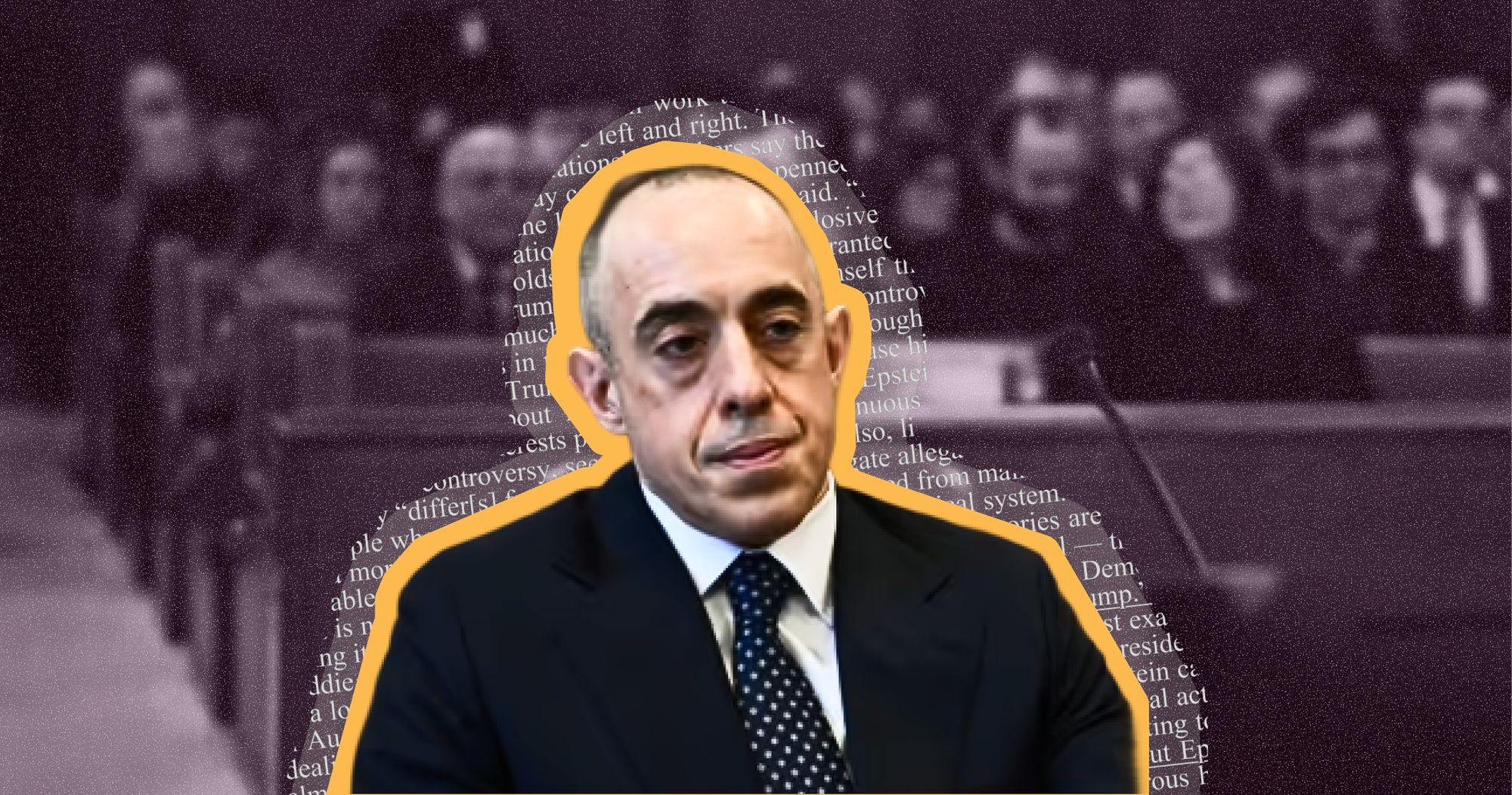
Emil Bove’s confirmation. On Tuesday, the Senate voted 50–49 to confirm Emil Bove to a lifetime judgeship on the Third Circuit Court of Appeals. Sens. Susan Collins (R-ME) and Lisa Murkowski (R-AK) joined all Democrats in opposing Bove’s nomination; Sen. Bill Hagerty (R-TN) did not vote. The confirmation follows a protracted fight over Bove’s nomination, which included whistleblower reports that Bove acted unethically and abused his power in previous roles.
Back up: Bove was President Donald Trump’s personal attorney, representing him during his recent criminal and civil trials. In November 2024, then-President-elect Trump named Bove principal associate deputy attorney general, the third-highest position at the Department of Justice (DOJ). On January 20, Bove was appointed acting deputy attorney general while Trump’s pick for deputy attorney general (Todd Blanche, also his former personal attorney) went through his confirmation process. On May 28, President Trump announced Bove’s nomination to be a federal appeals judge.
During the confirmation process, the Senate considered multiple allegations of misconduct from Bove’s time at the DOJ. Most notably, Erez Reuveni, the former acting deputy director of the Office of Immigration Litigation, submitted a letter to lawmakers that claimed Bove told Justice Department officials that they may need to defy court orders blocking the Trump administration’s deportation of noncitizens to El Salvador under the Alien Enemies Act. Reuveni said he was then fired for failure to comply with this directive (the Trump administration suspended him in April after he told a judge that he did not know what authority the U.S. used to justify its deportation of Kilmar Abrego Garcia to El Salvador).
A second whistleblower subsequently shared information to corroborate Reuveni’s claims. Separately, a group of over 900 former DOJ employees signed a letter opposing Bove’s confirmation, saying Bove led the department’s deviations from “constitutional principles and institutional guardrails.”
Separately, in February, Bove directed the Southern District of New York to dismiss without prejudice all charges in its corruption case against New York Mayor Eric Adams, a decision that prompted outcry over the appearance of an improper quid pro quo agreement between the Trump administration and Adams. Several federal prosecutors resigned in protest of the directive, and a whistleblower claimed that Bove had threatened to punish lawyers who did not go along with the dismissal. Bove told senators that the decision to drop the charges against Adams was “well within the scope of prosecutorial discretion.”
On July 17, Democrats on the Senate Judiciary Committee walked out of a hearing on Bove’s nomination after committee Chairman Chuck Grassley (R-IA) refused requests to allow further debate on the whistleblower claims. Grassley said his staff’s review of the issue could not verify that Bove urged staff to defy the courts, adding, “Even if you accept most of the claims as true, there’s no scandal… Government lawyers aggressively litigating and interpreting court orders isn’t misconduct — it’s what lawyers do.”
Democrats were unified in opposition to Bove’s nomination. After the vote, Sen. Cory Booker (D-NJ) said, “Bove’s confirmation… is a blow to the guiding principles of judicial independence and impartiality.” Separately, Sen. Murkowski said the whistleblower claims against Bove convinced her to break party lines and vote against confirming Bove.
Today, we’ll share reactions to Bove’s confirmation from the right and left, followed by my take.
What the right is saying.
- The right is mixed on Bove’s confirmation, but many praise his record and think he will be a quality judge.
- Some express reservations about his alleged conduct at the DOJ.
- Others say Bove’s resume justifies his confirmation.
In Fox News, Deputy Attorney General Todd Blanche said Bove “belongs on the bench.”
“Unfortunately, but unsurprisingly, the media has recently amplified slanderous attacks on Emil’s character based on a foundation of selective leaks, misleading reporting, and falsehoods,” Blanche wrote. “First, as to the termination of the leaker, it was Attorney General Pam Bondi and I who decided to terminate his employment. It was not Emil’s decision. And contrary to media spin, the employee was terminated for failing to defend his client — the United States of America — in open court; he was not dismissed for admitting an error in court.”
“Moreover, Emil has never encouraged lawyers or anyone else to act in defiance of a court order. There was no order to violate at the time of the alleged statements. No injunctive relief had been granted — oral or written. No directive was issued to reverse any executive action. These facts are not in dispute, not even by the leaker,” Blanche said. “Emil has the backbone for hard cases, the restraint to wield judicial authority judiciously, and the intellect to master complexity. He will decide cases fairly. He will apply the law as written. He will not bend to political pressure. And that is exactly the kind of judge our country needs.”
The Wall Street Journal editorial board argued “the quality of the President’s appellate nominees will influence whether judges and Justices decide to retire.”
“The concerns about Mr. Bove’s nomination aren’t frivolous. He was at the center of the Justice Department turbulence after Mr. Trump invoked the 1798 Alien Enemies Act to deport illegal aliens without due process. At a March 14 meeting, discussing the possibility that a judge could block those removals, ‘Bove stated that DOJ would need to consider telling the courts “f— you” and ignore any such court order.’ That’s according to a ‘whistleblower’ letter by a former government lawyer,” the board wrote. “Testifying to the Senate, Mr. Bove didn’t exactly deny uttering such a thing.”
“Mr. Bove also ordered an end to the federal corruption case against New York Mayor Eric Adams… This all creates an impression of Mr. Bove as a lawyer comfortable pursuing policy outcomes by pushing legal boundaries. A judge’s job is different. Maybe Republicans believe that Mr. Bove knows the difference. He testified that he’d interpret laws by turning to their text, as good judges should,” the board said. “Yet such nominations have a potential cost for Mr. Trump, in that Supreme Court Justices and lower-court judges will ponder the quality of the President’s choices when deciding whether to retire or take senior status.”
In The Federalist, Beth Brelje wrote “Bove will be an effective, pro-liberty judge.”
“They won’t say it, but even Democrats must know Bove is a solid pick. Many of former President Joe ‘Autopen’ Biden’s judicial picks were quite fresh out of law school with little courtroom experience and had obvious activist connections. Yet Democrats eagerly confirmed Biden’s picks. That is how you know this current posturing is only politics,” Brelje said. “Bove is currently the Principal Associate Deputy Attorney General. Much of Bove’s career has been with the Department of Justice, handling cases involving violent crime, terrorism, and drug cartels.
“In 2019, Bove earned the Director’s Award for Superior Performance by a Litigative Team from the Department of Justice. He graduated in the top five percent of his class at Georgetown University Law Center in 2008,” Brelje wrote. “Perhaps what the Democrats fear most is that Bove will bring some much needed balance to the judiciary.”
What the left is saying.
- The left opposes Bove’s confirmation, saying his loyalty to Trump undermines judicial independence.
- Some say Republicans may come to regret putting Bove on the bench.
- Others criticize Democrats for missing an opportunity to fill the seat in 2024.
In Fox News, Ryan Crosswell questioned Bove’s “fitness for the federal bench.”
“I was in the room when he made statements that my colleagues and I understood as threats — meant to pressure us into signing a motion to dismiss the federal criminal case against New York City Mayor Eric Adams. Mr. Bove has since denied making any such statements in testimony before the Senate Judiciary Committee, but those denials do not reflect what actually took place,” Crosswell wrote. “By the time of that meeting, it’s undisputed that he had already accepted the forced resignation of the U.S. Attorney in New York, put line prosecutors from that office on administrative leave for not signing the motion, and forced the entirety of the Public Integrity Section’s management to resign when it refused to carry out his order.”
Bove’s nomination “mark[s] a troubling precedent: confirming a nominee who, in my view, gave testimony that was so obviously misleading to the committee and the American public. That’s what makes this so profoundly disturbing,” Crosswell said. “Previous contested judicial confirmation hearings have involved accusations where one nomination’s credibility was pitted against that of an accuser, or judicial credentials were questioned. But never before has a nominee testified in such a demonstrably brazen manner with a wink and nod to the Republican committee members.”
In Vox, Ian Millhiser made “the conservative case against Trump’s worst judicial nominee.”
“Today, presidents typically create a bench of potential Supreme Court nominees by appointing ideologically reliable lawyers to federal appeals courts. These lawyers are selected more because of their loyalty to their political party’s agenda than to any particular person,” Millhiser wrote. “in a letter opposing Bove’s nomination, Gregg Nunziata — who served as Senate Republicans’ chief nominations counsel during the confirmations of Chief Justice John Roberts and Justice Samuel Alito — writes that confirming Bove would ‘betray the decades-long project of the conservative legal movement’ by inviting ‘more nominations of presidential loyalists in place of committed conservative lawyers.’”
“The most recent example of a president attempting to appoint a personal loyalist to the Supreme Court occurred in 2005, when President George W. Bush nominated his own White House lawyer Harriet Miers. But the Miers nomination crashed and burned in just a few weeks, largely because conservatives feared that she had a thin record on key issues like abortion,” Millhiser said. “If anything, [Bove’s] record on many of these issues is even thinner than Miers’s. So, by backing nominees like Bove, Republicans risk filling the bench with the same kind of unreliable allies that they fought to stop in 2005.”
In Balls and Strikes, Jay Willis argued “the cowardice of Senate Democrats made Emil Bove’s confirmation possible.”
“Bove was opposed by several prominent conservative legal activists, more than 80 former judges, and more than 900 former Department of Justice attorneys, who in a letter to the Senate Judiciary Committee called Bove’s confirmation ‘intolerable to anyone committed to maintaining our ordered system of justice,’” Willis wrote. “Last year, Democrats could have used their Senate majority to confirm someone very different to fill the seat: Adeel Mangi… But in the months that followed, as Republicans pushed an unhinged narrative that Mangi, who would have been the first-ever Muslim federal appeals court judge, was a cop-hating terrorist sympathizer, a handful of Democratic senators began to waver.
“The nomination then hung in procedural limbo for nearly a year until Trump’s victory in the 2024 election, which effectively killed Mangi’s chances at confirmation. As a result, the judgeship that could have been Adeel Mangi’s is now occupied by Bove,” Willis said. “It is true that Senate Democrats held razor-thin majorities during the Biden administration. But whipping the votes for a nominee as milquetoast as Mangi, a BigLaw partner who’d practiced at the same New York City firm for nearly 25 years, should not have been especially difficult. Instead, a critical mass of Democrats caved to bad-faith attacks rooted in howlingly obvious bigotry.”
My take.
Reminder: “My take” is a section where I give myself space to share my own personal opinion. If you have feedback, criticism or compliments, don't unsubscribe. Write in by replying to this email, or leave a comment.
- I find the allegations against Bove more convincing than the denials.
- Not only are the whistleblower reports credible, but former DOJ workers and judges strongly opposed his nomination.
- That Republicans would rubber-stamp Trump’s former lawyer despite this reflects extremely poorly on their integrity.
If you haven’t already, I encourage you to read two pieces from the Fox News opinion section that we cited today — one under “What the right is saying” and one under “What the left is saying” — and compare them to one another.
The first piece comes from Deputy Attorney General Todd Blanche, defending Bove’s character, and the second from Ryan Crosswell, a former federal prosecutor, accusing Bove of wrongdoing. Crosswell claims to have witnessed some of Bove’s allegedly unethical behavior, but he’s also running to be a Democratic member of Congress in Pennsylvania, so he has some obvious partisan lean. Blanche is claiming the allegations against Bove are concocted by the media, but he’s also currently serving in President Trump’s administration, so he has some obvious partisan lean, too.
When I read those two pieces side by side, I find Crosswell’s concerns far more compelling than Blanche’s denials. Crosswell is making specific and corroborated allegations that Bove tried to force a group of prosecutors into an agreement to let Mayor Eric Adams off; the public reporting and the resignations of those prosecutors support his telling of events. And anyone looking at what happened between Trump and Adams honestly should be able to see an obvious quid pro quo.
The word of a single person like Crosswell is not enough to impugn someone’s character, but my concerns about Bove do not rely on his judgment alone. Erez Reuveni, the DOJ whistleblower who spoke out about what he experienced while working for Bove, has given consistent and — again — corroborated testimony in public and private about Bove’s disregard for the law.
In fact, Reuveni sat for a lengthy interview with The New York Times explaining precisely what happened, why he was fired by the DOJ, and why he filed a whistleblower complaint. Unlike Crosswell, Reuveni is not a partisan; you can listen to his actual interview if you doubt that. He worked in the Justice Department’s Office of Immigration Litigation from 2010 — under Obama, Trump, Biden, and Trump again — until he was fired earlier this year. That means he advocated for the administration’s immigration agenda for the entirety of Trump’s first term and again at the beginning of this term. For instance, he was one of the lawyers who defended Trump’s so-called “Muslim ban” in 2017, working what he described as 100-hour weeks for the first months of Trump’s term trying to keep his order in place. He actually received commendations from the DOJ for his work in that case and for challenging sanctuary cities.
Reuveni leveled three specific allegations against Bove and the Trump administration. First, he explains that when Bove told DOJ lawyers that they might have to tell the courts “fuck you,” Reuveni was assured by his supervisor that they would follow any court orders, temporarily assuaging his fears. But the next time Reuveni was in court, he said he heard his colleagues lie to Judge Boasberg about whether planes carrying arrested noncitizens were taking off to El Salvador.
Second, Reuveni claimed that the administration was withholding information from ICE officers so they could unknowingly break the law. Essentially, Reuveni realized that the DOJ was not issuing guidance to its employees that came out of a court order to stop removing noncitizens to countries they weren’t from, but the DOJ was intentionally withholding this information from ICE, allowing agents to conduct illegal deportations with plausible deniability.
And third, Reuveni says that when he was involved in the Abrego Garcia case, Bove was upset that Reuveni 1) admitted the U.S. made a mistake in deporting him and 2) wouldn’t accuse Abrego Garcia of being an MS-13 gang member or terrorist in court, an accusation Reuveni said they did not have the evidence to make. Reuveni put it like this:
And this, to me, was the third key example of the f-you because we are now at a point where we’ve admitted we did something wrong, the government, but instead of fixing it, we’re just making stuff up about this person and signing a brief under penalty of perjury that we are submitting to the court. And so when that draft brief comes around, that’s the line because that’s us lying to a court, and that’s me signing my name to that lie.
Reuveni refused to sign his name on the file. He was suspended, and eventually fired.
This is what happened at the DOJ under Bove’s leadership. Reuveni is a very credible source. He is a longtime DOJ lawyer recognized by previous Trump administrations for his stellar work defending their immigration agenda; he has supported his claims with text messages and memorandums, and a second whistleblower corroborated the allegations. This is not character assassination and can’t be dismissed as simply “leaks.” These are longtime government employees putting their names on very direct, public claims of misconduct.
Putting aside all the controversy, the obvious question about Bove’s nomination is whether he is qualified for a lifetime judgeship. Here, the answer is not as straightforward as it should be.
Bove has been a federal prosecutor for nearly a decade, rose to senior DOJ leadership, went to a top law school, and had prestigious clerkships. These qualifications paint the picture that the Senate typically looks for of a more-than-capable legal thinker. Unfortunately, that picture is incomplete. The American Bar Association included a caveat to its evaluation of Bove because the Justice Department wouldn’t release his background files, a major, precedent-breaking red flag. That, paired with the letter signed by 80 former judges and over 900 former DOJ attorneys urging the Senate to reject him, is enough to press pause (and, yes, some of those signatories are stalwarts of the conservative legal movement).
Oh, and one more thing: Bove served as the current president’s personal attorney, and Blanche (the deputy attorney general defending him publicly) was the one who hired Bove to his private firm to help defend Trump. It’s a cesspool of croneyism, questionable qualifications, and allegations of amoral behavior.
Throughout Trump’s second term, I think Tangle has done a pretty good job of two things: 1) Not hyperventilating over concocted controversies and 2) calling out the most worrisome nominations Trump has made to his cabinet. The actions of many of those nominees have proven us right, and I feel confident about my concerns here, too: Bove is not the kind of person who should be serving a lifetime appointment as a federal judge. Republicans once again did not have the integrity to stand up to the president, or to hold up the kinds of standards they themselves preach, and the entire country is worse off for it.
Take the survey: Do you find the whistleblower allegations against Emil Bove credible? Let us know!
Disagree? That's okay. My opinion is just one of many. Write in and let us know why, and we'll consider publishing your feedback.
Your questions, answered.
Q: What is the practical implication of a country "recognizing" a Palestinian state?
— Anonymous from Portland, OR
Tangle: It may not surprise you to hear this answer from us, but it’s complicated.
The decision to recognize the sovereignty of an entity can come in a few different forms. Nations can give “de facto” recognition of another country or ruling entity, meaning that they simply acknowledge that a particular group has governing power without implying that their authority is legitimate. This recognition allows states to practically engage in dialogue, diplomacy and trade, but does not confer “diplomatic” recognition. As examples, the United Nations (UN) recognizes the Taliban as the de facto ruling authority in Afghanistan and Hamas recognizes Israel as a de facto authority, creating expectations of proper governance. By contrast, the U.S. does not recognize Hamas’s authority over Gaza and lists the group as a terrorist organization, which is why the government disburses aid to Gaza without the group’s cooperation.
The other form of diplomatic recognition is called “de jure,” meaning “in law.” France, Canada, Australia, and other countries are now set to extend de jure recognition to Palestine as a legitimate and sovereign state, which would allow for the establishment of embassies and to sign international compacts and treaties. However, these countries are considering recognizing the entity of Palestine and not the rule of Hamas, which Canada, Australia, and the European Union continue to list as a terrorist organization.
As an individual action, one state’s recognition of another may not do much other than impact diplomatic relationships. However, if enough states grant de jure recognition to another, that state could gain standing to join international organizations, like the International Atomic Energy Agency, the International Civil Aviation Organization, the World Health Organization, or the United Nations.
Widespread recognition of Palestine’s statehood — in both Gaza and the West Bank — could be significant. Right now, only the Palestinian Authority (which governs the West Bank) is an admitted member of the Arab League. However, the recent recognitions are creating momentum behind a movement from the Arab League to admit Palestine to the UN, demand Israel’s withdrawal from Gaza and the West Bank, and recognize the Palestinian Authority as the ruling power in both enclaves.
In effect, these recognitions are mounting diplomatic pressure for the removal of both Israel and Hamas from Gaza as one entity under one government. However, that’s not really up to other states; Palestine has to apply for admittance to the UN and other international organizations itself, which would require Hamas to abdicate or be removed from power in Gaza. To put a fine point on it, the international pressure is very unlikely to coerce Hamas out of Gaza, get the Palestinian Authority to govern both territories, or force Israel out of either.
Want to have a question answered in the newsletter? You can reply to this email (it goes straight to our inbox) or fill out this form.
Under the radar.
For the first time ever, India has passed China as the top smartphone supplier to the United States. The share of U.S. smartphone imports from India reached 44% in Q2 2025, more than triple the country’s 13% share in Q2 2024. Over the same time period, the proportion of smartphones imported into the U.S. from China decreased by over 50%. The shift began after the U.S. imposed a 145% tariff rate on Chinese imports in April, prompting Apple to begin moving U.S. iPhone production out of the country and into India. Apple CEO Tim Cook stated that China, who currently produces about 90% of all iPhones, would still be the main hub for product sales outside the U.S. Sherwood has the story.
Stop Google and ChatGPT From Sharing Your Private Info
A quick search reveals shocking details about you—phone number, address, family info, health records, financial accounts, even your social security number. Incogni's Unlimited Plan removes sensitive data, reducing risks from identity theft and financial manipulation while protecting you from Google searches and AI conversations.
Numbers.
- 43. The number of days between Emil Bove’s official nomination and confirmation for United States Circuit Judge for the Third Circuit.
- 80. The number of former federal and state judges who signed a letter opposing Bove’s nomination.
- 9. The number of years Bove served as assistant U.S. attorney in the Southern District of New York, from 2012–2021.
- 2. The number of federal criminal cases in which Bove, alongside Deputy Attorney General Todd Blanche, represented President Donald Trump.
- 4. Of 13 nominees, the number of judges that have been confirmed for federal judgeships in President Trump’s second term.
- 4. The number of those judges whom the American Bar Association (ABA) has rated “well qualified,” the designation the organization gave Bove, next to a note that read “insufficient information.”
- 100%. The percentage of federal judges appointed by the Biden administration the ABA rated “qualified” or “well qualified.”
- 96%. The percentage of federal judges appointed by the first Trump administration the ABA rated “qualified” or “well qualified.”
The extras.
- One year ago today we wrote about the Venezuelan election.
- The most clicked link in yesterday’s newsletter was the ad in the free version for The Penny Hoarder.
- Nothing to do with politics: A man was able to code PNG data into a bird’s song. Seriously.
- Yesterday’s survey: 2,629 readers responded to our survey on removing artificial dyes from food with 91% of respondents supporting the action. “Don’t see the harm in removing artificial dyes but wish he would focus on other additives more,” one respondent said.

Have a nice day.
People suffering from Type 1 diabetes must closely monitor glucose levels, and if they develop low blood sugar, they can solve the issue by eating carbohydrates. However, the condition can only be treated by an injection of glucagon when it becomes too severe and some people, including children, have trouble detecting hypoglycemia and administering treatment. Now, scientists at MIT have developed a new implantable device that can detect low blood sugar and deliver emergency glucagon automatically. The researchers have also successfully tested the device with epinephrine, meaning that it could be used to treat severe allergic reactions. They hope to begin clinical trials within the next three years. MIT News has the story.
Don’t forget...
🎥 Follow us on Instagram here or subscribe to our YouTube channel here.
💵 If you like our newsletter, drop some love in our tip jar.

Member comments