
I'm Isaac Saul, and this is Tangle: an independent, nonpartisan, subscriber-supported politics newsletter that summarizes the best arguments from across the political spectrum on the news of the day — then “my take.”
Are you new here? Get free emails to your inbox daily. Would you rather listen? You can find our podcast here.
Today’s read: 15 minutes.
Our latest.
In the last few days, we’ve published a couple of subscribers-only editions that you may have missed.
Last Friday, Senior Editor Will Kaback published the latest installment of his “Whatever happened to…” series with a look at net neutrality. Then, over the weekend, Executive Editor Isaac Saul interviewed The New York Times’s David French about James Talarico, Trump, and writing for The Times. Though you can watch Isaac’s conversation with French in full on our YouTube channel here, only paid subscribers are able to access the full written editions.
Click here to become a paid Tangle member today!
Quick hits.
- President Donald Trump is reportedly working to assemble a group of countries to reopen the Strait of Hormuz amid rising oil and gas prices. The effort may include an operation to seize Kharg Island, a critical Iranian oil export hub that the U.S. struck on Friday. (The latest)
- Federal Communications Commission Chairman Brendan Carr suggested news networks could lose their broadcast licenses for airing “hoaxes and news distortions” about the conflict in Iran. The comments came in response to a post by President Donald Trump criticizing the media’s coverage. (The posts)
- A federal judge blocked subpoenas served by the Justice Department to Federal Reserve Chair Jerome Powell, ruling that prosecutors had produced “essentially zero evidence” that Powell had committed a crime. The Justice Department is investigating Powell for his management of the central bank’s renovation of its Washington headquarters. (The ruling)
- South Korea’s military said North Korea fired over 10 ballistic missiles toward the sea off the country’s east coast as the U.S. and South Korean militaries conducted drills on Saturday. (The missiles)
- President Trump plans to sign an executive order on Monday creating a benefits fraud task force chaired by Vice President JD Vance. The group will seek to develop a national strategy against fraud in state and federal programs. (The order)
Peaceful News is Possible
In case you missed it, the news has been extra heavy recently. If headlines have been weighing you down more than usual, you’re not alone… but it doesn’t have to feel that way.
Meet The Pour Over: a Christian news company that believes staying informed doesn’t have to mean sacrificing your peace.
They deliver unbiased news that hits just what you need to be caught up on current events, plus brief Biblical reminders that keep you focused on what matters most: the Good News.
Join 1.6M Christians reclaiming their peace with The Pour Over.
P.S. The Pour Over’s not just hopeful, it’s also funny… sometimes. Get their welcome email, and if you don’t smile, they’ll send you a full refund (which is $0, because TPO’s always free).
Today’s topic.
The recent attacks in the U.S. Over the past two weeks, a series of attacks has taken place across the United States, with suspects allegedly linked to Islamic terror groups or ongoing conflicts in the Middle East.
Editor’s note: Tangle does not name perpetrators of attacks because of the well documented contagion effect.
On Thursday, a man drove his truck into a synagogue in West Bloomfield Township, Michigan, then opened fire on the building. According to authorities, synagogue security engaged the assailant, who then shot himself inside his vehicle. One security guard was taken to the hospital after being struck by the vehicle, but no one else was injured. The suspect was born in Lebanon, entered the U.S. on an immigrant visa in 2011, and was granted citizenship in 2016. The suspect had lost several members of his family — including his brother, niece, and nephew — in Lebanon in an Israeli airstrike earlier in March. The Israeli military said the suspect’s brother targeted in the airstrike was a commander of Hezbollah.
Also on Thursday, a gunman opened fire in a classroom where Army Reserve Officers’ Training Corps (ROTC) members were gathered at Old Dominion University in Norfolk, Virginia. The suspect allegedly shouted “Allahu akbar” before the attack, killing one person and injuring two others. According to authorities, students in the classroom subdued and killed the shooter. The suspect was identified as a native of Sierra Leone who became a naturalized U.S. citizen and served in the U.S. Army National Guard. In 2017, he was sentenced to 11 years in prison for attempting to support the Islamic State (ISIS); he was released from prison in 2024.
On Saturday, March 7, police subdued and arrested two men from Pennsylvania who allegedly attempted to detonate two improvised explosive devices (IEDs) outside Gracie Mansion, the New York City mayoral residence (the IEDs did not detonate, and no one was injured). The attempted attack occurred during an anti-Islam protest led by far-right influencer Jake Lang that had inspired counter-protests. After their arrest, the suspects reportedly told police they are supporters of ISIS and were partially inspired by the terror group.
Finally, on March 1, a gunman opened fire on patrons of a bar in Austin, Texas, killing three people and injuring over a dozen others. The alleged shooter, who was killed by police, was a Senegalese national and became a naturalized U.S. citizen in 2013. According to authorities, he was wearing a sweatshirt that said “Property of Allah” and an undershirt with an Iranian-flag theme when he carried out the attack.
In the wake of last week’s incidents, three Republican lawmakers published posts on X focused on the attacks’ alleged connection to Islam. Sen. Tommy Tuberville (R-AL) reposted a picture of New York City Mayor Zohran Mamdani (D) next to an image of the 9/11 attacks, writing, “The enemy is inside the gates.” Rep. Randy Fine (R-FL) said, “We need more Islamophobia, not less.” Rep. Andy Ogles (R-TN) posted, “Muslims don’t belong in American society.”
Today, we’ll cover these attacks and their link to heightened terror threats in the United States, with views from the right and left. Then, Executive Editor Isaac Saul gives his take.
What the right is saying.
- Many on the right say the attacks underscore the need for a broad rethinking of immigration policy.
- Some criticize the media’s coverage of the attacks.
- Others say modern terror threats increasingly come from inside the U.S.
In The Federalist, Brianna Lyman argued “this week’s terror attacks prove immigration isn’t ‘good’ just because it’s legal.”
“On Thursday [an assailant] — a Sierra Leone national — opened fire at Virginia’s Old Dominion University, killing Brandon Shah. [The man] came here legally… That same legality didn’t stop 41-year-old [another assailant] — a Lebanese national who came to this country in 2011 and was naturalized in 2016 — from crashing his car into a Michigan synagogue on Thursday while armed with a rifle,” Lyman said. “Meanwhile New Yorkers were spared on Saturday after two radical Islamists whose parents immigrated here from Afghanistan and Turkey allegedly tried to bomb anti-Islam protesters outside of New York City Mayor Zohran Mamdani’s official residence.”
“For decades Washington has operated under the false pretense that immigration is objectively good so long as it is done legally. That assumption has led to us to suicidal decisions,” Lyman wrote. “It has also… led to the displacing of American workers and students, as well as a disruption in national unity and cohesion. As these terrorist attacks show, legality alone does not make someone American in culture and norms, nor does it ensure that these immigrants share the same political and religious values that underpin our republic.”
National Review’s editors wrote “[the] media can’t hide the truth about [the] Gracie Mansion bomb attempt.”
“There is no doubt as to their motivations: Both men spoke freely and unrepentantly to police at the scene, proudly claiming inspiration from ISIS and stating they had intended their terrorist atrocity to be ‘bigger than Boston,’” the editors said. “Yet one would know none of this were one to go only by the headlines and framing devices the mainstream media have consistently used to explain this story to American readers, who — like it or not — primarily consume their news in headline rather than article form.”
“It is impossible not to notice that all of these headlines — or countless others from similarly situated media outlets — are carefully crafted to avoid stating a politically inconvenient truth: Islamic terrorists came horrifyingly close to detonating bombs in a crowd of protesters. Instead, our attention is directed toward the ‘hateful’ nature of the rally,” the editors wrote. “The media are consistently choosing not to report on the attack outside Gracie Mansion honestly, instead employing all of their creative writing skills to craft craven, obfuscatory headlines that aim to deceive by omission and suggestion.”
In The Wall Street Journal, Kevin Cohen said “terrorists are now often made in the USA.”
“Western counterterrorism operated for decades on a simple premise: Threats came from somewhere else. They crossed borders. They arrived with suspicious travel histories, fraudulent documents or known affiliations. Stop them there and the interior remains secure. That premise is no longer holding. The days since the Iran war began have seen at least four apparent terrorist attacks in the U.S.,” Cohen wrote. “Increasingly the danger emerges inside societies that still treat admission as the end of a security process rather than the beginning of one.”
“Seen one by one, these incidents look like separate crimes. But they share several threads: lawful presence, few warning signals, online radicalization, and attacks carried out without the fingerprints of an organized network,” Cohen said. “Radicalization rarely follows a single path. For some ideology comes first. For others the trigger is grievance, isolation or personal instability, which gradually hardens inside online echo chambers, where resentment circulates freely. Social media has accelerated the process, allowing extremist narratives to spread quickly and widely.”
What the left is saying.
- Many on the left express concern over the rising number of domestic attacks.
- Some note the danger posed by terror attacks and anti-Muslim bigotry.
- Others criticize Republicans for their shifting national security policies.
The Newsday editorial board said “[the] terrifying Temple Israel, Old Dominion attacks bring home danger.”
“A pair of terrifying incidents Thursday brought home the fear and uncertainty prevalent on the global stage, leaving Americans rightfully feeling more vulnerable and concerned for what could come next,” the board wrote. “The ongoing conflict has opened the door to increased radicalization and terrorism, and to the potential for more terror to come… Antisemitic violence has intensified, too, with active shooter incidents at three Toronto synagogues, an explosion outside a Belgium synagogue and a security incident outside a Norway synagogue, just in the last two weeks.
“While those threats are real, nothing excuses sweeping, racist rhetoric that targets Muslims coming from those like Alabama Sen. Tommy Tuberville, who Thursday posted to social media, ‘The enemy is inside the gates,’ accompanied by a retweet of a photo of New York City Mayor Zohran Mamdani paired with a photo of the Sept. 11 terror attacks. That’s unacceptable,” the board said. “Radicalized individuals don’t represent entire religions, just as synagogues and Jewish schools don’t represent Israel or its military.”
In USA Today, Sara Pequeño argued “don’t let [the] Gracie Mansion bomb scare obscure far-right’s danger.”
“The news media has been — rightfully — focused on the potential harm these IEDs could have caused. Political violence is never the answer, no matter the views being espoused. But the presence of far-right, Islamophobic protesters in New York City is also deplorable, and failing to get the attention it deserves, regardless of how the protest ended,” Pequeño said. “The protest, titled ‘Stop the Islamic Takeover of New York City, Stop New York City Public Muslim Prayer,’ was organized by far-right influencer Jake Lang. Lang… roasted a pig in front of Gracie Mansion as part of the protest.”
“Lang presumably lives in Florida; he’s running to replace former U.S. Sen. Marco Rubio there. Yet he’s traveled north to spew hate in New York,” Pequeño wrote. “It’s pathetic that someone would come all the way from Florida because they’re outraged that New York City has a Muslim mayor… The entire weekend was full of chaos, but that chaos could have been avoided if Lang had just stayed in Florida.”
In The American Prospect, James Baratta wrote “playing politics with national security is a dangerous game.”
“National-security experts contend that geopolitical escalations amplify the risk of lone-wolf extremism, in which self-radicalized actors commit violent, ideologically motivated attacks without material support from organized terrorist networks,” Baratta said. “But the ongoing erosion of counterterrorism resources and expertise, recent shift in priorities across U.S. intelligence agencies toward immigration, and historic lack of oversight over the FBI’s Joint Terrorism Task Force (JTTF), which has developed a reputation for wrongfully targeting activists and communities of color, appear to be softening the nation’s counterterrorism readiness.”
“Apart from the shift in priorities across U.S. law enforcement and intelligence agencies, the Trump administration appears to be diminishing the nation’s counterterrorism capabilities in other ways,” Baratta wrote. “Days before Trump ordered U.S. Central Command to initiate Operation Epic Fury, FBI Director Kash Patel reportedly fired a dozen agents, analysts, and staff tasked with monitoring threats from Iran due to their involvement in the federal investigation into Trump’s alleged retention of classified documents at his Mar-a-Lago estate.”
My take.
Reminder: “My take” is a section where we give ourselves space to share a personal opinion. If you have feedback, criticism or compliments, don't unsubscribe. Write in by replying to this email, or leave a comment.
- What worries me most about these attacks is the lack of obvious warning signs.
- Preventing these attacks isn’t as simple as reducing immigration or deploying more surveillance.
- Solutions for our mass violence problem are as elusive as ever.
Executive Editor Isaac Saul: Unfortunately, we’re making up a lot of ground here all at once. So I think it’s worth taking these attacks in the order we reported them in the introduction and thinking about the common threads from the stories.
Let’s start with the man who drove his truck into a synagogue in Bloomfield Township, Michigan. Obviously, the congregants at that temple were innocent and did nothing to provoke such an attack. At the same time, it’s also obviously relevant that the attacker recently lost family members in an Israeli airstrike in Lebanon. When I say “violence begets violence” and we have no way to truly understand how many more extremists this war will create, this is a good example of what I mean. The suspect’s brother was reportedly a commander of Hezbollah, a U.S.-designated foreign terrorist organization. I’d like to imagine our federal law-enforcement agencies could have identified someone like that as a threat, but it's hard to imagine exactly how they could have stopped him without some kind of predictive surveillance apparatus that borders on “pre-crime.” Or, if you take the killer’s purported rationale at face value, I suppose preventing Israel from bombing Lebanon is a solution, but it’s one we obviously don’t control.
At Old Dominion University, a person with a record of trying to help the Islamic State opened fire in a classroom, killing one person and injuring two others. The man reportedly yelled “Allahu akbar” before his attack but was killed while being subdued, so we won’t know what really drove him over the edge or why he targeted this classroom. The shooter had previously been sentenced to 11 years in prison for attempting to supply support to ISIS; it’s easy to fault the fact he was on the street, but by the same token, 11 years is a long time. He served almost eight of those years in prison and was still under court-mandated probation. He was also a U.S. veteran, a naturalized U.S. citizen, and an online student at Old Dominion.
In the Gracie Mansion attack, two young men who claimed to be supporters of the Islamic State terror group showed up in Manhattan with the stated intent to create an attack worse than the Boston Marathon bombing. The men drove to New York with materials for a homemade bomb they bought in Bucks County, Pennsylvania (where I grew up). While the corporate media’s truly embarrassing and biased reporting on the story led many to believe Mayor Zohran Mamdani was being targeted, in reality, the two men were allegedly going after a far-right rally titled “Stop the Islamic Takeover of New York City: Stop New York City Public Muslim Prayer.” One man said he was inspired by ISIS materials he watched on his phone.
Finally: The Austin shooting, which occurred just a couple days after some of my team and I attended a conference a few streets over. The shooter acquired his guns legally in 2017, was a naturalized citizen, and was unknown to officers before the act of violence. There are reports he may have had a mental illness.
What stands out to you when you look at all these cases?
It’s easy, as some people have done, to simply point to the association between all these attackers and Islam, then chalk this up to a failure of our pluralistic society. Or, alternatively, that the attacks were carried out mostly by immigrants or naturalized citizens, meaning that our immigration system requires better vetting. But this is a simplistic response that would fail to actually prevent these attacks. Each of the naturalized citizens was seemingly radicalized after being naturalized, which means a vetting process to become citizens would not have stopped them. Again, I think it is a good and reasonable argument that we should already have denaturalized the suspect in the Old Dominion attack, or that the denaturalization window ought to be larger for supporting terrorist organizations. At the same time, I think it’s equally valid to say we should treat naturalized citizens the same way we treat all citizens; that means not solving our problems through deporting them, but through putting them through our justice system the same way we would a U.S.-born citizen.
What’s more interesting to me is that almost always, when we cover acts of mass violence, the warning signs become immediately obvious — social media posts, family members throwing up red flags, a history of violence, an encounter with police. But so far, those typical warning signs were fewer and less obvious than usual.
The strongest warning sign was the Michigan attacker reportedly not showing up for work in the days before the attack. Otherwise, law enforcement would have had almost no early indicators to go on. The Old Dominion attacker only had his prior record, the Gracie Mansion would-be bombers only their recent search history, and the Austin shooter only his history of mental illness. I don’t think we’d want the feds to use any of those things to justify investigations.
And, of course, it’s hard to separate these ideologically motivated acts of violence from the larger spate of violent mass shootings in our country, which are typically carried out by disaffected young men, often homegrown and white, with no immigration story and no relationship to any foreign country. To me, solving for the four stories in today’s newsletter with “stricter immigration” would be just as ineffective as trying to address homegrown violence with “reducing exposure to violent video games.” If you’re in the mood to be maximally cynical, some very dark jokes online about this kind of violence being the most quintessentially American thing an immigrant could do in 2026 is really not that far off; we are uniquely bad in this respect, and the root cause is not “immigration” or “Islam,” even if this spate of attacks has been carried out by Muslims with relevant immigration stories.
To be direct: I’d feel much more optimistic about where we were as a nation if resolving mass violence like this were as simple as restricting immigration. But I’m not. What actually makes me despondent about acts of mass violence — both the ones we’ve witnessed in recent weeks and the ones we’ve witnessed for the last two decades — is the conglomeration of all the issues that create them. The online radicalization, the loneliness epidemic, the disaffected young males, the Islamic extremism, the far-right extremism, the terribly enforced gun laws, the culture of glorifying violence, the mental health issues, and so on. And for the recent attacks, consider some of the uniquely wonderful things about America that are being used against us for evil:
Our robust freedoms of speech and assembly allow a far-right group to gather in an anti-Islam rally outside the Muslim mayor’s residence in our biggest, most diverse city, which predictably incites a counterprotest. Then a pair of teenagers allegedly radicalized by freely disseminated information show up ready to inflict mass damage. The brother of a Hezbollah commander is welcomed to our society as an individual, one able to live freely without the weight of his family association, and he uses that freedom to retaliate against innocent American Jews for a military strike conducted by a foreign country in another foreign country. A naturalized citizen who once tried to support ISIS is told he can return to civil society after he serves an appropriate punishment, and leverages that opportunity at redemption to murder a teacher and injure several others. Even the Austin shooter, also a naturalized citizen, benefits from our gun laws once he becomes naturalized, in the spirit of being treated as any other citizen, and he possesses a firearm for nine years without using it illegally… until he does.
How do we address these problems without uprooting the values we espouse and often live out as a nation? How do we protect ourselves without dynamiting the very pluralistic society these values produced, and yet are now being abused? How do we turn our attention to violence here with a giant foreign entanglement occupying the federal government’s time? And what leaders are going to offer solutions that don’t involve mass surveillance or ignoring the religiously motivated violence or violating our civil liberties or widespread immigration crackdowns or revoking gun rights?
It’s not just that I don’t know the answers, it’s that I can’t even realistically imagine a holistic solution in this political moment.
Take the survey: What do you think could have prevented the recent attacks? Let us know.
Disagree? That's okay. Our opinion is just one of many. Write in and let us know why, and we'll consider publishing your feedback.
Your questions, answered.
Q: While all our eyes are fixated on Iran, there is also fighting going on between Iran’s neighbors Afghanistan and Pakistan. What is this conflict about and is it connected to the U.S./Israel campaign at all?
— Hannes from Glendale, WI
Tangle: On February 26, Afghanistan’s Taliban government launched an attack on Pakistani military bases near their shared border, claiming retaliation for Pakistani strikes on Afghan bases several days prior. Pakistan responded by bombing Afghan border provinces and the capital of Kabul — the first time Pakistan has ever launched a confirmed attack on Afghanistan’s major cities. Pakistan’s defense minister described the situation as an “open war.”
Details about casualties and civilian deaths are divergent and difficult to verify. Afghanistan claims Taliban attacks early in the conflict killed 41 Pakistani soldiers and wounded 53 others, while Pakistan claims it inflicted heavy casualties and material losses on Afghanistan while targeting 41 border outposts. Most civilian casualties have been on the Afghan side, and the United Nations says that Pakistani attacks have killed 75 civilians and displaced 115,000 more.
The current Afghanistan–Pakistan War is not directly tied to the outbreak of war in Iran, but its implications could exacerbate regional destabilization. At the core of the conflict, Pakistan asserts that the Afghan Taliban is offering a safe haven for the Pakistani Taliban (TTP), a jihadist militant group formed in 2007 with the goal of overthrowing the Pakistani government (the Taliban rejects these claims). Pakistan originally helped to create the Taliban and was one of its principal supporters, so the current conflict represents a dramatic reversal in Pakistan’s position towards the militant group governing its western neighbor.
Want to have a question answered in the newsletter? You can reply to this email (it goes straight to our inbox) or fill out this form.
Under the radar.
On Friday, President Trump signed an executive order authorizing the Department of Energy to accelerate oil and gas development under a Cold War-era law. Energy Secretary Chris Wright then directed oil company Sable Offshore Corp to restore drilling operations off the southern California coast, which could produce roughly 50,000 barrels of oil a day. One of the pipelines that Wright ordered to reopen was the site of a 2015 spill that released 100,000 gallons of oil into the ocean and damaged marine life. California Gov. Gavin Newsom (D) criticized the order and said he will sue to stop it. The Los Angeles Times has the story.
Headlines Weighing You Down? There's a Better Way
The Pour Over delivers politically neutral news for Christians—just enough to stay informed, with Biblical reminders that keep the Good News in focus. No anxiety spiral, no rage bait. 1.6 million readers trust their approach.
It's free, it's funny (sometimes), and the welcome email might actually make you smile.
Numbers.
- 23. The number of deaths in foreign-born terrorist attacks on U.S. soil during President Barack Obama’s two terms, according to a Cato Institute analysis.
- 12. The number of deaths in foreign-born terrorist attacks on U.S. soil during President Donald Trump’s first term.
- 1. The number of deaths in foreign-born terrorist attacks on U.S. soil during President Joe Biden’s term.
- 8. The number of deaths in foreign-born terrorist attacks on U.S. soil in President Donald Trump’s second term, to date.
The extras.
- One year ago today we had just answered your questions in a Friday mailbag edition.
- The most clicked link in Thursday’s newsletter was the ad in the free version for Finance Buzz.
- Nothing to do with politics: The new license plate designs for 2026 just dropped.
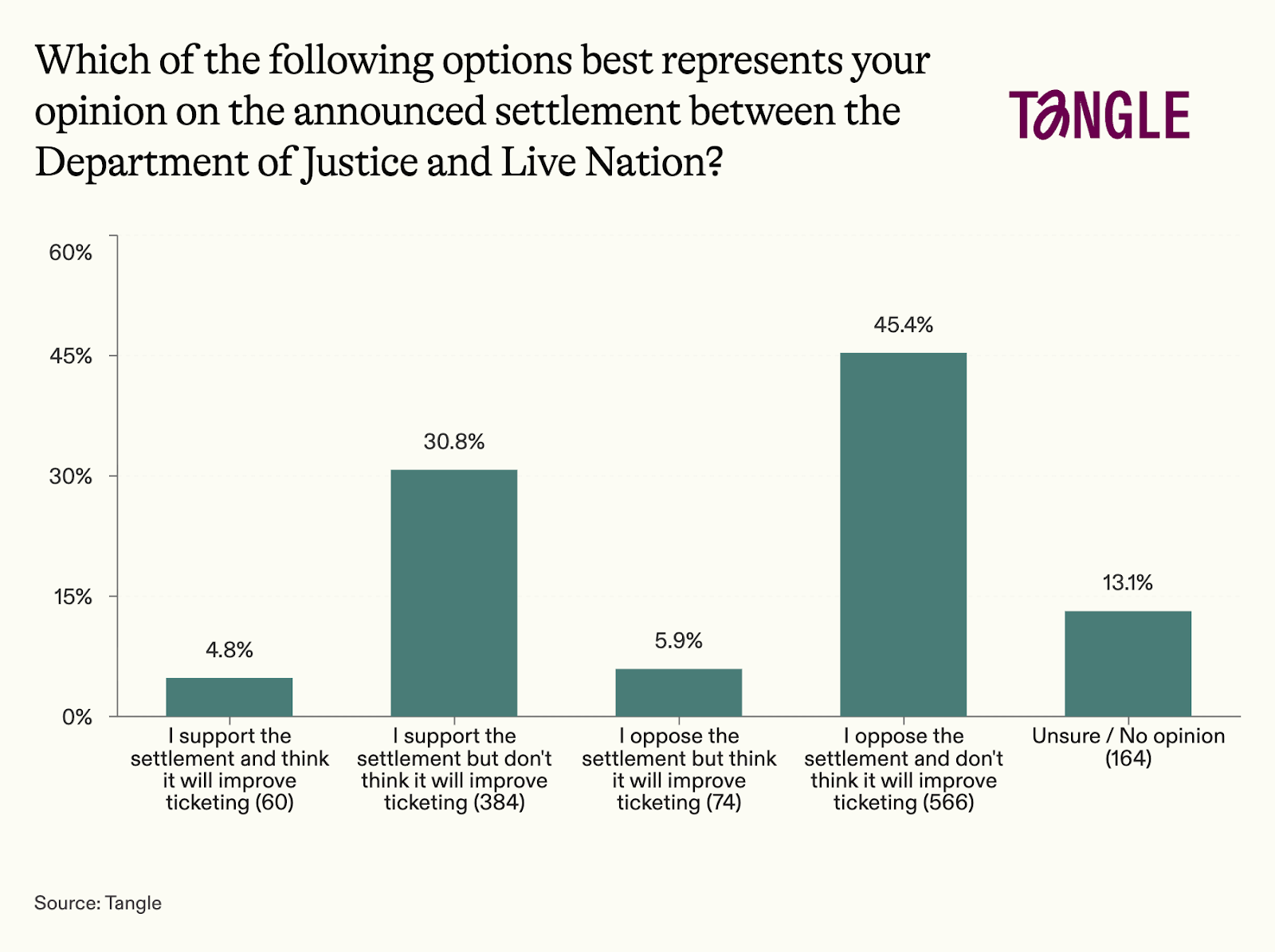
- Thursday’s survey: 1,248 readers responded to our survey on the Live Nation settlement with 45% opposing it and saying it won’t improve ticketing. “I think the settlement might improve ticketing marginally, but the situation called for a much tougher one,” one respondent said. “These post-COVID buyers are also at fault as consumers — a concert SHOULDN’T cost $600, and we shouldn’t be willing to pay that. We’re feeding the monster,” said another.
Have a nice day.
Until recently, the waters off Gujarat, India, were ground zero for whale shark hunting — up to 500 of the world’s largest fish killed every year, mostly just to waterproof boats. Then a beloved Hindu spiritual leader began weaving whale sharks into his sermons, likening them to daughters returning home to give birth, and the fish went from nameless to the “vhali” — the beloved one. Since 2002, fishers in Gujarat have rescued over 1,000 whale sharks, and hunting has ceased almost entirely. “The whale shark is like my daughter,” fisherman Ganeshbhai Devjibhai Varidum said. “If she hurts, I hurt.” Reasons to Be Cheerful has the story.

Member comments