This is the Tangle Sunday Edition, a brief roundup of our independent politics coverage plus some extra features for your Sunday morning reading.
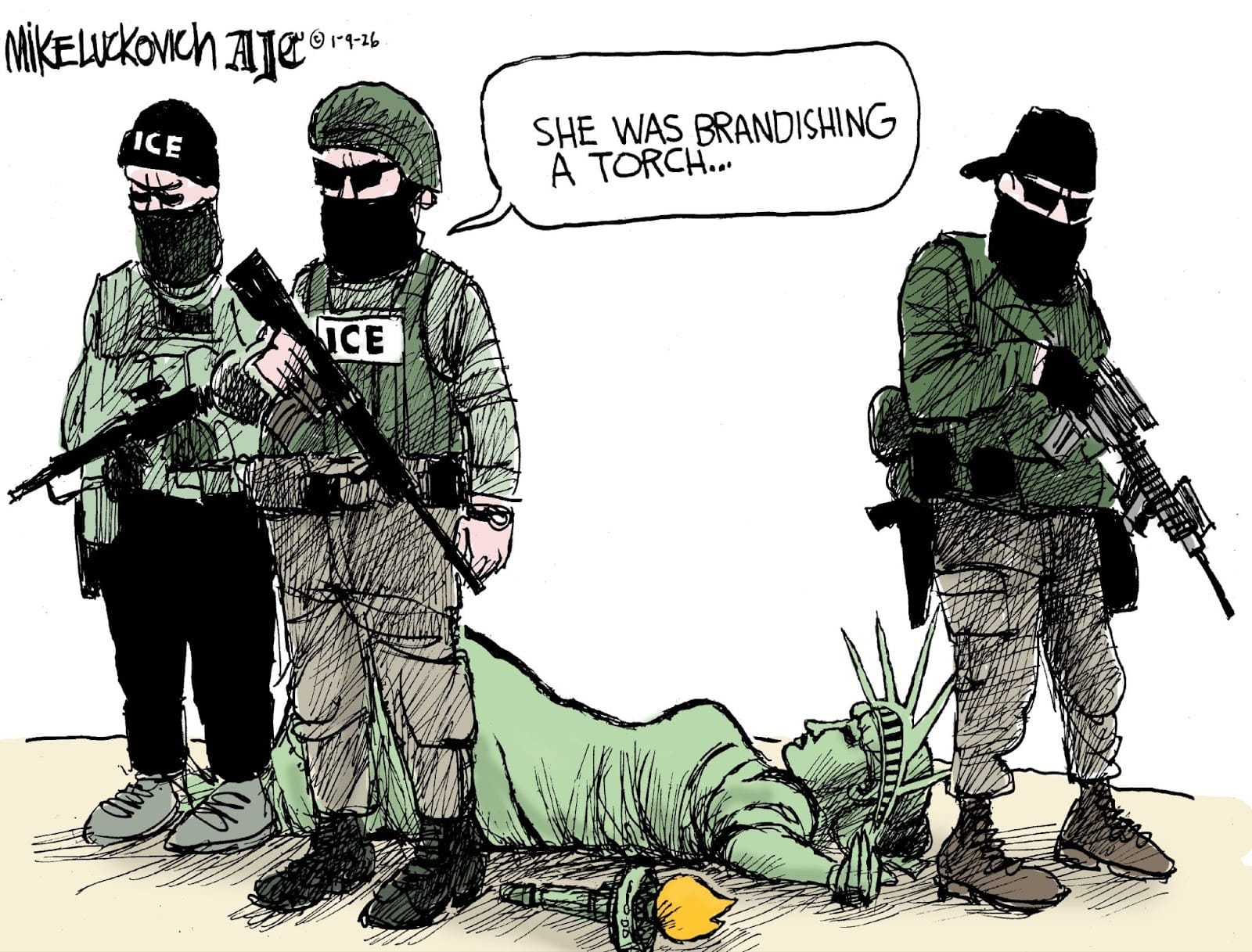
What the left is doodling.
Mike Luckovich | Creators Syndicate
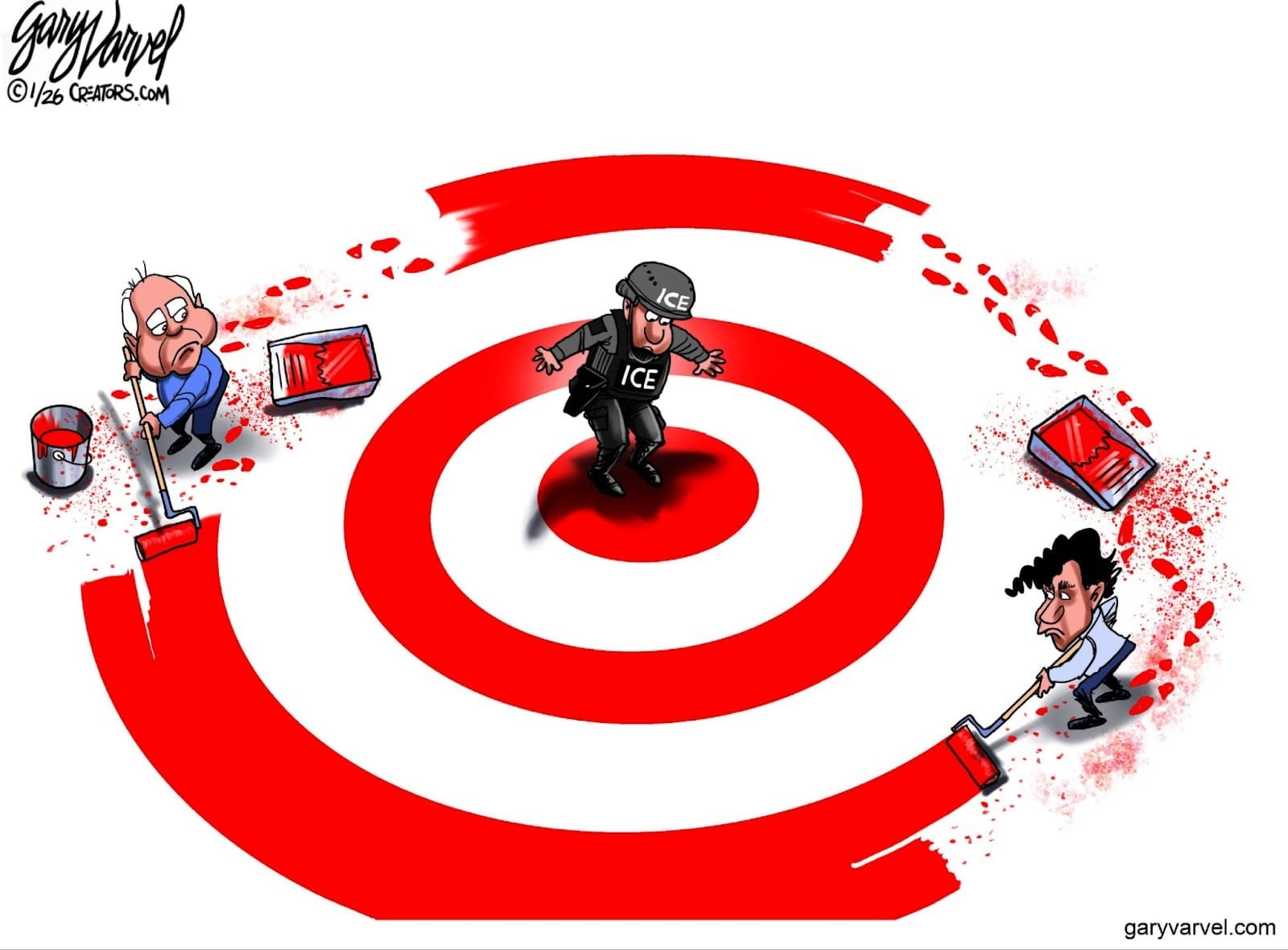
What the right is doodling.
Gary Varvel | Creators Syndicate
Monday, January 12.
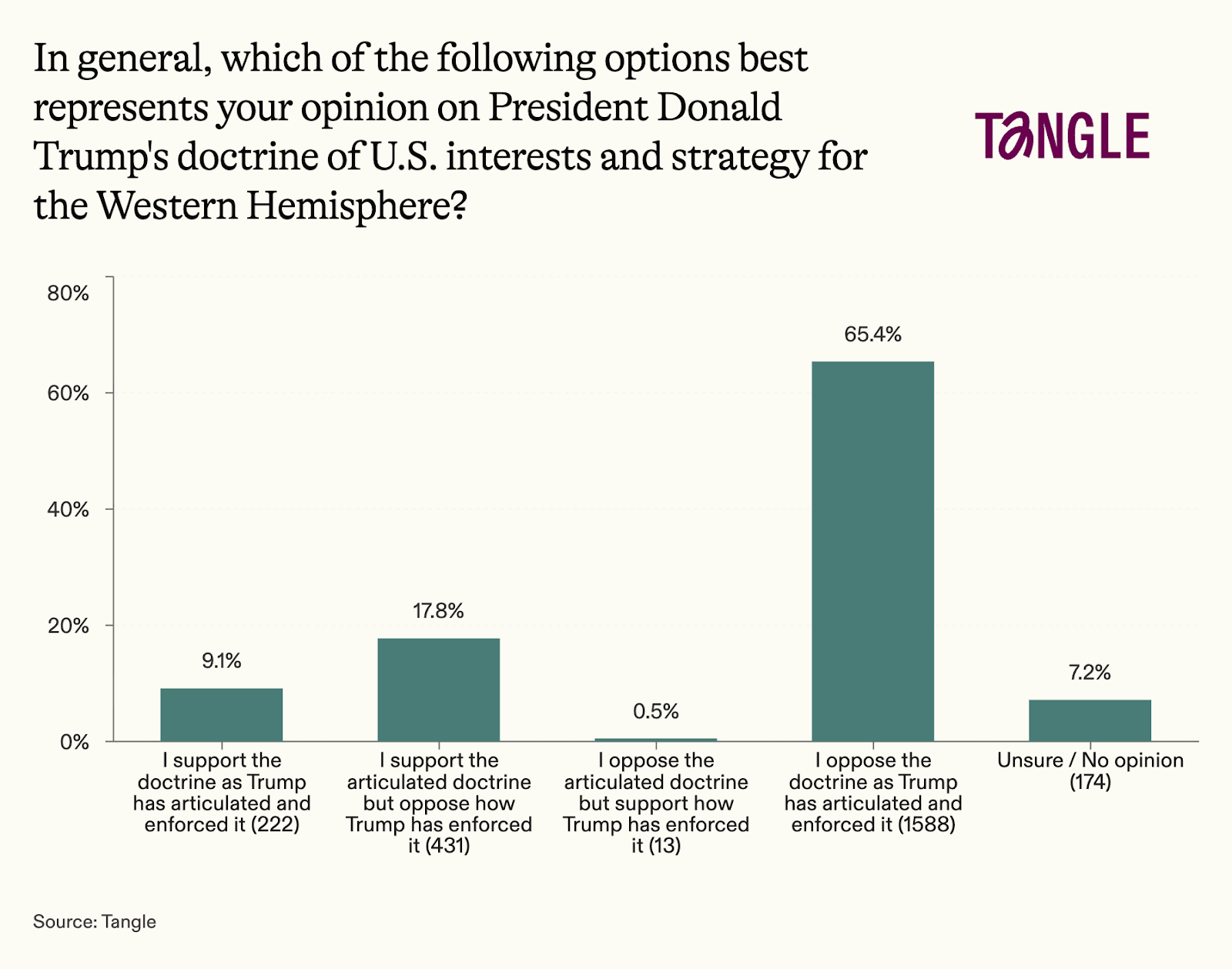
Trump’s strategy in the Western Hemisphere. Since the start of his second term, President Donald Trump has prioritized the United States’s influence in the Western Hemisphere, often antagonizing nearby countries and seeking to increase control of critical resources. In previous weeks, after the U.S. captured and arrested Venezuelan President Nicolás Maduro, Trump and his top officials threatened Cuba, Colombia, and Mexico with similar military action and renewed his focus on acquiring Greenland.
Our take:“Trump’s ‘Donroe Doctrine’ fits within an already described security strategy that I broadly agree with. Some of that strategy, and Trump’s recent actions in the Western Hemisphere, contradict the stronger principles. That makes me think Trump doesn’t really have a doctrine, other than following personal and transactional relationships.”
Reader Survey:
Tuesday, January 13.
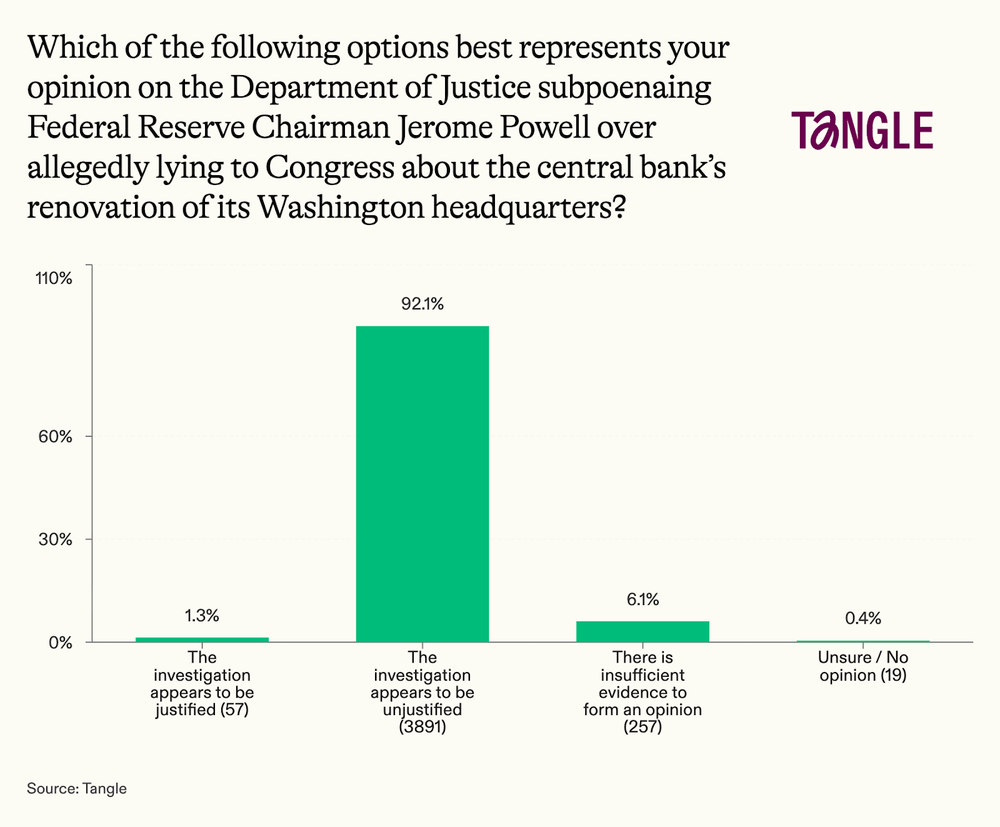
The investigation into Jerome Powell. On Sunday, January 11, The New York Times reported that the U.S. attorney’s office in the District of Columbia has launched a criminal investigation into Federal Reserve Chairman Jerome Powell. The investigation reportedly focuses on Powell’s June 2025 congressional testimony about the central bank’s renovation of its Washington headquarters. Shortly after the first reports surfaced, Powell confirmed that he had received grand jury subpoenas from the Justice Department threatening a criminal indictment. The chairman called the investigation “unprecedented” and said the administration is threatening legal action to pressure the Fed to lower interest rates.
Our take: “Powell gave as good a statement as I’ve ever heard from a public official. Trump is exerting political pressure on the Fed; we should say so clearly, and should all be concerned about it. I hope that enough Republican senators find their backbone before our economy suffers dire consequences.”
Reader Survey:
Wednesday, January 14.
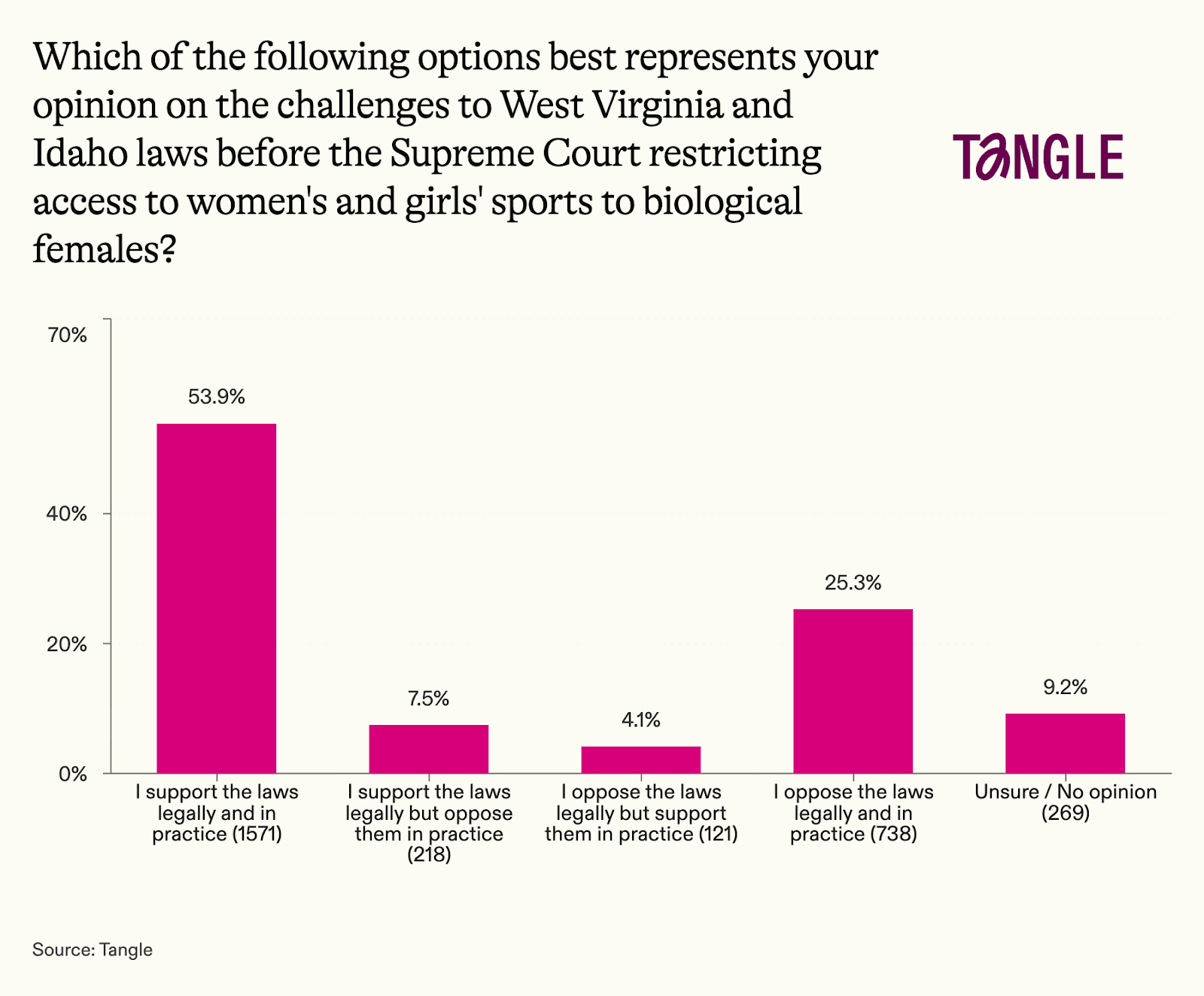
Transgender women in sports. During oral arguments on Tuesday, January 13, the Supreme Court appeared likely to uphold state laws banning anyone other than biological females from participating in women’s and girls’ sports. In West Virginia v. B.P.J., the mother of a transgender girl brought a challenge to a state law in West Virginia; in Little v. Hecox, a transgender woman wishing to compete at the college level challenged an Idaho law. Together, the legal challenges claim the laws violate the 14th Amendment’s Equal Protection Clause and Title IX, a federal law that prohibits sex discrimination in programs that receive federal funding. Although the justices are expected to rule similarly in each case, the Court is considering the challenges separately.
Our take: “The left and right frame these issues very differently and always end up talking past each other. I heed calls for compassion for the lived experiences of others, but ultimately believe the law requires rigid definition. The Court will rule in favor of the states, and I think it should, but I won’t be totally celebrating the decision.”
Reader Survey:
Thursday, January 15.
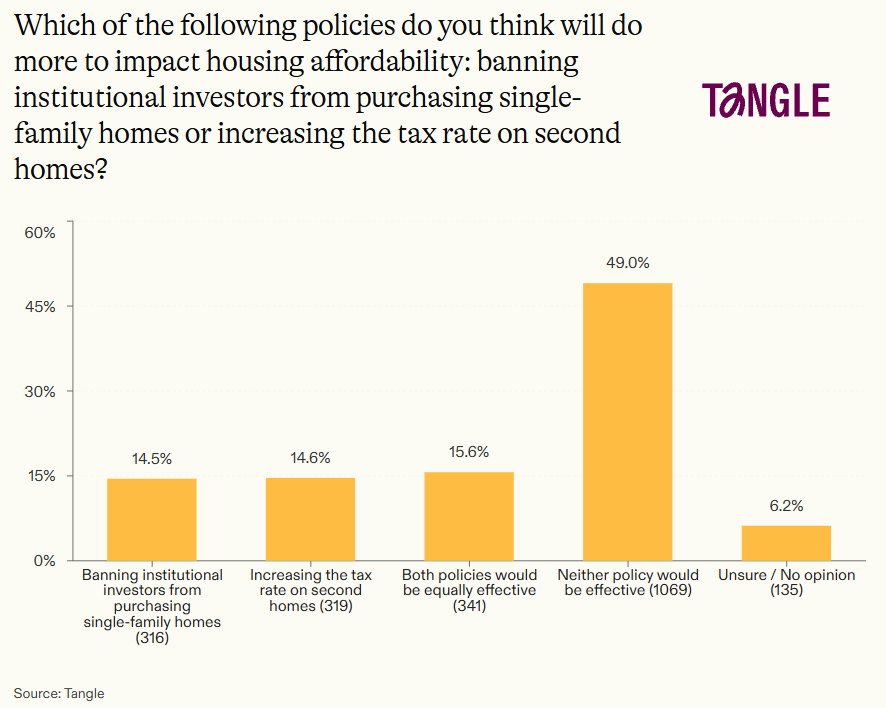
Trump’s housing affordability efforts. Last week, President Donald Trump announced a pair of actions to address rising homeownership costs. On January 8, the president directed Fannie Mae and Freddie Mac — government-sponsored mortgage-finance companies — to buy $200 billion in mortgage bonds to bring down mortgage rates. On January 7, Trump said he was “taking steps to ban large institutional investors from buying more single-family homes” and would ask Congress to codify those rules. The president said he will share more details about his housing affordability plans in a speech at the World Economic Forum in Davos, Switzerland, next week.
Our take: “I applauded this proposal at first, but cooled on the idea as I read more. Making housing affordable requires cutting regulations and building more housing. I also have another proposal: Local governments should increase taxes on second homes.”
Reader Survey:
Friday, January 16.
Recently, during an internal staff discussion about a contentious newsletter, Executive Editor Isaac Saul joked about publishing the contents publicly. That joke became a reality in this week’s Friday edition, where we published four staff conversations about recent controversial topics we’ve covered, including Jerome Powell, trans women in sports, classifying the Washington Post editorial board, and the shooting of Renee Good. You can read the piece here.
What just happened.
Here’s a rundown of the major stories that have broken since our last newsletter on Thursday.
On Thursday, President Donald Trump said he would invoke the Insurrection Act if federal agents in Minnesota are impeded from enforcing immigration. The act allows the president to deploy the military to suppress rebellions and enforce federal laws. (The warning) On Friday, President Trump appeared to walk back the warning while speaking to reporters at the White House. (The comments)
On Thursday, the U.S. military seized an oil tanker near Venezuela, the sixth such seizure. The U.S. Southern Command said the tanker was “operating in defiance of President Trump’s established quarantine of sanctioned vessels in the Caribbean.” (The seizure)
On Thursday, President Trump shared the framework of a healthcare plan that aims to lower drug prices and insurance premiums. The document, called The Great Healthcare Plan, calls for codifying “most favored nation” drug pricing agreements with pharmaceutical companies and sending subsidies to individuals instead of healthcare companies, among other provisions. (The plan)
On Thursday, the Senate voted 82–15 to pass a package of three spending bills that includes measures to fund the Commerce, Justice, Energy, and Interior departments through September. Congress has now passed six of 12 measures to fully fund the government. (The vote)
On Thursday, Venezuelan opposition leader María Corina Machado presented President Trump with her 2025 Nobel Peace Prize during a meeting at the White House. A Trump administration spokesperson said Trump intends to keep the medal. (The gift)
On Friday, a district judge in Minnesota ruled that federal agents participating in immigration enforcement operations cannot detain or tear gas protesters who aren’t obstructing authorities. (The ruling)
On Friday, Canada and China announced a trade agreement that will reduce Canadian tariffs on a limited number of Chinese electric vehicles and Chinese tariffs on Canadian canola seed exports. The two sides also expressed interest in strengthening diplomatic ties. (The deal)
On Friday, the White House announced the members of the Gaza “Board of Peace,” a temporary authority tasked with implementing President Trump’s peace plan for the enclave. (The board)
On Saturday, internet service was partially restored in Iran after weeks of mass anti-government protests. In a speech, Iranian Supreme Leader Ayatollah Ali Khamenei blamed U.S. President Trump for the country’s unrest, while Human Rights Activists News Agency said it had verified 3,090 deaths connected to the protests. (The latest)
On Saturday, President Trump said on Truth Social that he planned to impose new 10% tariffs on Denmark and seven other European countries until a deal is reached for the U.S. purchase of Greenland. (The tariffs)
On Saturday, U.S. Central Command announced that al Qaeda leader Bilal Hasan al-Jasim was killed by a U.S. strike in Syria on Friday. Al-Jasim was reportedly directly connected to the ISIS gunman who killed two U.S. service members and a civilian interpreter on December 13. (The strike)
Reader essay.
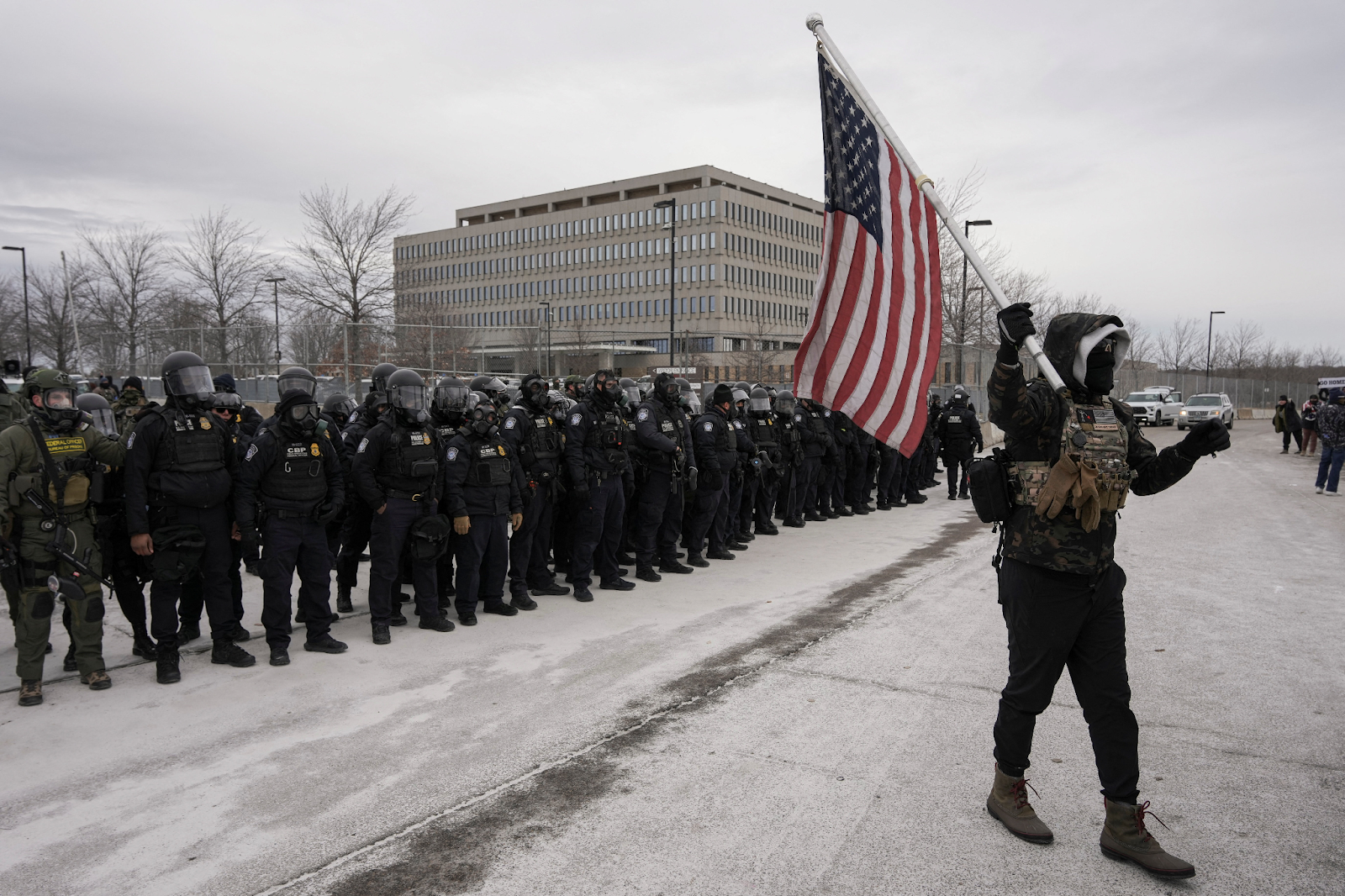
A counter-protester with a U.S. flag and Immigration and Customs Enforcement (ICE) agents outside the Whipple Federal Building in Minneapolis, Minnesota | REUTERS/Tim Evans
Two weeks ago, we published a newsletter on an ICE agent shooting and killing Renee Good in Minneapolis, Minnesota. Tensions over immigration enforcement in the city have only heightened since, as more agents have come to the city and more residents are protesting their presence. Today, Minneapolis-based reader Erin C.M. Anderson shares a personal, evocative essay on her experience watching these events unfold in her city.
This post is for paying subscribers only
Sign up now and upgrade your account to read the post and get access to the full library of posts for paying subscribers only.