This is the Tangle Sunday Edition, a brief roundup of our independent politics coverage plus some extra features for your Sunday morning reading.
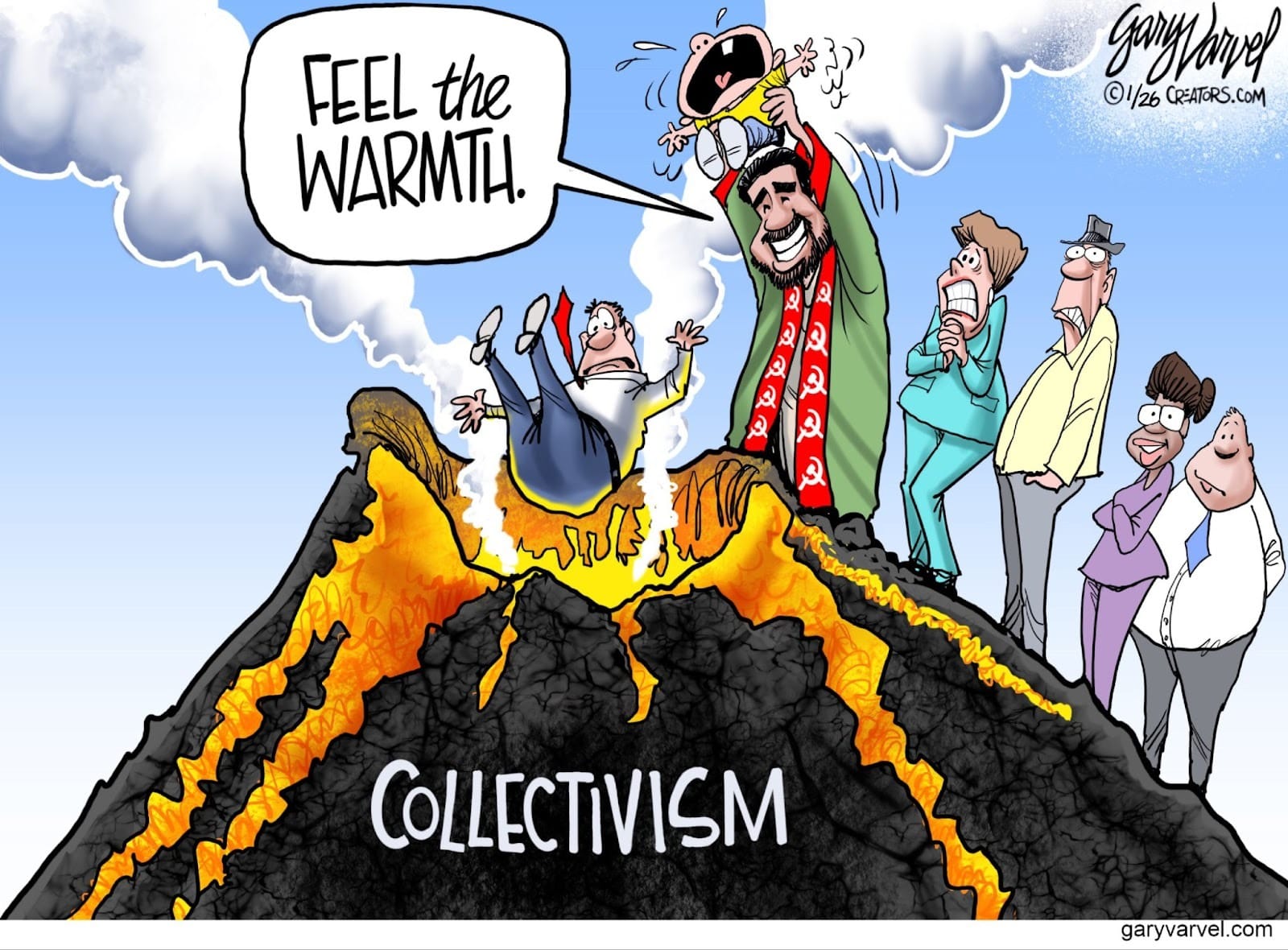
What the right is doodling.
Gary Varvel | Creators Syndicate
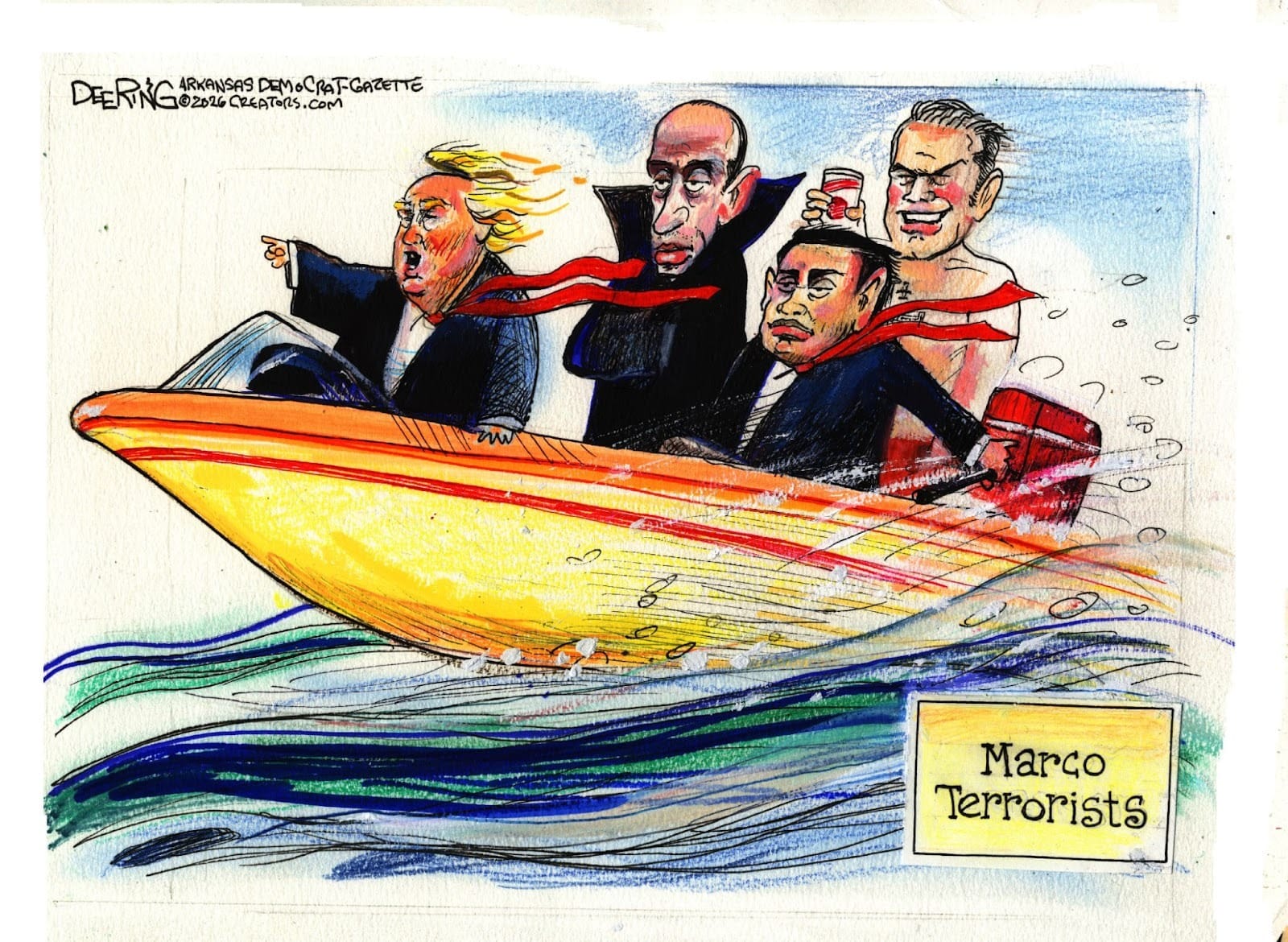
What the left is doodling.
John Deering | Creators Syndicate
Monday, January 5.
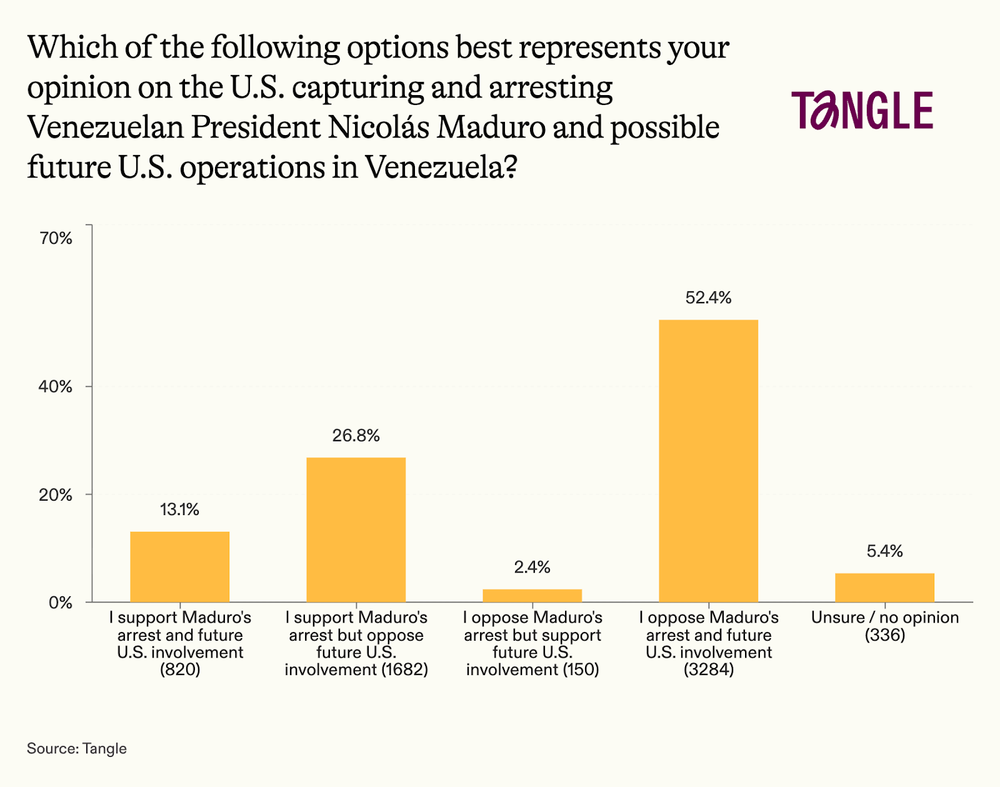
The U.S. ouster of Venezuela’s president. On Saturday, January 3, the United States military conducted air strikes in Venezuela and carried out an operation to capture Venezuelan President Nicolás Maduro. Shortly thereafter, the Department of Justice announced that Maduro and his wife, Cilia Flores, had been indicted in the Southern District of New York and charged with “Narco-Terrorism Conspiracy, Cocaine Importation Conspiracy, Possession of Machineguns and Destructive Devices, and Conspiracy to Possess Machineguns and Destructive Devices against the United States.” In a press conference later in the day, President Donald Trump said that the United States will assume control of Venezuela “until such time as we can do a safe, proper, and judicious transition.”
Our take:“Maduro was an unequivocally repressive dictator, and I’ll shed precisely zero tears over his arrest. This should also be the final nail in the coffin for any notion of a ‘Trump doctrine’ on foreign policy — there is none, and deciphering the administration’s reasoning for this operation is impossible. As for what comes next, the administration is offering little to go on.”
Reader Survey:
Tuesday, January 6.
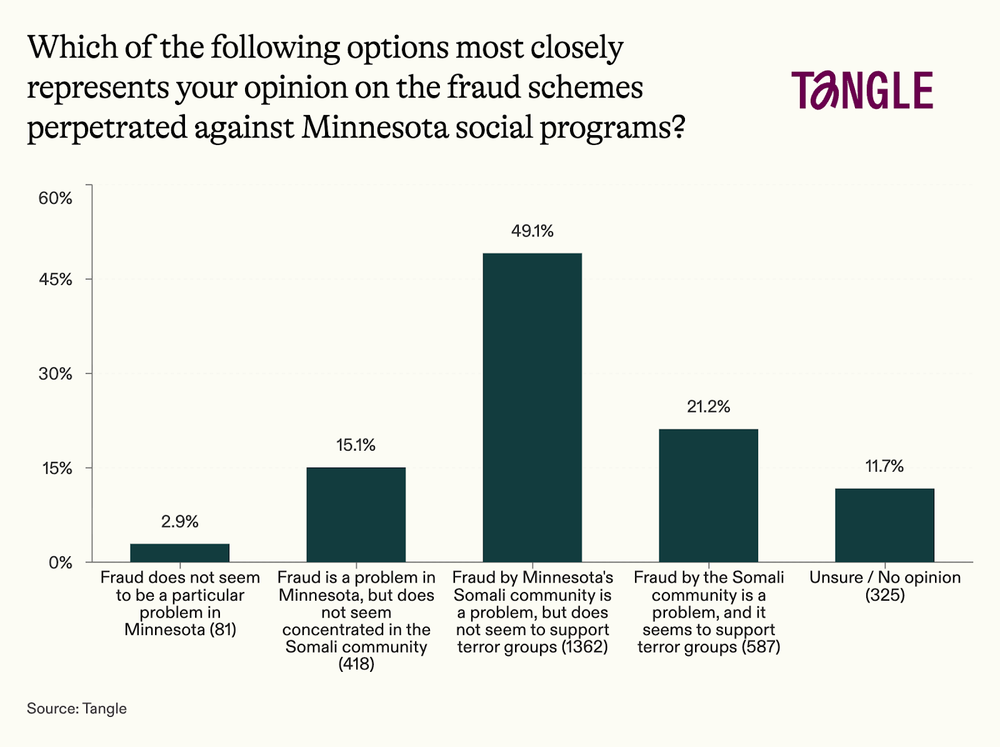
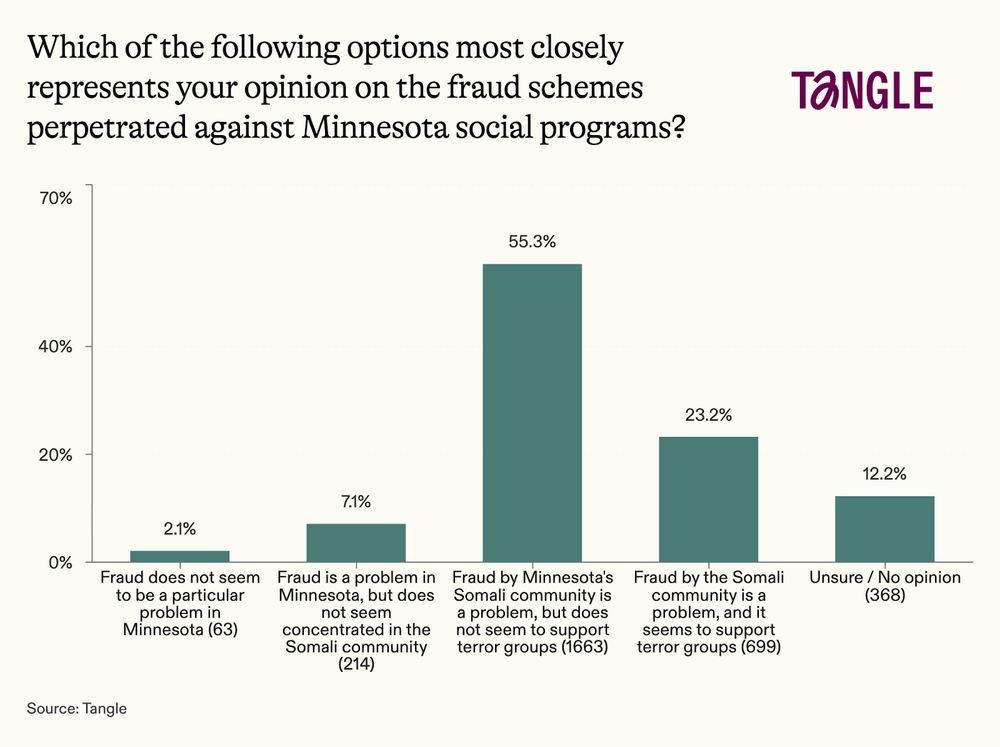
The latest on the Minnesota fraud investigations. On Monday, January 5, Minnesota Gov. Tim Walz (D) announced he is ending his reelection campaign for a third term. The governor and 2024 Democratic vice presidential candidate has come under increasing scrutiny for his handling of the fraud schemes, which were concentrated in the state’s Somali-American community and have drawn national attention in recent weeks. On Tuesday, January 6, the Trump administration said it will freeze $10 billion in funding for child care and other programs in five states controlled by Democrats, including Minnesota. Separately, Homeland Security Secretary Kristi Noem said that agency officials were conducting a fraud investigation in Minneapolis, and the agency reportedly plans to deploy up to 2,000 agents to the area as part of an immigration crackdown.
Our take: “We’re all just playing ‘Trump’s Big Game’ which inevitably distracts us from addressing the root problem. We should try dissecting this issue without talking about Trump and focus on the facts. Large government programs need oversight, and political leaders can’t ignore issues because they may aid their opposition.”
Reader Survey:
3,007 readers responded to the same question when we covered the issue on December 3; those results are below.
Wednesday, January 7.
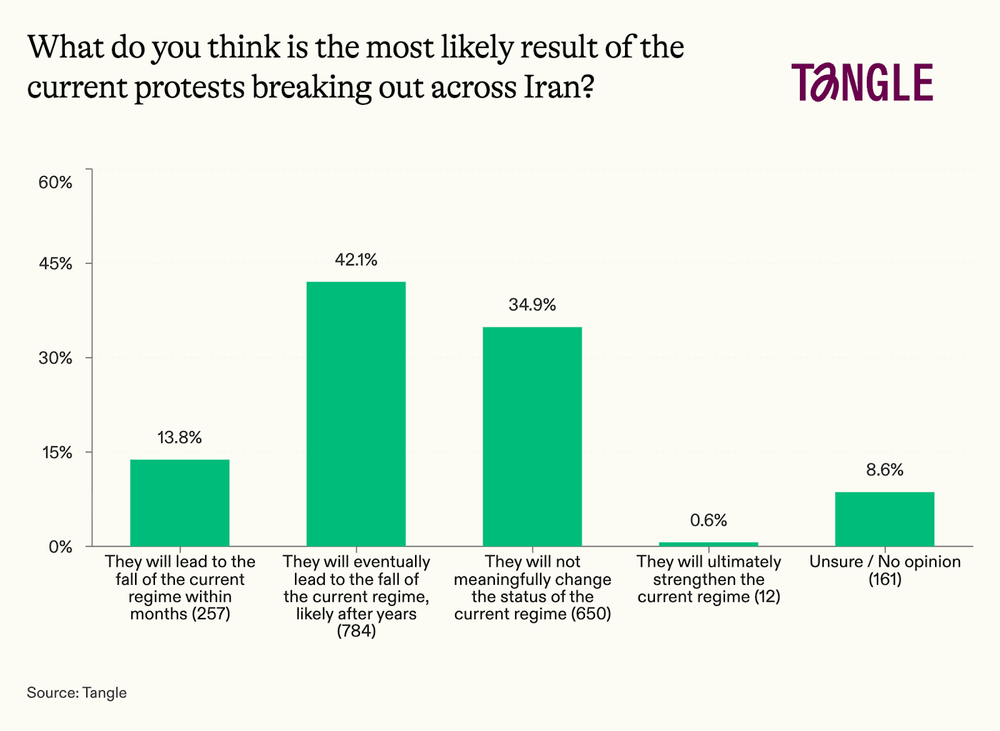
The protests in Iran. In late December, protesters in Tehran, Iran, took to the streets over rising costs and economic conditions in the country. Larger demonstrations erupted across Iran in the following days, with crowds gathering in major cities and provincial centers to protest economic conditions, government restrictions, and broader grievances with the country’s political system. Iranian authorities responded with a mix of violent suppression and internet disruptions; a spokesman for the Iranian government has claimed the unrest is driven in part by foreign interference.
Our take: “These protests have many similarities to past uprisings in Iran — and some key differences. I’m doubtful that Trump will take military action to support the protesters. Still, I think the Iranian regime is on its last legs.”
Reader Survey:
Thursday, January 8.
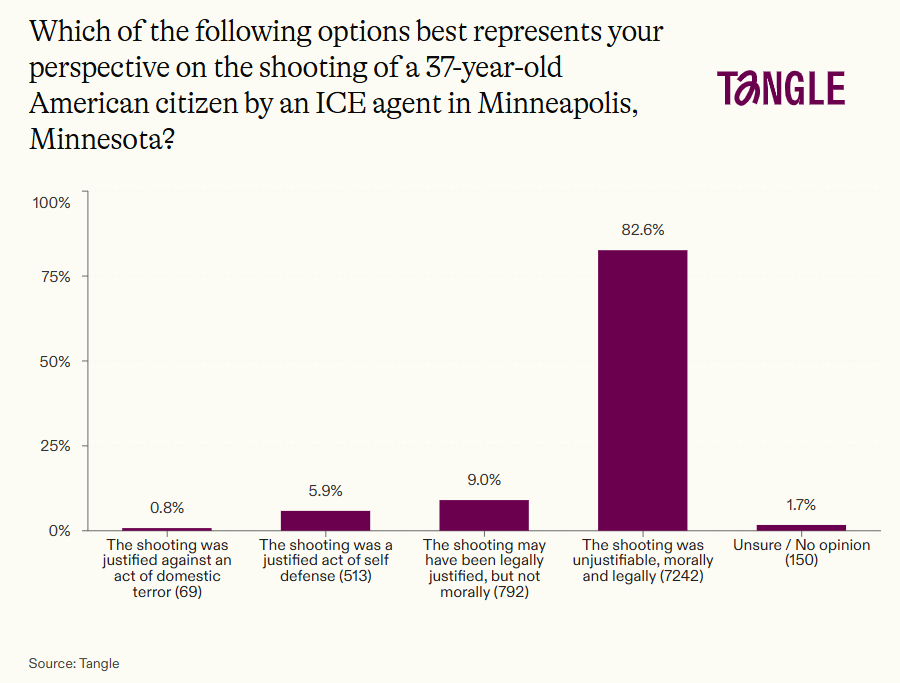
The ICE shooting in Minneapolis. On Wednesday, January 7, an Immigration and Customs Enforcement (ICE) officer shot and killed a woman in her vehicle during an operation in a Minneapolis, Minnesota, neighborhood. Federal officials claimed that the woman was attempting to run over ICE agents, while local officials said the officer acted recklessly. The incident comes amid heightened tension in the city and state, which has become a focus of the Trump administration’s deportation efforts.
Our take: “This killing is a predictable result of the Trump administration’s aggressive, provocative deportation campaign. Debate over legality is justified, but the White House is spreading falsehoods. From a moral and practical standpoint, I think the shooting was clearly unjustified.”
Reader Survey:
Friday, January 9.
Every year, we use our first Friday edition of January to reflect on our coverage from the previous year. We review our takes, assess what we got right and wrong, and then give ourselves a letter grade. This year’s review was split into two parts; you can read Part 1 here, and find Part 2 here.
What just happened.
Here’s a rundown of the major stories that have broken since our last newsletter on Thursday.
On Thursday, Minneapolis officials said that federal officials had blocked them from participating in the agency’s investigation into the woman fatally shot by an Immigration and Customs Enforcement agent on Wednesday. (The update)
On Thursday, the Senate voted 52–47 to advance a bill that would bar the Trump administration from conducting further military action in Venezuela. Five Republicans joined all Democrats in supporting the measure, which still needs to pass the chamber in a final vote. (The vote)
On Thursday, Colombian President Gustavo Petro told CBS News that he welcomed President Trump’s invitation to meet at the White House and hoped the discussions would “stop a world war.” (The comments)
On Thursday, U.S. Border Patrol agents shot two people in Portland, Oregon. Officials said the agents were conducting a “targeted vehicle stop” when the driver of the car attempted to run them over. The two victims “have some nexus” to the drug cartel Tren de Aragua and are now in stable condition, Portland Police Chief Bob Day said. (The shooting)
On Thursday, the Commerce Department reported that the U.S. trade deficit for October was $29.4 billion, down 39% from the prior month and its lowest level since mid-2009. (The report)
On Thursday, the House voted 230–196 to pass a Democrat-led bill that would extend enhanced Affordable Care Act subsidies for three more years after the subsidies expired at the start of the year. 17 Republicans voted for the bill, which now heads to the Senate, where it is not expected to pass in the near term. (The vote)
On Thursday, President Trump said that government-backed mortgage-finance companies Fannie Mae and Freddie Mac will buy $200 billion in mortgage bonds as part of an effort to improve housing affordability. Trump did not offer further details on when the purchases will be made. (The announcement)
On Friday, European Union member states gave their support for a trade agreement with the South American group Mercosur, which would be the bloc’s largest-ever free-trade accord. Opponents to the deal, led by France, say it will undercut domestic farmers. (The deal)
On Friday, Iranian Supreme Leader Ayatollah Ali Khamenei said that the government would not “back down” amid nationwide protests that escalated over the past week. Human Rights Activists News Agency estimates that at least 72 people have been killed in the demonstrations as of Saturday. (The latest)
On Friday, the Labor Department reported that U.S. employers added 50,000 jobs in December, fewer than economists expected. The unemployment rate decreased slightly to 4.4%, and October and November payrolls were revised lower by 76,000. (The numbers)
On Friday, U.S. Southern Command announced that the U.S. has seized another sanctioned oil tanker in the Caribbean. The tanker is the fifth seized by the Trump administration since the president’s announcement of a “total and complete blockade” of sanctioned tankers coming to and leaving from Venezuela. (The seizure)
Reader essay.
Photo by skynesher/iStock
We’re starting off this year with an essay from Jack Ballard, a recent high school graduate, that speaks in direct response to our edition on phone bans in schools. Jack’s high school instituted a phone ban, and he experienced firsthand how it helped his classes be more productive and encouraged his classmates to be more social. However, he had a deeper problem with his school’s phone ban — one that he thought prevented it from being a good policy. He also offered what he thought would be a better solution.
This post is for paying subscribers only
Sign up now and upgrade your account to read the post and get access to the full library of posts for paying subscribers only.