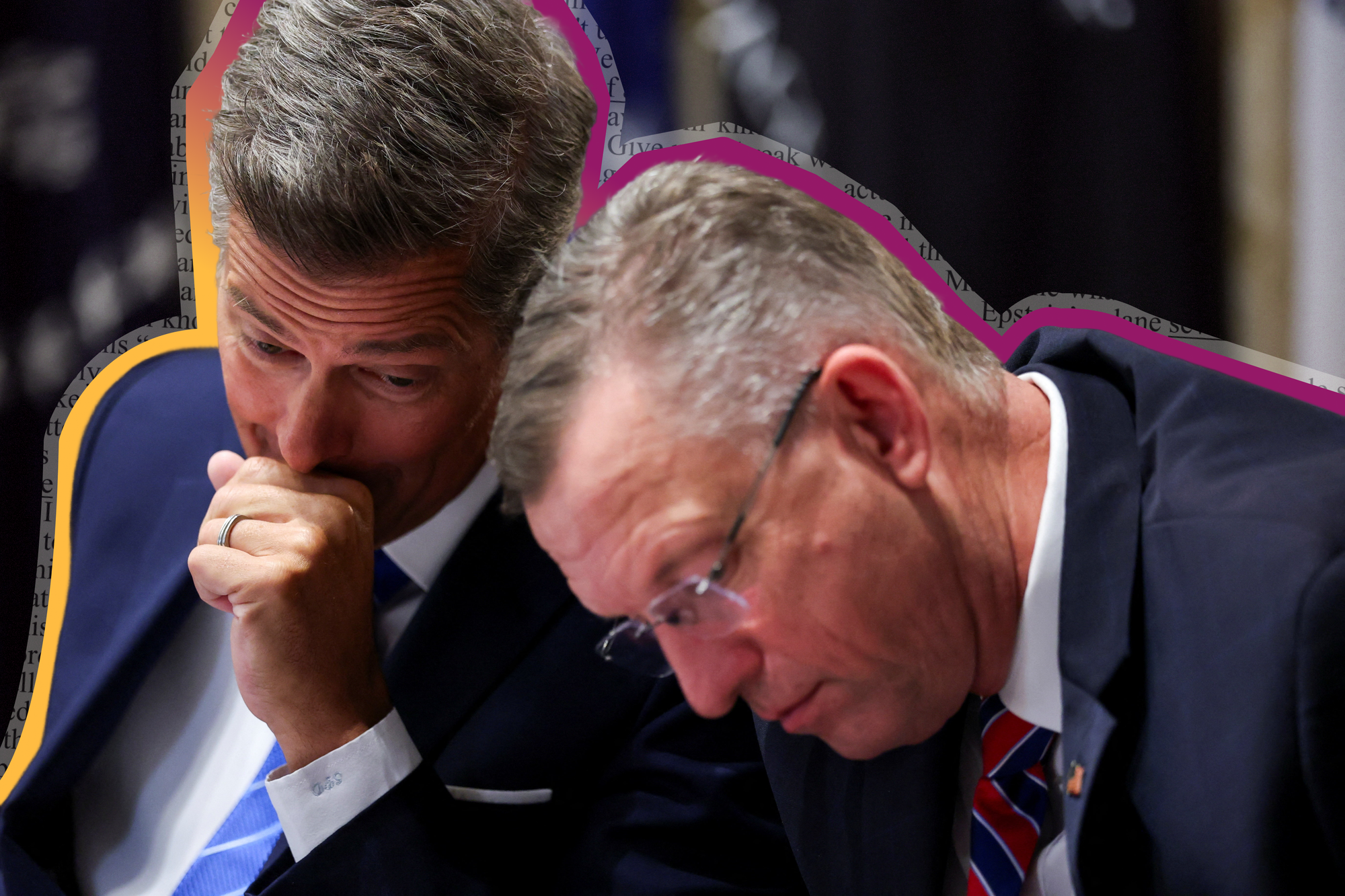
Transportation Secretary Sean Duffy and Secretary of Veterans Affairs Doug Collins at a cabinet meeting in August, 2025 | REUTERS/Jonathan Ernst, edited by Russell Nystrom
The first eight months of the second Trump administration have been headlined by several prominent cabinet members: Marco Rubio, Robert F. Kennedy Jr., Pete Hegseth, Kristi Noem, Scott Bessent and Pam Bondi, among others. These agency leaders have undertaken wide-ranging initiatives to carry out the president’s agenda, drawing regular coverage and analysis of their actions. But other department heads have also been shaping policies, implementing programs, and making consequential decisions — often without the same degree of media attention.
Today, we're going to devote a two-part edition to ten Trump administration leaders whose work does not always grab headlines but touches on key issues like agriculture, housing policy, labor, international aid, the environment, and more. In Tangle fashion, we’ll give an overview of their core initiatives, what supporters and critics are saying, and the issues we think will define the remainder of their time in office.
Reminder: Tangle’s Friday edition is for premium subscribers. As a free member, you’ll receive a preview of this edition, but to read the full piece — and receive part two at 12:30pm ET/9:30am PT — you’ll need to upgrade your membership.
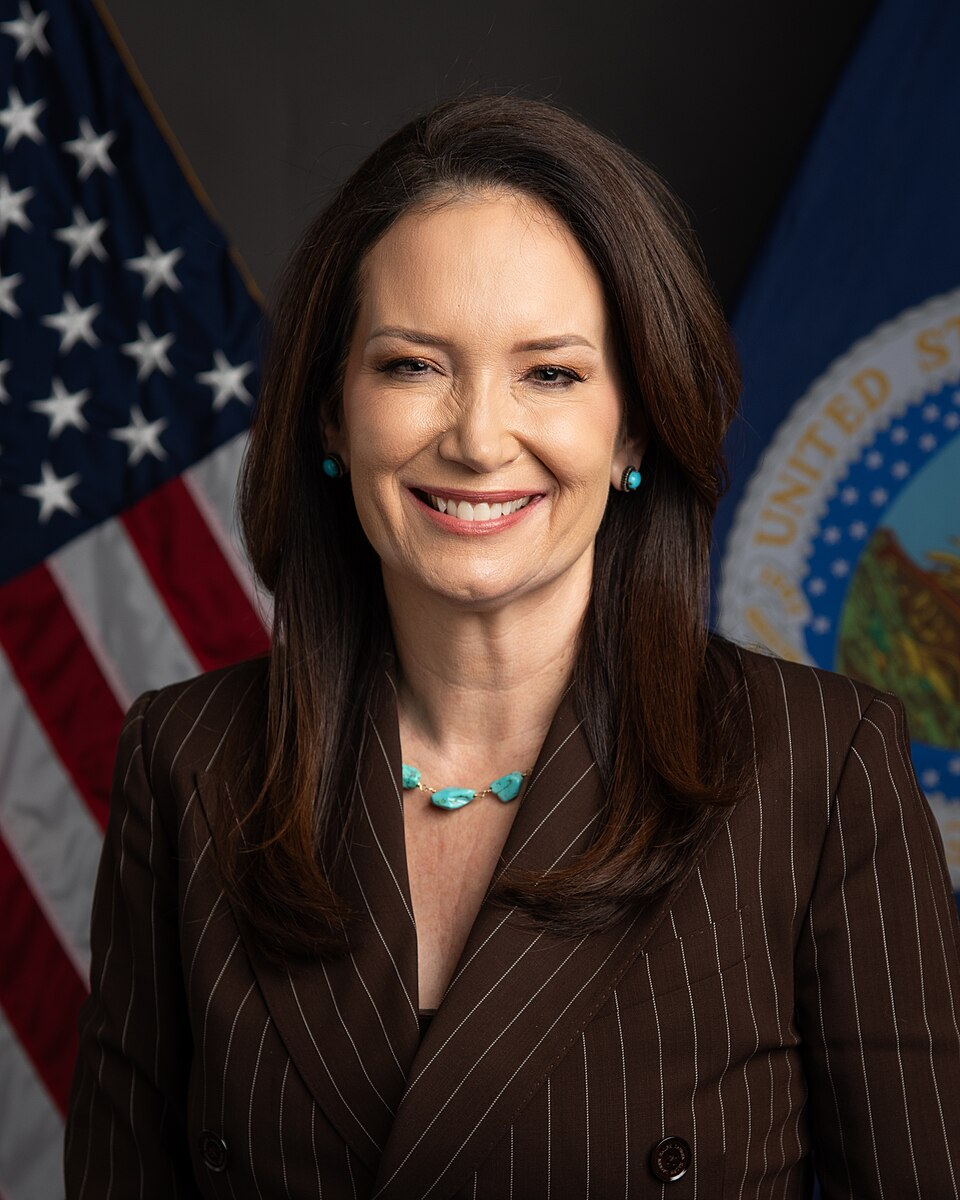
Brooke Rollins, Secretary of Agriculture.
Agriculture Secretary Brooke Rollins | Official Portrait, Department of Agriculture
Who is she?
Brooke Rollins was the founding president and CEO of the America First Policy Institute (AFPI), a conservative think tank launched in 2021 to boost Trump’s policies. AFPI employed many officials from Trump’s first presidency, and several former AFPI employees now hold senior positions in the current administration. Before founding AFPI, Rollins held multiple roles in the first Trump administration, including director of the Domestic Policy Council. She’s also served as former Texas Gov. Rick Perry’s (R) policy director and ran the Texas Public Policy Foundation, another conservative think tank. The Senate confirmed Rollins as Agriculture secretary in a 72–28 vote.
What she’s done.
Since Rollins’s first days in office, she has linked the Department of Agriculture (USDA) with national security. Along with the Departments of Defense, Homeland Security and Justice, the USDA released a “Farm Security is National Security Action Plan,” which outlines seven critical areas for the USDA to address.
One of these areas was ownership of American farmland by adversarial governments. Rollins signed a memorandum of understanding with the Treasury Department to give USDA more involvement on the Committee on Foreign Investment in the United States, completing a partnership kicked off by Congress last year. Additionally, Rollins released a map of foreign farm land purchases and a web portal for individuals to report instances of foreign governments influencing American politicians with respect to the sale of American farmland.
Rollins also ordered a USDA reorganization, cutting salaries, moving jobs out of Washington, D.C. and ending USDA diversity, equity, and inclusion (DEI) programs on her first day in office. She has overseen the distribution of billions of dollars to farmers, and Rollins announced that USDA and DOJ antitrust attorneys would work together to combat rising input prices for farmers. She’s also taken action to protect the U.S. from New World screwworm.
What supporters and critics are saying.
Supporters say her experience as an executive of two large public policy organizations and lifelong involvement in farming will make her an effective Agriculture secretary. Since her confirmation, some industry leaders have conditionally endorsed the memoranda of understanding between DOJ and USDA, calling on leaders to make sure it is properly applied. Others have commended her efforts to prevent New World screwworm from infecting American cattle.
Detractors have criticized Rollins’s decision to substantially reorganize and cut programs at USDA without forewarning or congressional oversight. Many worry that moving jobs out of D.C. will lead to additional resignations at a department that 18,000 employees have left since January. Others have criticized her comments surrounding the Partnerships for Climate-Smart Commodities initiative, which focused on growing crops using practices that reduce greenhouse gas emissions.
What’s next?
Rollins and many other politicians have warned recently that farmers are in an economically perilous position. At the same time, photos of Treasury Secretary Scott Bessent’s phone showed a message seemingly sent by Rollins complaining that Argentina “sold a bunch of soybeans to China, at a time when we would normally be selling to China.” Rollins continued, “Soy prices are dropping further because of it. This gives China more leverage on us.” Soybeans are the largest agricultural export of the United States, but retaliatory tariffs have made South American-grown beans more competitive.
On Tuesday, in her appearance on Fox Business’s “Making Money with Charles Payne,” Rollins said that President Trump has committed to a bailout for farmers and will make an announcement on it “likely next week.” Rollins will probably work with Senate Majority Leader John Thune (R-SD) to try to shepherd a farm bailout bill through Congress.
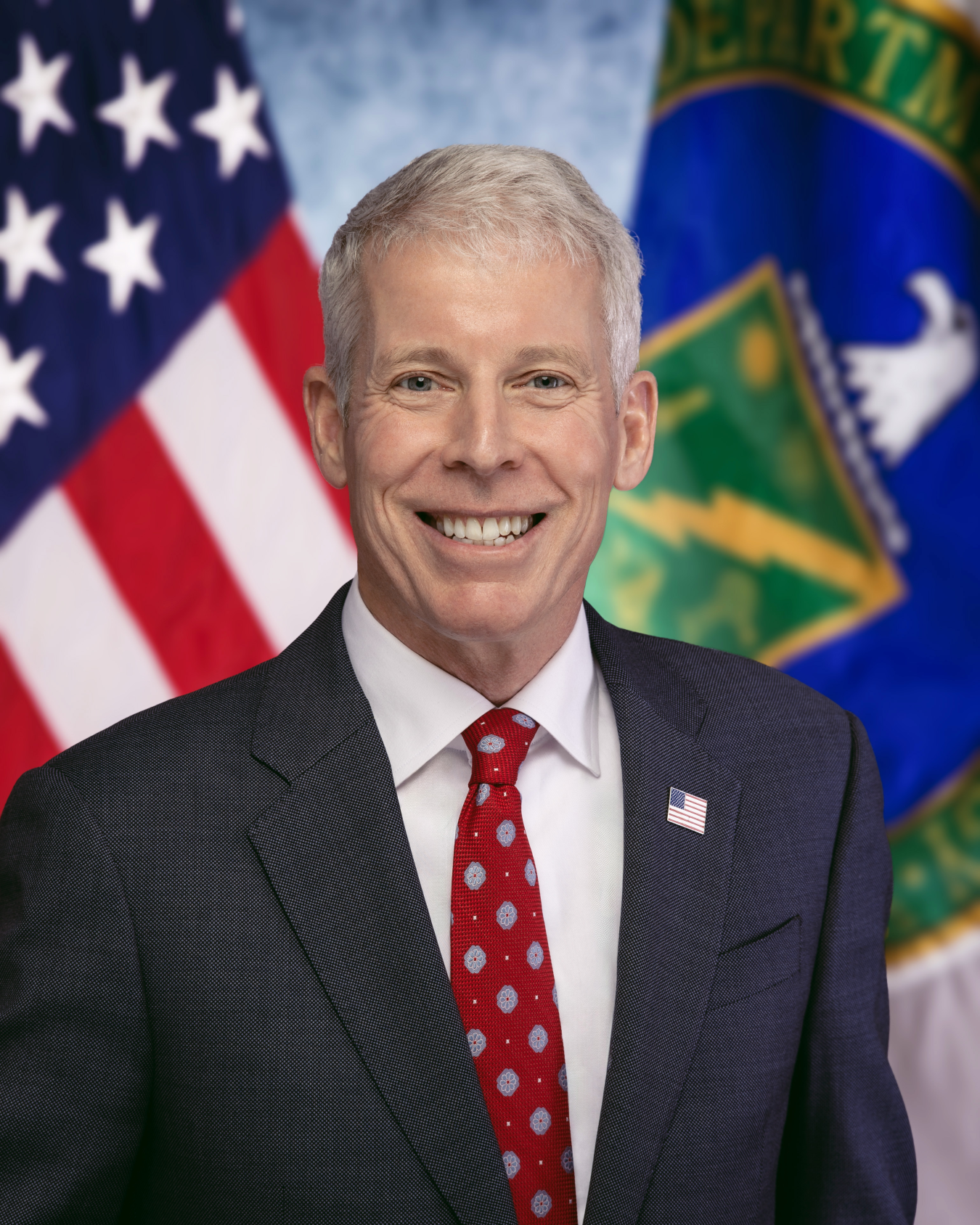
Chris Wright, Secretary of Energy.
Energy Secretary Chris Wright | Official Portrait, Department of Energy
Who is he?
Chris Wright is an energy entrepreneur, best known for founding hydraulic fracture (fracking) mapping company Pinnacle Technologies and serving as its CEO from 1992 to 2006. Wright led several other shale energy retraction companies — most recently Liberty Energy — and has participated in efforts to tap shale for geothermal energy and develop small modular nuclear reactors. Wright is a scientist who studied at MIT and Caltech, and he was confirmed by the Senate in a 59–38 vote in February.
What he’s done.
Wright has broadly shifted the Department of Energy’s (DOE) focus towards energy sources and infrastructure but away from managing the environmental effects of converting those sources into energy. In his opening remarks to DOE staff, Wright articulated his belief that the rising demand for energy fueled by AI necessitated both new innovations and a commitment to U.S. fossil fuels, particularly natural gas. As a self-proclaimed “climate realist,” Wright has also expressed skepticism that intermittent renewable energy sources — solar, wind, and hydroelectricity — can replace fossil fuels.
This post is for paying subscribers only
Sign up now and upgrade your account to read the post and get access to the full library of posts for paying subscribers only.